Maurice Foster shares some observations on some of the newer wild Camellia species growing at White House Farm.
The four seminal species behind the largely nineteenth-century development of literally thousands of cultivars are of course C. japonica, C. sasanqua, C. reticulata and C. saluenensis. Their relative merits as species are already well known, and their influence on the vast treasurehouse of garden camellia hybrids immense. C. cuspidata has also been quite widely grown for many years. But over the last 20 years several other camellia species have been brought into cultivation; some of the most promising of these for garden-worthiness are among the 48 Camellia species we grow here at White House Farm.

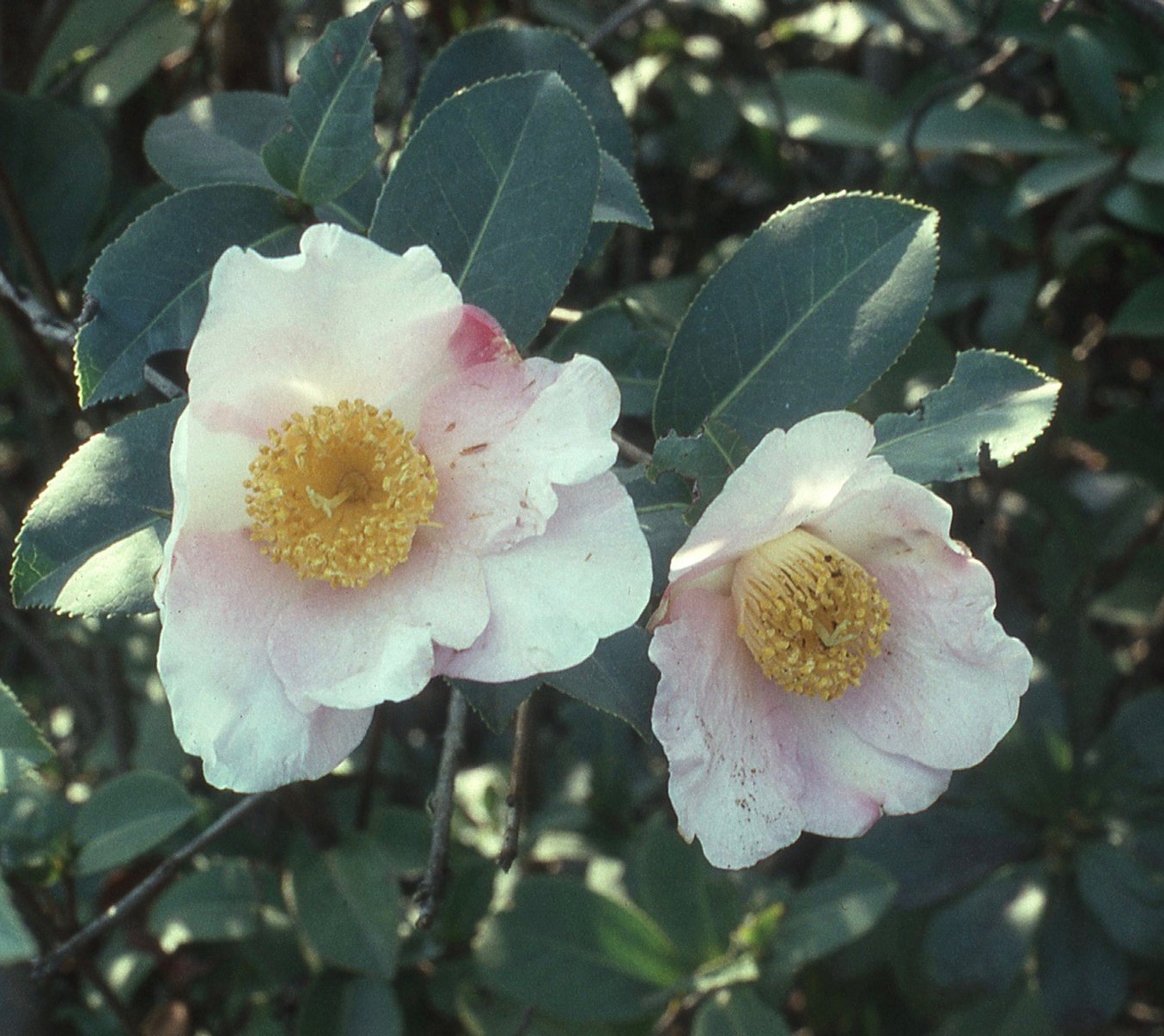
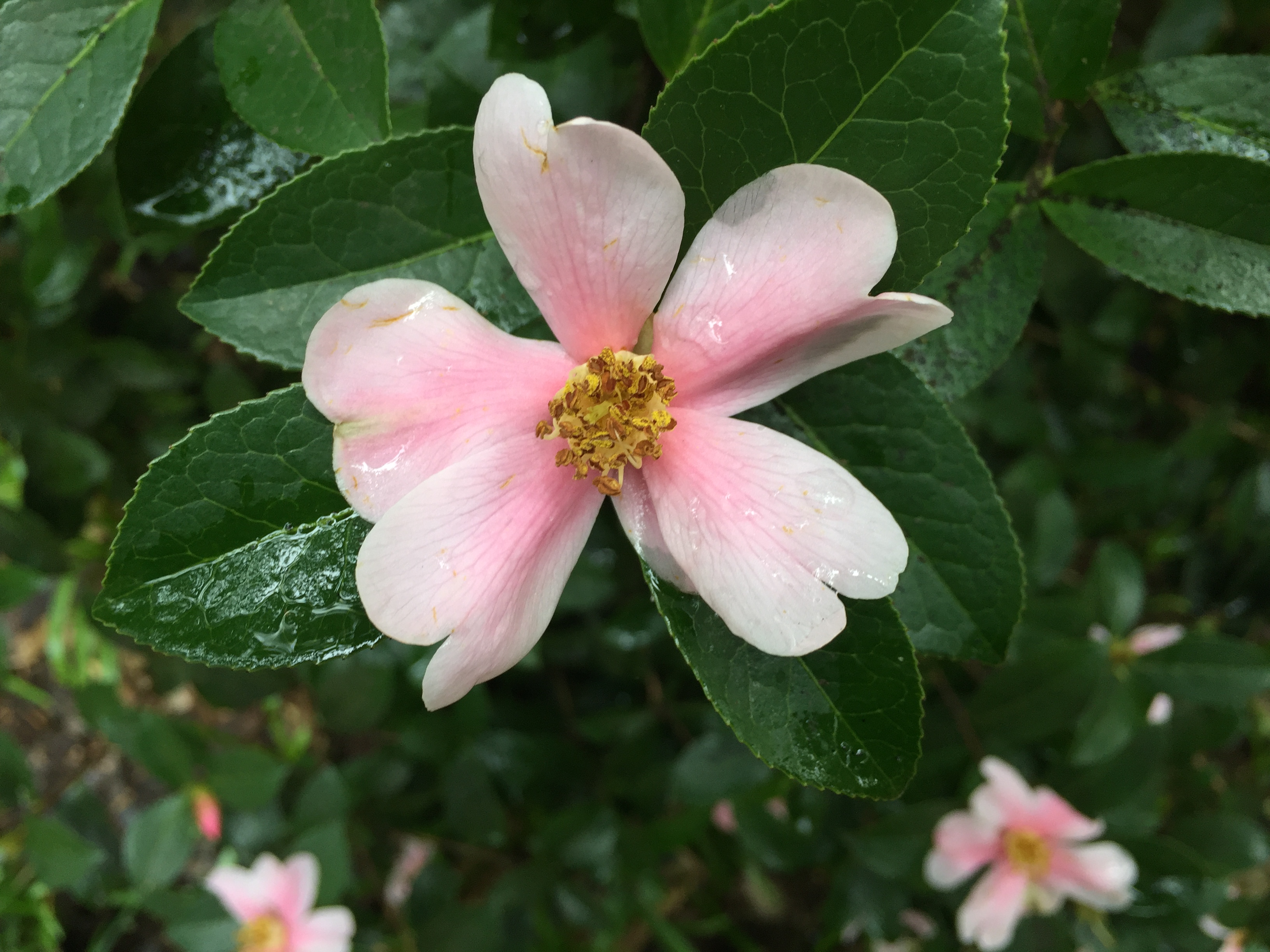
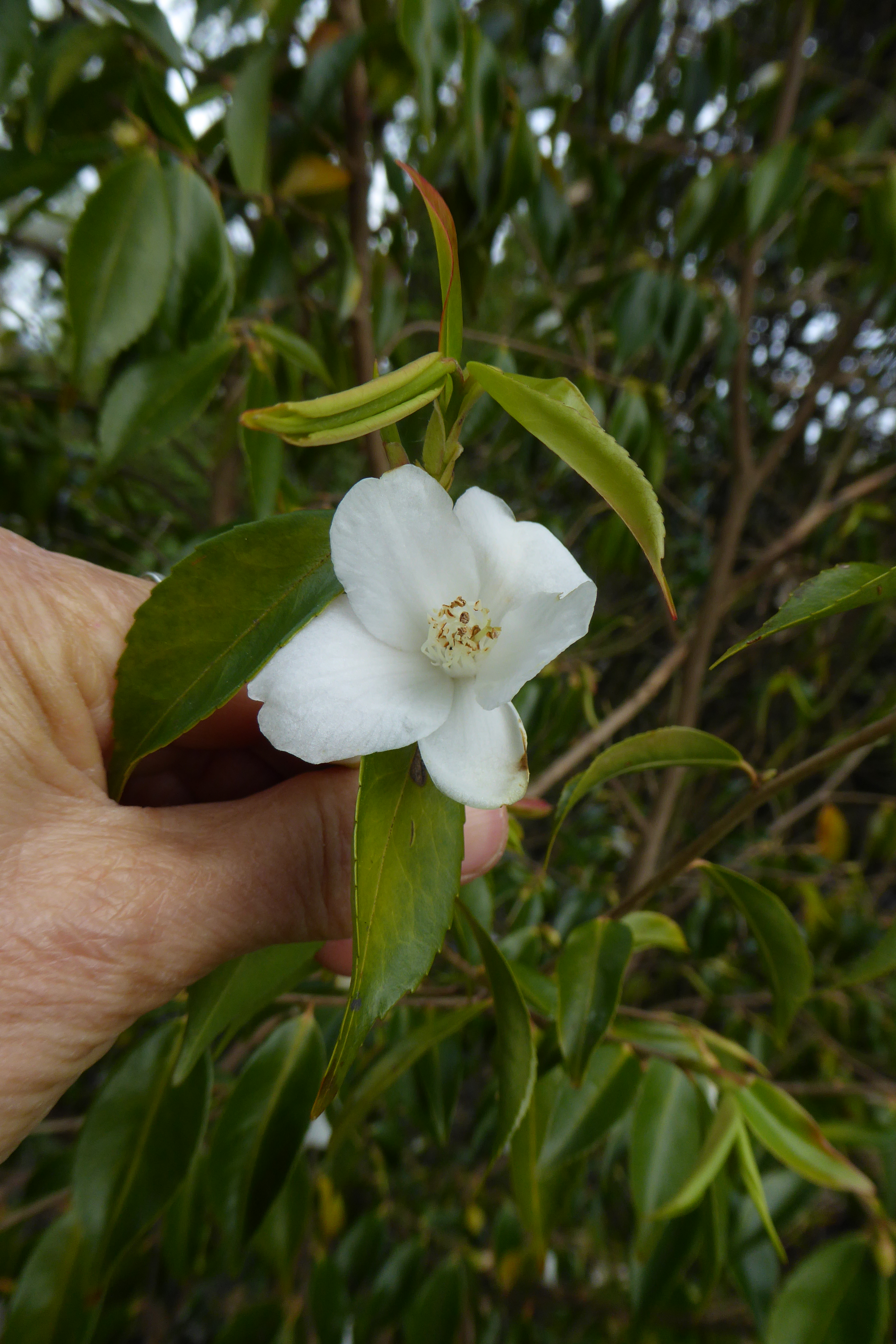
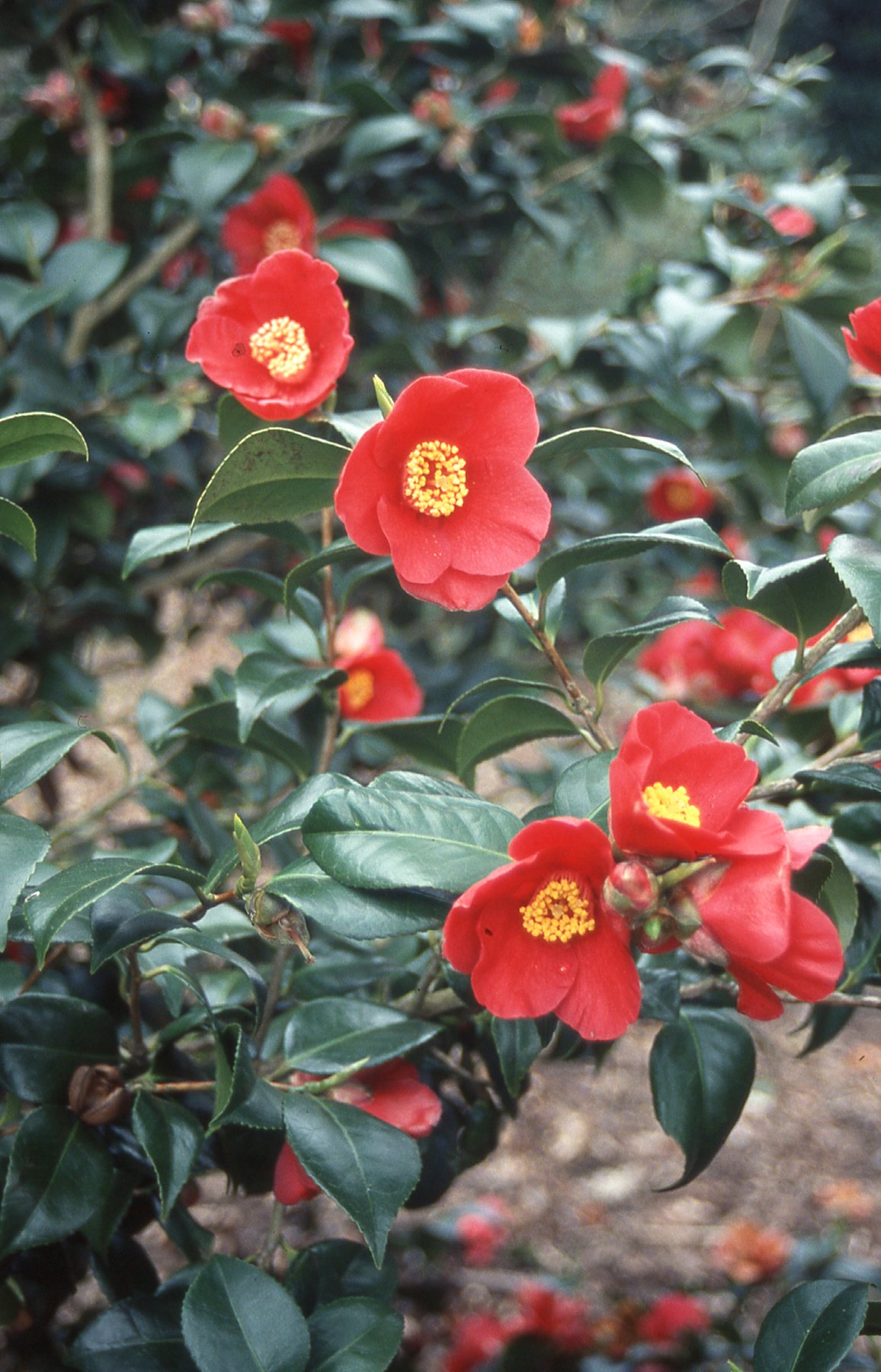
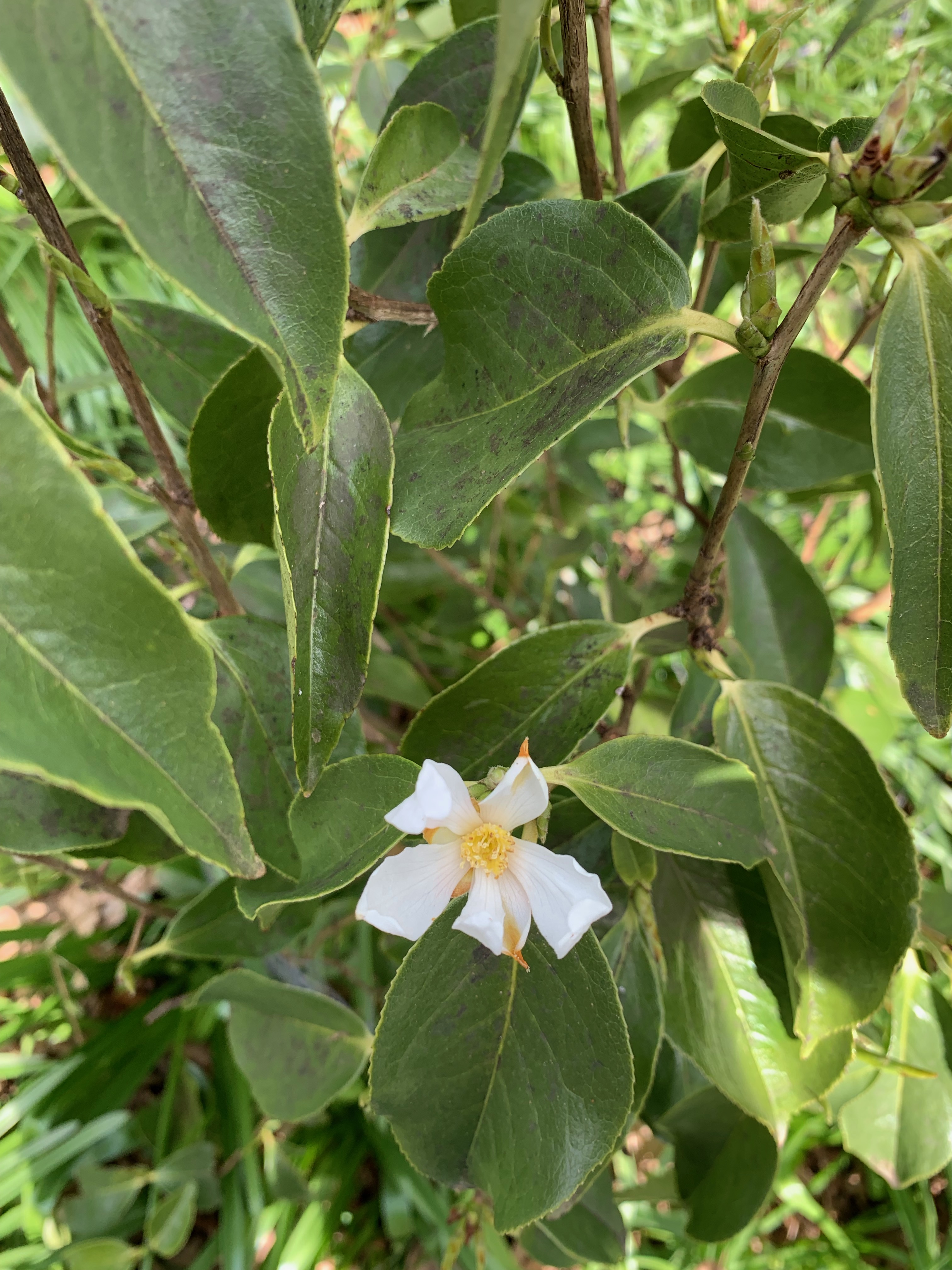
The total number of designated camellia species varies markedly depending on which taxonomist you favour. In 1958 Robert Sealy at Kew described some 82 species from the material then available; by 1981, with many more species newly discovered in China, H. T. Chang recognised no less than 280. T. Ming brought this back to a more sensible 119 in 2000 – but this back and forth itself shows there is a challenge here, and scope for more work, both in the field and the laboratory.
Whichever taxonomic classification you follow, about 80% of species are to be found in China, with some new species recently discovered in Vietnam and elsewhere in E. Asia. Most of these Chinese species are found in the warmer temperate zones of the south and south west, with inland populations often at relatively low altitude, meaning that cold hardiness has been seen as the principal limiting factor for successful cultivation in the UK. The vigour of WHF’s collection seems to disprove this concern. Of course we have had a good run of milder winters, and some botanists believe members of Theaceae, such as Camellia, and the closely related Ternstroemia and Polyspora, for example, have cold hardy genes in their makeup. But it may be, too, that as for so many other genera, siting is crucial.
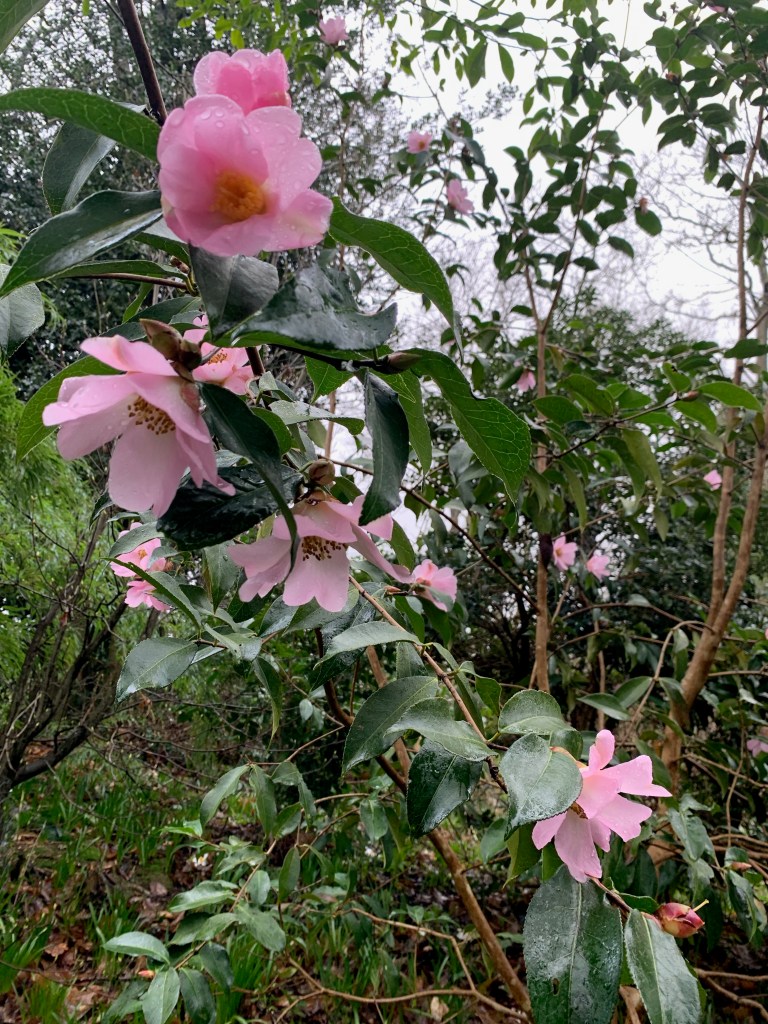
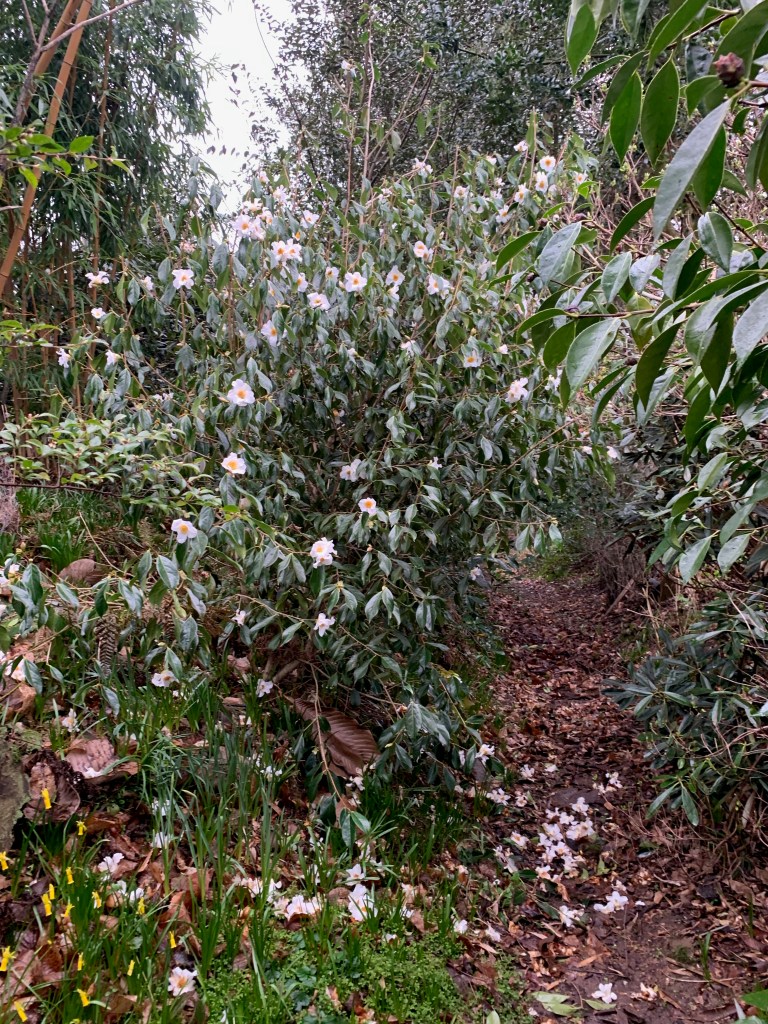
Here, finding the right spot for planting is the first priority, and the key to success in creating optimum conditions for survival and good growth. Most of our species camellias are located in the wood, or as underplanting in the mature garden, with wind protection from the bitter North Sea winter winds to the north and the east to which we are exposed being on a hogsback of some 500ft. But the same slope protects against spring radiation frosts, because colder air, being heavier than warm air, sinks – this katabatic wind means sheltered slopes avoid frost pockets. Rainfall at WHF averages about 30” a year: drainage is another benefit of slopes, and there’s a balance to be struck between top cover, root competition, and good light, although I have found that once established, C. species cope especially well with this. Light woodland is ideal, with part shade, some humidity, and plenty of moisture during growth.
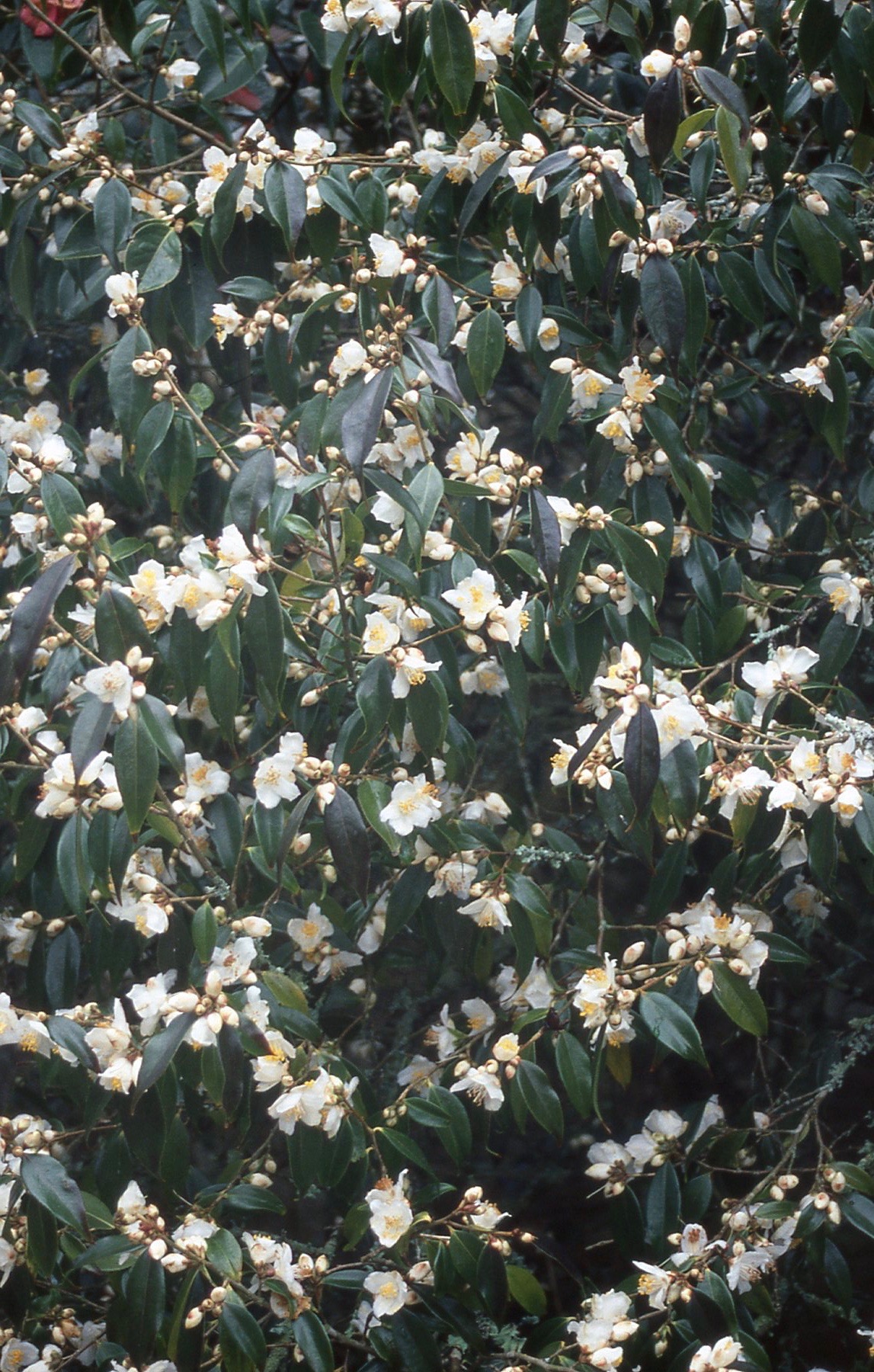
Certainly, winter hardiness appears to be less of a concern after 20 years growing experience here. Not only have these newer Camellia species not succumbed to frost, but last year C. tunganica, introduced by White House Farm some 15 years ago, maintained fresh white flowers in abundance after a series of -7C nights: freshness of flower already the standout quality of this species, which drops before browning, essential in a white.
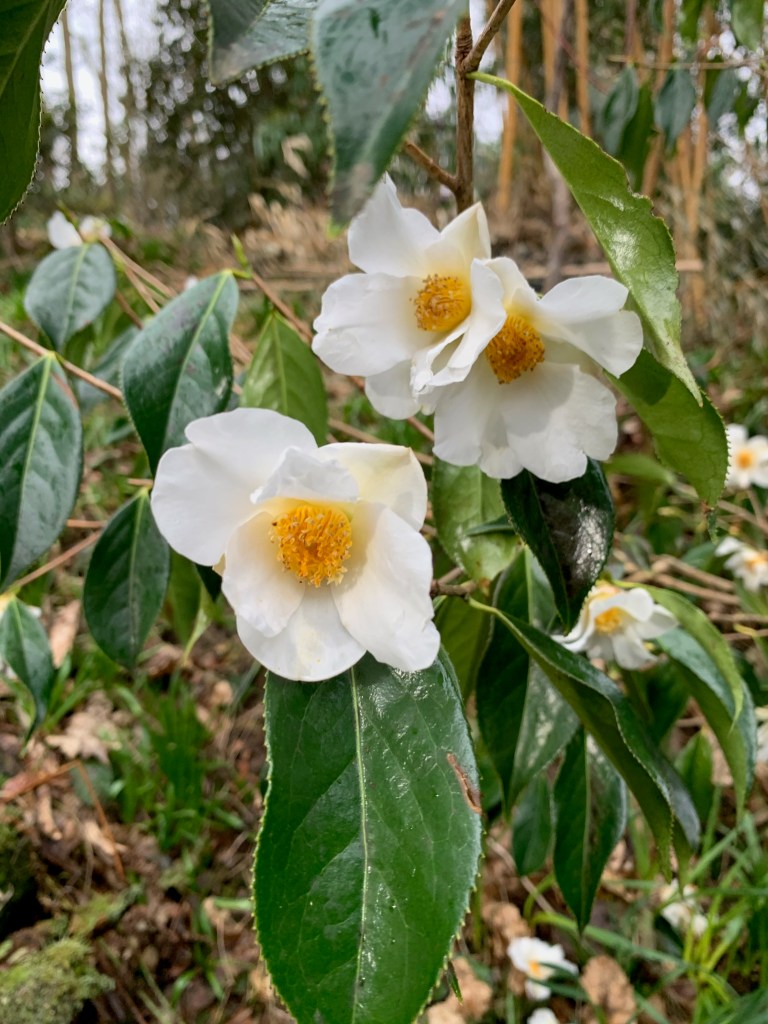
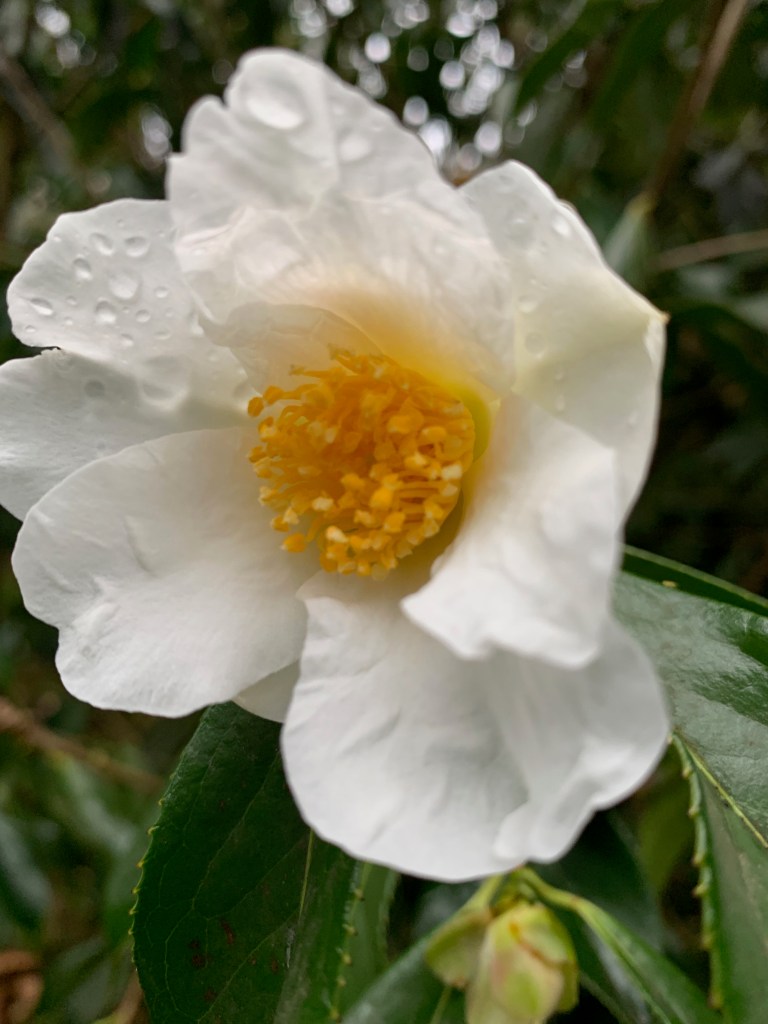
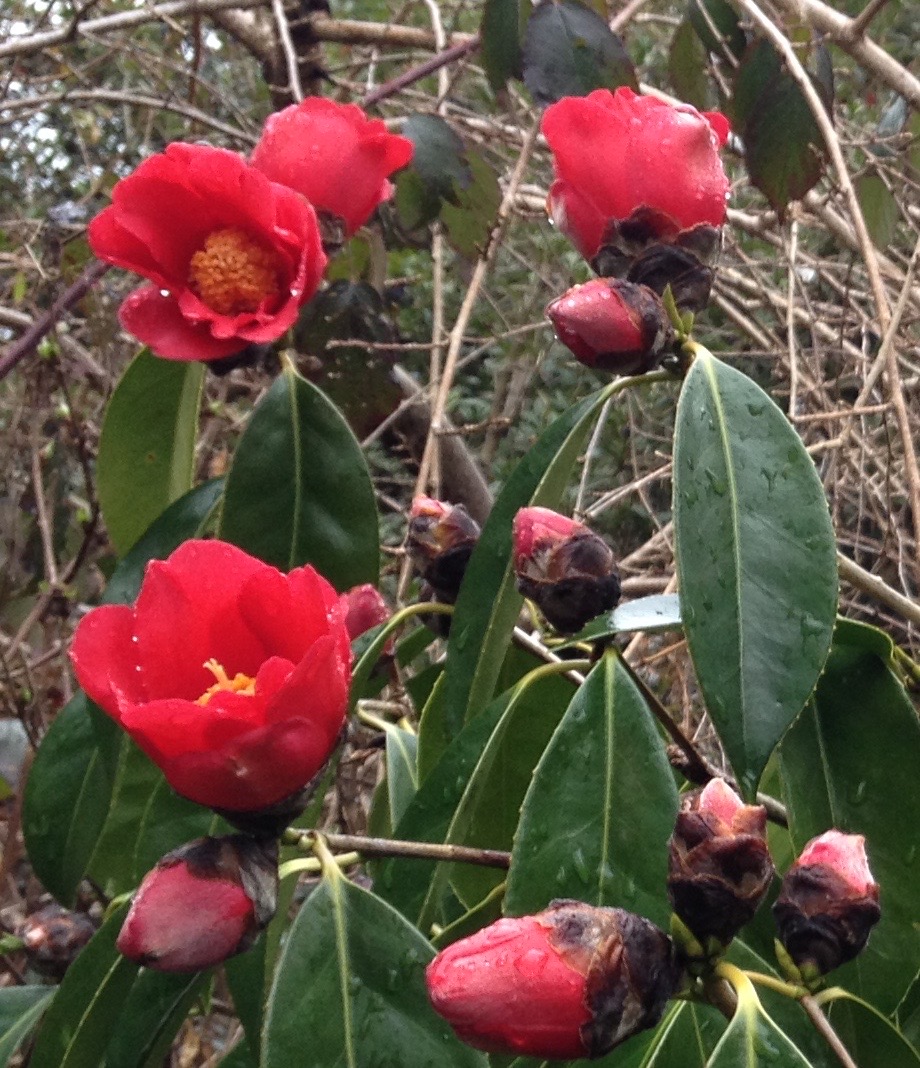
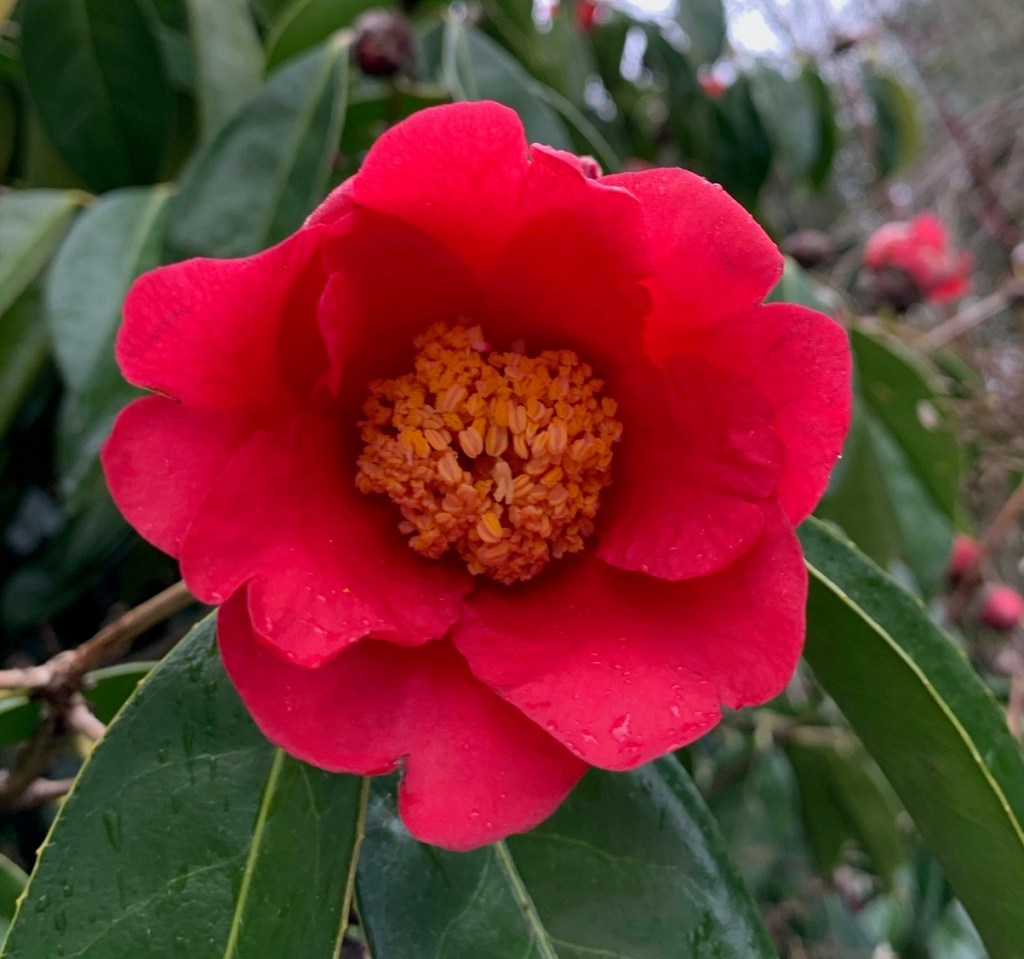
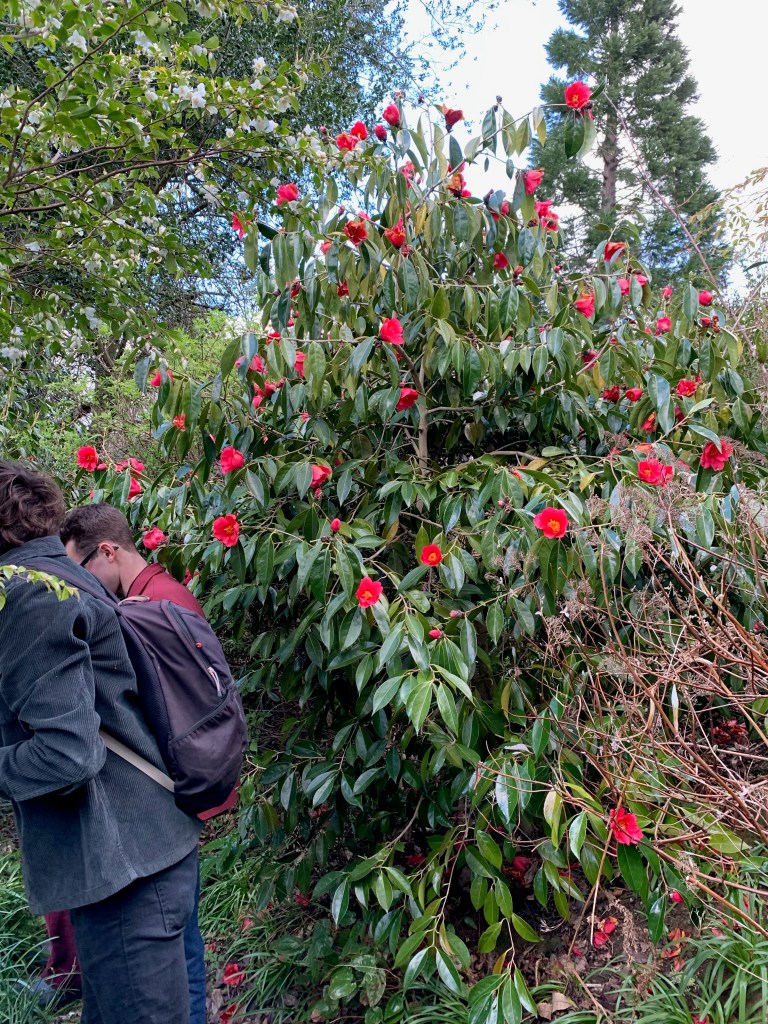
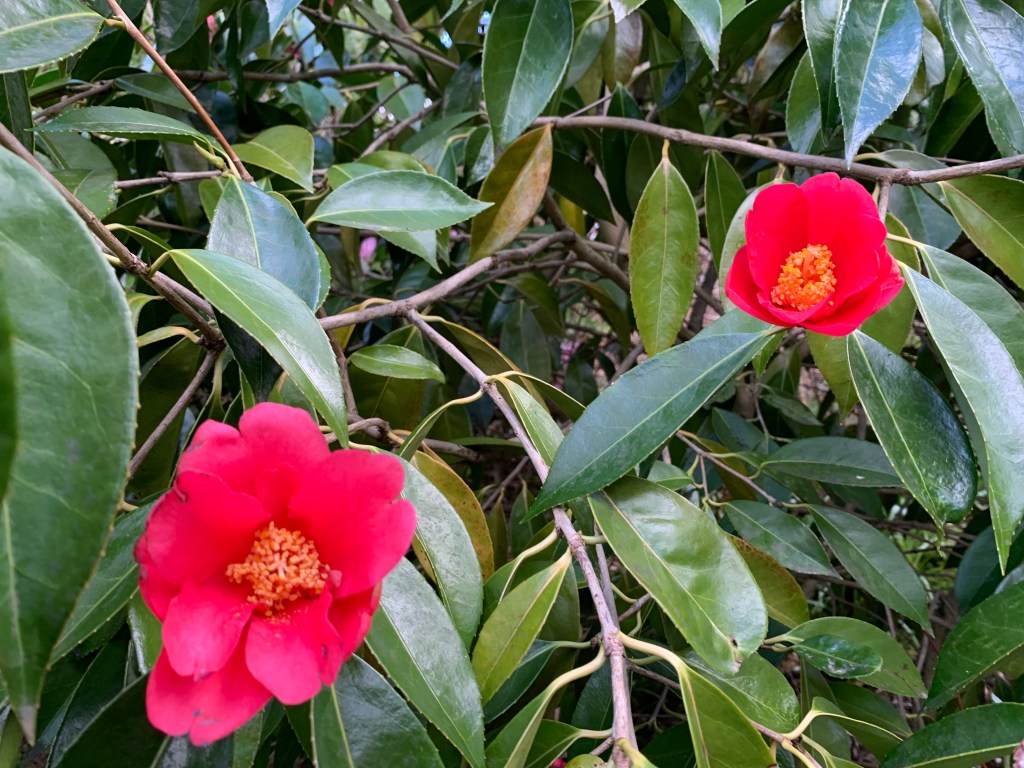
Bearing in mind that all species vary from seed, some of these species can clearly hold their own with the best of the garden hybrids in flower and foliage. Of three large flowered red species, the spectacular red flowers of C. chekiangoleosa warrant inclusion in any collection – and although I am now pretty sure that some of my open pollinated seedlings are contaminated with C. japonica and are natural hybrids, my plants still show what is distinctive about the species: a tough, vigorous pyramid of bold glossy large elliptic leaves ( typically 16x5cm) studded with large cupped flowers of a vivid clear blood red, significantly larger than those of typical C. japonica. It outperforms the reds C. polyodonta and C. semiserrata, which have also survived multiple cold winters here (-7C).
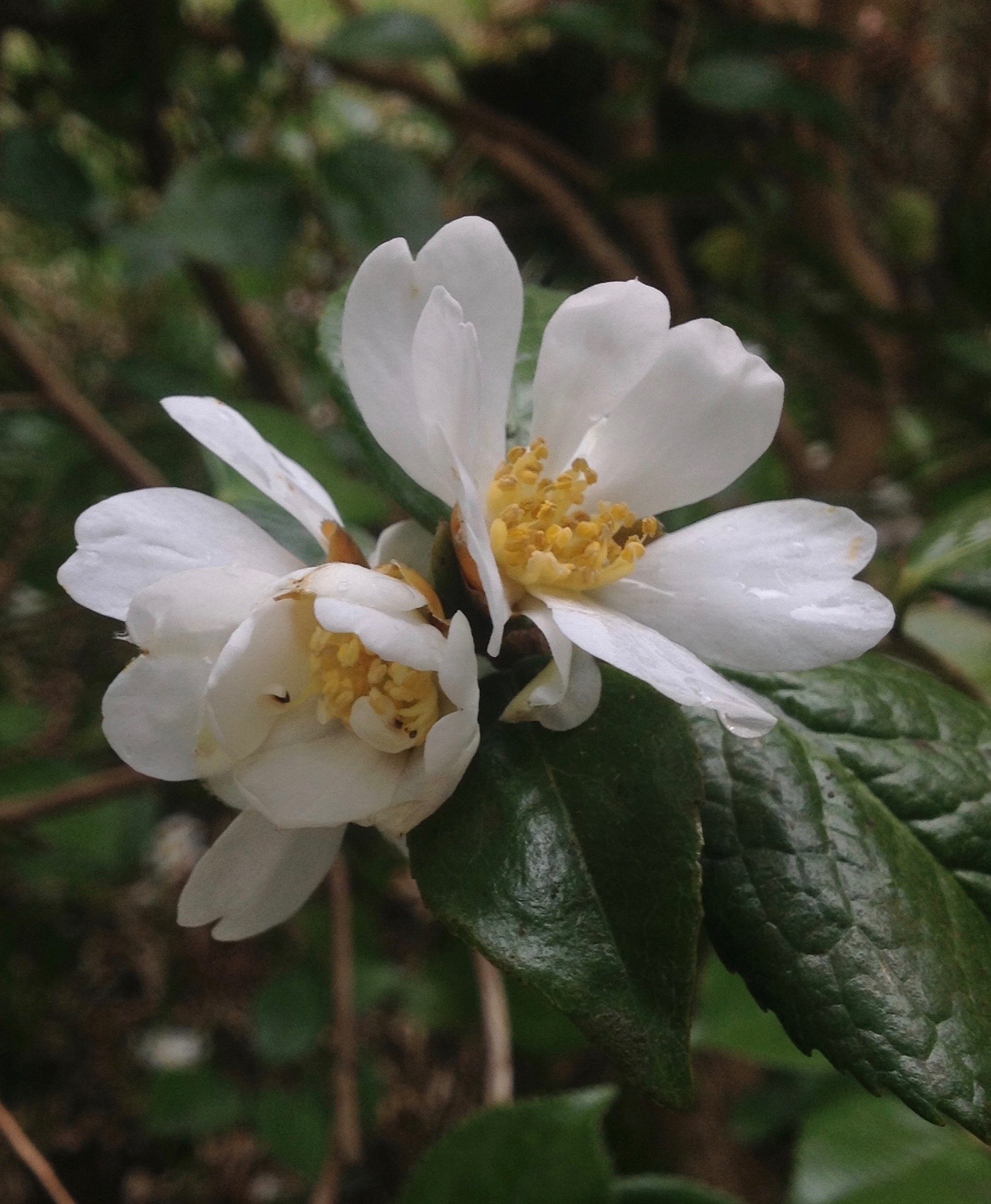
A species that should certainly be more widely grown is C. trichocarpa. From SE Yunnan and SW Guizhou at altitudes up to 2300m it is moderately hardy: here three plants have been growing strongly without problem for 17 years. The 5-6cm white flowers appear in early spring and have a large central boss of bright yellow spreading stamens, presenting themselves beautifully on an upright shrub (reaching about 3m) among green 11 x 5cm wavy edged leaves with deeply impressed veins, and attractive cinnamon bark.

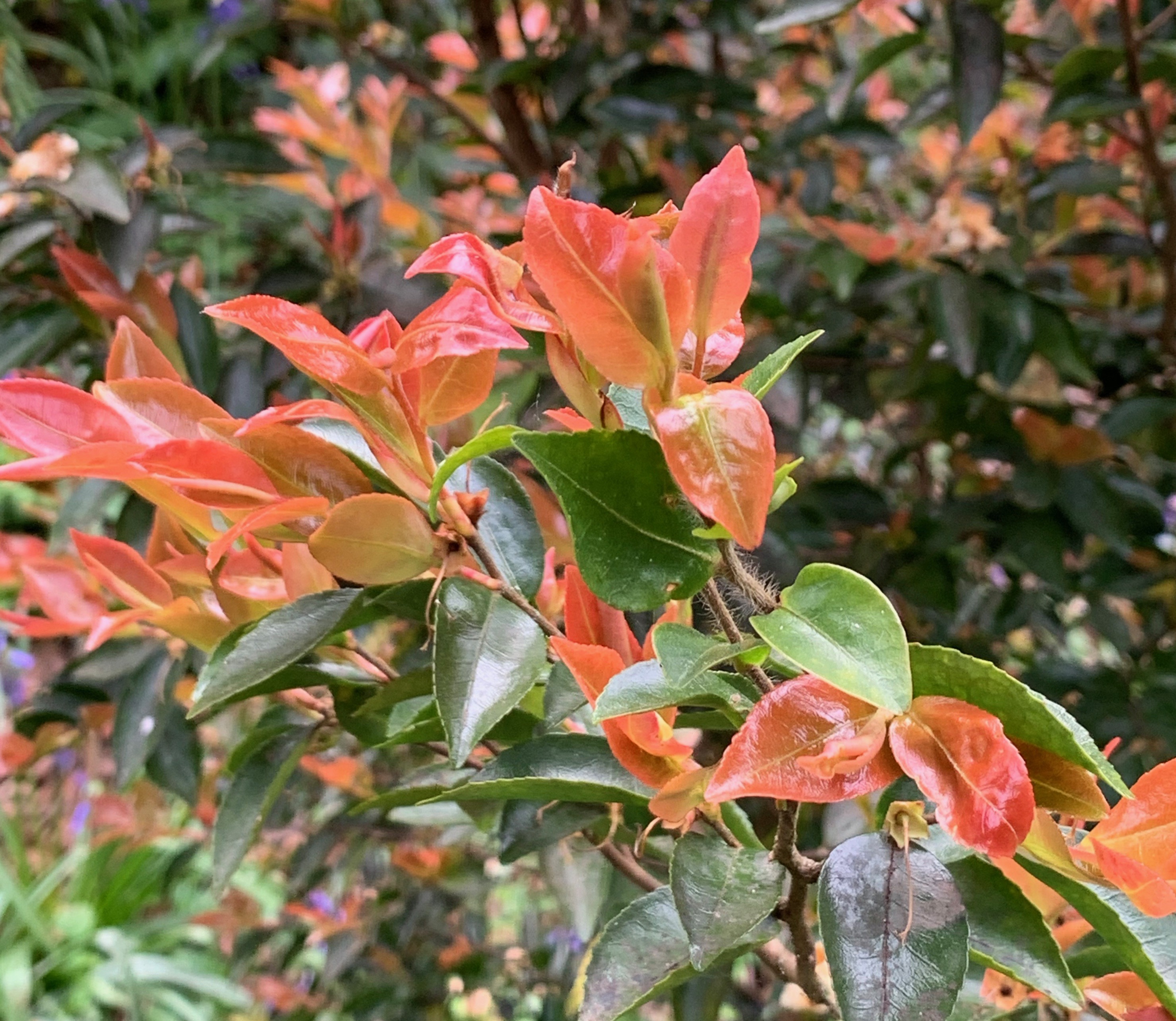
Ming reduced C. trichocarpa to a subspecies of C. henryana, but in cultivation the two are quite different. The flowers of the latter are much smaller, on a bush with a loose, spreading habit, and smaller, less impressively veined, acuminate 7x3cm lanceolate leaves more widely spaced on arching shoots. C. henryana is exceptional for its spring foliage: perhaps the best red young growth of all.
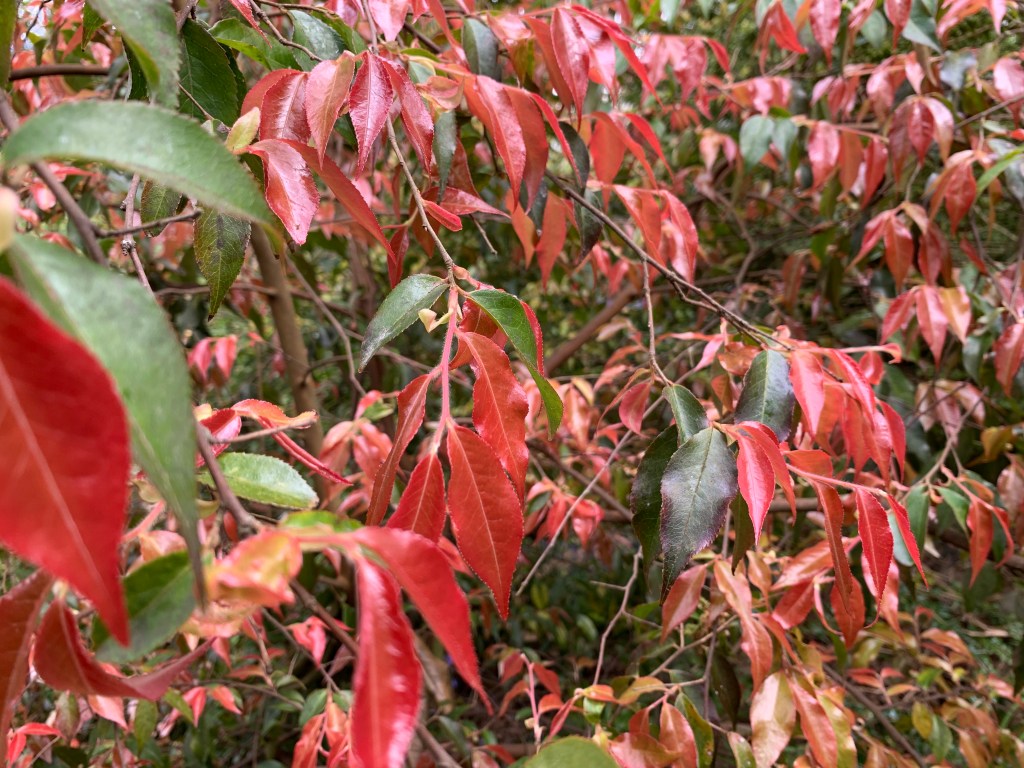
Reddish coppery young growth is an attractive character of many species and is also a feature of C. yunnanensis, a species in turn often confused with C. henryana, as both flower from late October, and can continue over winter in milder weather into early spring. But C. yunnanensis flowers are relatively large, up to 8cm, produced both terminally and in the upper axils with the white petals reflexing to give still more prominence to the yolk-like shock of yellow stamens.
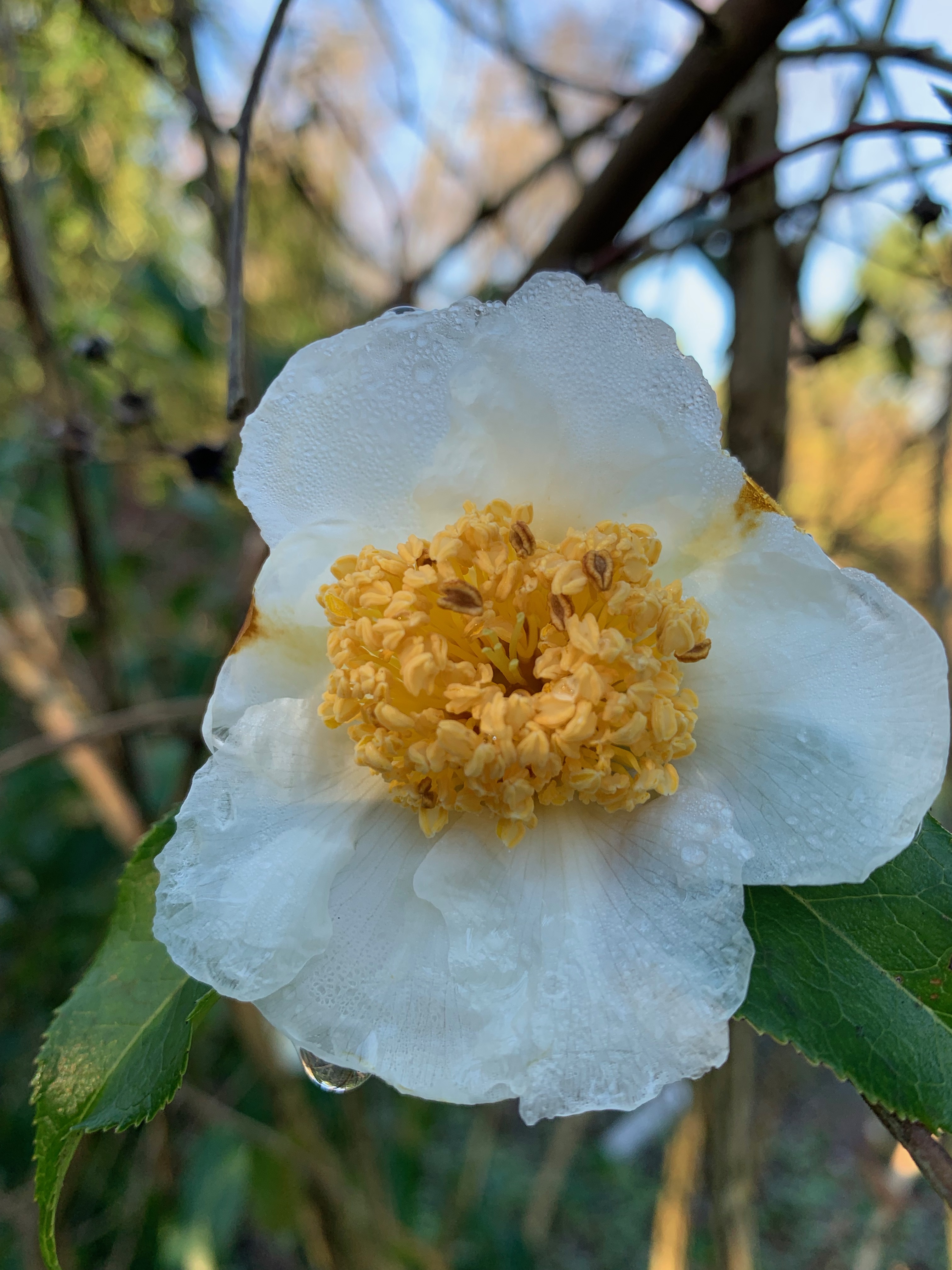
C. yunnanensis once mature (c. 10 years+) produces a good crop of conspicuous large fruits, like purple cheeked apples; as does C. tricocarpa, whose prominent apple-sized fruits, red where exposed to sun, are a valuable ornamental feature. I’ve found the seeds of this and most other camellia species also germinate, and the seedlings establish, very easily.
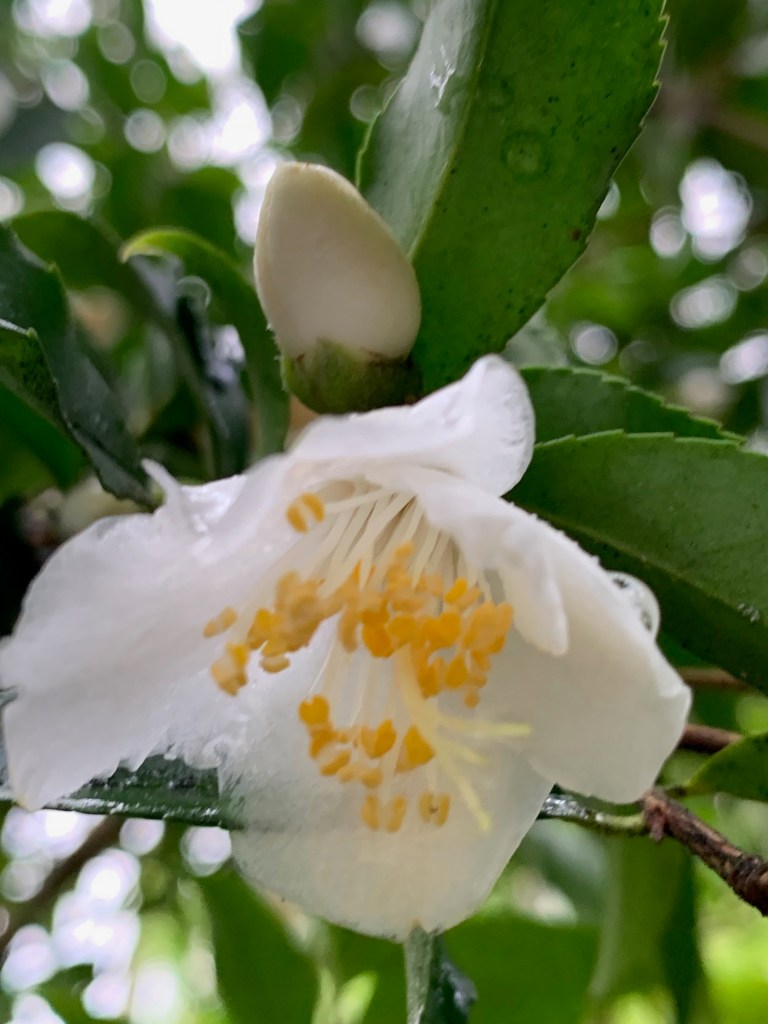
Also white-flowered but entirely different in character are C. forrestii, C. grijsii and C. brevistyla: all are small-flowered substantial shrubs, and all are proving to be hardy, achieving about 3m after 7-10 years. C. forrestii is particularly free flowering, terminally and in the leaf axils. The small flowers of some 3 – 4cms across are slightly cupped and slightly fragrant. Ovate petite leaves have a slight gloss on a bushy neat shrub. From Yunnan and found up to 2500m, it has been perfectly at home here and our two plants are fringed by dozens of self sown seedlings.

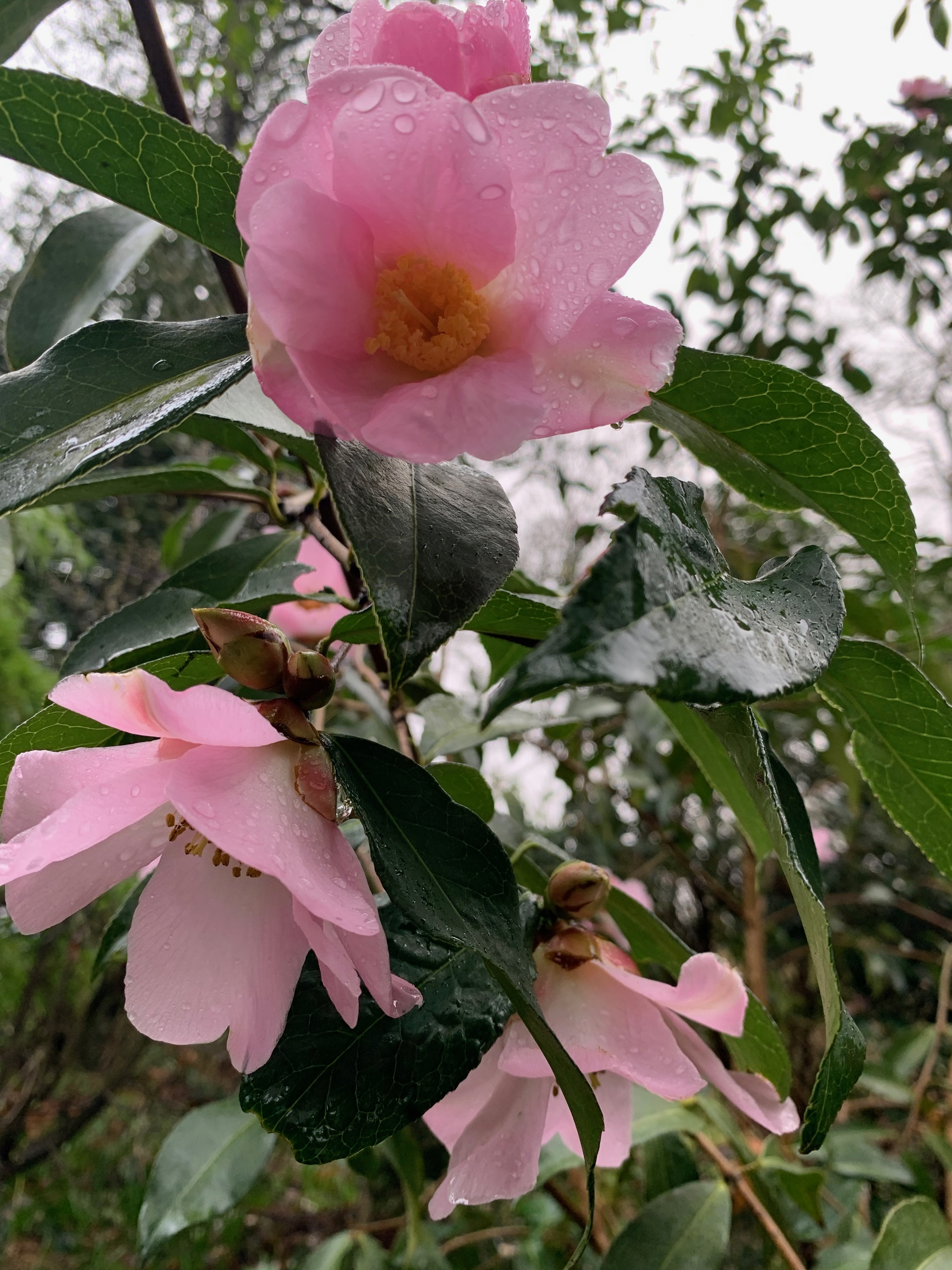
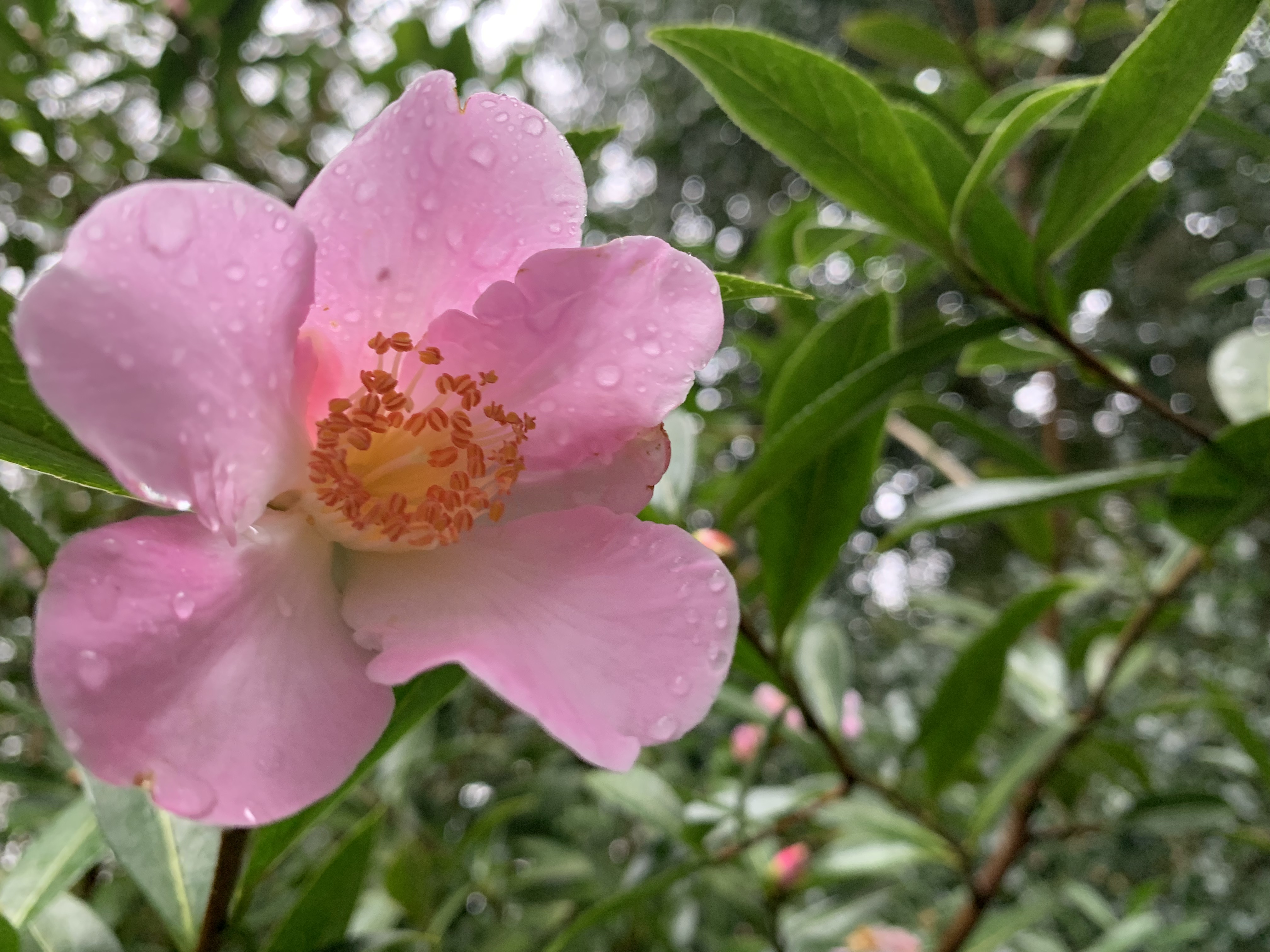
C. pitardii, with a wide distribution in China, is perhaps my favourite, variable in habit and in flower, with colour ranging from rich pink to white. In a good form flowers are of high quality, some specimens a clear shell pink, with little of the more typical vinous underlay. I have three different collections, all growing well after a decade; the best has an open habit and clustered flower buds, both terminal and axillary, with up to twelve buds on less than a foot of stem. The elegant open funnel shaped flowers are up to 8cm in diameter and open in succession over a long period from February onwards. It is an excellent plant often confused with C. saluenensis, parent of the great C. x williamsii race.
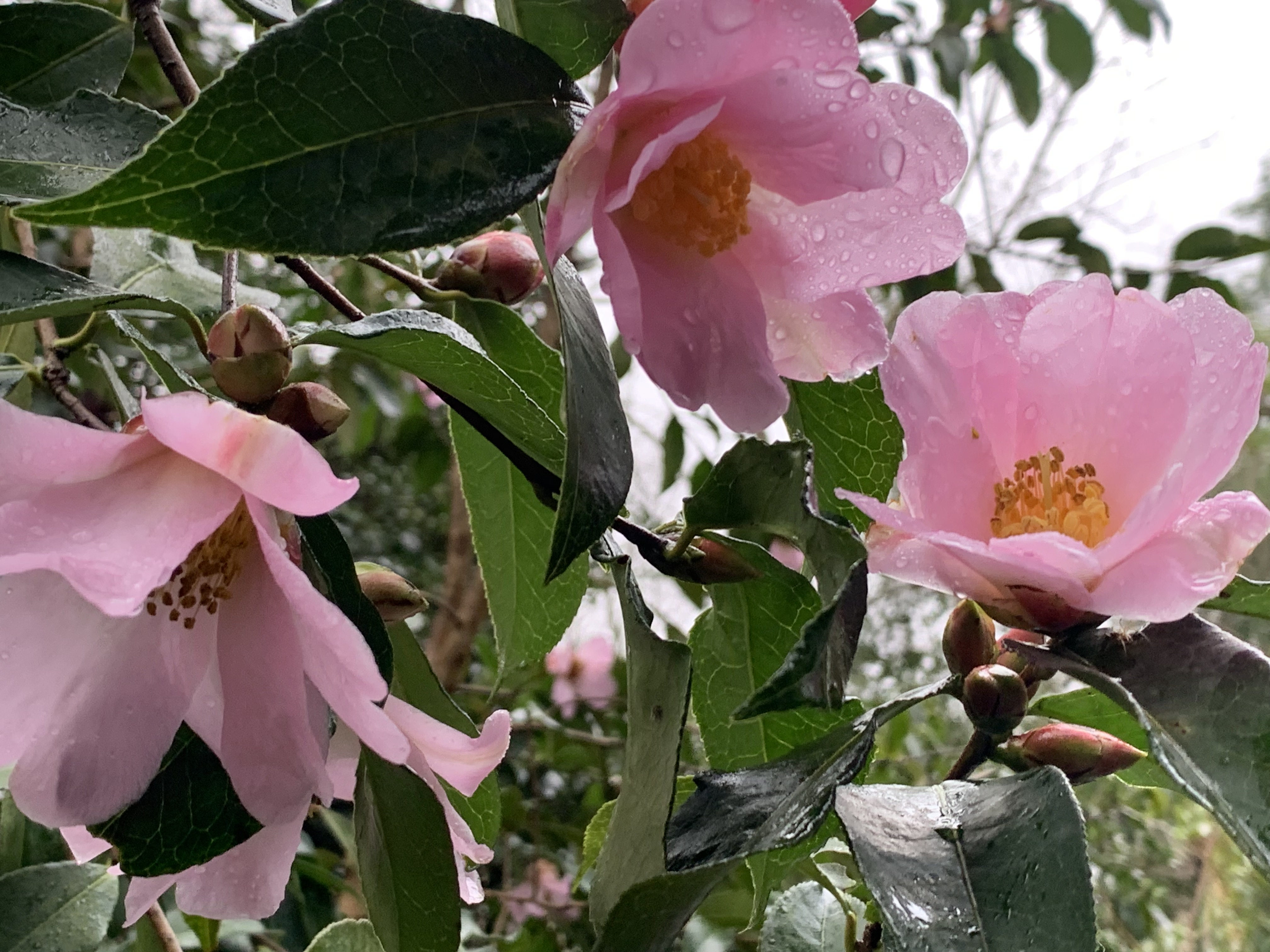
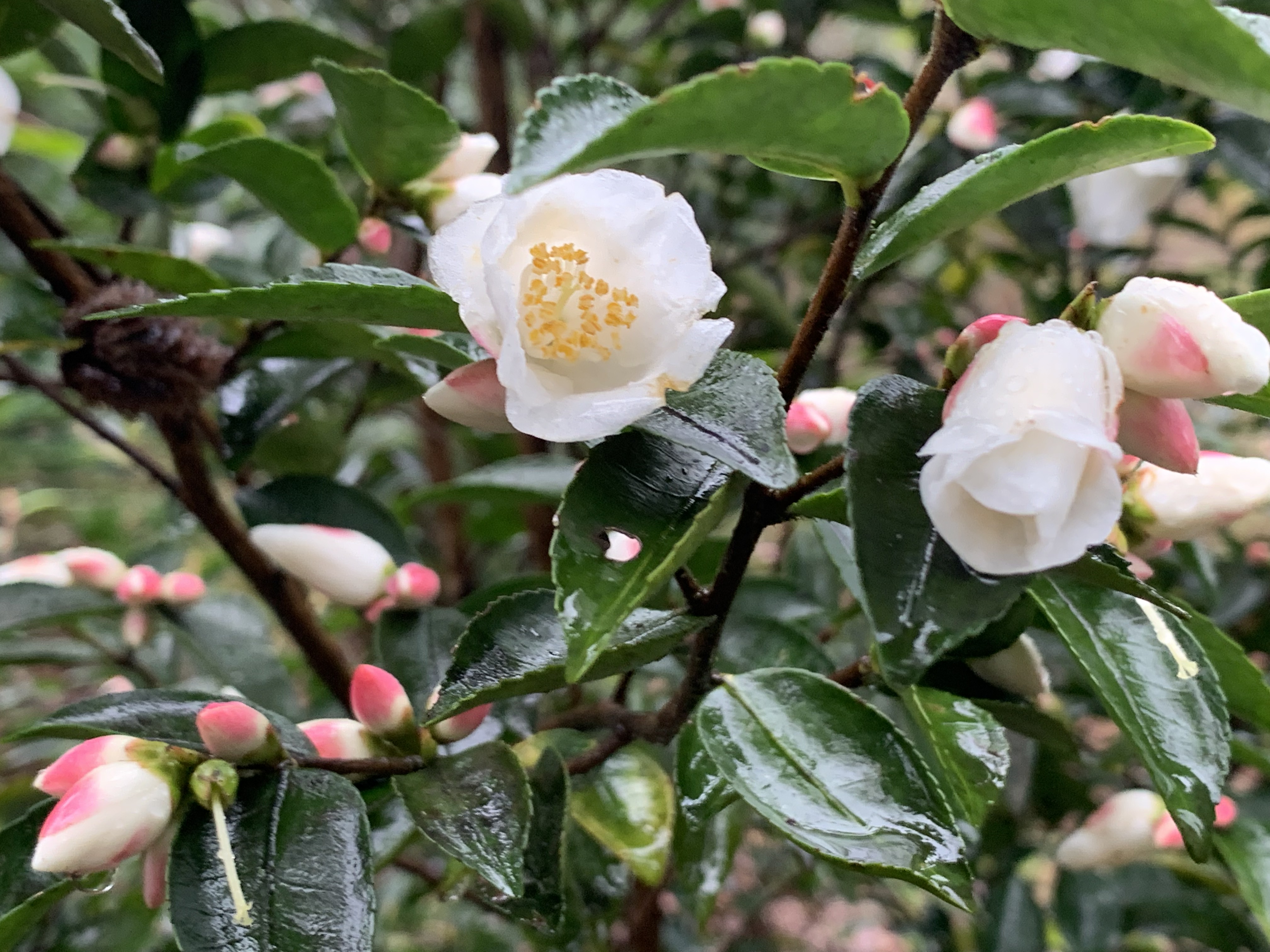
The Taiwanese species C. transnokoensis is now well known and frequently planted. It has turned out to be surprisingly hardy, and its dense bushy habit, small leaves and abundance of small flowers in spring make a great display. We grow 3 or 4 forms, the best with dark pink buds, the colour retained on the back of the outermost petals when open, particularly attractive. It is an excellent candidate for a small garden, or a specimen plant in a pot.
Many other new Camellia species are thriving in Cornwall – these notes offer a mere glimpse into a future full of exciting potential, and suggest what is already possible in Kent. This looks likely to be a continuously expanding new range of plants which are beginning to prove their value in gardens, and for hybridising, too. They certainly offer beauty and interest in a far more demanding range of garden conditions than their native origins might seem to allow.
References: Collected Species of the genus Camellia. An illustrated outline. By Gao Jiyin, Clifford R. Parks, Du Yueqiang.
See Maurice’s 2017 RCM Yearbook article on Camellia species here.
There will be an IDS Study Day on the genus Camellia on Saturday March 30th at White House Farm: for more information click here.
There will also be a Garden Masterclass guided tour of White House Farm Camellias and Magnolias on April 4th: for more information click here.
For more details of these and other events see our latest Newsletter: https://whitehousefarmgardenandarboretum.com/whf-winter-newsletter-2023-24/
 White House Farm Garden and Arboretum