One of our main occupations at present is to review all genera in the collection here at White House Farm, with a view to completing an accurate database, and creating permanent labels. Trustees Chris Sanders, Jack Aldridge and Rod White have all recently been trawling through the Mahonia collection in a valiant attempt to sort out the nomenclature and taxonomy of a genus where hybridity is rife and newly wild-collected species the subject of much discussion. French expert Olivier Colin was also here recently for the day with advice and comment, so the horticultural brainpower applied in the field is formidable. And comment on the current RHS mahonia trial at the Hillier arboretum is also a useful source of information.
I have been collecting Mahonias for some years as I rate very highly the role they play in the winter garden from September to March. This year, when for days it seemed hardly to get light, and a depressingly dark cloudbase hung over the world like a giant saucepan lid, Mahonias lifted the spirit with their irrepressible shiny evergreen foliage and their longlasting succession of bright yellow flowers, with a constant flutter of bluetits feasting on nectar and blackbirds later relishing the juicy blue fruits.
When we completed our initial survey I was amazed to discover that I had amassed as many as over 70 species, forms and hybrids, including a significant number raised from wild collected seeds from both Asia and the Americas. Here are just one or two to provide a flavour of the pleasure they give in passing them daily during the short dog days of dormancy.
Mahonia nitens
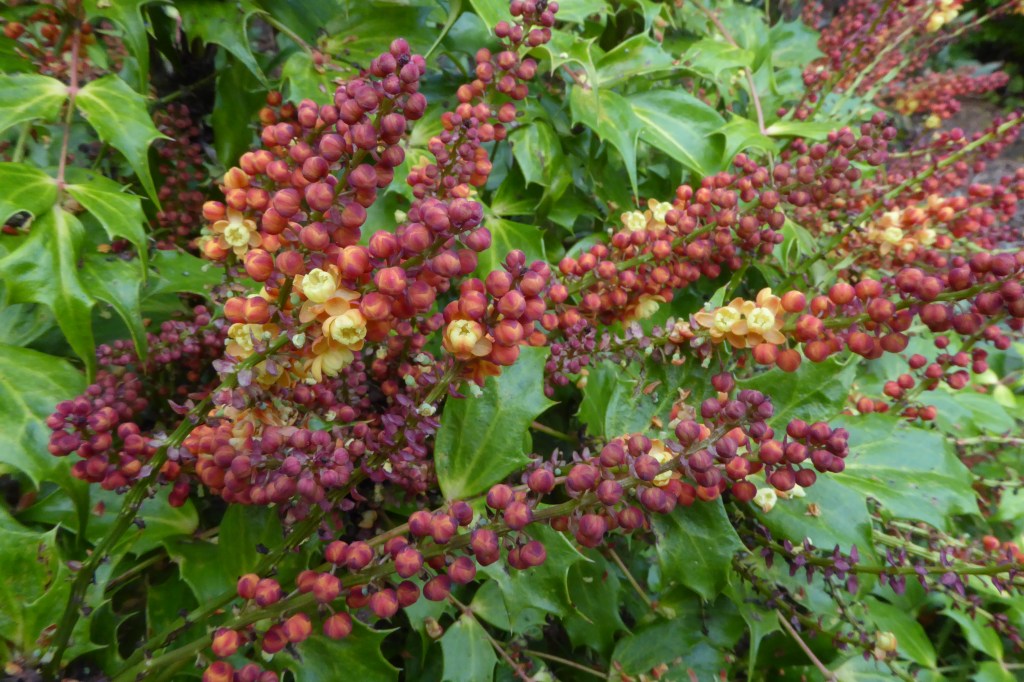
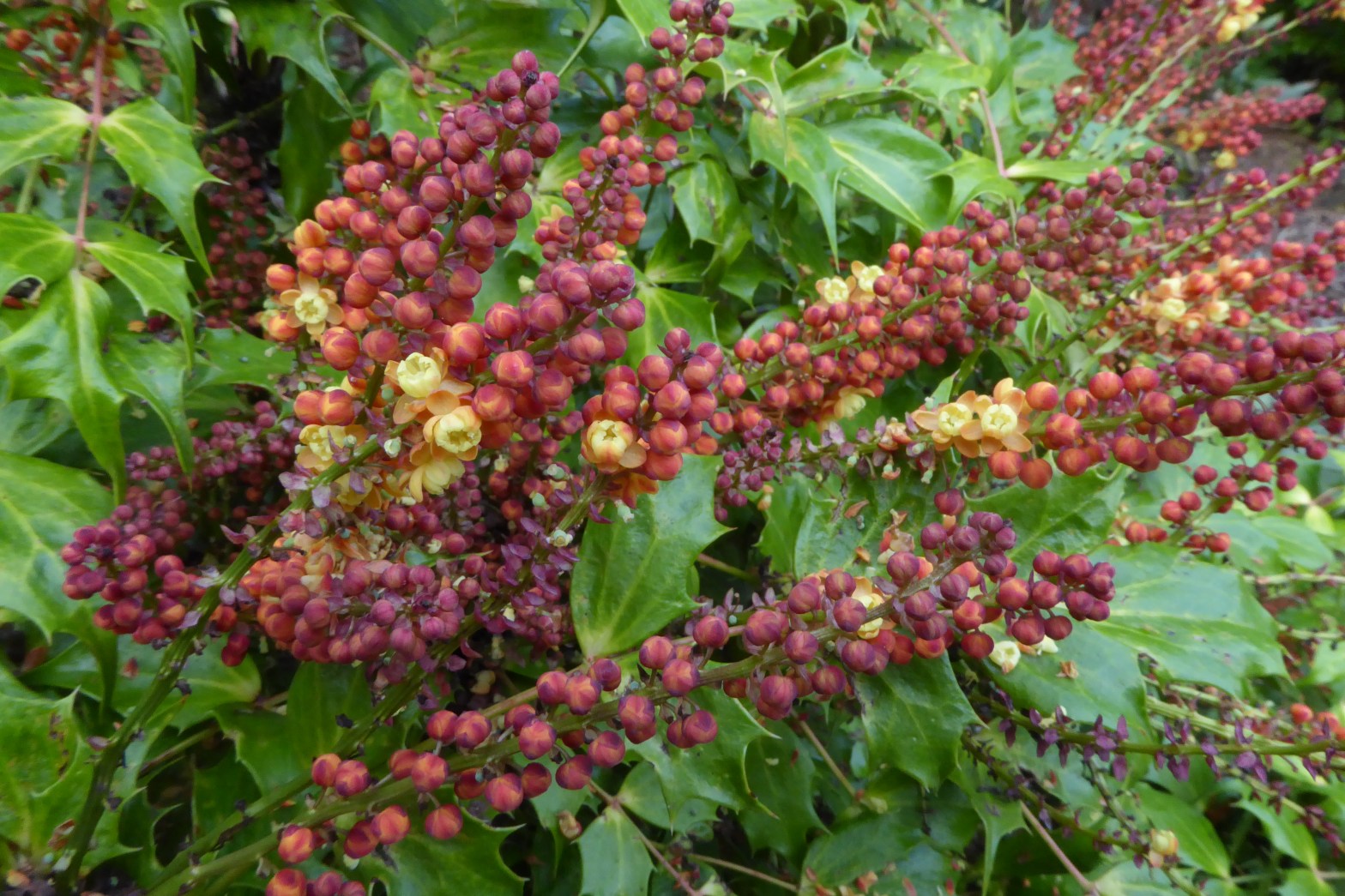
This is M. nitens (Ogisu 94010) photographed in September, and one of the earliest to flower. It was given to the De Belders at Kalmthout, who generously distributed it. Great for small gardens: compact, excellent foliage with purple young growth and flower able to compete with the best.
Mahonia oywakensis
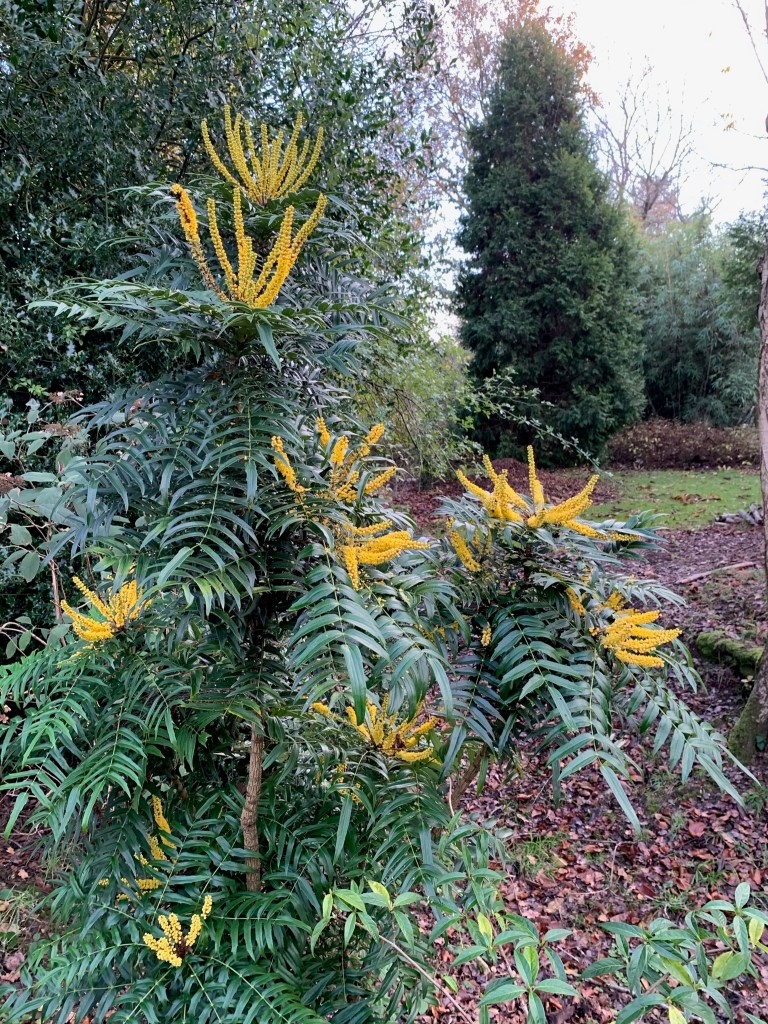
An Edward Needham collection, this is the type species of M. oywakensis. Its narrow leaflets and golden flowers are special and it looks a relatively compact grower. It flowers from October into November.
Mahonia russellii
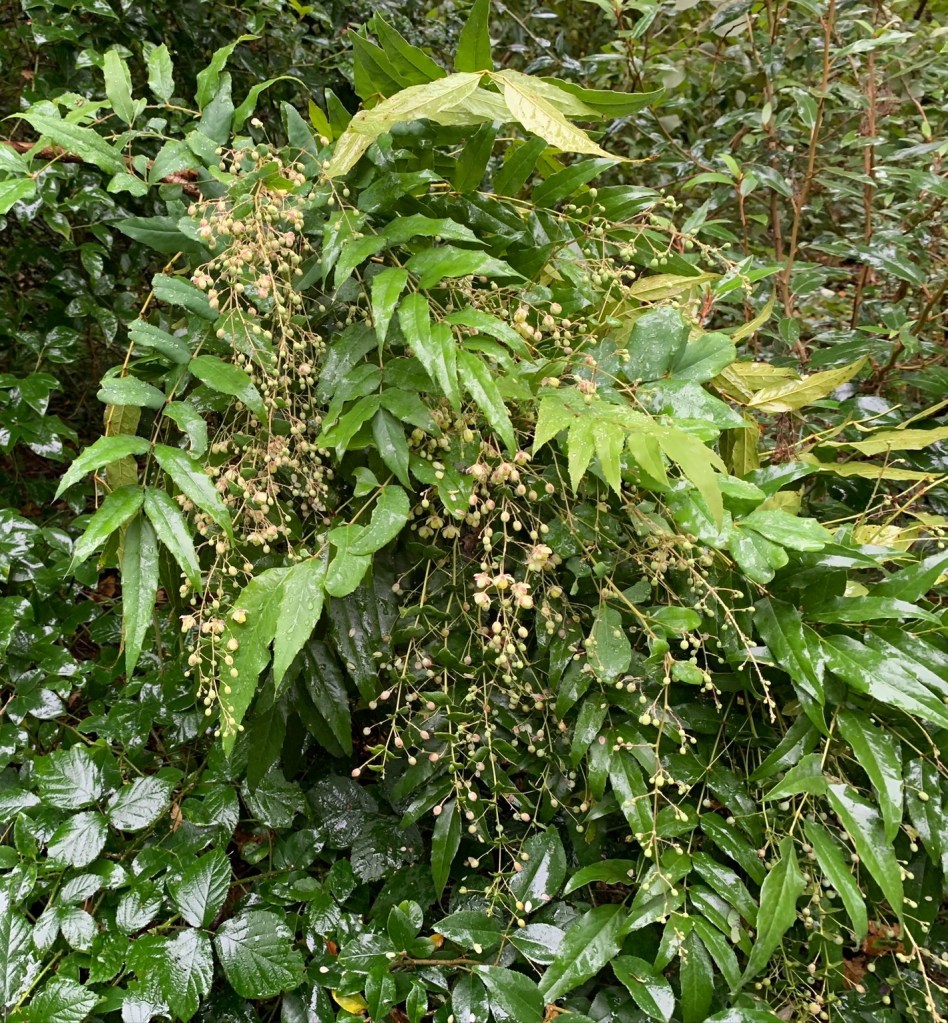
A quite recent introduction, this is the Mexican M. russellii, named for James Russell of Castle Howard fame. Suspecting a lack of hardiness, I tucked it in under an old holly in a quite dry situation, stony and well drained – poor soil to keep it honest – and it has thrived, flowering freely each year in December. There are some first rank Mexican mahonias turning out to be hardy here at White House Farm, and which should be better known for their significant impact on the winter garden.
Mahonia ‘Esme’
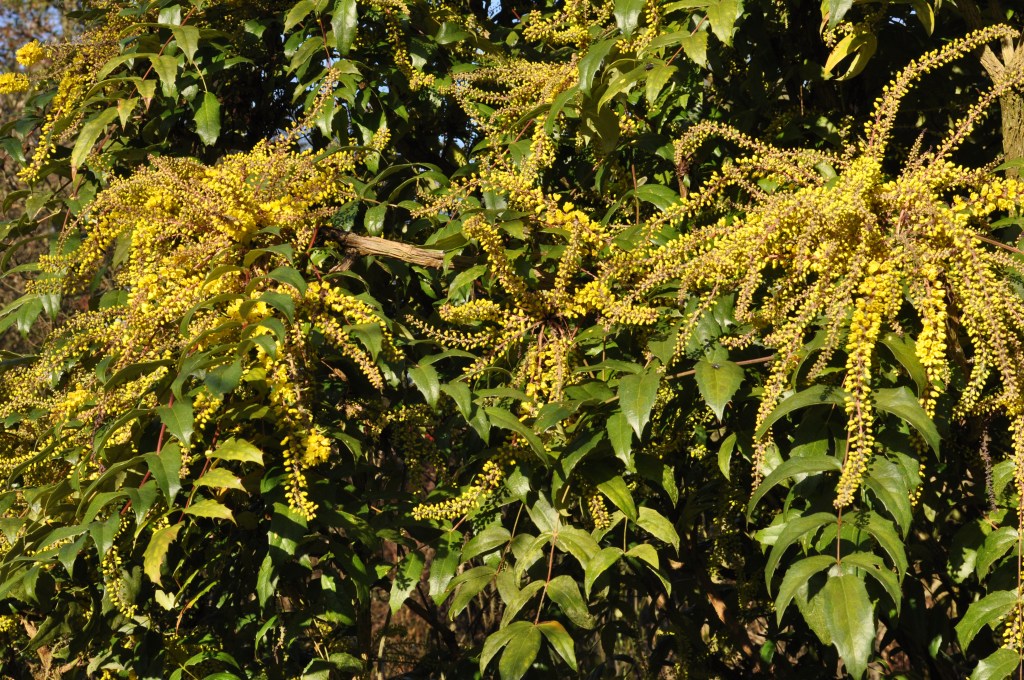
I have named a plant for each of my 7 grandchildren and this is called Mahonia ‘Esme’, who is currently in her third year at Glasgow university and rapidly becoming Scottish. It appeared from nowhere as a volunteer in a pot in the greenhouse and I planted it as any old background seedling evergreen in the rose garden. It turned out to be a first class plant some 4x4m with long pendulous racemes of small flowers in January and February. I measured one raceme at 16 inches. The young growth is plum purple. The parentage is anyone’s guess but M. duclouxiana – whatever that is – influence gets most votes.
Mahonia ‘Cantab’
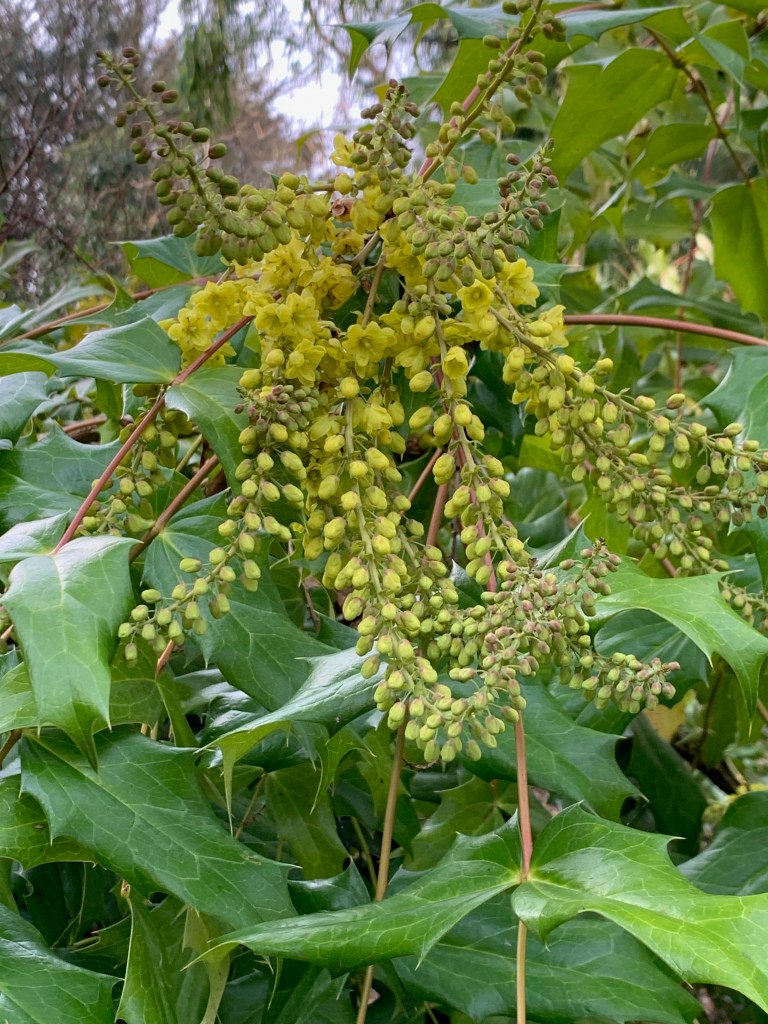
Also with pendulous flowers is the hybrid M x lindsayae ‘Cantab’, which sprawls untidily over a vast area. Don’t plant it if you are a strict disciplinarian. The individual florets are perhaps the largest in the genus, delightful and highly effective – and like the plant, sprawl gently everywhere in a generous mass. A plant of distinction, in both senses; I enjoy its flowers and its individuality.
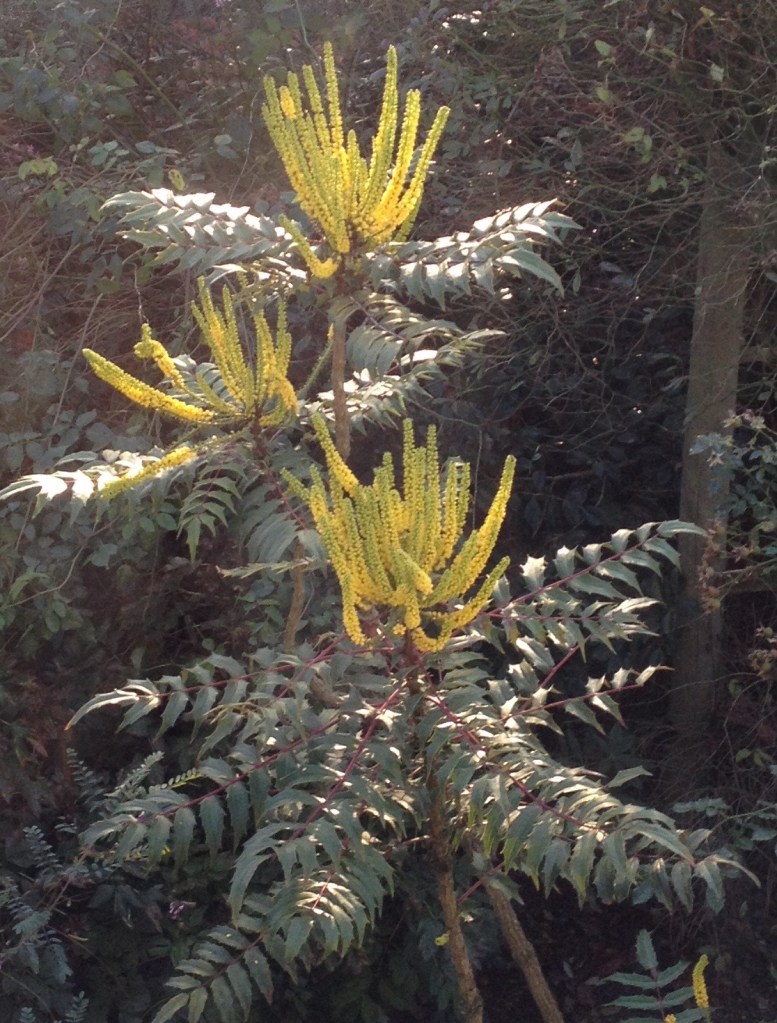
From south Sichuan, the identity of this Mahonia is a subject of some discussion. It was identified as M. huiliensis MF 941068 (Chinese advice) but there are thoughts it may be something new. In any event, from October on it is magnificent. The dark red rachis are distinctive.
There is a variety of opinion among cognoscenti on this plant. It was collected in Yunnan by Charles Boulanger, and this plant was kindly given to me by Alexander Anagnostides who is building a fine garden in Varengeville sur mer, in Normandy. It flowers very early in late August/early September and one thought is that it may be a hybrid between M. shenii and M. nitens. However, I have raised it from seed, kept three and distributed the rest and so far all seedlings have turned out to be identical to the parent, with no suggestion of hybrid parentage. The foliage is highly distinctive, unmistakeably thick and hard like a stiff plastic. Any thoughts welcome.
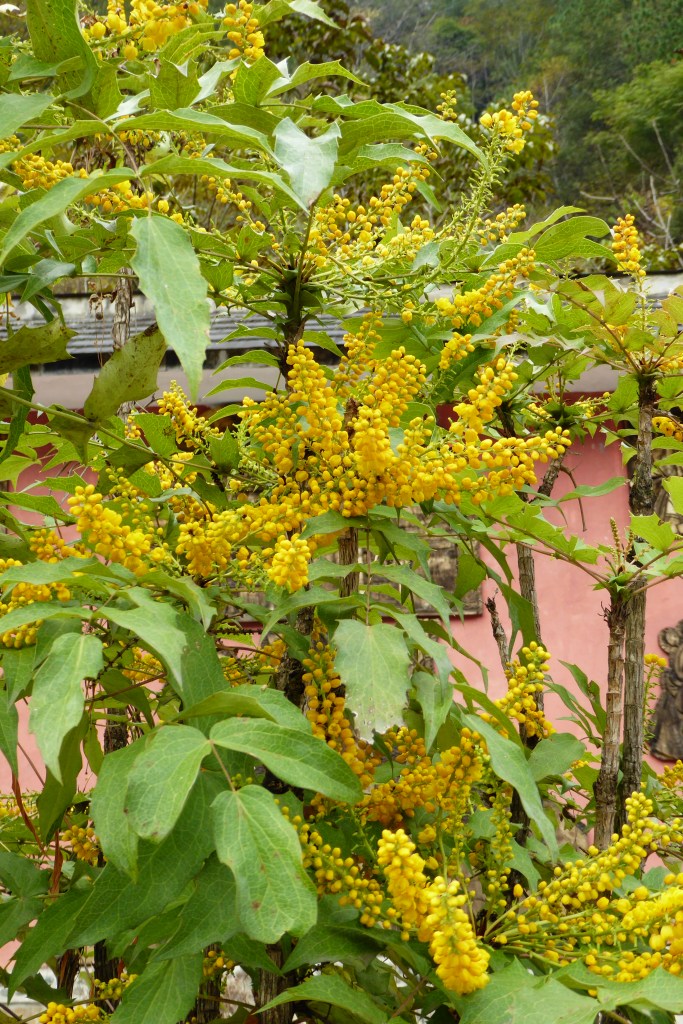
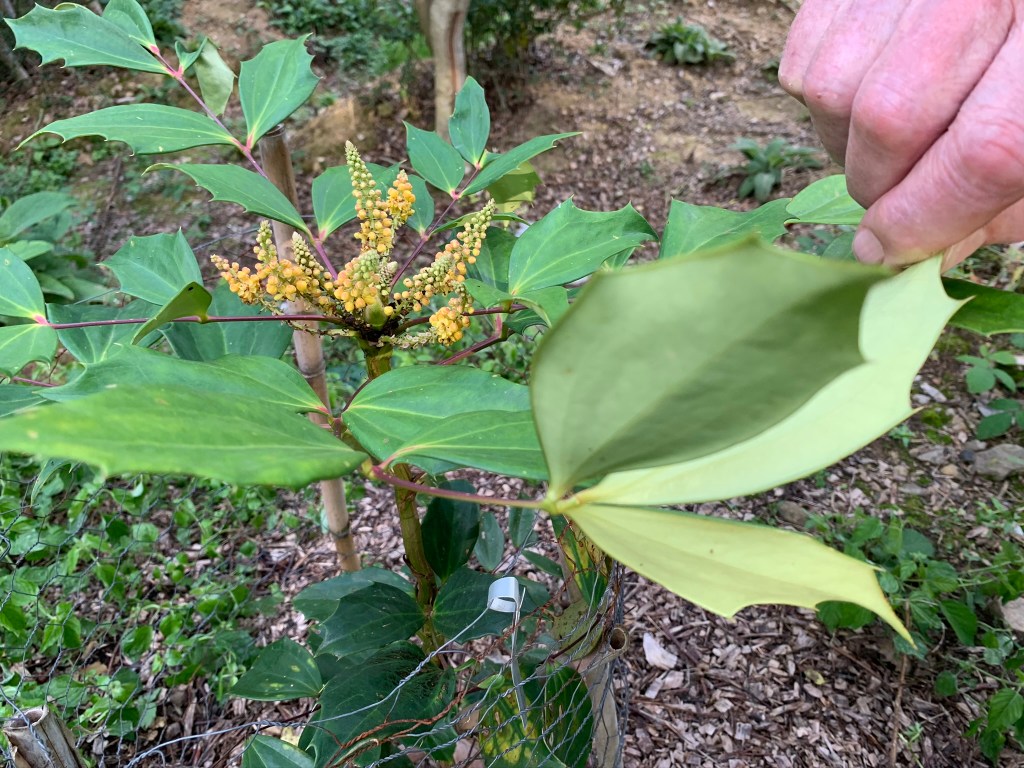
Finally, there must be many more fine mahonias still to be discovered in China and not yet in cultivation in the West. For example, this is a highly distinctive free flowering plant with unusually pale green foliage I photographed in a temple garden in the far west of Yunnan. We can only hope that the wonders and wealth of the Chinese woody flora, the finest in the world, may still be available for our future enlightenment and enjoyment.
Maurice Foster
 White House Farm Garden and Arboretum
I’d be interested to know if any of your mahonias manifest autumn/winter colour as some of the more common species do.
LikeLike