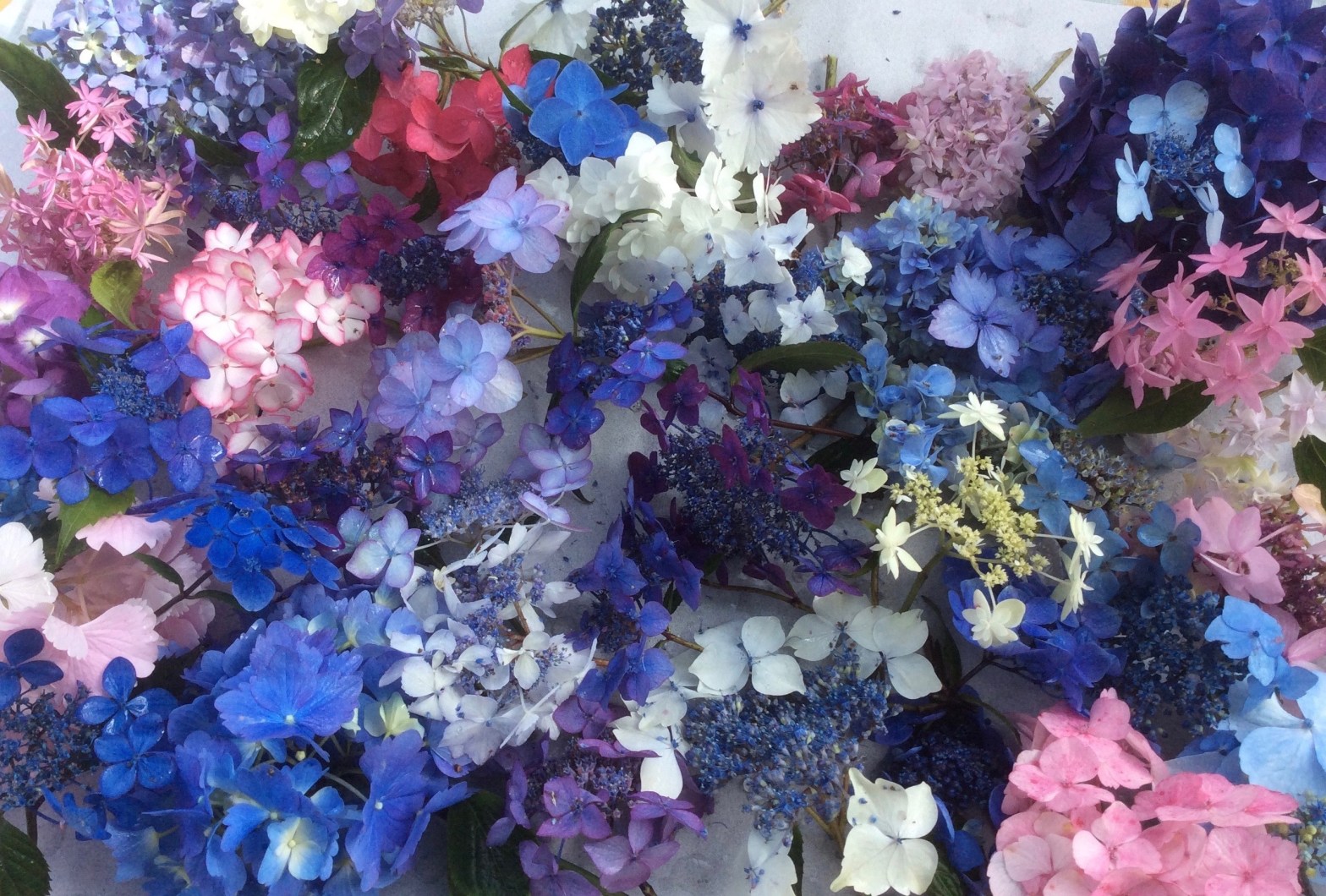
A few spaces are left for our Open Day on Wednesday June 25th, with a focus on hydrangeas – serratas, but many other hydrangea species too.
TO RESERVE A SPACE, EMAIL US AT WHITEHOUSEFARMARB@GMAIL.COM
Coffee and intro talks at 10.30, tours at 11am and 2pm – tea and Q & As at 4.30pm. Bring your own picnic lunch, we provide biscuits and drinks
Winter temperatures in Nova Scotia are commonly below -20C, which doesn’t bother tough hydrangea species like H. paniculata, arborescens or heteromalla – nor, surprisingly, H. serrata. This grows and flowers there normally, untroubled by the low temperatures, reflecting its origins as a species in the mountains of Japan. H. macrophylla, in contrast, originating in the milder maritime regions of Japan, and evolving in a frost-free environment with a long soft growing season and thick, turgid, slow-to-mature shoots, is usually cut to the ground by frost and more or less ungrowable in these low temperatures.
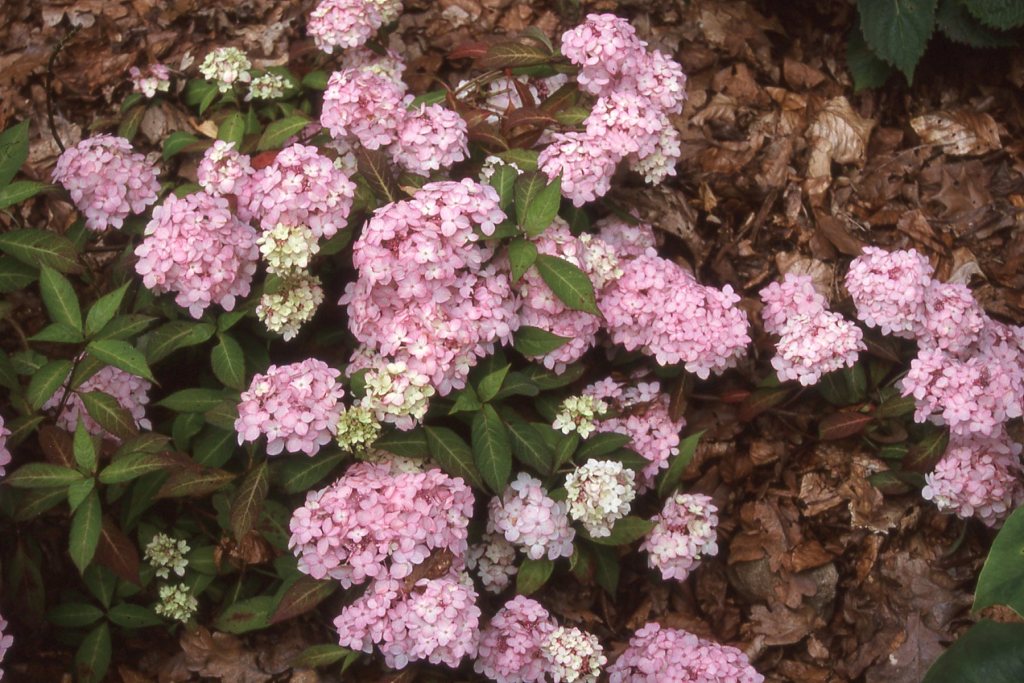
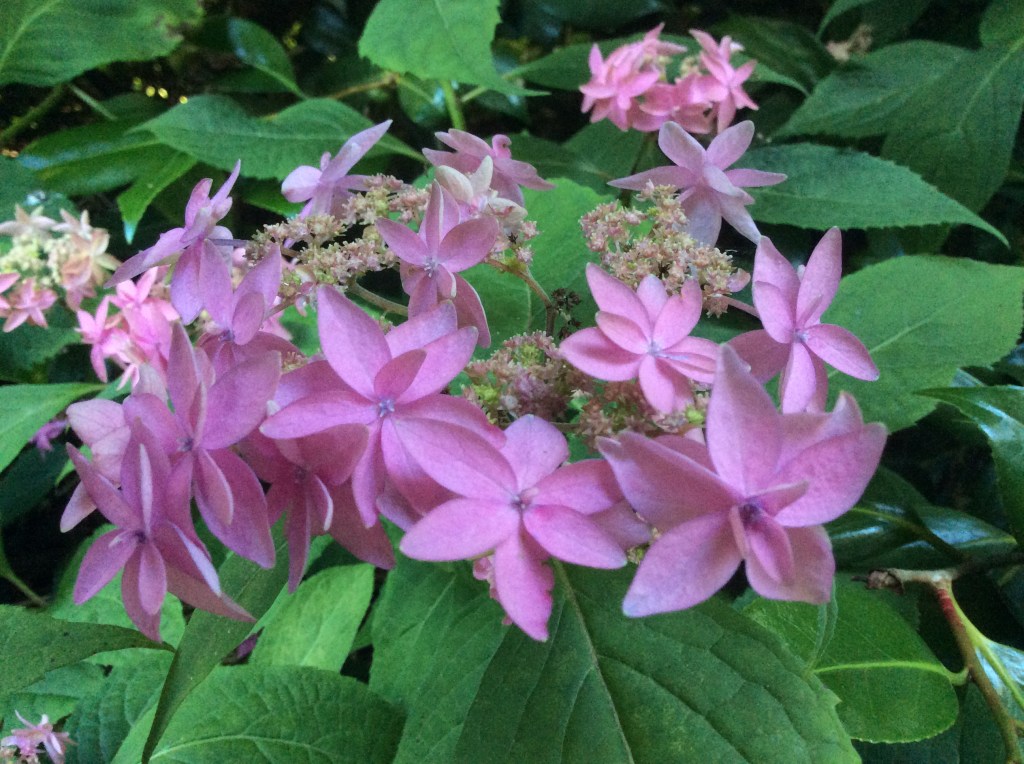
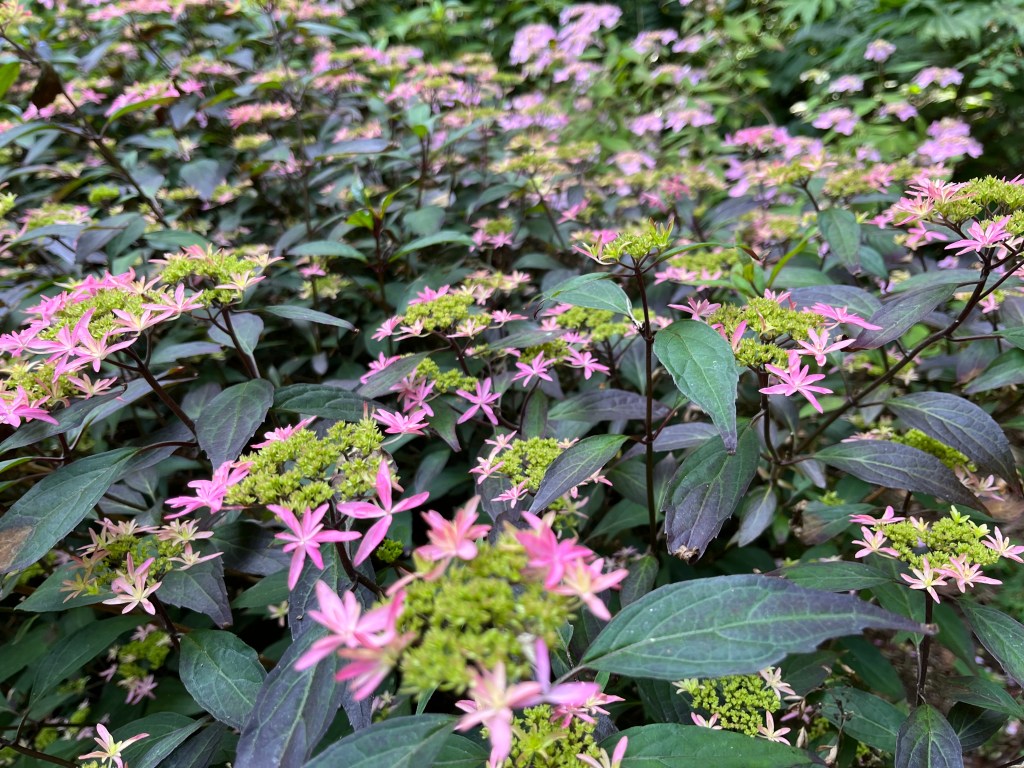
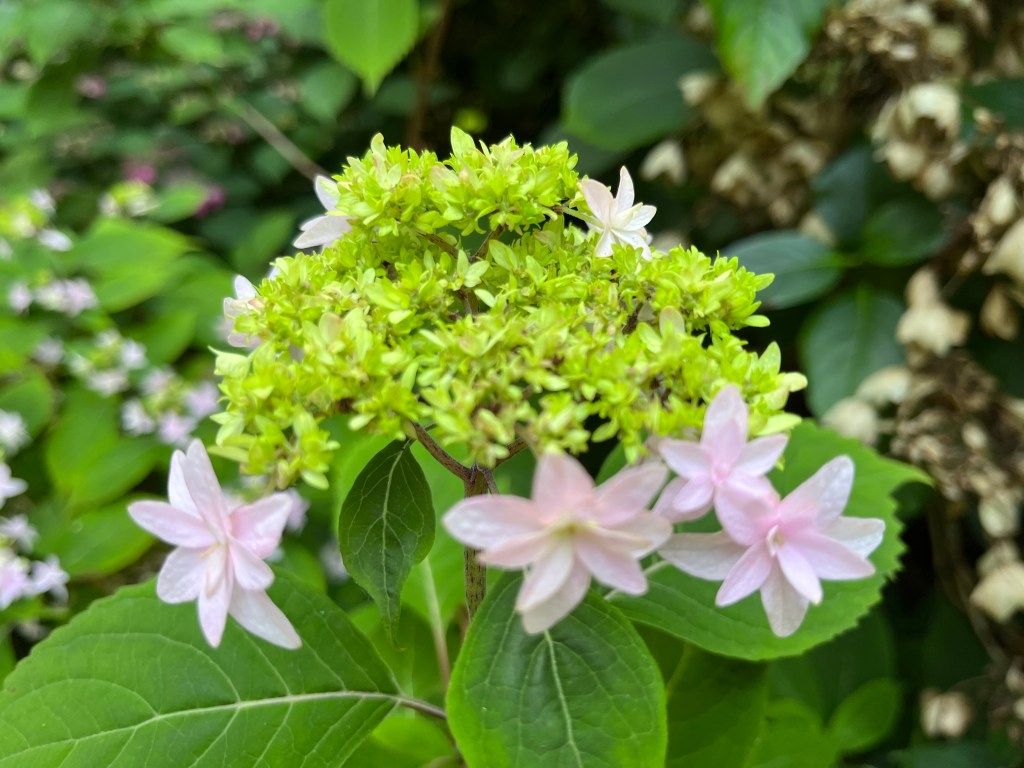
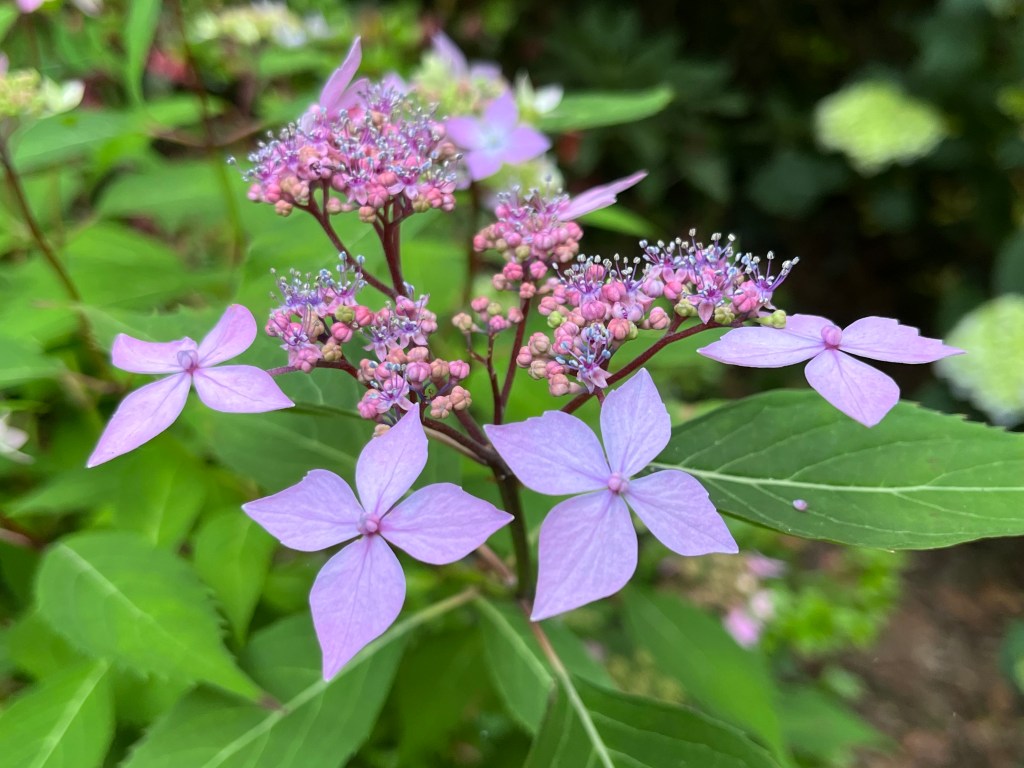
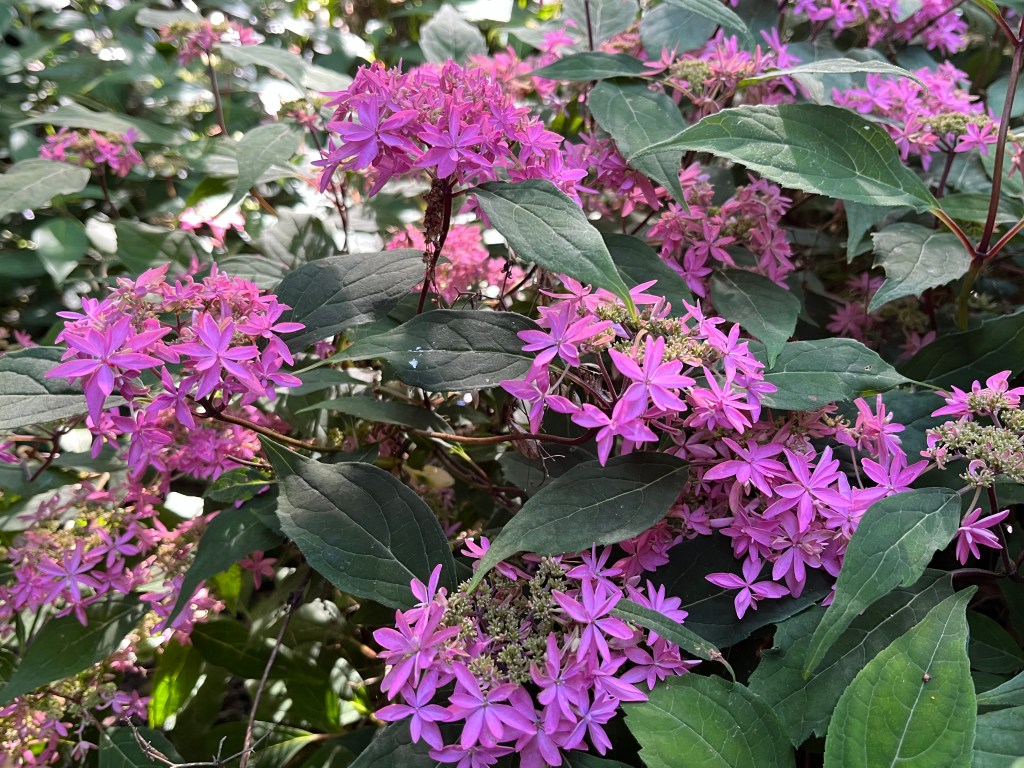
These cold-resistant qualities of H. serrata seem improbable when you look at the plants: usually not more than a metre high, slender twigged, with small thin leaves, as if they have a delicate and vulnerable constitution. On this superficial evidence H. serrata has not often been a first choice selection for planting where it will have to endure the rigours of a cold and unforgiving winter.
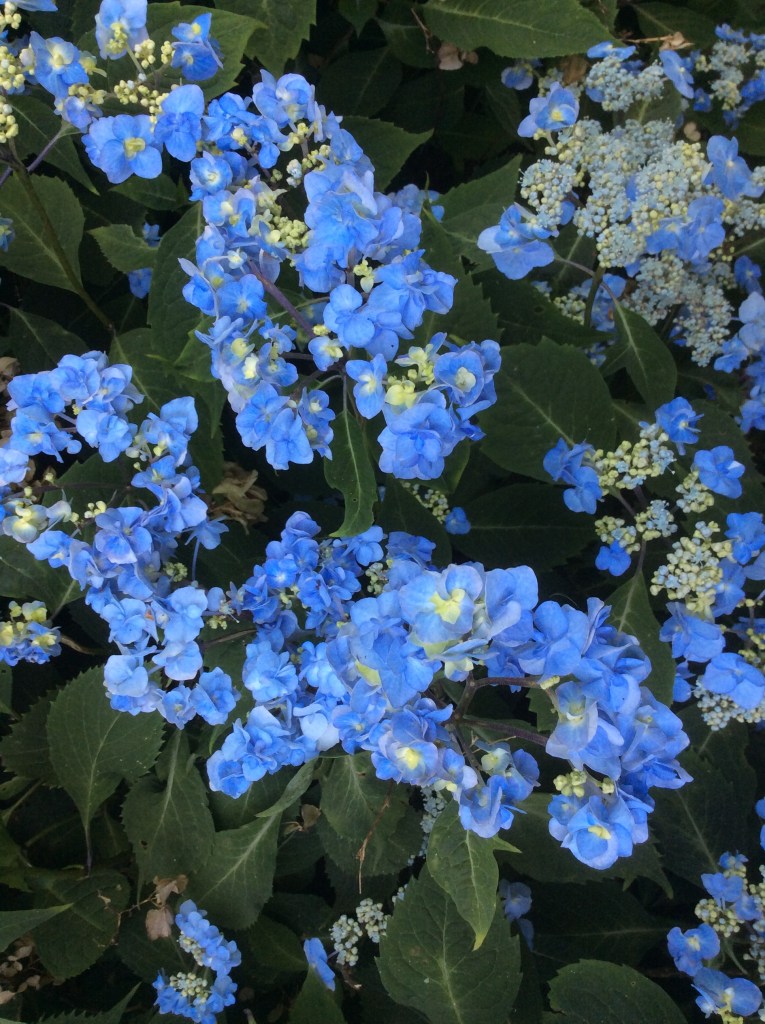
As a montane species, mainly belonging to mountain forests but often seen above the tree line, H. serrata has a short growing season: its wood is usually ripened by August, hardened already for winter.
Its relative lack of popularity in Western gardens might be due to this misperception, particularly on the part of a nursery trade which sees it as difficult to sell, and thus fails to promote it, in a vicious circle. But there are many advantages of this great shade-loving garden plant, ideal for underplanting or companion planting in a border. For example:
-Early flowering.
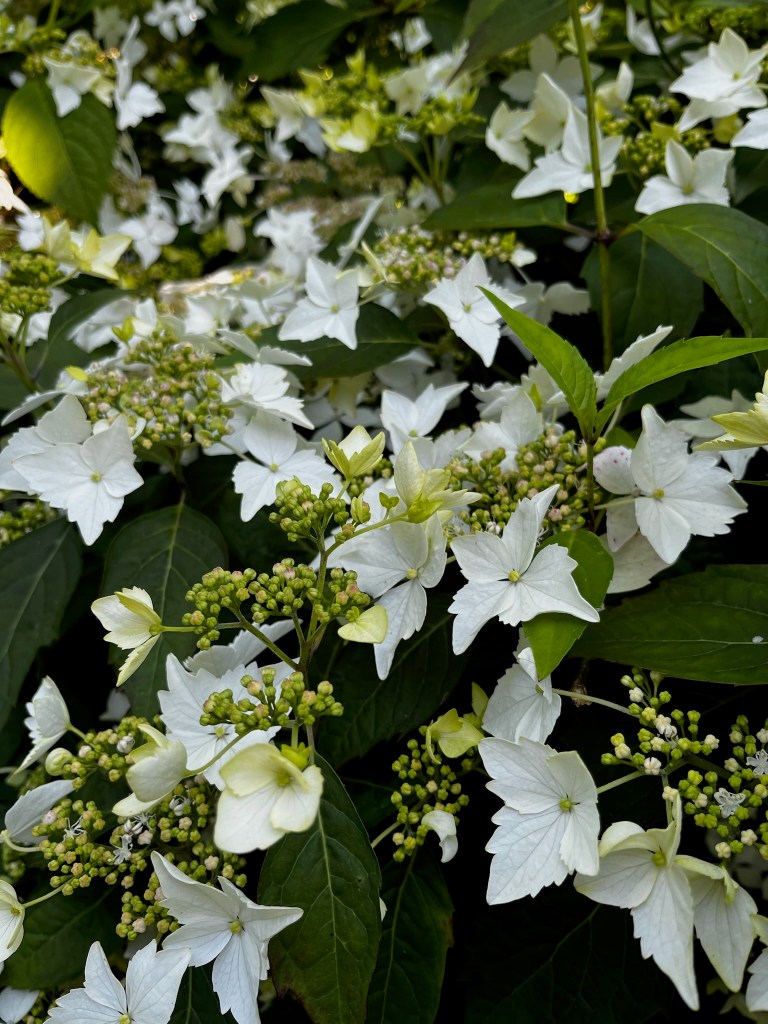
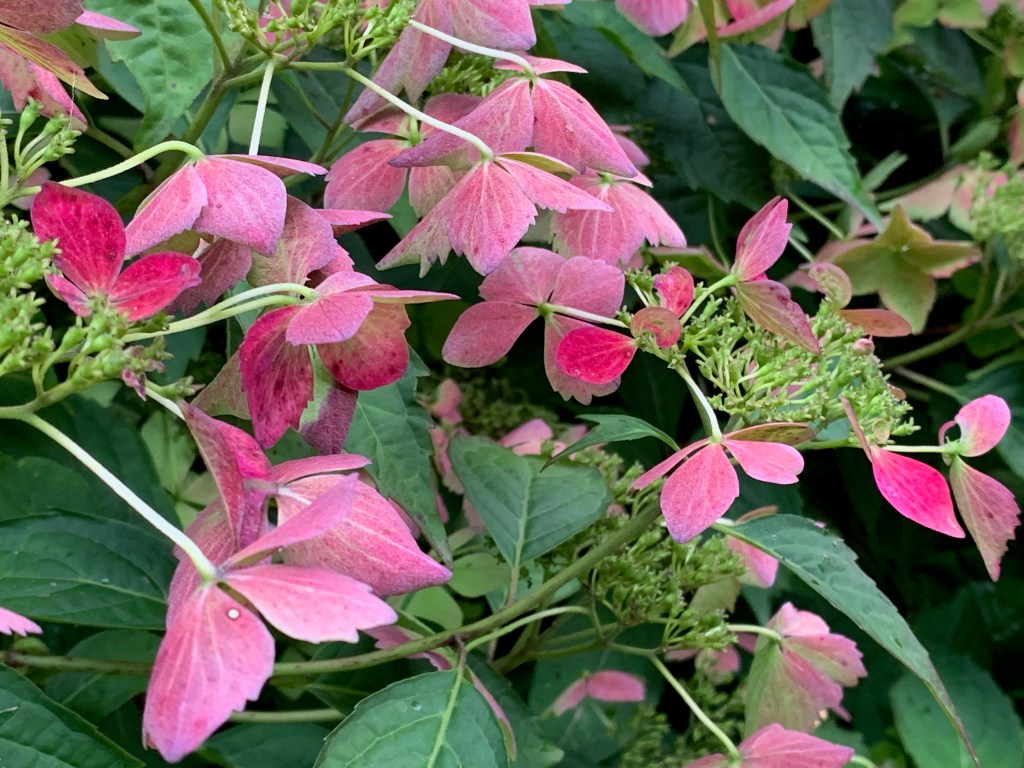
H. serrata is an earlier flowering species than H. macrophylla, from late May to early July, so good to fill the ‘June gap’. In addition, many also often fade to attractive autumn colours with some varieties continuing to offer great colour through October. The Japanese varieties with ‘Beni’ – meaning ‘red’ – all have this benefit.

-Compact habit.
Most varieties will remain reliably compact enough for minimal intervention in a border, offering a reliable, low-maintenance carapace of colour year on year, without pruning needed..
-Shade-loving.
To be seen at its best, H. serrata needs semi-shade, as it flowers at midsummer when the sun is at its zenith. The full heat of direct sun at midday can shrivel the rayflowers. They often recover once cool temperatures return, but the species thrives underplanted and in close combination with other shrubs. Good sunlight exposure, however, often gives the foliage an attractive range of rich, dark maroon and purple colour.
–Modest growth.
Its reliably modest growth means H. serrata can be a stable component of a herbaceous border, without compromising nearby plants. Here at WHF we have 45 year-old Japanese serratas still no more than four feet high, and wide. These give the impression that once established, they are happy just to get on with the business of existing for as long a life as possible, in keeping with the sometimes very ancient forests where they’re found in Japan. Petite growth to produce another year’s array of often jewel-like tiny flowers is also consistent with a short growing season.
This type of serrata flowers reliably with no pruning, each year’s new buds and leaves imperceptibly inching forward. A few more vigorous varieties will reach out over a path every few years, but serratas are the low maintenance hydrangea par excellence. We have specimens here at WHF over forty years old that are covered with flower every year and still no more than a chest high spreading shrub.
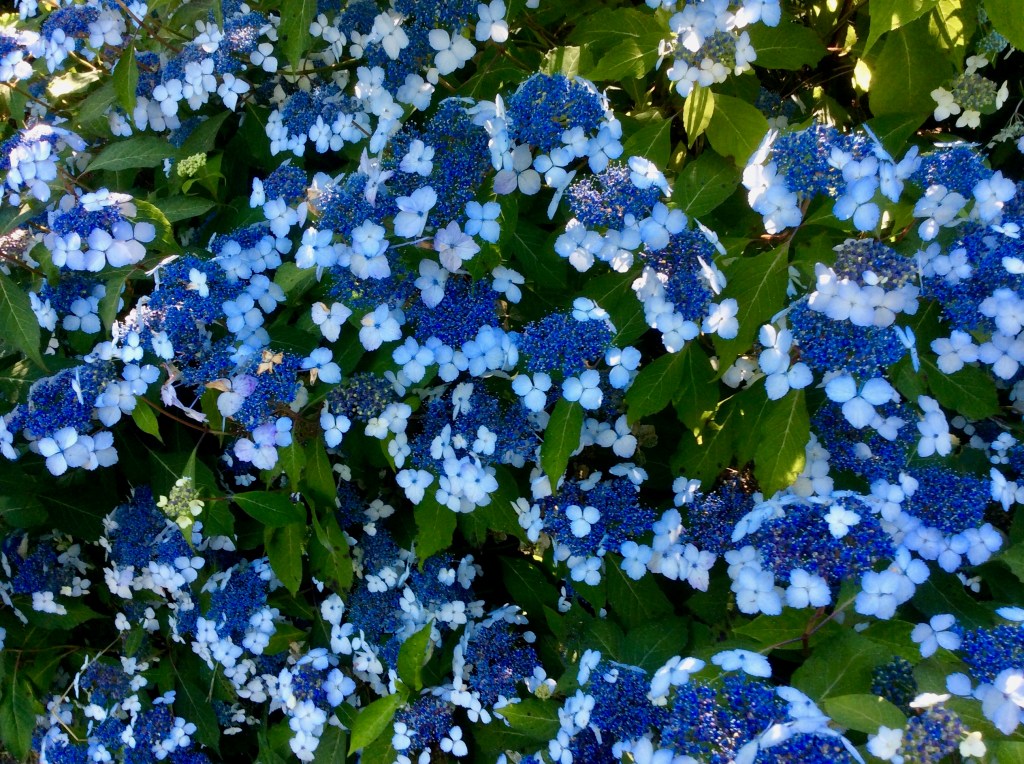
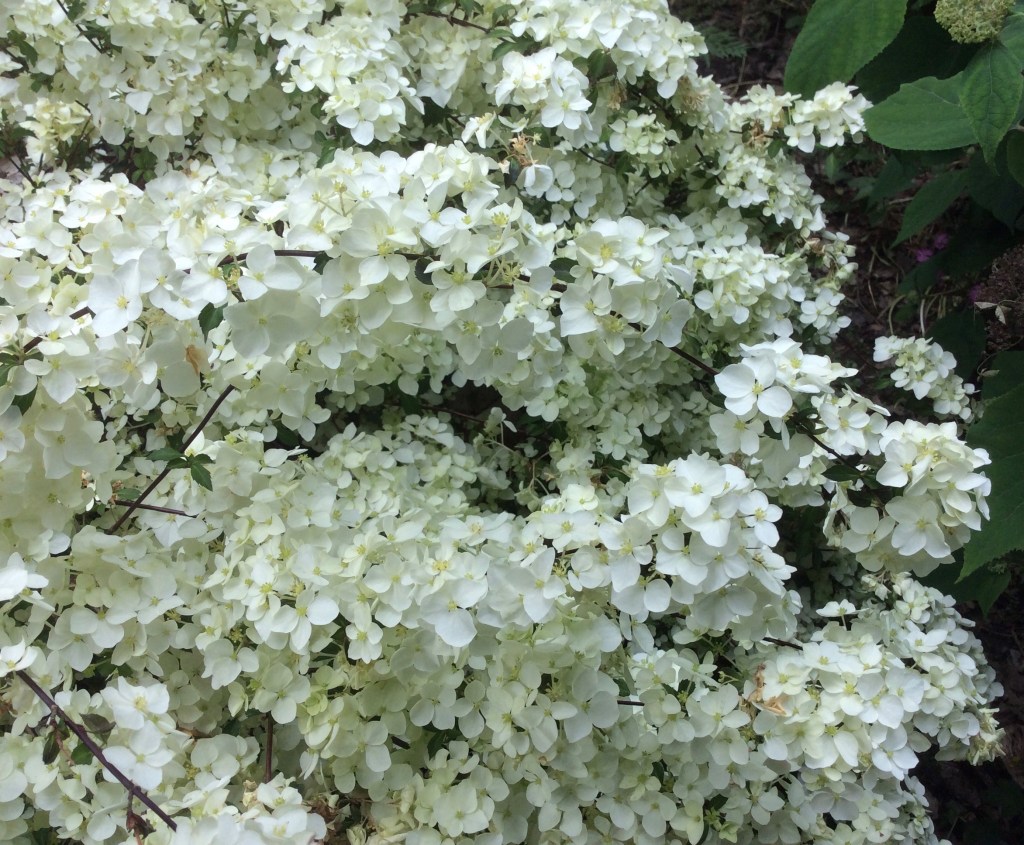
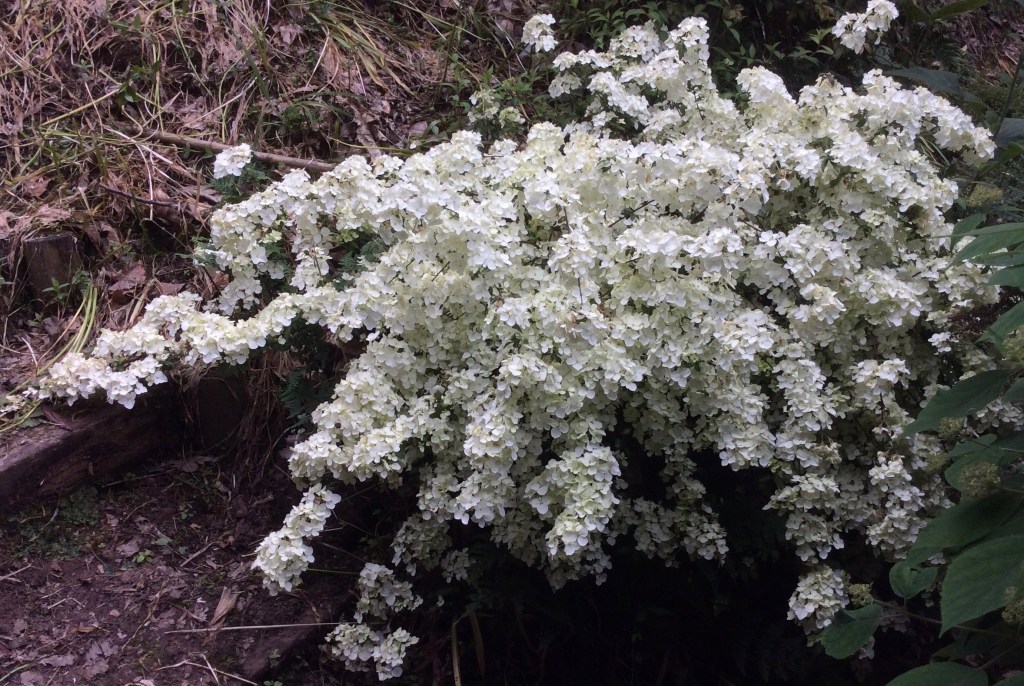
The influence of H. scandens genes in both wild hybrids and cultivars can add to that axiliary flowering, for an overall free-flowering effect, rather than heads on individual stems. In some varieties, no shoot is without a flowerbud (such as ‘Shiro Fuji’).
-Variety of form and colour.
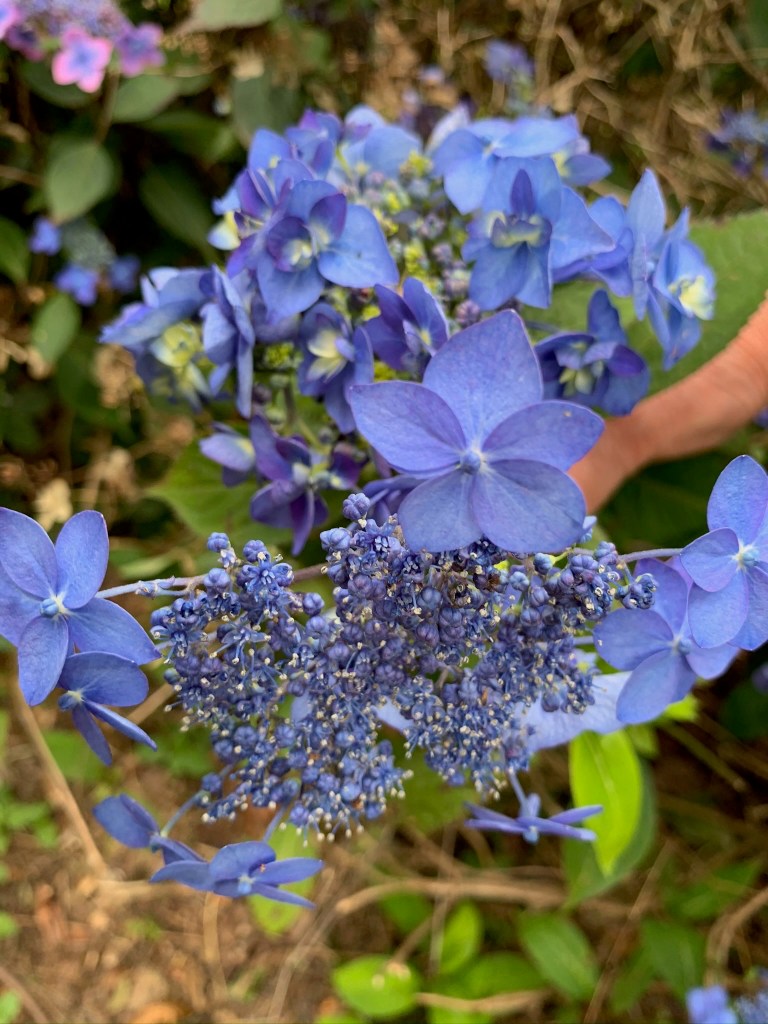
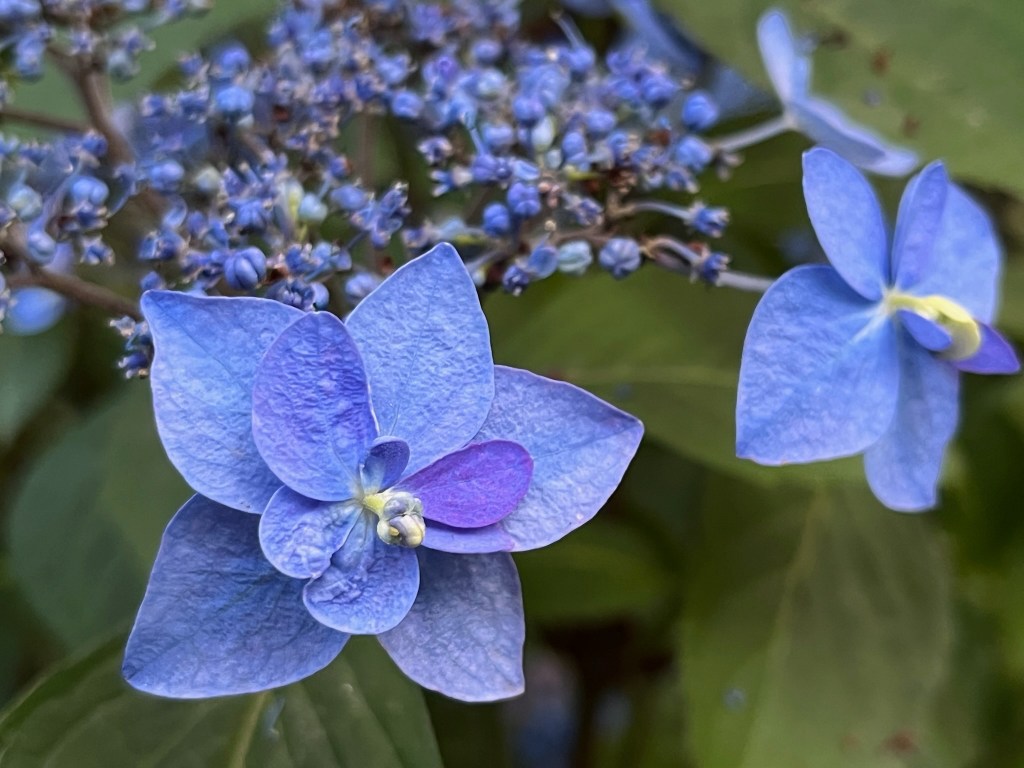
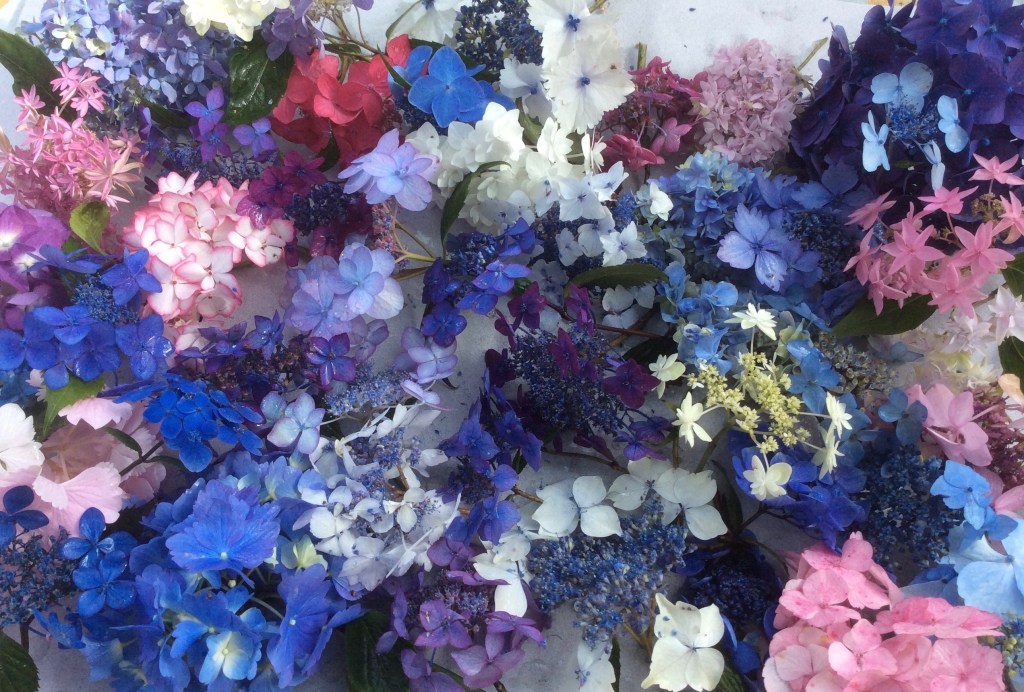
Here at WHF Clare has been documenting our hydrangea serrata walk (some 229 distinct specimens bred over some thirty years of back-crossing), and she would add to the virtues of H. serrata sheer variety of flower form – each plant offering a slightly different combination of fertile and rayflower colour; and the rayflowers themselves ranging from fimbriate to rounded, drop-shaped petals to square, almost tessalated petals, singles to doubles, sometimes more. Below is an example of single-double-multiple variation across the same type and colour, in adjacent seedlings:
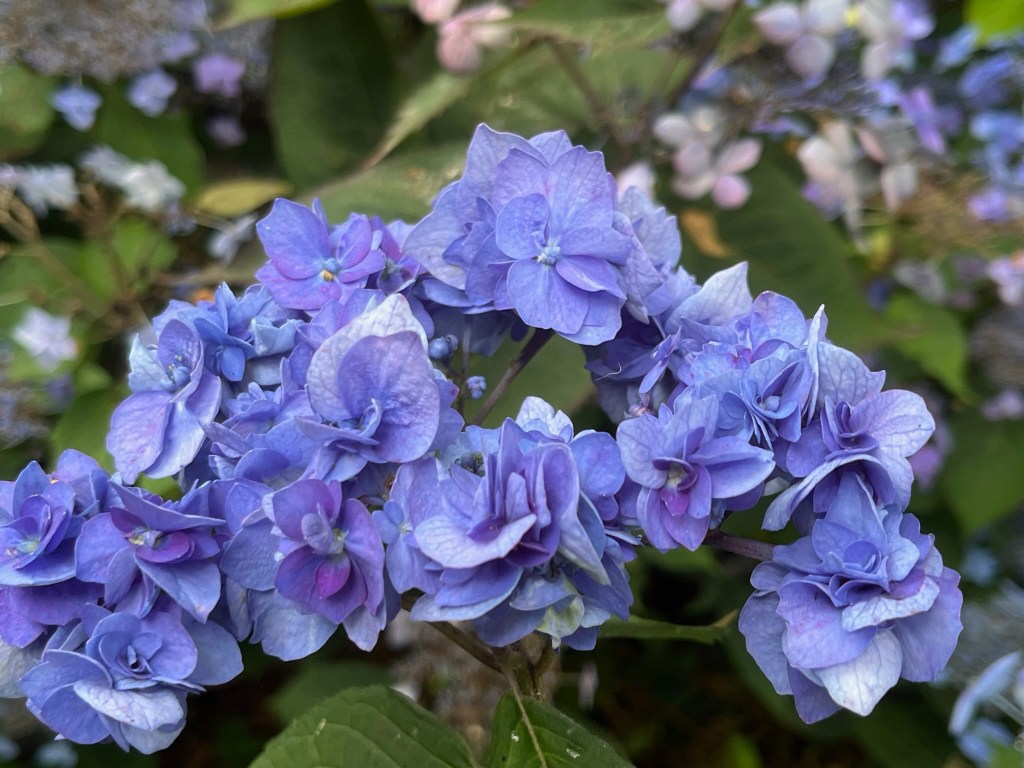
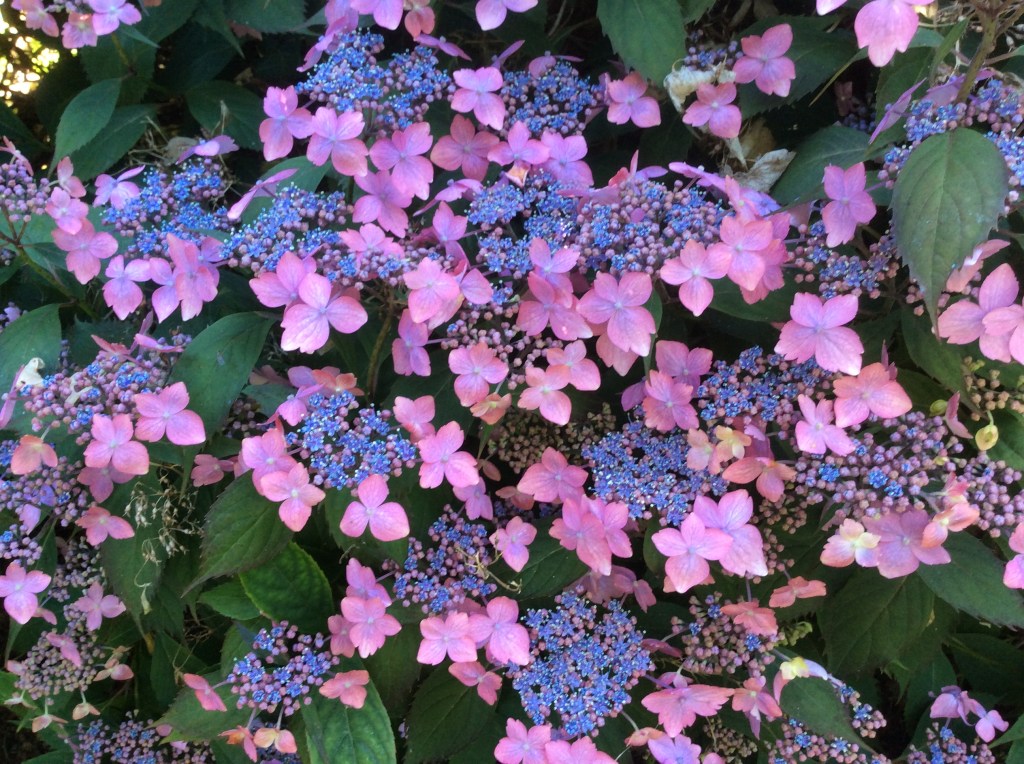
As with H. macrophylla, soils vary and colours vary accordingly, from pinks and reds through purples to blues, according to the plants’ varying ability to take up aluminium. Not only soil changes this capacity, however – stress and juvenility can also vary this ability and cause colour change. In our collection, several varieties have pinker and bluer flowers on twigs joined to the same branch. Self-layers, as the plant slowly spreads are often pinker than the parent they rooted from, suggesting either that blueing might a feature of maturity, or that (more likely) the nearby soil has a different ph than the bed. If moving towards a path, spread in the past with with ash or gravel, this is a likely source of alkalinity enough to influence colour – as is an alkali mains water supply, as we have in chalky Kent.
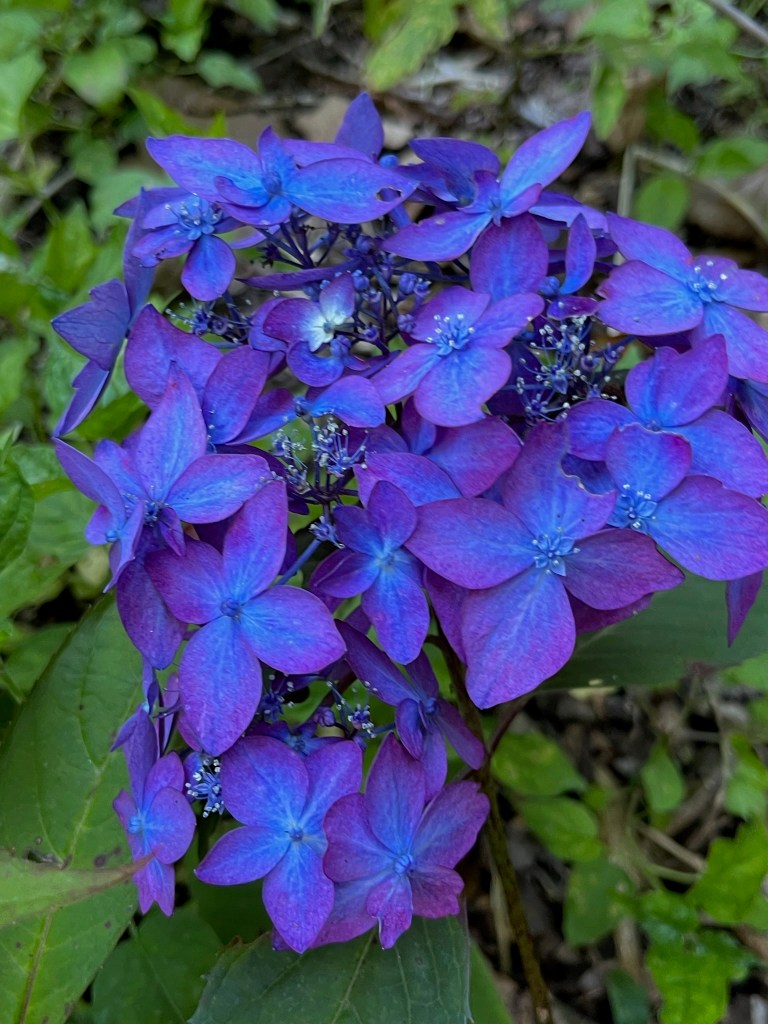
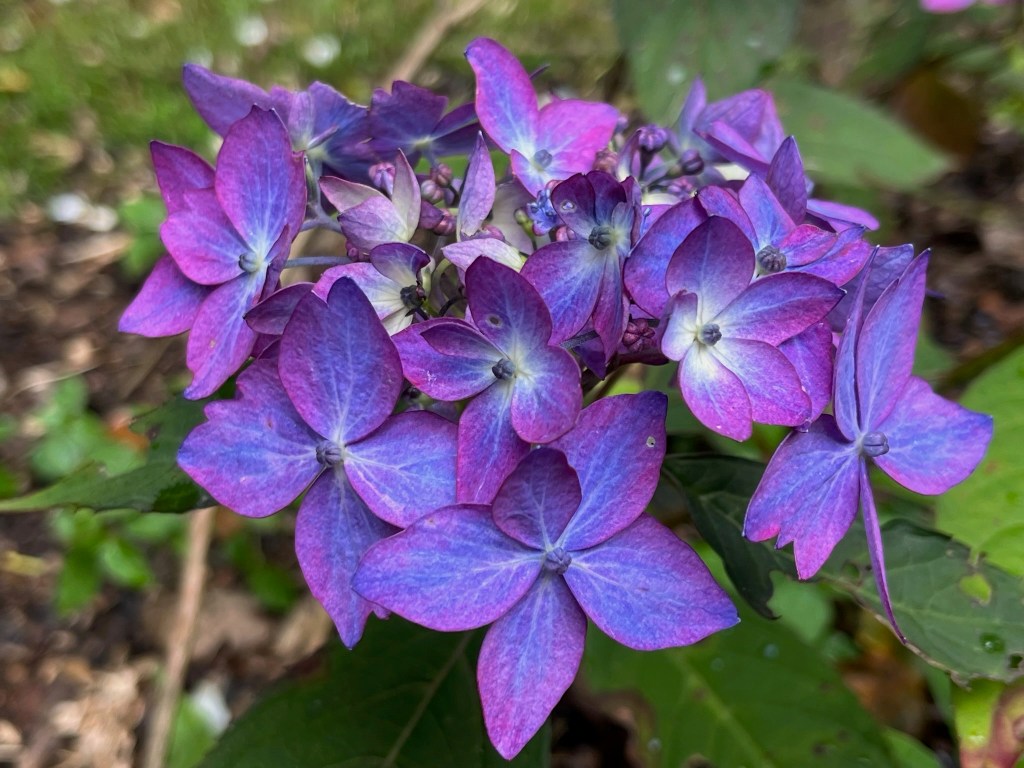
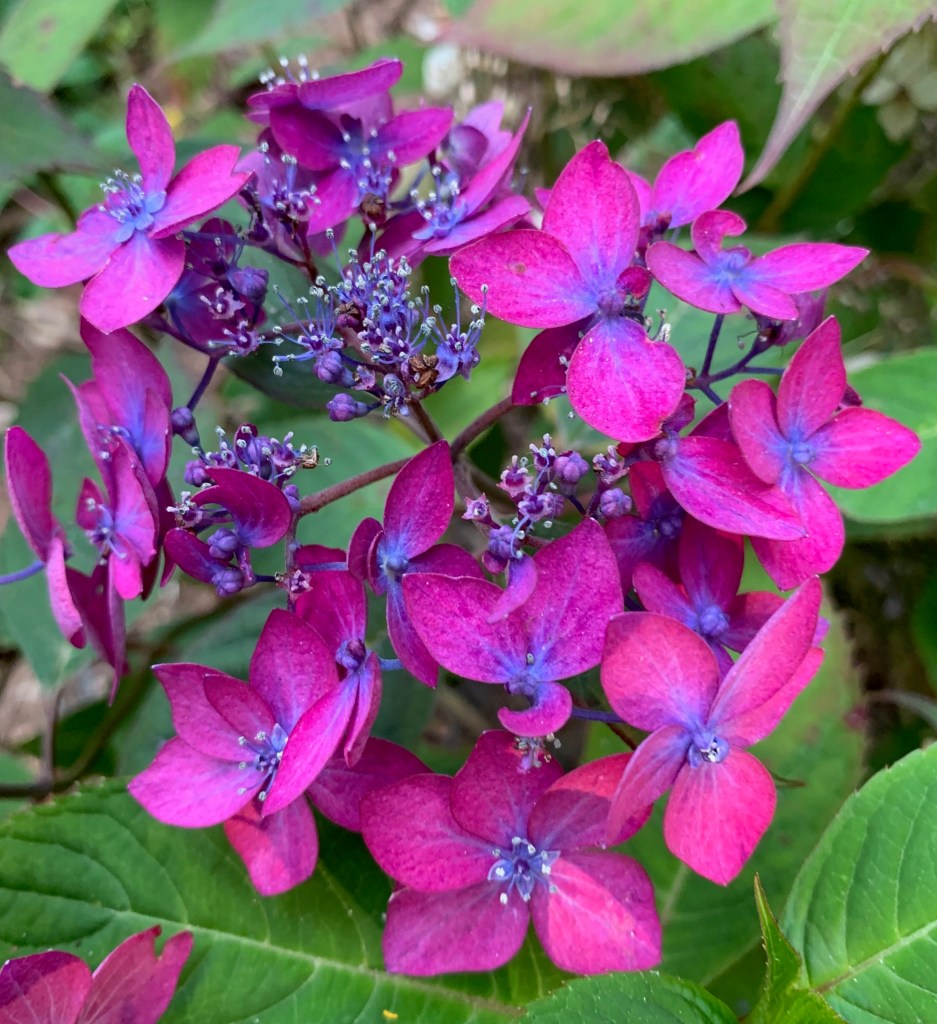
Above are three seedlings of the same variety, growing in different soils in the Garden, Wood, and Arboretum.
We look forward to seeing on Wednesday June 25th to see more….
 White House Farm Garden and Arboretum