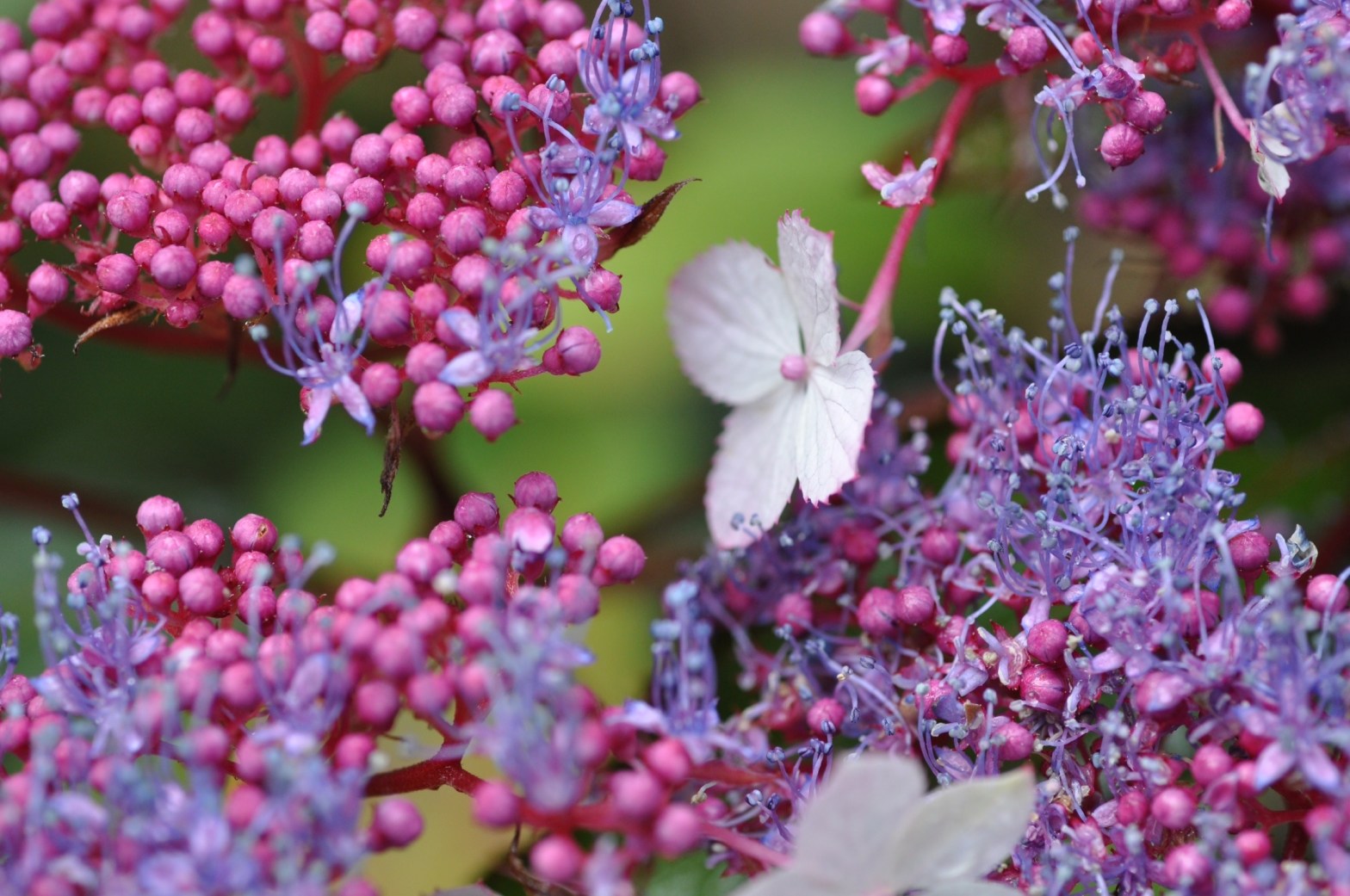
“Per aspera ad astra“
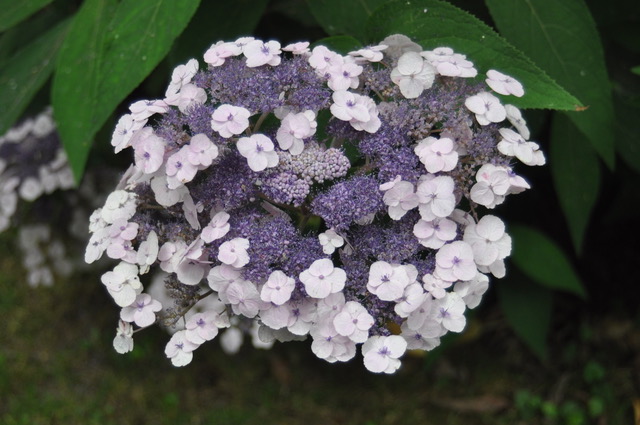
That quote punningly just about sums up this season for Hydrangea aspera: translated as roughly ‘Through asperities (hardships, adversities, rigours) to the stars.’ The ‘aspera’ in H. aspera is usually taken to refer to the rough texture of the underside of the leaf, but I have not since 1976 experienced such a hard, adverse and rigorous test of this species, with punishing temperatures on successive days this summer exceeding 30C, exacerbated by an almost total absence of rain. The thunderstorms were all around but never over us, the torrential downpours everyone else seemed to get always missing our few acres. The drought was unremitting, and considering the general prejudice that the subsection of the genus Hydrangea called asperae (which includes H. aspera and H. involucrata) needs plenty of moisture to grow well, expectations were for a poor season.
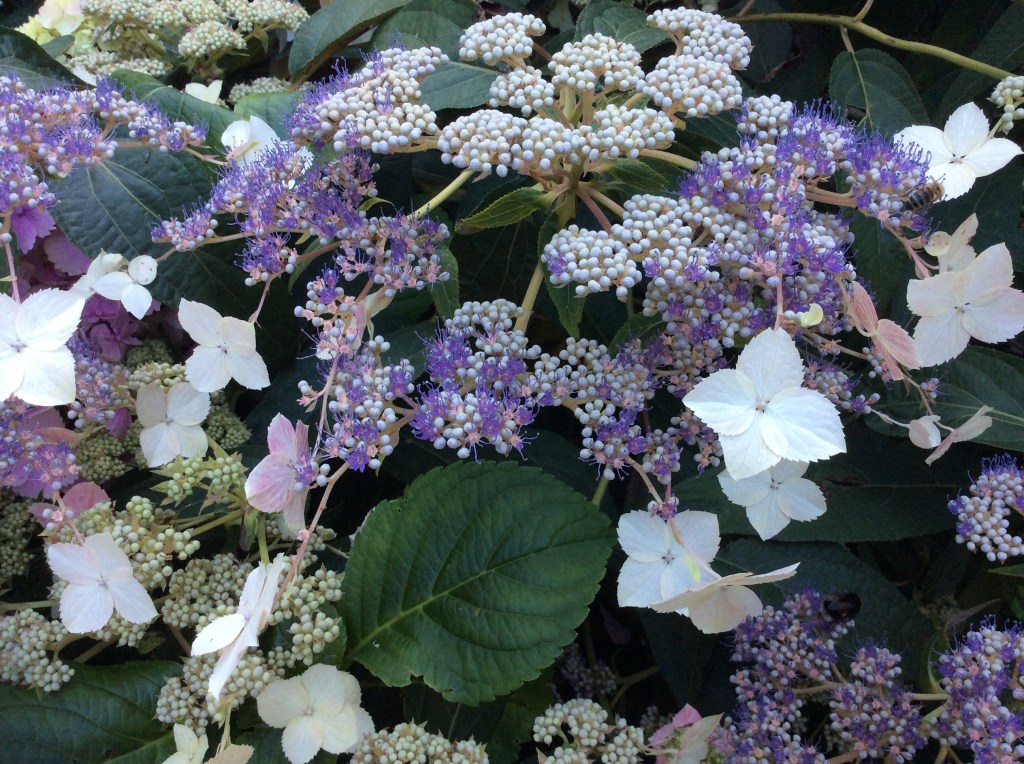
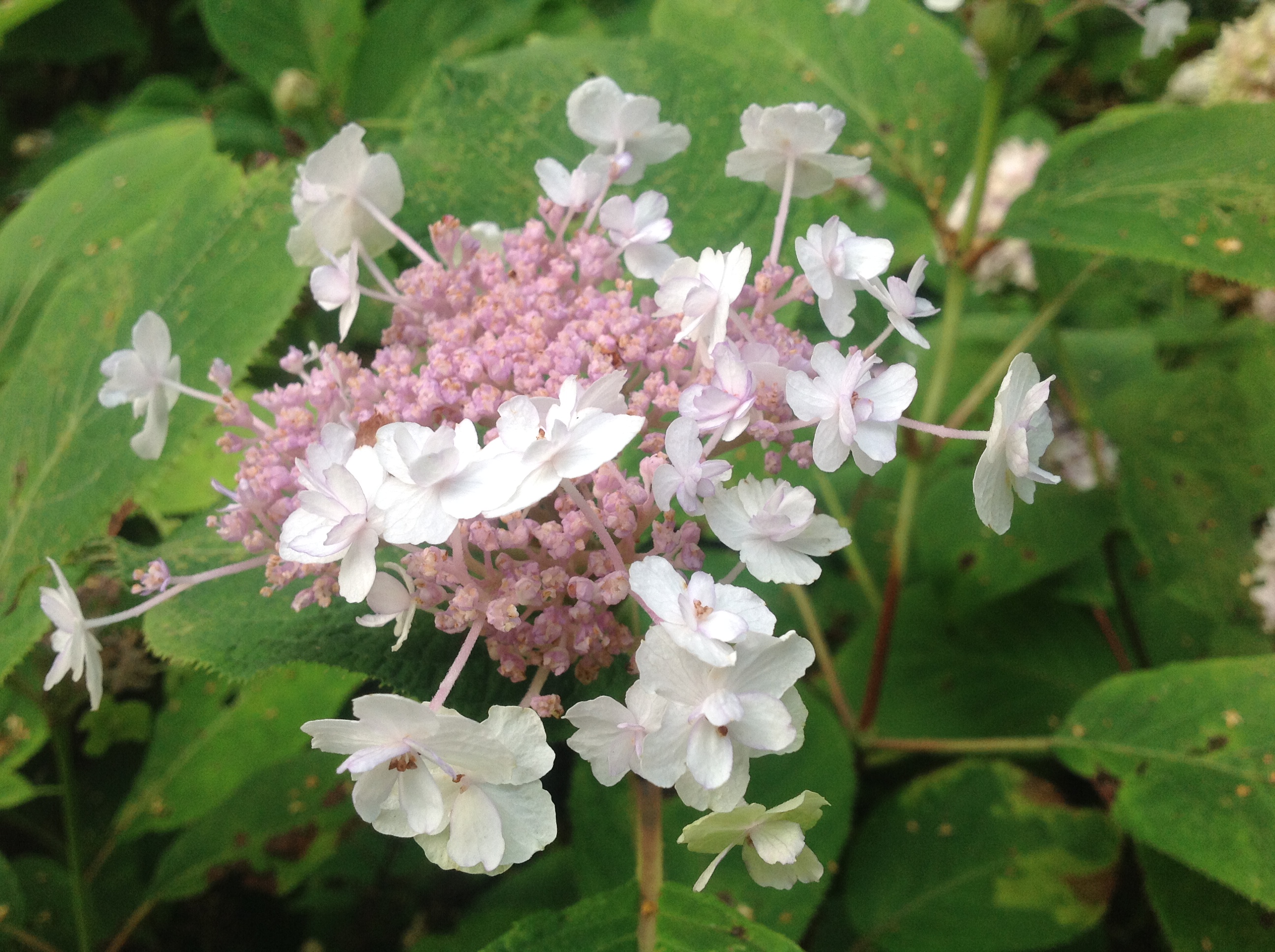
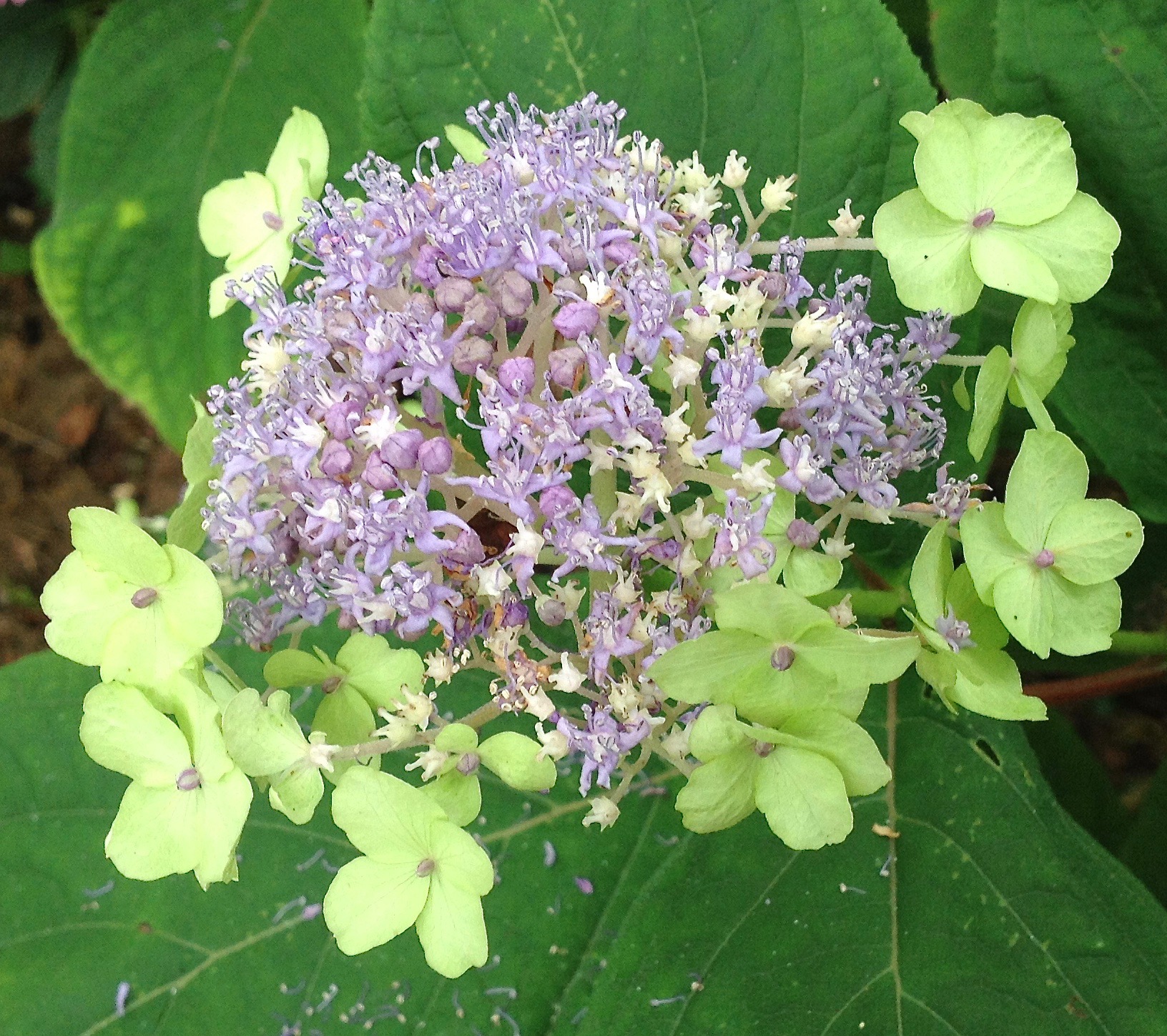
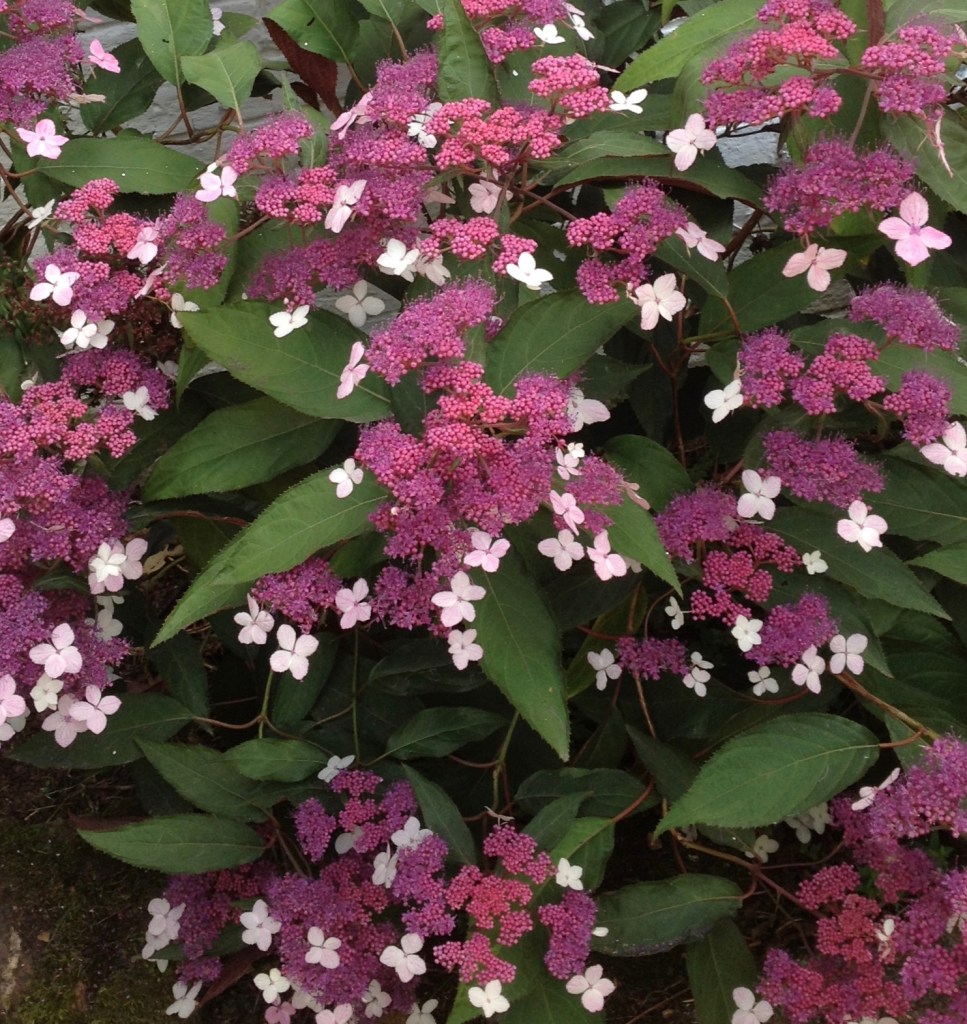
Incredibly, and at first blush something of a miracle, this has turned out not to be the case. Contrary to these negative expectations, it is an excellent show this year, with asperas and involucratas flowering beautifully everywhere as I write this, their flowers normal size, and if anything more prolific than usual. We gave them only one good watering, late on when the plants were budding, to encourage the production of flowers. We have 3 underground cisterns that catch the rain from various roofs and hold many thousands of litres of rainwater. This naturally acidic rainwater is important as our mains supply is alkaline (Kentish chalk a likely influence) and we’ve found a single mains water soak can turn hydrangeas pink and spoil the purity and depth of blue for several years, especially in the macrophyllae subsection (H. macrophylla and H. serrata) – but this applies as well to the various ‘blues’ among our aspera seedlings.
Apart from any natural ability to resist adverse conditions (don’t forget that H. aspera is a weed species in Western China, so like all weeds, is a natural survivor) we put this good performance down to a heavy mulch of wood chip, inhibiting evaporation; to ‘close boskage‘ planting (a term popularized by Michael Haworth-Booth for woody co-planting that fills a bed or border, leaving no exposed ground); to some top cover shade from the hottest part of the day; and to a generally northern/easterly facing situation in a retentive medium loam, for the most part without tree root competition. All this encouraged retention of moisture at the root – without irrigation.
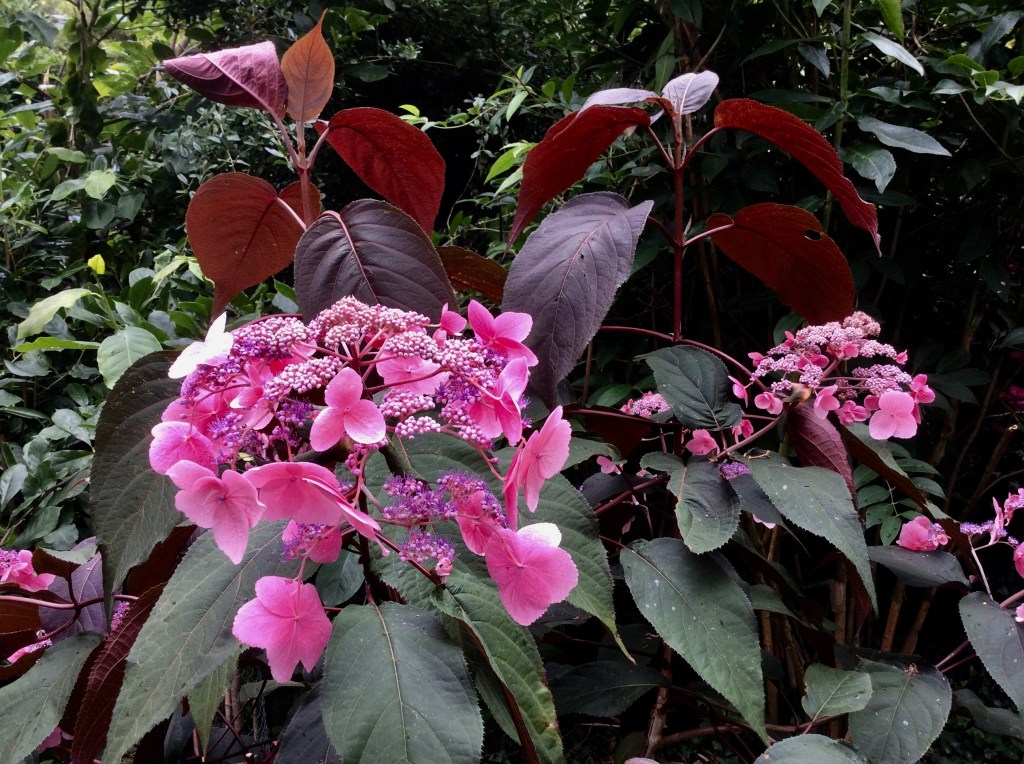
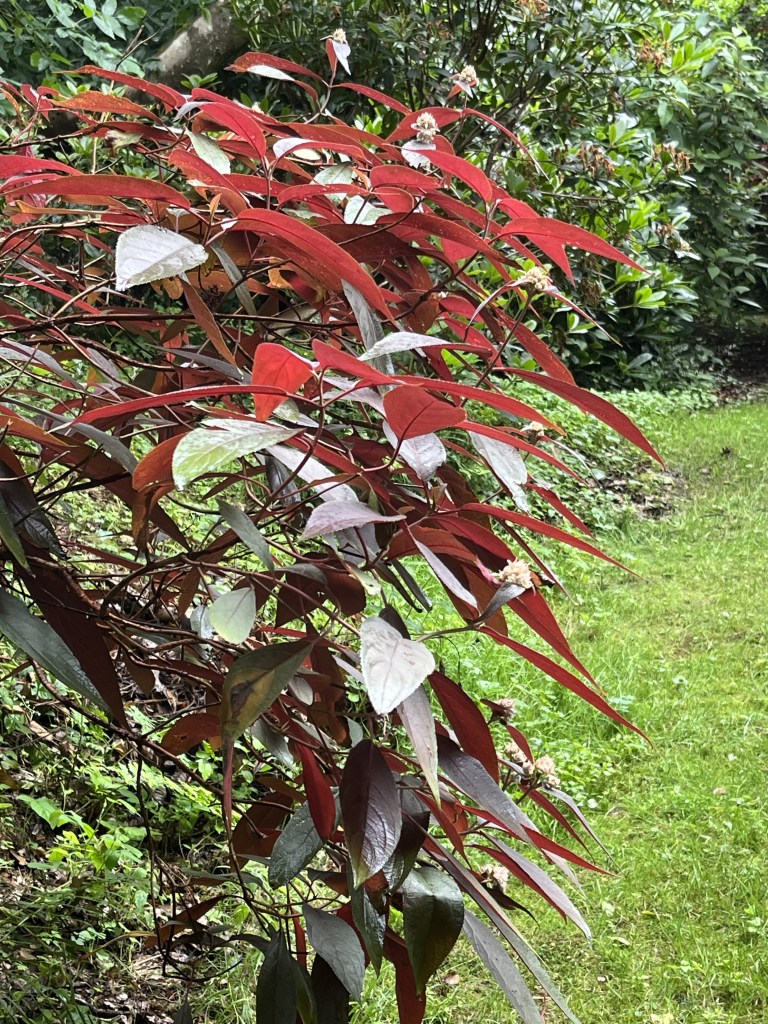
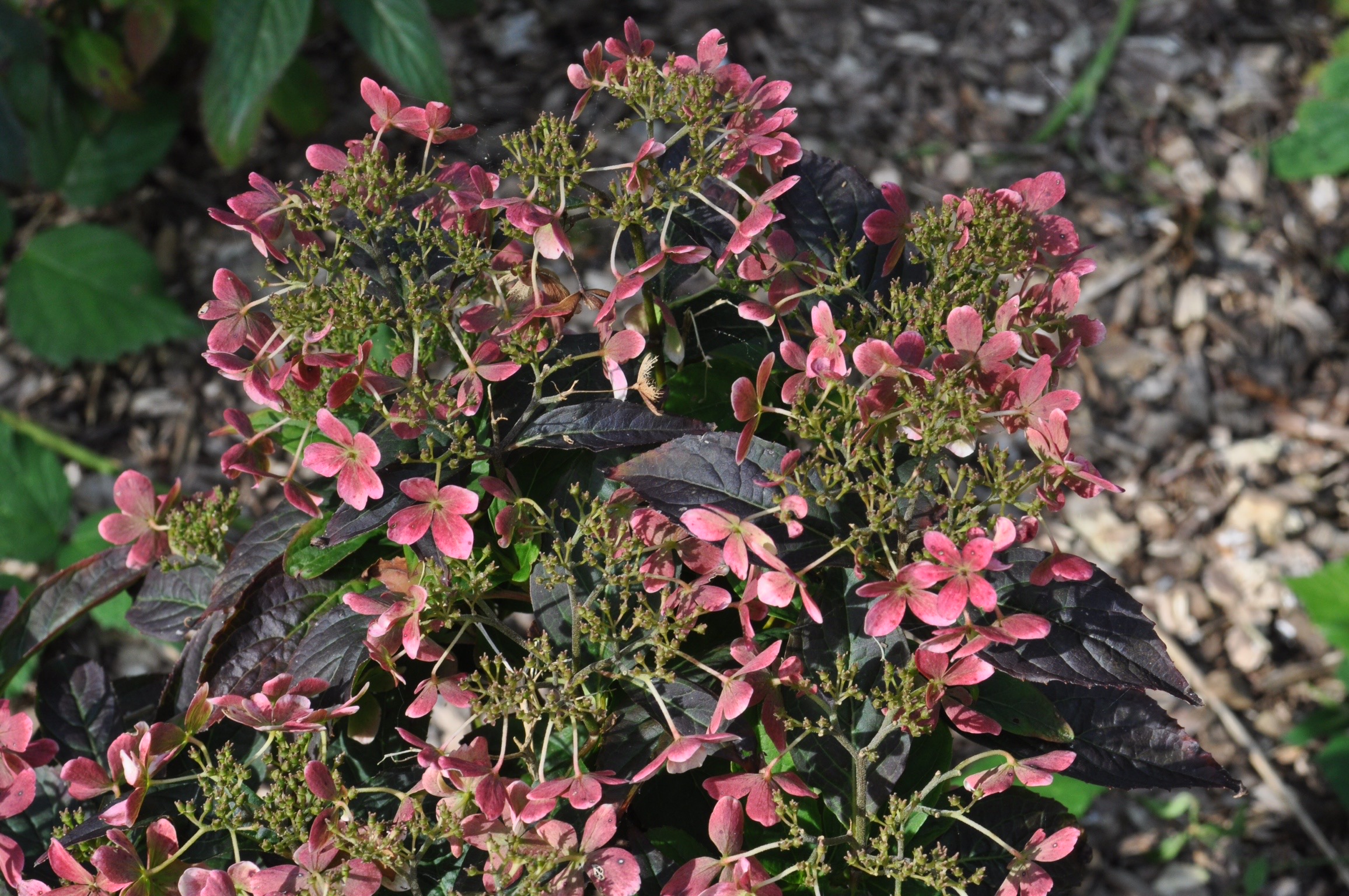
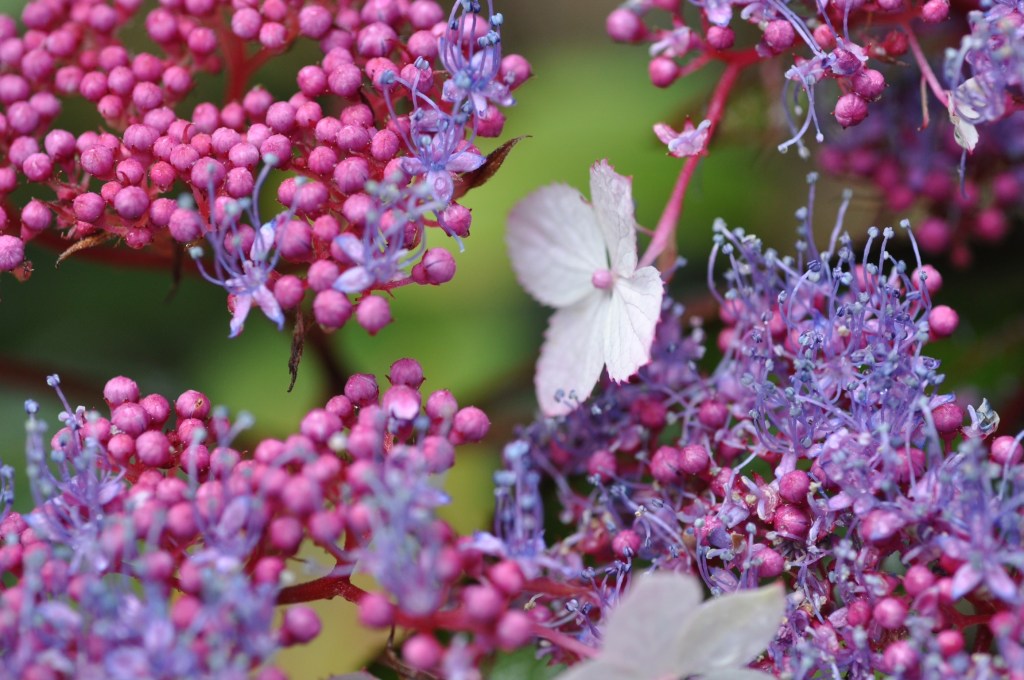
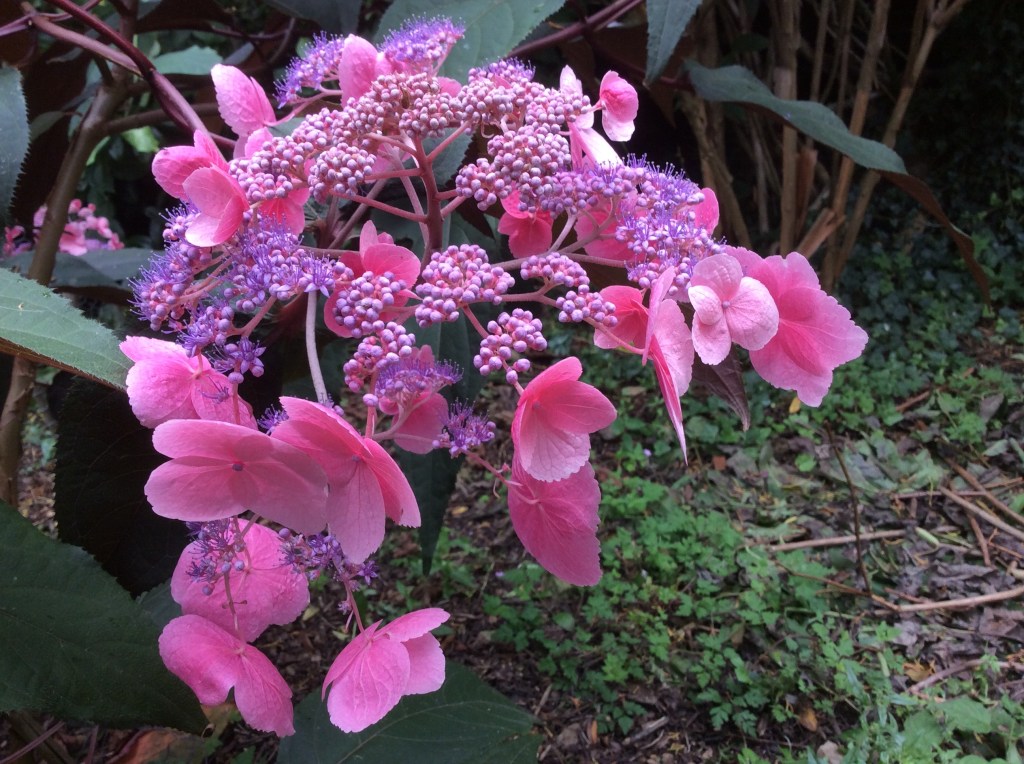
You are invited to come and see these plants for yourselves during our Hydrangea Aspera Open Day on Saturday August 23, 10.00-4.30pm (see below). We’ll tour the collection, and look at the taxonomy of the species – for example, comparing the fleshy hairs (trichomes) on the stems and leaves of H. sargentiana with the stiff, flat hairs on the leaf reverse of H. strigosa and the soft, long, curly hairs on H. villosa – key elements in distinguishing the recognized species in the aspera complex. We’ll also examine the many colourful hybrids we have created at White House Farm over many years, producing flowers of rich colour, many against a background of dark foliage – such as ‘Hot Chocolate’, available widely now in nurseries, and mentioned online just last week.
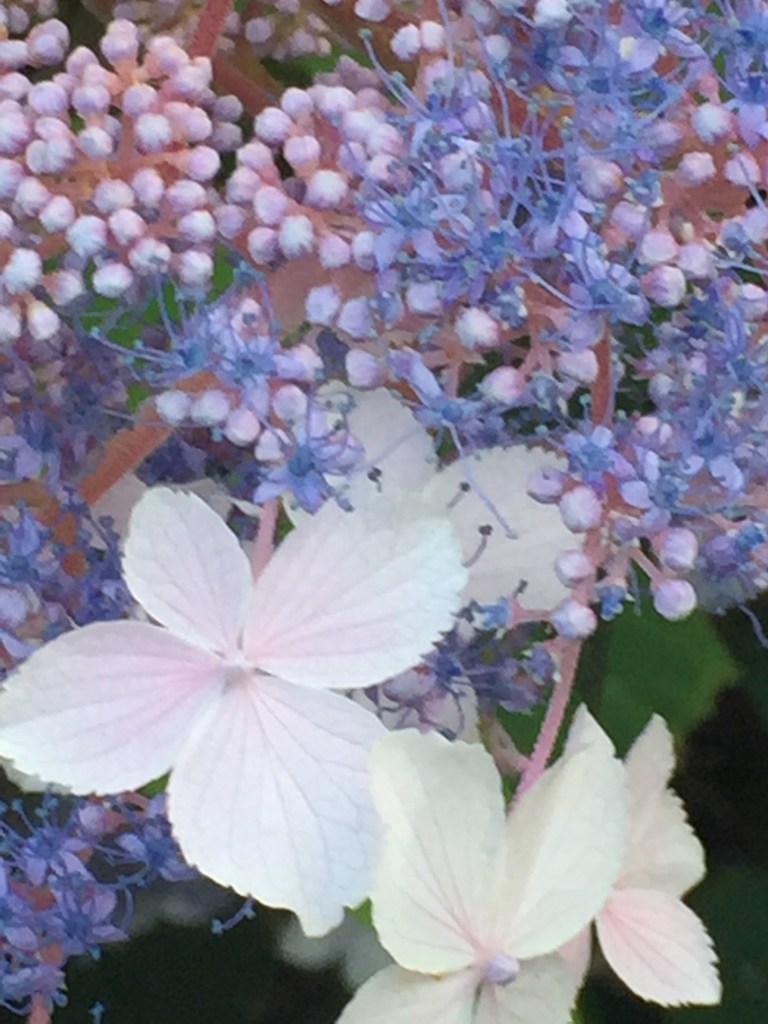
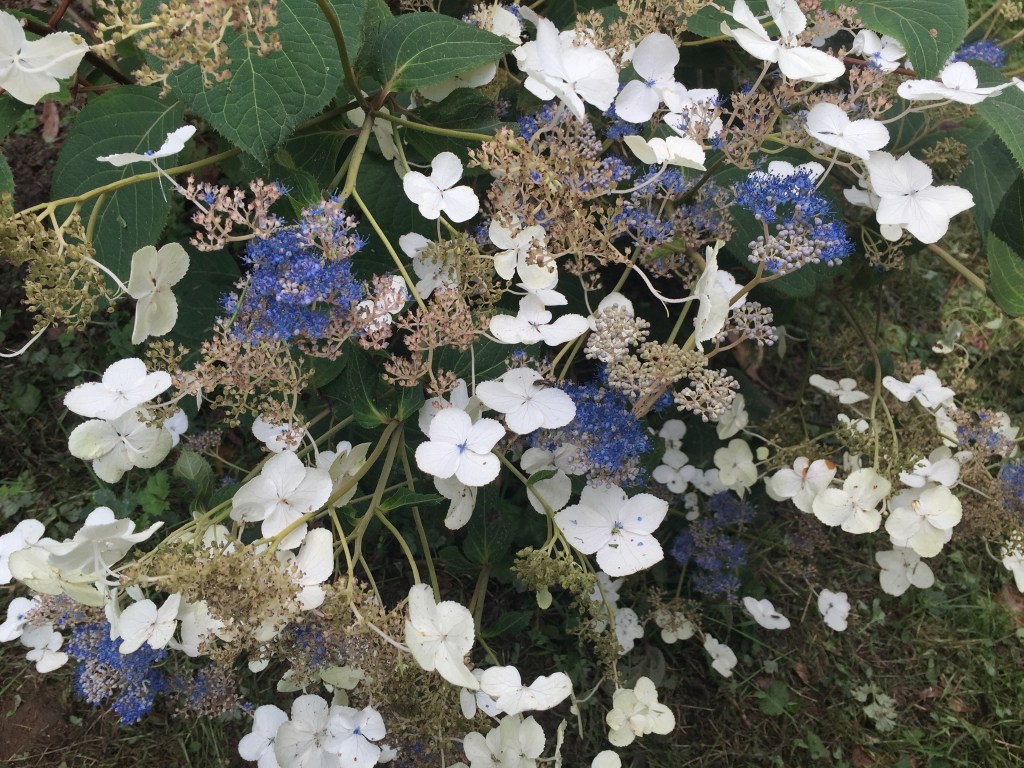
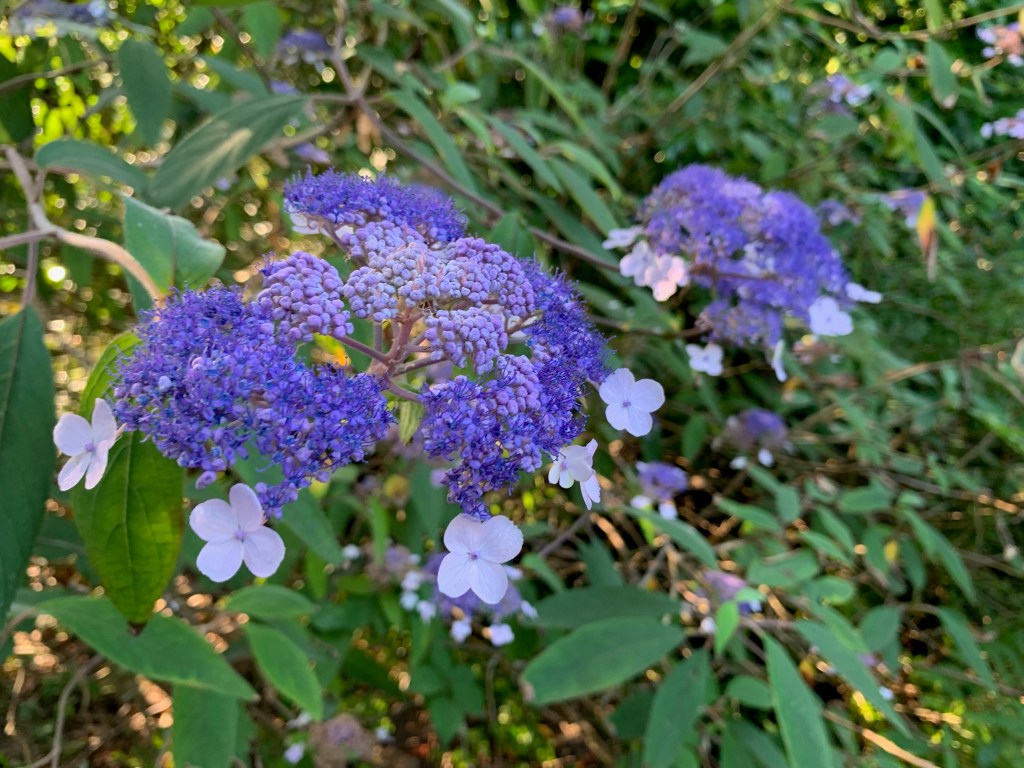
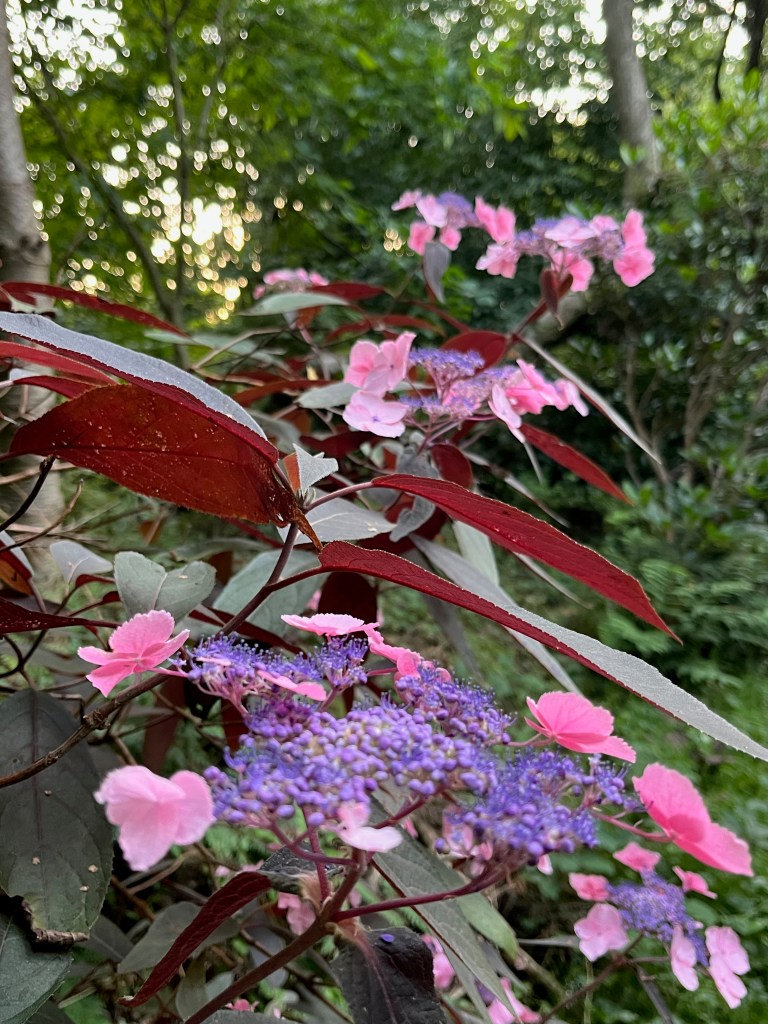
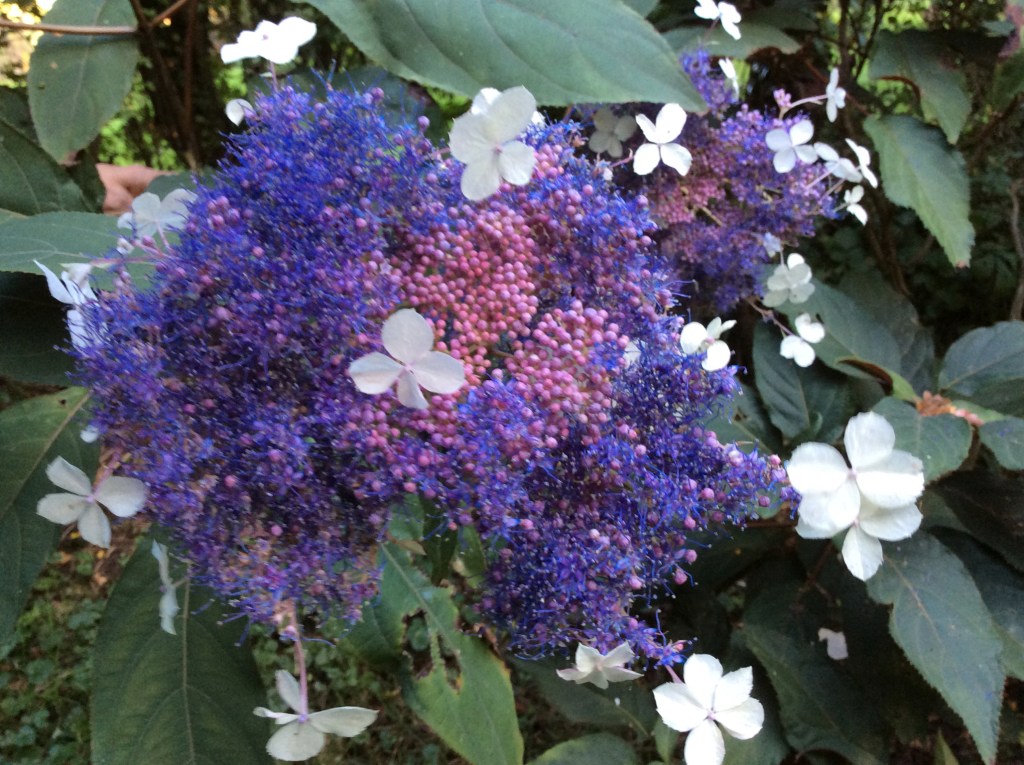

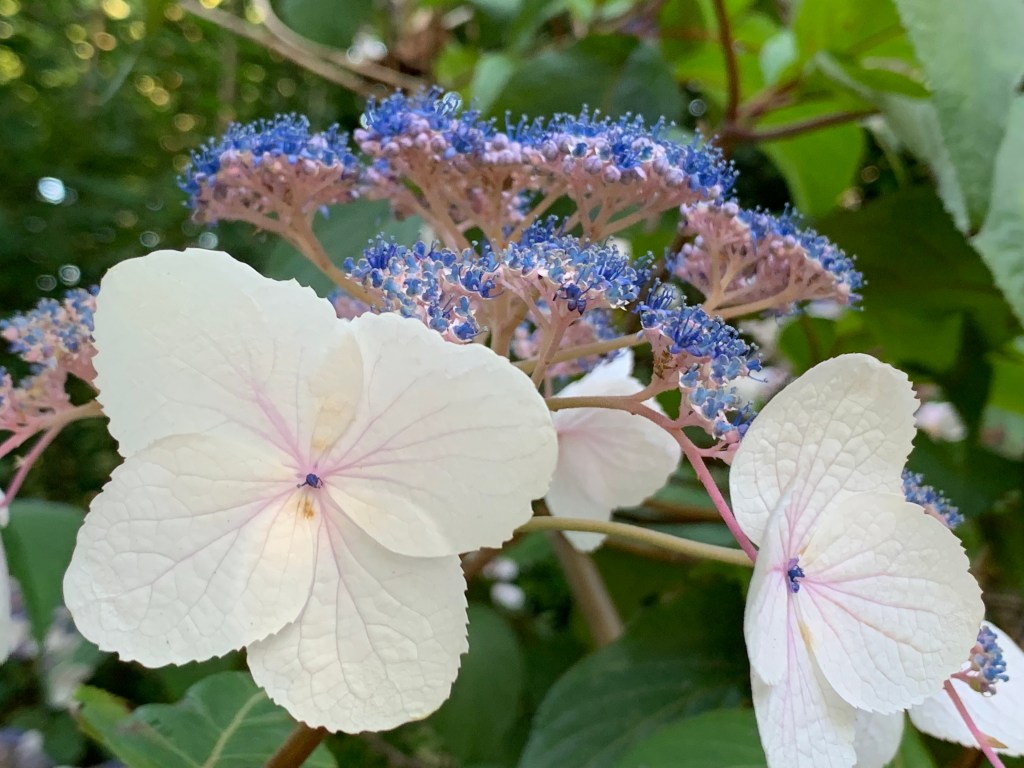
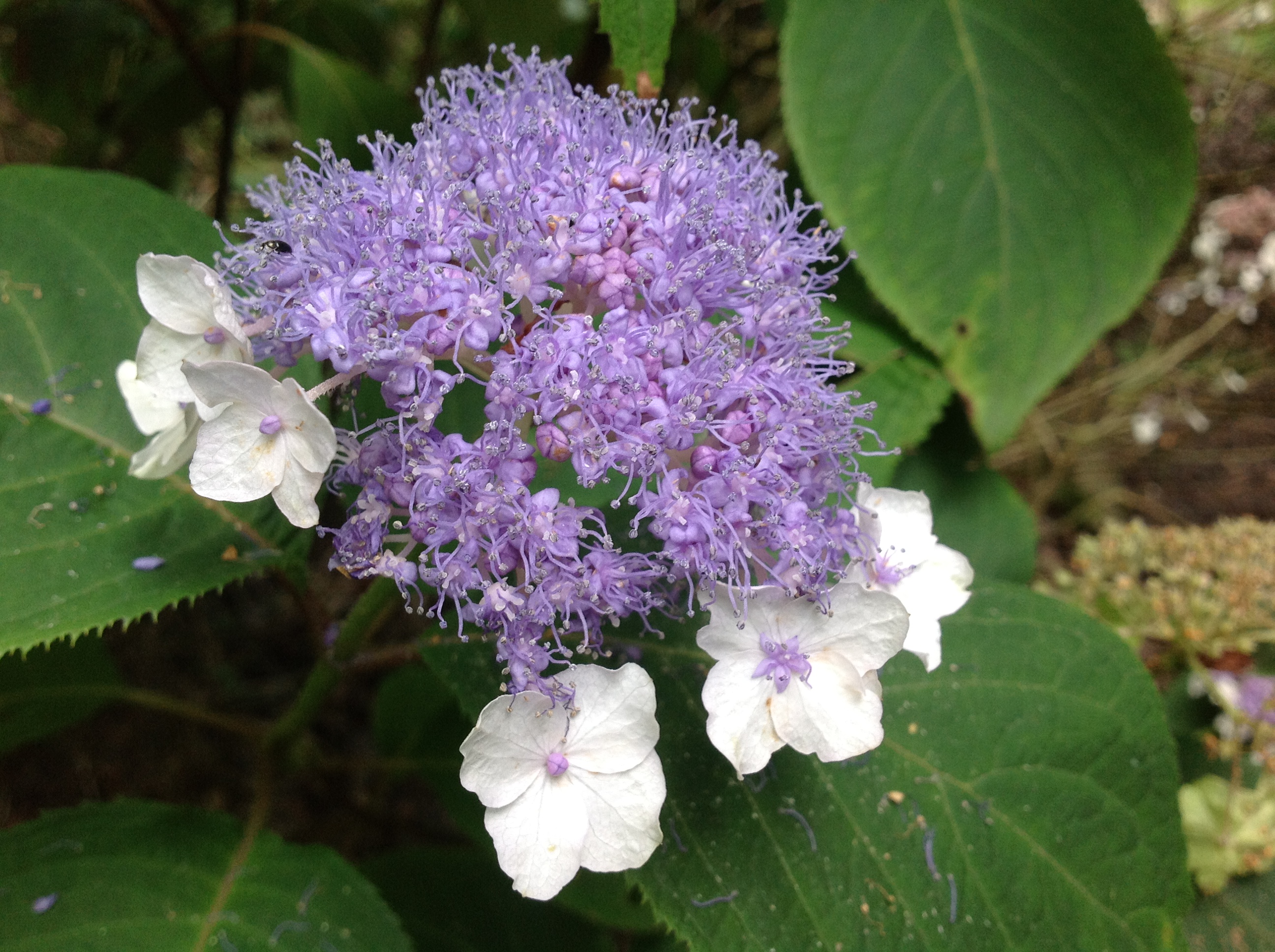
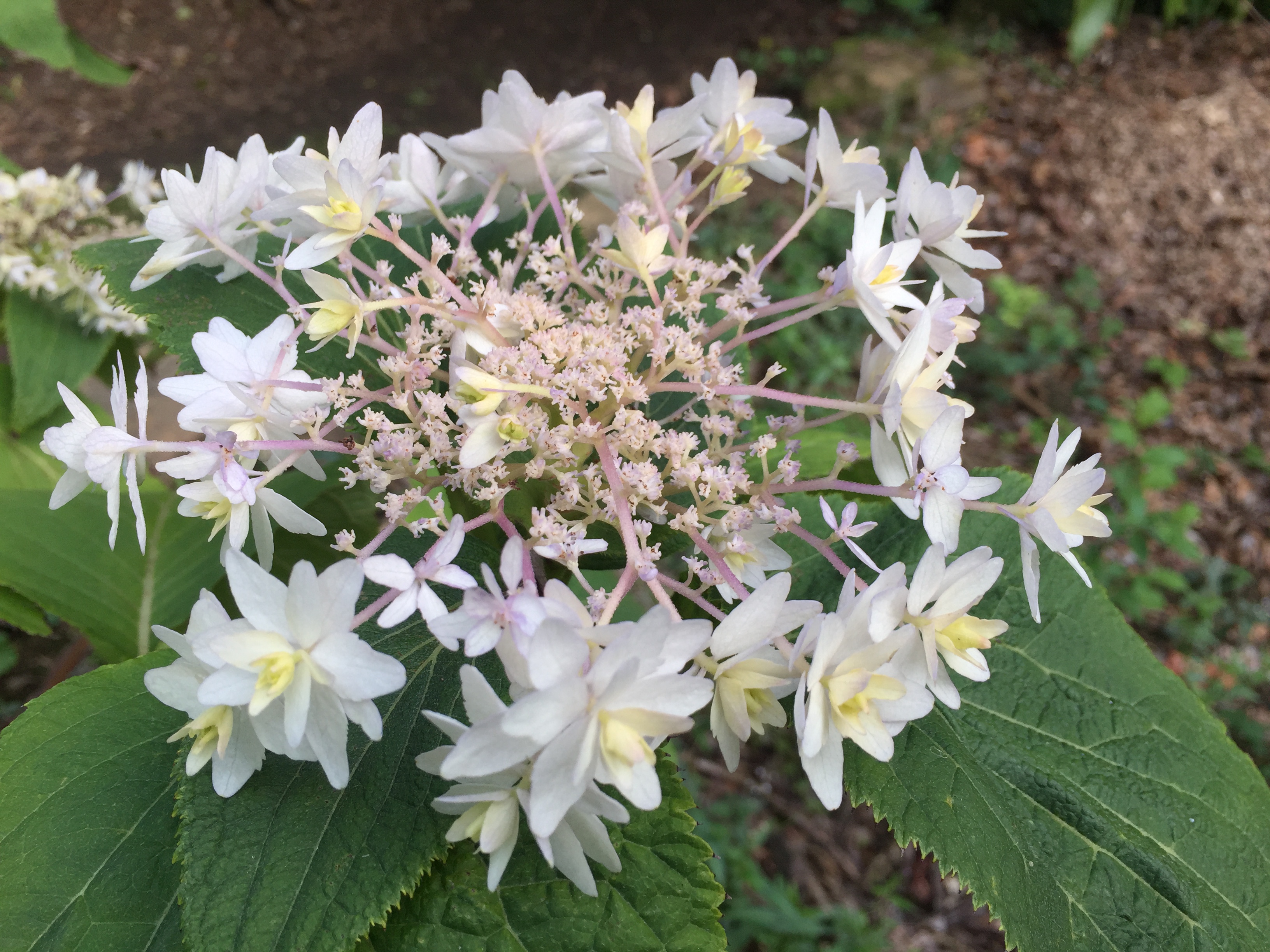
The many and varied forms of H. involucrata will also be on show. These are easygoing plants that should be more widely planted for garden decoration, as I am sure you will agree when you see them flowering in West Kent. They are among the most shade tolerant of all plants, continuing to flower freely in poor light.


Early autumn is one of the time windows in the year for grafting, so we will start the day with a hands-on demonstration of grafting by our trustee Chris Lane, one of the best known skilled professional grafters in the country, who runs five national collections, including Wisteria, Hamamelis and Flowering Cherry, at his Witch Hazel Nursery in Kent. Chris will show the key technical elements in what is sometimes the only practical means of propagation available for certain plants, and something beginners should not be afraid to undertake. There is a mythology attached to this essentially straightforward method of reproduction that can seriously inhibit the amateur from having a go. But watching a personally-made graft grow on is the most satisfying of any garden activity, and the pleasure goes on for years. So come and see how it is done, and go for it.
I will also demonstrate how to take cuttings, particularly of hydrangeas – among the easiest plants to reproduce from this method. Very little specialist equipment is needed to succeed: a pot, a polythene bag, an elastic band and a north facing windowsill can do the trick for many of the easier hydrangeas. Choosing the stage of development of the wood, ideally just firming – not too hard, not too soft – is an important judgment, and the date in the calendar matters less than this critical selection of which shoot to take, with suitable cuttings of some hydrangea species available from June through to August. The cuttings window for H. aspera is more limited, as it matures its wood quite early, and harder wood is not so easy to root. Getting summer cuttings through their dormancy over the winter is another problem – we’ll discuss strategies for that, what to aim for, and what to avoid.
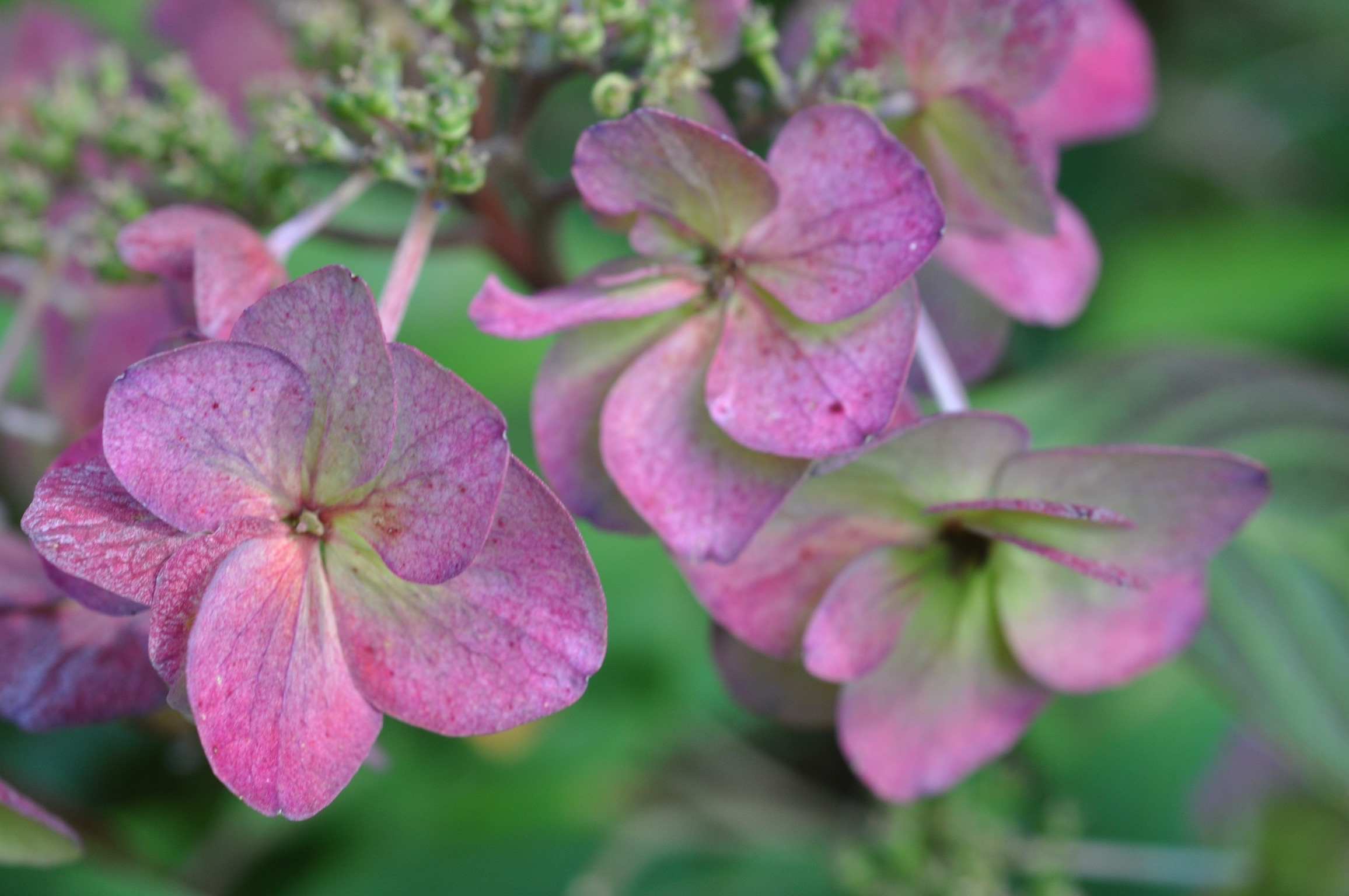
There will also be a range of H. macrophylla, H. serrata and their hybrids – with H. serrata in particular providing late colour in a way no other genus can rival for the beauty of the transition between the fresh flowers of summer and the first signs of the more muted shades of autumn.

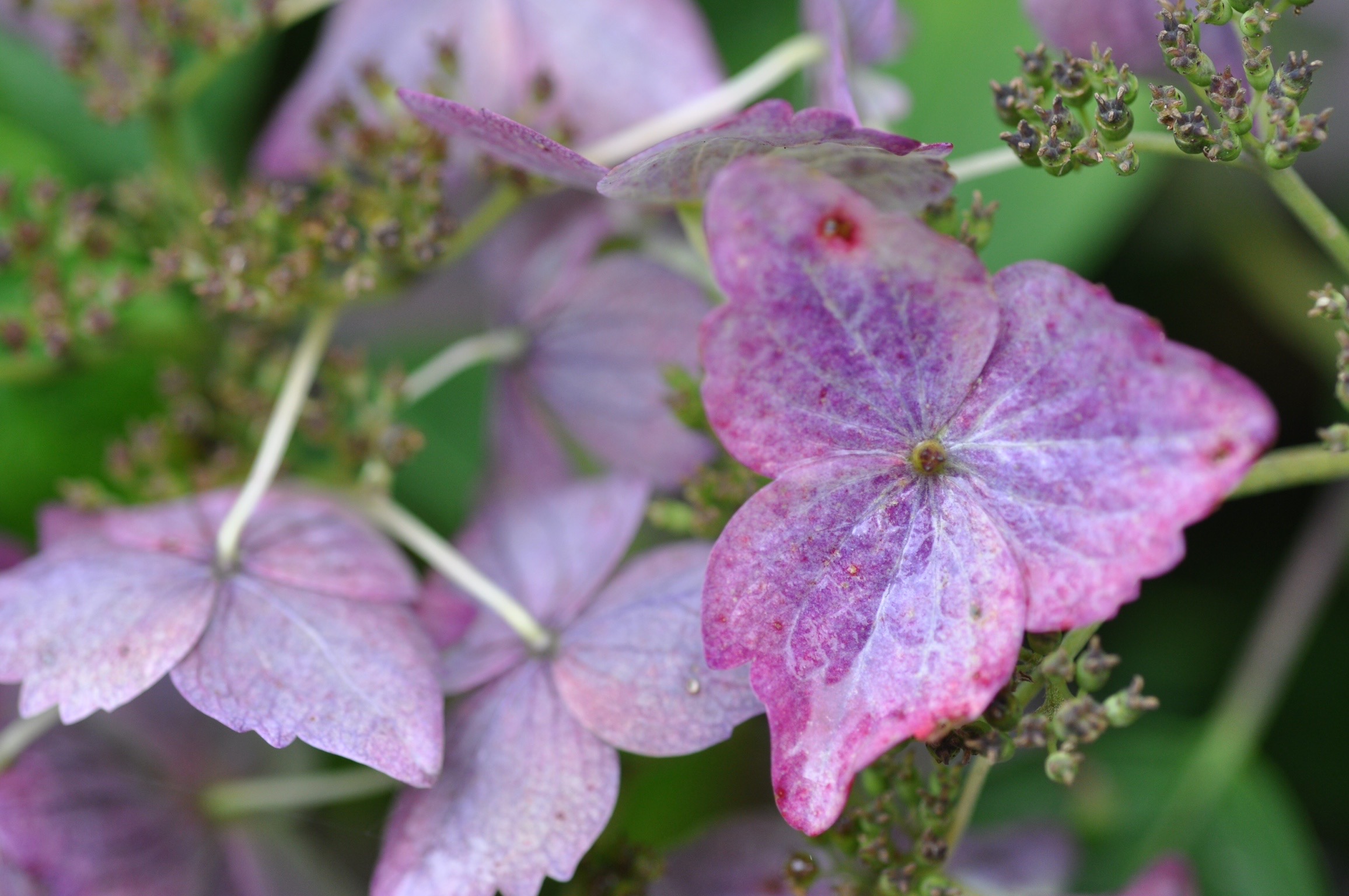
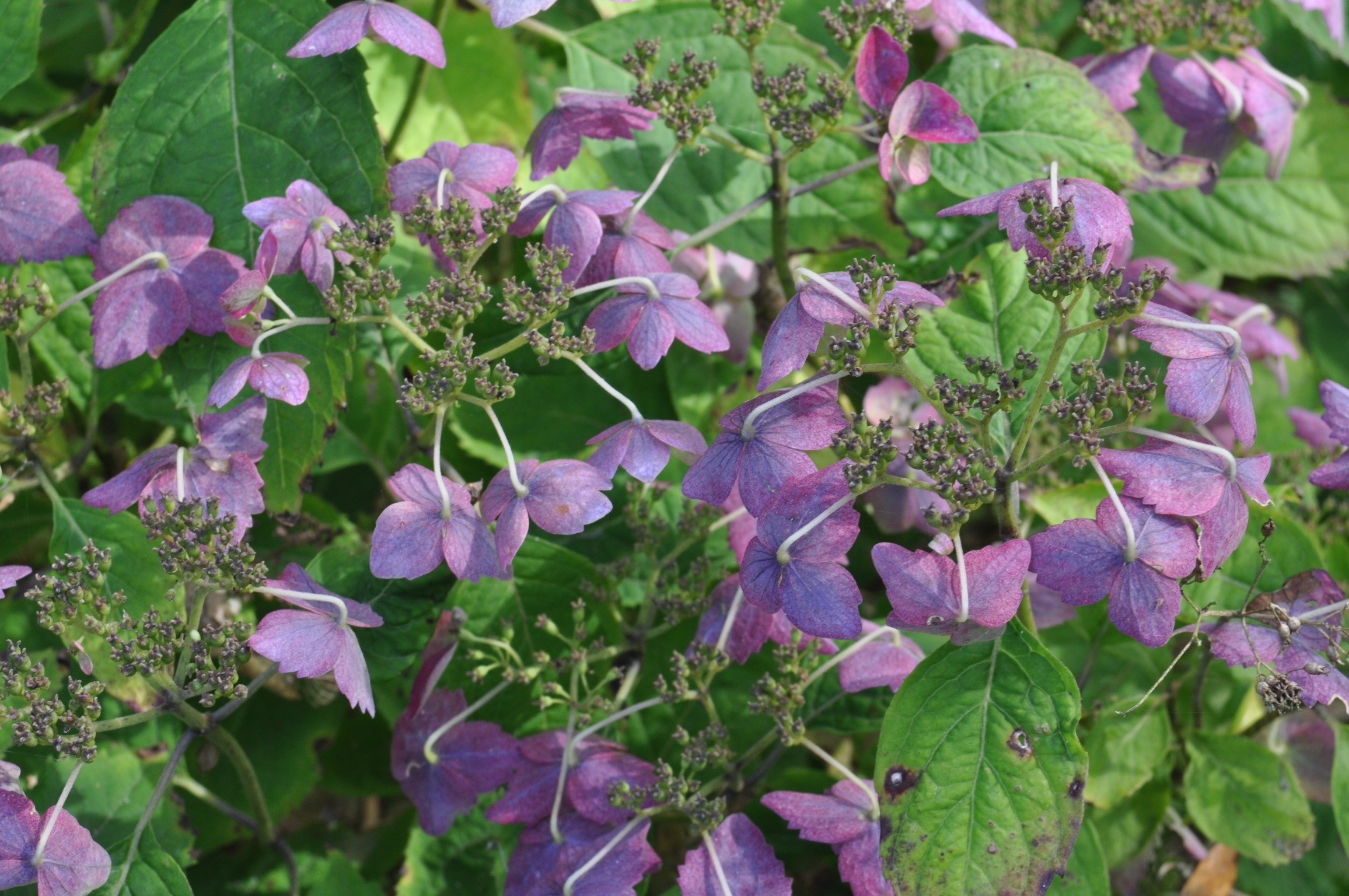
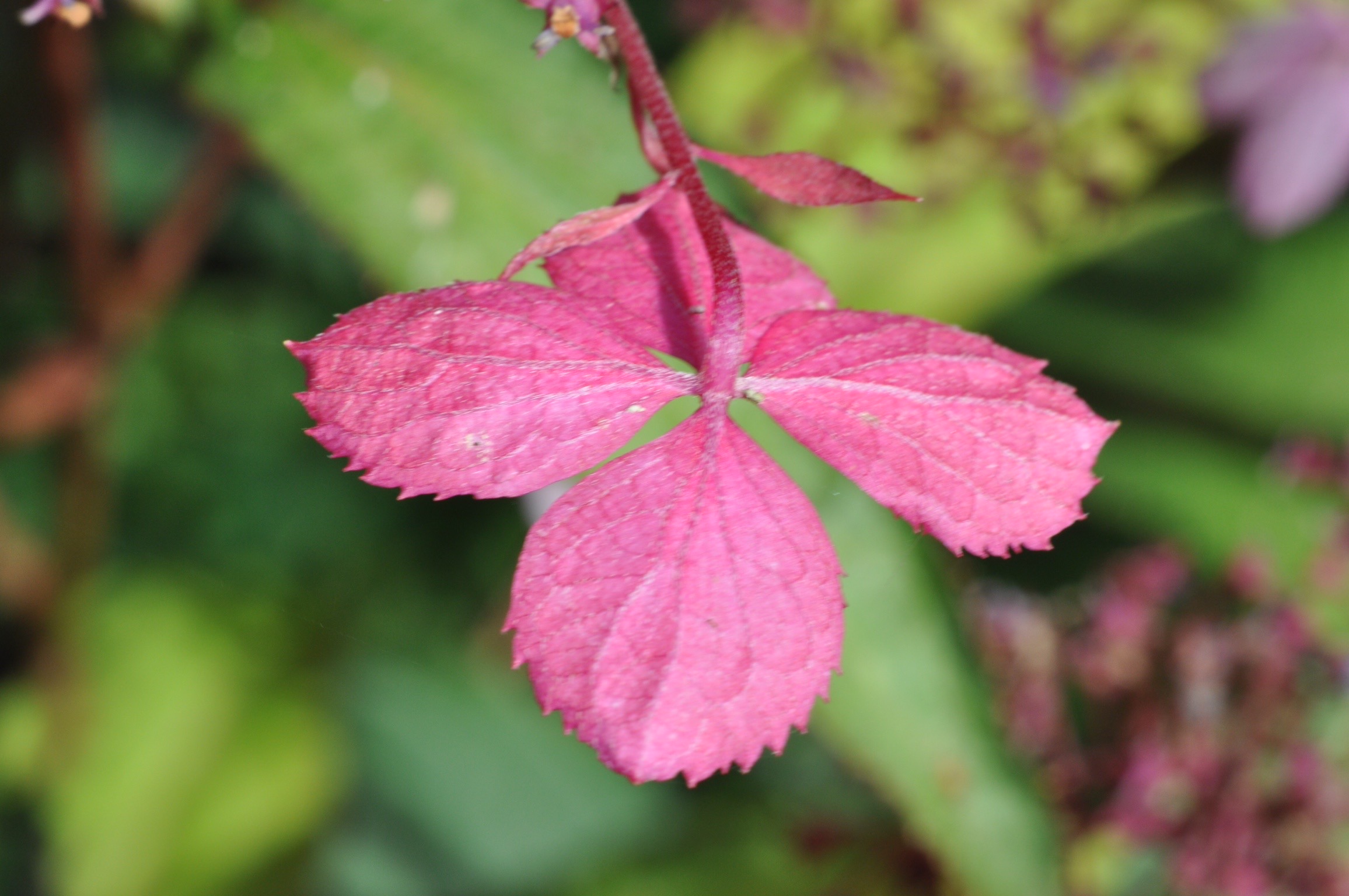
OPEN DAY SCHEDULE: We’ll start on time as there is a lot to get through. Coffee/tea and biscuits will be available from 10.00am onwards all day. If you wish to come for only part of the day, that’s fine – but please let us know your timings, so someone can come and greet you, and take you to the tour.
10.30am Chris Lane: grafting demonstration, with participation and discussion. If you have sharp knives and/or root stocks and scions to practice on, please bring them. We might have a few magnolia root stocks for sale – TBD.
11.00am Maurice Foster: introduction to the day, and the tours of the garden and arboretum, plus demonstration of how to take Hydrangea cuttings (with participation and discussion as we start to go round the garden).
11.30am Garden Tour in small groups with Trustees, looking at hydrangea cultivars of all kinds, examples of planting strategies, and landscape effects.
1.00pm Lunch, with informal discussion. Bring your own picnic lunch.
1.45pm Tour of the arboretum – the beginning of autumn colour on H. serrata and hybrids, our H. aspera walk, wild-collected paniculatas, heteromallas and other hydrangea species, with rose hips, early liquidambers and some early berries (sorbus, cretaegus, euonymus) on the way.
3.45 – 4.30pm Tea, discussion, selection of ‘Plant of the Day’.
WHF Trustees, plant experts across many genera, will be on hand to guide, discuss and answer questions; WHF plants will be available for sale; Gift Aid Donations are welcome (most choose to give £15 per person). To reserve a space email whitehousefarmarb@gmail.com.
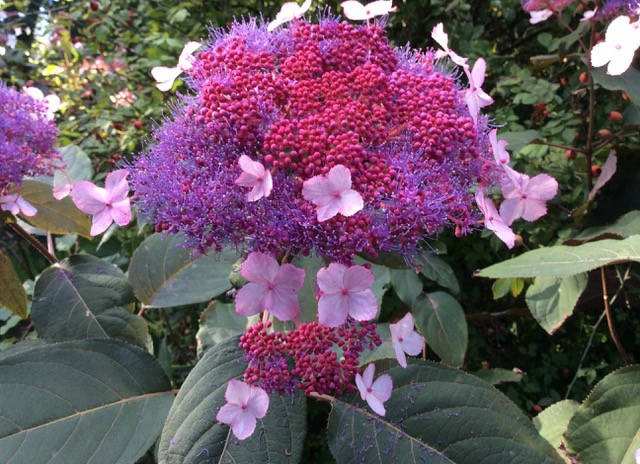
 White House Farm Garden and Arboretum