“One snowy winter day, Empress Wu Zetian , the first woman sovereign in China’s history, ordered all the plants to bud and blossom. But the peony, too proud to flatter the Empress, remained bare. The empress flew into a rage and had all the peonies in the Tang capital Changan ‘banished’ to Luoyang.”
This is taken from a postcard tourist promotion featuring Luoyang peonies.
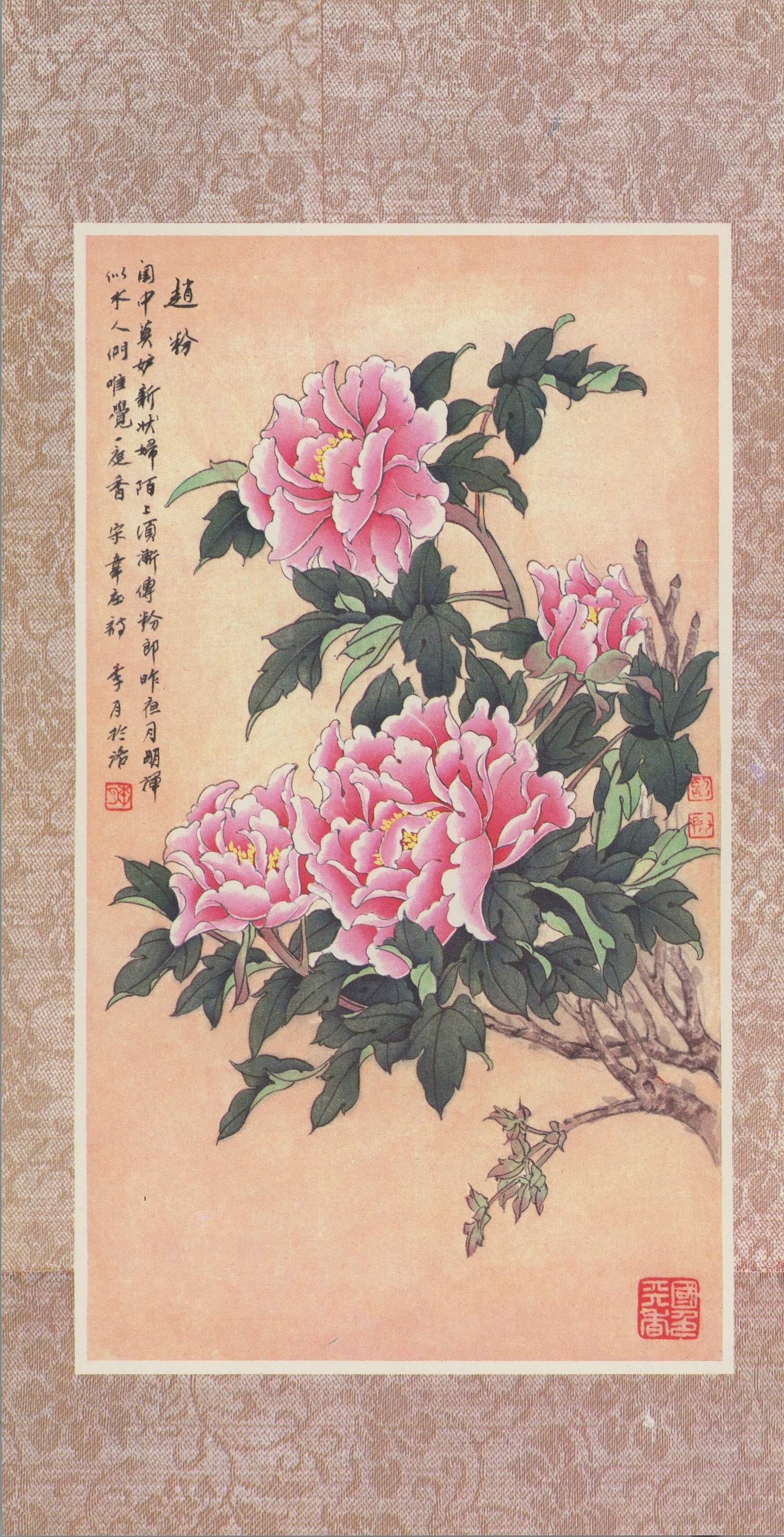
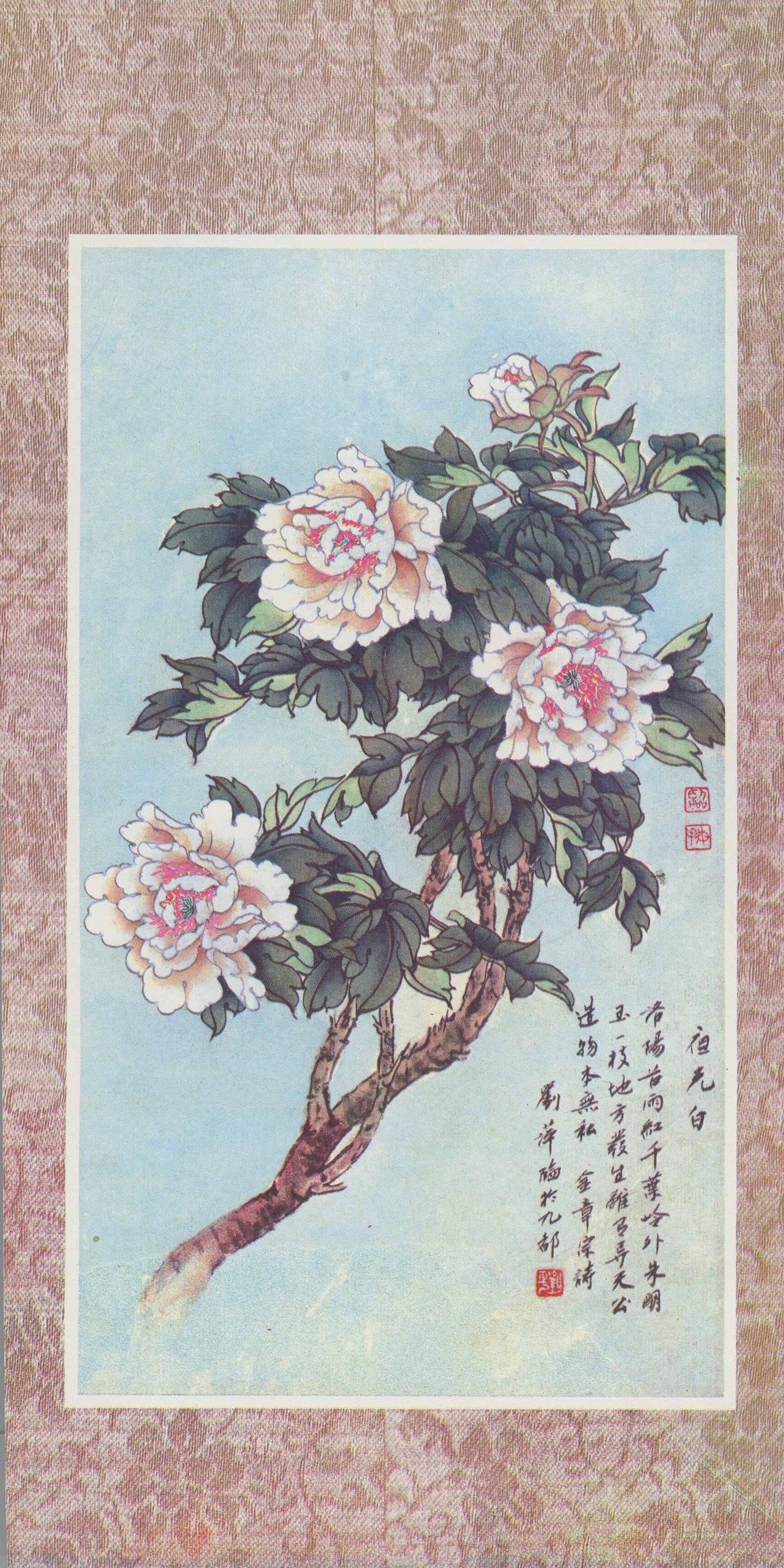
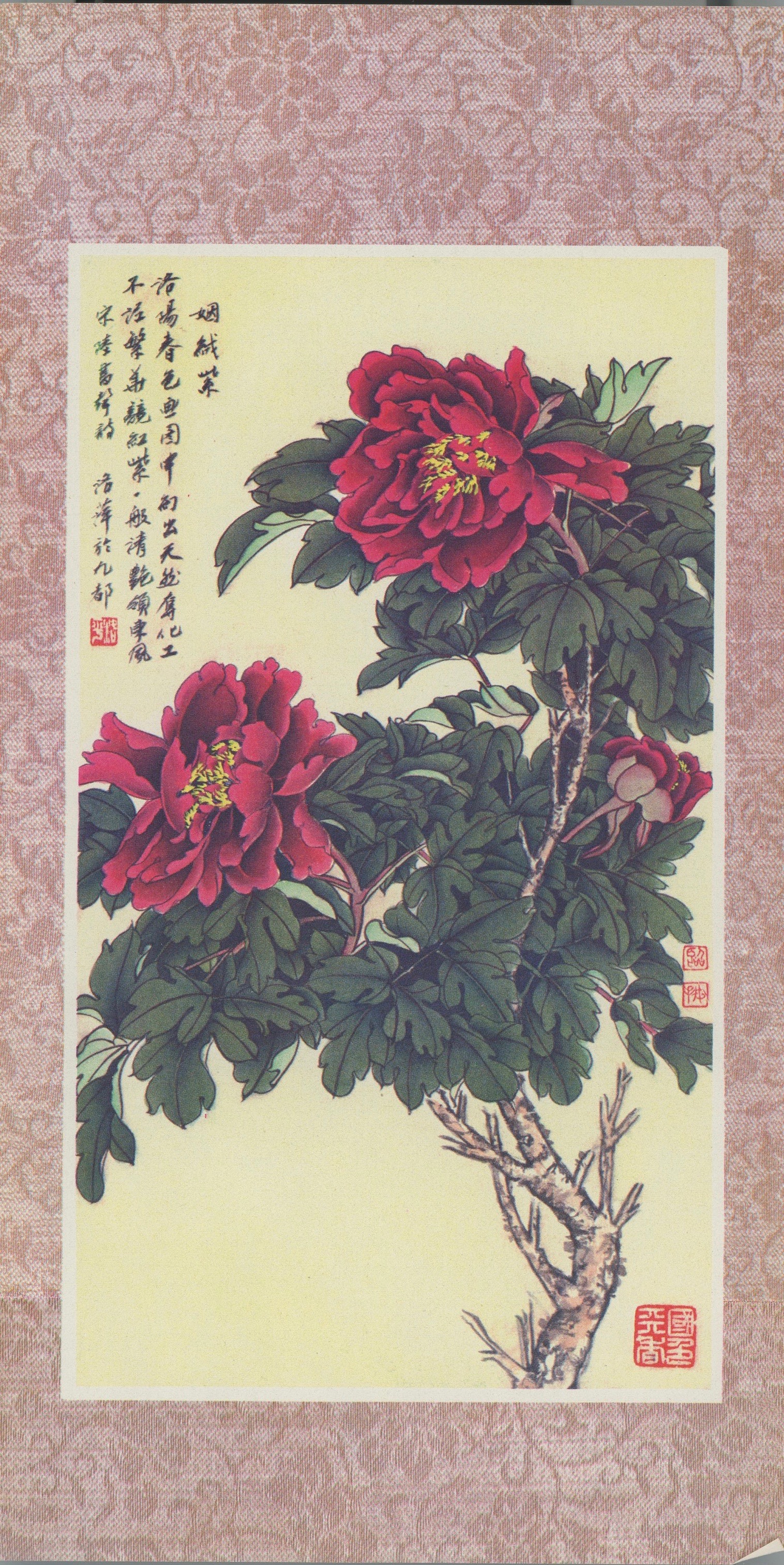
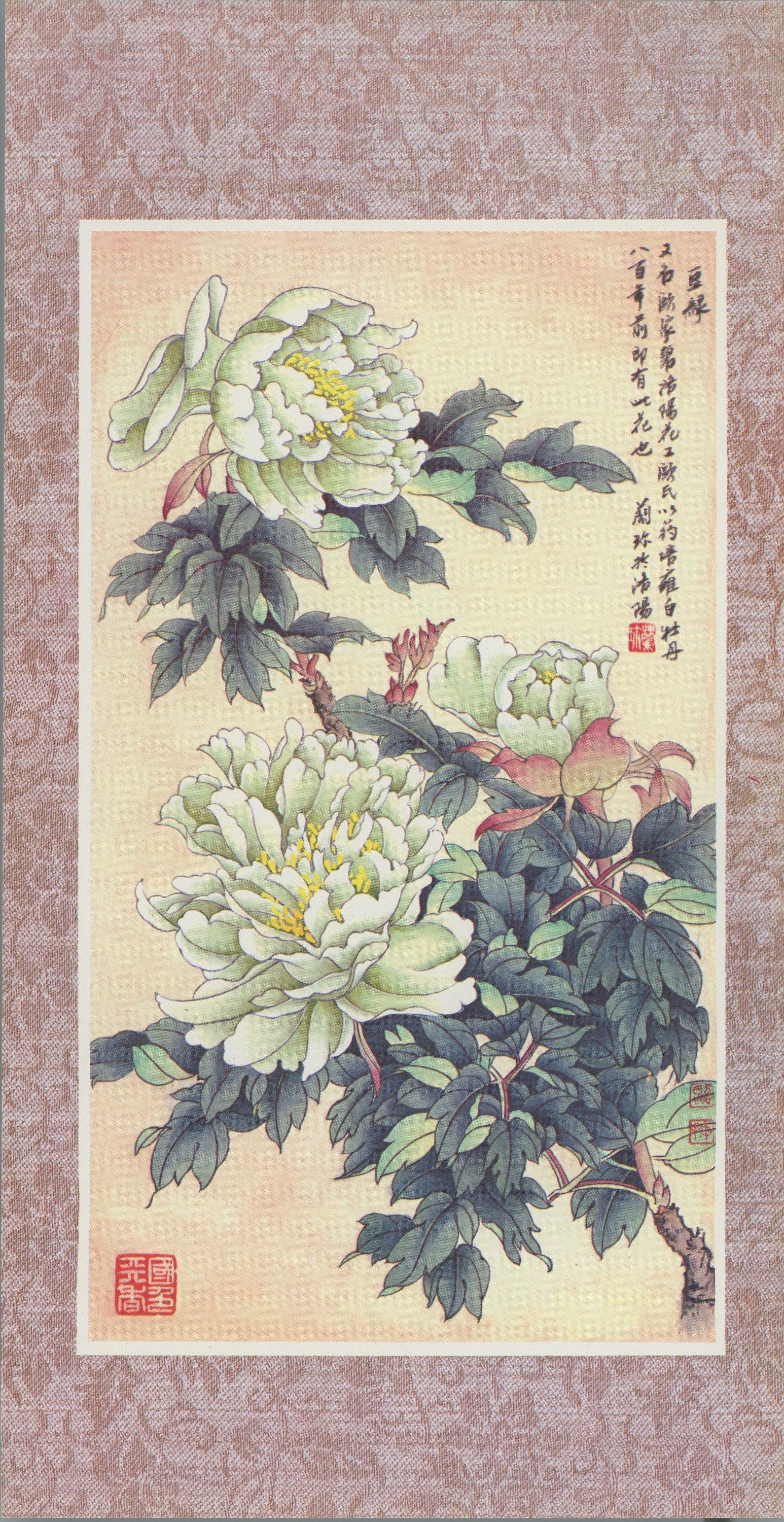
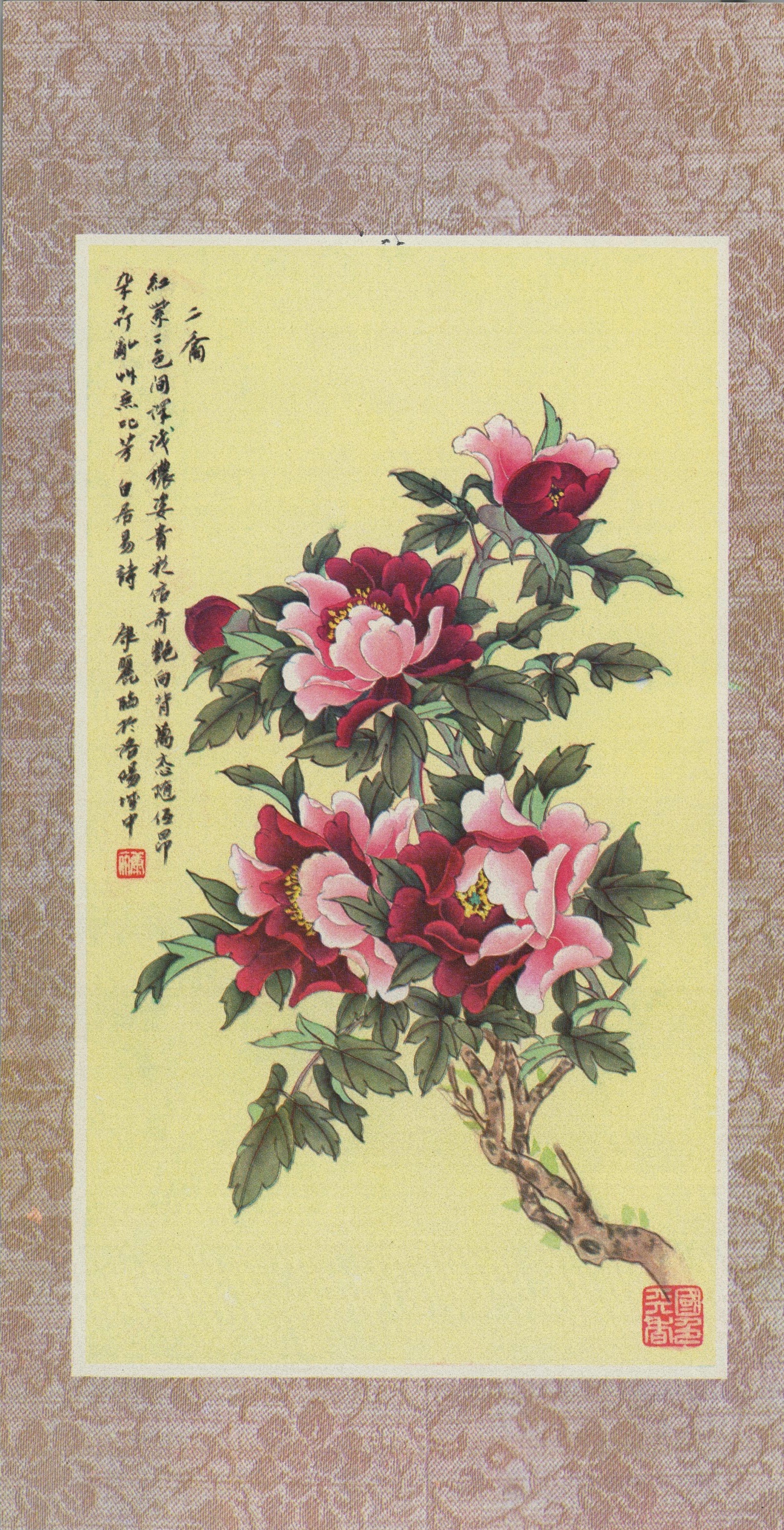
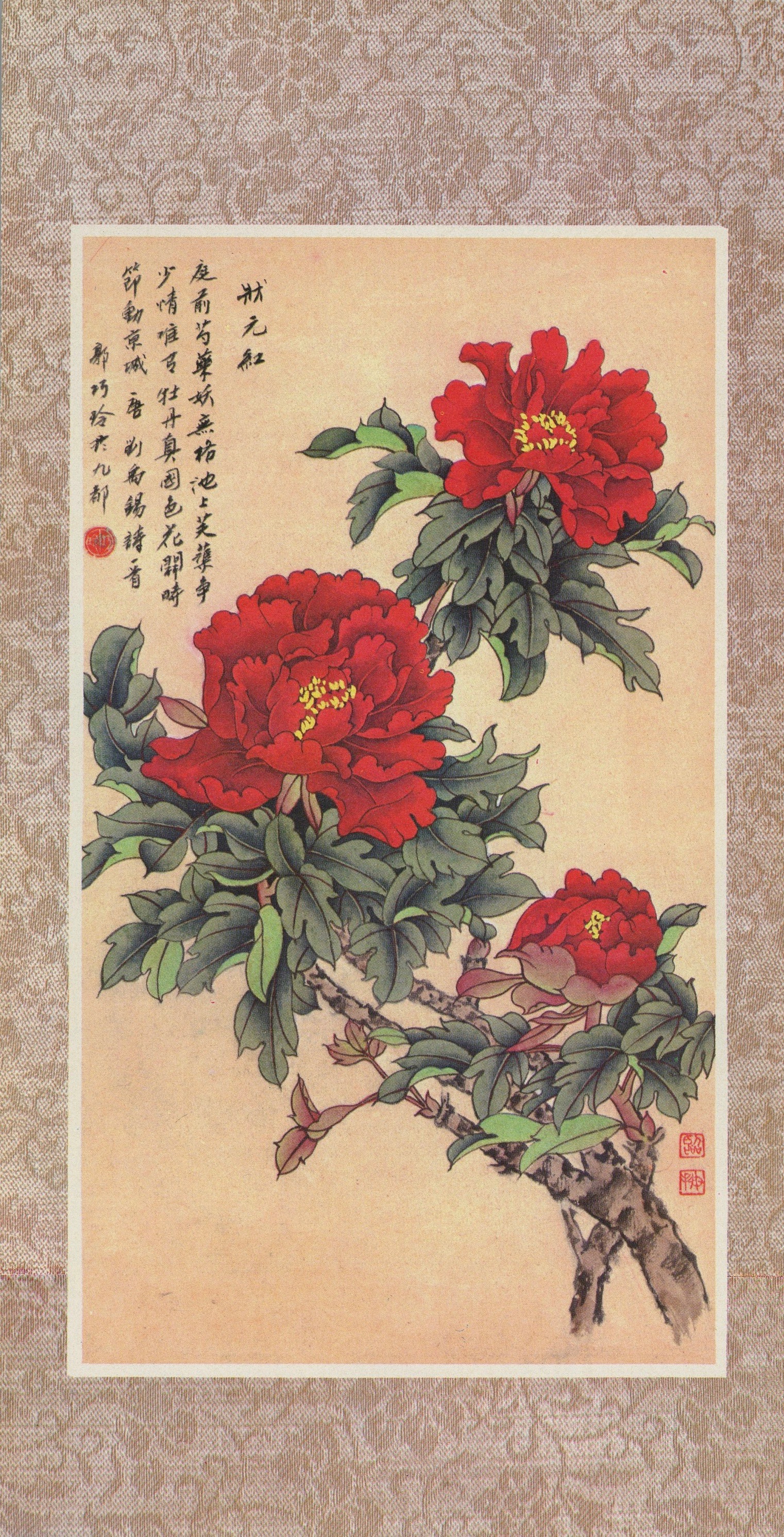
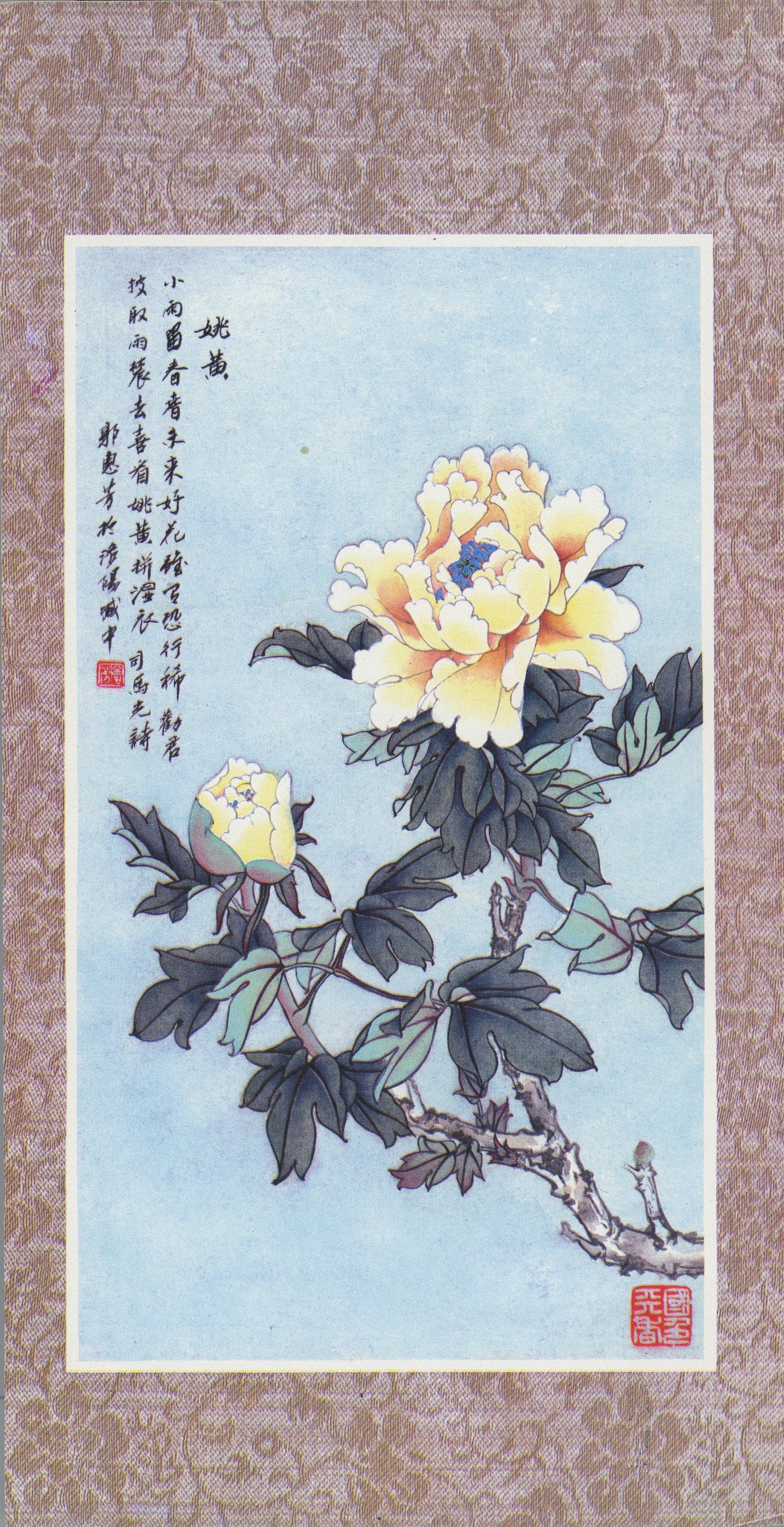
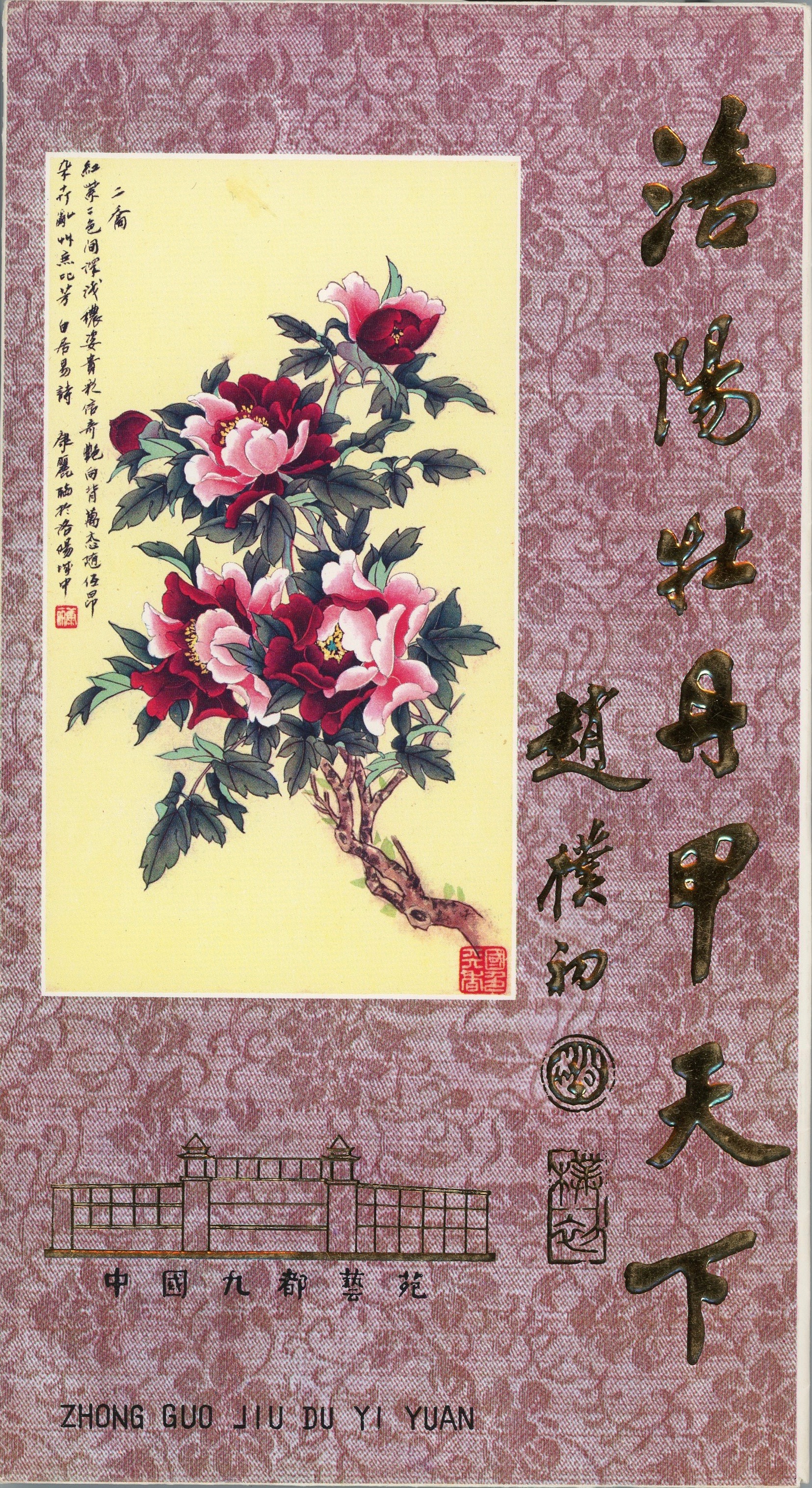
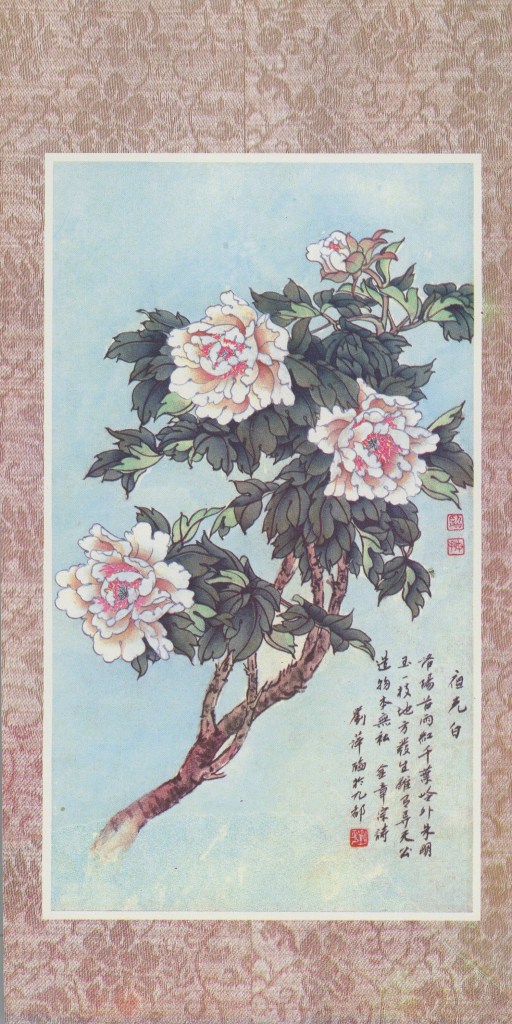
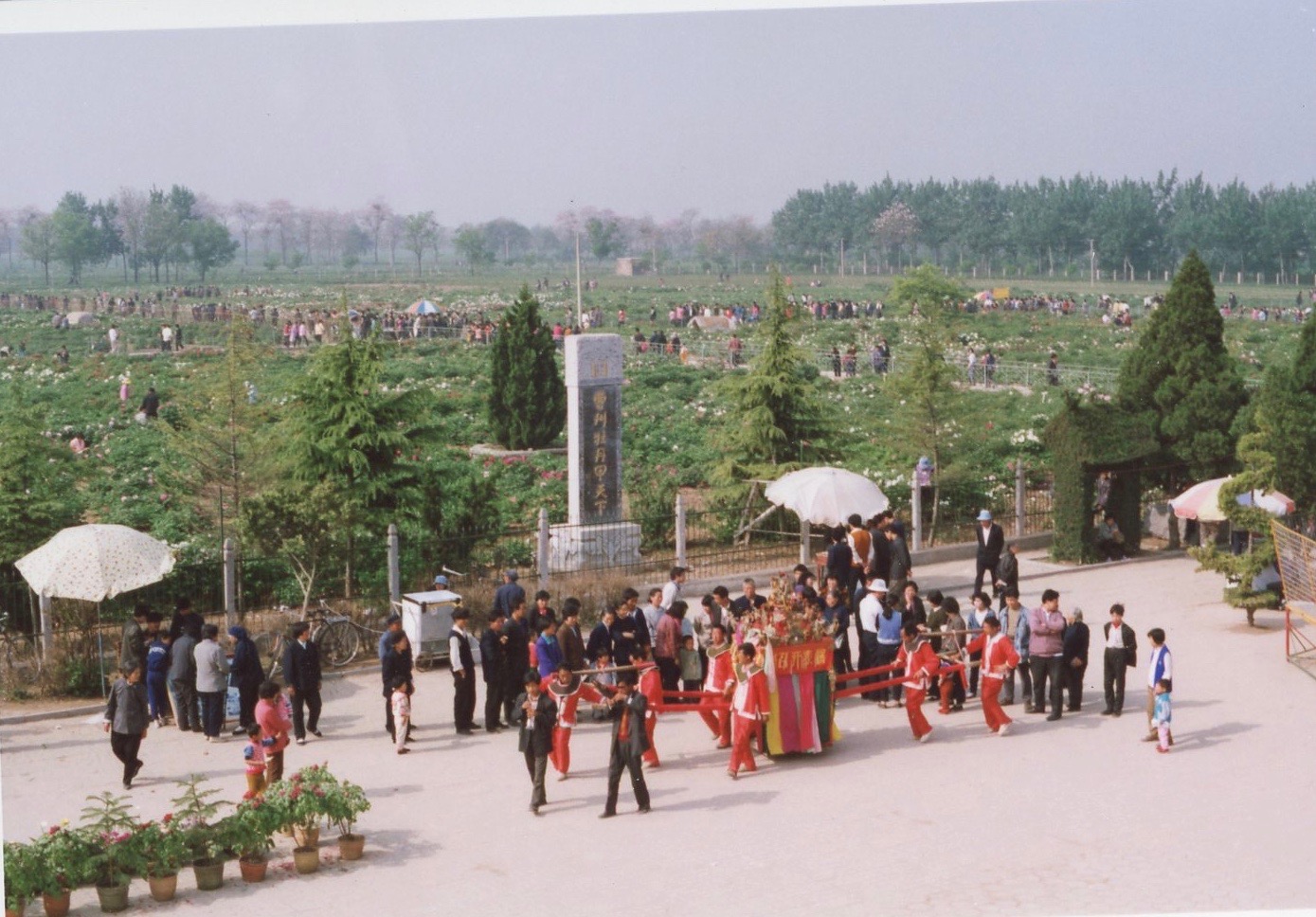
The legend of the Luoyang peonies goes back to the Tang dynasty, 618-907AD. Luoyang, a district in Henan in N. China, is today one of the great centres of peony production, conservation and development in China, comprising tens of thousands of plants, it is claimed in over 1000 different varieties. This blog isn’t about the Luoyang peonies as such, but Luoyang is typical of a number of similar centres across north and west China. Thousands of tourists flock there through April into May as part of an annual festival to see the great floral spectacle of the ‘moutan’, in colours of every hue, from yellow to dark red, flowers from fully double to a simple single.
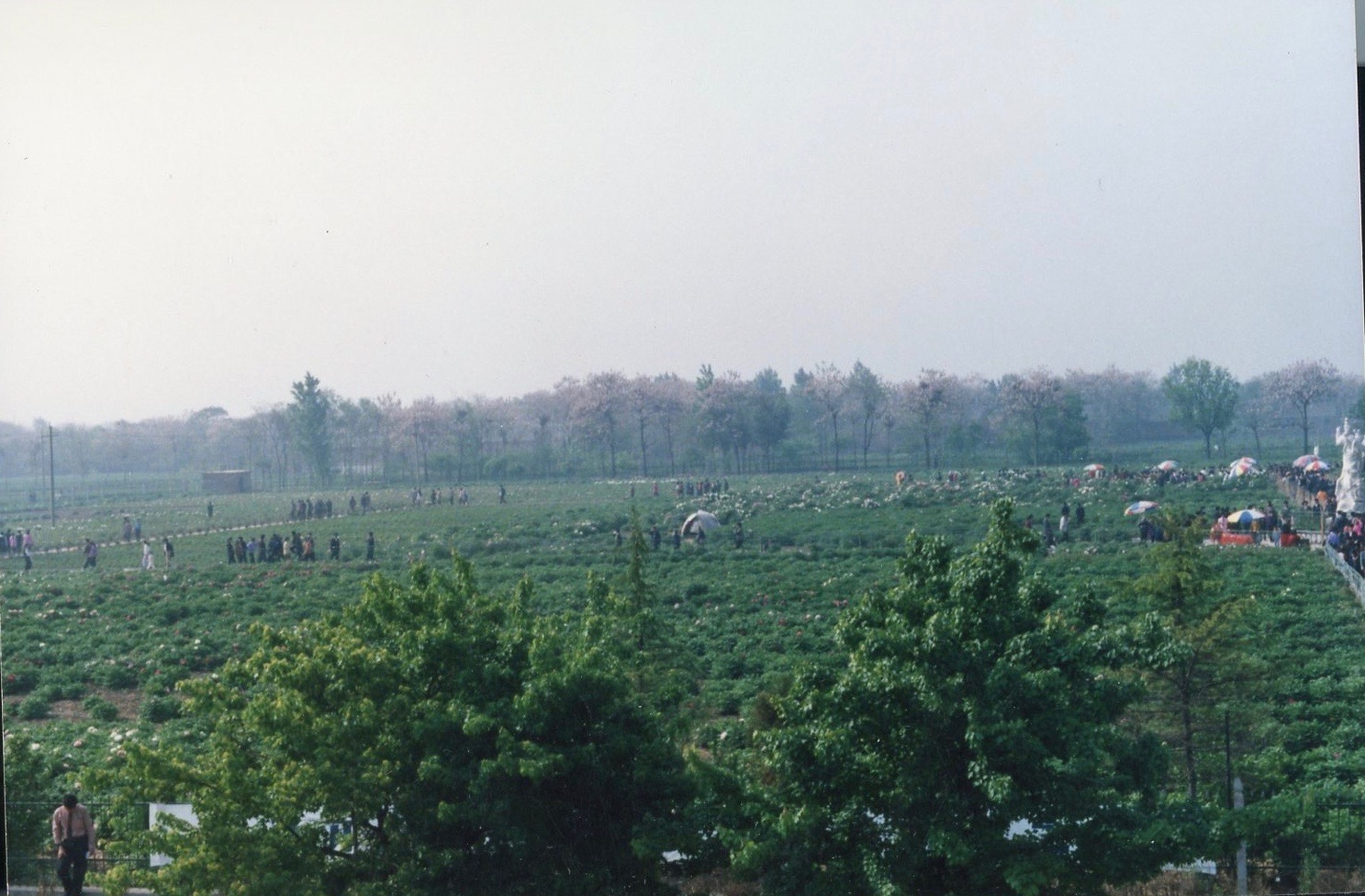
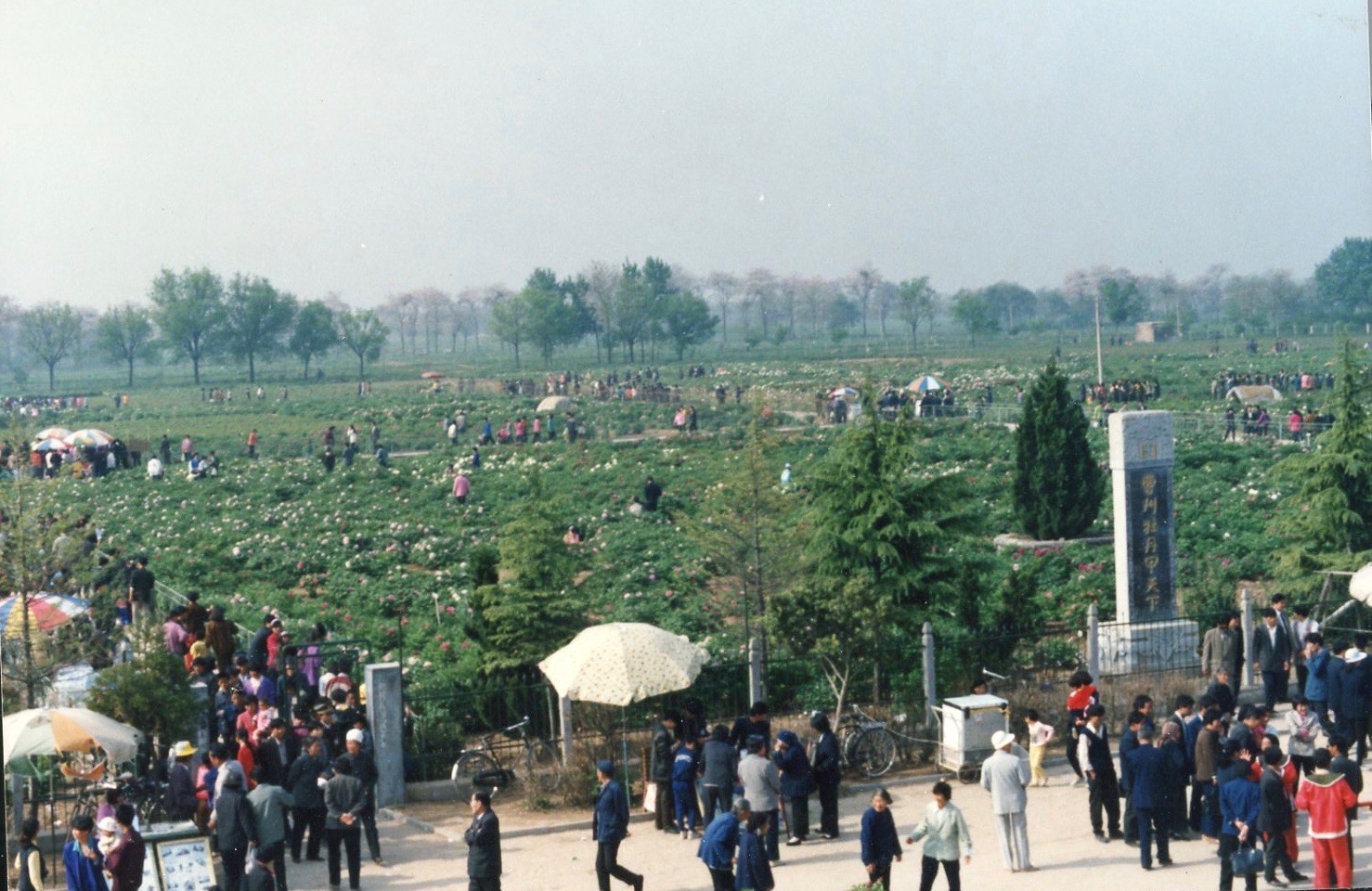
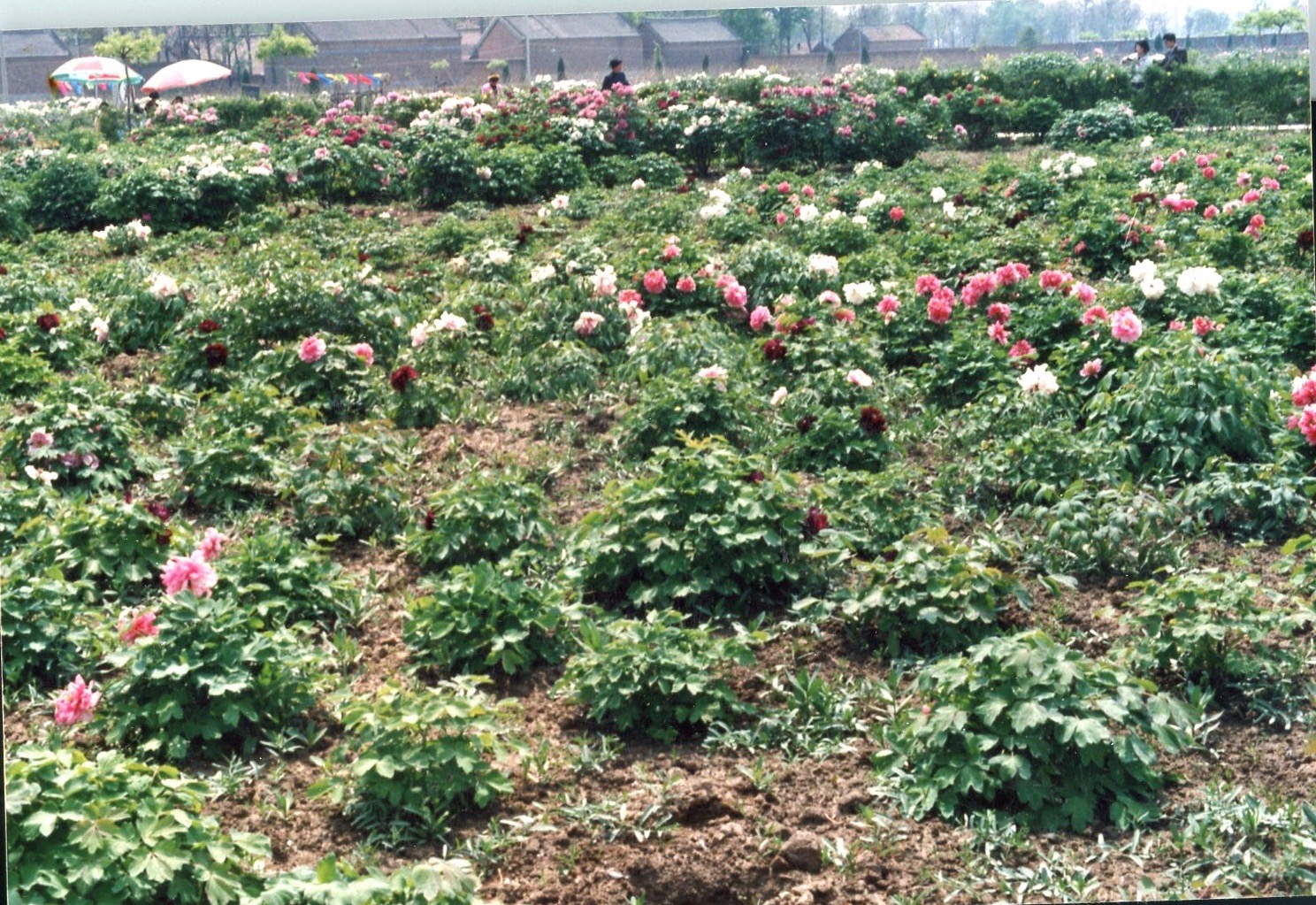
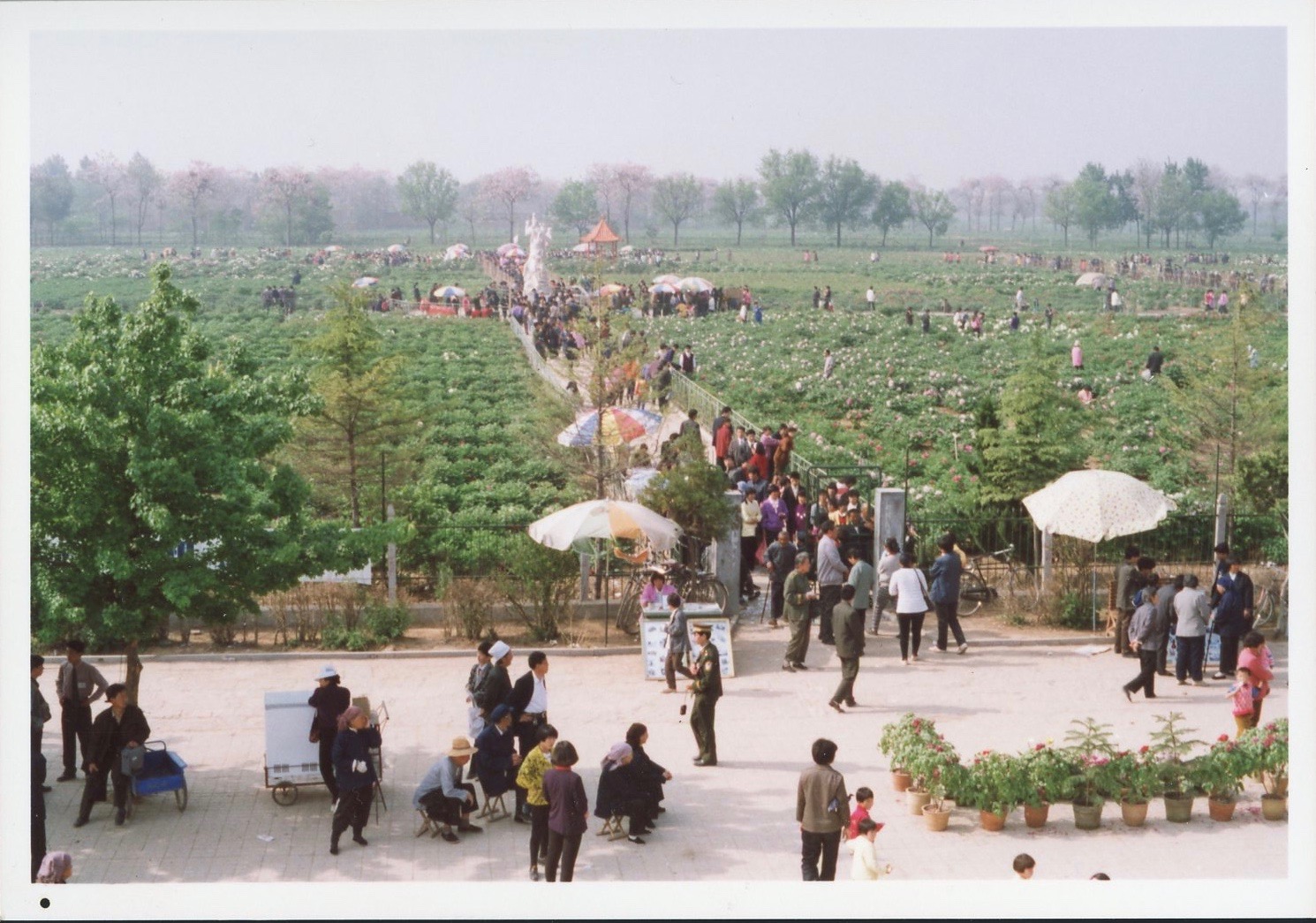
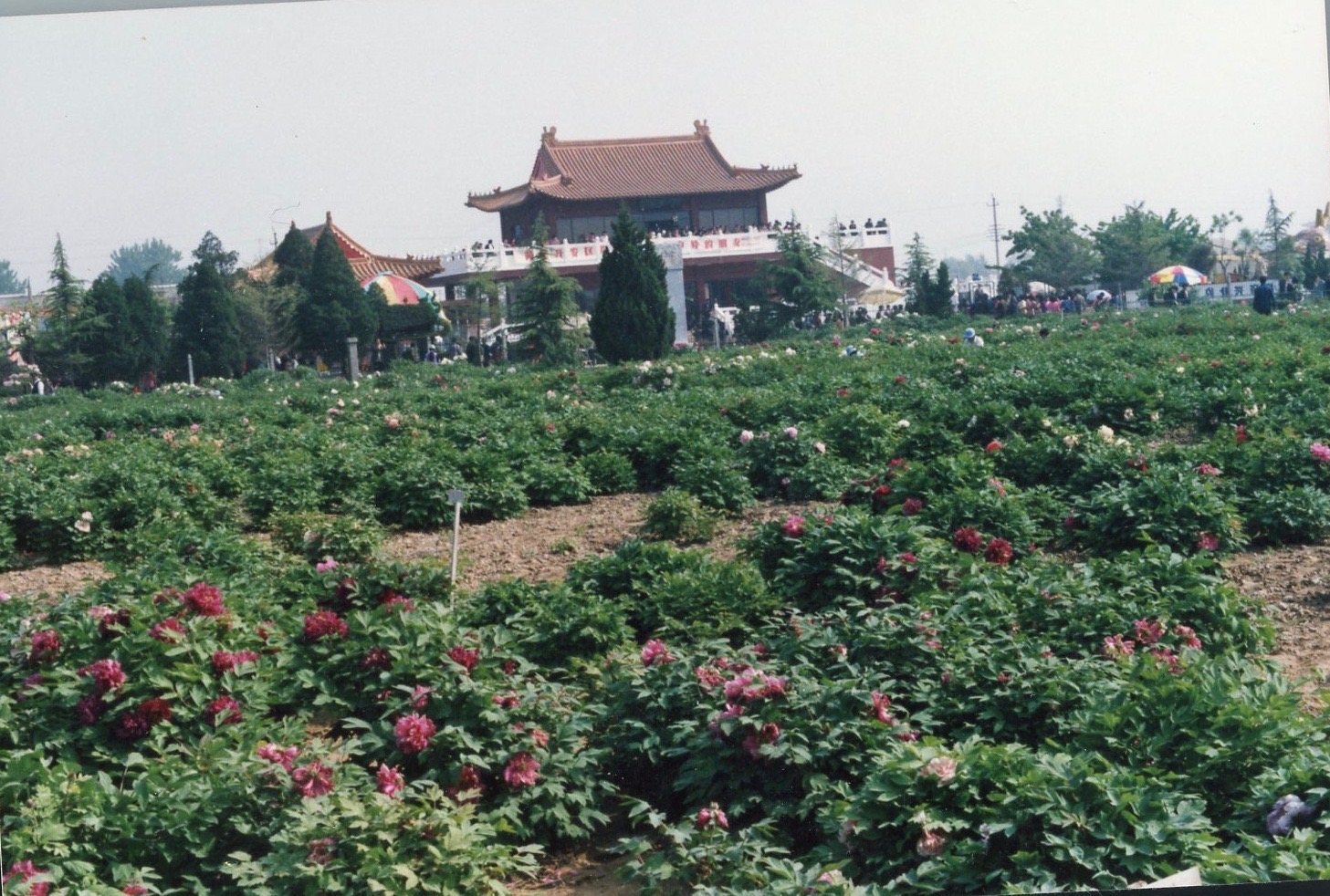
The peony is revered in China: it is one of the four seasonal flowers, the principal plants featured in Chinese art, ceramics, and textiles, woven into silks and brocades. The peony represents spring; the lotus, summer; the chrysanthemum, autumn; and the plum, winter.
The first tree peony in the UK was introduced to Kew in 1789 by Sir Joseph Banks through the good offices of a doctor in the East India company. Some 40 years later it was reported to be 8x10ft across, with double flowers of a bright magenta at the centre, fading to a paler tone at the edges. By the end of the nineteenth century availability of different cultivars of peony in the UK could be measured in scores if not the hundreds.
Today, most tree peonies available for purchase in the UK belong to what is now known by taxonomists as the ‘Gansu Group’ of peonies. Many of these are largely based on seedlings from a white-flowered plant with a prominent dark blotch at the base of the petal, collected by Joseph Rock in a lamasery garden in Gansu. This dark blotch is a key character to define the group.
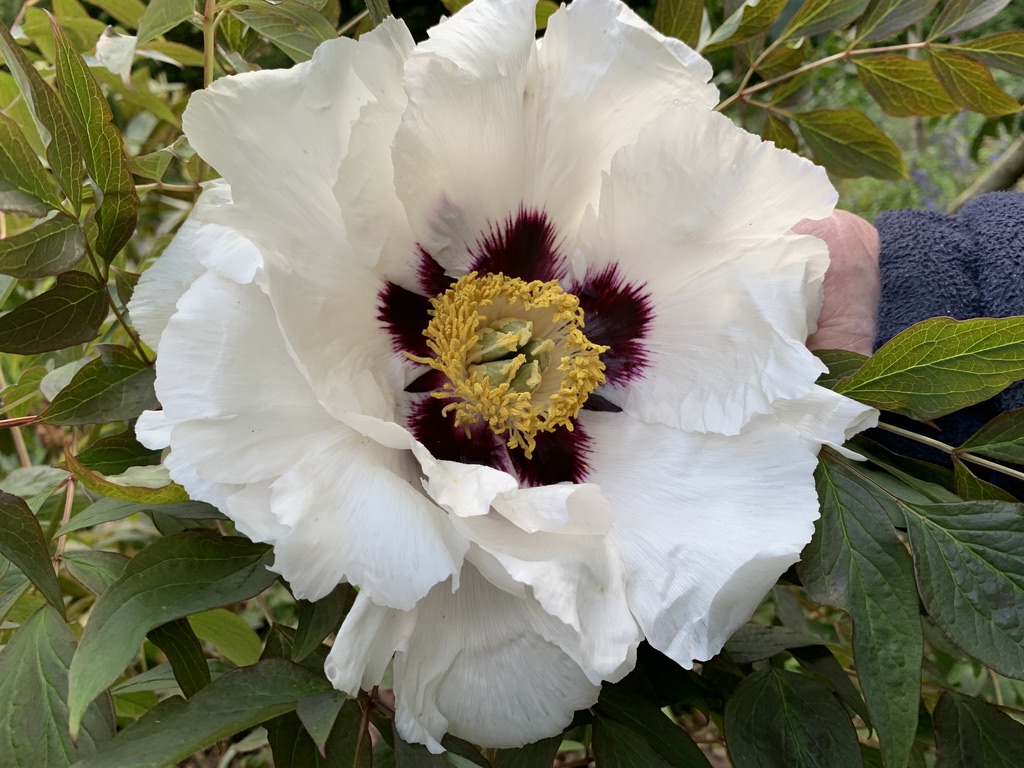
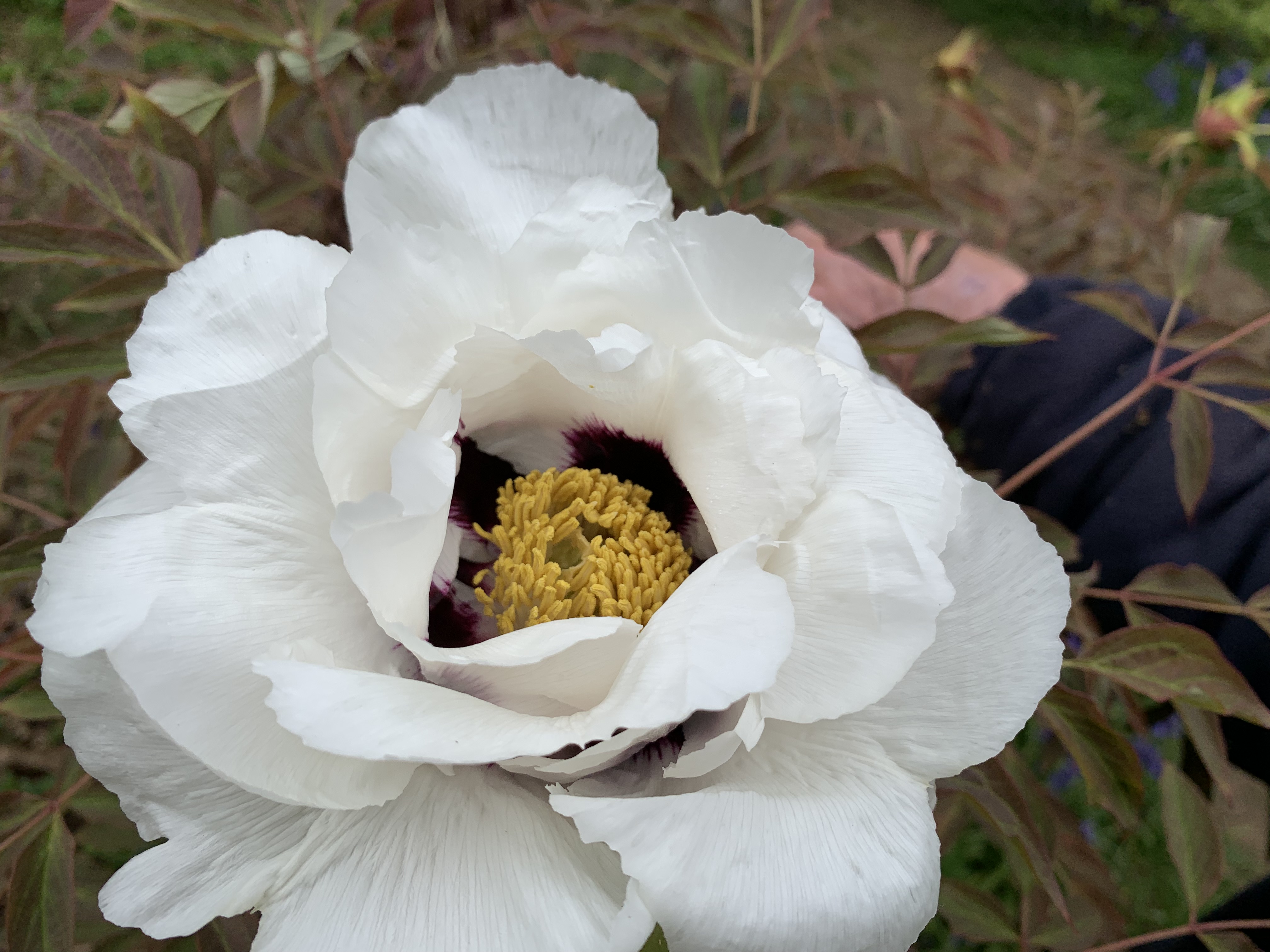
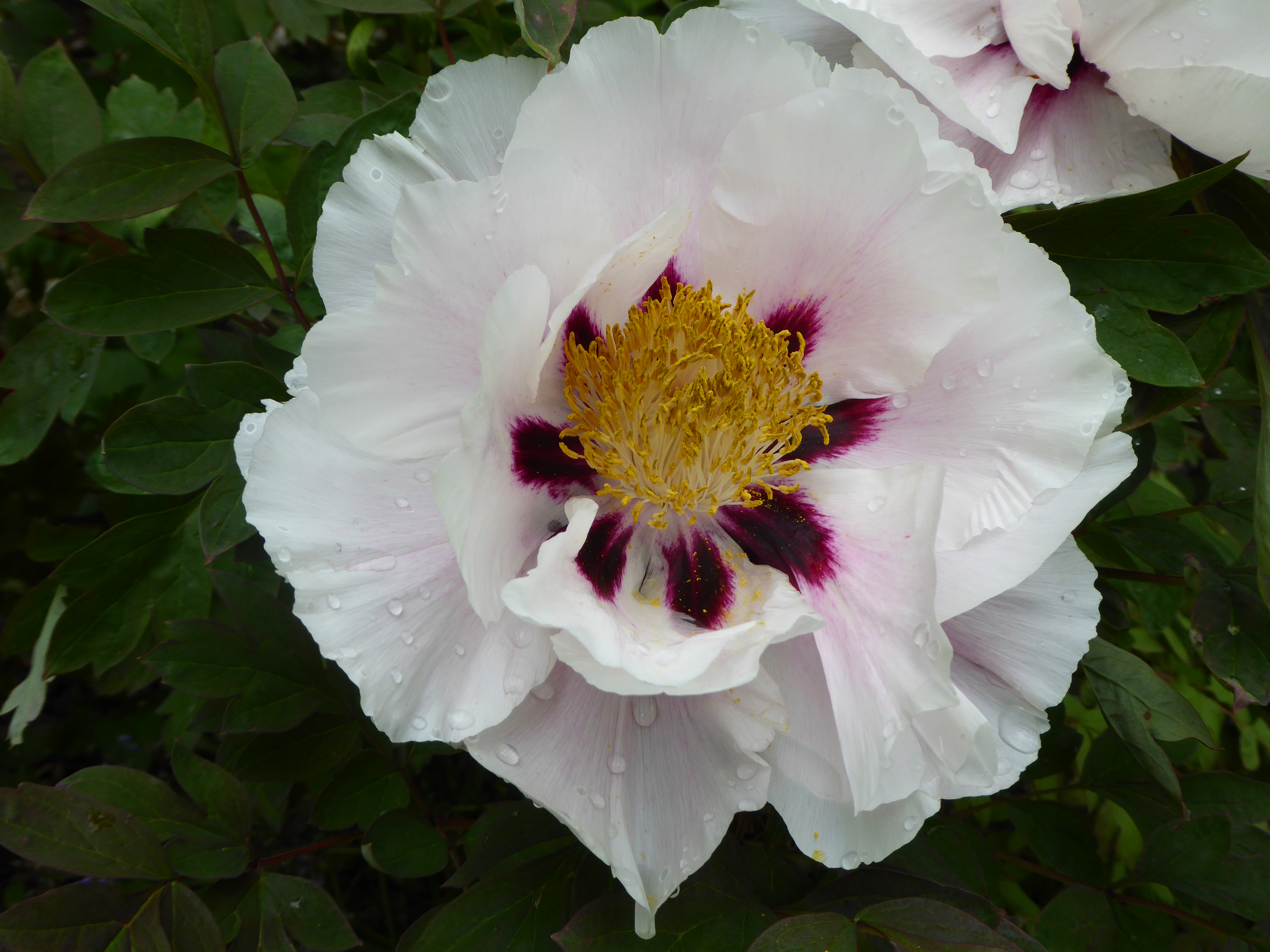
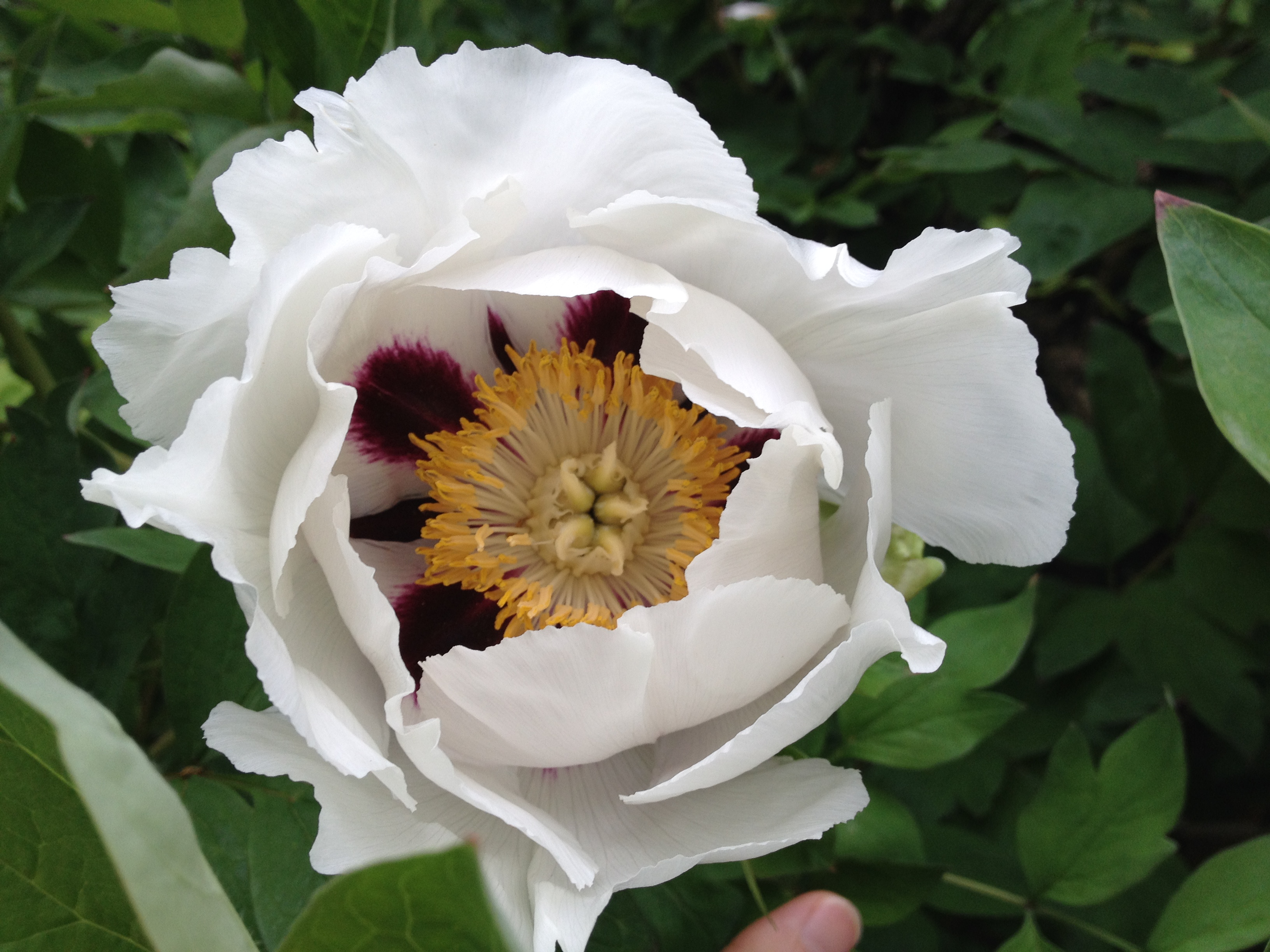
This Rock plant was the subject of much discussion among taxonomists as to its (now illegitimate) status as a species. A specimen was sent to Sir Frederick Stern which is now known as a cultivar called ‘Highdown’, and seed and seedlings were distributed by Sir Frederick to many friends from his garden of that name. The true wild species – not this lamasery-originated specimen – is known as Paeonia rockii (but not featured here).
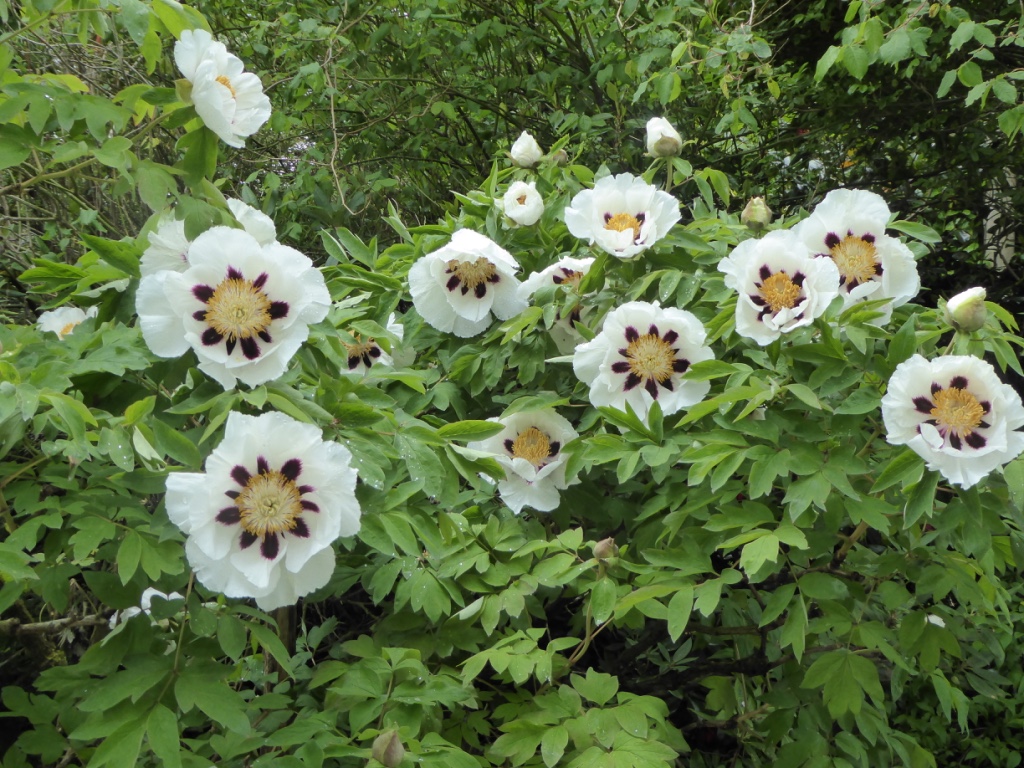
My own white specimen was purchased as a rooted cutting from a plant from Sir Frederick Stern, probably a seedling, given to Lady Anne Berry at Rosemoor, when it was her private garden. It had pride of place, against a small gazebo. I lost this but not before I had grafted it onto seedlings of P. delavayi – and it is now 40 years old, rather overshaded but still flowering.
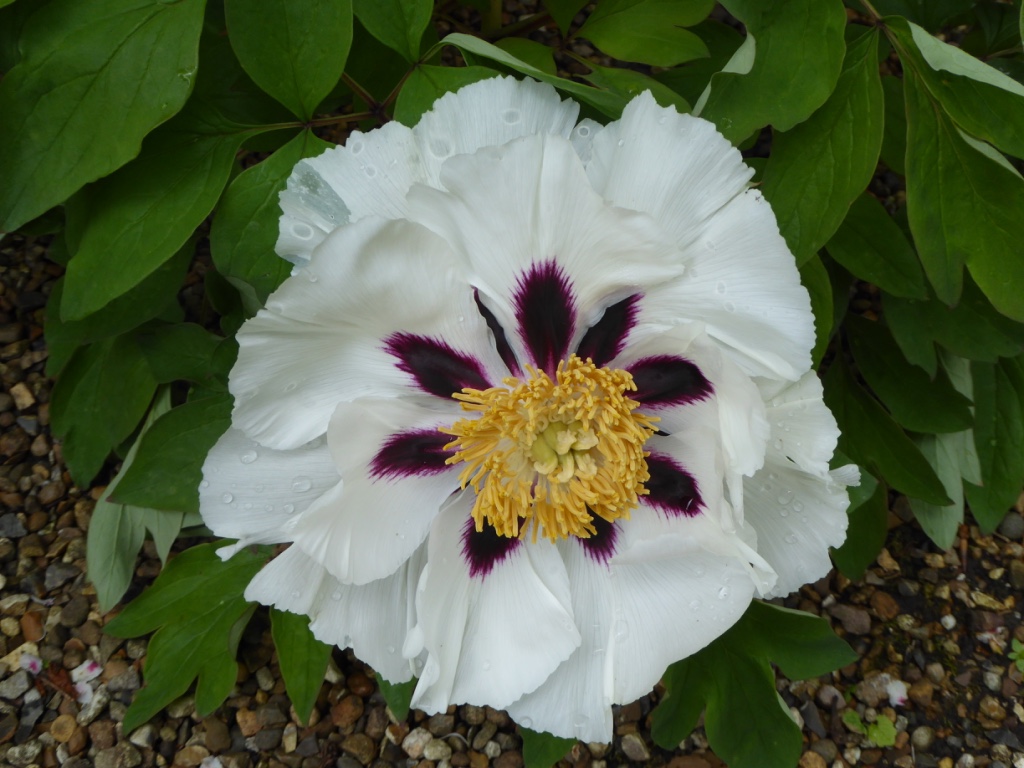
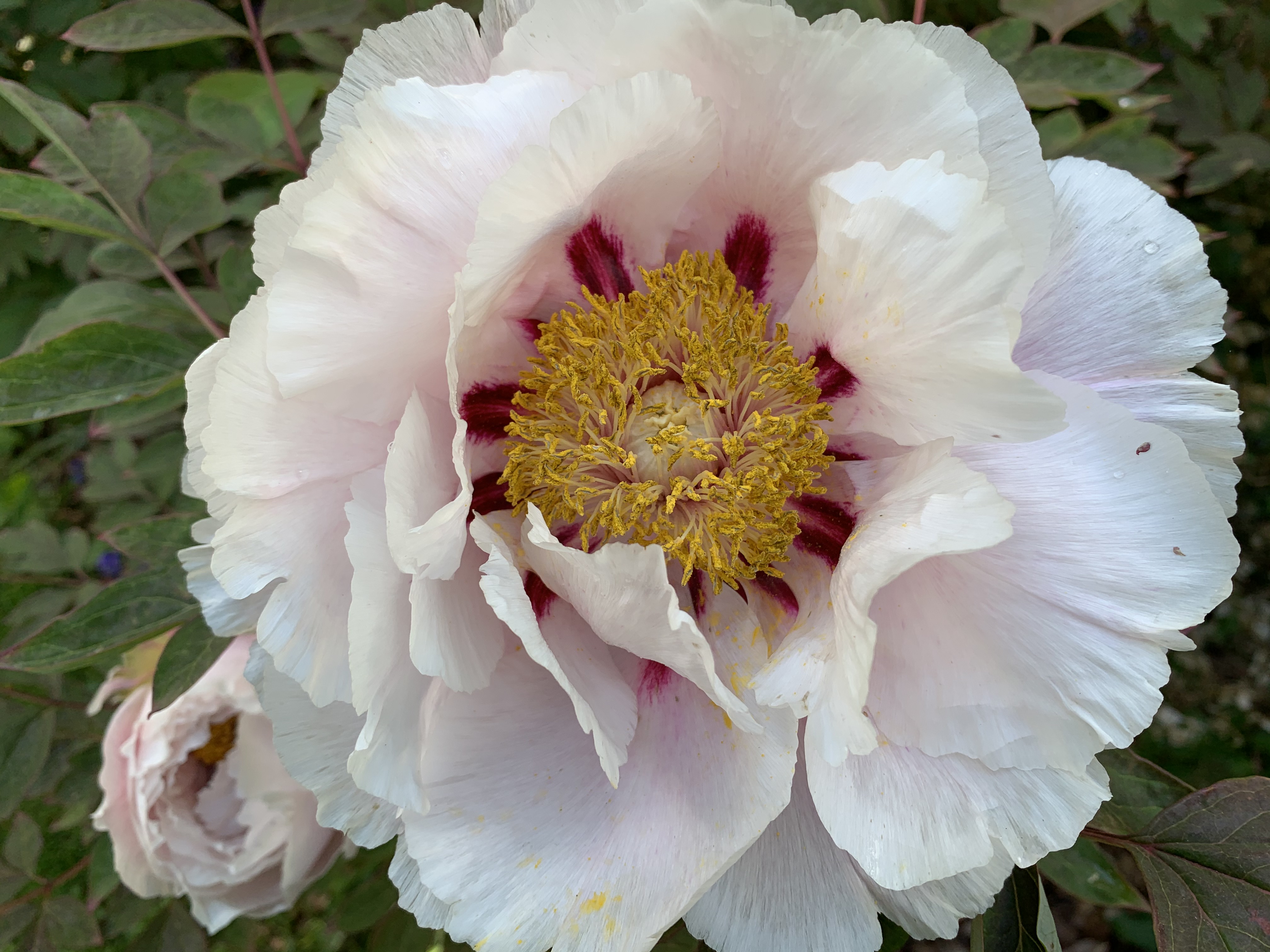
Lady Anne also gave me a packet of seeds from her plants, many of which turned out to be pink/magenta, all with the dark basal blotch and all worth growing.
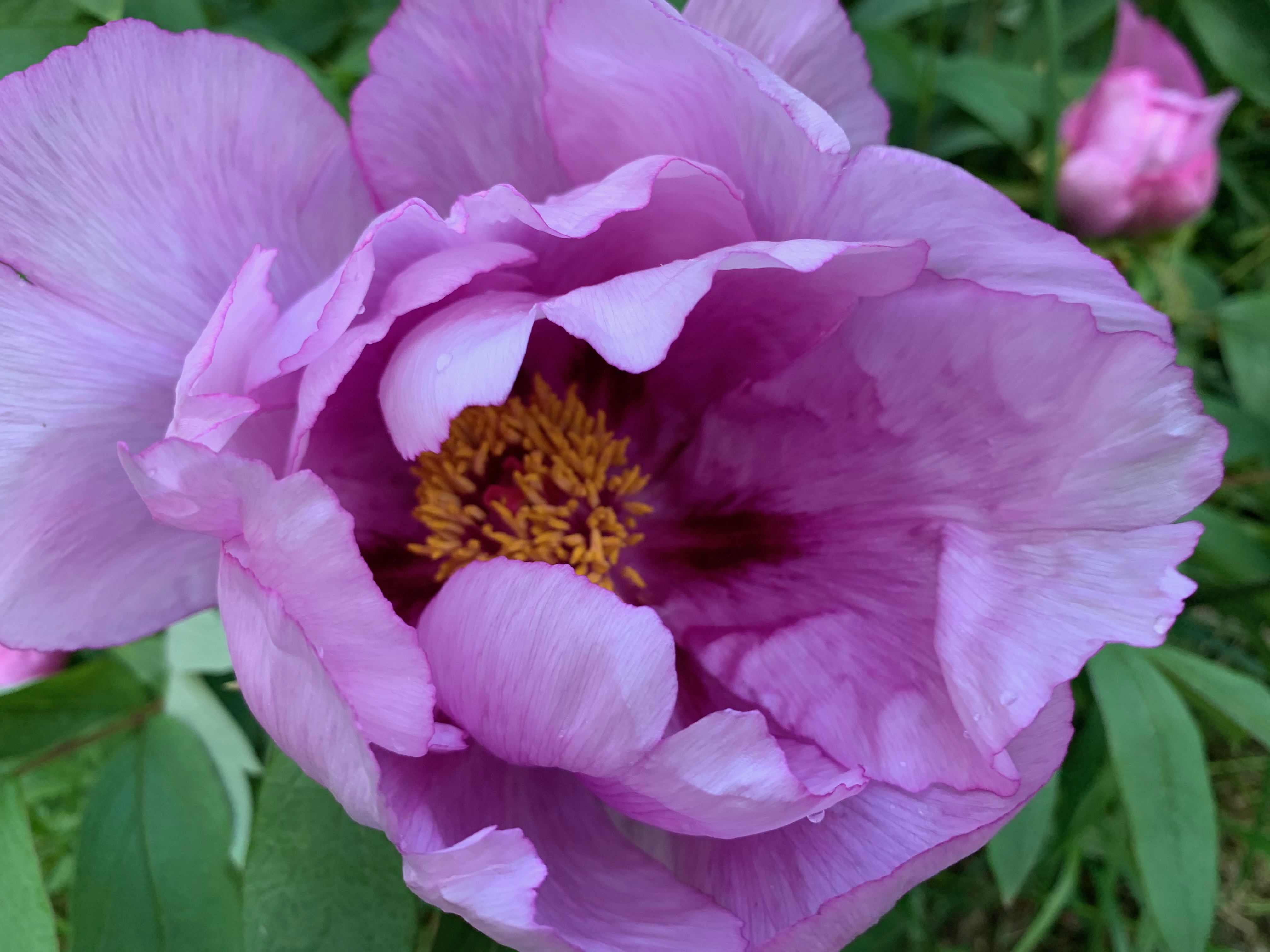
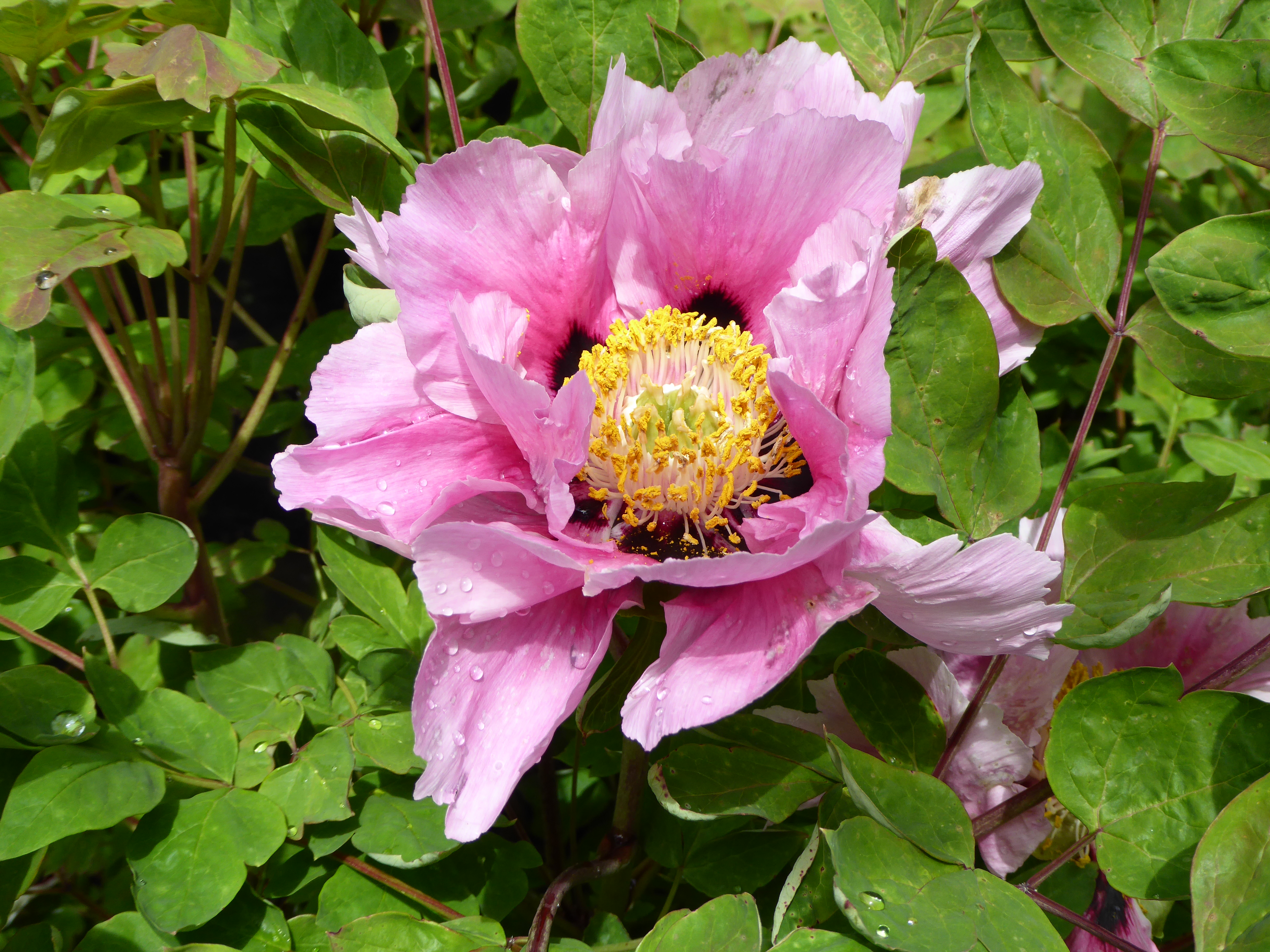
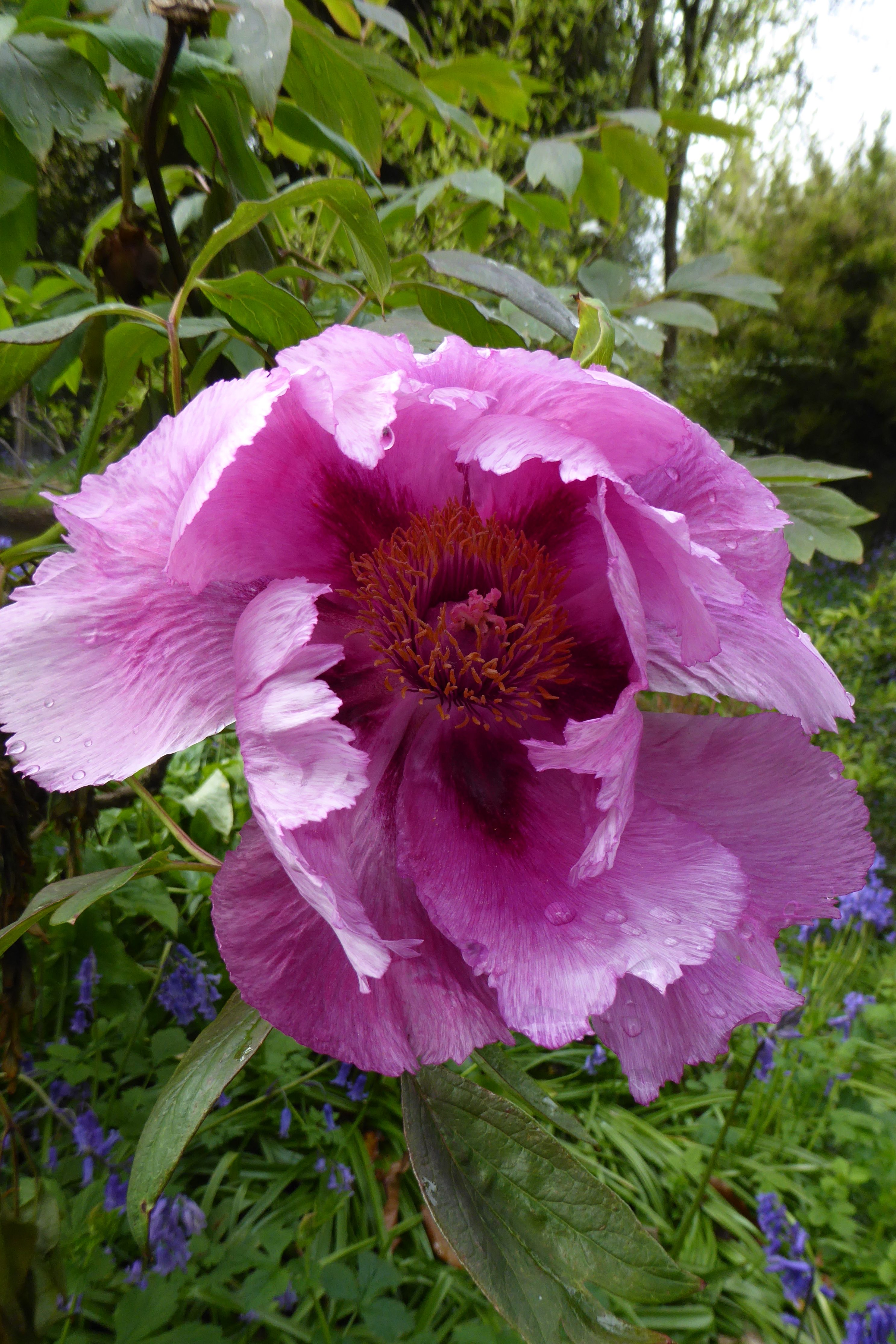
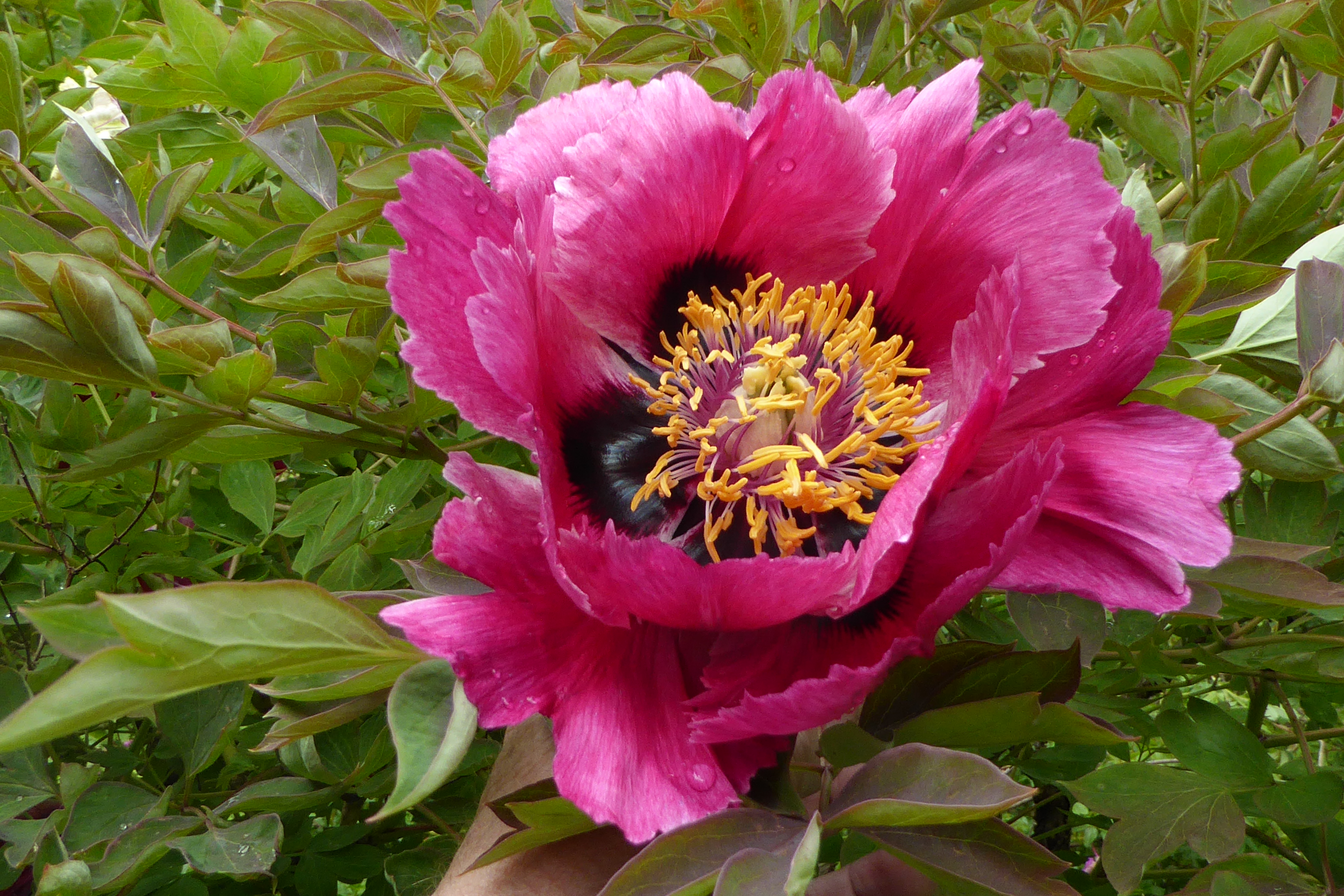
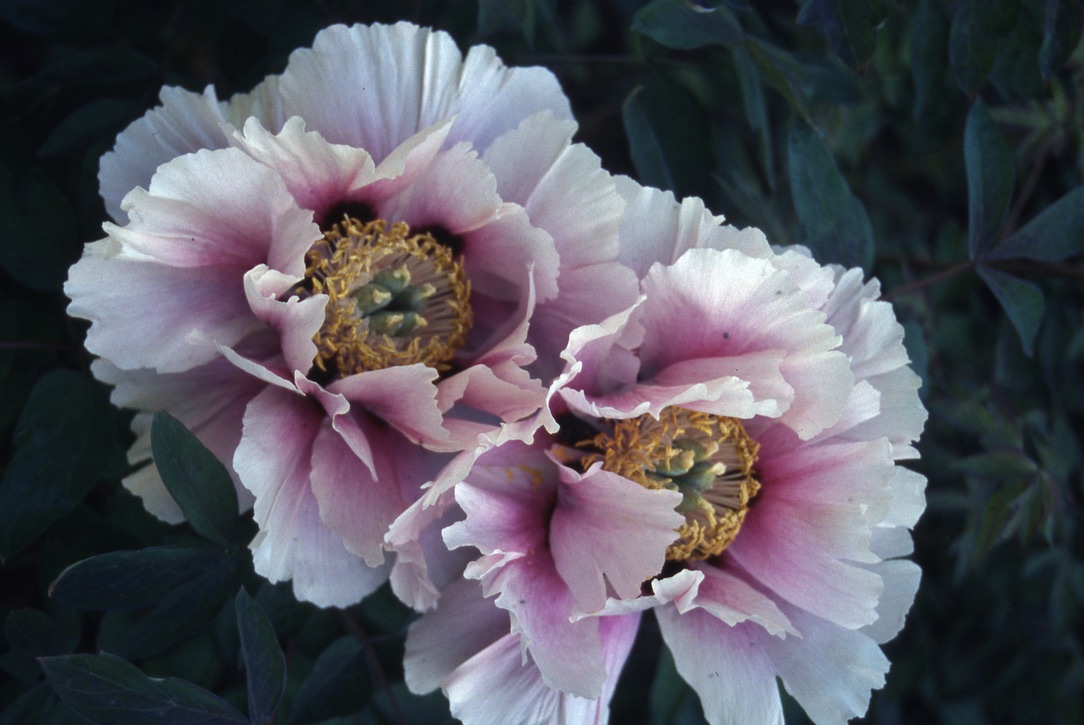
Taxonomists have recently sought to make sense of the plethora of peonies in China by separating them into geographical Groups, with much discussion as to the species origins of each Group.
The Luoyang paeonies mentioned above are designated the ‘Central Plains Group’, and from a continental climate of hot summers and cold winters these are felt to be less suited to our conditions than the ‘Gansu Group’. There is a discussion of these groups in Trees and Shrubs Online, largely based on a book by Will McLewin and Dezhong Chen, a Chinese grower in the van of peony development.
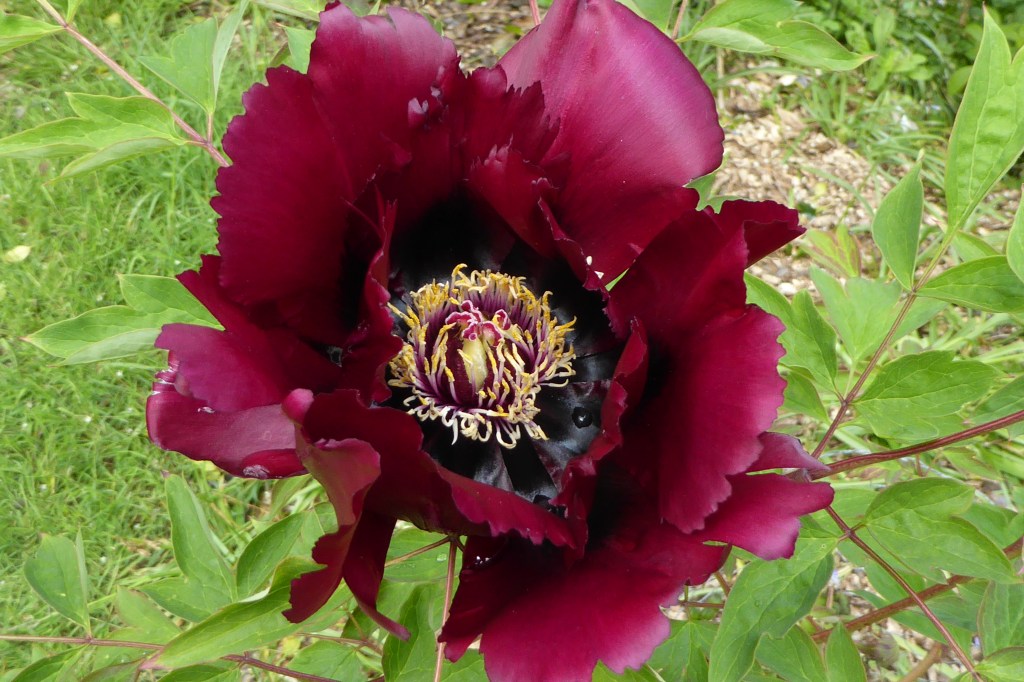
Breeding and selection in China has been going on for some 1600 years, so it is very difficult to draw coherent botanical or morphological conclusions as to origins. There are hybrids of hybrids of hybrids of hybrids, and almost all are desirable garden plants, in an infinite range of form and colour. With the pace of development and ease of communication today, these geographical zones may become blurred further by increased crossing between Groups. In addition, many peonies were prized for medicine, so often lifted from the wild and mixed in with other peonies.
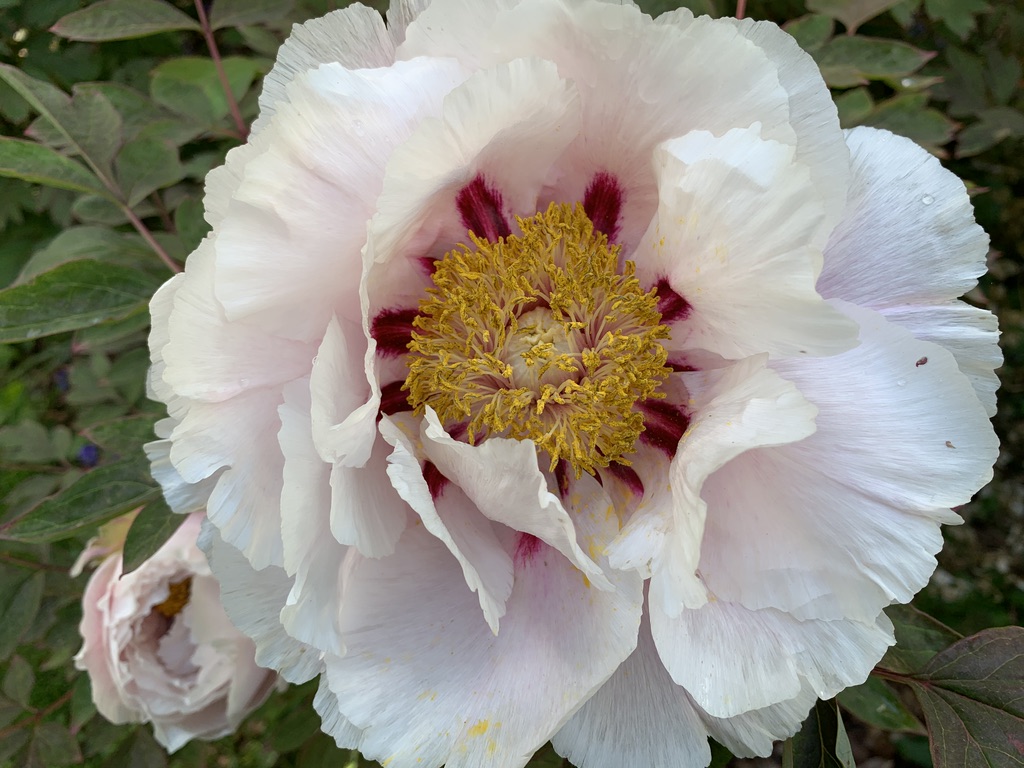
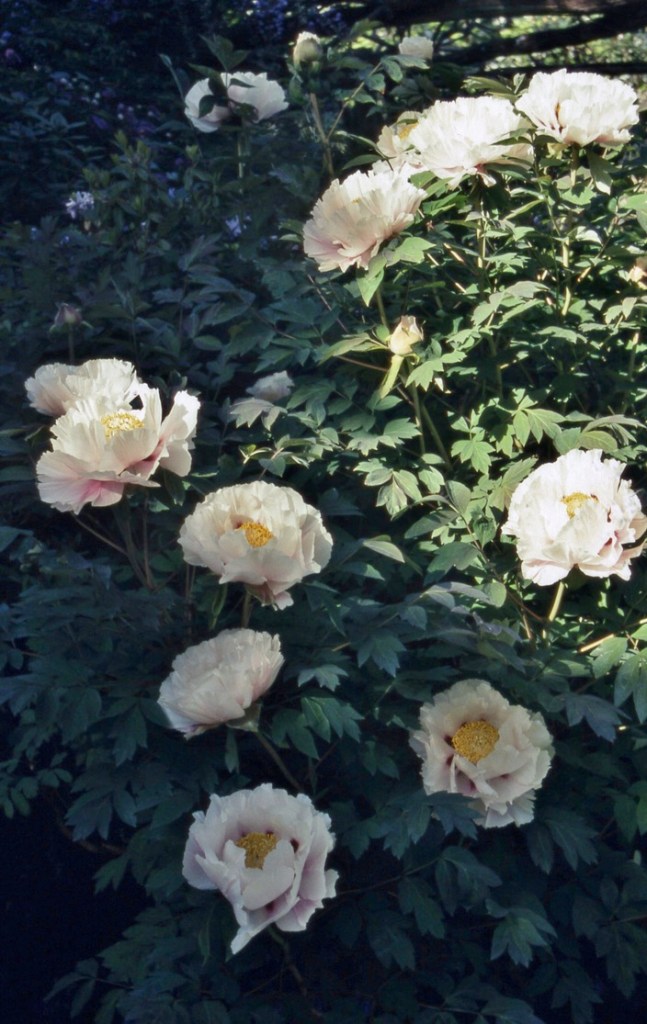
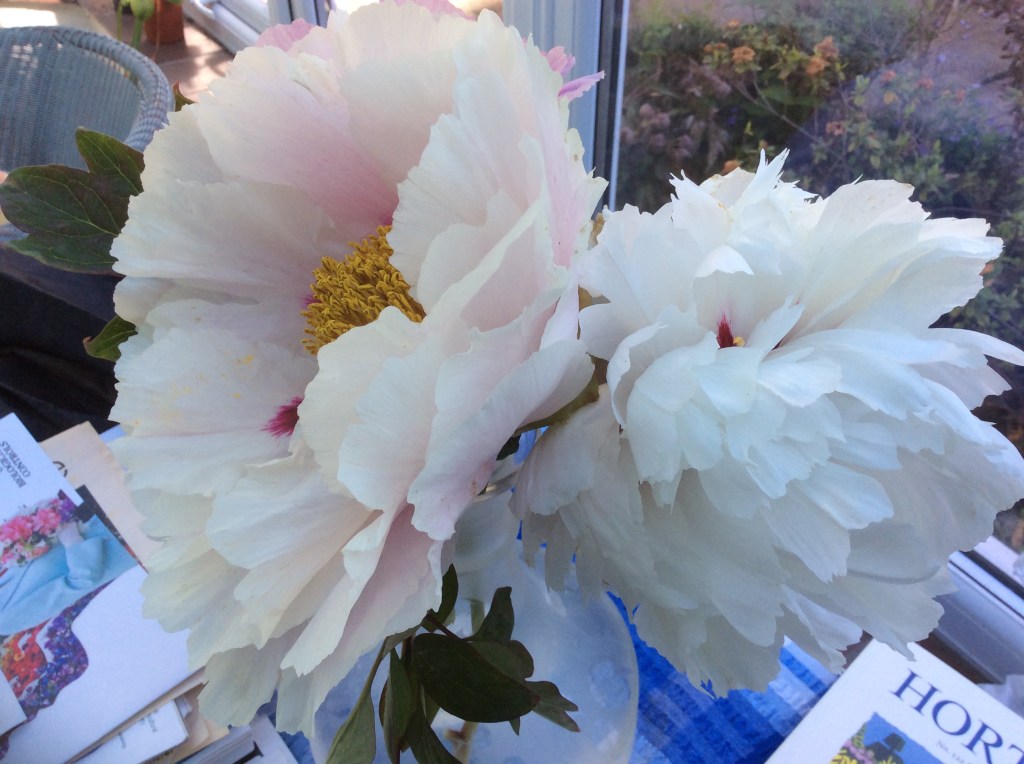
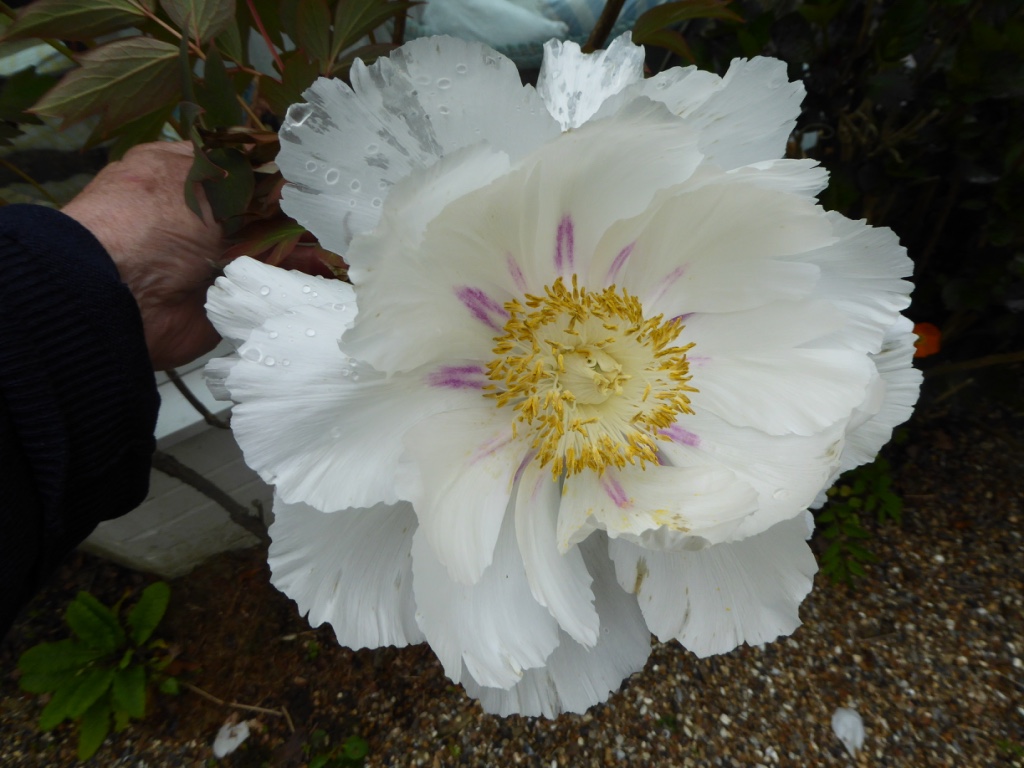
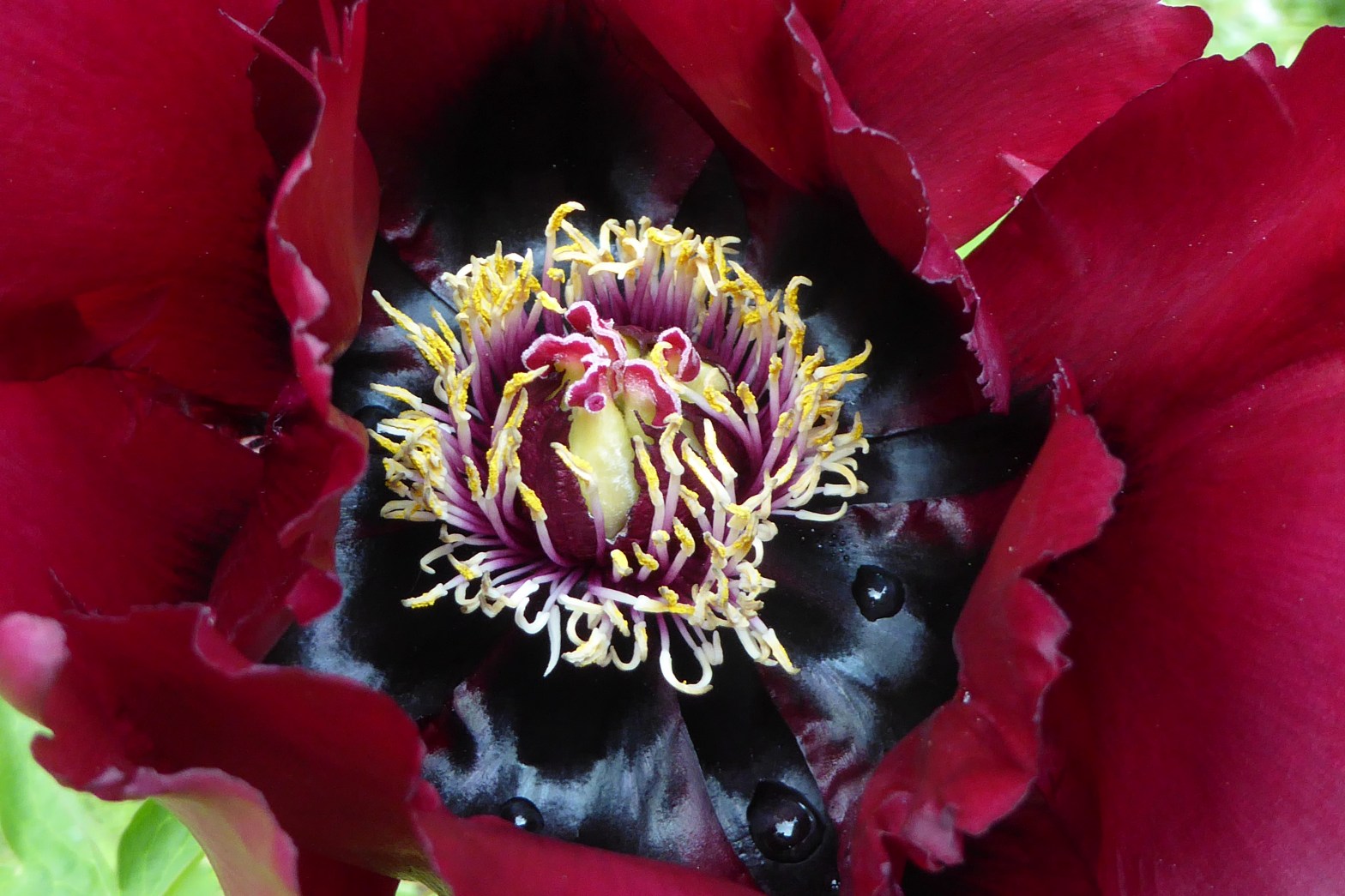
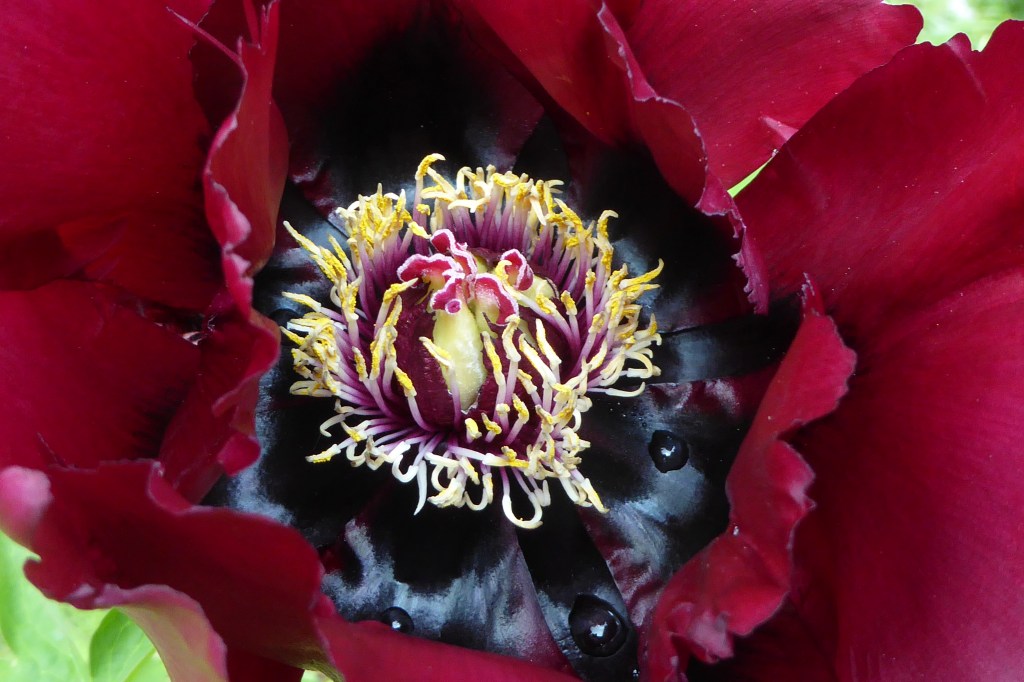
After my own experience of growing peonies from seed, as gardeners looking for the impact, colour and the wonderful glamorous presence of the peony in flower, I would suggest a very satisfying policy is to acquire seeds and sow a few each year. The results are almost certain to be pleasing, as some of my own randomly raised seedlings featured above demonstrate.
Grown on in good compost and planted out after two years, some peonies will flower in 4 years, and most in 5. Seeds are not difficult; they must be kept moist, and are best stored with damp vermiculite in a refrigerator, until ready to be sown in spring: protect from mice after sowing, which will seek them out. It is exciting each year to watch for first flowers, and one of the joys of gardening. Peonies take up little room and are perfect for the small garden.
Look out for my next blog, which discusses peony species, the Japanese forms, and one or two of the brilliant yellows developed by Lemoine in France and Saunders in the US.
Maurice Foster
 White House Farm Garden and Arboretum