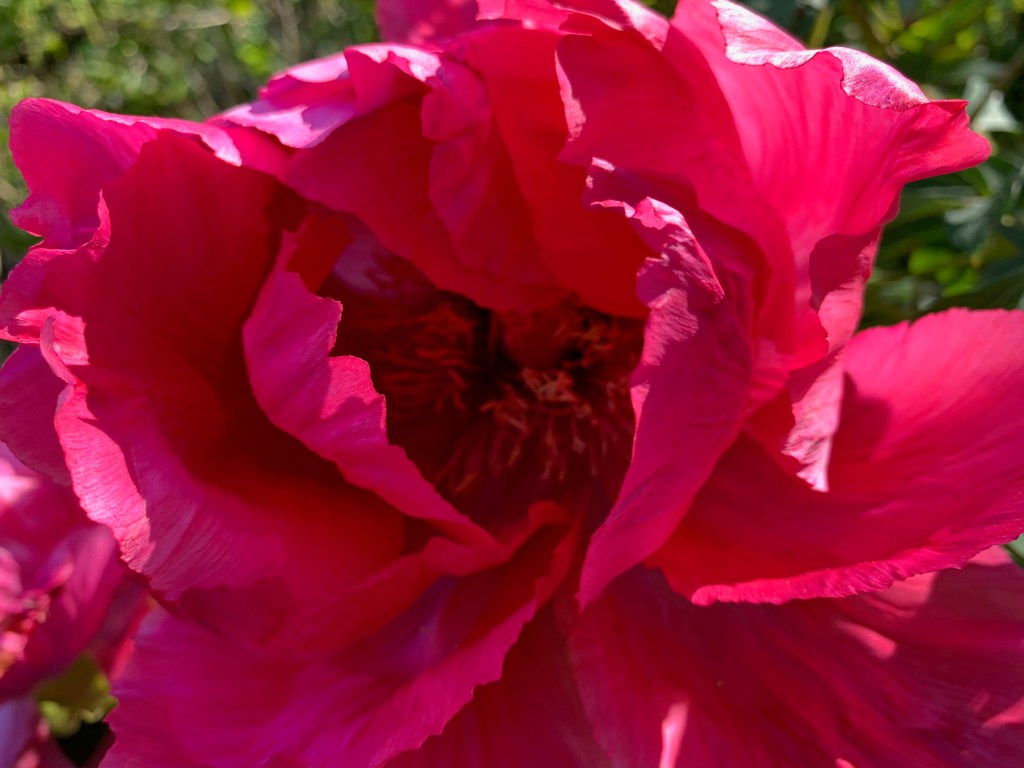
There are no tree peony species native to Japan: but sometime in the eighth century, the Chinese Moutan found its way into the country, where it became known to the Japanese as the Botan, and over the centuries, developed its own Japanese character. In his book ‘The Moutan or Tree Peony’ Michael Howarth-Booth – never far from expressing an opinion – wrote of these Japanese peonies:
‘Varieties of more exquisite beauty of line, of clearer colouring, with flowers of lighter weight that held themselves beautifully presented on the bush, took the place of the heavier, larger Chinese flowers of more muddled petalage…..the Chinese varieties are less refined in form.’
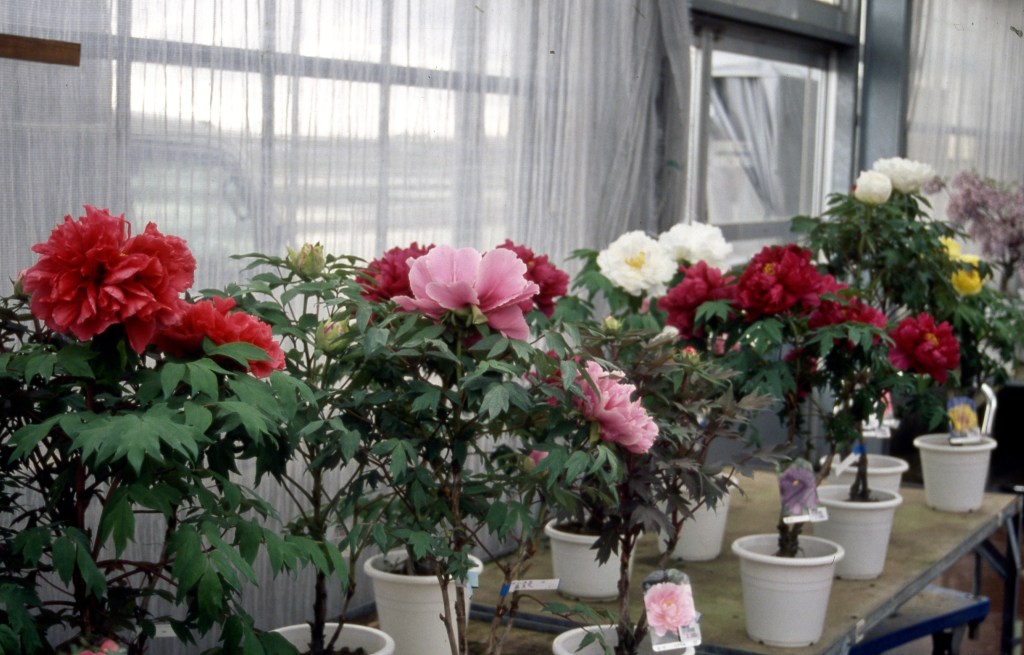
The peony certainly holds a high place among flowering plants in Japanese culture, along with chrysanthemum, cherries, and iris; and in the spring, displays in garden centres and nurseries feature magnificent flowering specimens in pots, along with wisterias and azaleas. They are frequently seen fronting houses on the street in window boxes with companion plantings.
My own experience of growing Japanese peonies is limited; those I grow are typically less bushy than the Chinese, often producing gangly long shoots that need staking. They often need espalier support, even in the open garden, with sticks to hold firm the long shoots and encourage growth from the base. I also find them more fastidious and subject to botrytis than the Chinese, and suspect they insist on full sun and the breeze blowing freely through their branches to stay healthy.
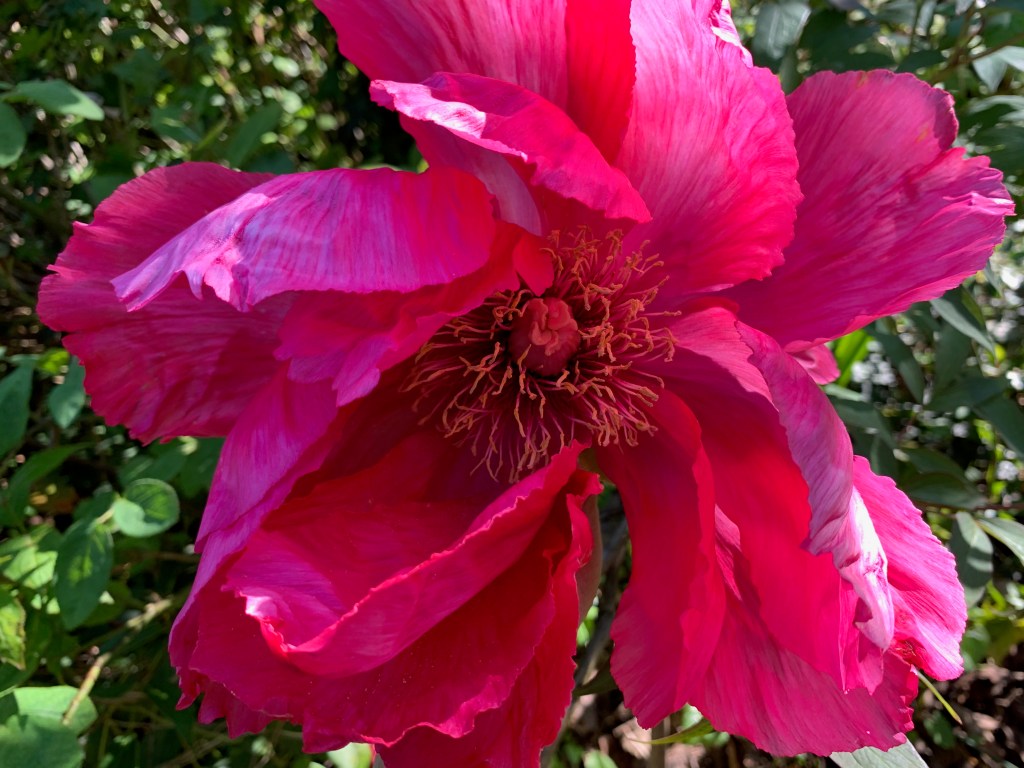
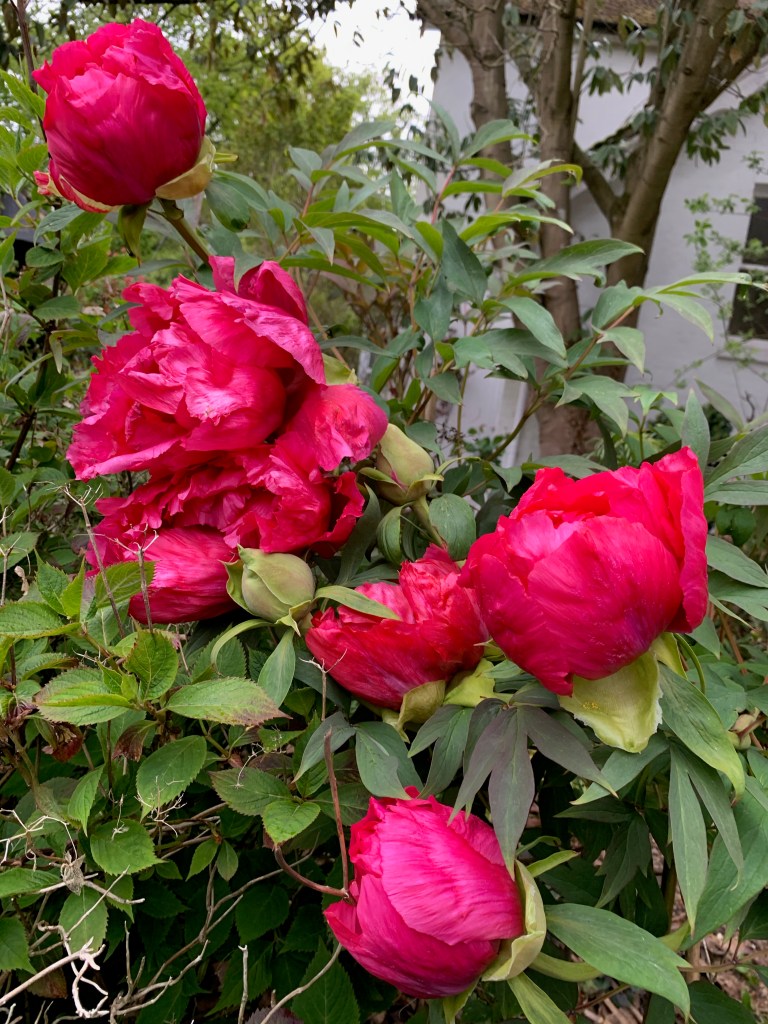
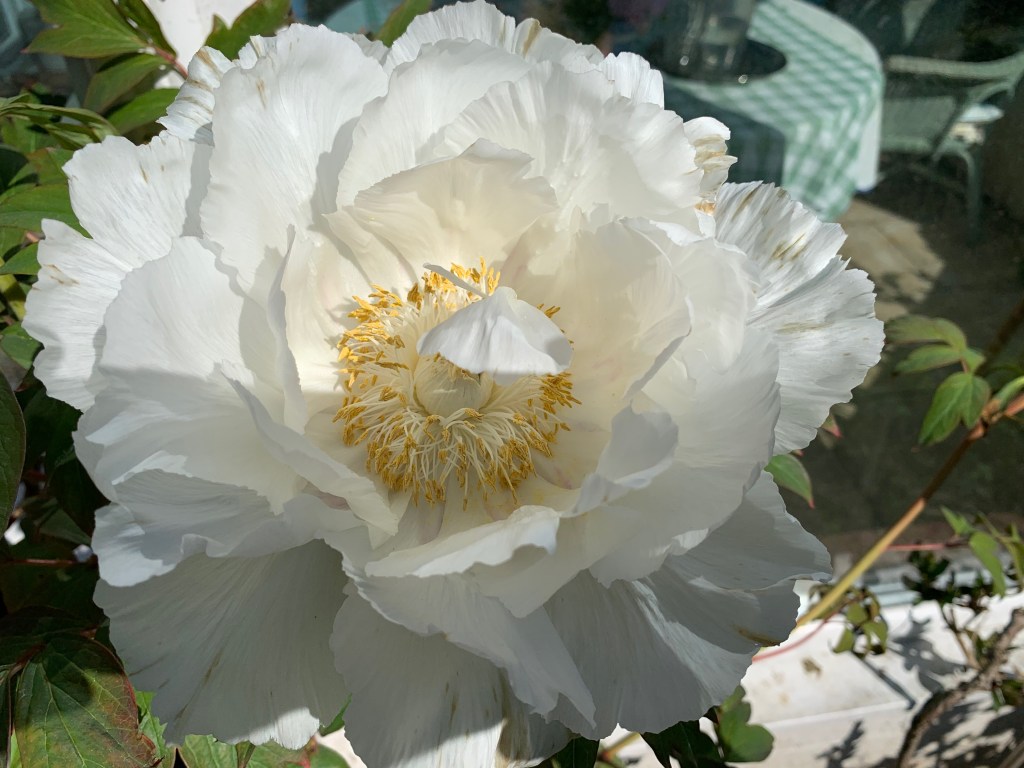
The flowers of Japanese peonies tend to be large and silky, in a greater range of pure colours than the Chinese, with many magnificent singles and semi-doubles.
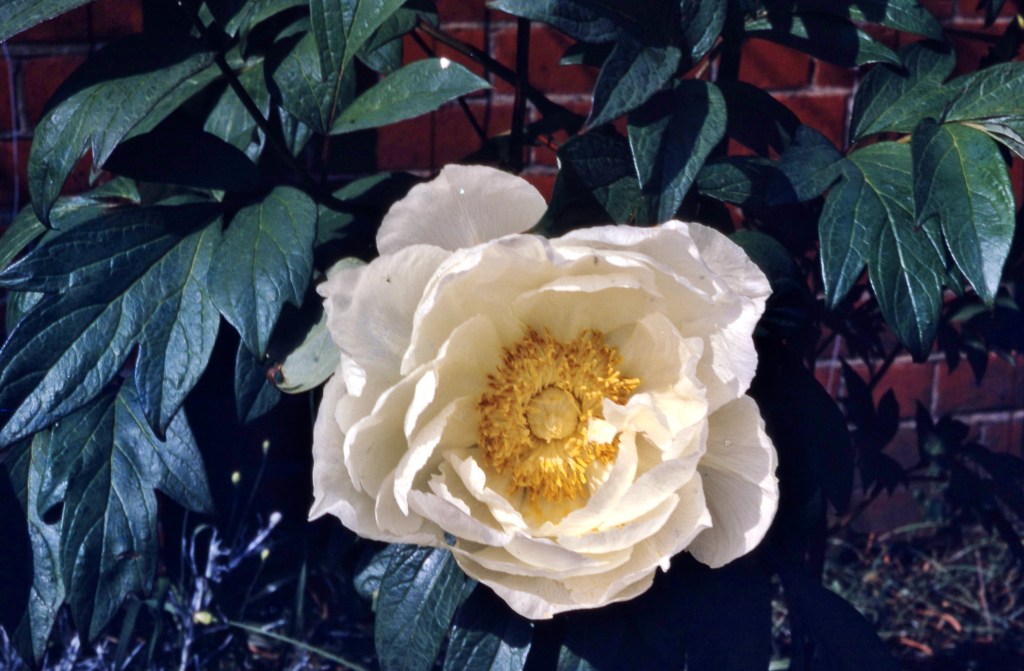
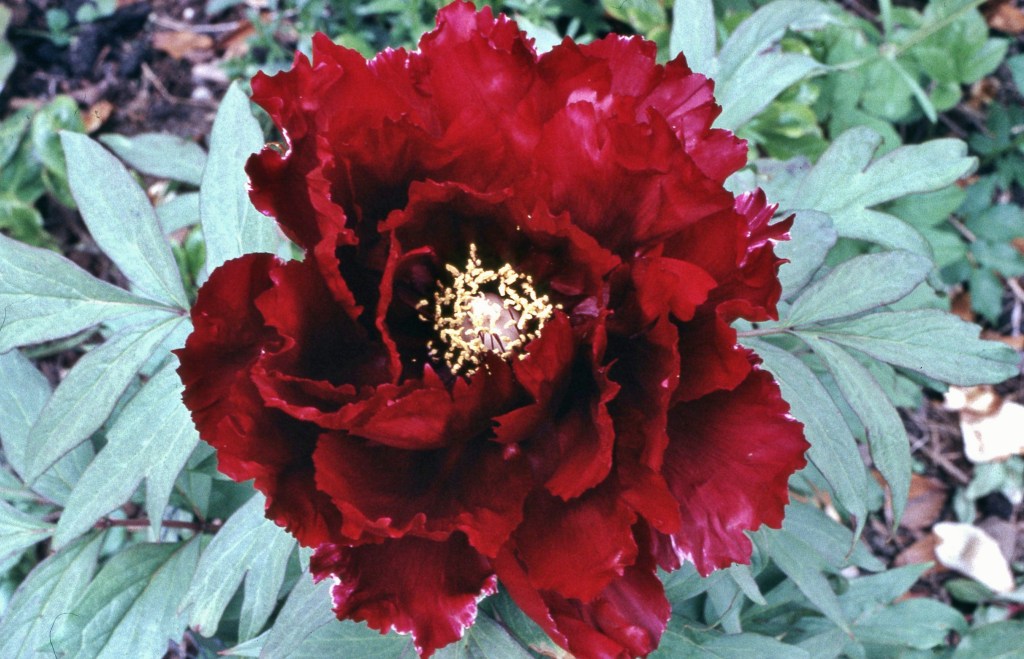
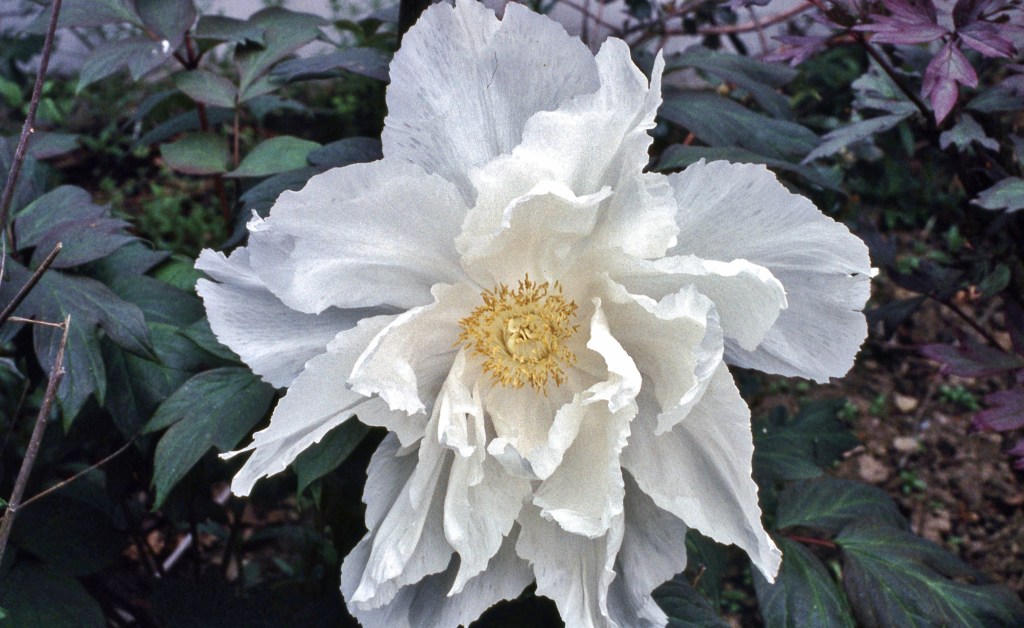
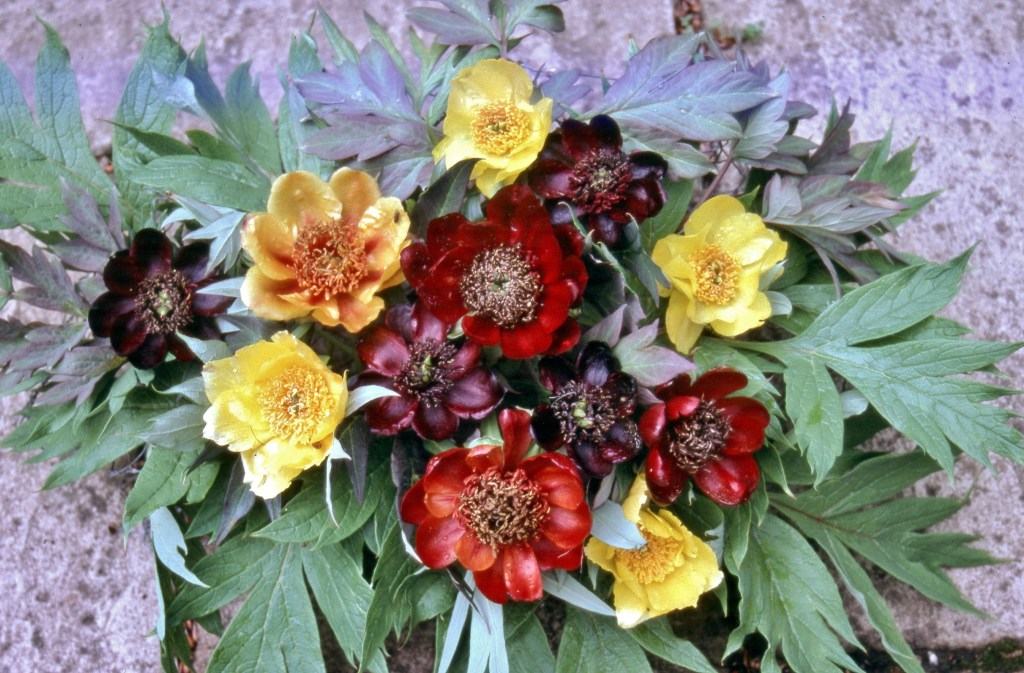
A Japanese garden centre I visited twenty odd years ago favoured single or semi-double forms, perhaps typical:
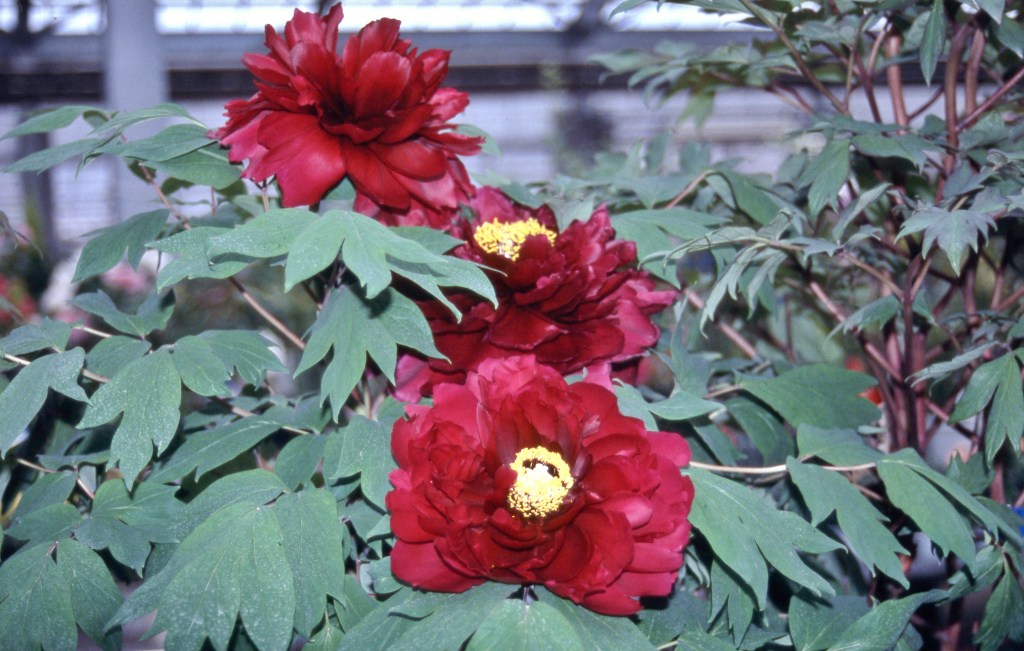
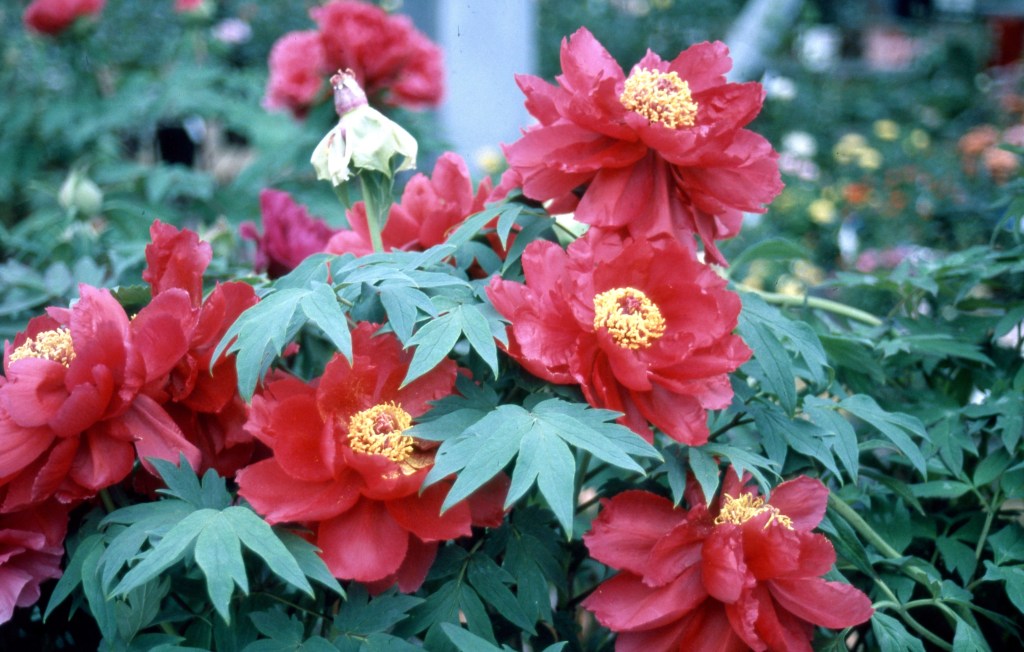
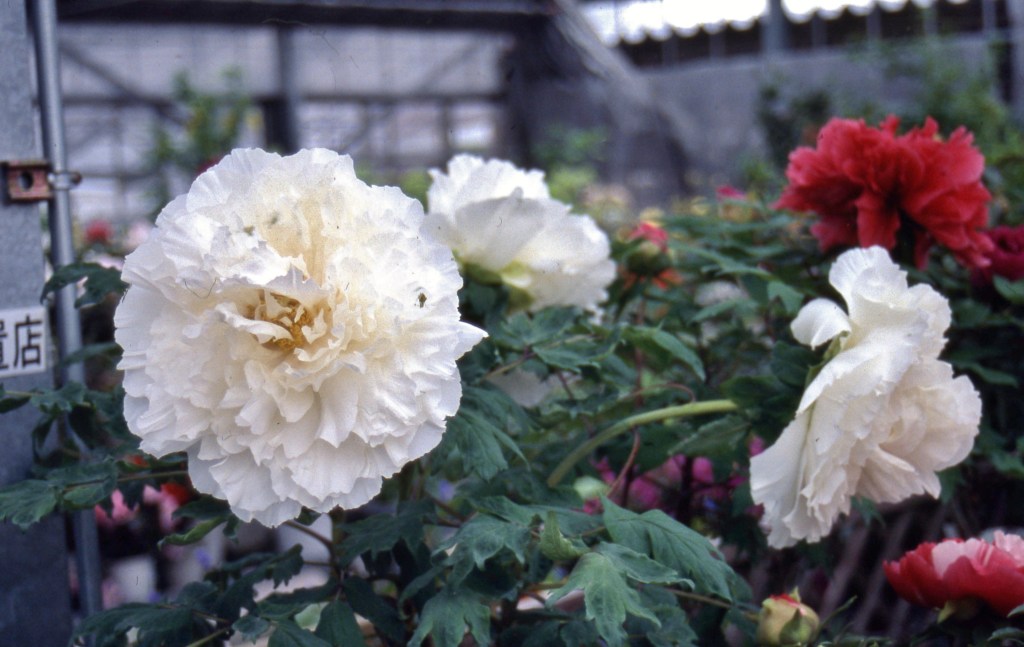
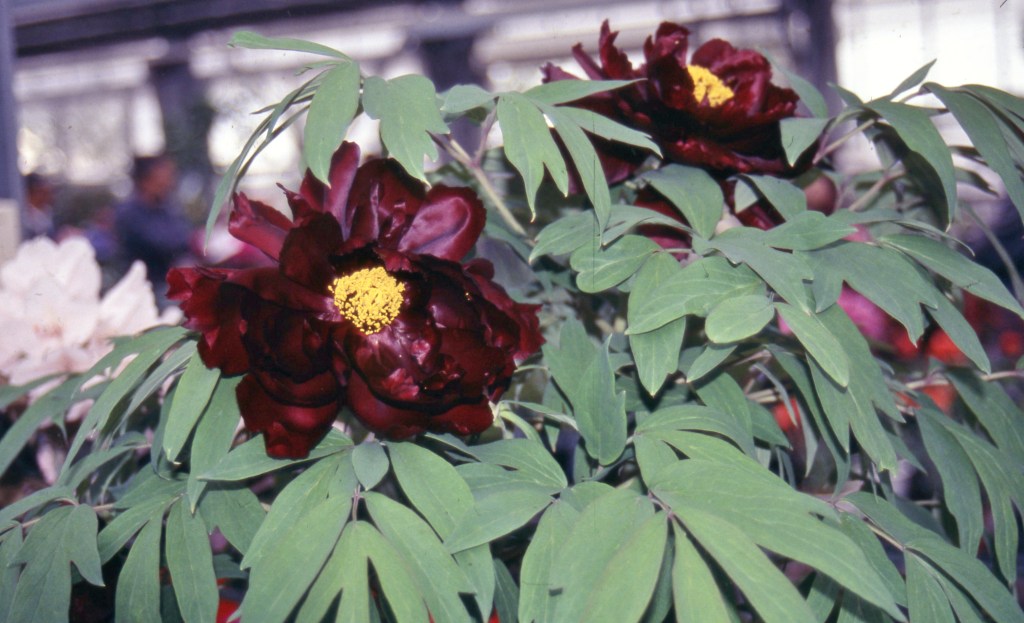
But I suspect there are many Japanese forms that fit the Haworth-Booth definition of Chinese ‘muddled petalage’ too.
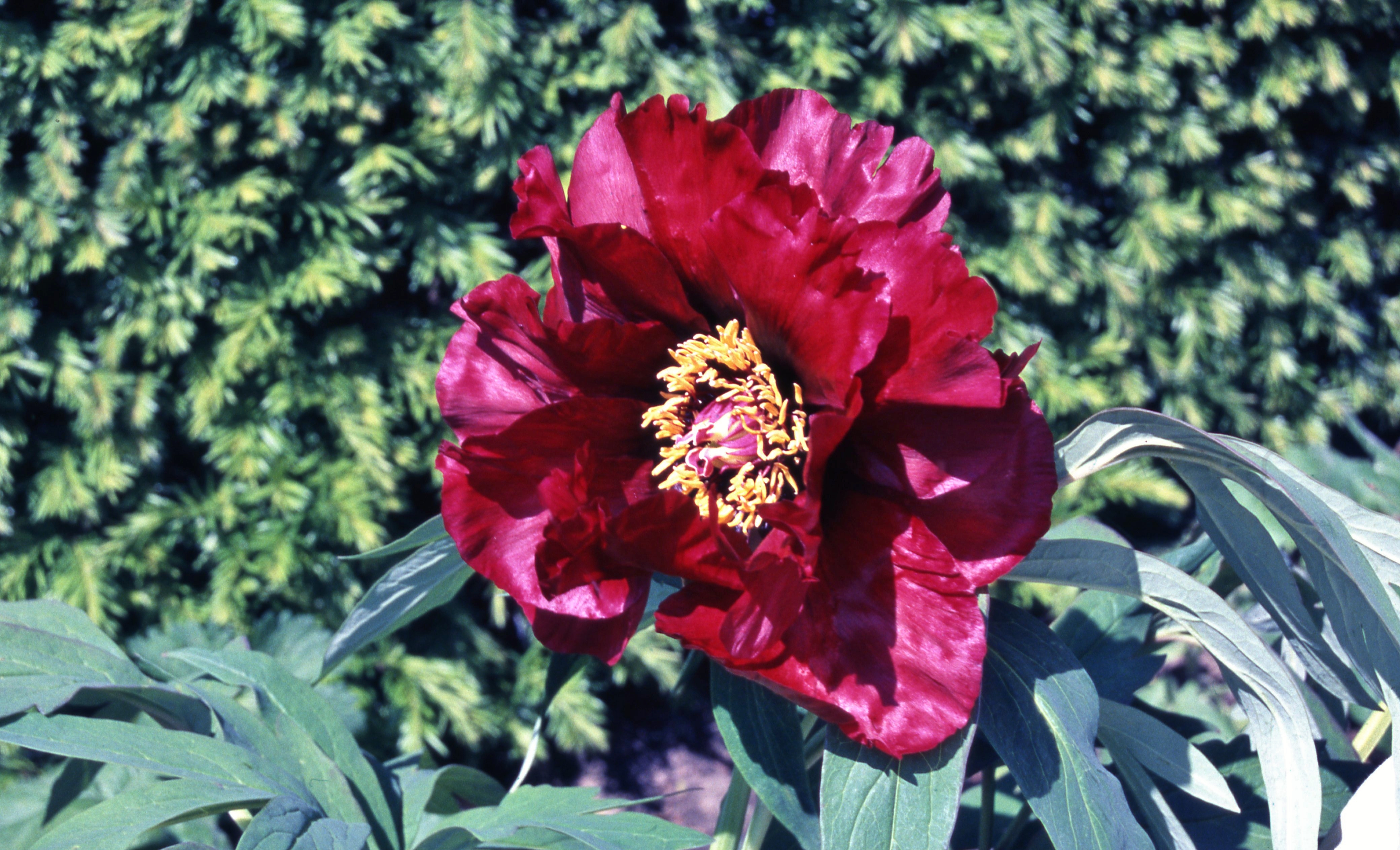
A case in point: I bought some magnolias from Mr Amos Pickard, the magnolia specialist in Canterbury, and as a bonus he very kindly gave me a nice tree peony, which he called Kinshi and had received from Japan. When it flowered it was clearly what we know as the Lemoine hybrid Souvenir de Maxime Cornu, its massive yellow/orange tinted double flowers bowing under their weight and when wet probably weighing over a pound. What’s in a name… I suspect there has been a degree of double naming with transliterations/translations between Japan and Europe, sometimes confusing origins.
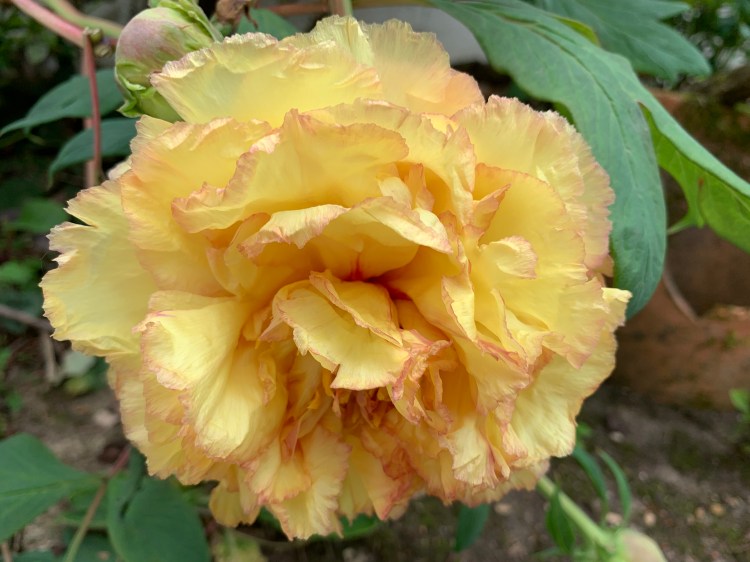
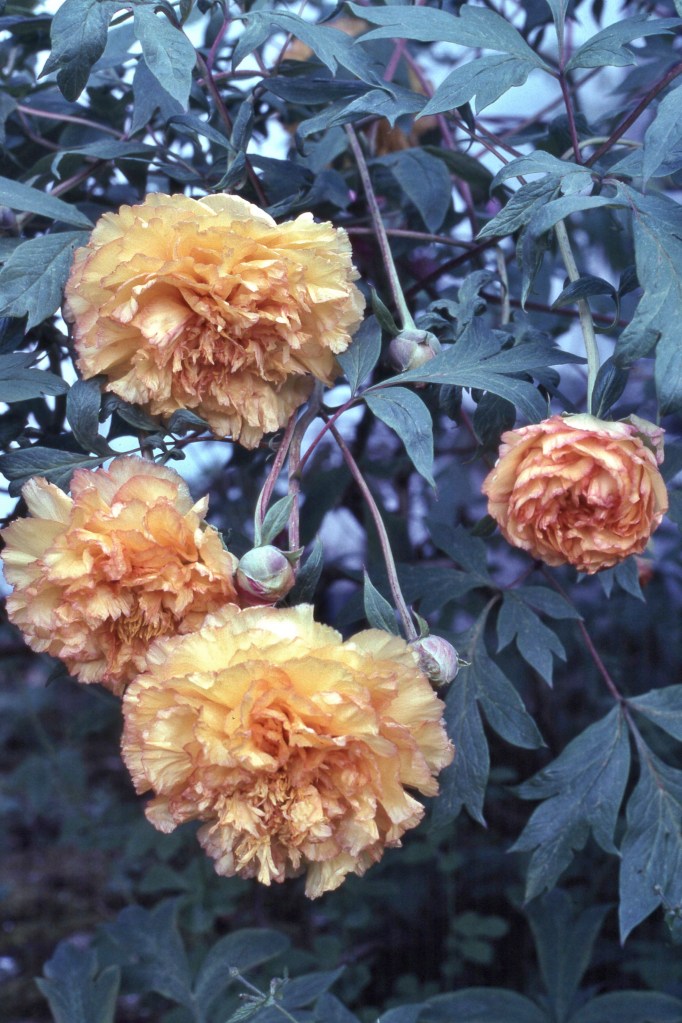
The inevitable and prolific French breeder Lemoine revolutionised tree peonies with his yellow hybrids in the early 20th century using Paeonia delavayi var lutea as a seed parent and Moutan cultivars as a pollen parent.
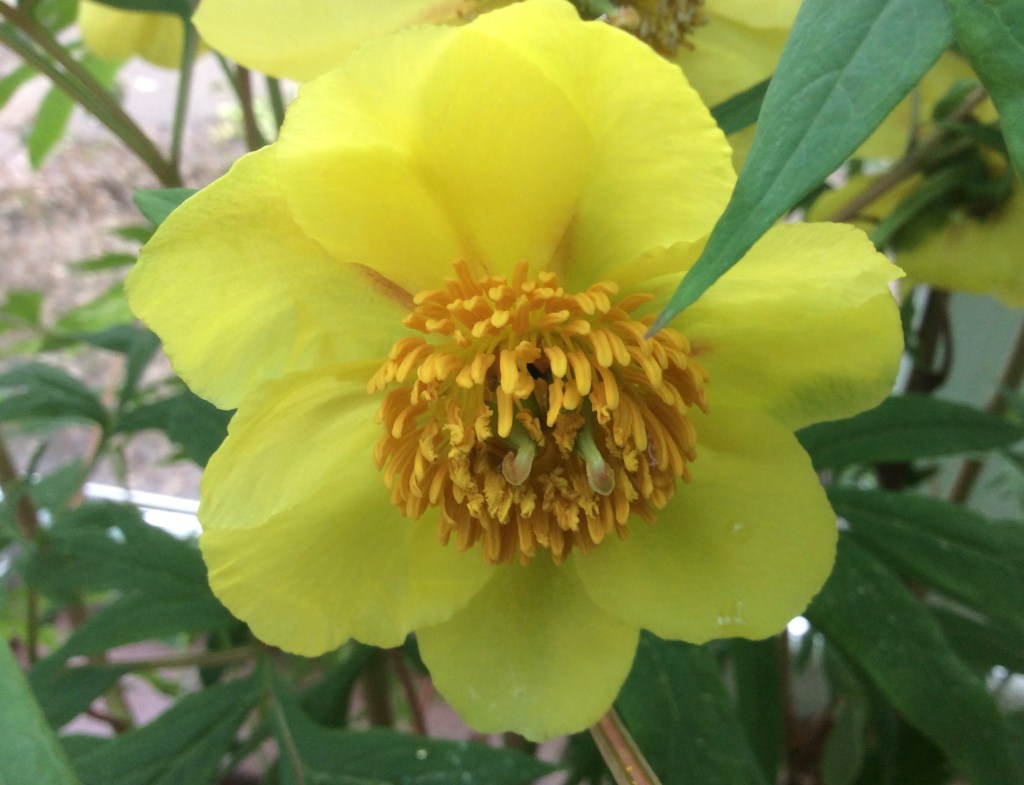
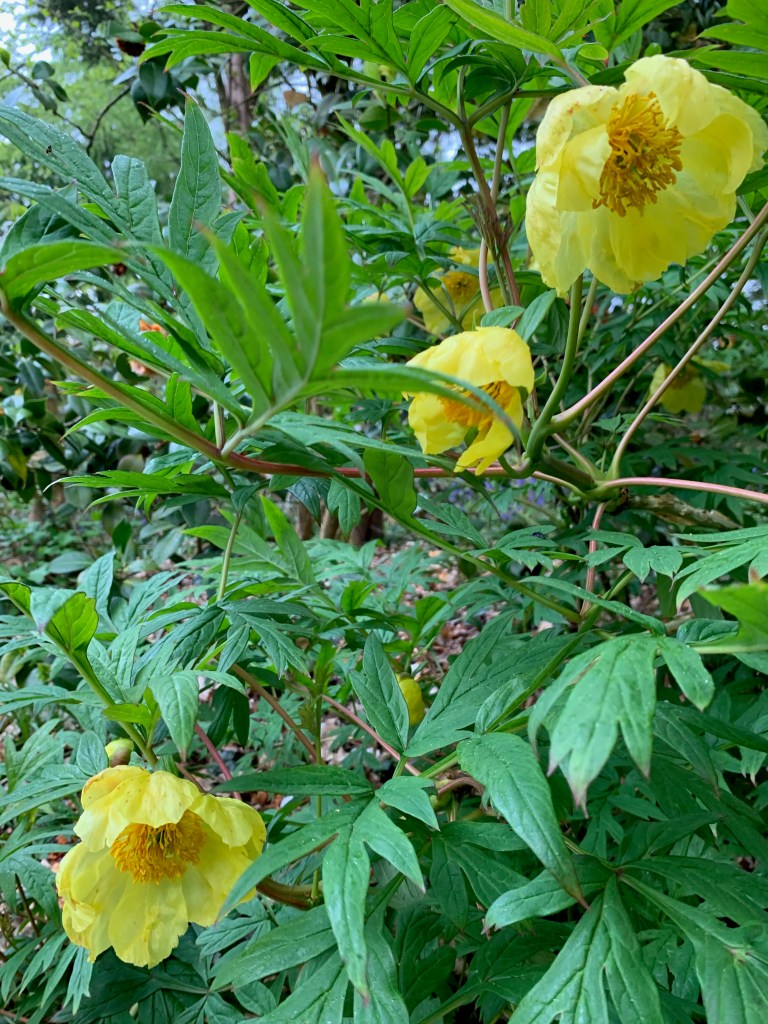
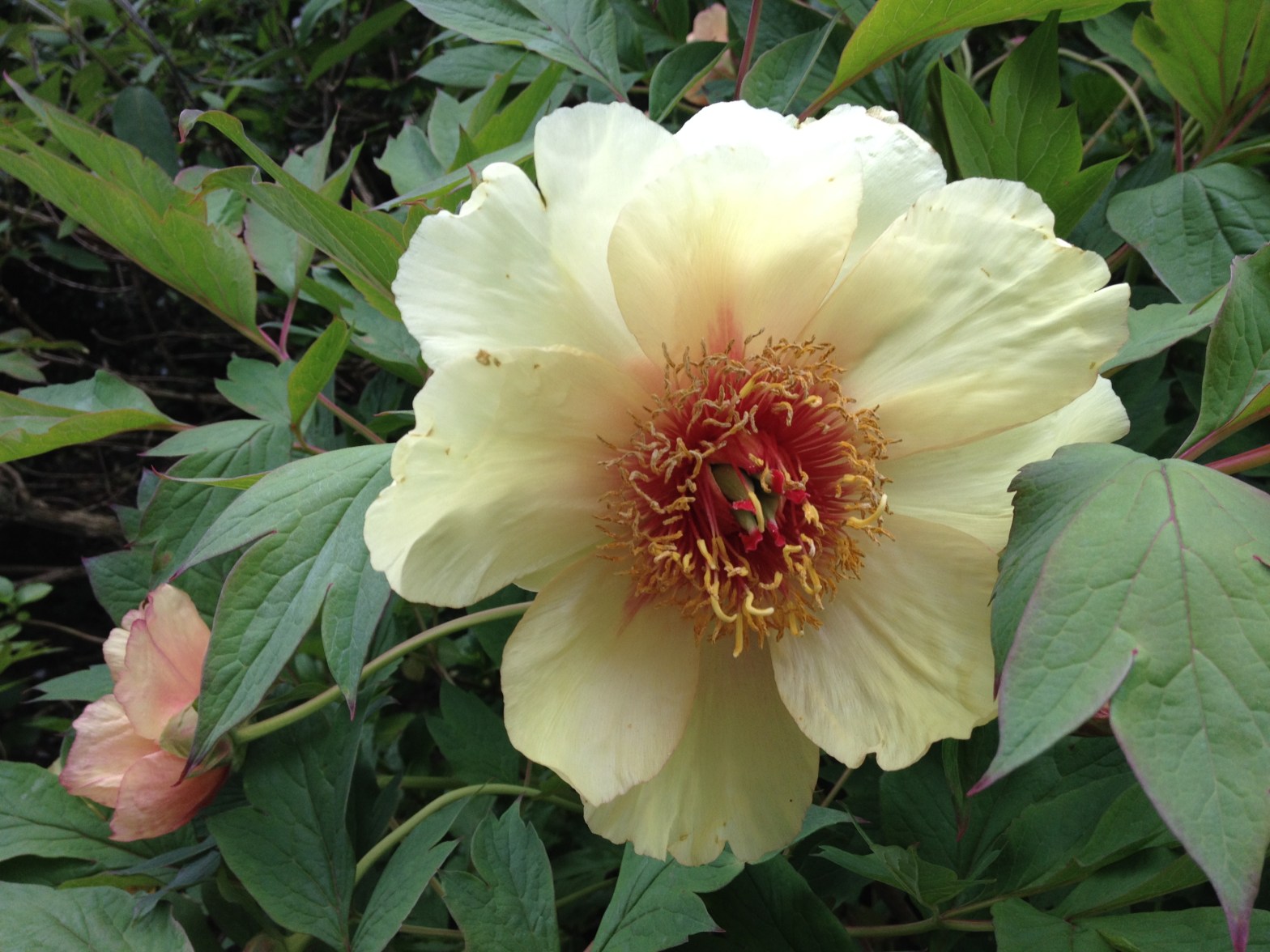
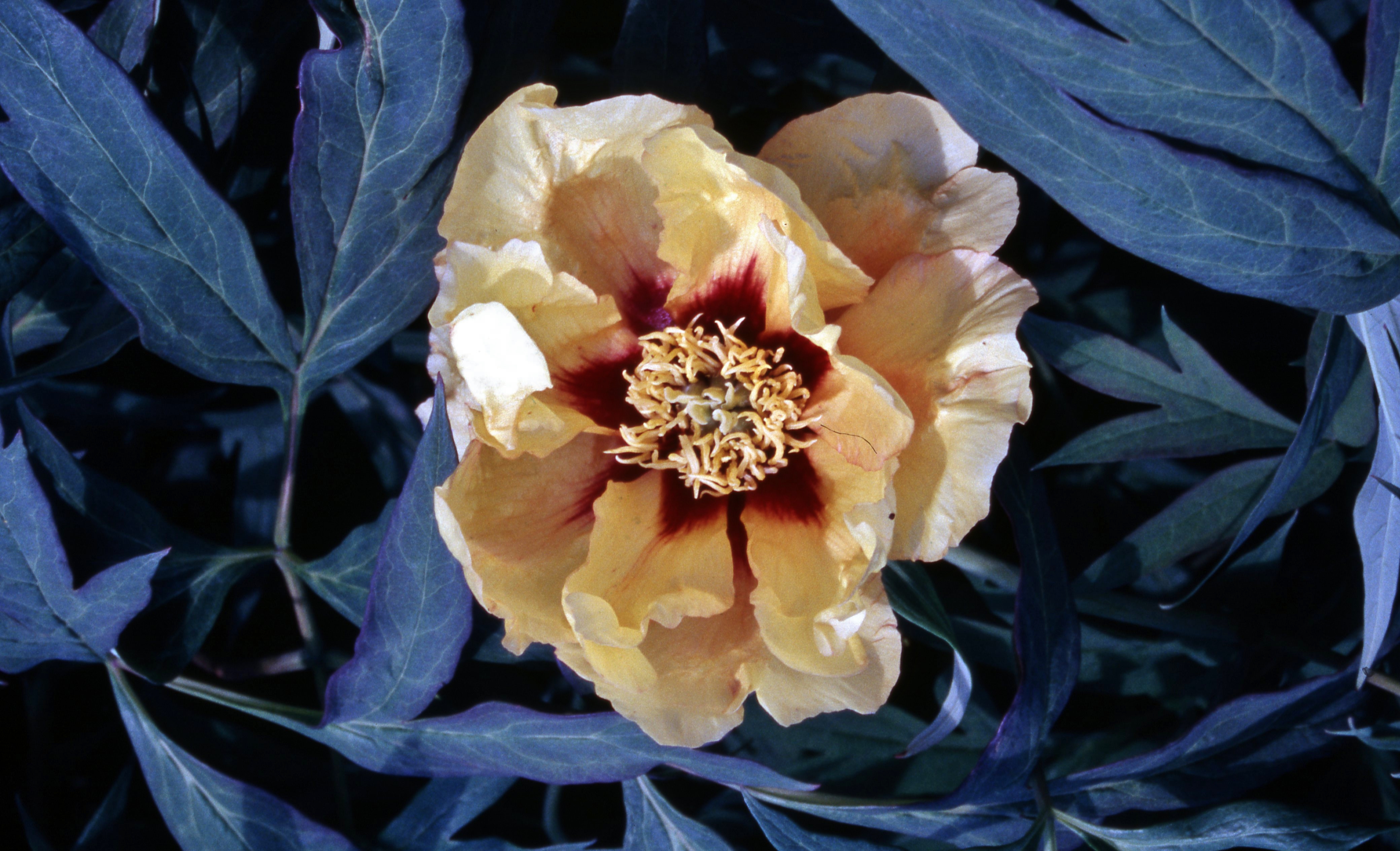
In contrast to heavy doubles, such as Souvenir de Maxime Cornu (above), and its branch sport ‘Chromatella‘, Lemoine’s finest creation in my view was ‘L’Esperance‘, a beautiful semi-double yellow with a faint flush of red at its centre, known as ‘Kintei’ in Japan.
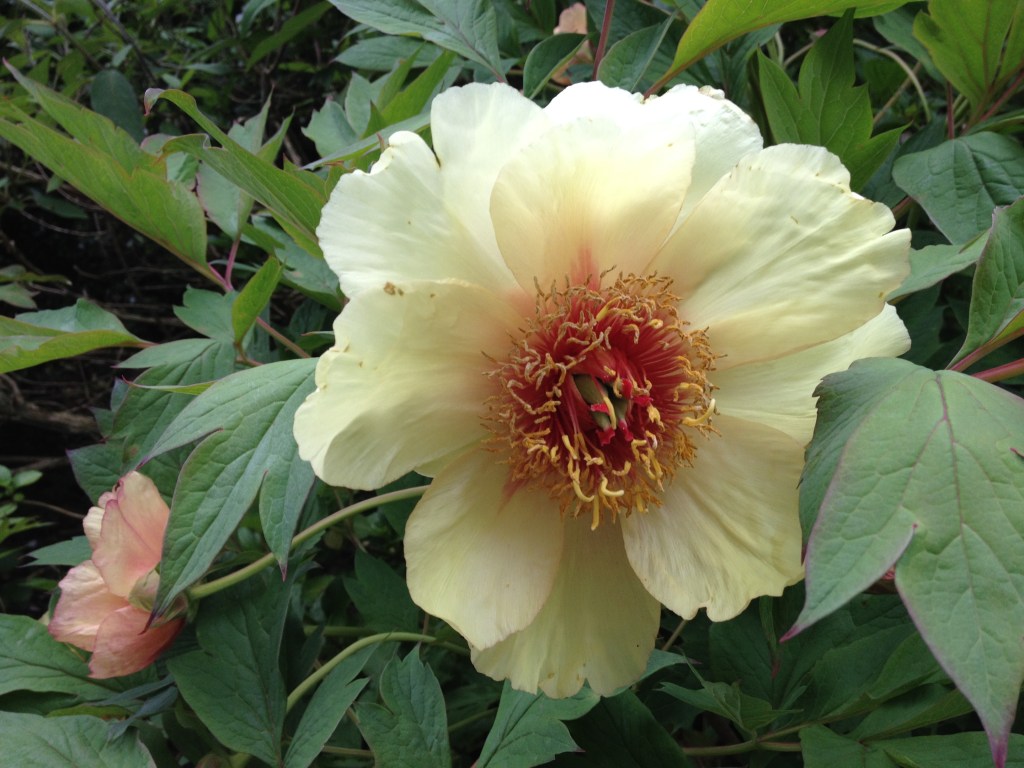
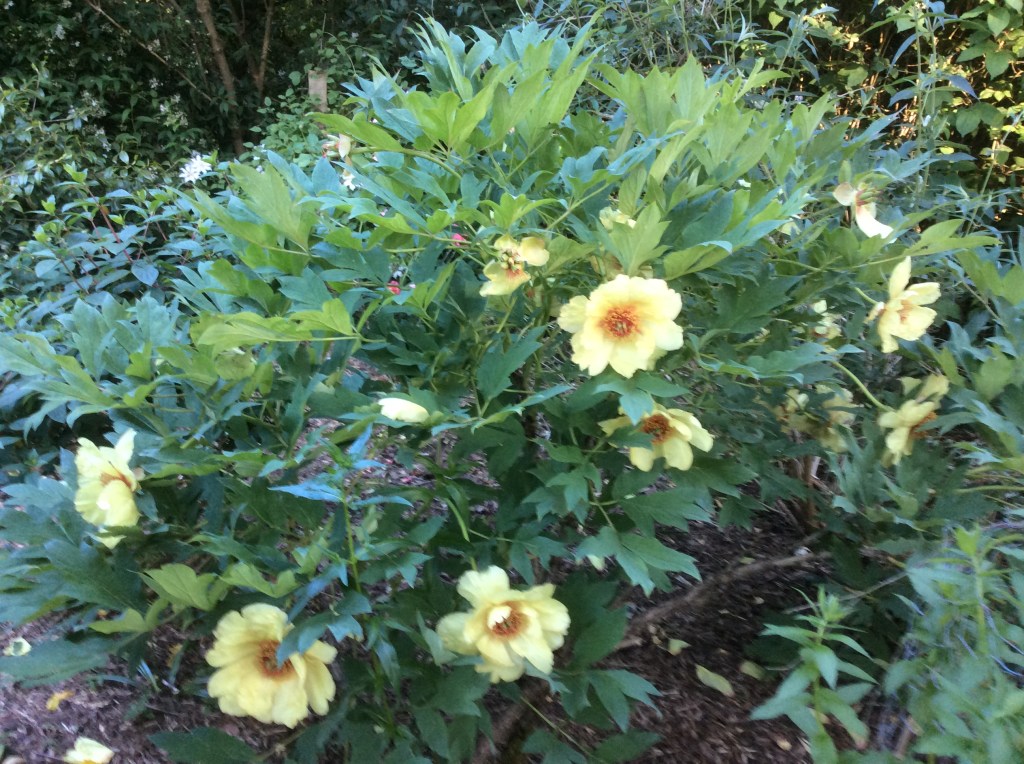
To quote Howarth-Booth again (writing in 1963): ‘Probably as a garden shrub, this [‘L’Esperance’] is still the finest tree peony ever raised’. It has a strong constitution and an established bush can reach 2.5m x 3m across, studded with large flowers in late May. It is only rarely seen today in gardens. Another excellent single is P. ‘Mme Louis Henry‘, the flowers stained with red.
P. ‘Alice Harding’, (1936) named to commemorate the author of ‘The Book of the Peony’ published in 1917, is a smaller-growing lemon yellow double, less heavy than most doubles and parent of the first intersectional Itoh hybrids (see below).
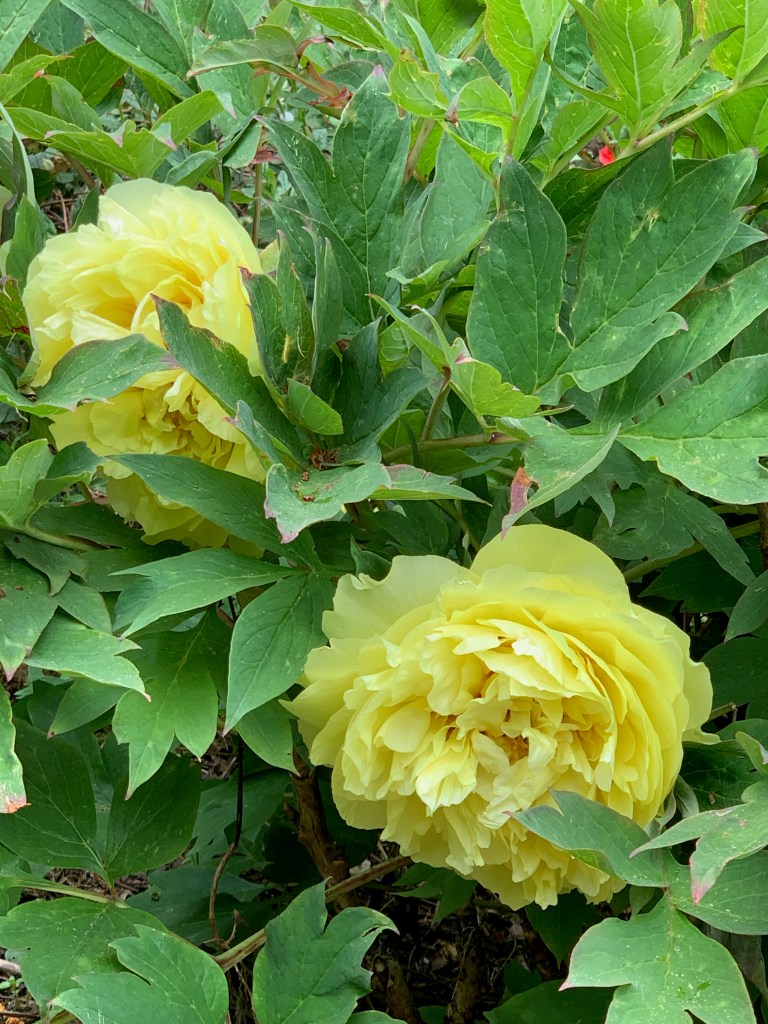
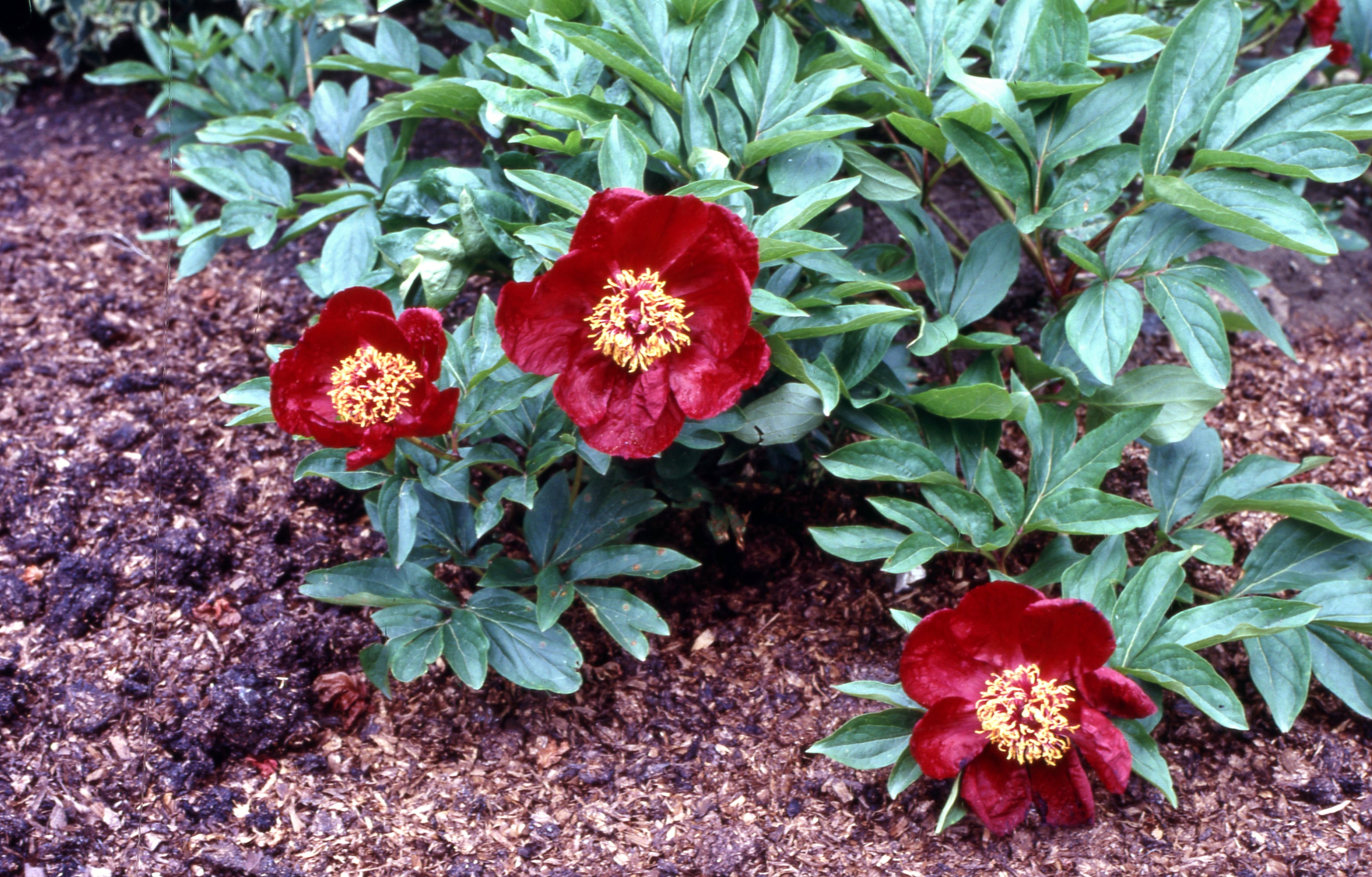
Inspired by these Lemoine hybrids, in the 1940’a and 50’s, the secretary of the American Peony Society, Prof. AP Saunders, bred some first rate yellows from P. delavayi var lutea and some outstanding dark reds from P. delavayi. He exhibited over 80 new varieties at Society meetings. Avoiding the big fat doubles, he used single Japanese varieties as his pollen parents and his mostly single/semi-double hybrids reflect this character in nicely presented flowers, well clear of the foliage. P. ‘Argosy’, is a pale, cup-shaped yellow with a purple centre; and probably his best known that has survived the years is P. ‘High Noon’, a clear yellow semi-double with a suggestion of red at its heart.
Others of Lemoine’s provenance still survive and there are newer forms being produced today of great garden quality. American breeders have produced plants in almost every colour and colour combination. The American Peony Society website, for example, demonstrates a remarkable range, mostly single and semi-double peonies with the flowers holding up well above the foliage. Closer to home, there is a beautiful clear yellow ‘rockii’ type, the first of its kind, called Hua Xia Jin Long (‘Golden Dragon’) that incidentally will set you back £250.
P. delavayi var lutea itself is a very variable plant in both habit and flower colour, but at its best as a 1mx2m compact shrub that holds its flowers clear of the foliage, it is worth growing in its own right.
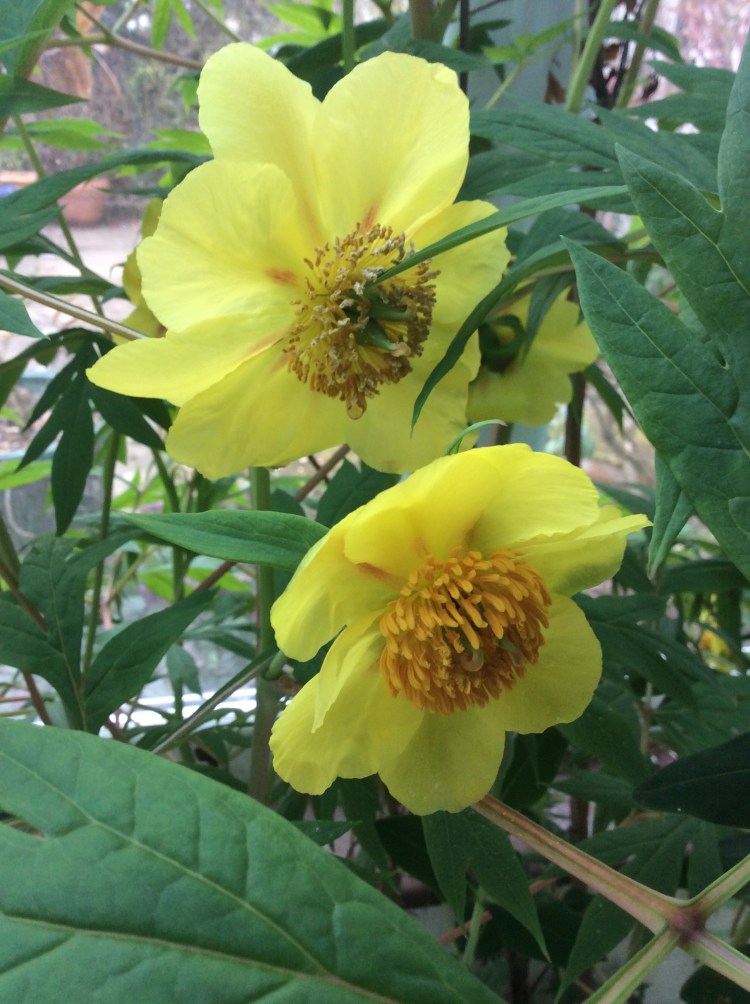
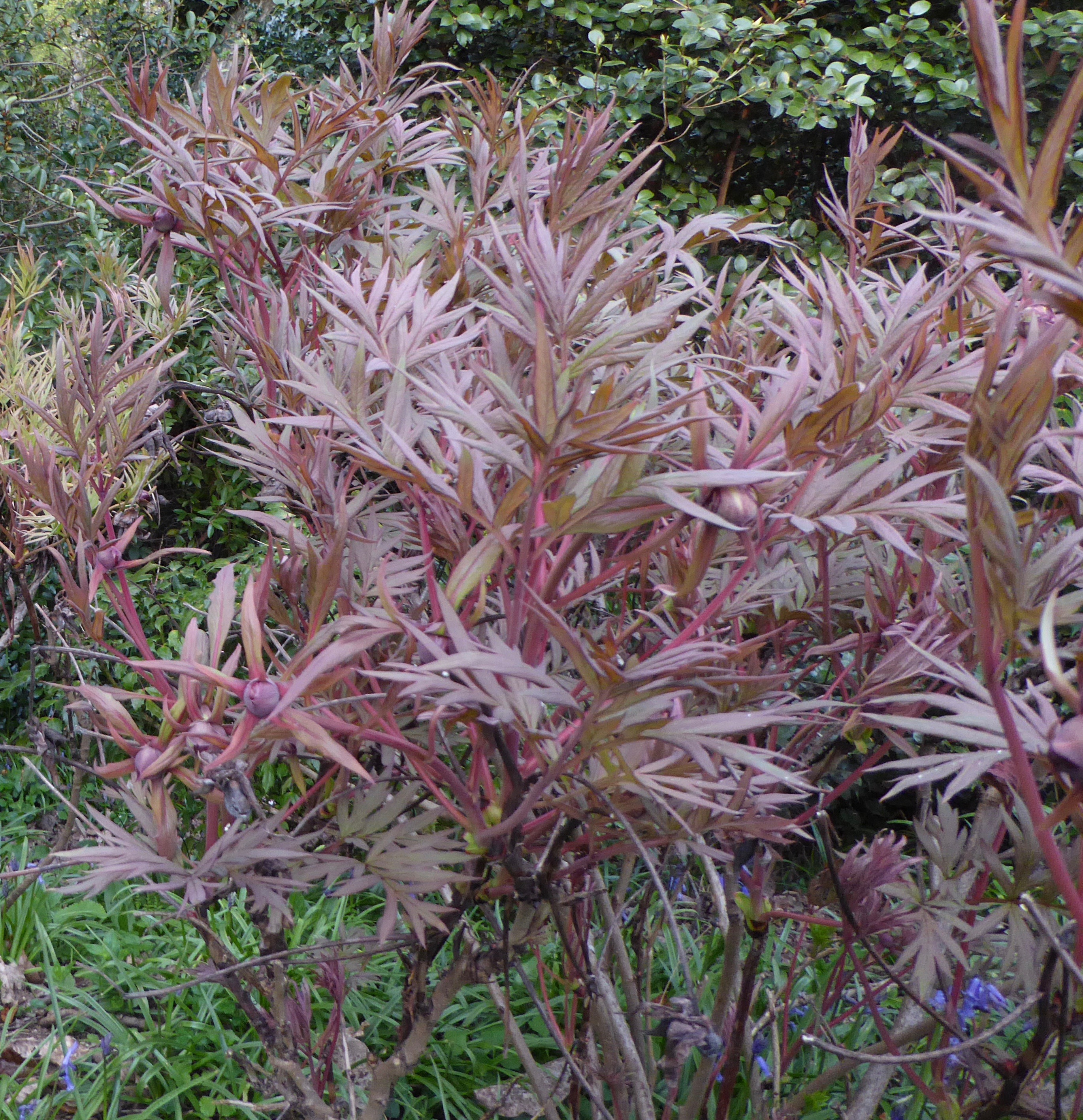
And the type species P. delavayi is a variable red, parent of many of the best red hybrids, also in its best forms worth growing in its own right. It originates from NW Yunnan where it is a rather straggling woodland plant. In cultivation it usually makes a 1m x 1.5m quite tidy shrub. The spring foliage is exceptionally attractive, the narrow, delicate leaves a purple/pink, gradually transitioning to green.
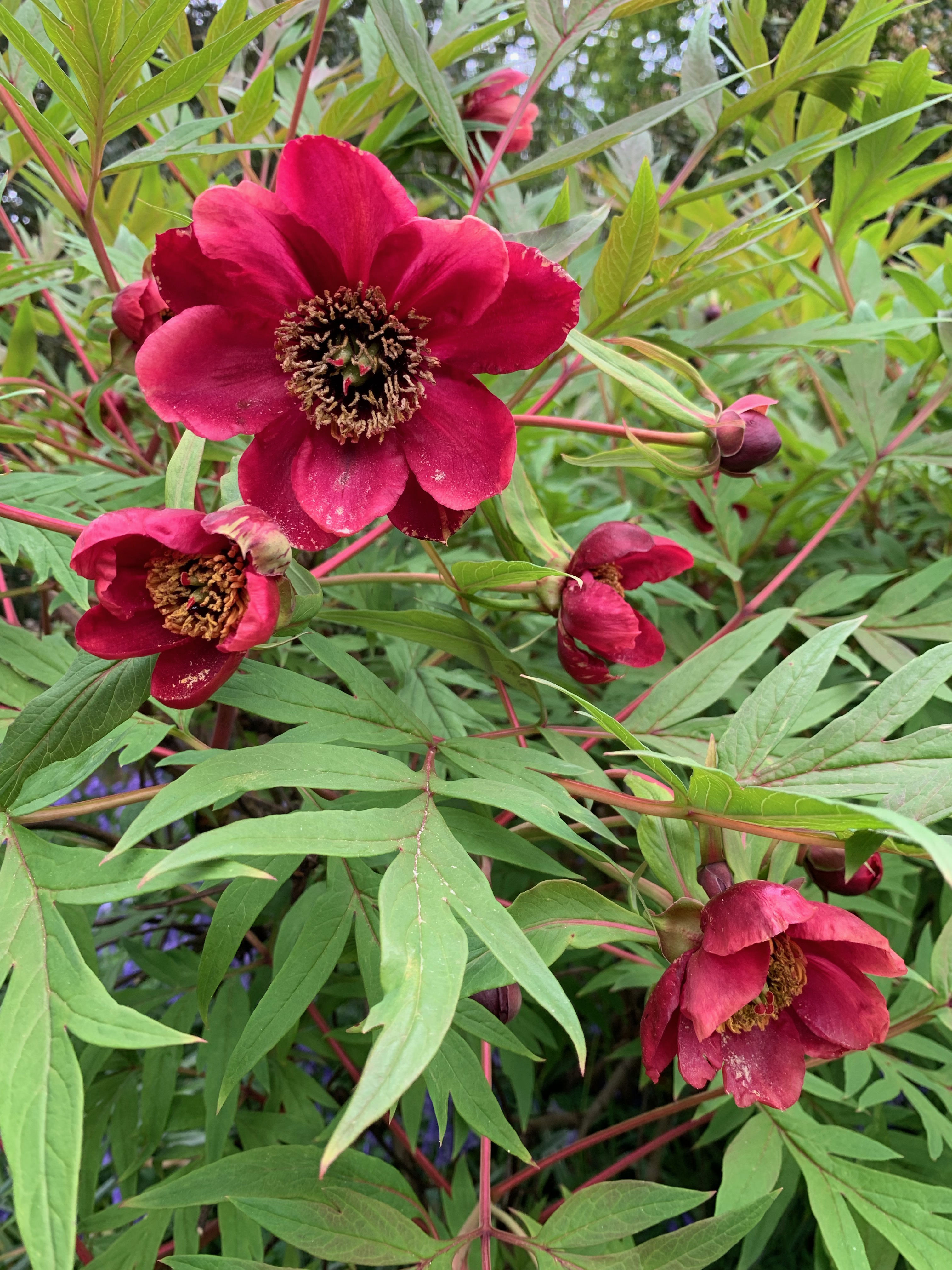
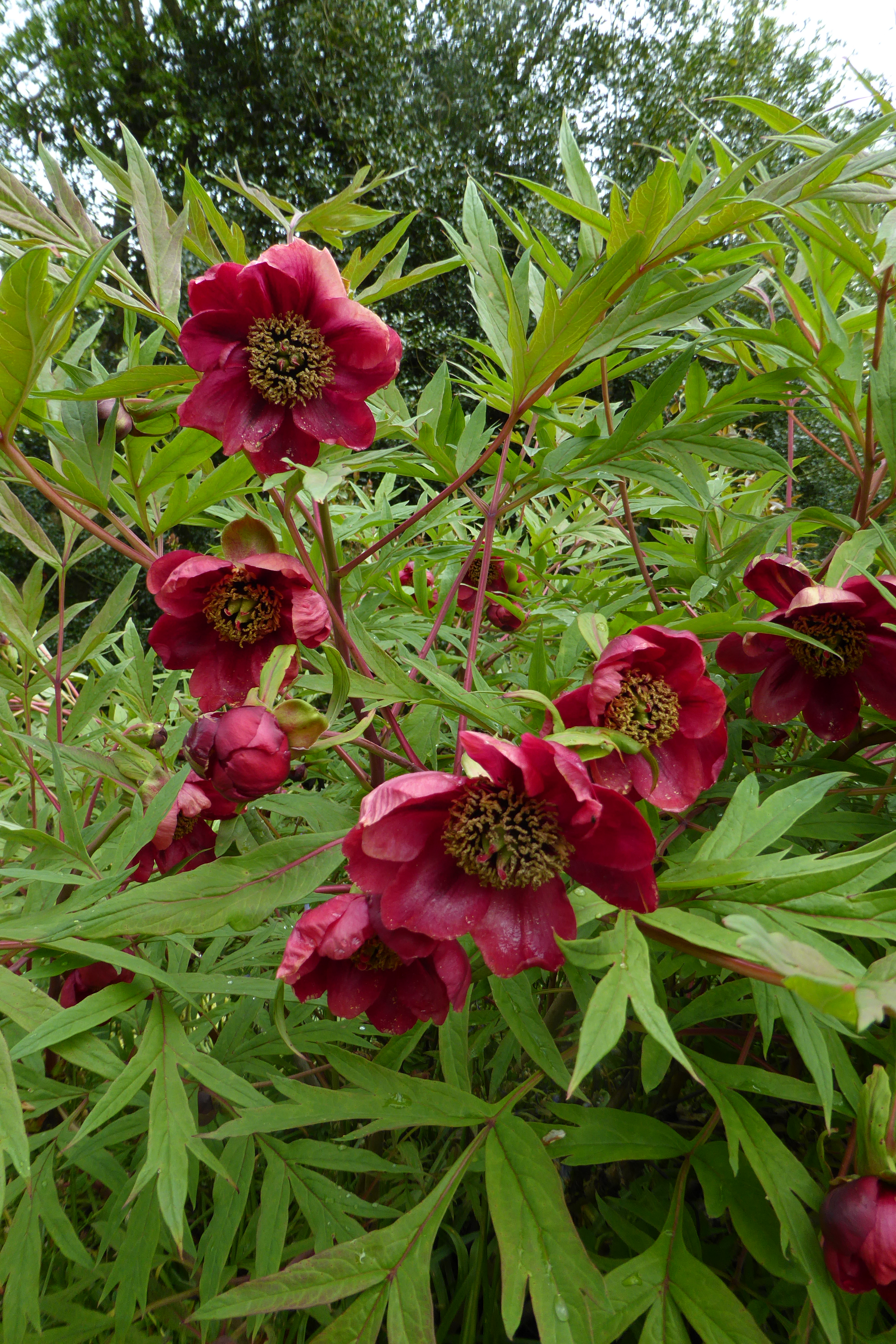
Var lutea is by no means the only garden worthy alternately-coloured form of P. delaveyi: there are various reds, some yellow forms with flowers blotched and stained red; and an extreme variant seedling here at WHF that is close to black. We call this P. ‘Persephone‘ (she was abducted by Hades, god of the underworld). It received an Award of Merit from the RHS.
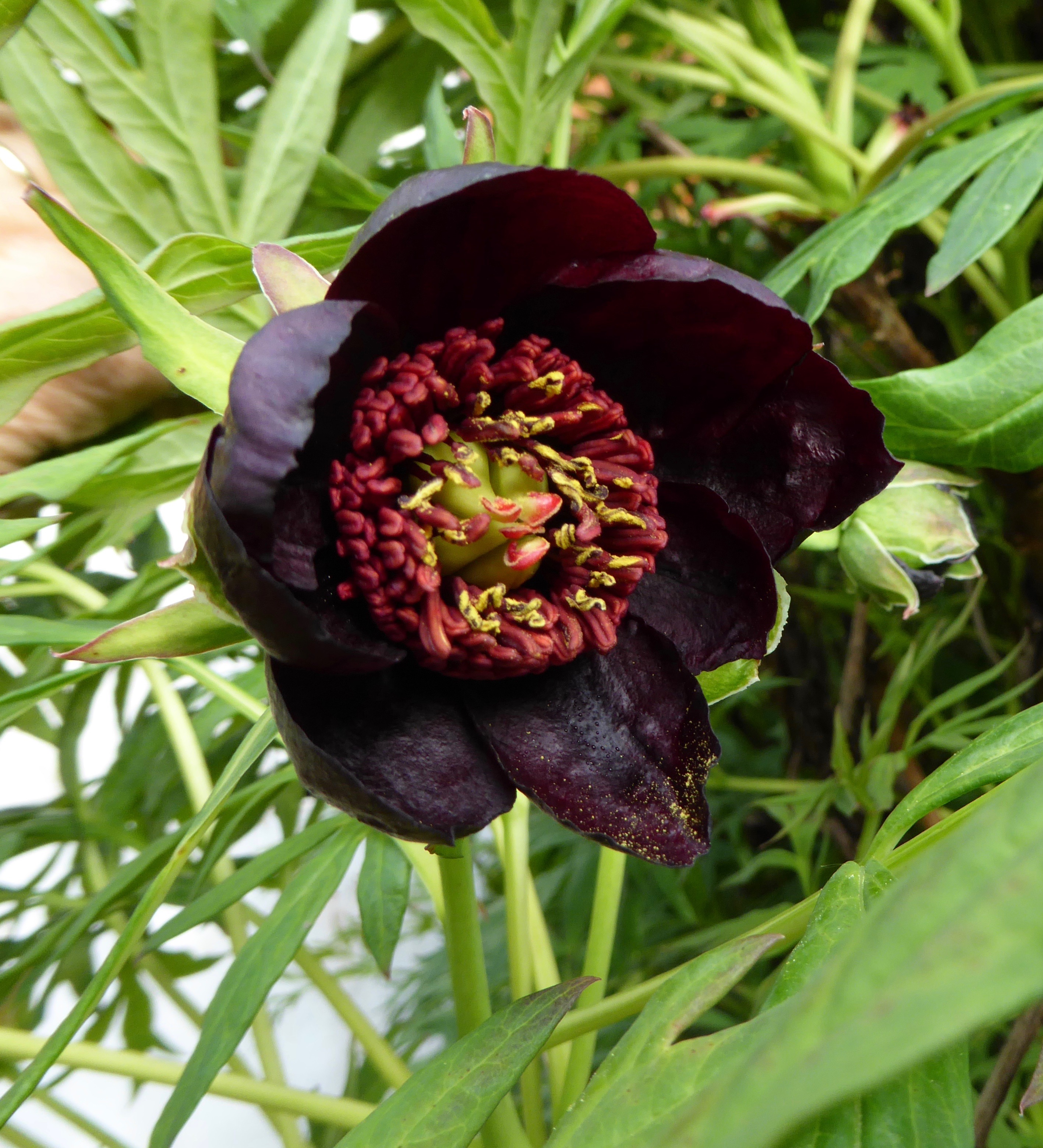
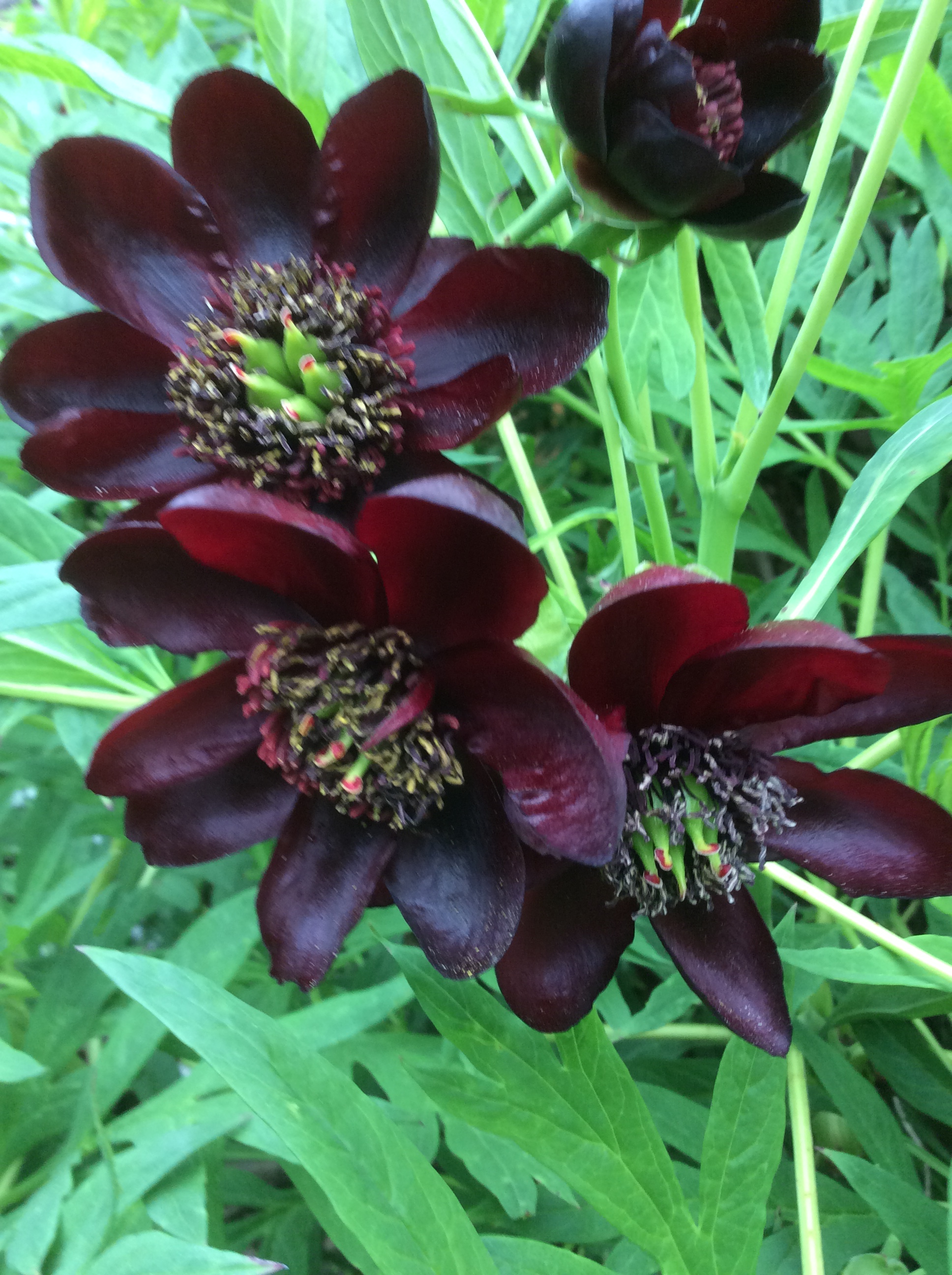
As a garden plant this variant is less appealing for its habit, making a leafy untidy mound some 2.5m x 3m often with a poor flower/foliage ratio, and with flowers part hidden in the copious foliage. Best results can be when grown as a specimen in some exposure, to encourage freer flowering and better presentation.
Some forms of P. delaveyi sucker freely, so are robust growers, and offer good cut flowers.
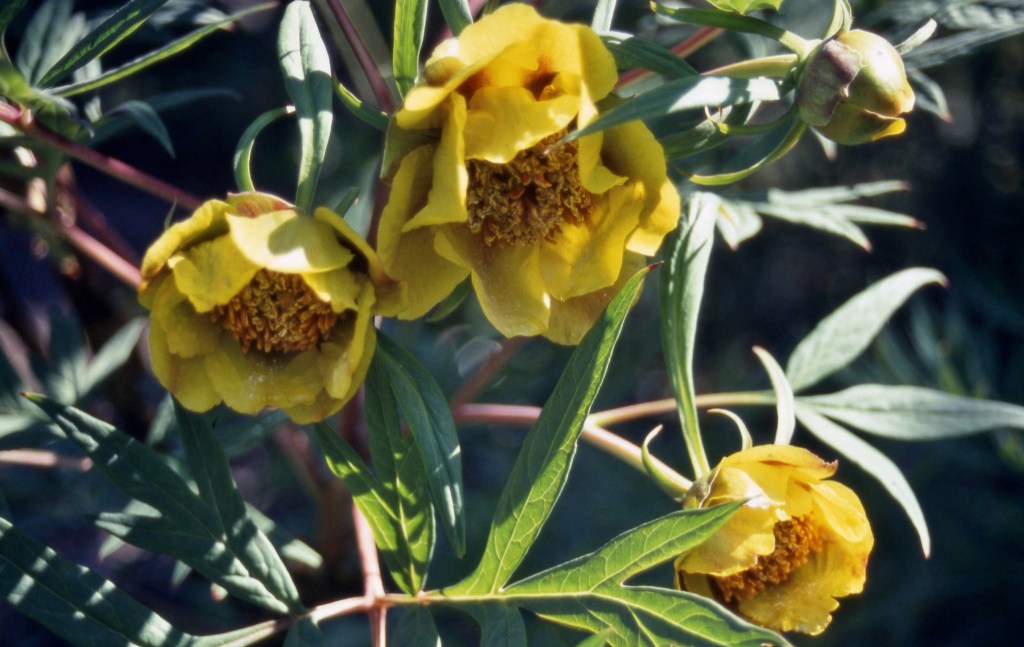
P. ludlowii (used to be called P. lutea var ludlowii) can also have an untidy habit and growth characteristics that tend to partly conceal its bright open corymbs of relatively small buttercup yellow flowers. It is useful as a background shrub in the garden, but needs plenty of space. It can work well as support for clematis flowers, as a colour contrast.
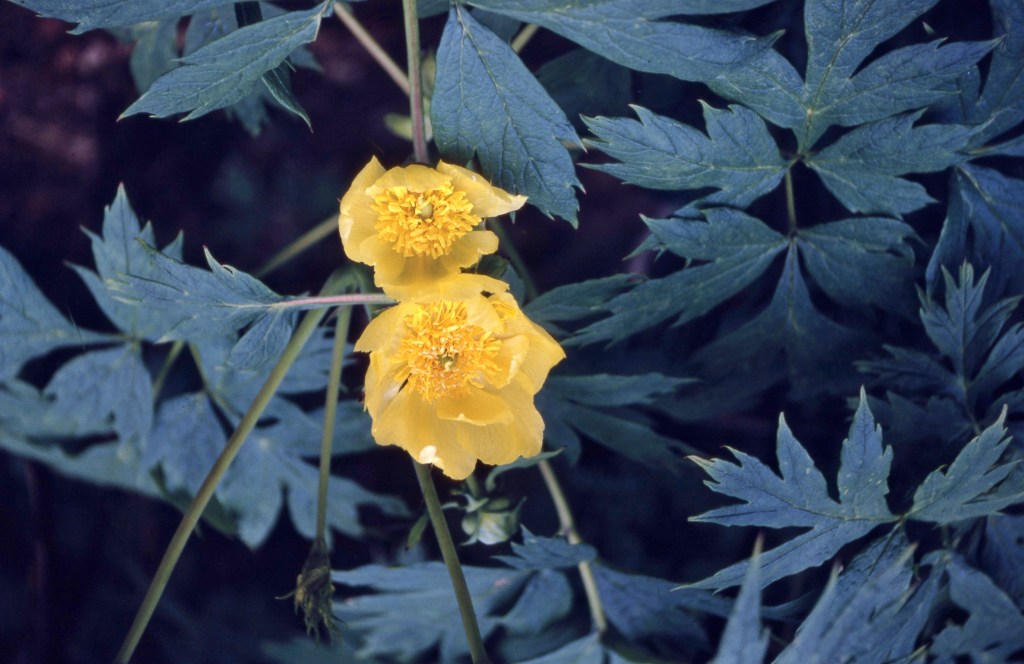
Paeonia ostii is rare in the wild, having been dug for the medical value of its roots and an oil from its crushed seeds. In cultivation it is irritatingly unreliable, here in Kent excited into growth in December with young shoots then invariably mashed by frost or heavy rain. In Cornwall it does a bit better, though Tom Hudson tells me it shoots early, rarely ripens and there is some dieback, so it does not make a decent shrub. He keeps it going from seed and young plants; but it’s worth the trouble as in flower it is very attractive.
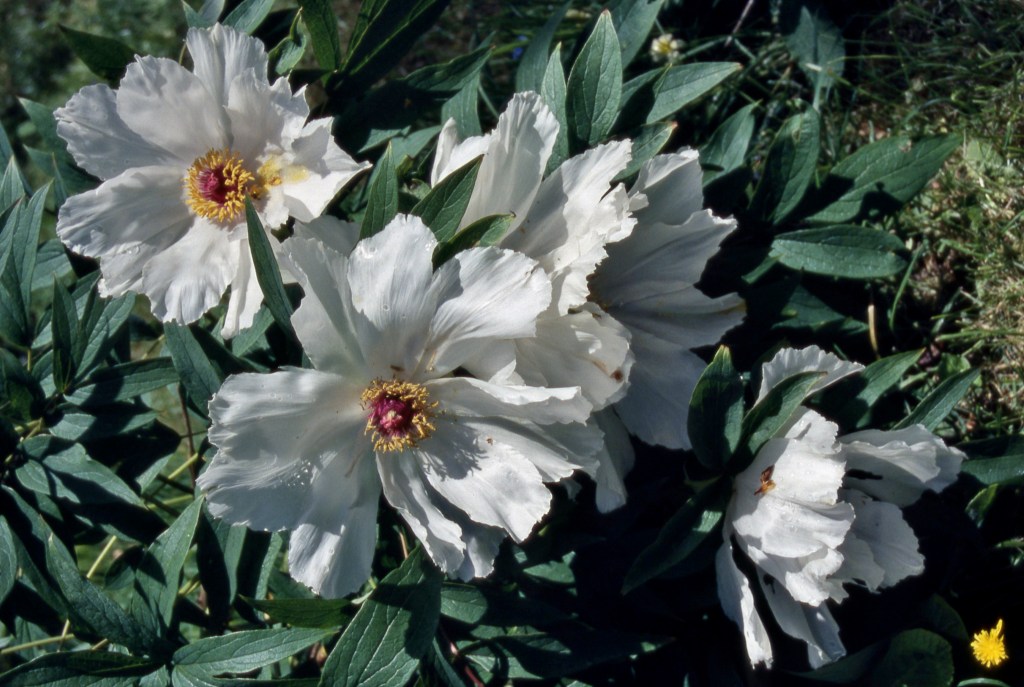
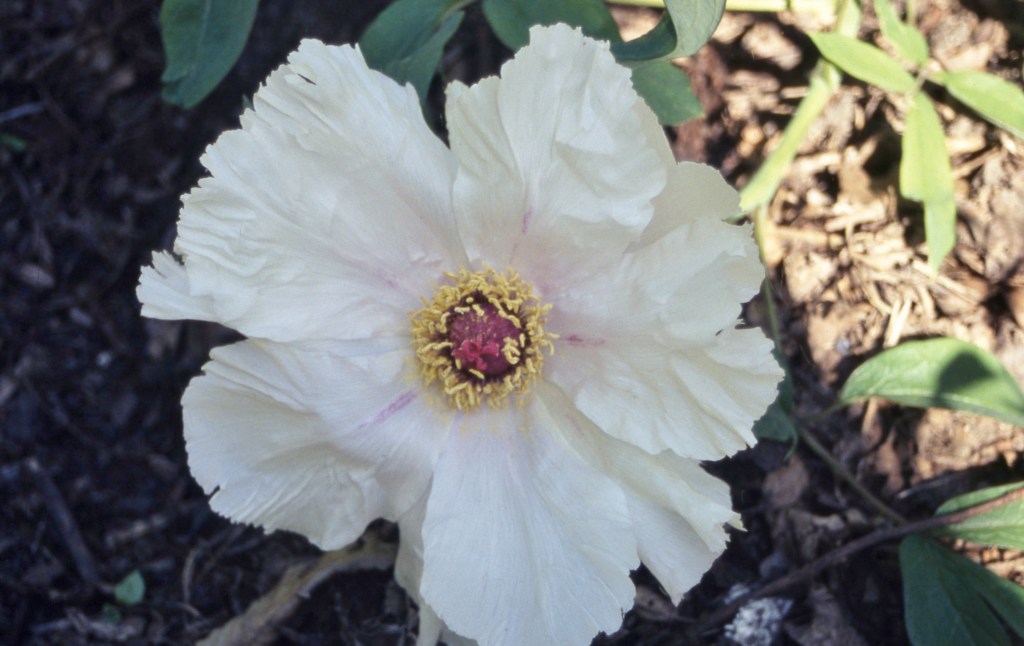
P. qiui (pronounced ‘chew-eye’) is a quite recent introduction and like many of these species, rare in the wild, and occasionally traceable in the now many garden hybrids. It is a dwarf shrub up to 60cm. My own seedlings are as yet unflowered but friend Peter Shotter tells me that it is variable in colour, from a clear pink, to white with a suggestion of pink at the base. Peter’s images reflect this, the pink shown here reverting to almost white on the same plant in subsequent years. His plants are in shade.
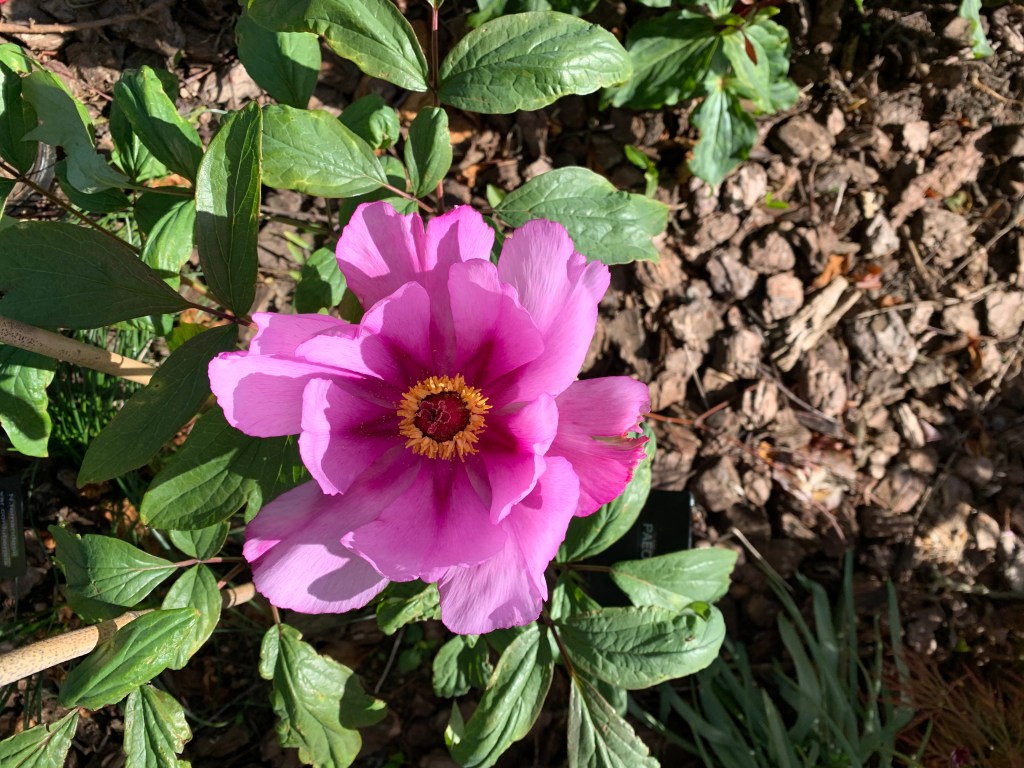
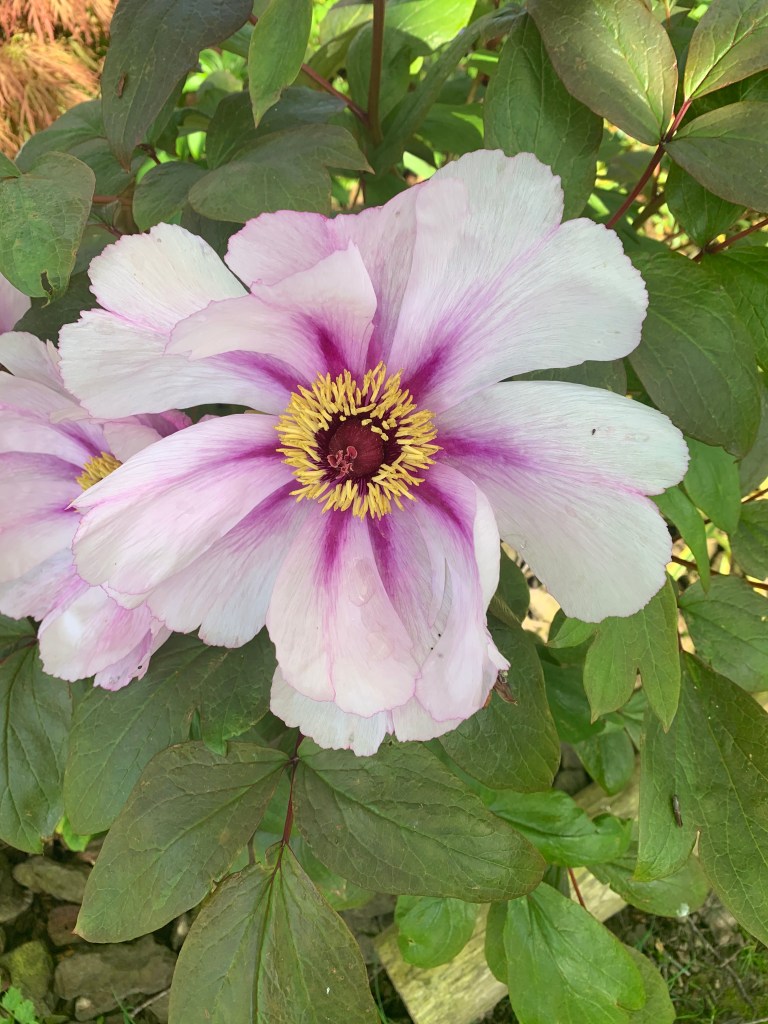
In the 1940’s and 50’s Dr Toichi Itoh, a Japanese breeder, crossed the tree peony double yellow, ‘Alice Harding’ (see above) with a herbaceous peony. After many attempts, a handful of yellow seedlings flowered in 1964 and ten years later were sent to the US where 6 were introduced commercially as the ‘Itoh’ hybrids. These early crosses produced flowers that were double, sterile, yellow and heavy, mostly facing down. Later attempts produced fertile seeds, and these opened up a whole new range of colours, ranging from yellow, red, pink, apricot, white and bicolours, in a wide variety of flower forms, mostly well-presented. These are now known as ‘Intersectional’ hybrids.
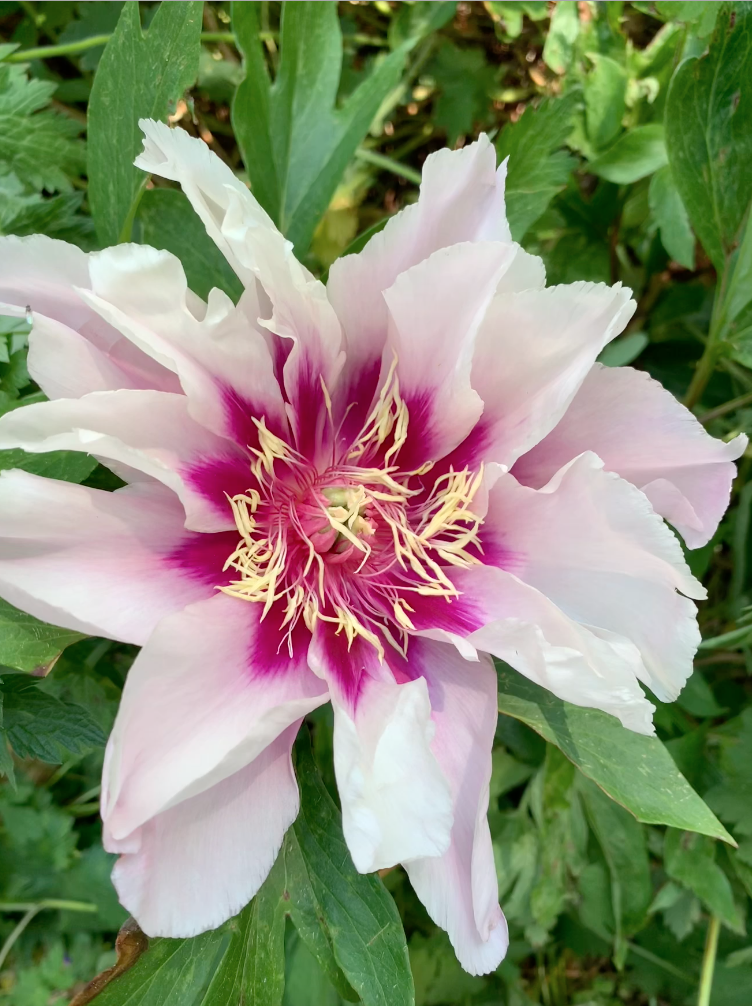
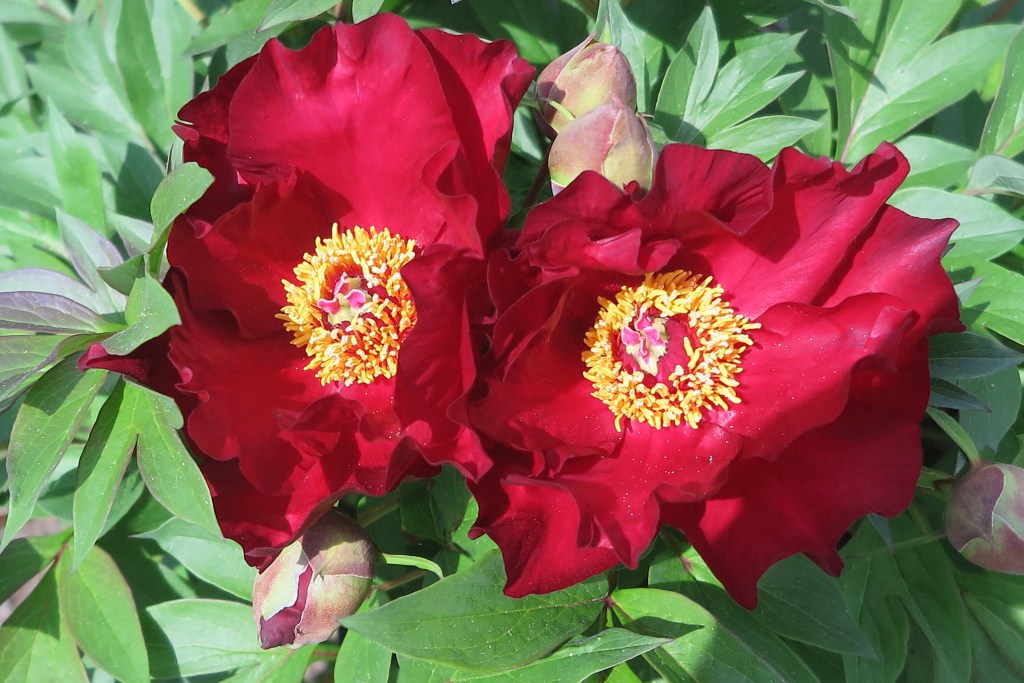
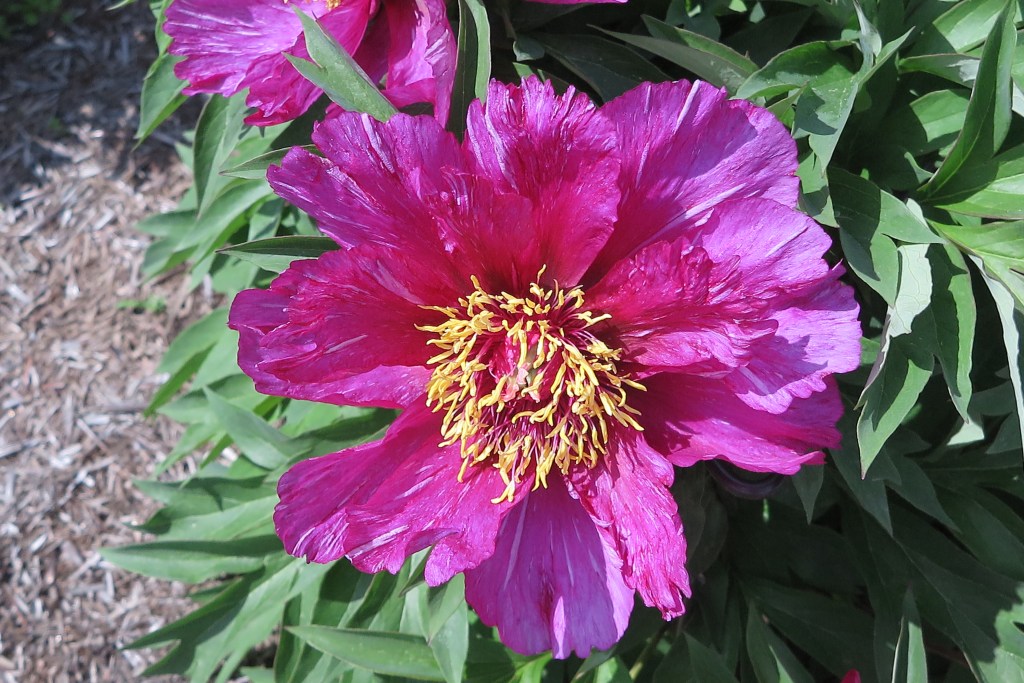
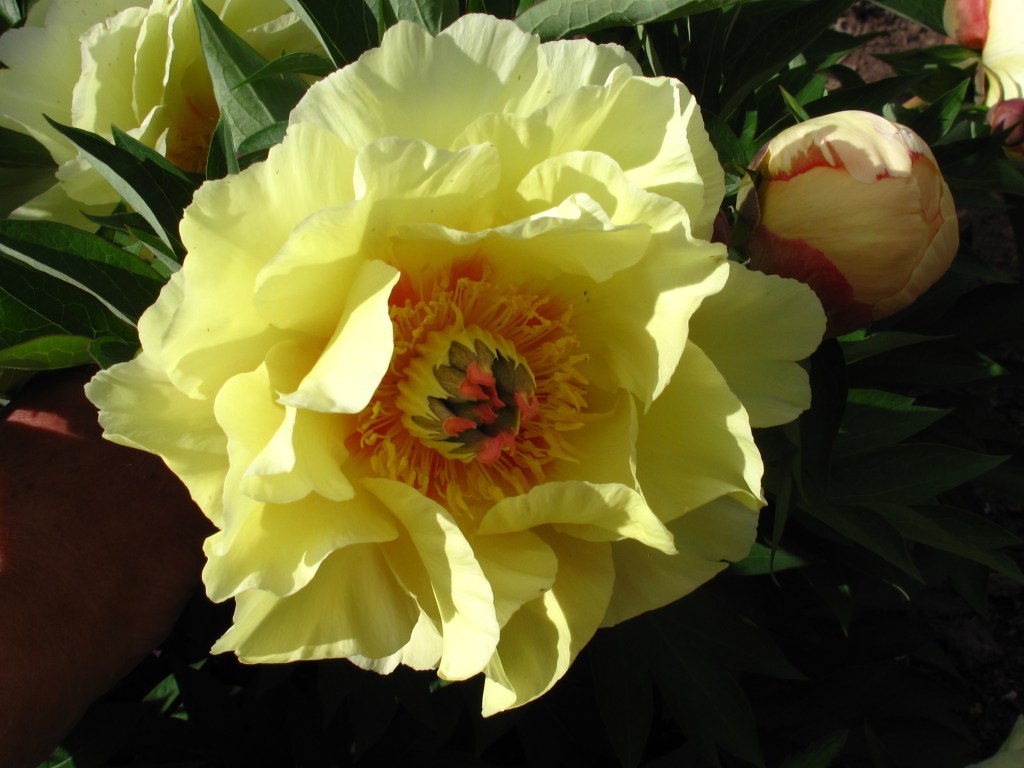
They are a halfway house in habit, compact, with mostly herbaceous growth, but interspersed with woody shoots. This combination of herbaceous shoots alongside buds on short woody shoots extends the flowering period, which is also late, well into May.
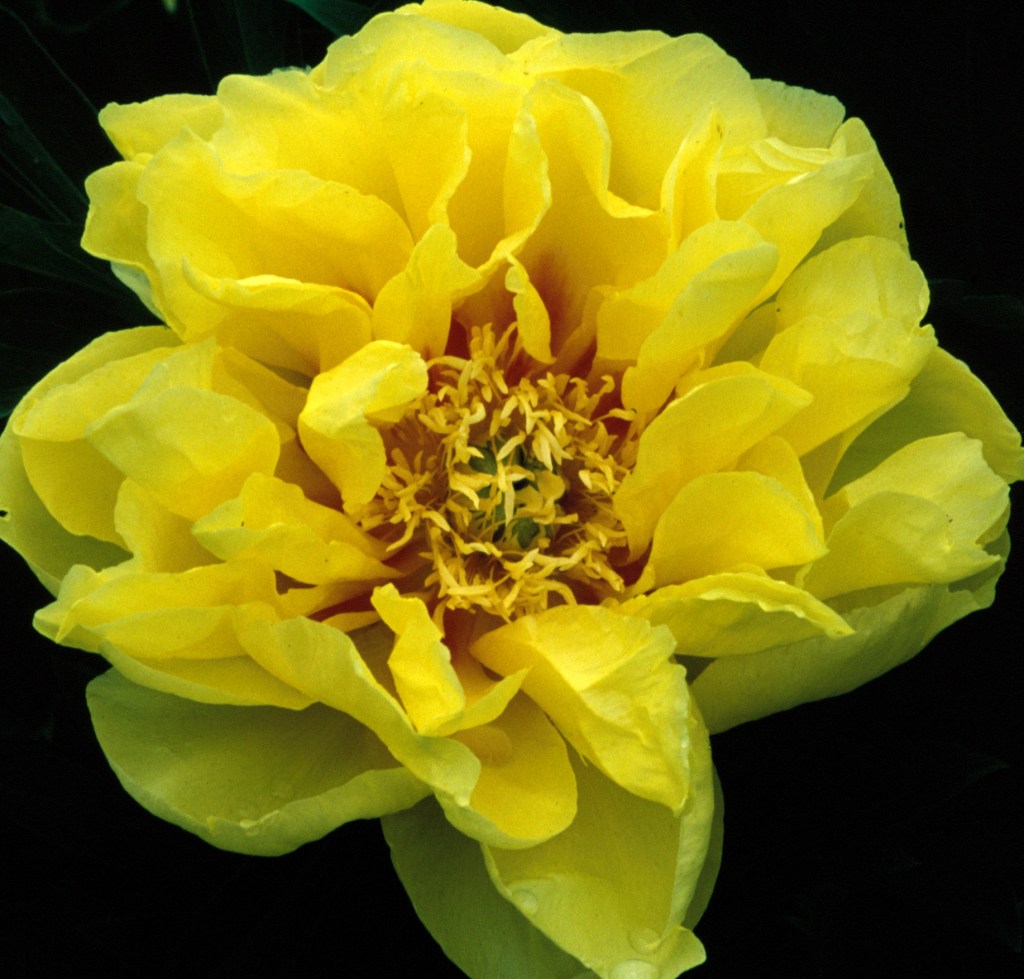
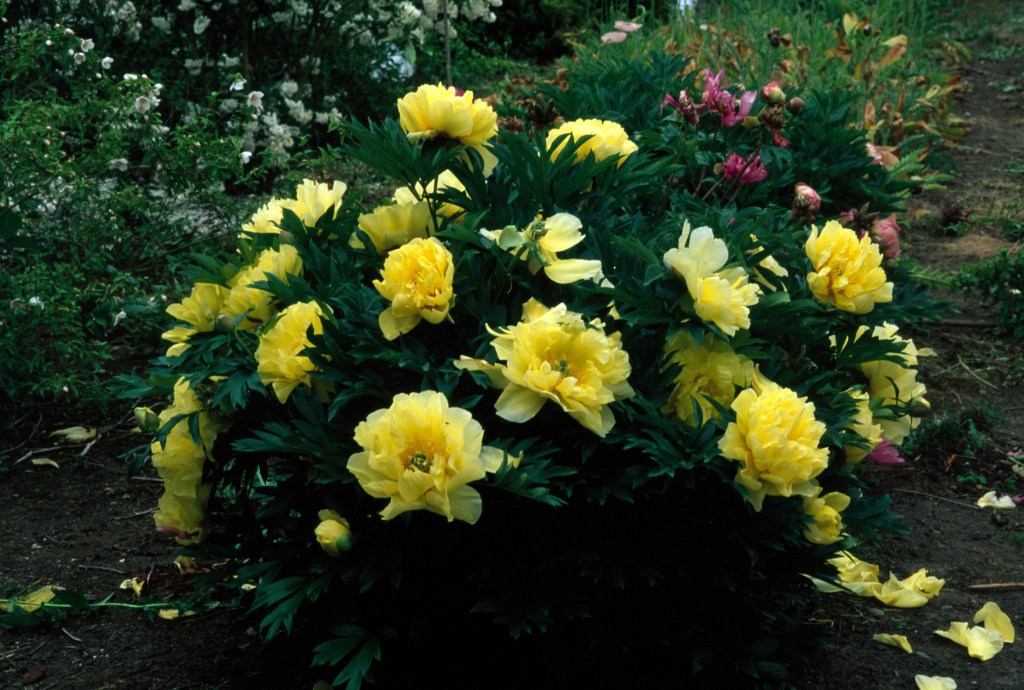
In colour and form, these plants represent something of a revolution in peonies and open up choices for colour combinations with other May flowering plants.
The steady penetration of species and hybrids from China and Japan into peony breeding in recent decades has produced an extraordinary variety of choice. I reiterate my previous suggestion – if you want to grow some nice peonies and enjoy the anticipation as well as the end result, acquire some seeds from a good source – and enjoy the variety of seedlings over time.
Read our latest newsletter here.
Upcoming Open Day dates at White House Farm are:
Sunday March 29th
Sunday April 12th
Sunday May 31st
Sunday June 14th
Tickets are £15: to reserve a spot, email us at whitehousefarmarb@gmail.com, we’ll confirm your reservation and send you more details about the day.
 White House Farm Garden and Arboretum