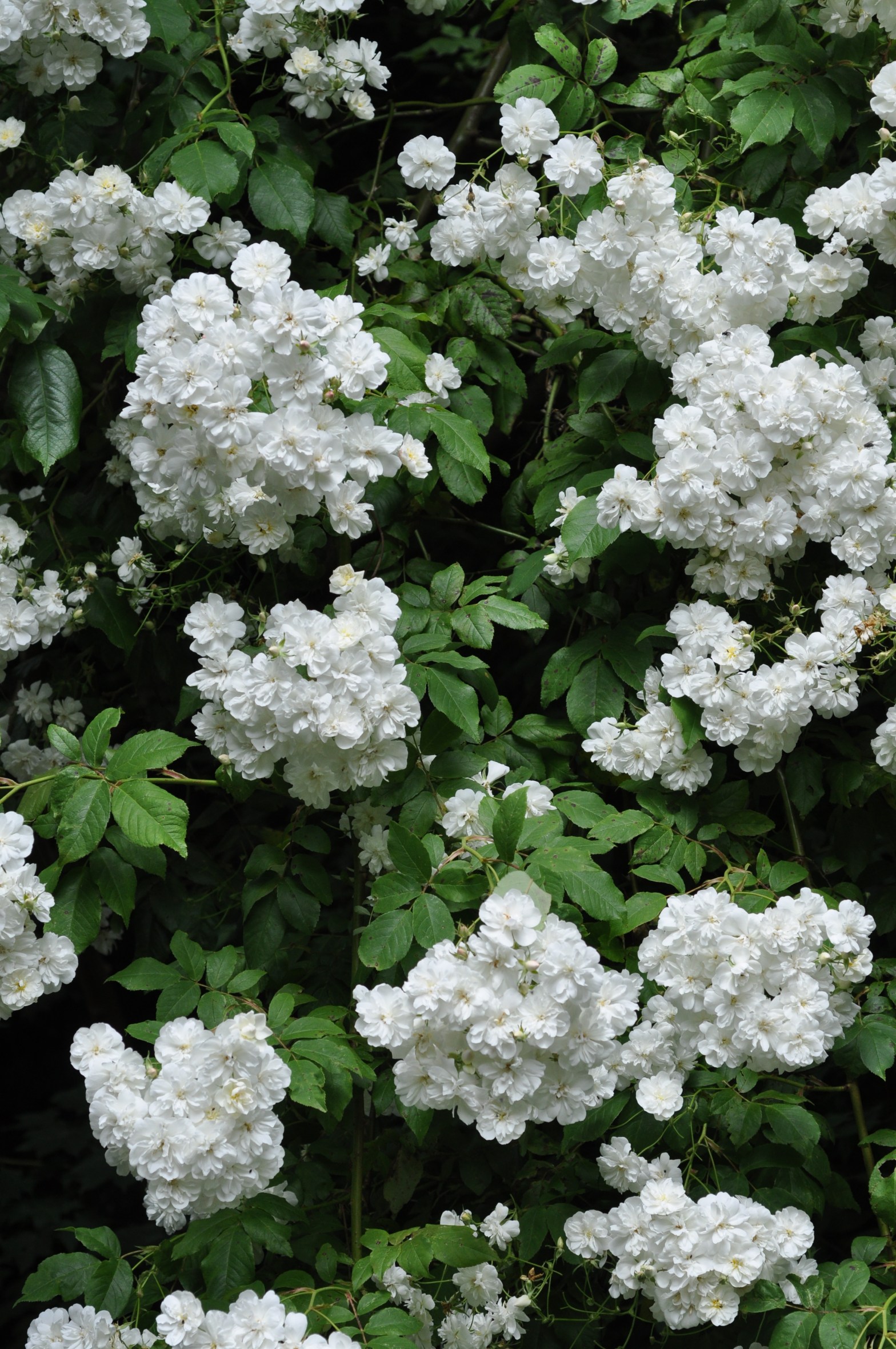
Yunnan in Western China is probably the epicentre of rose species – and many of them, such as members of the Synstylae group, have huge vigour, which they seem to pass on to their various hybrids.
The best known is probably Rosa filipes, of which the remarkable ‘Kiftsgate’ is a form or hybrid. The type species of R. filipes is infrequent in the wild, but recognisable from its long, thread-like pedicels forming large corymbs of simple single white flowers.

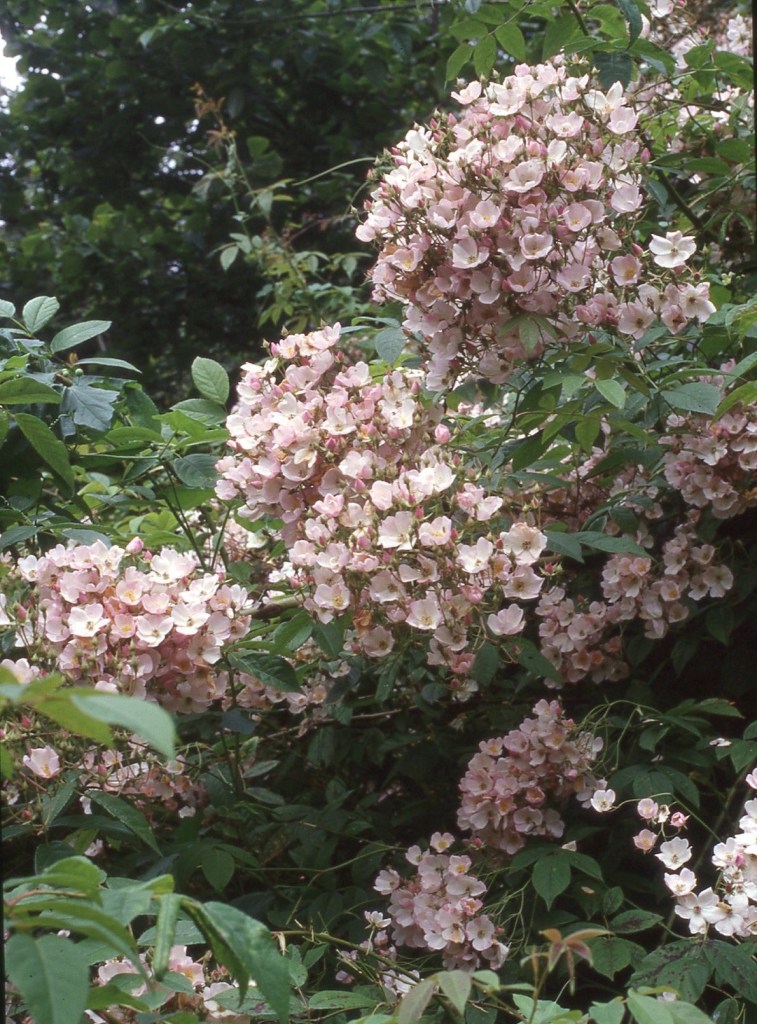
Below is an open-pollinated R. filipes seedling from White House Farm, ‘Rosemary Foster’, with pale pink colouring, which will climb up to fifty feet in a tree (here, sycamore and oak) and hang down long flowering shoots in arcs.
The other notable member at WHF of the synstylae group is Rosa longicuspis, which has virtually every attribute a desirable flowering plant might possess: it has polished dark green foliage, is fully evergreen (even in several degrees of frost), largish flowers in open corymbs which those with a decent nose say has a faint smell of bananas – and vigour. Our plant is 20 feet tall by as much as 40-50ft across, entirely smothering an old bramley apple tree. The young shoots are polished reddish brown.
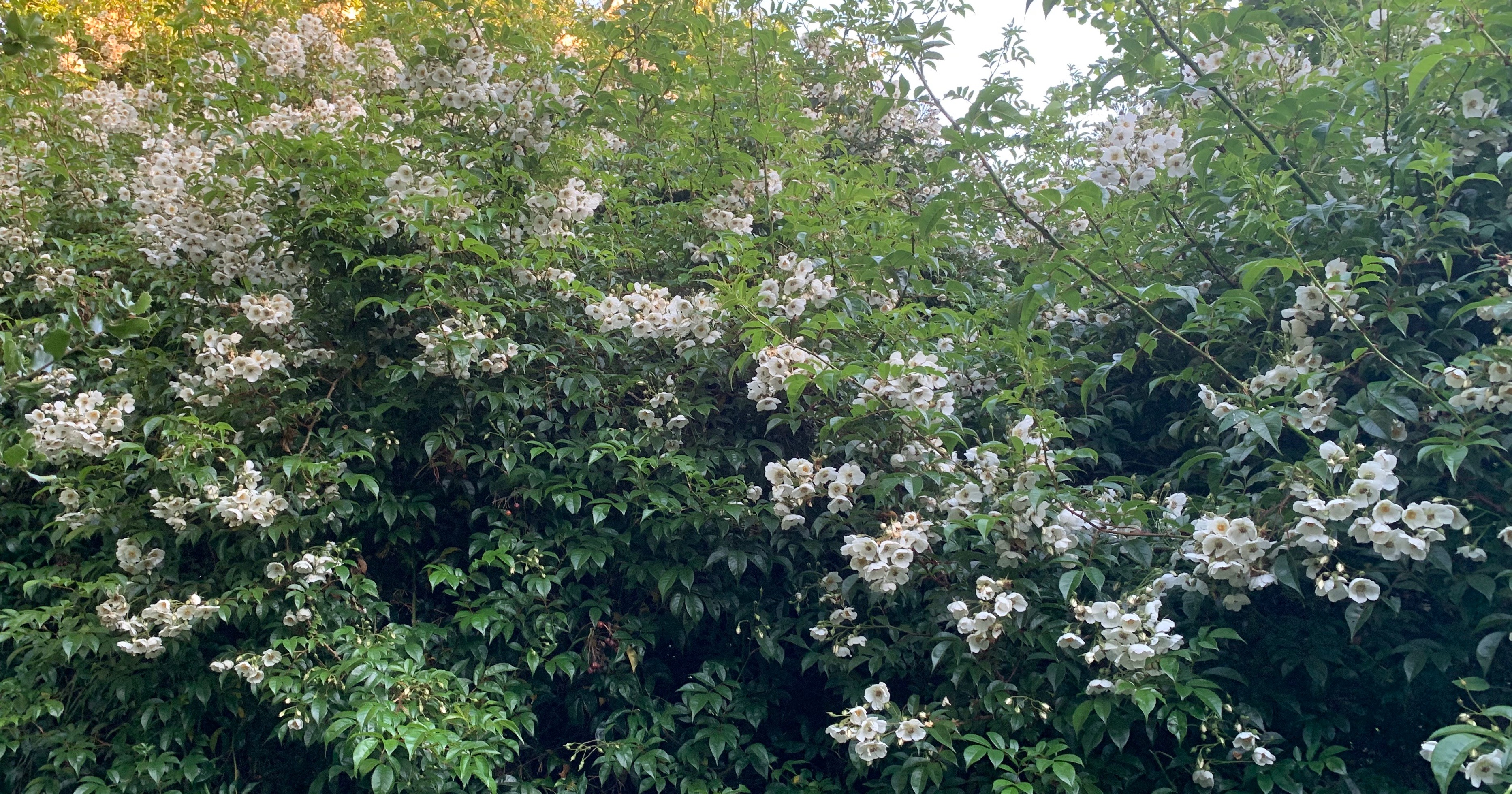

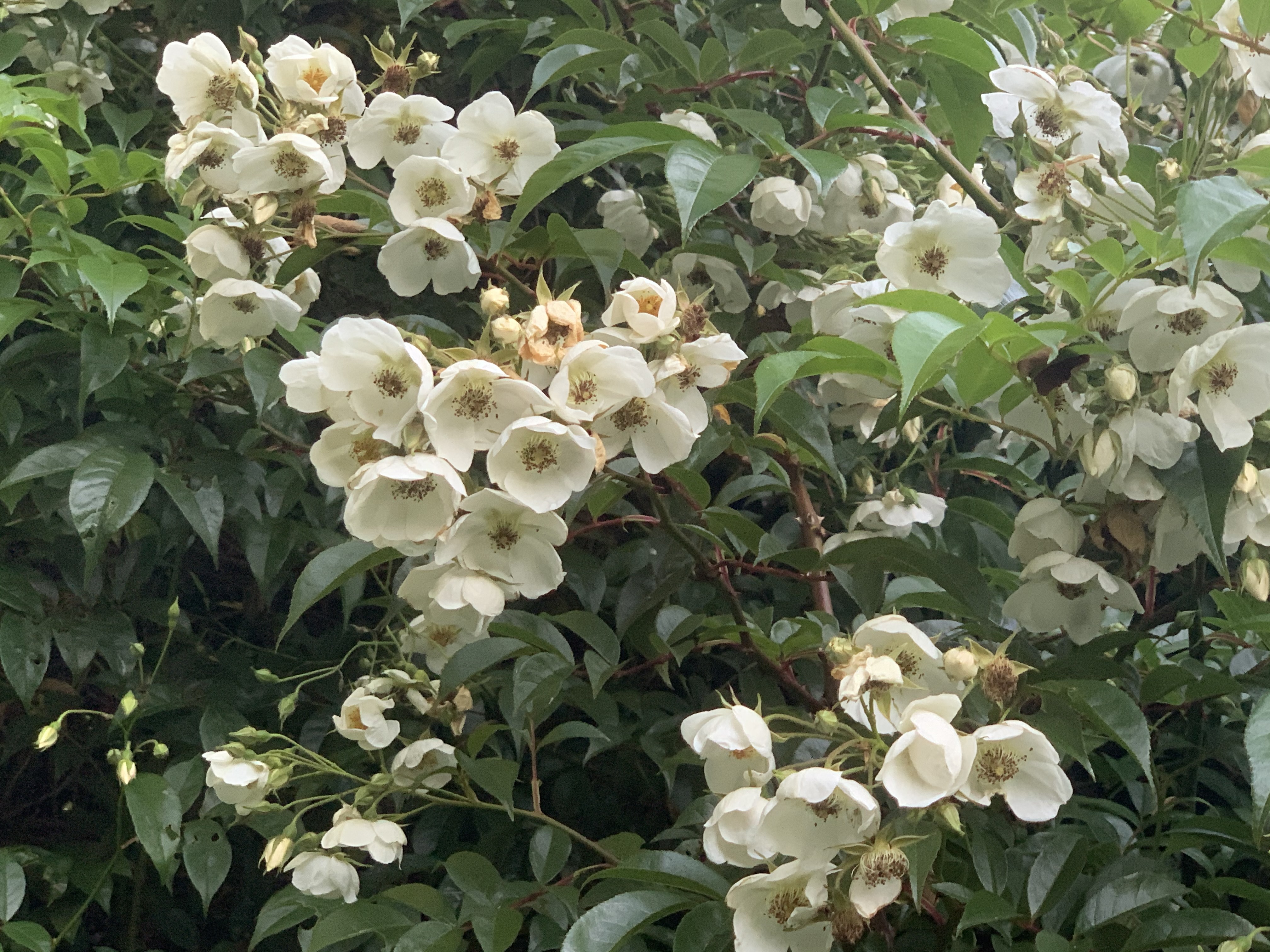
The conventional commercial sources have said neither of these synstylae are marketable because they are too vigorous for the average garden. R. filipes is also ultra-promiscuous, producing copious seedlings, many of which are worthwhile (like ‘Rosemary Foster’). But we think they have significant potential for hybridising. We use them to enliven our screen trees, and they are often a feature in autumn for their clusters of hips.
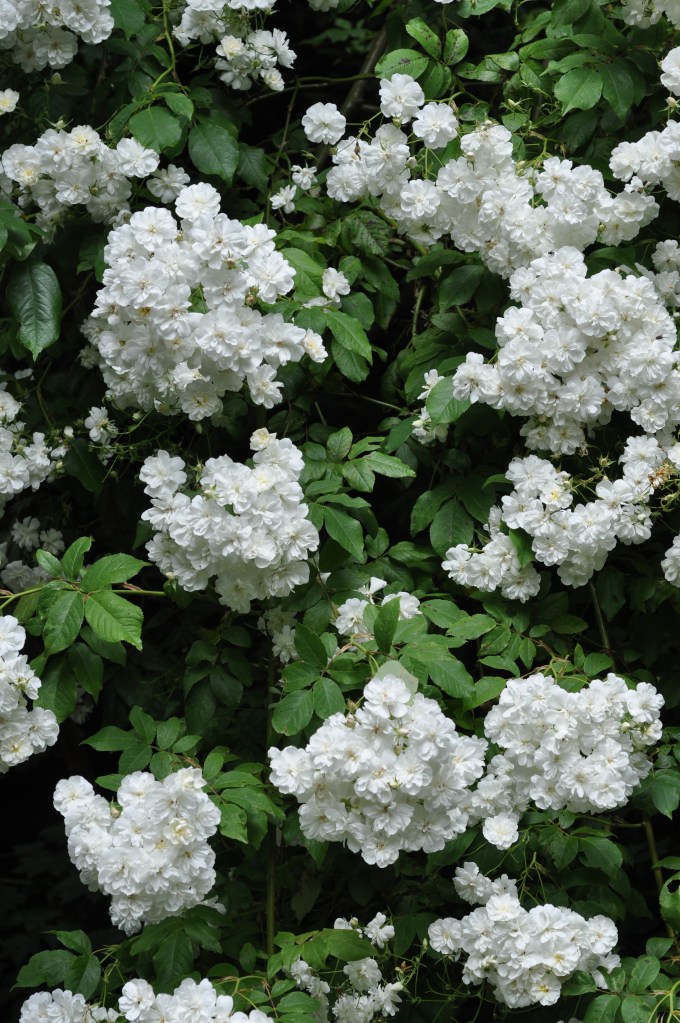
Another very promising synstylae bred here has large rosette-like white flowers hanging in festoons cascading down the side of an old gean. It leaves ‘Rambling Rector’ standing in the middle of his rural parish, so we’re looking for a suitable name for it from higher up the episcopal hierarchy.
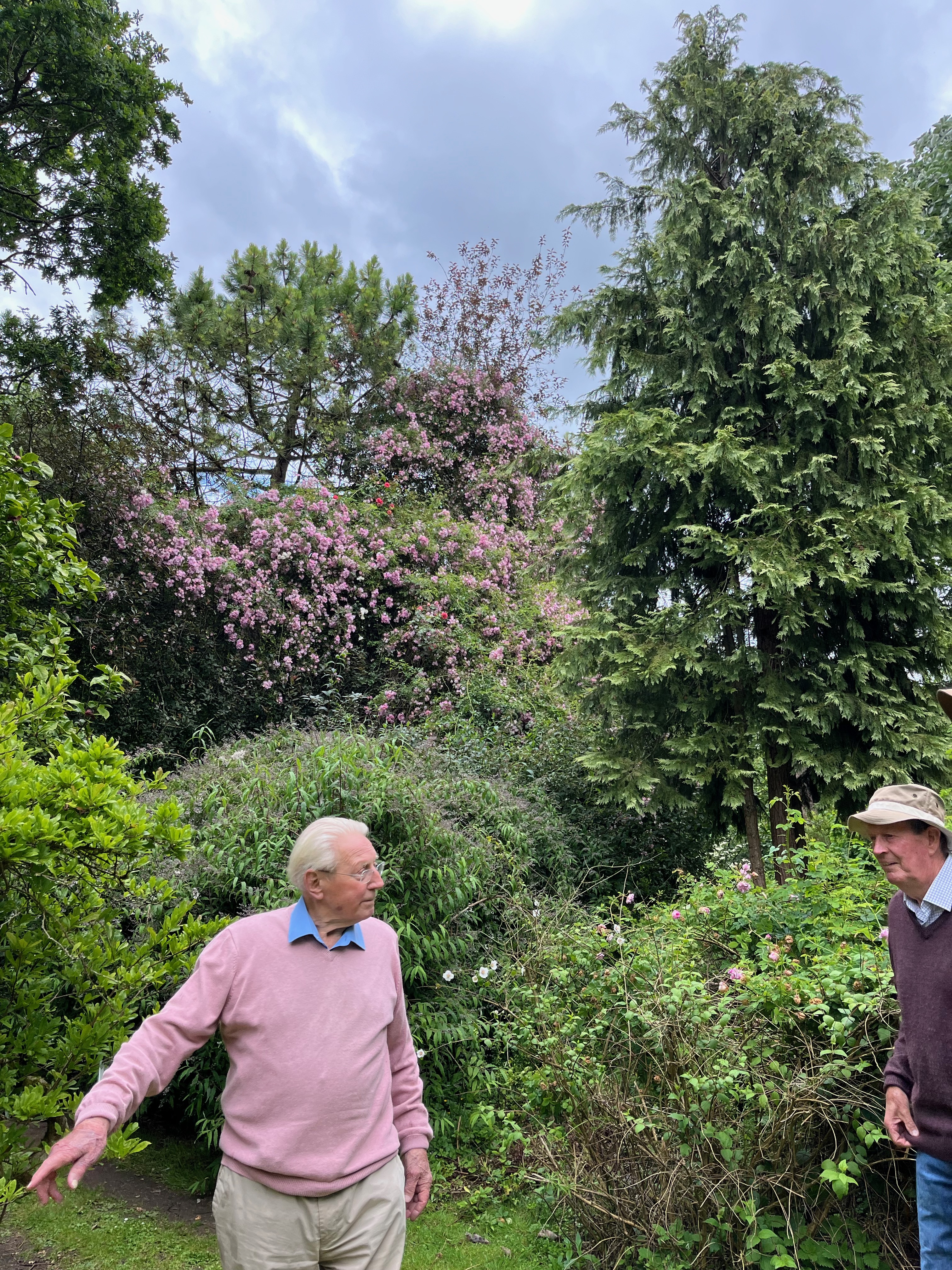
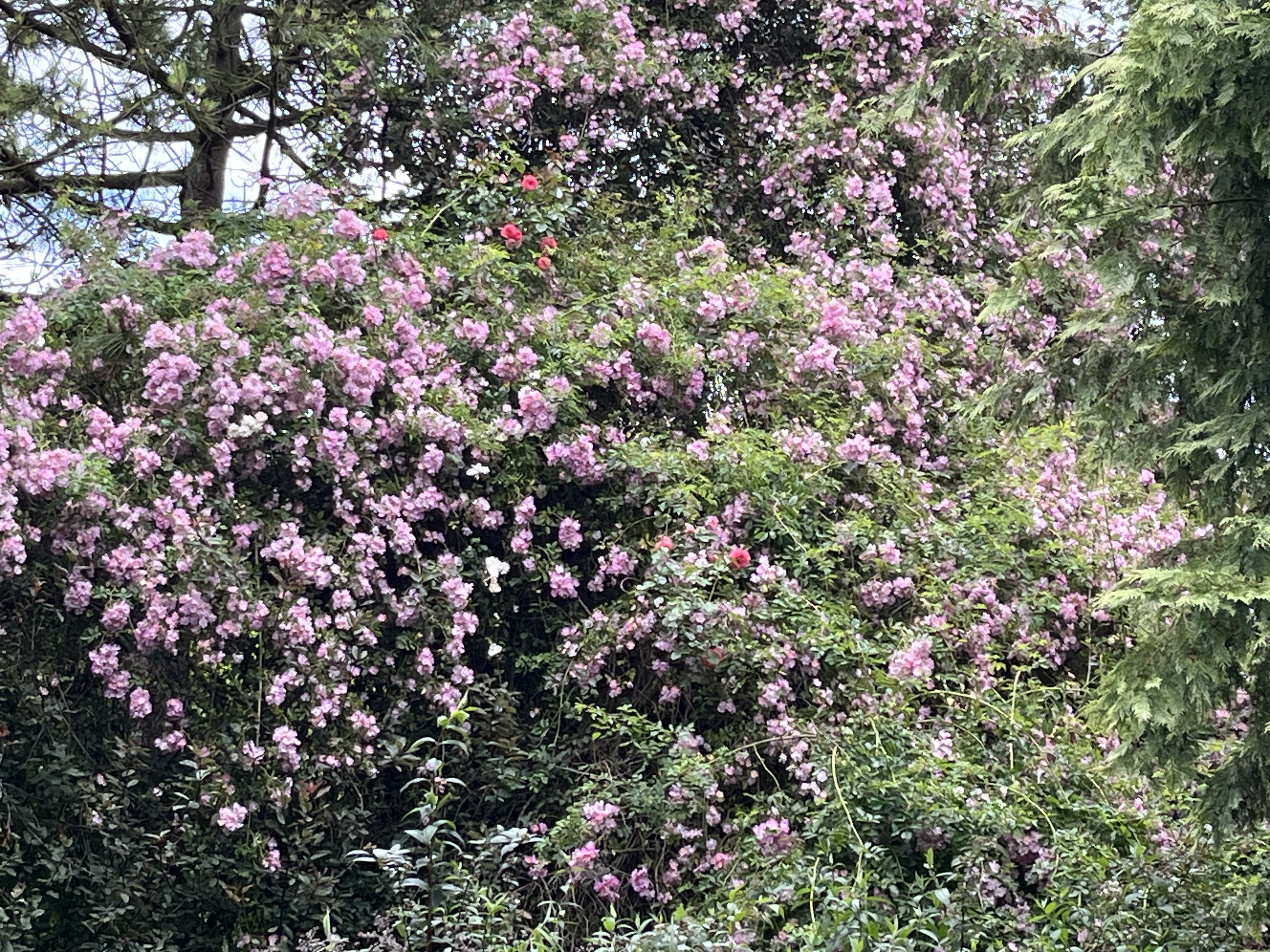
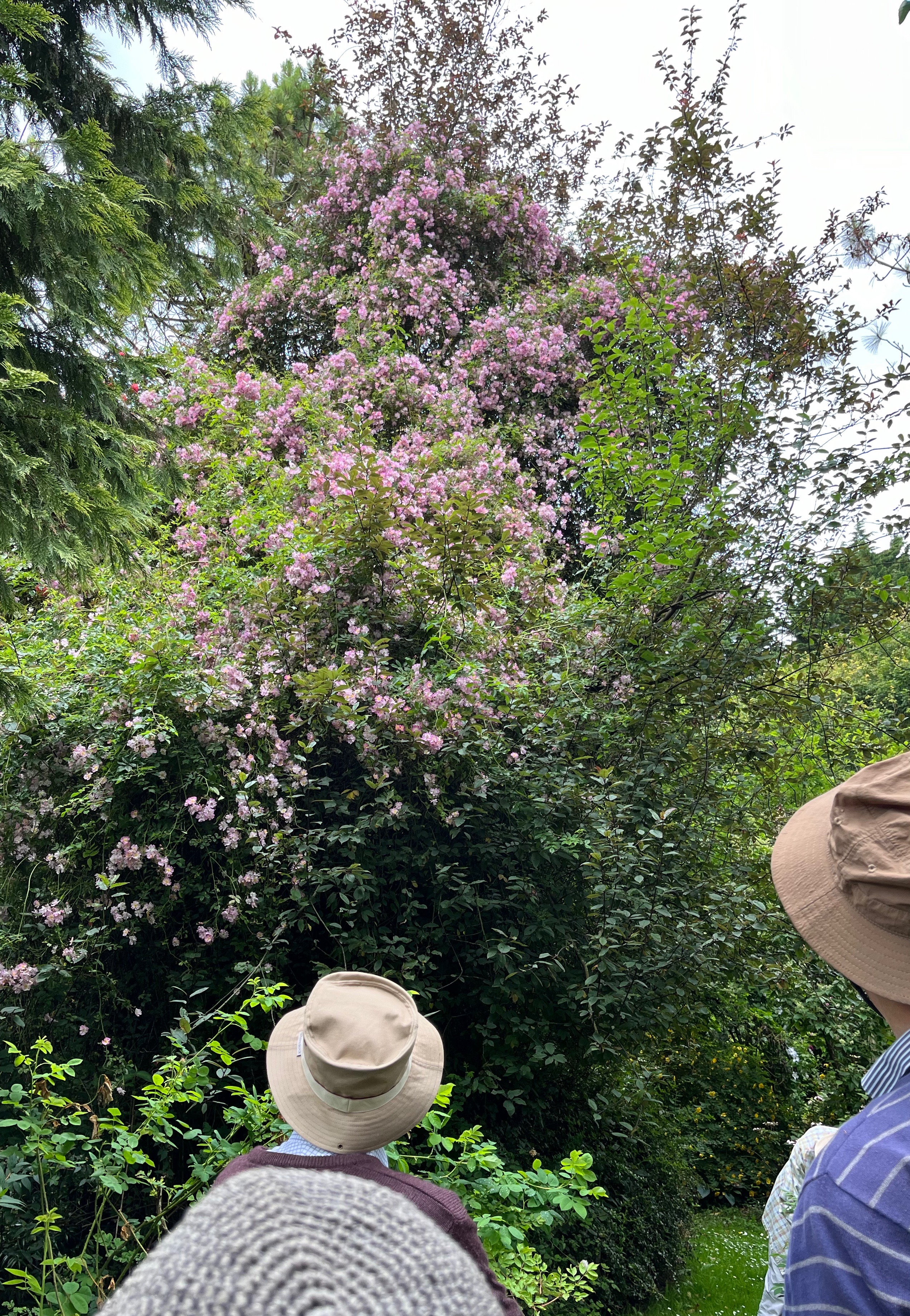
A further climbing rose which has attracted much attention from visitors is a strong pink seedling of ‘Veilschenblau’ , now smothering a large Prunus colorata in the Rose Garden. This was brought in as a specimen to the RHS Woody Plant Committee by its then secretary Diana Miller many years ago as a seedling from her garden. I showed interest in it, took the specimen home and rooted it as cuttings. There seems to be little of Veilschenblau in it, in terms of either colour or vigour, but twenty odd years on it is now a remarkable spectacle.

We tend to leave self-sown rose seedlings here until they flower, particularly if a good rose is or was once planted nearby. One never knows one’s luck. After all, every plant we grow in our gardens originated from seed.
Further reading:
‘A Genuinely Evergreen Rose’ on Rosa longicuspis, in The Plant Review, Sept 2020
‘Elusive Titans of the Trees: Synstylae, in the The Historic Roses Journal, Autumn 2020


thankyou for highlighting these roses . What better way to add some sparkle to the summer green trees . As for your religious name how about embracing their homeland and call it The Bountiful Buddha
LikeLike
Wonderful – Rosemary Foster is SPECTACULAR! Toby Tristram is another named R. filipes which does very well even this far north!
If we are ever down in Kent is it possible to visit White House Farm Garden?
Many thanks from Panny
Panny Laing,
Logie House
Forres
Moray IV36 2QN
http://www.logie.co.ukhttp://www.logie.co.uk/
LikeLike