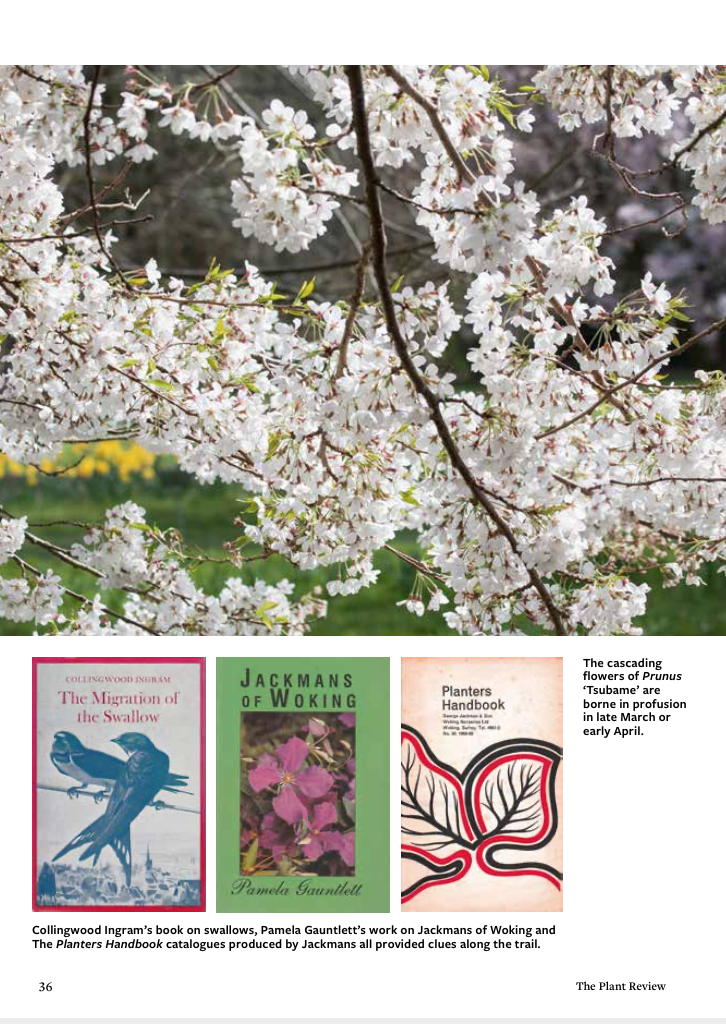
By WHFAF Trustee Christopher Sanders VMH. This article was originally published in December 2023 by the RHS Plant Review. Reproduced by kind permission of the RHS.
Erwan Le Bec shares his experience of interning at White House Farm
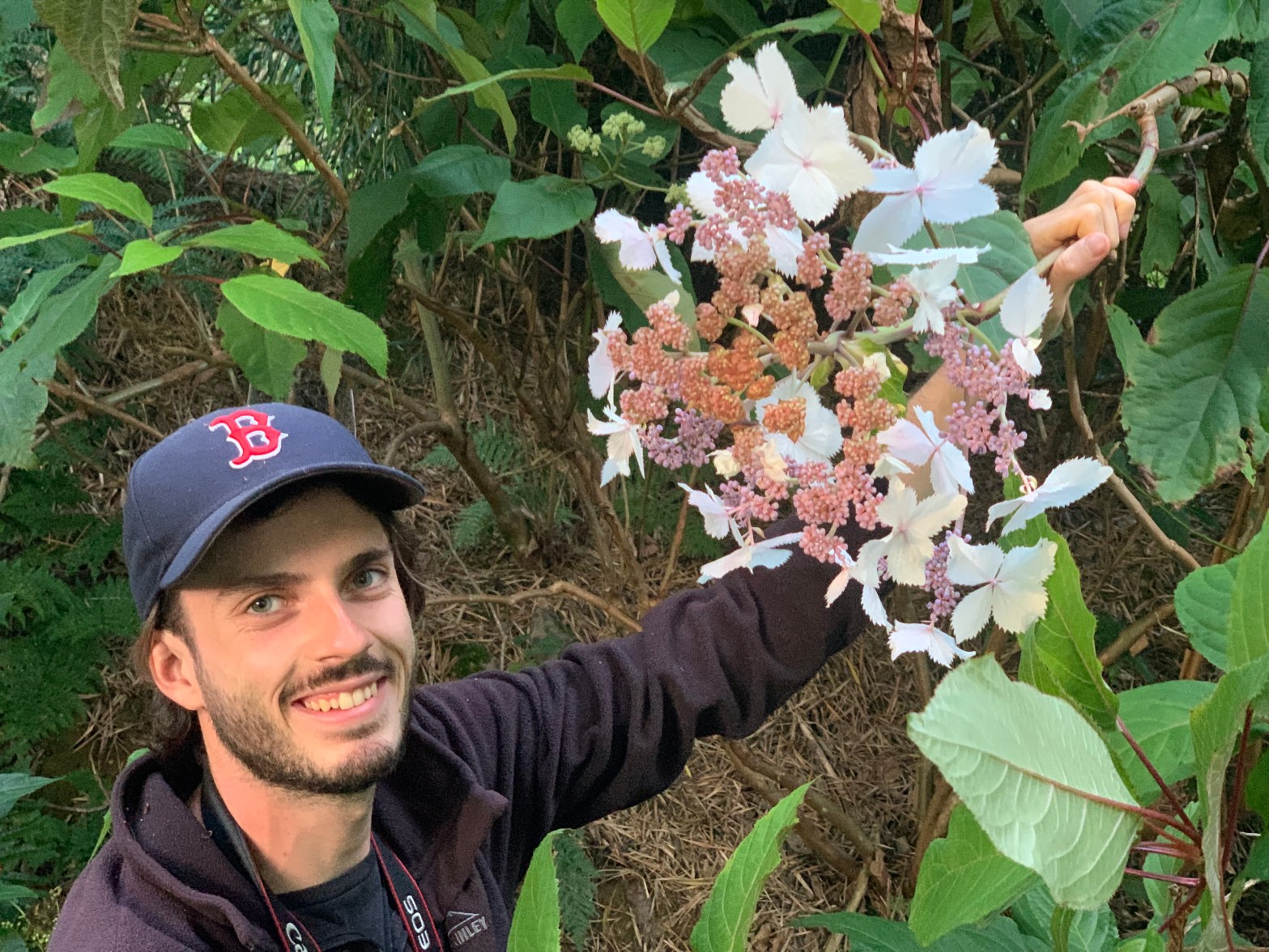
Erwan Le Bec, a French horticultural student at INH school (Agrocampus Ouest Angers) writes about his recent visit to us as an intern. He left us with extraordinary photographs and research notes about our collections.
Since I was a child I’ve had a particular interest in the world of plants.
It started with my grandfather’s vegetable garden, then moved to ornamental plants, and especially woody plants, whether trees or shrubs, because to me they seemed incredible living creatures, able to survive against all the difficulties of our world. This passion developed over the years and I decided to take advantage of my studies in landscape design to deepen my knowledge of botany. I began in 2019 with an internship at the Roscoff botanical garden, then continued with an internship at the Aoba nursery, run by Cédric Basset and Manon Rivière, and, last year, had a unique experience at Wespelaar arboretum with Christophe Crock and Koen Camelbeke. This world of trees and shrubs is now for me both a refuge and an idyllic setting for a future professional life.

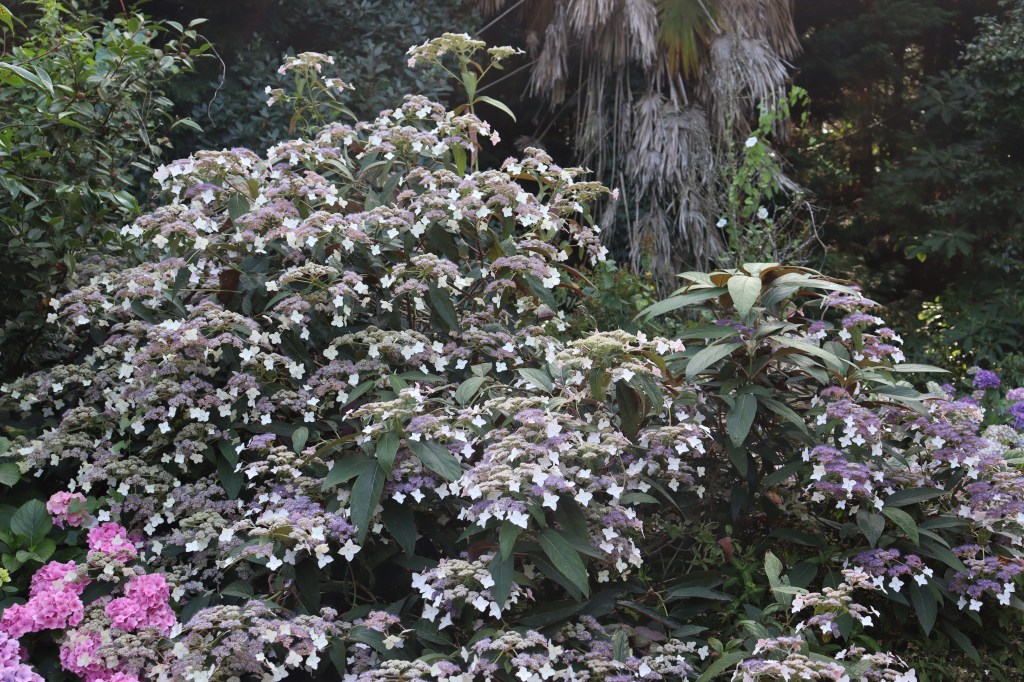
For several years I’d been hoping to be able to have some experience in gardens in England, to improve my English and my knowledge of plants at the same time. Last summer, during a talk in Herkenrode with Philippe de Spoelberch, we spoke about the garden at White House Farm and its wonderful Hydrangea collection. Having worked on the Hydrangea collection at Wespelaar arboretum, WHF seemed a good choice for my next internship destination. After few emails, I agreed with Maurice Foster on a 3-week internship in August 2023. As soon as I arrived, I felt right at home at White House Farm, with a nice welcome from Clare, her children and Maurice. The atmosphere was incredible: a house in the middle of a treasure trove of plants from so many different horizons. The Hydrangea aspera had just begun to bloom and were shining in all their splendor, like images I’d seen in books about the flora of China.

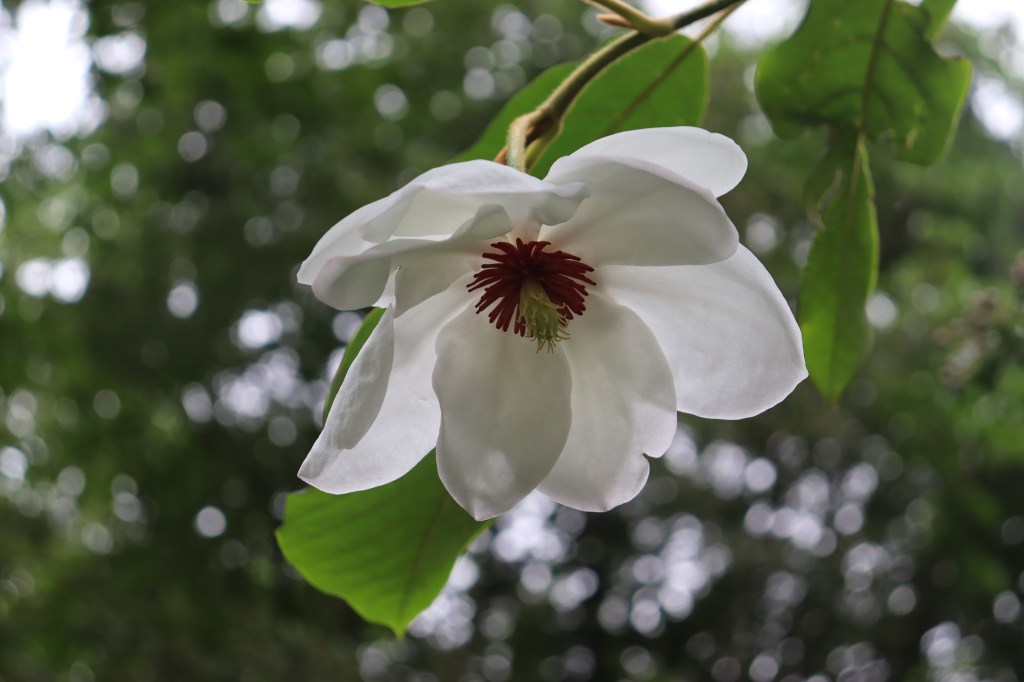
From the very first evening, Maurice welcomed me with open arms into his world, giving me access to his knowledge and some interesting books: it was the beginning of an incredible experience, three weeks of pure happiness. During these weeks I inventoried with Maurice some zones in the garden, and some genera like Carpinus, Sorbus, Corylus and Euonymus. Thanks to this work, I discovered my favourite plant of the garden: the Magnolia wilsonii x Magnolia globosa seedling from one of his collections that he has nicknamed ‘Parachute’ because of its very big white flower.
Any activity with Maurice at White House Farm is interesting and instructive, because at WHF each plant has its own story, so every day he took me with him to the different regions of his travels. For example, he discovered Carpinus fangiana in Yunnan in 1998 with some American botanists – the tree had no fruits, and they thought that the foliage looked fagaceous, and was probably an oak. But Maurice kept on searching, and finally spotted a the very characteristic single fruit of Carpinus fangiana in some taller branches. I also helped the arboretum team for one day a week, pruning, tree-felling, and weeding, which was a great way to learn about plant collections in a different way, as something constantly changing. And every week Maurice took me to different famous gardens like Wisley, Nymans and Hilliers to meet different plant specialists, such as Chris Sanders, Chris Lane, Rod White and Jack Aldridge. It was a great pleasure to talk to them, each one a specialist in his own areas.
This unique and comprehensive experience was very encouraging; it helped me feel I belong in this world of enthusiasts. So I’m finishing my last year of study in landscape design by specialising in urban green spaces, with a 6-month work experience in February 2024 to conclude my course, which I hope to do in a garden or arboretum. My sincere thanks to Maurice and Clare for their welcome, and to Philippe de Spoelberch for this recommendation.
Follow Erwan on Instagram at @decouverte_botanique, connect with him on LinkedIn, or contact him at erwan.le-bec@orange.fr.
_______________________________________________________________________________________________For more about White House Farm, join WHF Friends to receive our latest newsletter.
‘Dogwood with a bark’: Cornus wilsoniana

By WHFAF Trustee and RHS Wisley horticulturalist Jack Aldridge
This article was originally published in June 2023 by the RHS Plant Review. Reproduced by kind permission of the RHS.
Is a pink-flowered philadelphus a real possibility?

By WHF Trustee Christopher Sanders, VMH
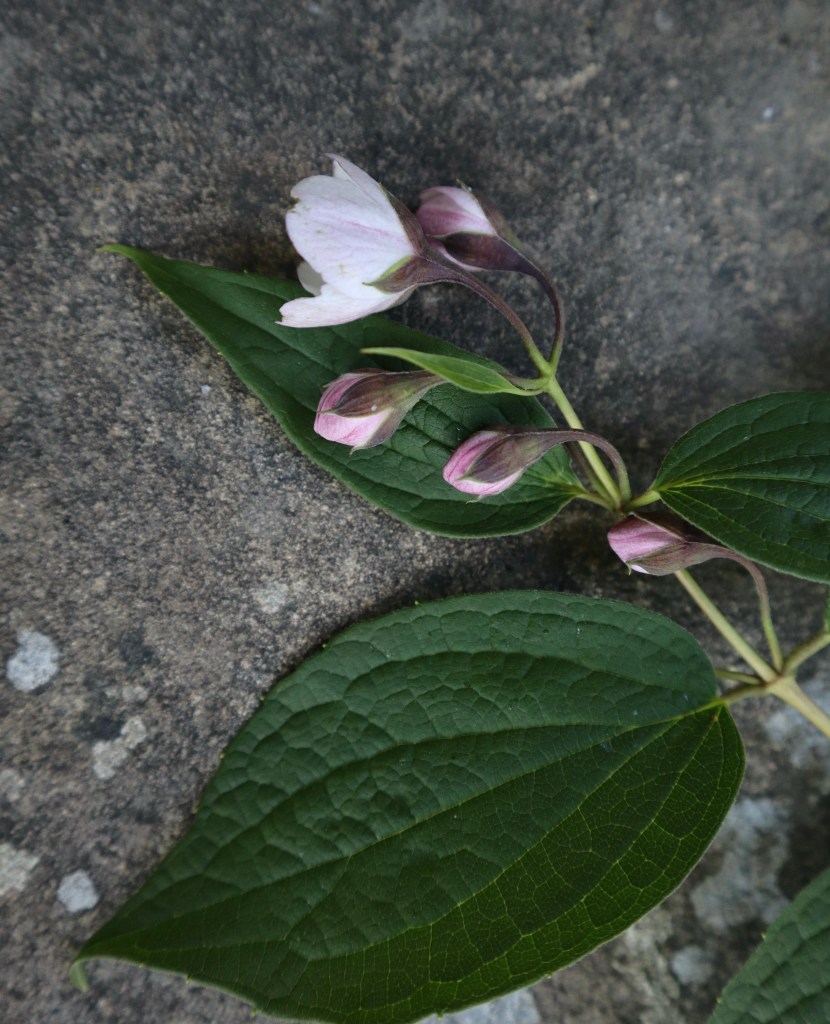
It’s well known that some Mexican species and their hybrids such as P. maculatus, P. mexicanus and P. ‘Belle Etoile’ possess a gene for the colour pink, but this is manifested as a more or less basal blotch on the inner surface of the petals, resulting in a central ring of pink or purplish-pink in the heart of the flower. However, those present at the recent Philadelphus Study Day at White House Farm were intrigued when shown a young shrub recently planted out in the Wood, which was clearly exhibiting pink-flushed flower buds and whose petals had faint pink streaks on their exterior.

Maurice told us that he had been given this as a cutting under the name of Philadelphus aff. delavayi “pink form” during an RHS Woody Plant Committee visit to Bodnant in North Wales a few years ago. The name seems somewhat doubtful, given that P. delavayi is an early-flowering species; other examples of P. delavayi in the collection (a fine melanocalyx B & L collection and the Nymans form, for example) had mostly finished flowering by the study day (17th June), although a longer-lasting P. delavayi flavescens was still going strong into July. It reminded me that I had once seen something similar many years ago on a visit to Highdown, the famous chalk garden near Worthing, Sussex, created by Sir Frederick and Lady Stern. It bore no label, but at the time I attributed it to P. tomentosus.
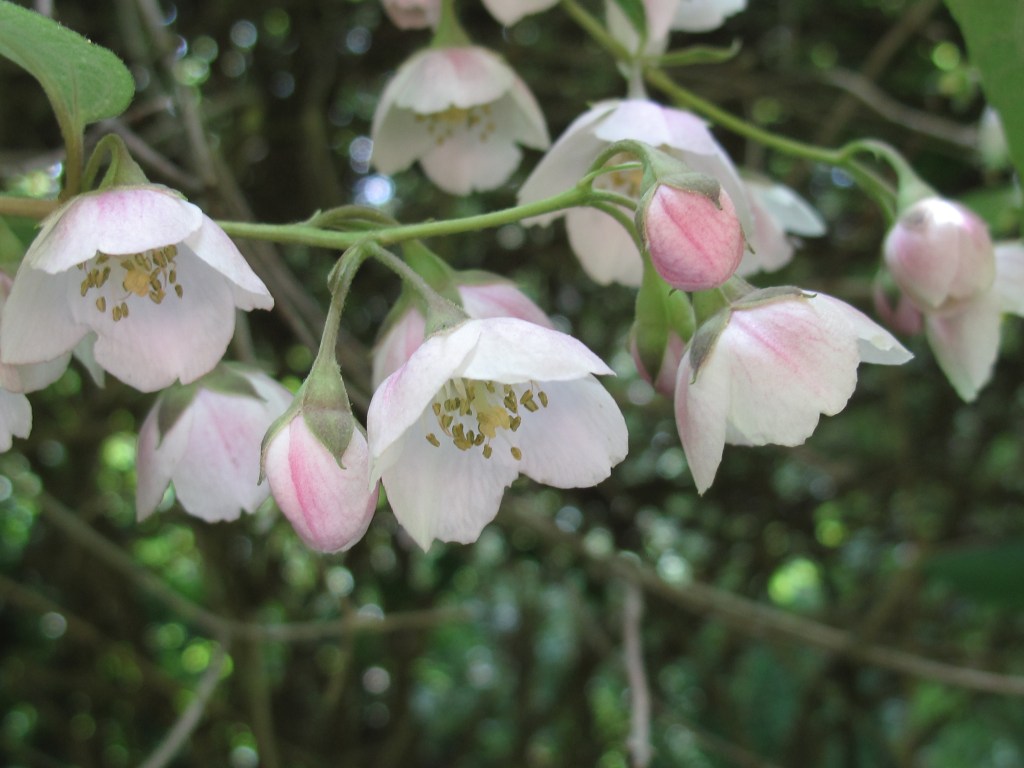
Fortunately, I took photographs of it because on a more recent visit I found that the border where I last saw it had become a dense, overgrown thicket and there was no sign of the pink philadelphus. Hopefully it is still there, but the whole border is in desperate need of drastic pruning in order to give it a chance to recover. In the meantime, fellow trustee Jack Aldridge found in the Wisley library the following brief reference in EXTRACTS from the Proceedings of The Royal Horticultural Society, Vol. LXXXI, 1956, Part Two:
Referred to Scientific Committee and to be seen at a future meeting:
Philadelphus L. & S. 17408 (pink form) exhibited by Sir Frederick Stern O.B.E., M.C., Highdown,
Goring-by-Sea, Sussex.
This must be the same thing I saw at Highdown. Further research revealed that L. & S. 17408 was collected by Frank Ludlow in Gyasa Dzong, NW Bhutan, on Oct 3rd 1949. Frank Ludlow and George Sherriff (L. & S.) collected mainly in Bhutan and SE Tibet, and P. tomentosus is native to the Himalaya. More details have been requested on the precise origins of both this and the Bodnant plant, and I’ll report back here as more information comes in.
Might there be a connection between the Highdown and Bodnant plants? Back in the 1950s at the regular RHS fortnightly shows at Vincent Square, there would have been much keen but friendly competition involving many of the great gardeners of the time, including Sir Frederick Stern from Highdown and Lord Aberconway from Bodnant. Plants and/or cuttings were likely freely exchanged afterwards, so the Highdown philadelphus could well have found its way to Bodnant.
It is, then, not inconceivable that the pink genes of the Mexican plants could be married to species like these from the Himalaya, and maybe after a couple of generations we might see a really pink philadelphus.
Two rare Philadelphus re-located
by WHF Trustee Chris Sanders, VMH
As a result of the successful Philadelphus study day held at WHF on Saturday 17th June, two rare Lemoine Philadelphus cultivars believed to have been lost to cultivation have come to light.
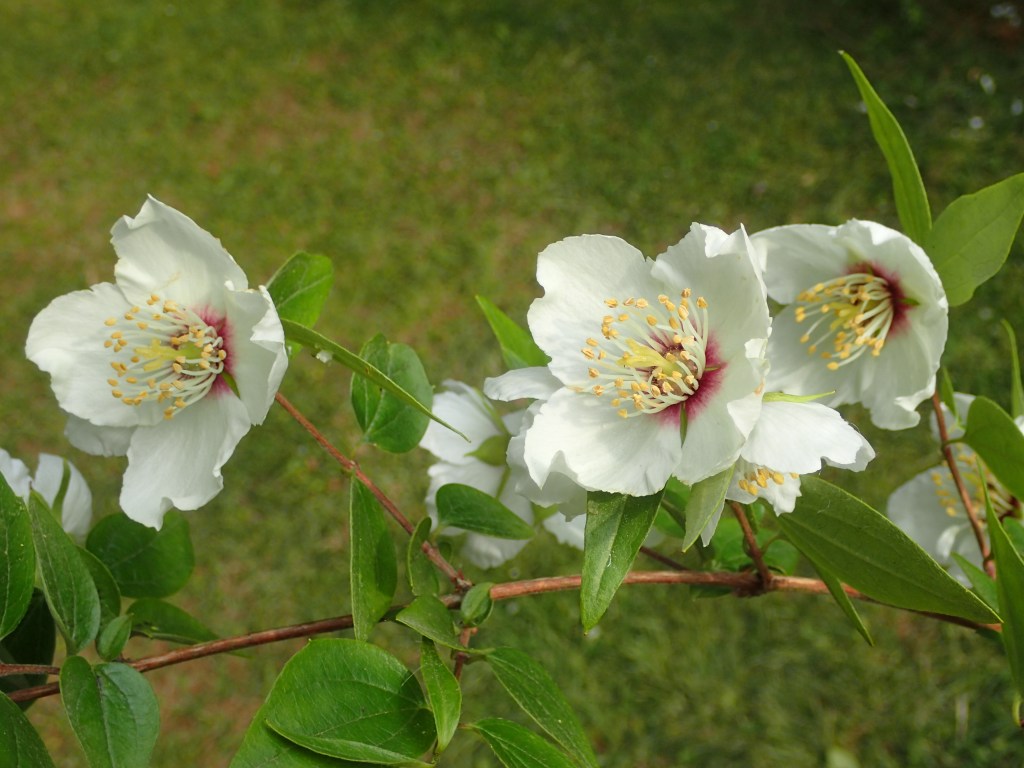
Philadelphus ‘Oeil de Pourpre’ (Purpureomaculatus Group)
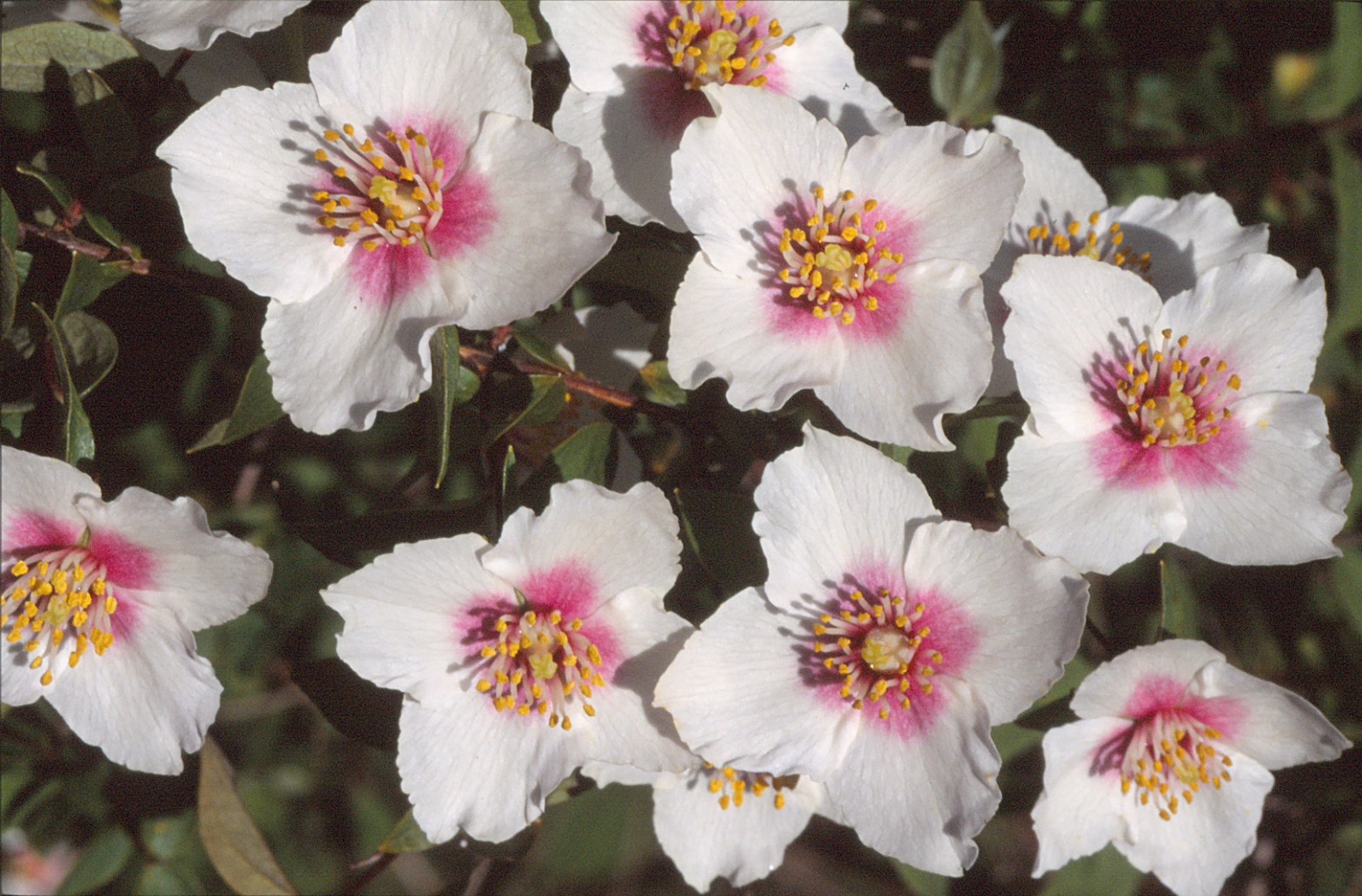
Trustee Jack Aldridge, who is based at Wisley, brought a handsome specimen from that garden labeled ‘Oeil de Pourpre’. At first, both Maurice and myself, who had both grown and lost this cultivar in the past, and remembered it as a rather weak plant of poor constitution, were rather doubtful about its identity. However, on returning home, I dug out some images taken many years ago when I grew a specimen obtained from the National Collection of Philadelphus at Leeds, and I’m now convinced that the Wisley plant is indeed correctly named. In the attached image its chief characteristics of a deep purplish basal blotch (the deepest colour of any Philadelphus) and the distinctive cup-shaped blooms can clearly be seen.
‘Oeil de Pourpre’ was raised by the famous French Nursery of Victor Lemoine et Fils and introduced in 1910.
Philadelphus ‘Purpureomaculatus’ (Purpureomaculatus Group)
At the study day, there was some discussion about two other Lemoine cultivars, namely ‘Bicolore’ and ‘Purureomaculatus’, neither of which had been seen in cultivation for some time. I later recalled that a plant from Leeds which had been distributed as ‘Bicolore’ had been misidentified and was really ‘Purpureomaculatus’, but, like ‘Oeil de Pourpre’ seemed to have become very rare and no longer offered for sale. Arguably, this is the most attractive of the group with widely expanded medium-sized flowers having a good purple blotch at the base of each petal.
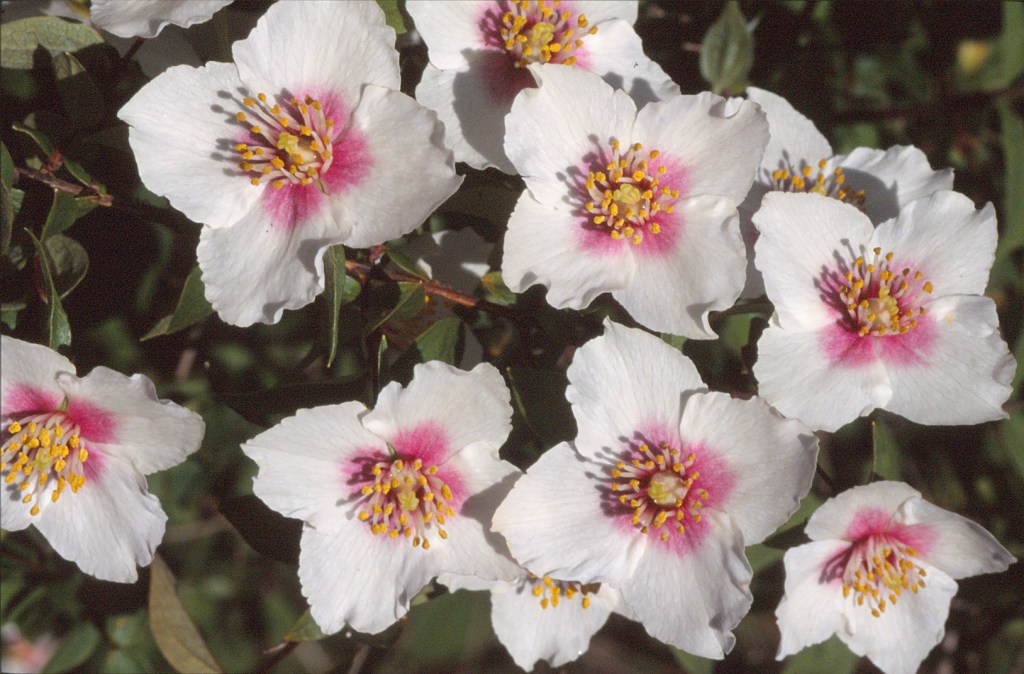
A couple of days after the event, the indefatigable Jack alerted me to a small Shropshire nursery (Harley Nursery, near Much Wenlock) who were offering ‘Bicolore’ for sale via their website. Photographs accompanying the text left no doubt in my opinion that this was clearly ‘Purpureomaculatus’. A visit to the nursery on the following day resulted in the purchase of five lusty plants for distribution to interested parties. Also, interestingly, the nursery owner confirmed that he had obtained his original stock from the (now defunct) National Collection at Pershore College in Worcestershire. As a former student at this college who was very familiar with the collection in its heyday, I was aware that much of the Pershore collection had been obtained from guess where – Leeds!
‘Purpureomaculatus’ was raised by Lemoine and introduced in 1902.
The above two cultivars are really important discoveries and the intention is to propagate them as soon as possible for wider distribution. Now it just remains to try and track down the real ‘Bicolore’.
Magnolia Study Day 2023

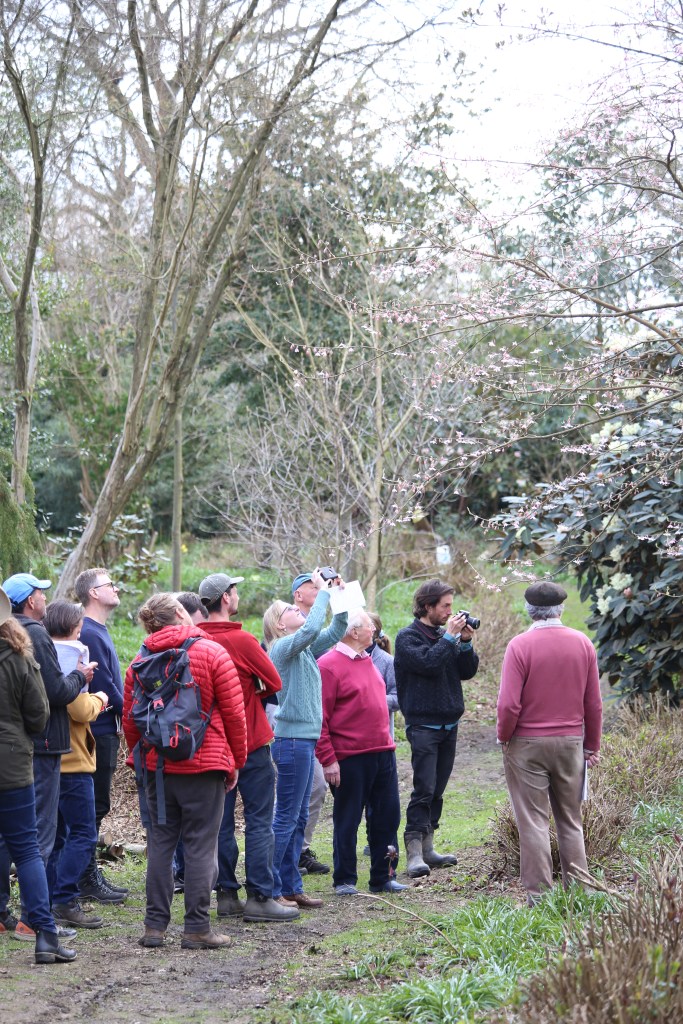
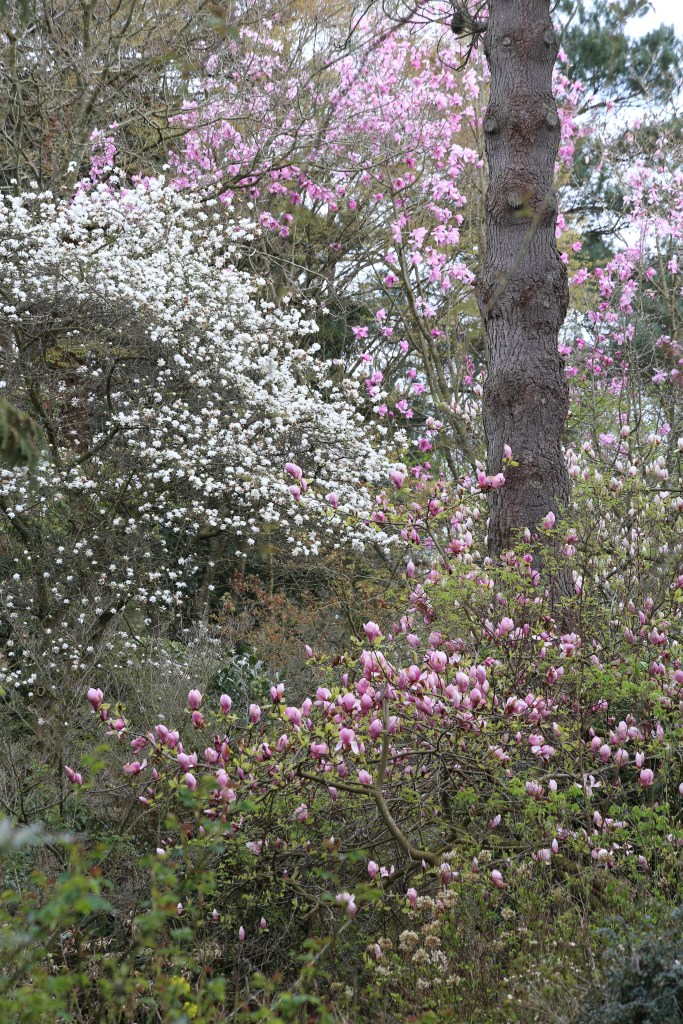
On Saturday April 8th students and faculty from Wisley, Great Dixter and Kew gathered round a table of vases of magnolias in current bloom, selected from the WHF collection of around 250 species and cultivars from Magnolia, Michelia and Mangleitia. These students were joined by WHF Friends and Volunteers from a variety of backgrounds, from landscape architects to directors of other well-known gardens nearby. The table was set on the main lawn, ringed everywhere by magnolias up to 30-40 ft in the garden landscape, conspicuous against a dark backdrop of conifers. Twelve of these are Tree Register (TROBI) National Champions (eg Apollo, Arnold Dance, Sundew, Sweetheart, Pickard’s Snow Queen etc).

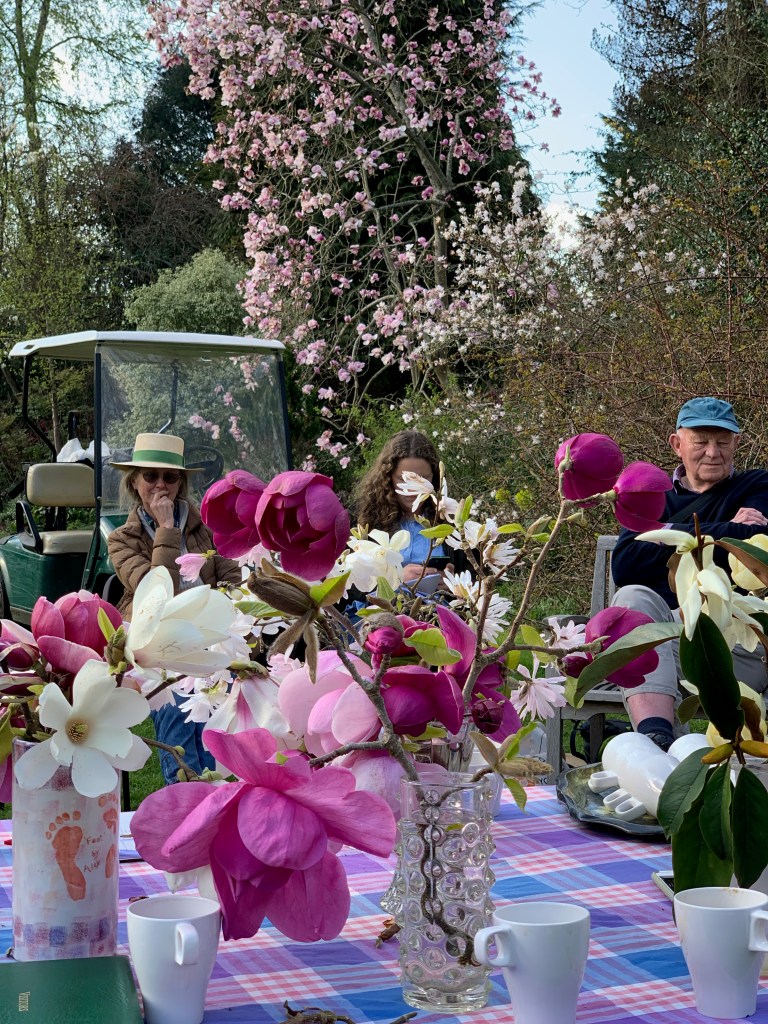
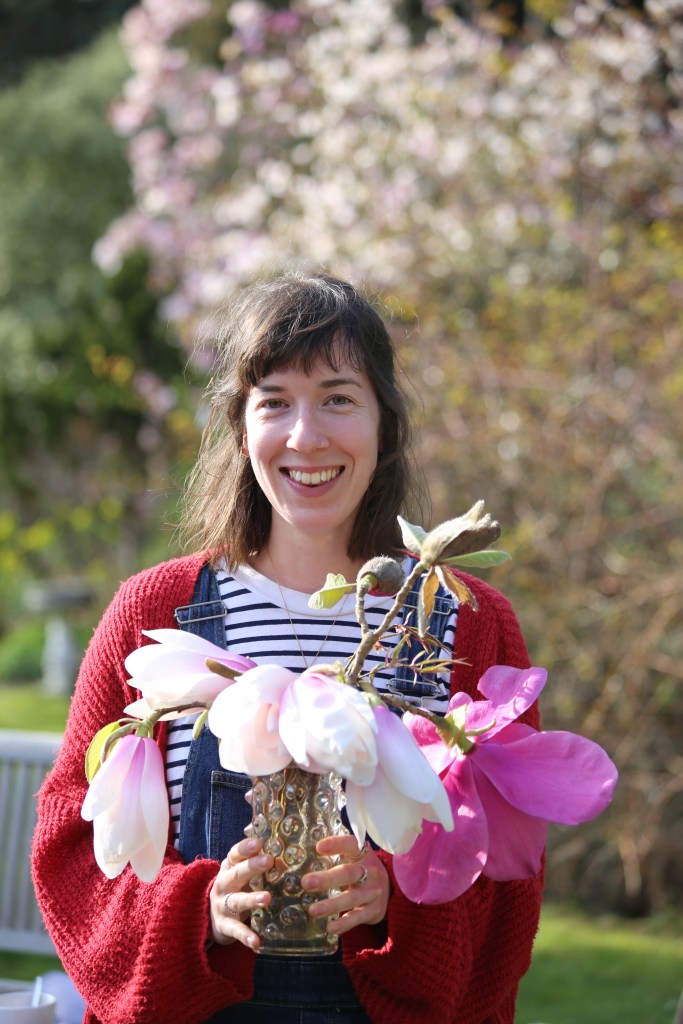
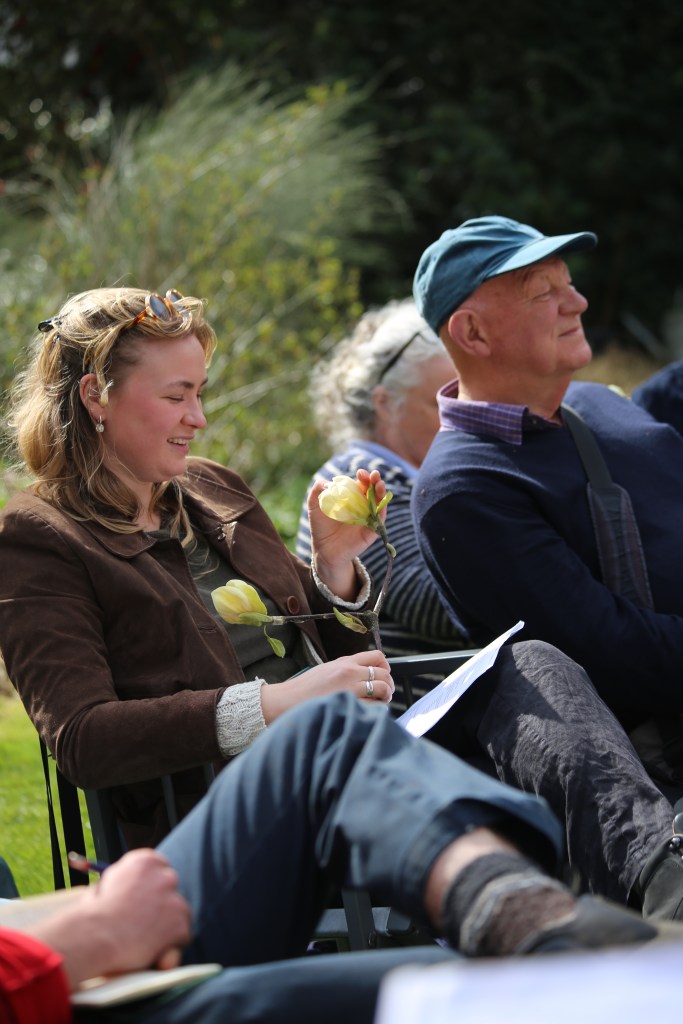
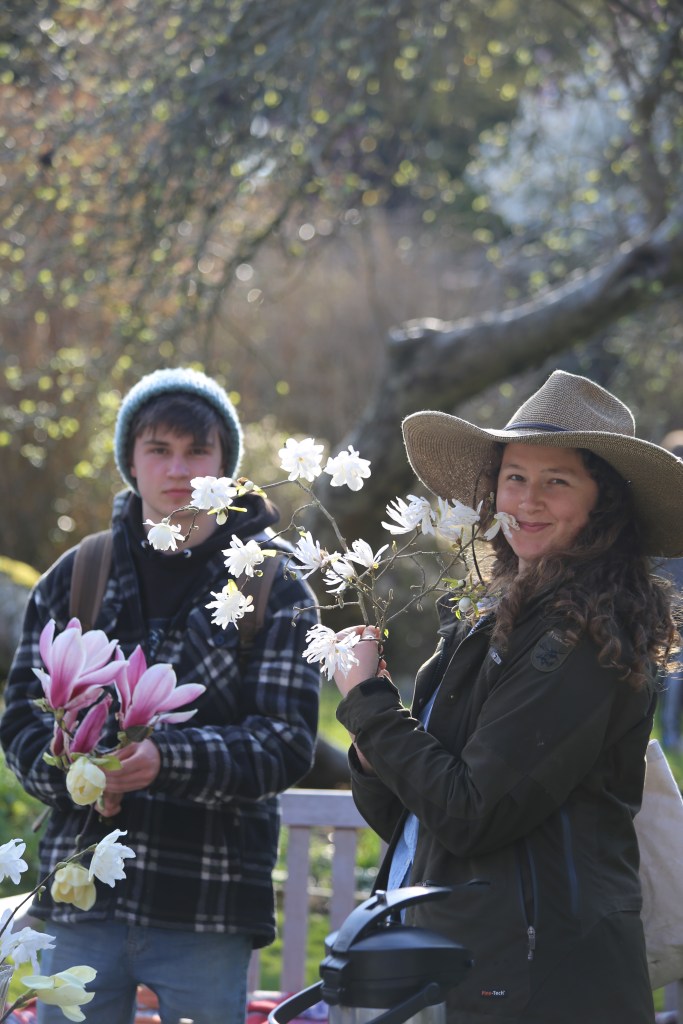

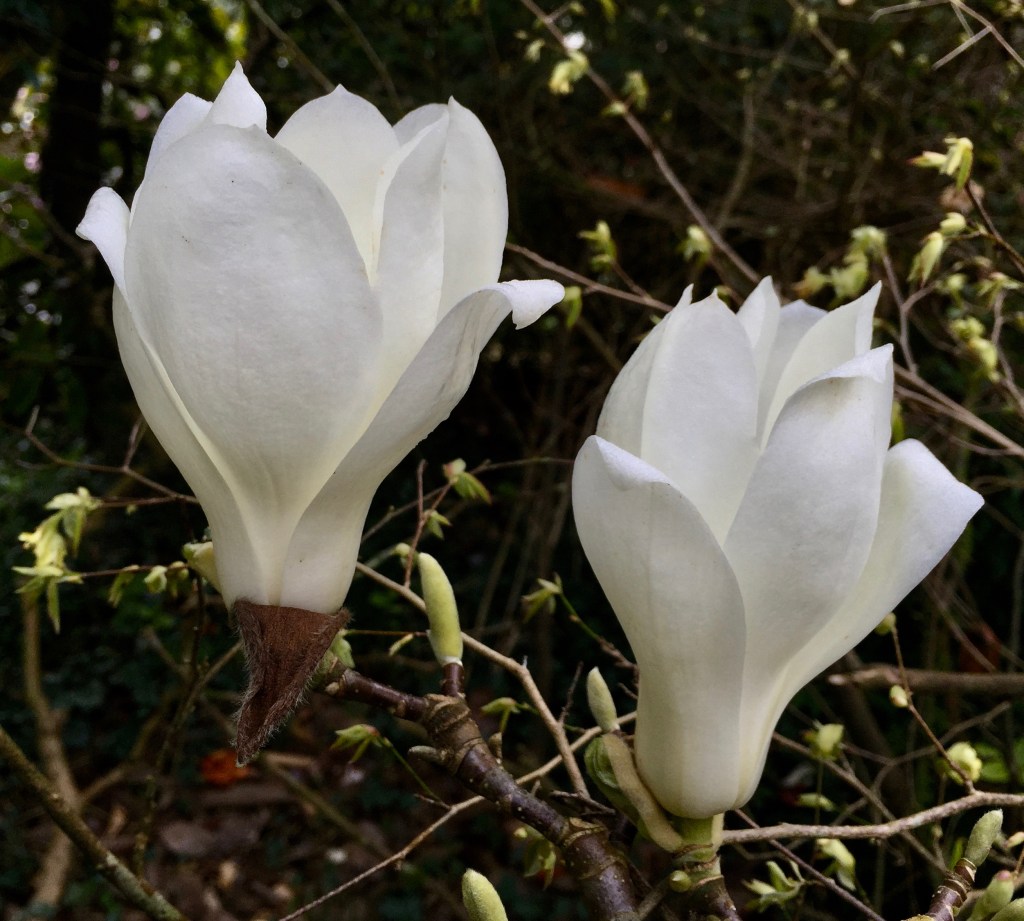

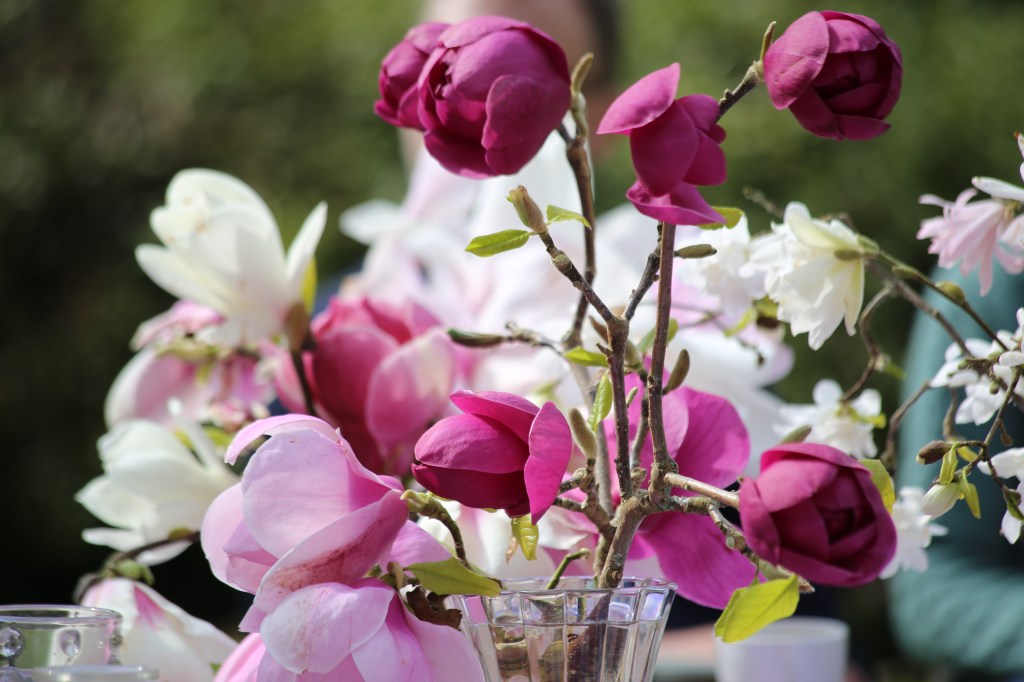
Another table provided continuous cups of tea and coffee, and someone brought two tins of chocolate crispies, essential requirements to keep the show on the road.
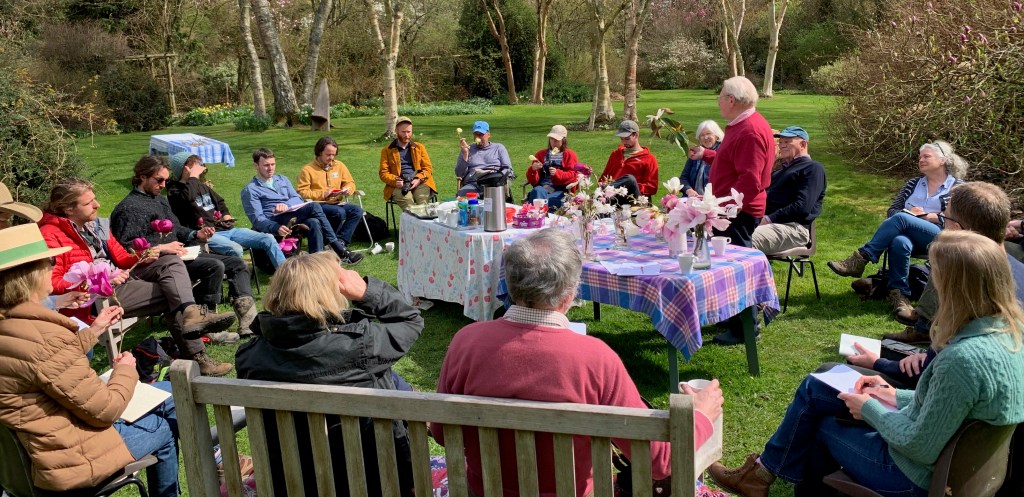
A few last flowers of the earlies – sargentiana var robusta, campbellii , campbellii var mollicomata and dawsoniana- were still available for the vases, plus some examples of their hybrids and forms, such as the Raffilii Group, Premier Cru, sargentiana var robusta ‘Blood Moon’, dawsoniana ‘Clarke’ and ‘Valley Splendour’.

Maurice arranged 8 vases divided into main horticultural subdivisions of most practical use to horticulturalists and garden designers, and containing examples of representative specimens:
- 1 The early Asiatic trees (campbelli, dawsoniana, sargentiana var robusta – see above)
- 2 Stellata, loebneri and denudata (see above)
- 3 Sprengeri (Copeland Court, Lanhydrock, Claret Cup etc)
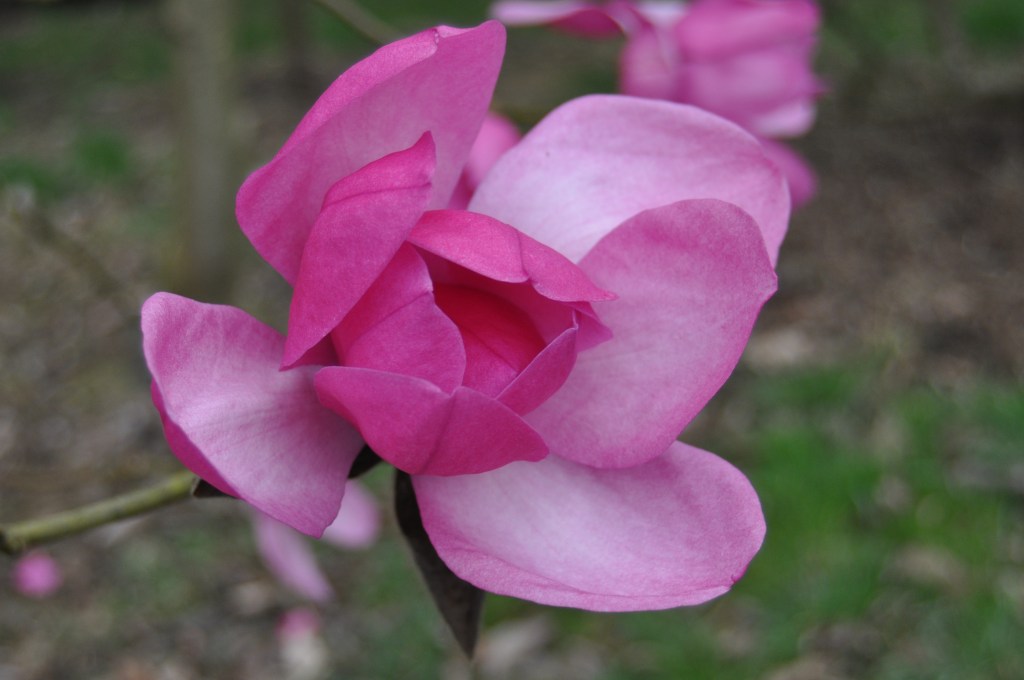
- 4 Soulangeana and Pickards (Snow Queen, Grace McDade, Ruby, Opal etc)
- 5 Greshams (Tina Durio, Manchu Fan, Pink Bouquet, Darrell Dean etc)
- 6 Kiwis – New Zealand hybrids (Iolanthe, Ruth, Kathryn, Genie etc)
- 7 Michelia/Mangletia (only Michelia doltsopa, and Michelia yunnanensis in flower)
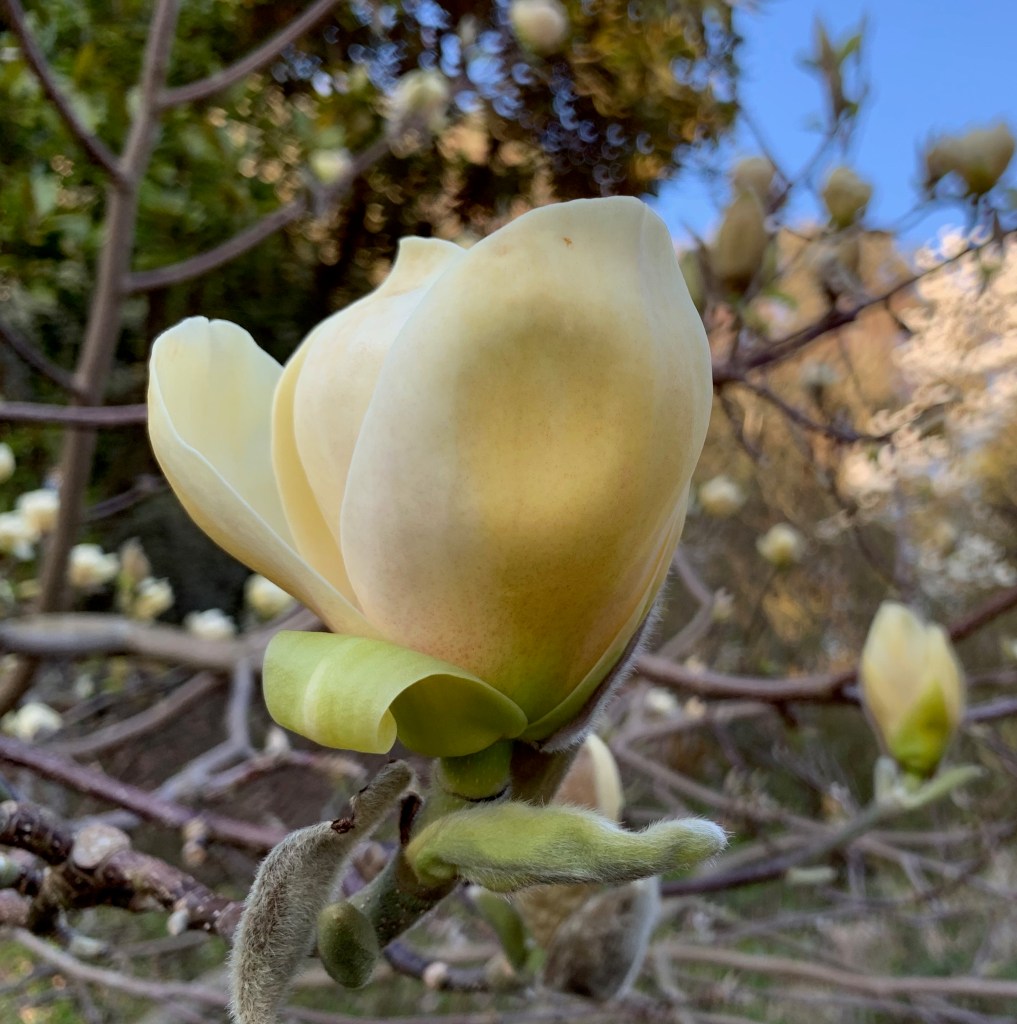
- 8 Yellows (only Petit Chicon and Honey Tulip beginning to flower)
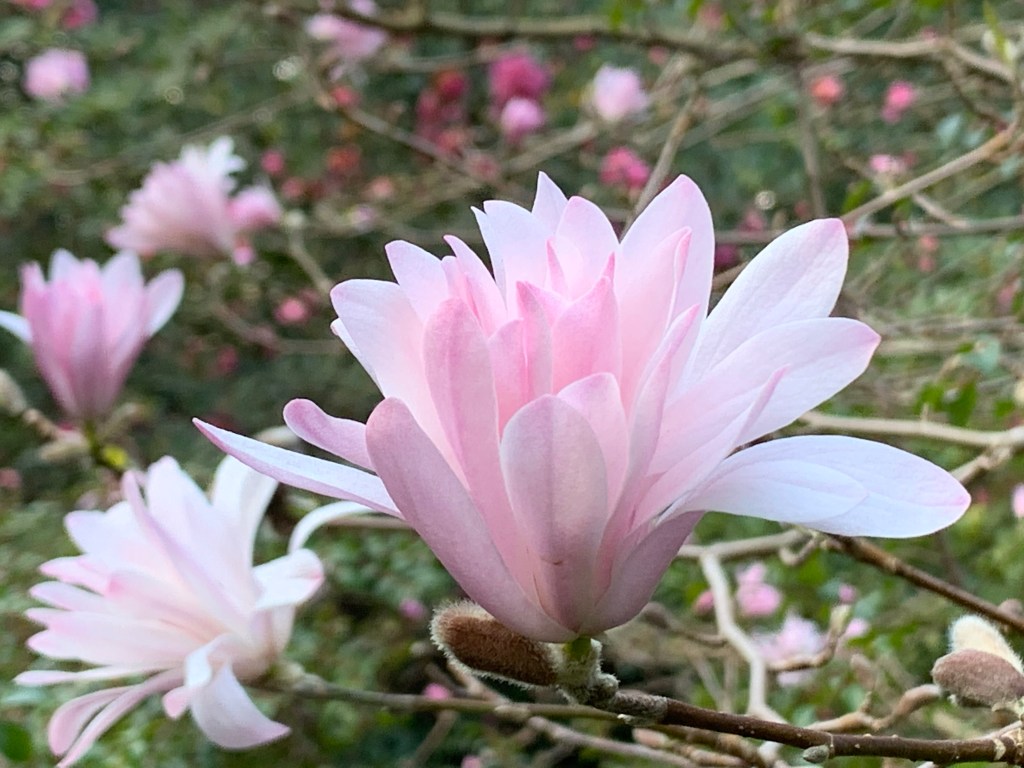
Vases of M. stellata , like the best pink form ‘Jane Platt’ and pale pink ‘Dawn’ were featured with cultivars of the tough, weather-resistant M. kobus x stellata M. x loebneri, such as the favourite fragrant Mag’s Pirouette, free flowering long-lasting ‘Merrill’ and the larger flowered ‘Donna’.
Two additional vases could be added – the summer flowering Oyamas and the evergreen grandifloras that do not begin flowering until May and were therefore not represented; but our evergreen michelia Doltsopa, over forty feet, gave us a fresh first flower.
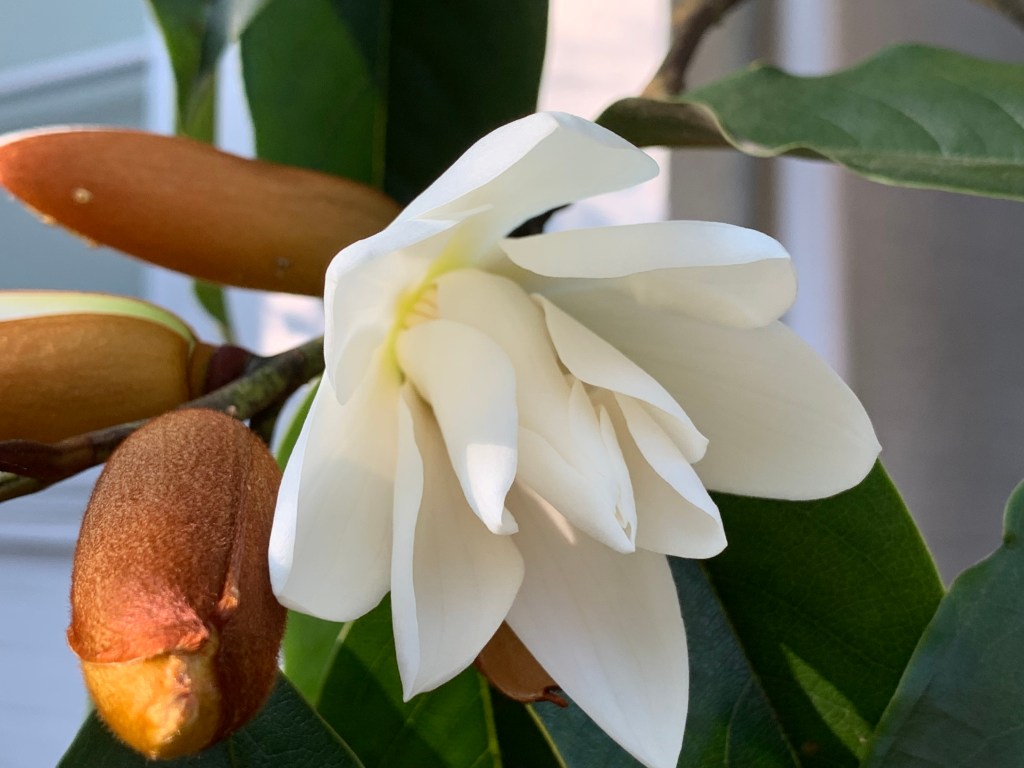
There was plenty of discussion of subjects like growth rates, weather resistance, length of flowering time and notably the questionable value to horticulturalists of sinking Michelia and Mangleitia into Magnolia when there are morphological characters of significance to gardeners that clearly distinguish them. There was a consensus that this was unhelpful as there is useful horticultural information and history contained in a name, and the value of this is sharply reduced by placing these two genera into the generality of the wider genus of Magnolia. For example, what value is there now in calling Mangletia decidua (significantly named as the only deciduous plant in an evergreen section) Magnolia decidua, when so many other magnolias are deciduous? The power and point of the name is hollowed out…..

After lunch, the group toured the arboretum where distractions like Meliodendron xylocarpum, Corylopsis and Stachyurus and large leaf rhododendrons were seen, along with more magnolias – notably a superb M. campbellii alba from the Himalaya flowering for only the second year with 8 flowers; and the final flowers on ‘Premier Cru’, a WHF seedling.
Extraordinarily delicious home-baked cake generously provided by Wisley staffer Narisa Kempster rounded off the day, with the plant of the day over tea winning most votes (4 out of 24) not a magnolia, but the meliodendrons then in early flower, especially the Hillier form and MF’s own collection, one freely flowering for the first time this year as a 11 year year-old tree, a nice pink. A forty-foot specimen Gresham Magnolia ‘Manchu Fan’ and M. loebneri ‘Mags Pirouette’ were also featured in the vote.
Text: Maurice and Clare Foster. Photographs by Owen Hayman and Clare Foster.
Propagation: crucial now not just for garden collections, but also for conservation
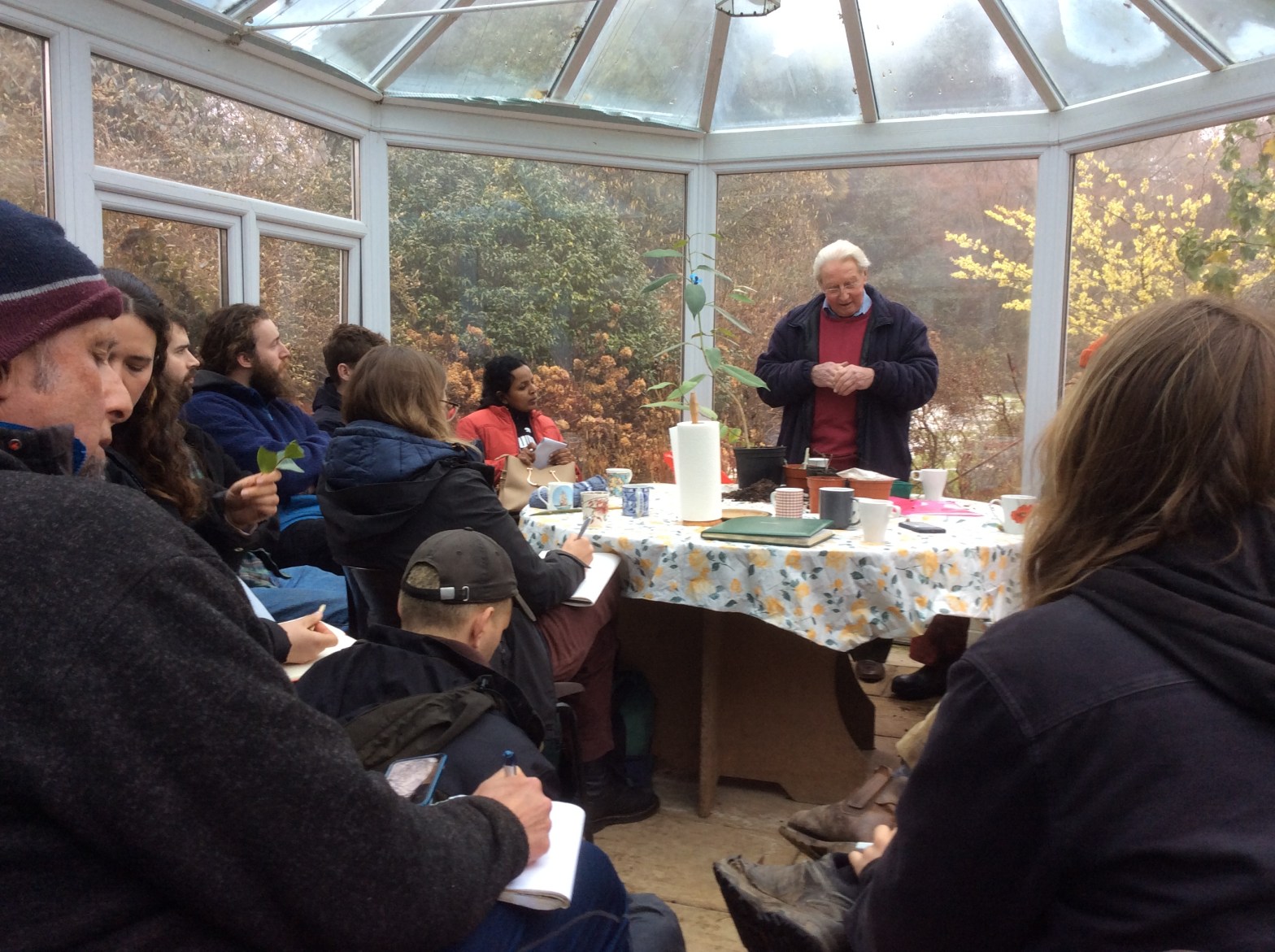
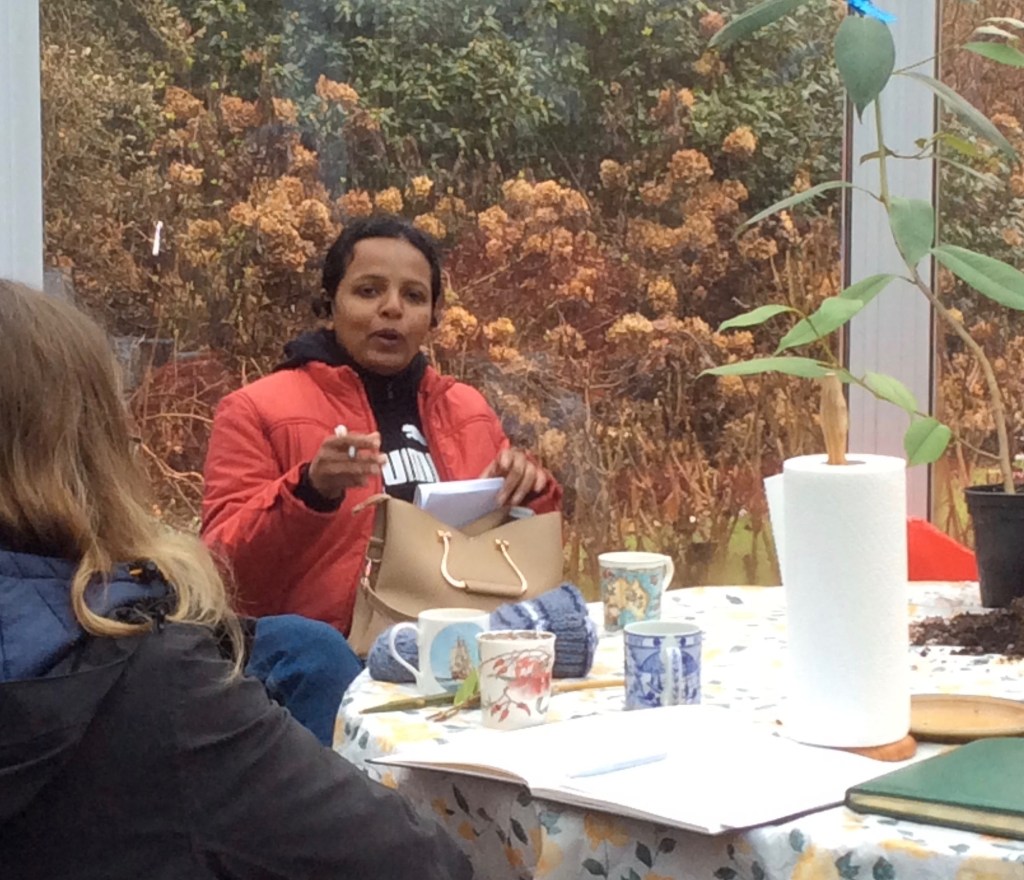
WHF held a propagation skills workshop on a cold weekday in early March 2023. Talks were given by Chris Lane on grafting, Peter Shotter on seed germination, Maurice Foster on cuttings, and Nadeesha Bandara shared details of the research project she’s part of at Nottingham University about the influence of hormones on rooting. We had eighteen students from Kew and Great Dixter plus Rod White from the RHS Woody plant Committee and Jack Aldridge from Wisley, so were crammed cosily in the conservatory on a snowy day with a continuous supply of tea and coffee, followed by a muddy tour of the arboretum when the skies cleared.
Maurice introduced the day by saying that the next generation of horticulturalists carry a great responsibility precisely as propagators, because without ‘looking after, growing on, sharing all the stuff that’s been collected’ the wonderful plants we’ve got now that are not being produced commercially will disappear. He said ‘botanists used to be sniffy about what they call ex situ conservation but have come to recognise this is increasingly important as large areas of wild populations are eradicated…so skilled propagators now and in the future will bear a huge responsibility in conservation’ – not just in enlarging the range of good garden plants available to designers and gardeners.
Chris Lane has done hundreds of thousands of grafts in the past five decades, the prerequisite of being able to create and maintain five national collections at his Witch Hazel nursery in Kent – Prunus (flowering cherries), Hamamelis, Wisteria, Parrotia and Amelanchier. After stressing the importance of maintaining your own razor sharp knives from his talk I learned more about the logic behind the differences between the two main times of grafting, winter and summer. In winter (usually whip grafts – a diagonal cut that binds the end cut of the rootstock with end cut of the scion, aligning and matching the circling edges of the cambium – there will be minimal activity in the scion and rootstock, so pot conditions need to be dry and very well-aired, and low temperatures can be taken advantage of to that end – what Chris Lane calls ‘cold callousing’. With summer grafts, usually side veneer grafts – where only one side of the root stock is cut, peeling back to a short flap at the base where sharply-tapered young scion material is inserted – both scion and rootstock are in the midst of vigorous growth, so moisture is less of a problem, but leaves need clipping by at least half of their area to minimise transpiration. So summer grafts will do well in a fogging unit, or under polythene; whereas winter grafts need to be kept dry in the pot while dormant.
Hot pipe grafting over the winter enables warmth to applied confined to just the union to encourage callousing while avoiding rot. Chris showed students how to make a home-made version of this technique. For more details of this and other grafting tips Chris mentioned, there’s a good comprehensive print introduction to grafting by Brian Humphrey, The Bench Grafter’s Handbook, by CRC Press (2019).
Peter Shotter said the key to sowing seeds of woody plants was the composition of the compost – it should be low in nutrient and very free draining. He mixes his own sterile medium with as much as 50% grit, and 50% peat or peat substitute. He also makes his own bespoke leaf moulds. Perlite is a commonly-used alternative to grit, but Peter has found it associated with rot in lilies and other bulb seeds, or other seeds that need a long time to germinate. A heated propagator isn’t necessary if more patience with a cold frame is an option – and artificial warmth can backfire for slow-to-germinate species by encouraging rot and disease, especially in the case of large woody plant seeds such as camellia, peony, oak and magnolia etc. Chris Lane pointed out the need now to be able to grow your own understocks from seed because of reduced commercial availability, and Maurice said he’s seen the same sorbus seeds take from 1-7 years to germinate, which is an evolutionary survival mechanism – if the same seed treated in the same way germinates at different times, if the first to grow dies, more are on their way. For this reason he sometimes uses petri dishes in the fridge to be able to lift seeds as they germinate without disturbing the others. Peter discussed growing-on, and his potting on compost mixture for the seed of difficult bulbs, such as lilies – a third leaf mould, a third grit, and a third commercial ericaceous compost.
Moving to cuttings, Maurice emphasised three things – the importance of juvenility, of the timing when the cutting is taken (a function of the state of the wood, not the calendar), and aftercare. Cuttings have to be taken early enough for the rooted plant to retain enough carbohydrate to survive their first dormant winter. With woody plants such as birches and maples it is essential to keep them dry and not to transplant them until they start growing the following spring. The idea is to keep them in a state of suspension or stasis. During this period if moisture is not controlled they will rot off, so the sterile compost needs good aerating grit to ensure a supply of oxygen at the root: dryness while dormant is key. He added that 80% of losses in planting out woody plants from pots in the garden is due to planting too deep – and it’s the same with cuttings when you first pot them on: allow the root shoulders to be just visible, perhaps adding some grit on top – and again, avoid nutrient-rich commercial composts, as well as potting on into too big a pot. Keeping constant temperature during sunny periods is important, so misting and shading will be necessary, but without restricting too much light for photosynthesis – it’s a balance.
Then Nadeesha Bandara from the University of Nottingham shared details of an ongoing research project on the effects of hormones on rooting.
Our next Study Day will be on Magnolias, on Saturday April 8th, with a few places remaining. The early Asiatics – campbelliis, sargentianas and dawsonianas will be mostly over, but there will be plenty of others to see – and the soulangeanas, loebneris etc should be at their peak. To apply, or for more information about our 250+ collection of Magnolia cultivars and species, contact Clare Foster at whitehousefarmarb@gmail.com.
by Clare Foster, Chair of the WHF Arboretum Foundation
Owan Hayman reports on the Hydrangea aspera study day at White House Farm
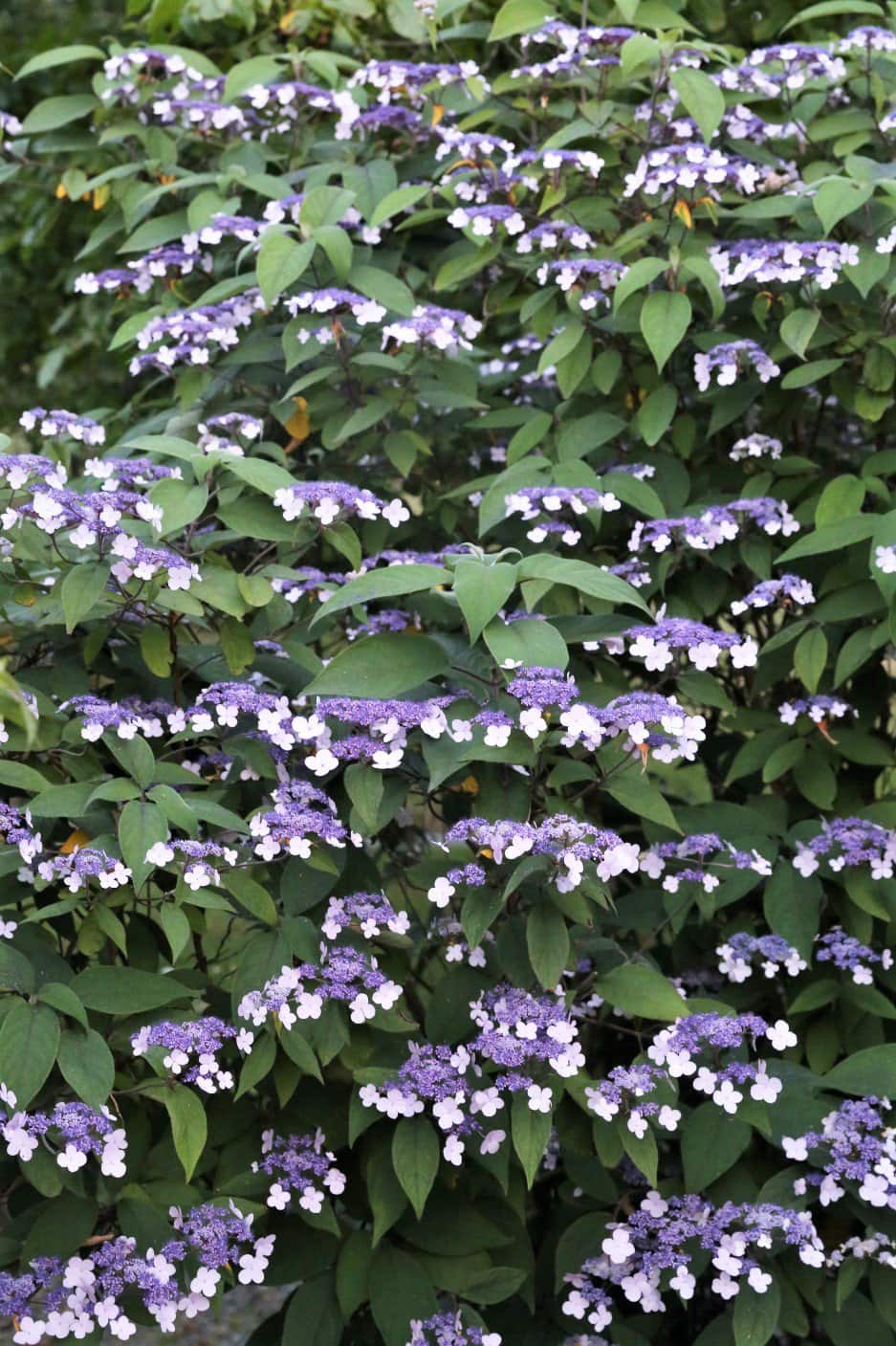
This is a repost of Owan Hayman’s blog ‘Hydrangea aspera: in love with lacecaps at White House Farm’ as part of his monthly blog series ‘In From The Garden’ for garden designers Bestall & Co (first published on September 8th, 2022).
In mid-August, I joined a trip to visit a little-known treasure trove of a garden and arboretum in the ‘Kentish Alps’, just off the M25 by Sevenoaks. Maurice Foster started with 5 acres at White House Farm over 50 years ago, creating the garden with his late wife Rosemary. About 30 years ago they gained an additional neighbouring pick-your-own strawberry field, on which they planted a 7-acre arboretum. Almost every plant in the arboretum is from wild collected material of known origin, much by Maurice himself. He participated in legitimate expeditions to Pakistan, Mongolia, Japan, Tasmania, and New Zealand, but China was where he kept going back. What they created is anything but a dull stamp collection; this is a wonderland of beautiful and rare woody plants, displayed with real artistry. The collection has been largely private for most of its history, but was established as a Foundation in 2019, and Maurice and his daughter Clare welcome visitors through guided group tours. Seeing the plants through Maurice’s eyes, having seen exactly how and where they grow in the wild, gives otherwise unobtainable insight into how plants can be placed and mingled to best effect. This helps us understand plants as communities, rather than individuals; a cornerstone of sustainable planting design.
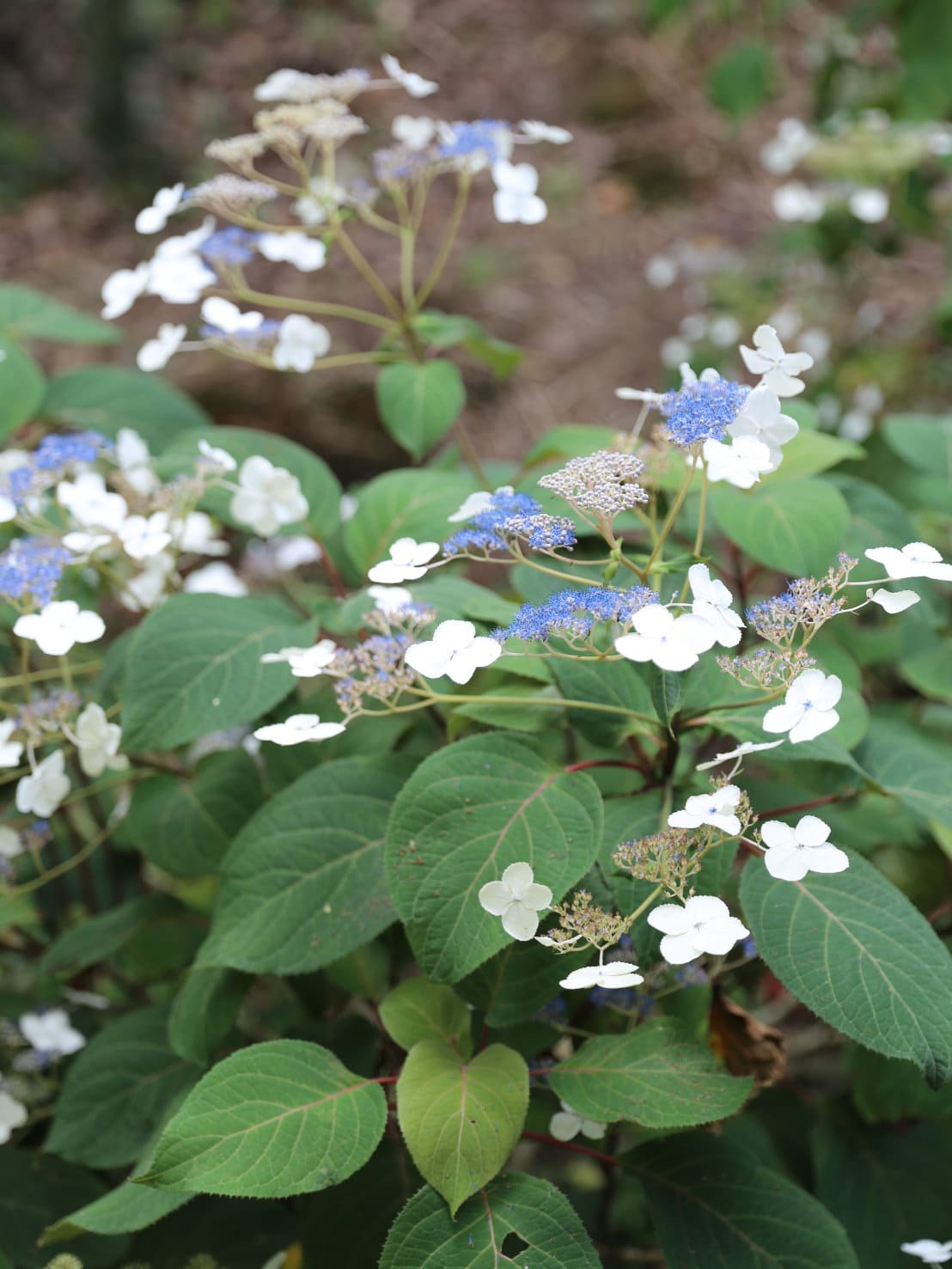
Fellow RHS Wisley student and housemate Jack Aldridge organised the trip to go and look at Maurice’s magnificent collection of Hydrangea aspera. Jack was just 19 when we started at Wisley 2 years ago, but the depth of his encyclopaedic knowledge of woody plants is something I think I’ve only scratched the surface of in conversation. He’s already contributing to key information sources like Tree and Shrubs Online. Bringing a few of his fellow Wisley students to visit Maurice at White House Farm was something he had been excited to do for over a year.
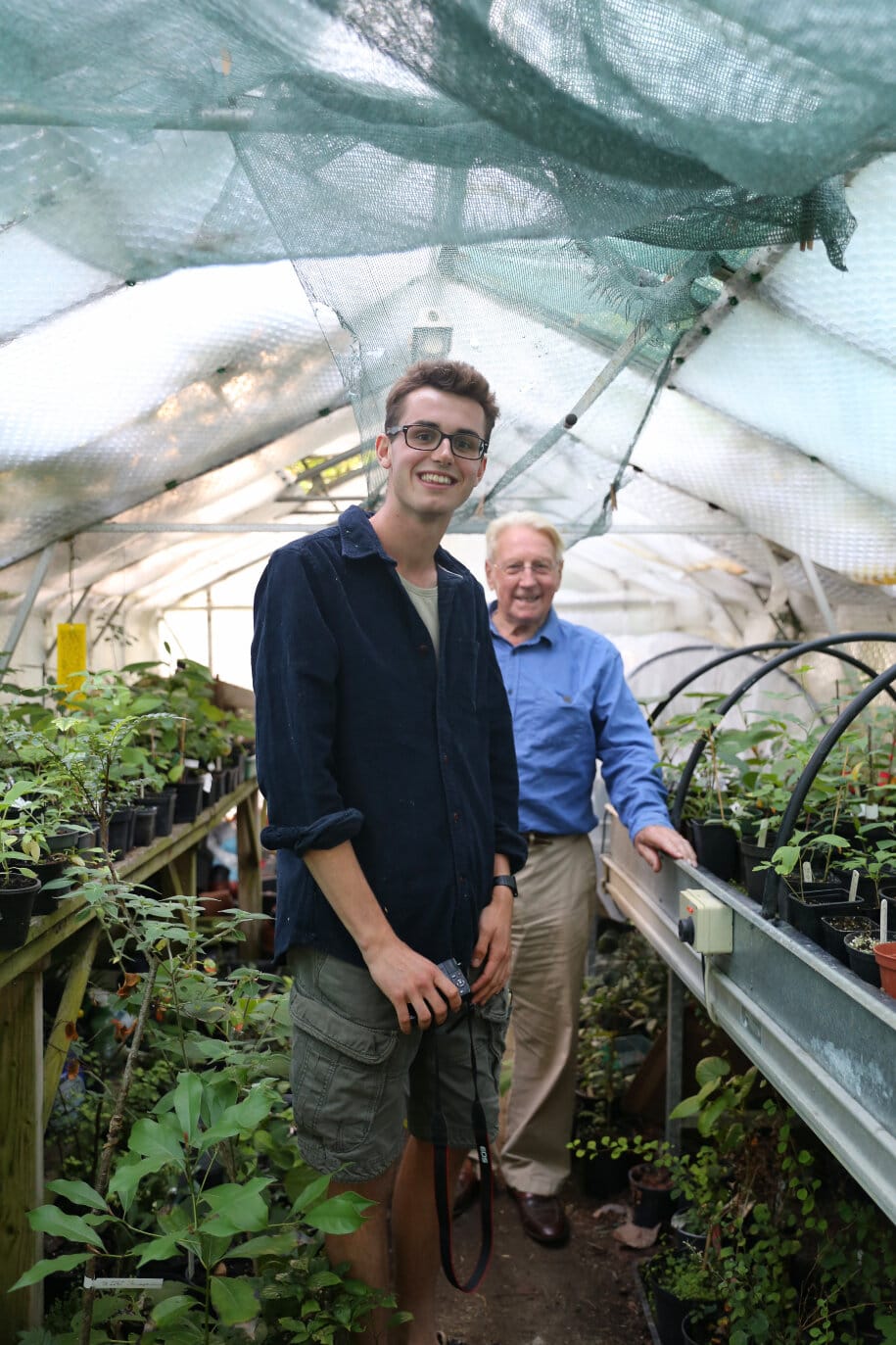
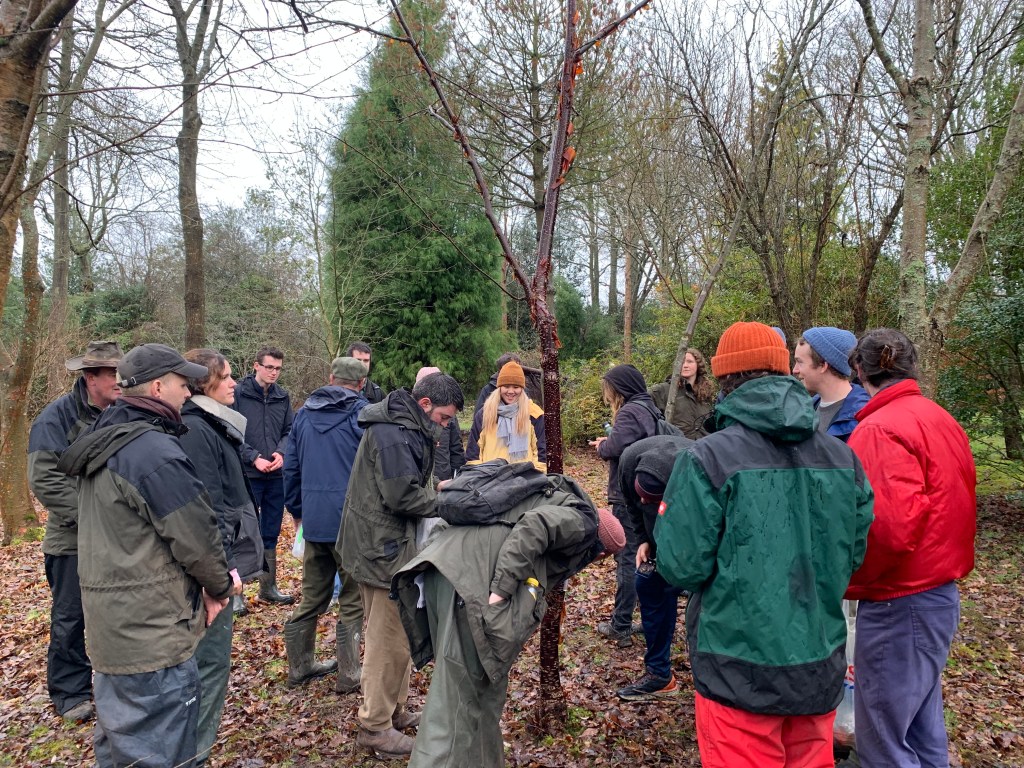
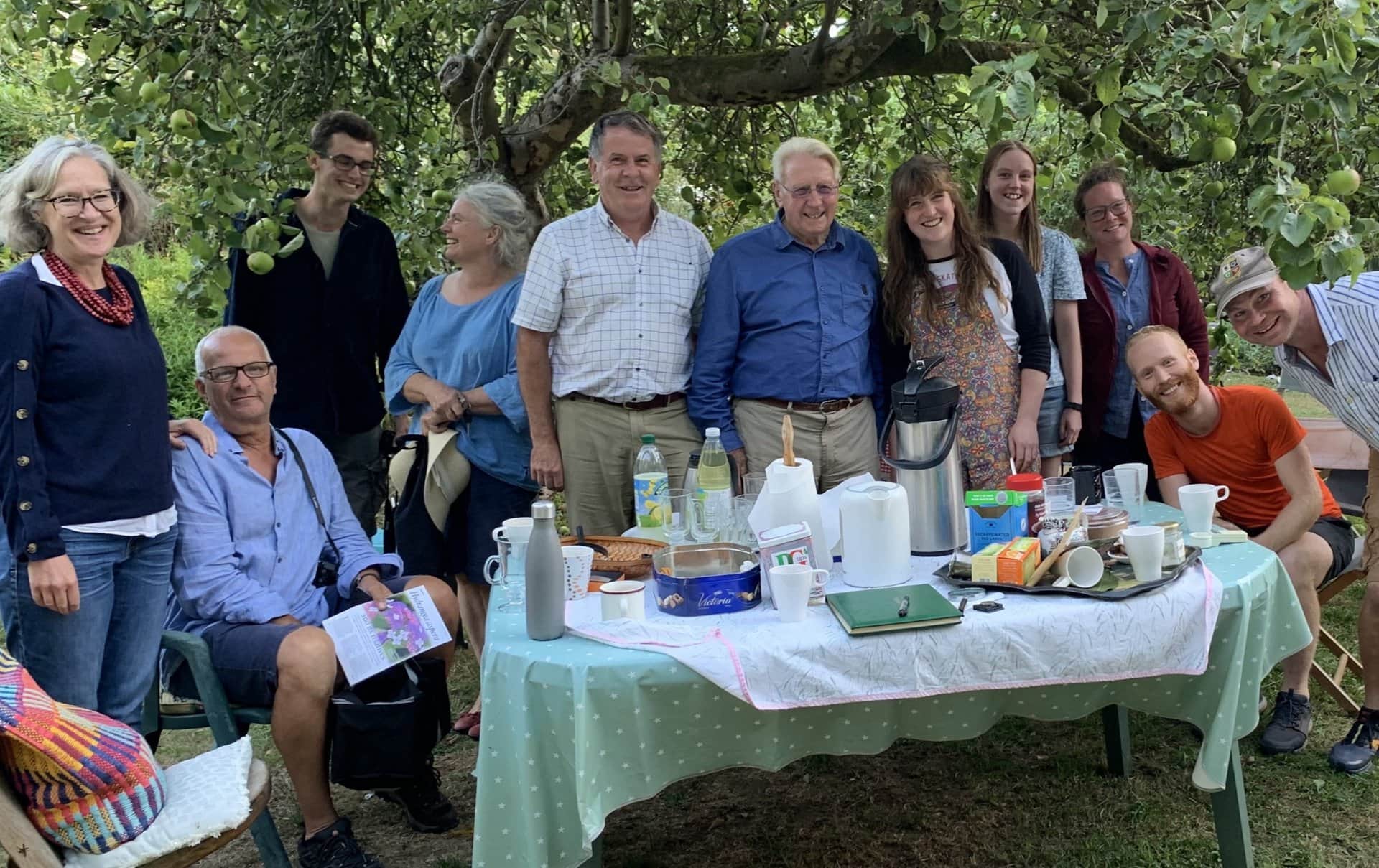
After a warm welcome from Maurice and Clare, we had tea and cake under an old Bramley apple tree. Maurice told us about how Hydrangea aspera are hugely diverse in their flowers, foliage, form and hardiness. So much so this group of plants was once considered to be 31 distinct forms, but is now seen one species, with four subspecies, and two groups. They occur in the wild in the Himalayas and Burma, China into Vietnam, along with the islands of Taiwan, Sumatra and Java. Yunnan Province in Western China is the best place to see them, growing as a weedy pioneer species, colonising bare ground like birch and sycamore do here in Britain. The wide range of Hydrangea aspera all have differing tolerances of frost, wind exposure, and scorching midday sun. It’s certainly worth making sure you choose a plant suited to your conditions, or vice versa. Broadly, provide shelter from freezing easterly winds, and avoid planting in frost pockets. They need moisture-retentive soil, and ideally are cast into shade during the hottest part of the day. Smaller-leaved forms can take more sun. Soil pH will not affect flower colour as in other Hydrangea species. Villosa Group are most frost-hardy, while subsp. strigosa forms are best avoided in all but mildest gardens.
Jack recommends the following Hydrangea aspera;
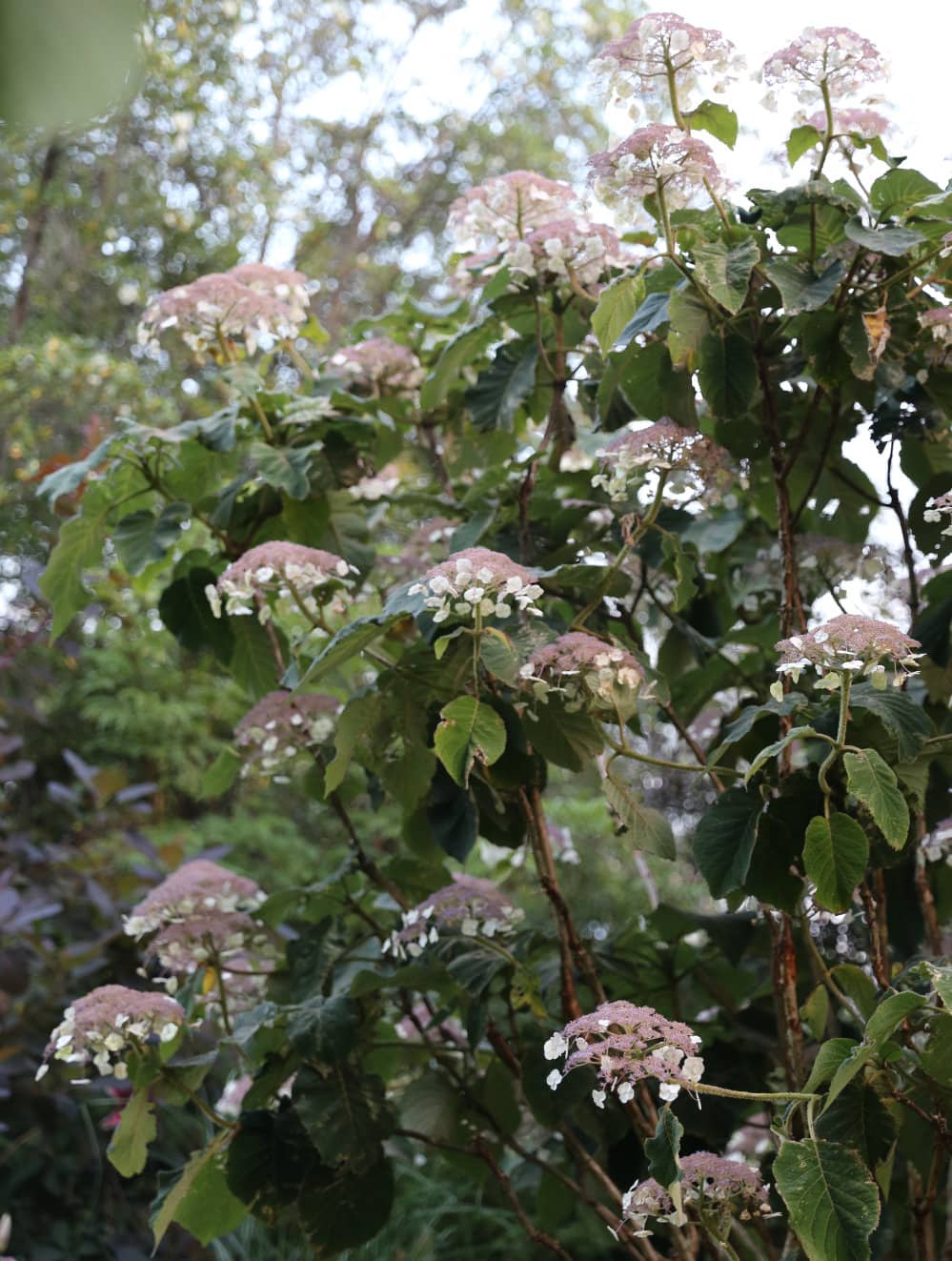
subsp. sargentiana – Best grown in soil that doesn’t dry out, with good light, but overhead tree cover. Worth growing just for its enormous tactile furry leaves, but relatively early pale lilac flowers in July are a bonus. The best form is ‘La Fosse’, originating at a French arboretum of the same name.
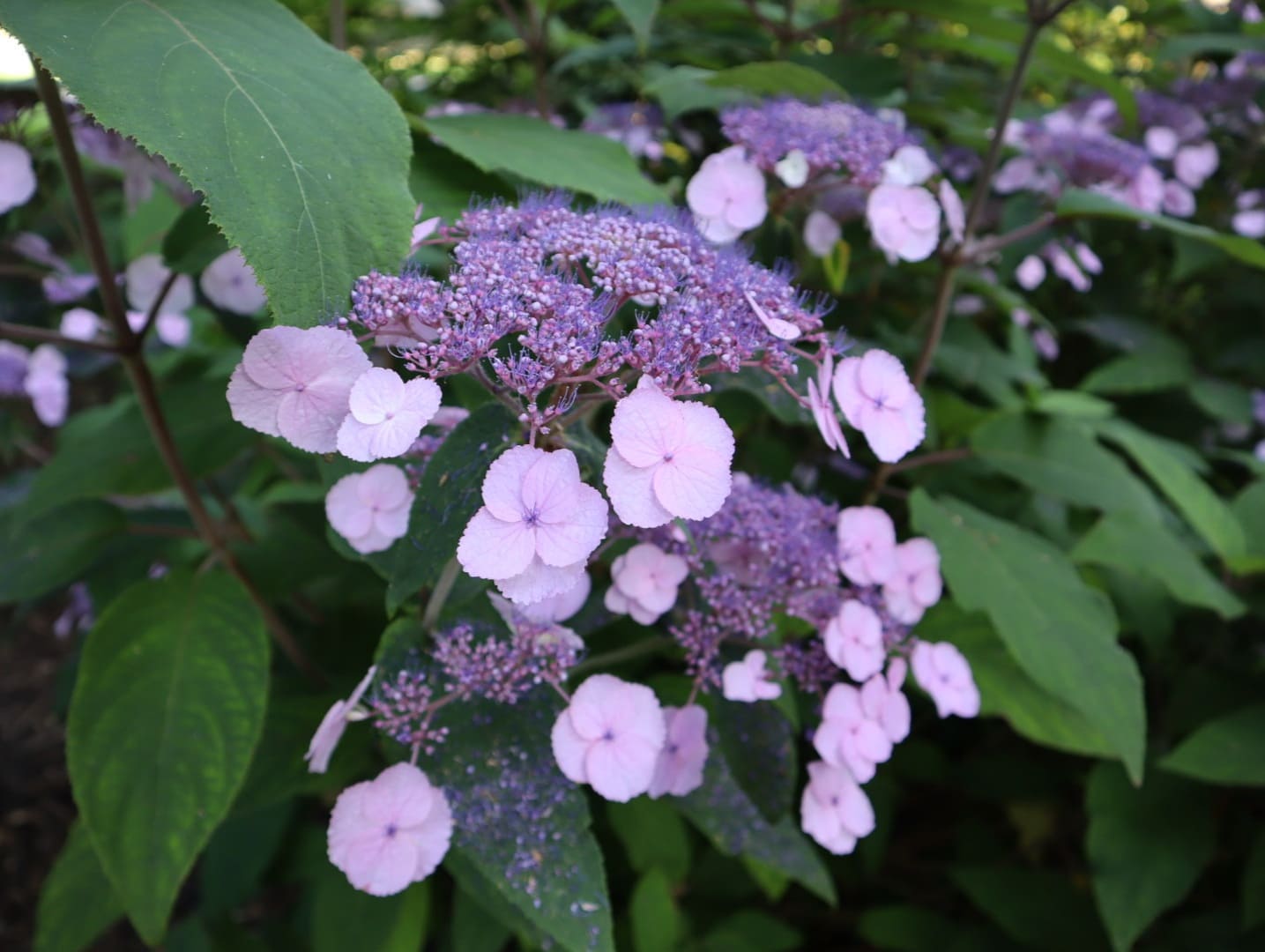
Villosa Group – This is the most common form of Hydrangea aspera, being overall hardy, from higher altitudes and northerly latitudes. In the front rank of all late summer flowering shrubs, putting on superb show in August. Flowers intense purple with lilac ray flowers, which look effective into autumn. ‘Velvet and Lace’ AGM is a great form to look out for.
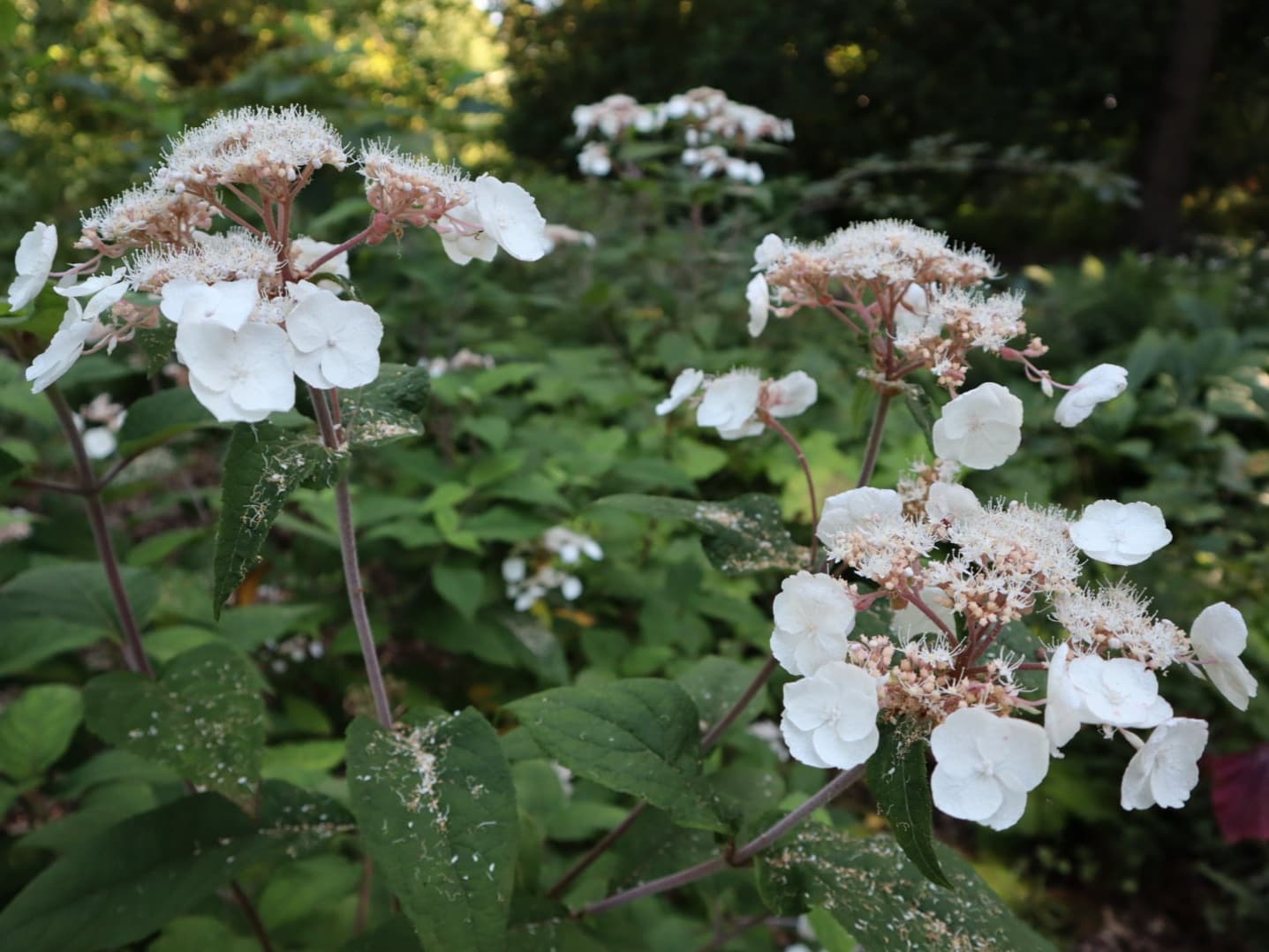
‘Peter Chappell’ – a very handsome white flowered form, with all parts of the flower fully white, to strong effect. A generally more compact plant than other forms. ‘Mauvette’ is pale lilac in flower, but very similar in all other respects e.g. flowering early July, more tolerant of full sun – very useful for using in a sunny mixed border, where other forms would not be suitable.
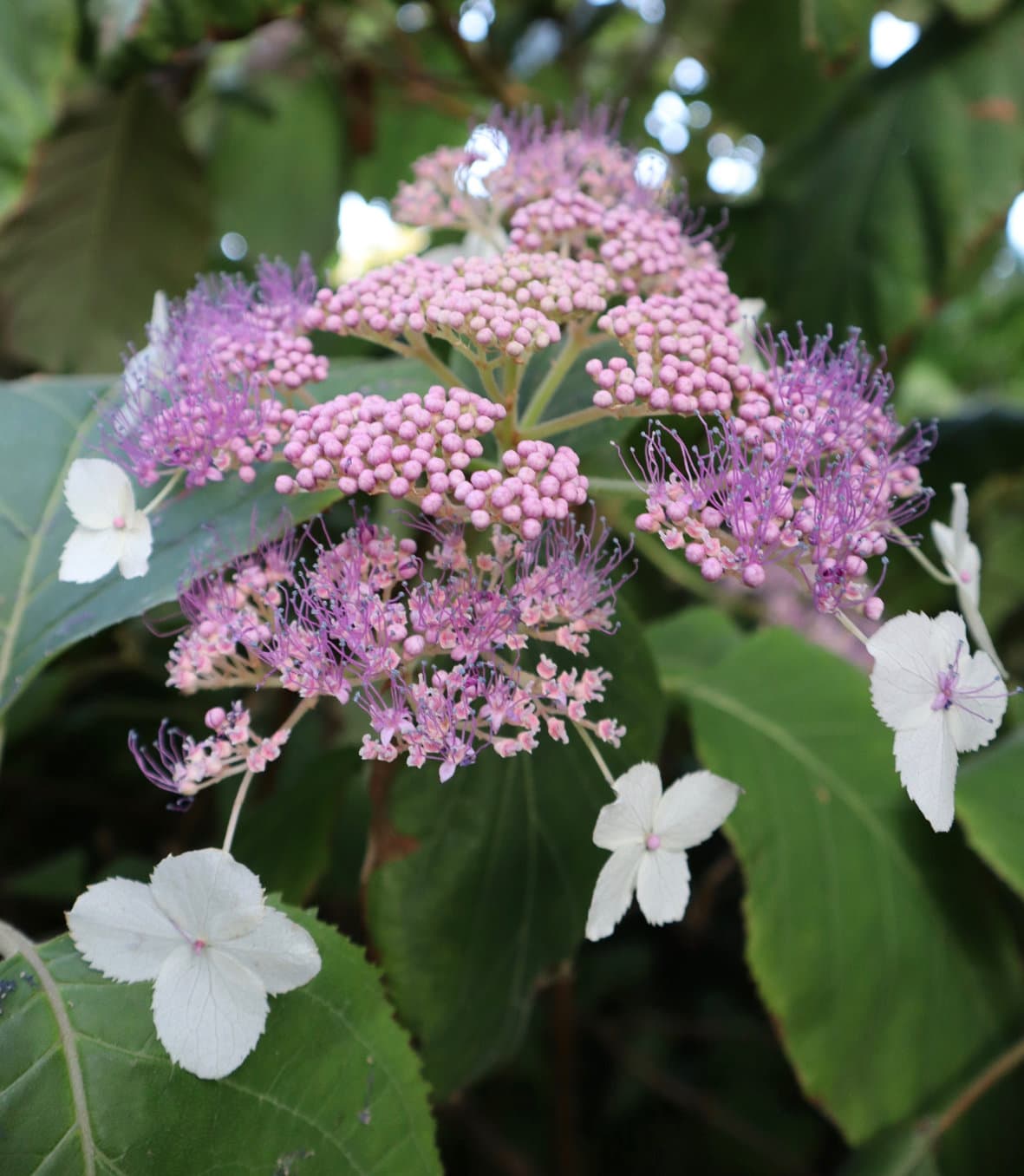
Kawakamii Group – originating from Taiwan. Plants in this group make large, wide-spreading shrubs, characteristically wider than tall. They flower relatively late, in late August to September. ‘Lishan’ and ‘September Splendour’ are both excellent named forms, from Crûg Farm Plants.
Coloured-leaved forms
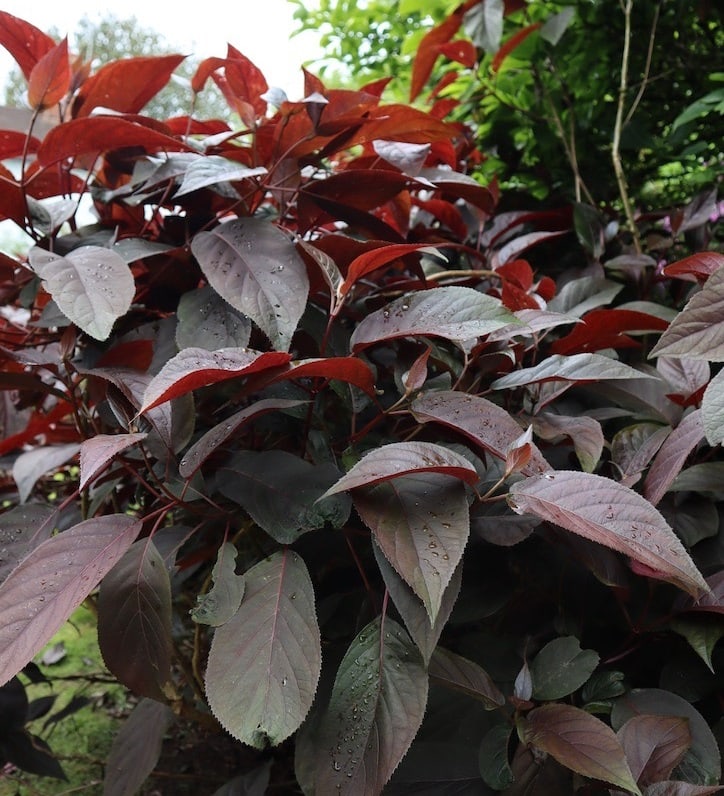
Japanese botanist Mikinori Ogisu found purple-leaved Hydrangea aspera growing in Hubei in China, and brought it into cultivation in 1998. This can be found under the name ‘Koki’ in Europe, with exceptional beetroot purple young growth all summer, with strong red-purple underside.
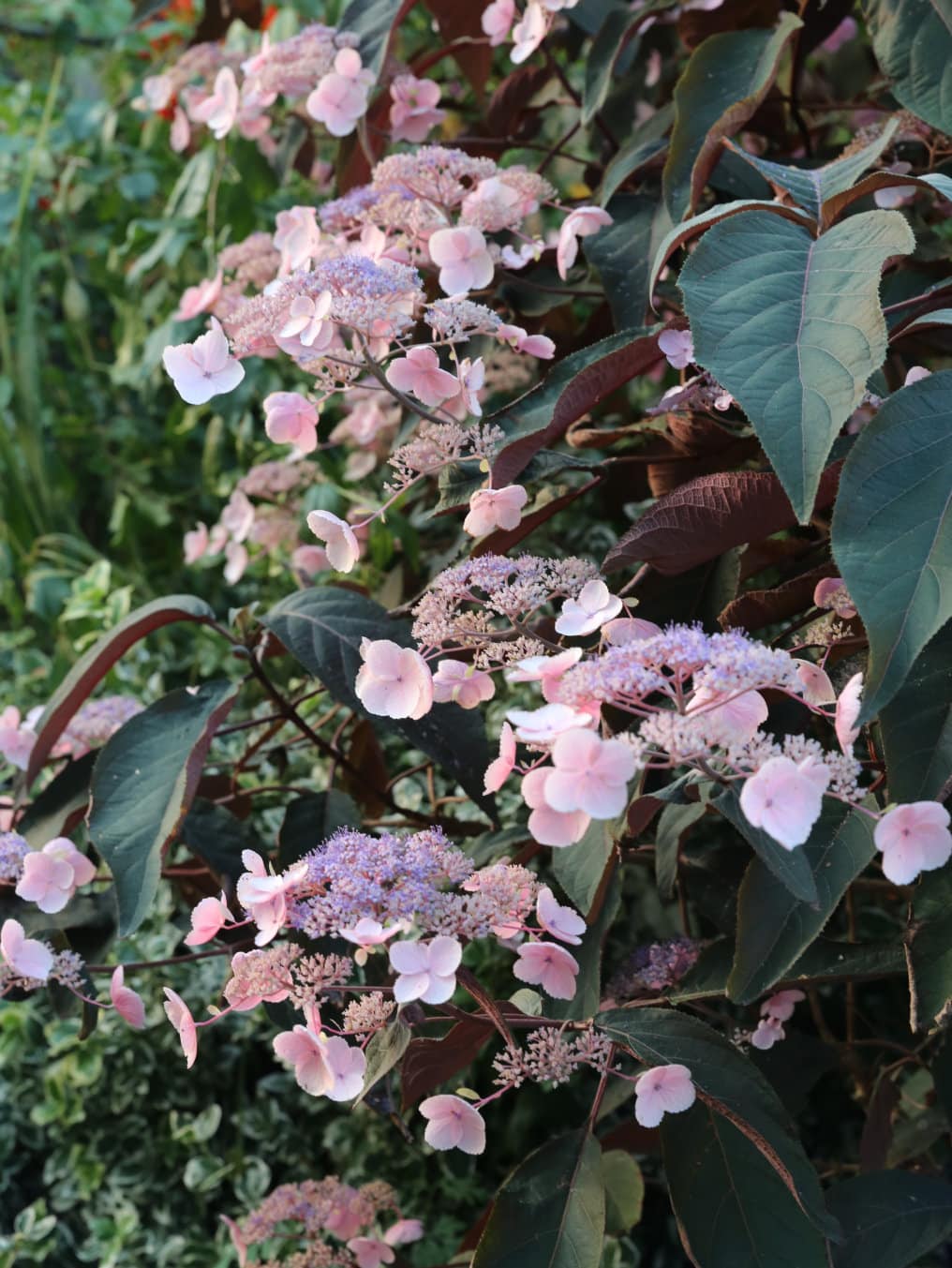
In 2006 Maurice Foster used ‘Koki’ to breed perhaps one of the best Hydrangea aspera of all, the popular ‘Hot Chocolate’, selected for its overall improved hardiness, relatively compact habit and larger, brighter shell pink sterile flowers. The blooms are set off against dark olive green and purple foliage, bronze when backlit by the sun.
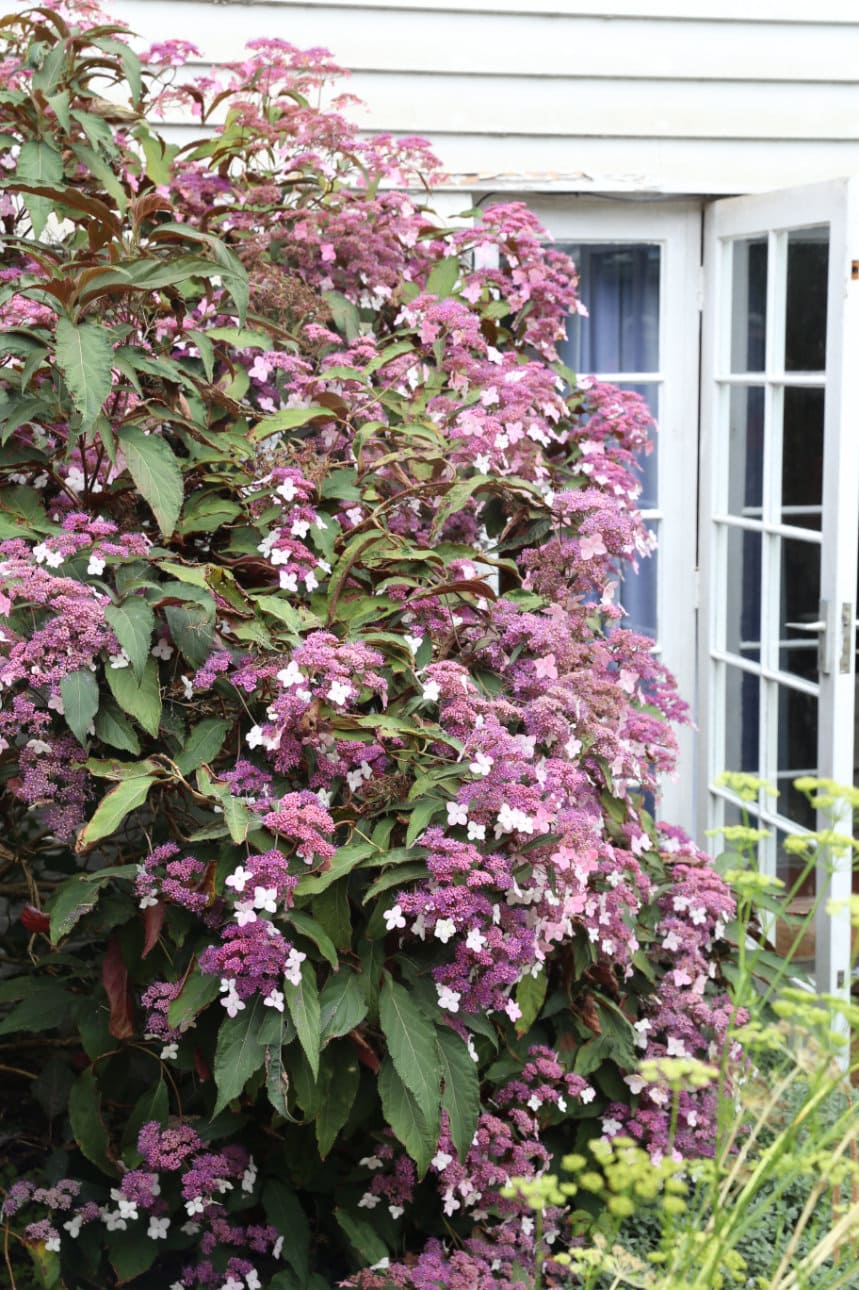
Using ‘Hot Chocolate’ as a parent, Maurice has raised even more exciting plants since, with highly attractive red undersides including ‘Rosemary Foster’, which is a really stand-out plant, named for Maurice’s late wife.
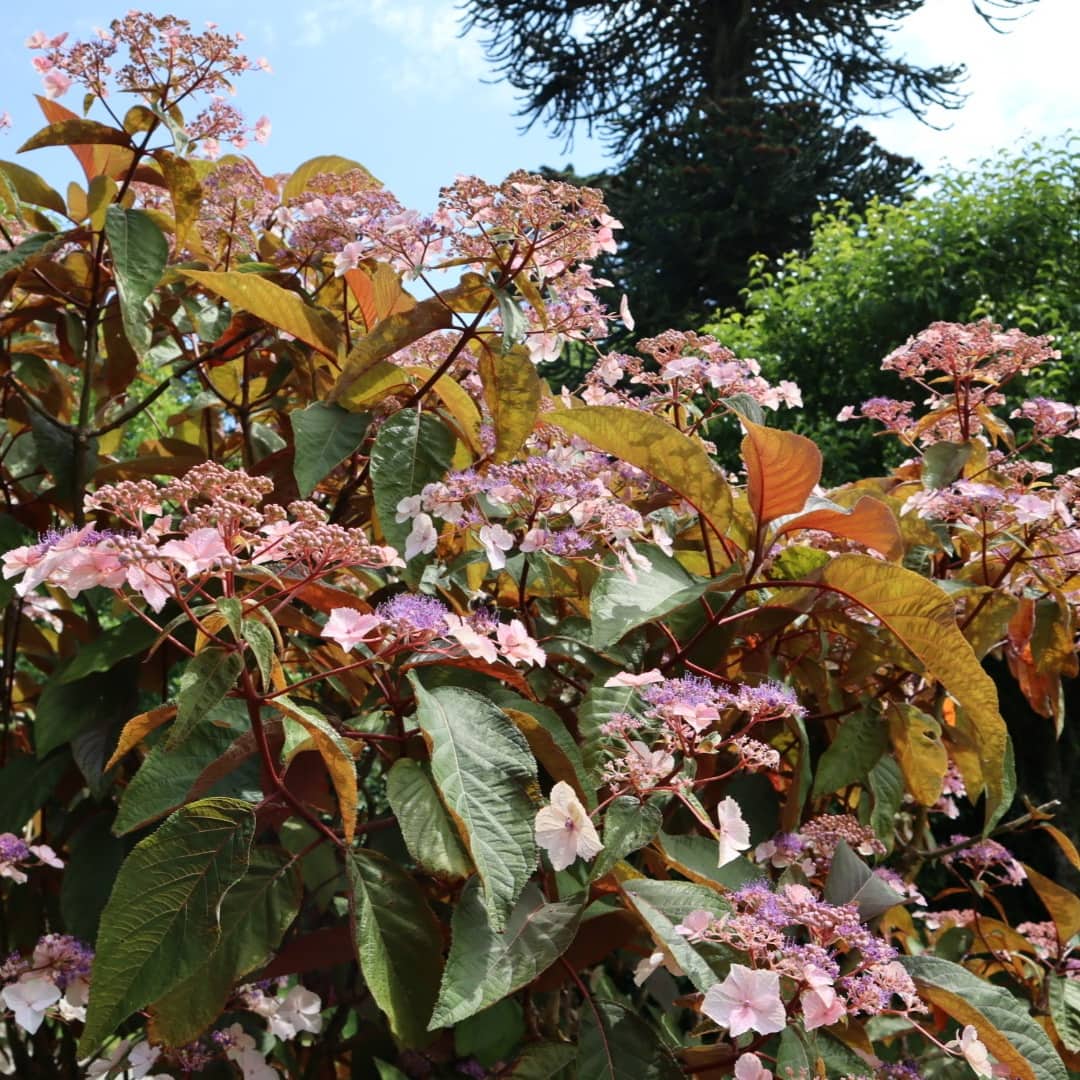
The most desirable form with coloured foliage is Hydrangea aspera subsp. strigosa ‘Gong Shan’ – a gorgeous form with large, saturated bronze foliage, impressively large and complex flowers on a vigorous upright shrub. Unfortunately only suited to frost-free parts of the UK. It was collected by Maurice Foster and Tom Hudson of Tregrehan Garden in Cornwall, where you can see the best specimen in their walled garden. Look out for it at their early summer plant fair: sometimes Tom’s potted up some cuttings for sale!
Hydrangea are just one of the many genera that have been developed by Maurice over the years into into a totally unique and invaluable collection. Rhododendron, Magnolia, Camellia, Viburnum, Wisteria, Clematis, Philadelphus, and Deutzia, are some of the other flowering trees and shrubs that are highlights at White House Farm, plus there’s climbing roses and a vast range of trees. We very much appreciate the generosity of Maurice and Clare for hosting and guiding us, sharing their invaluable knowledge, and the various cuttings we came away with. May this be the start of a new era of discovery, as more people discover this unrivalled collection. And thank you Jack for sharing your knowledge and wisdom on this much underused species, and for being the best Wisley housemate anyone could wish for!
About the author: Owen Hayman
Owen, an RHS qualified horticulturist with a full Level 3 Diploma in Horticulture came in the top 3 at the 2019 Northern Regional Final of The Young Horticulturist of the Year.
He originally came to horticulture from Fine Art, switching from a Fine Arts Foundation Diploma to gain a degree and a masters in Plant and Soil Science from the University of Sheffield in 2014. He then worked as a researcher on various field research projects in Alaska, Panama and Borneo. When not away in the field, he became obsessed with visiting gardens and nurseries across the British Isles and the Netherlands, began developing his own garden, and then took on a walled allotment garden as a personal project. He realised his true passion was in horticulture, and so moved away from academia and into the world of specialist plant nurseries and professional gardening. He first joined the garden design firm Bestall & Co as a member of the planting and aftercare team in spring 2019, but is now completing his Wisley Diploma while continuing to write articles for Bestall & Co on a monthly basis, who say they are ‘delighted to maintain contact with such a passionate and knowledgable plantsman’.
‘Planting an Idea’: Maurice Foster asks should more be done to reconcile good taxonomic practice with the needs of gardeners?


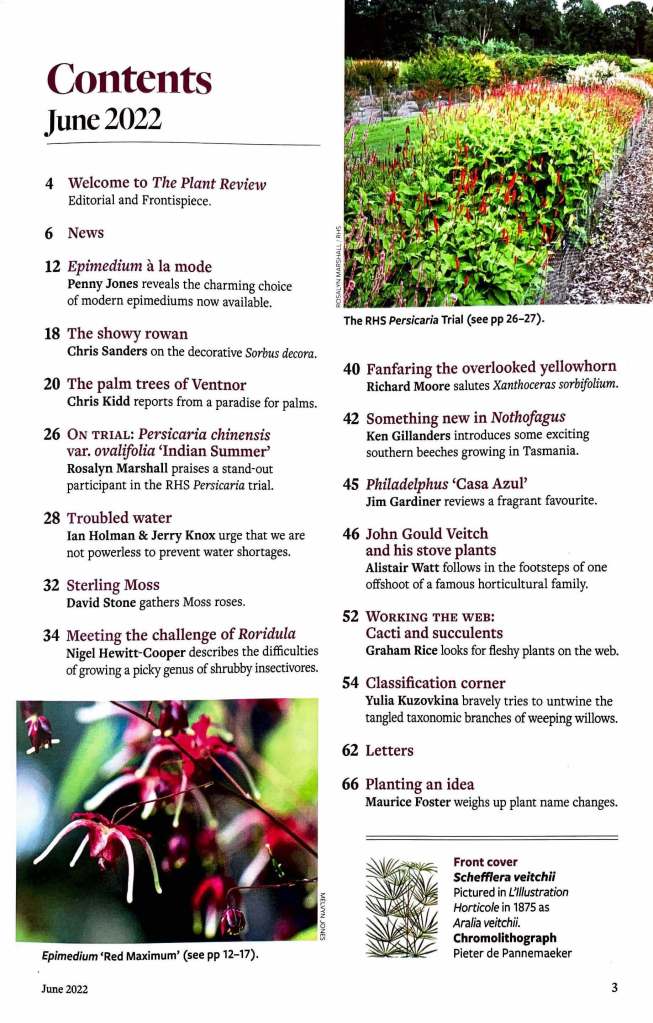
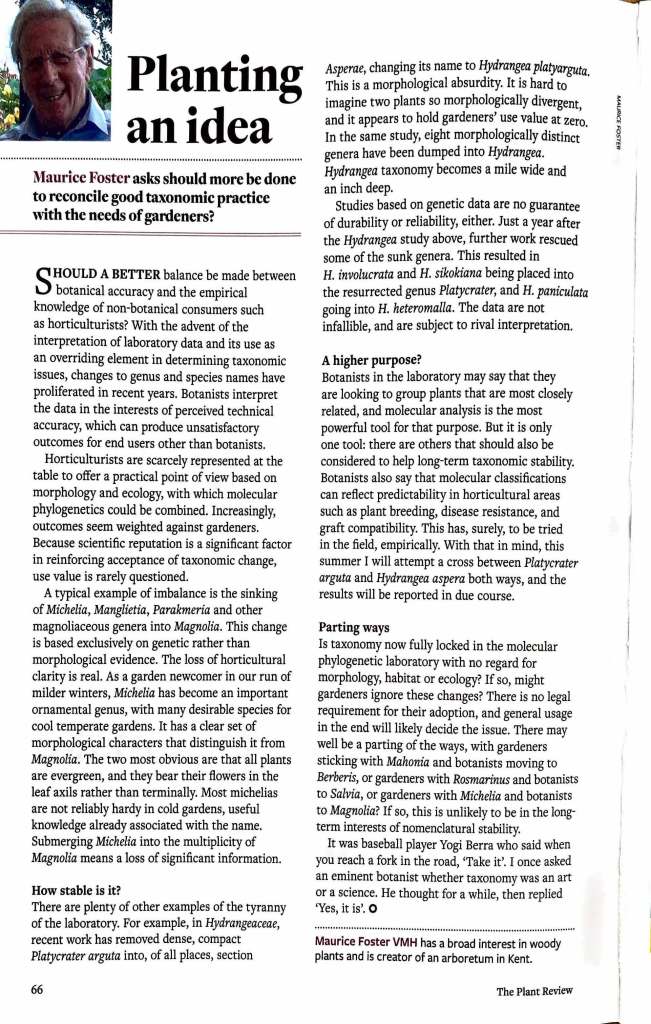
This article first appeared in The Plant Review (previously The Plantsman), the RHS publication devoted to the diversity of cultivated plants rhs.org.uk/theplantreview
A good year for hellebores
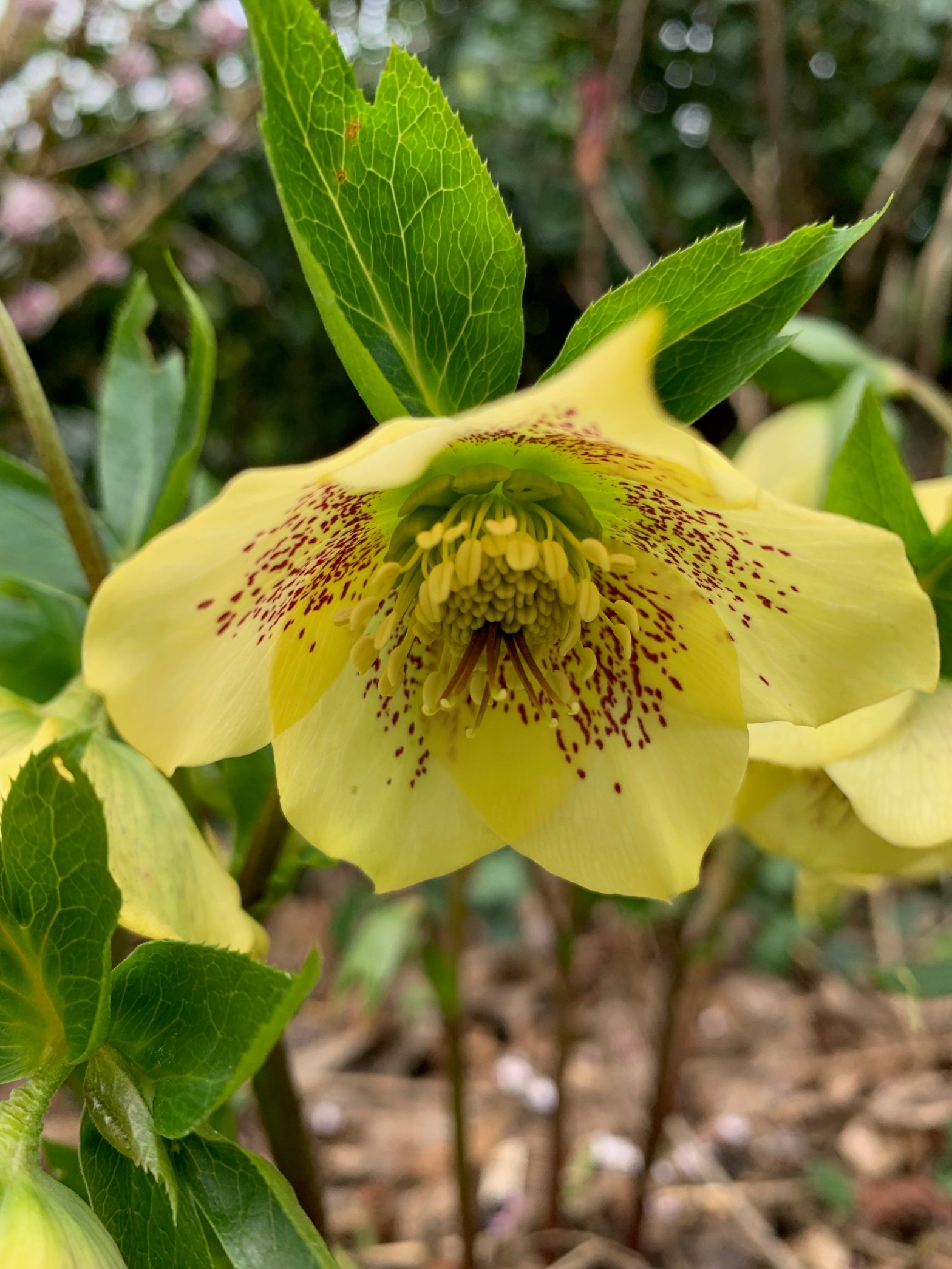
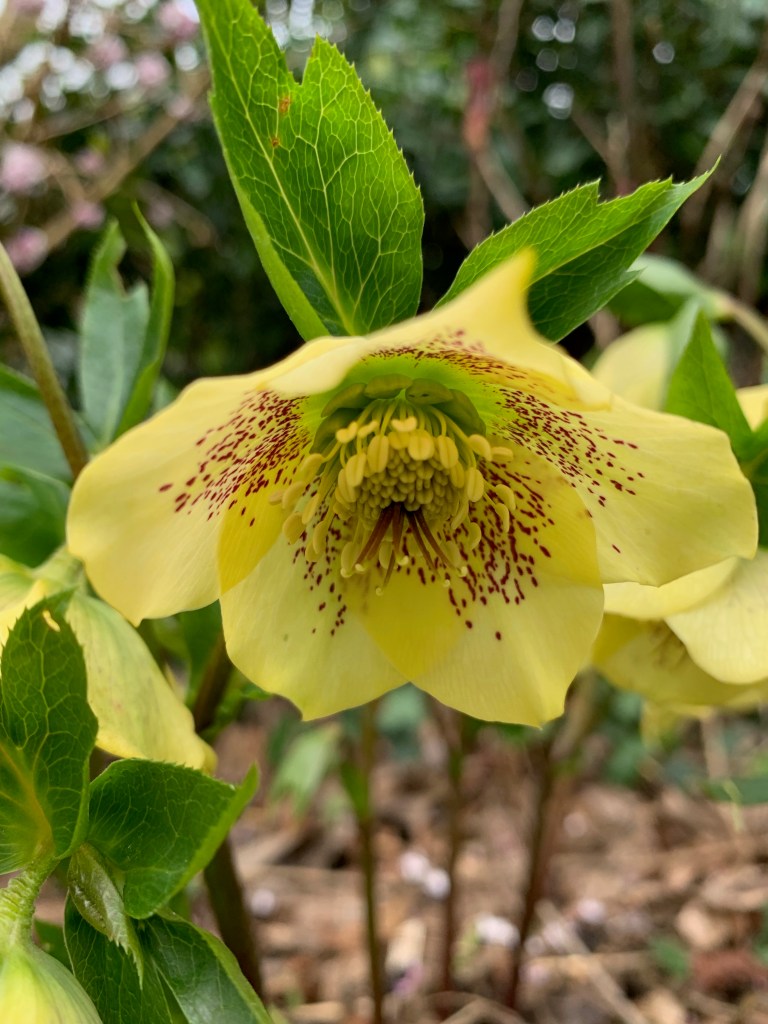
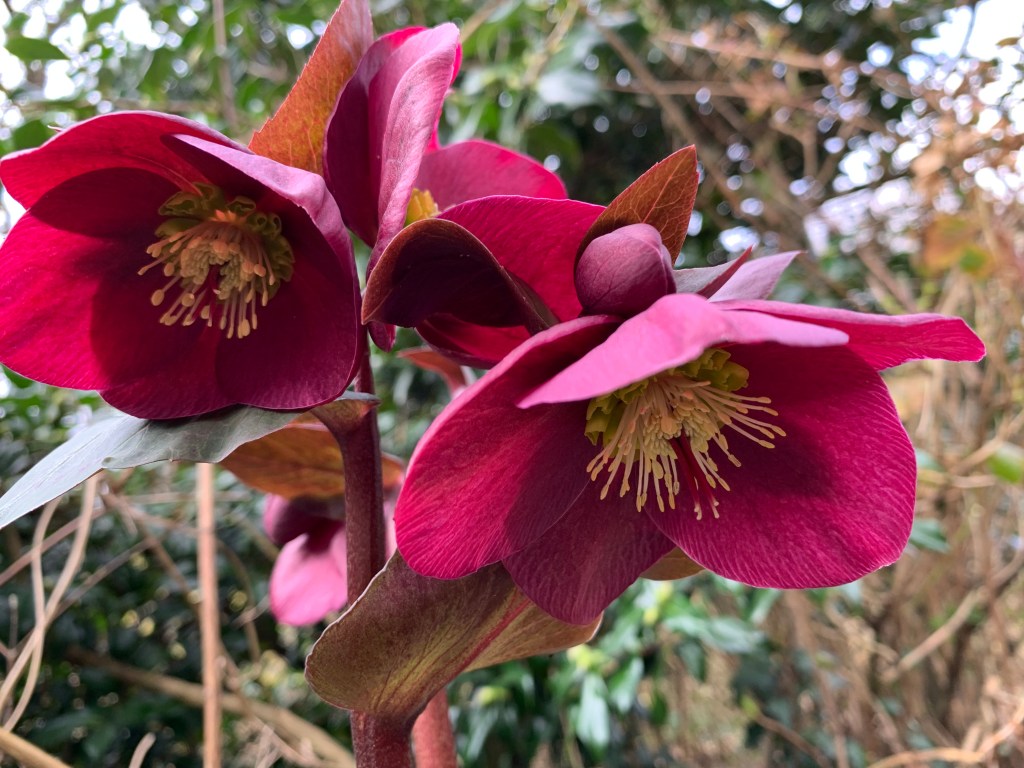

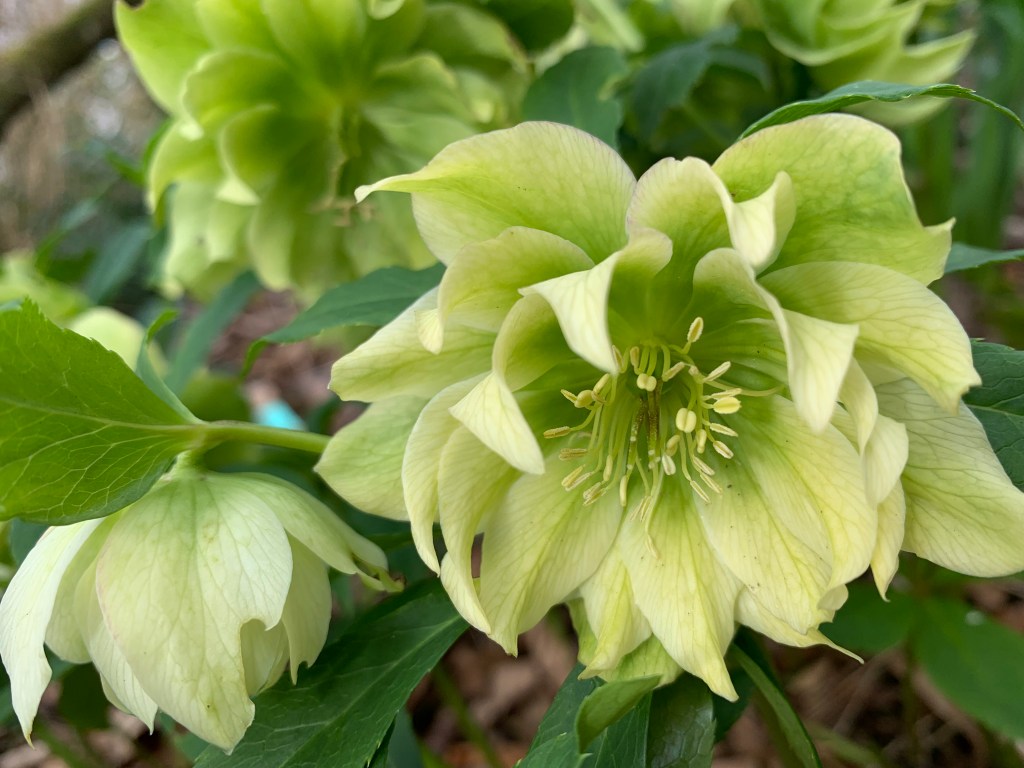


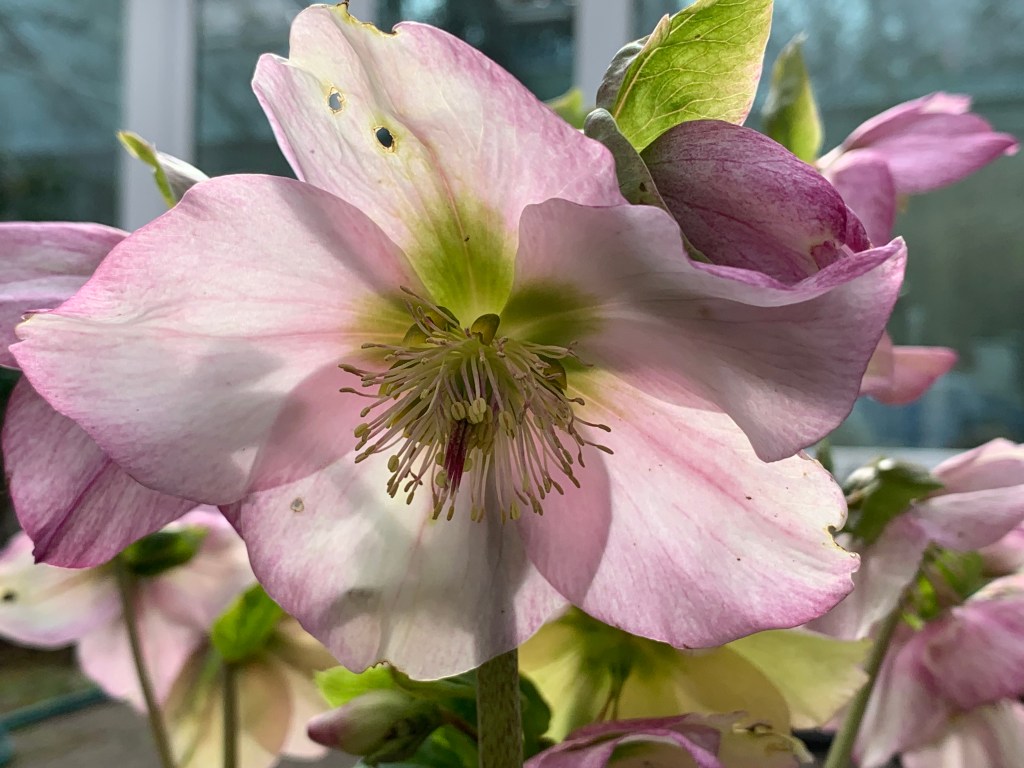
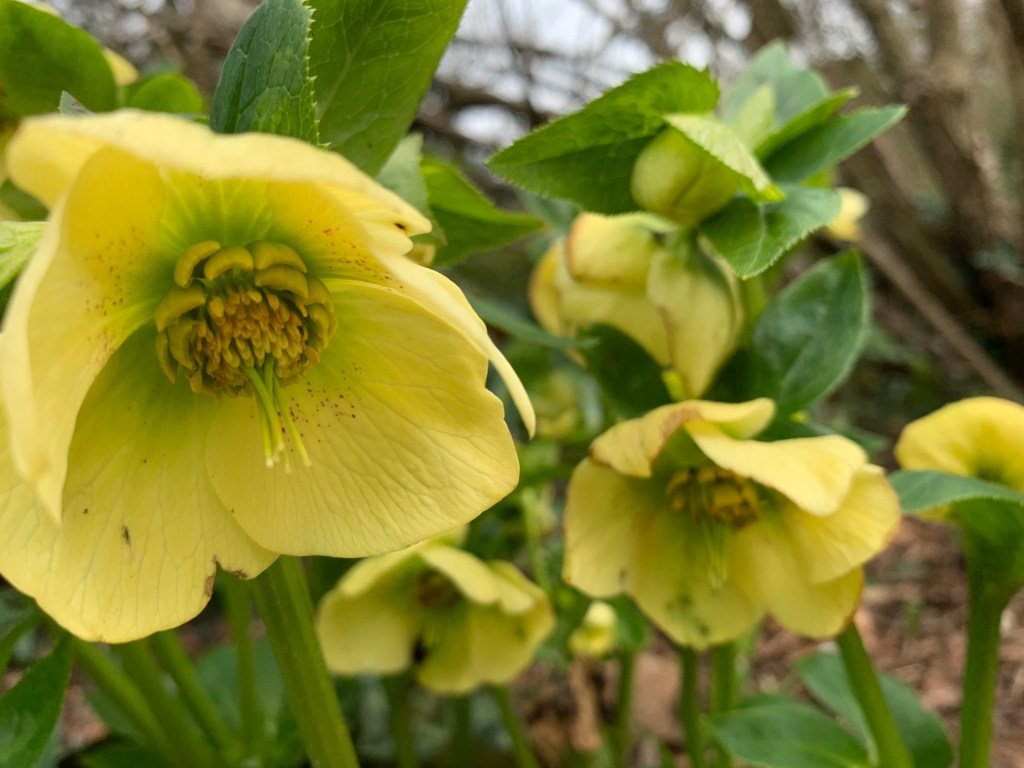
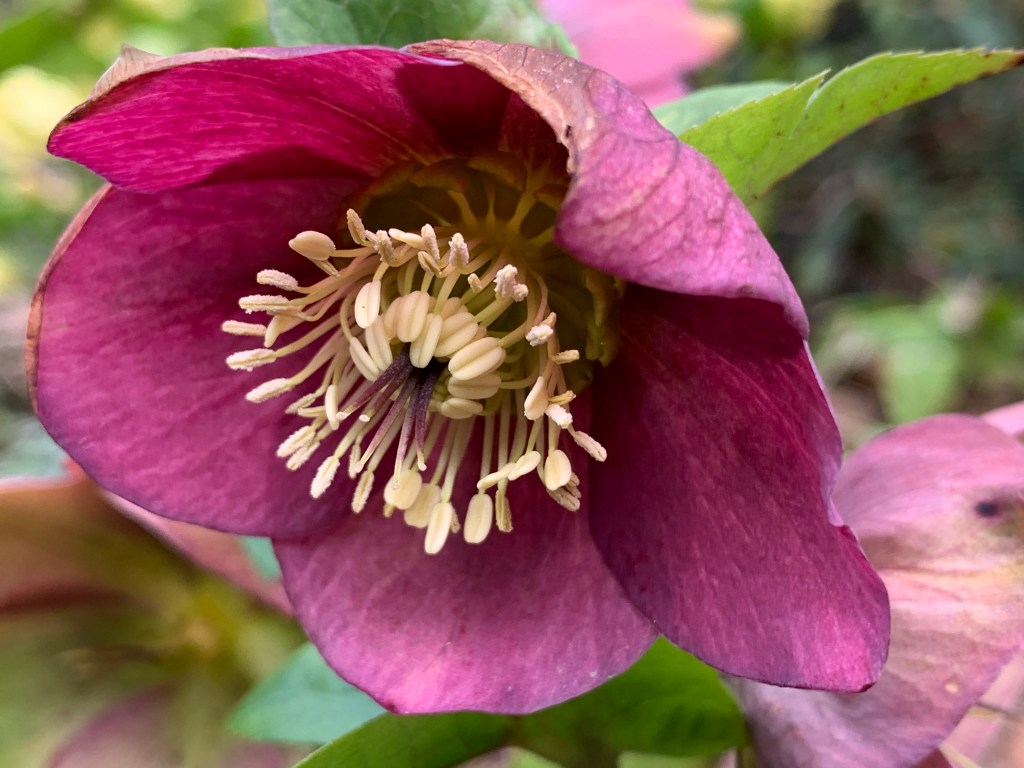

In the dark days of winter when snowdrops and hamamelis are the only spots of colour a range of different hellebores can offer an eye-catching unexpected pastel patchwork.
- Hardy perennials that provide good colour in the winter garden
- Their pastel colour range when grown nearby each other is itself attractive
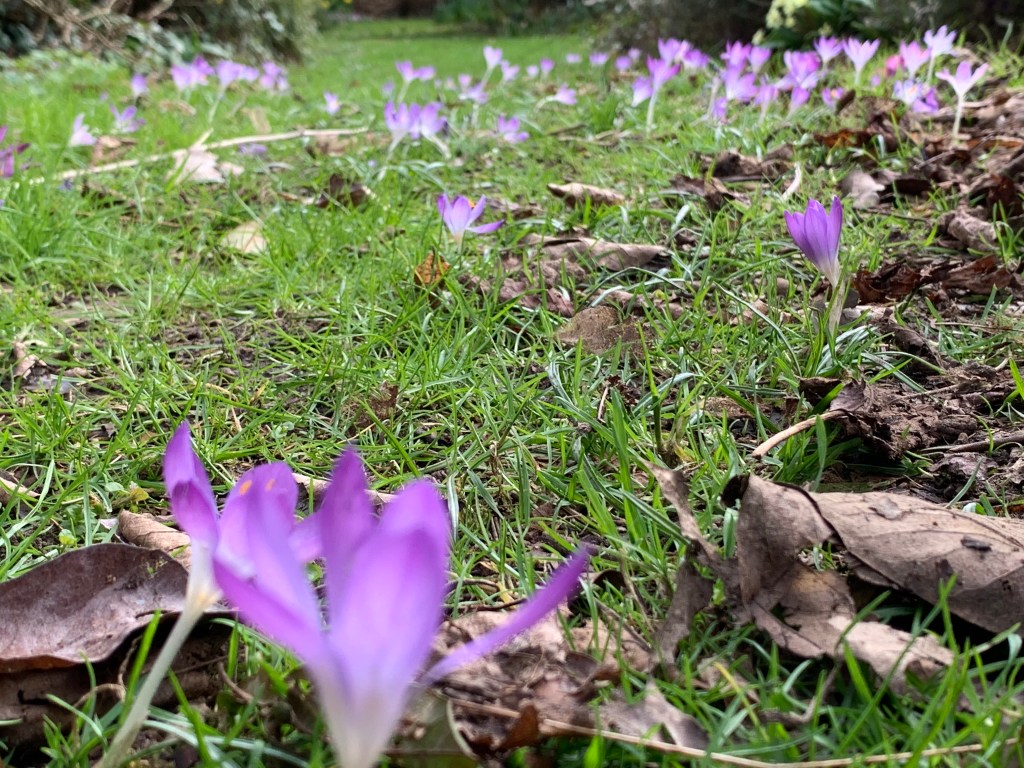
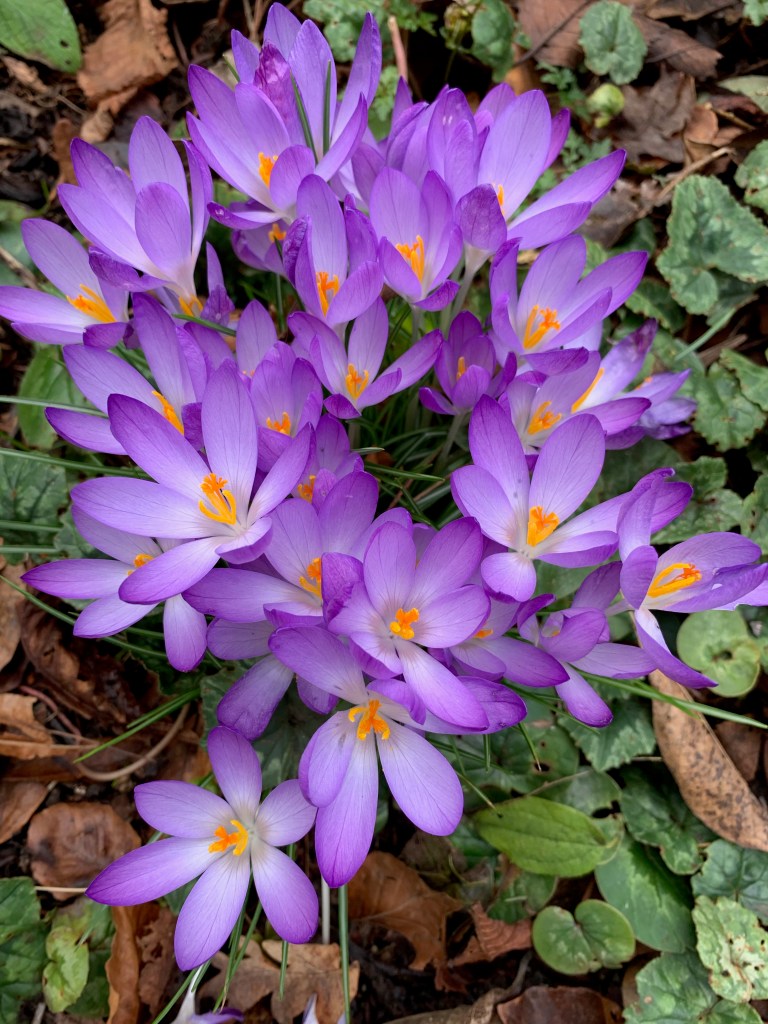
Briefly upstaged by far more evanescent signs of spring the steady hellebores carry on holding their own until late April.
White House Farm conditions mean we have learned over the years the enormous difference between removing vs. not removing the spreading leaves as they drop to the ground in November. This is because here, if left on the plant to droop and flatten over the winter, mice find them ideal shelter and feed on the nascent flower buds underneath. On the years when we have remembered to spend a couple of hours in late October/early November with secateurs removing the dying leaves at the stem before they could start to attract mice under their layer of shelter the inflorescence the following January – blooming through to late April, in some cases – has been unparalleled in scale and vigour. If we don’t take this protective measure at WHF, sometimes only one or two late flowers will appear.
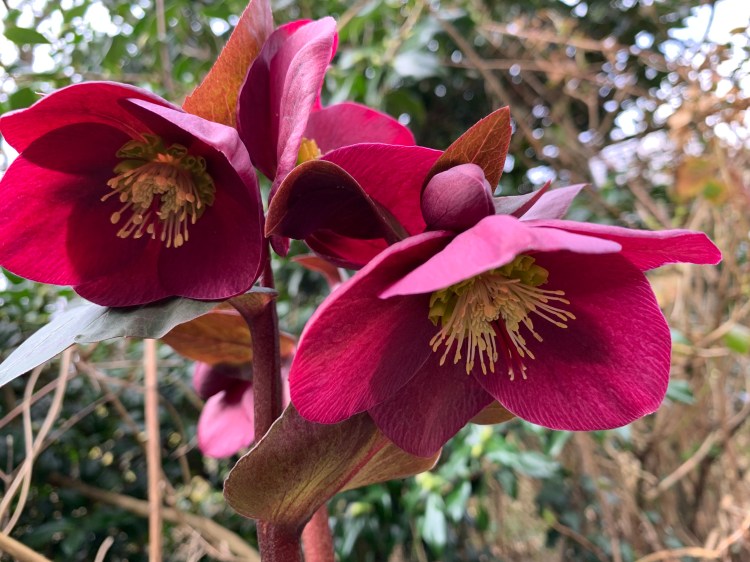
The most remarkable thing about Hellebores is they start blooming in January when very little other colour is visible, and many are still going strong in late April, others till elegant blooms fade to pastel green. This picture was taken on April 21st 2022:
For an excellent range of hellebores, John Massey’s Ashwood Nurseries offers one of the best selections of available plants in the UK, John having been a keen collector of hellebores as in the last two decades breeders like himself radically expanded the range of hellebore colours and petal markings. The private garden of the late plantswoman Veronica Cross in Stoke Lacey, Hertfordshire has an outstanding collection of hellebores, mainly based on John’s creations.
By Clare L. E. Foster, WHFAF Trustee
 White House Farm Garden and Arboretum