
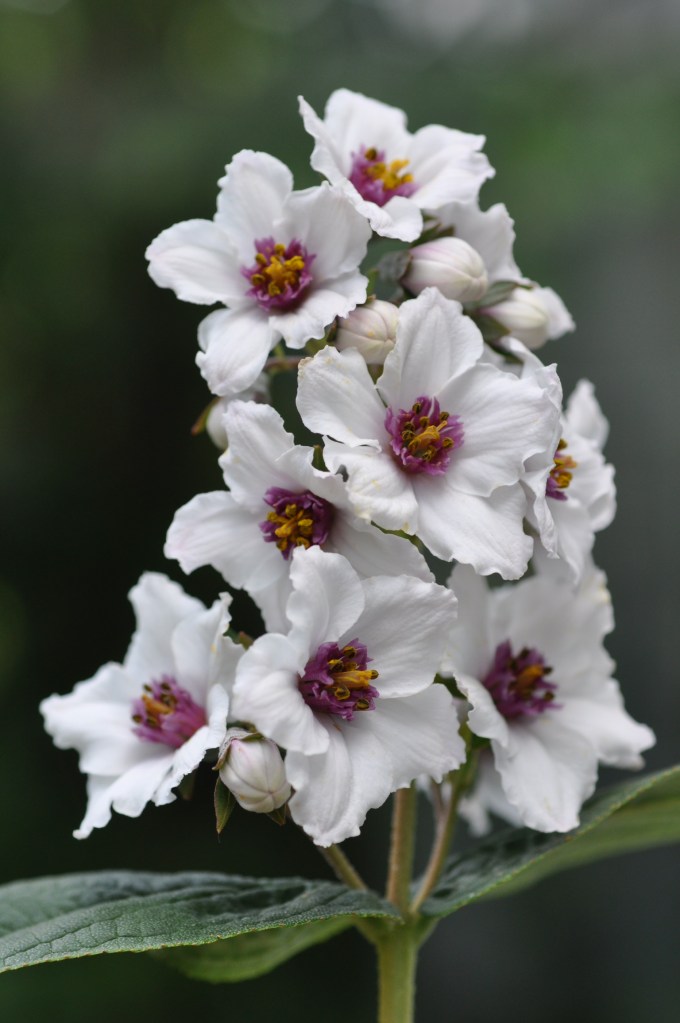
‘Deutzias are a group of plants that all keen gardeners are aware of, that most gardeners with an interest in woody plants grow, that very few understand as a group, and that are greatly confused in cultivation.,’ says Rod White (Vice-Chair of the RHS Woody Plants Committee with responsibility for Trials). ‘The range of Deutzias that exists is well displayed by the mature collection at White House Farm, which ranks in comprehensive range and variety alongside Glasnevin, Kew, and Hilliers in showing the breadth of the genus. Of particular interest is the plant of Deutzia grandiflora, a great rarity.’
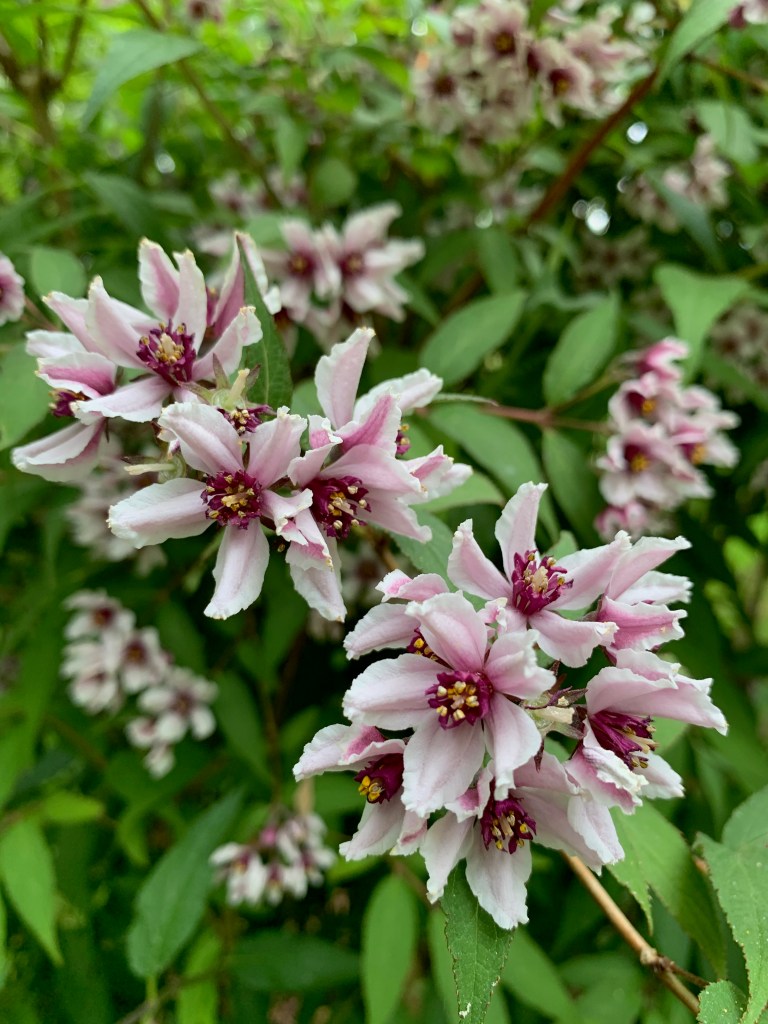
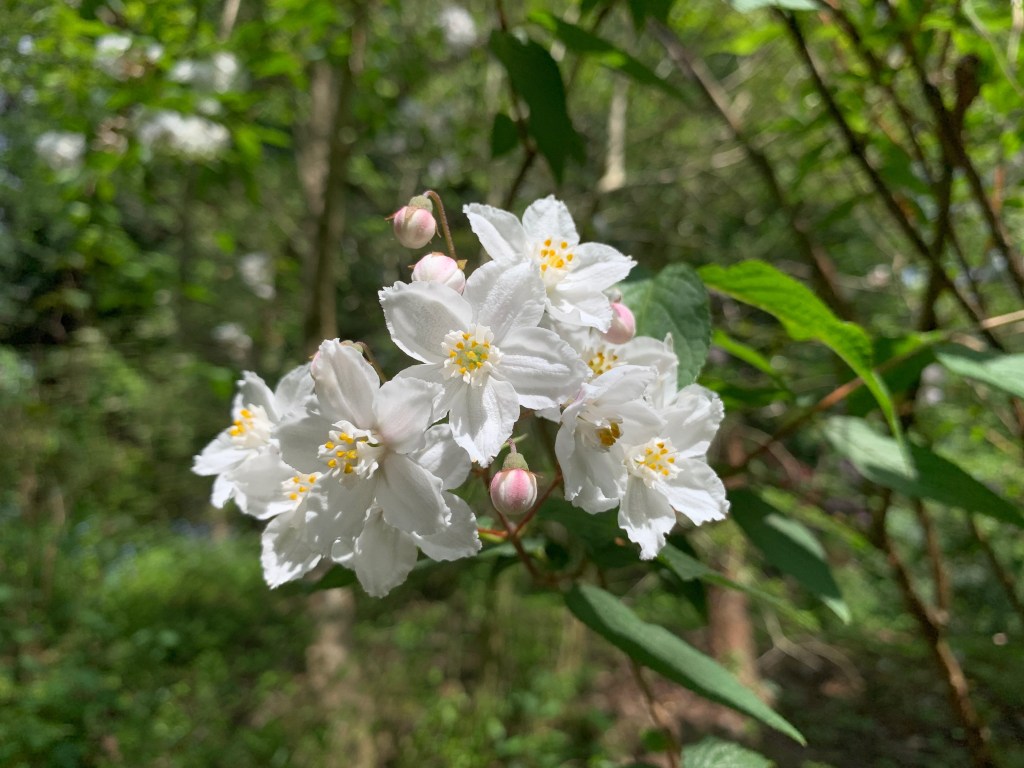
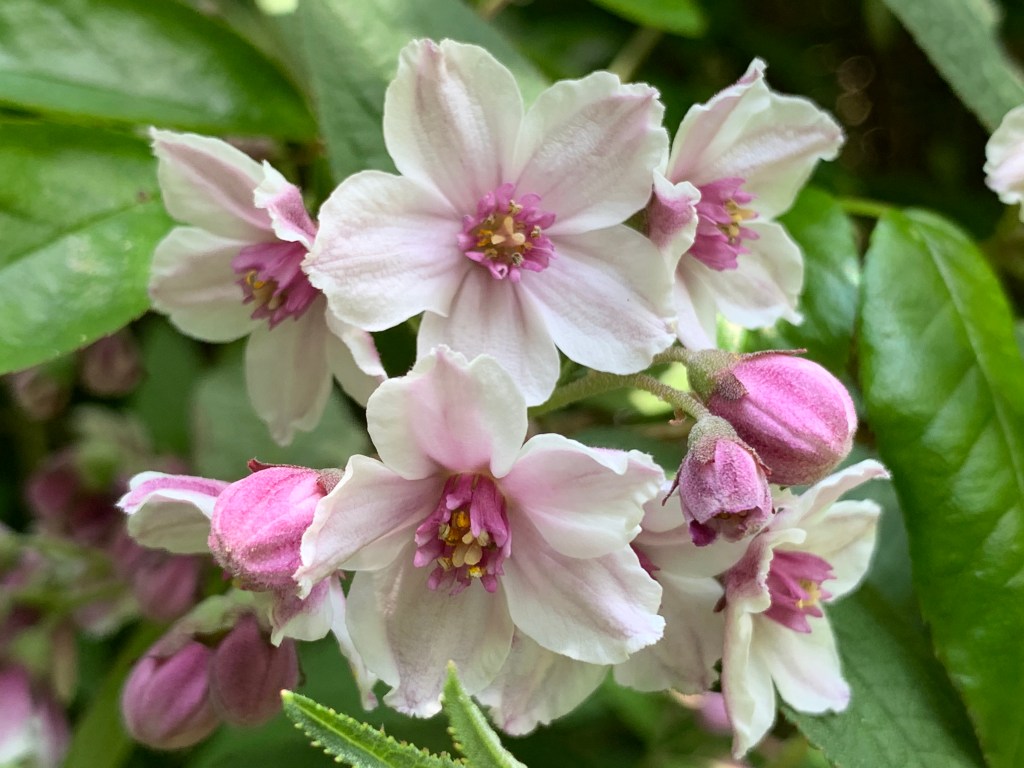
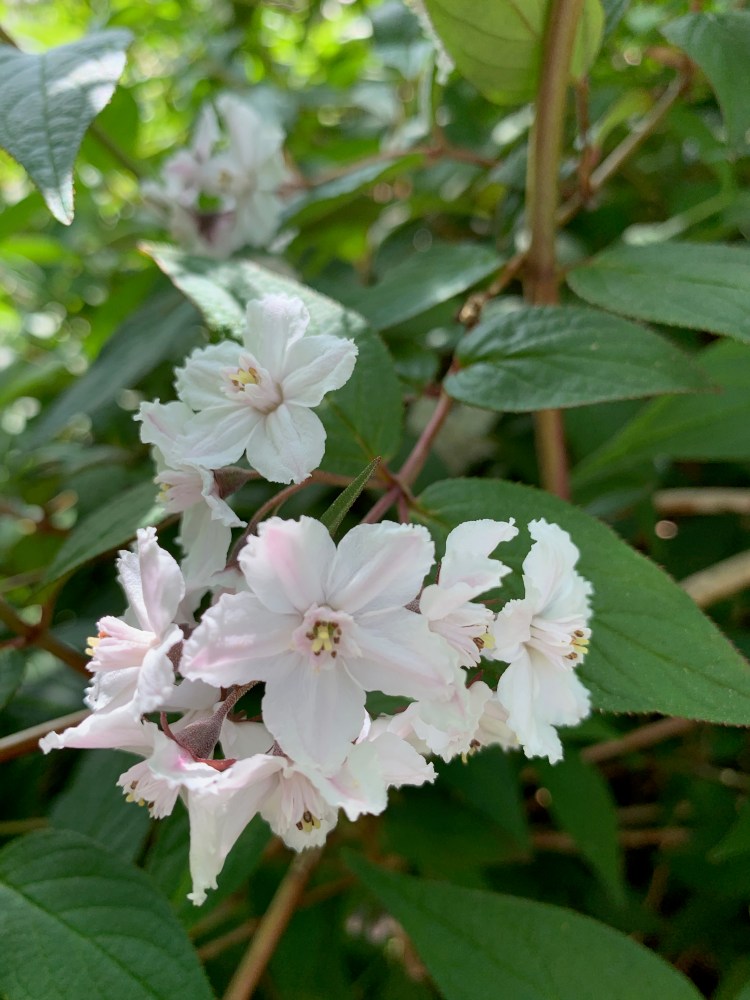
‘The great late 19th century nurseryman, Victor Lemoine, recognised the importance of Deutzias and carried out hybridising to great effect until the 1920s. Since that time the group has not received the attention it deserves. So knowlegeable consciousness of it has been lost.’
Rod White, Vice-Chair of the RHS Woody Plants Committee with responsibility for Trials
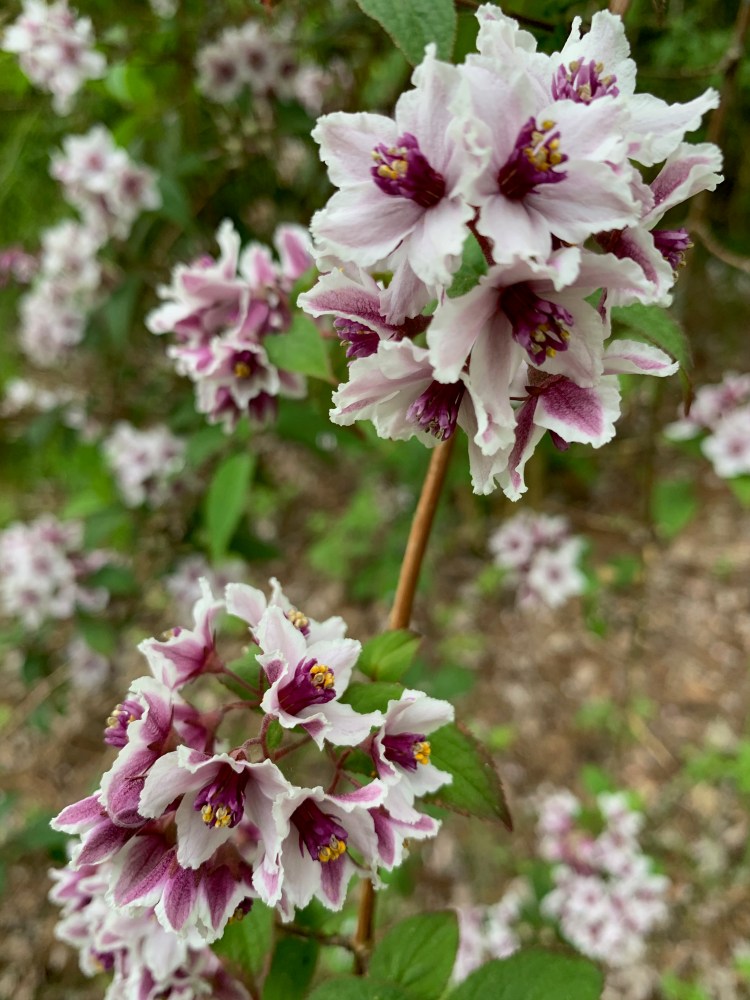
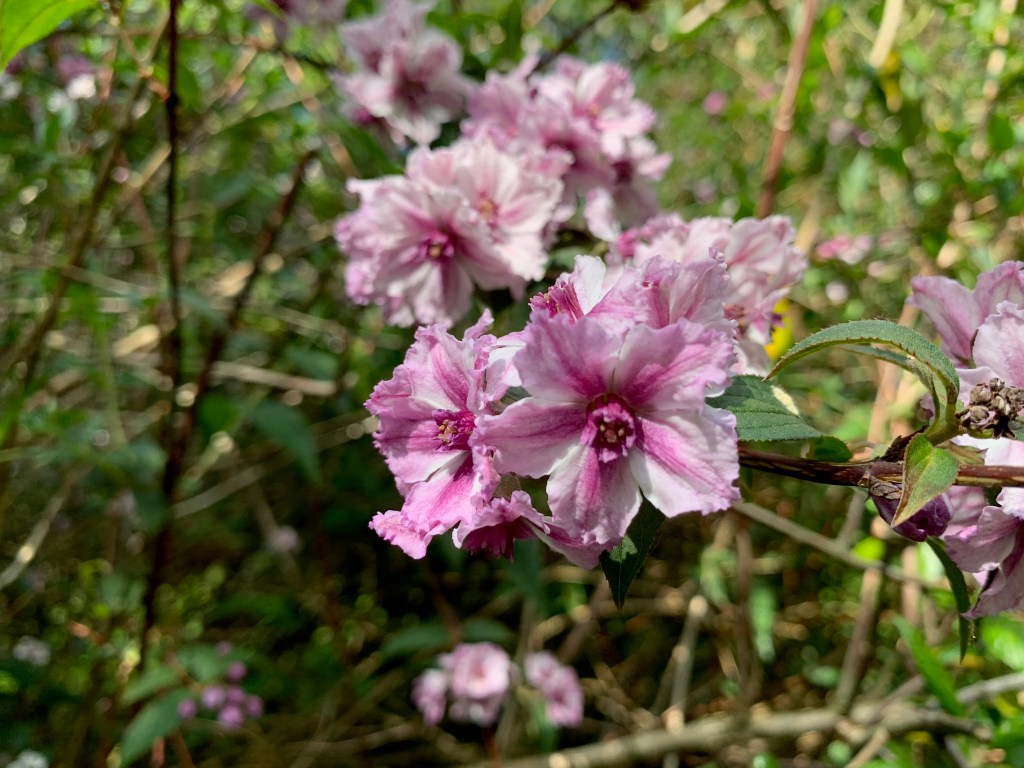
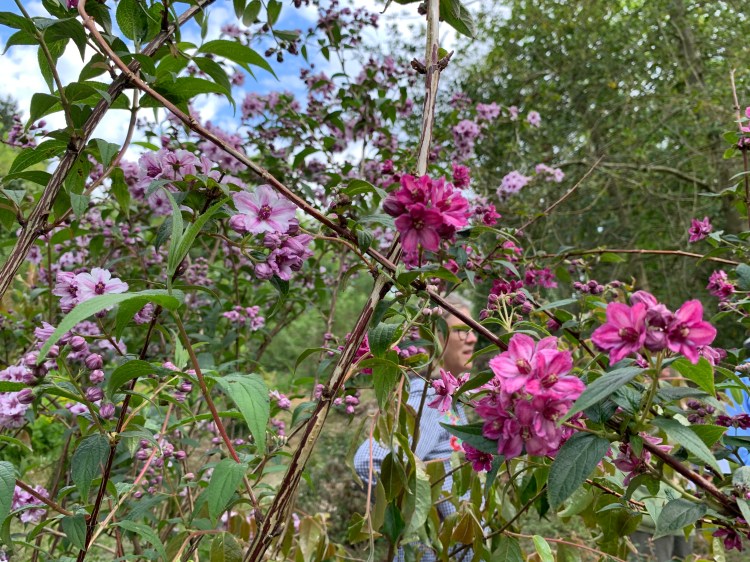
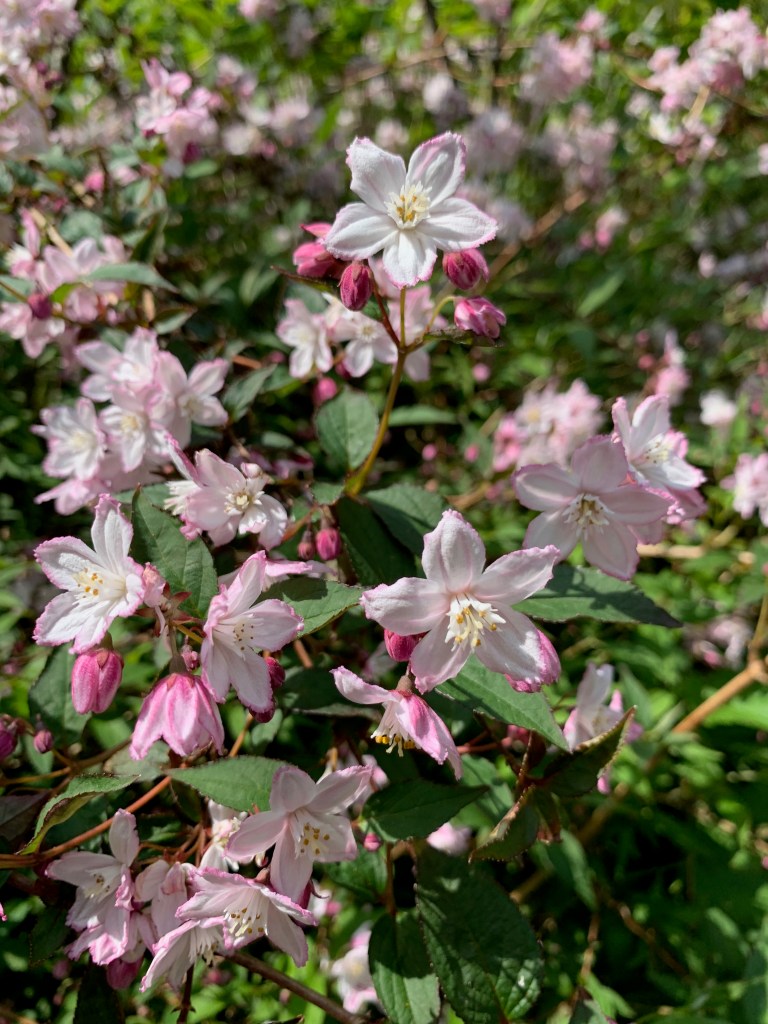
In 2021 we photographed and labelled the collection of Deutzias at WHF, the result of up to four generations of hybridizing. Many new shrubs look to be of garden value, for flower, foliage, hardiness and habit, ranging in age from 5 to 25 years old. Some are tucked away in corners, as is to be expected with limited space but also with a genus that is ideal for underplanting, and for co-planting amid other genera for year-round interest. Maurice has bred mostly forms of purpurascens, calycosa and longifolia, looking for free-flowering compact shrubs suitable for small gardens and with improved continuity of flower.
We selected, labelled and photographed approximately fifty unnamed seedlings unique to White House Farm, and will track them year on year, so we can get acquainted with the best overall performers. For example, we’ve already seen some difference in hardiness between seedlings after the 2022’s April 2nd wind-born frost (-3C at WHF).
These WHF seedlings (with flower and form good enough to compare) are grown at White House Farm side by side with various favourite cultivars and named species, particularly D. longifolia, D. compacta and D. purpurascens, among others. This gives context for comparison – not just the prettiness of flower form and colour, but also of tolerance to cold, drought, timing, and continuity. Most Deutzia are free-flowering and last for around three weeks in late May or early June: but some differ significantly from this.

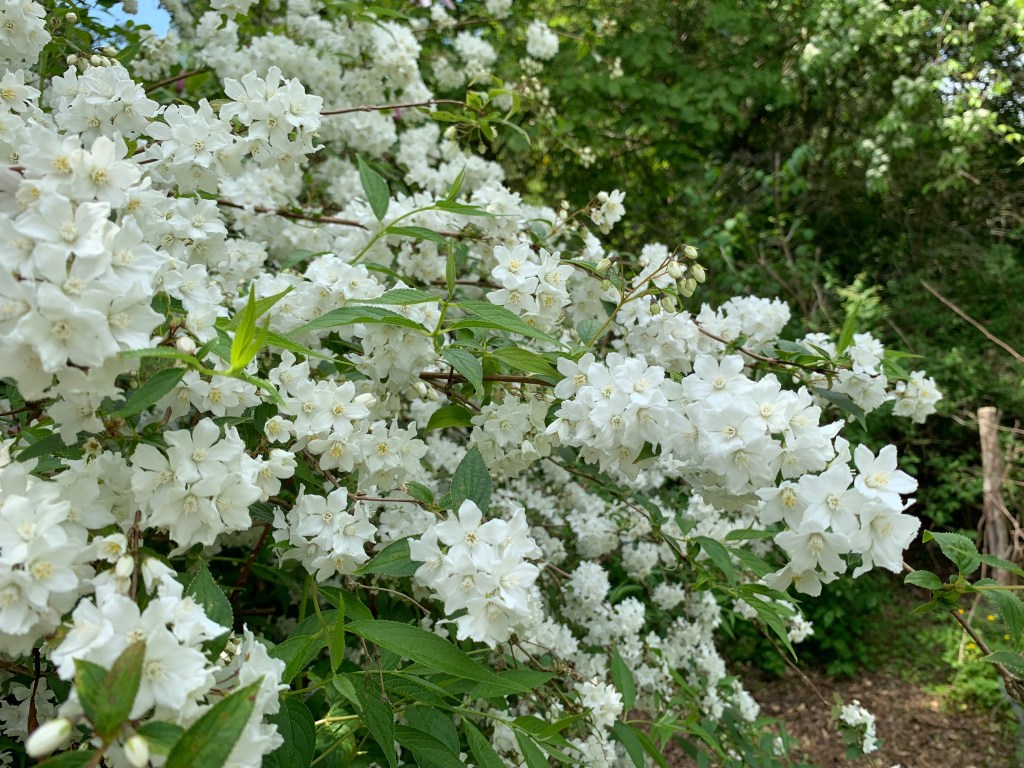
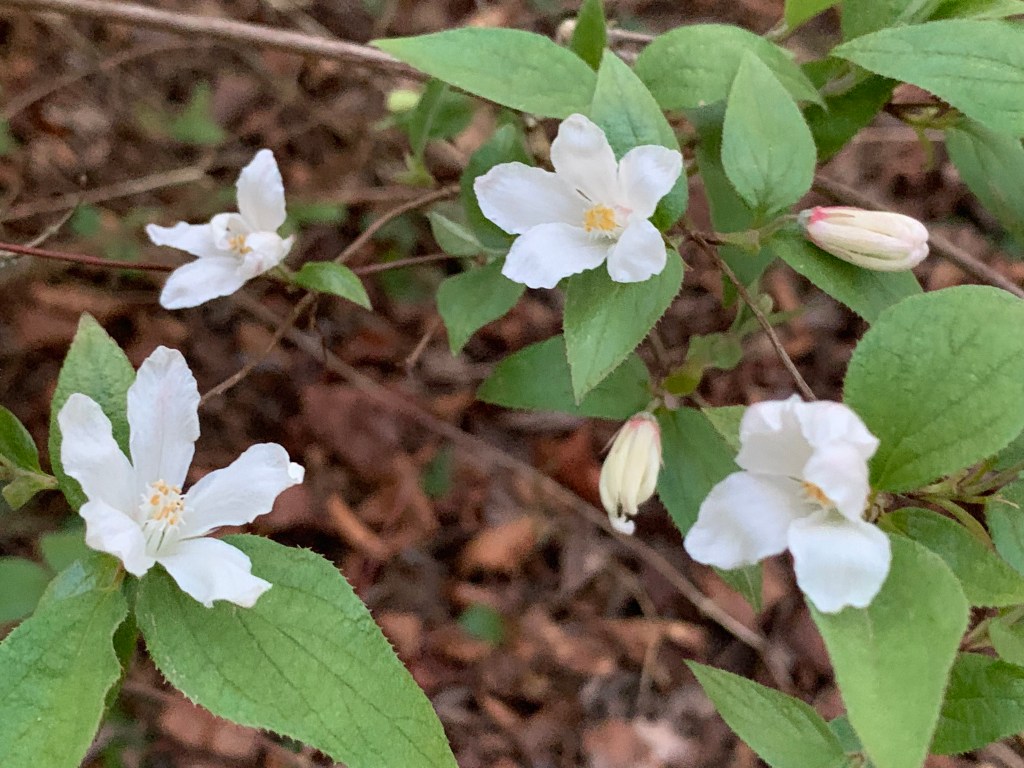
WHF’s D. grandiflora, for example, which Rod White mentions above, grown from seed collected by Chris Sanders near the Great Wall of China, 100km north of Beijing, now a compact bush (c. 1m by 1m) some twenty years old, came into flower in late-February 2022 and is still covered in delicate fresh white flowers with no sign of browning in late April.
By Clare L. E. Foster, WHFAF trustee

 White House Farm Garden and Arboretum