Rosa sericea is probably the most widespread rose species in Asia, both geographically and in terms of altitude. It is found throughout the Himalaya from Nepal in the west across to SE Tibet and NE India in the east, into Burma and through Yunnan and Sichuan into central and southern China and north into Kansu and Hubei.
It is probably geography and range of altitude that account for its unique variability – plant size and habit, armature, vestiture, foliage, flowers and heps: give the kaleidoscope a shake and you will see something different. Historically, this means that its nomenclature has been split into all kinds of varieties and forms and synonyms, most now no longer in use, but sunk into the single species.
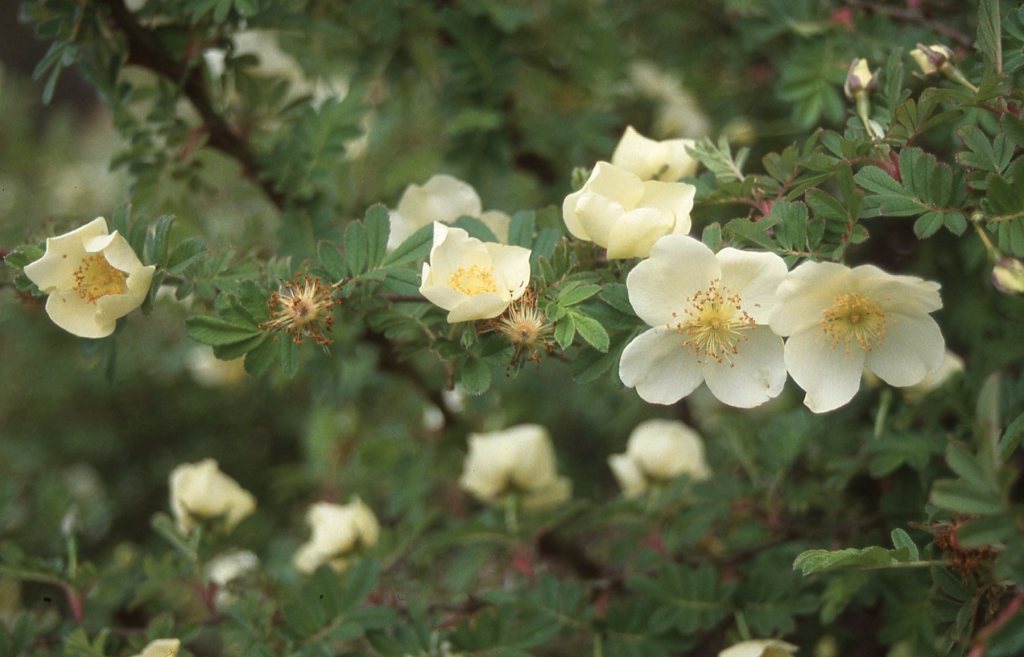
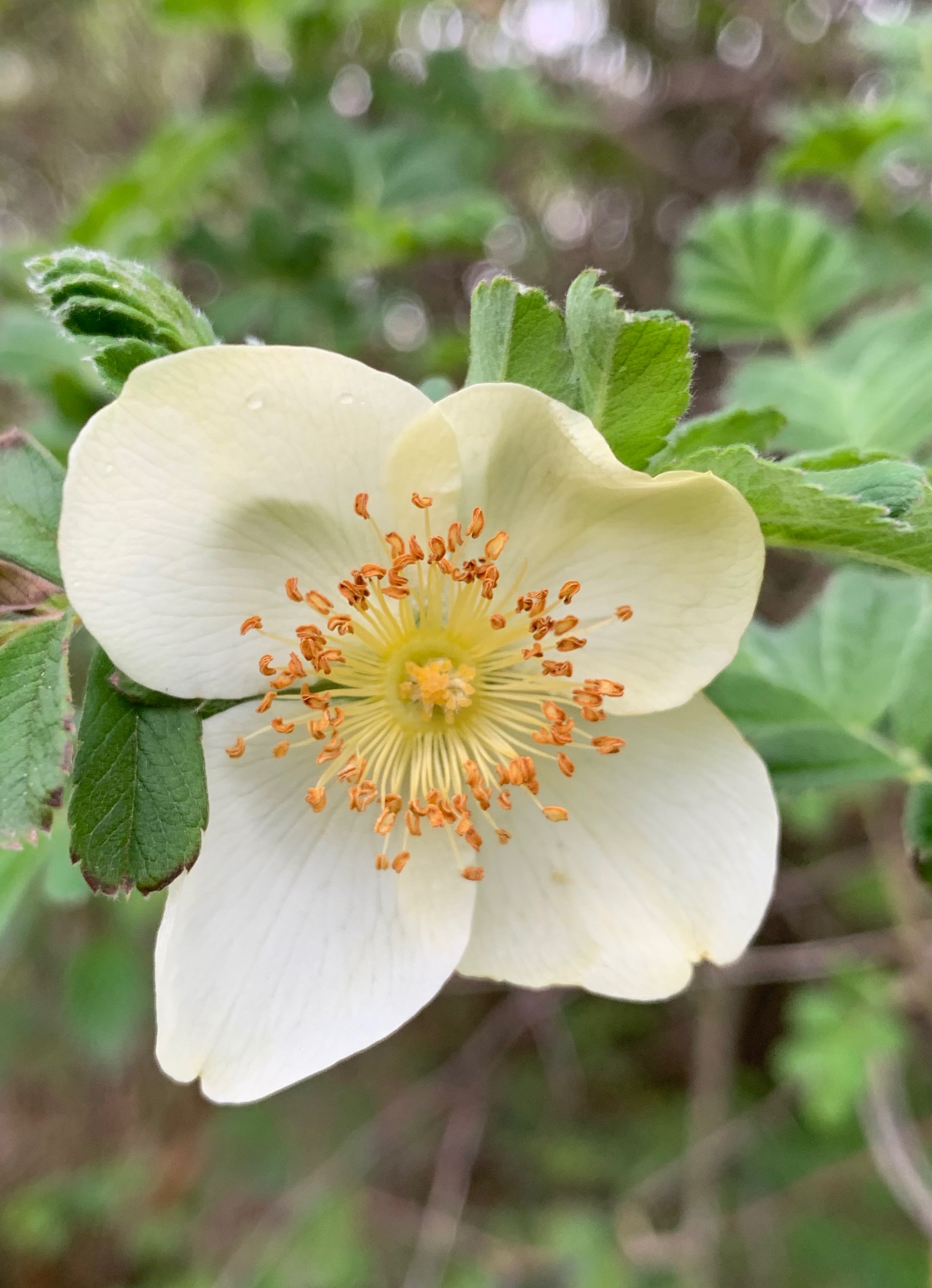
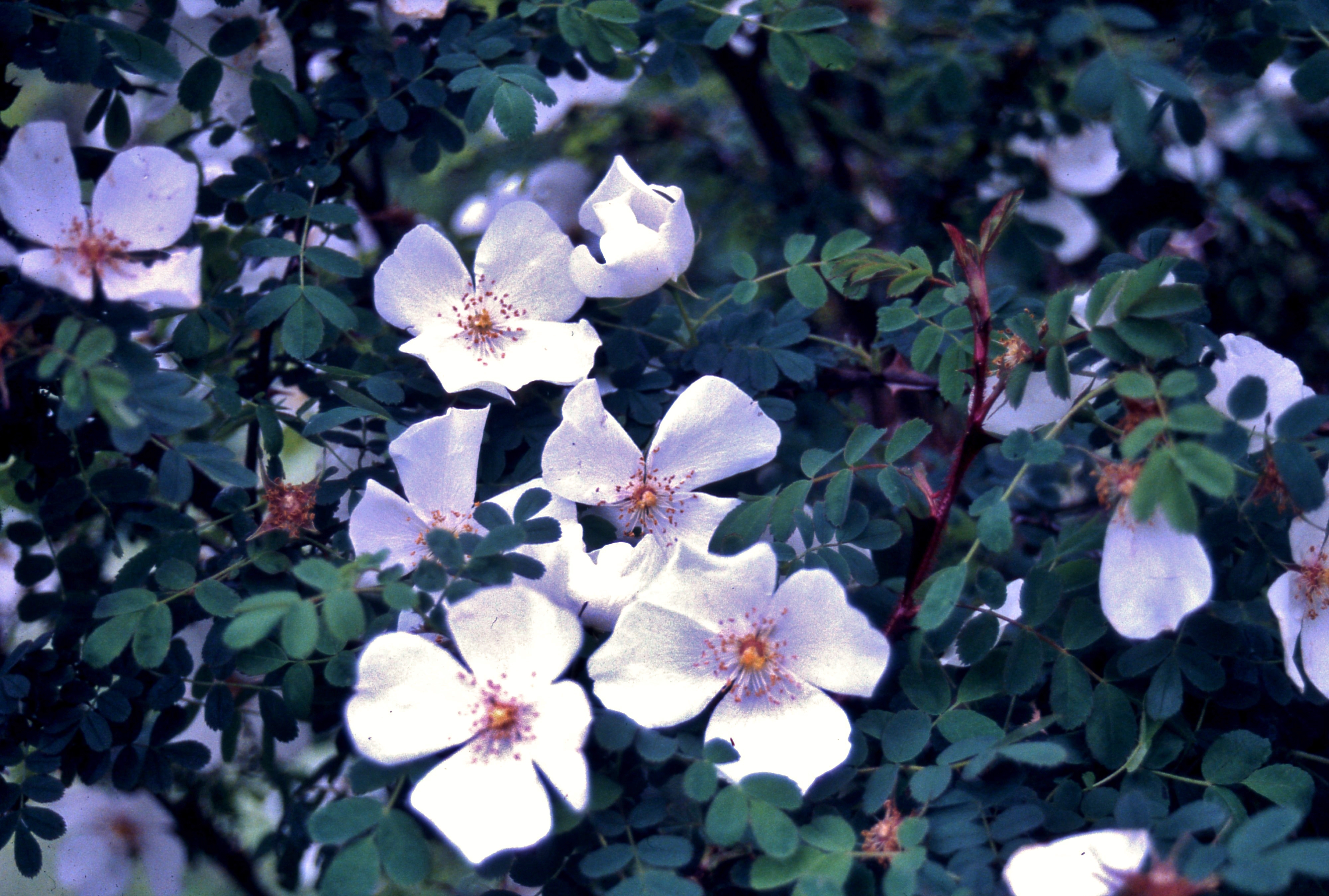
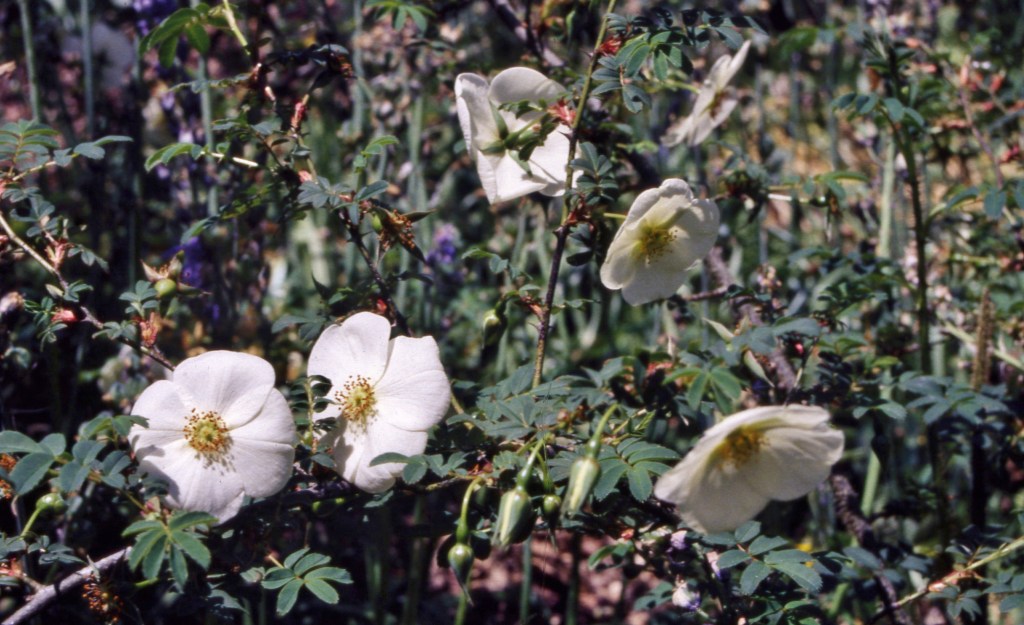
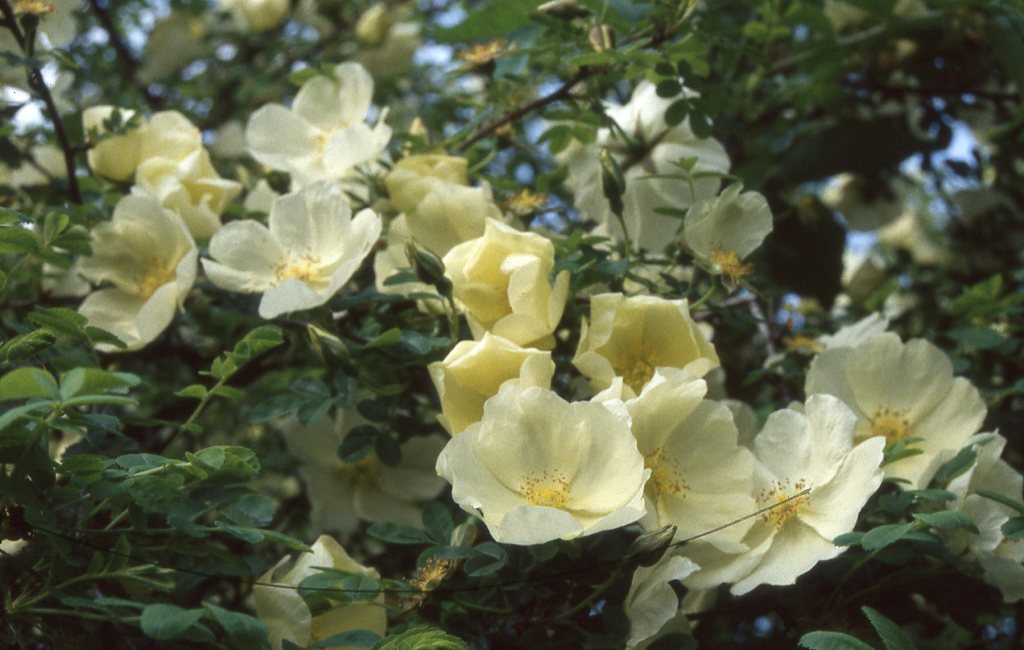
Its one consistent character is that it is the only rose in the entire genus with 4 petals, rather than 5. Thus in flower it is easily identified; five petalled flowers in the wild are very rare.
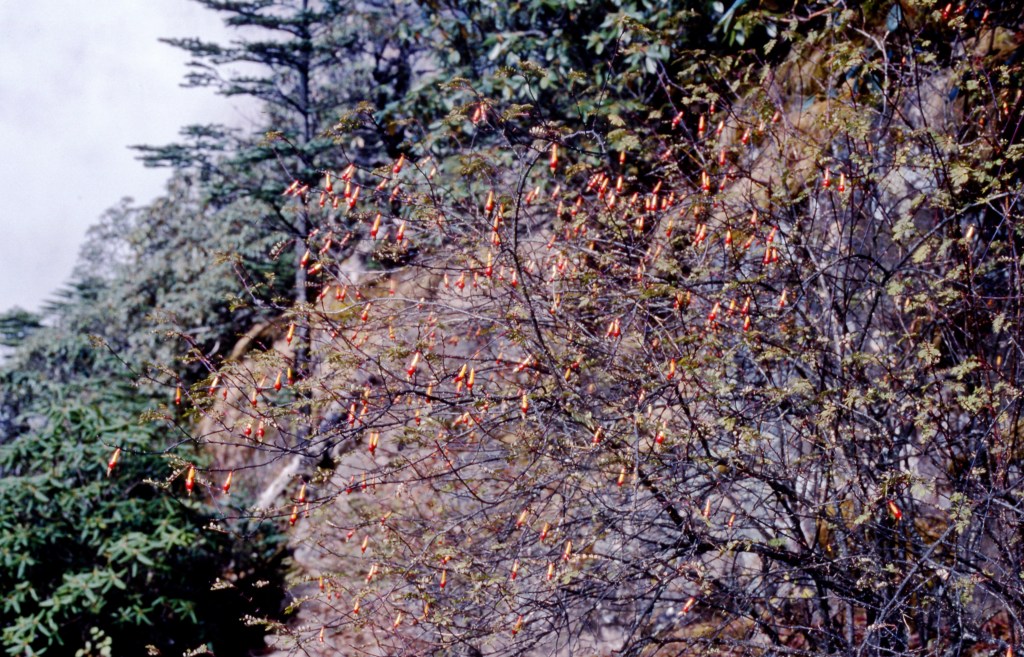
I have seen R. sericea some 4 x 4m growing lushly at low altitude in the warm Paro valley in Bhutan and 1 x 2m at 4000m in the Wumengshan in NE Yunnan, scrambling into Rhododendron lacteum at the tree line.
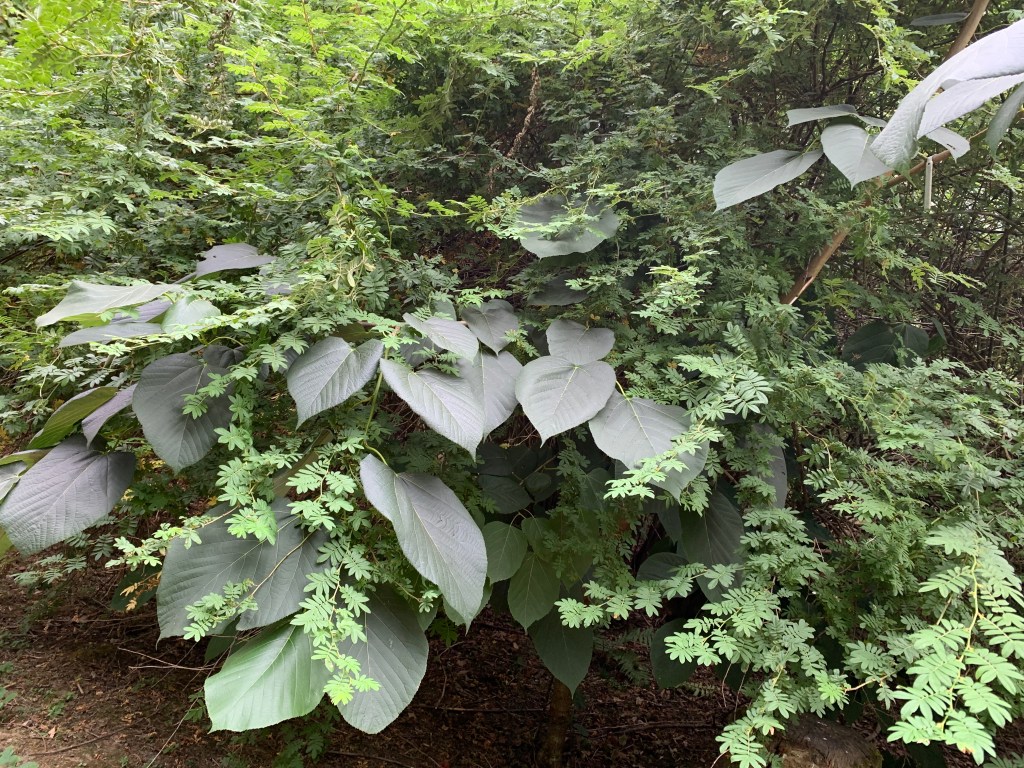
Curiously, it seems to hold to its wild habit in cultivation, with the more compact high altitude forms ignoring the easier life in the garden and more or less modelling their character in nature. And by contrast the softer low altitude forms sprawl freely across the countryside with their natural vigour. I have a plant in the arboretum now 5m high x 6m across.
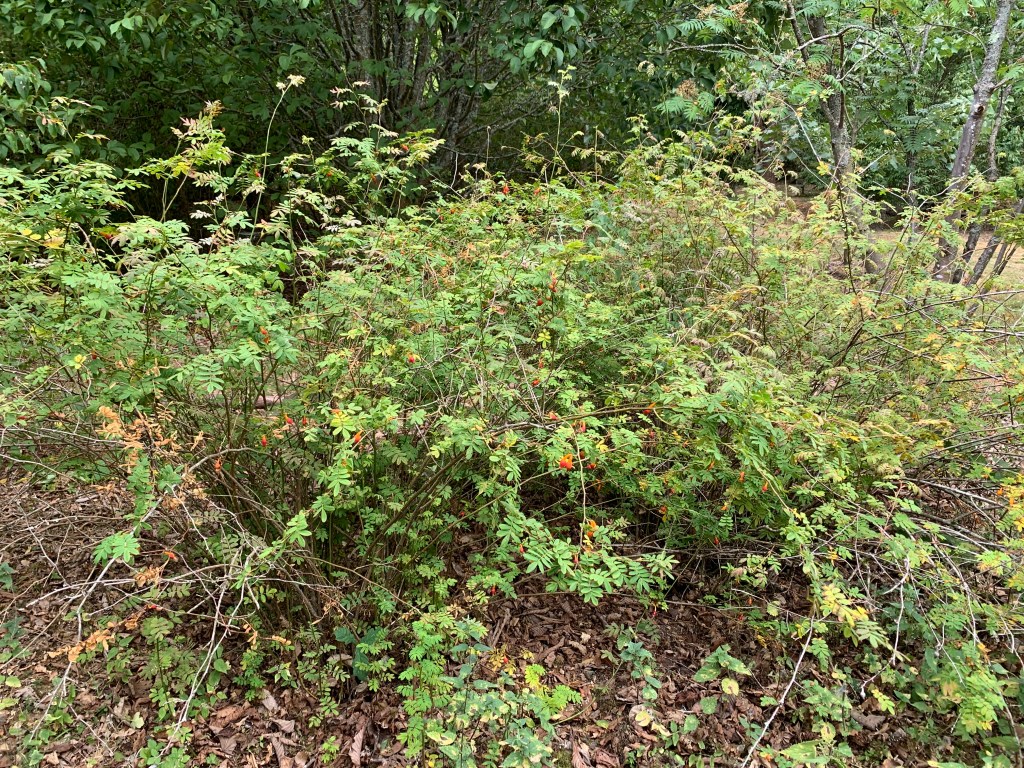
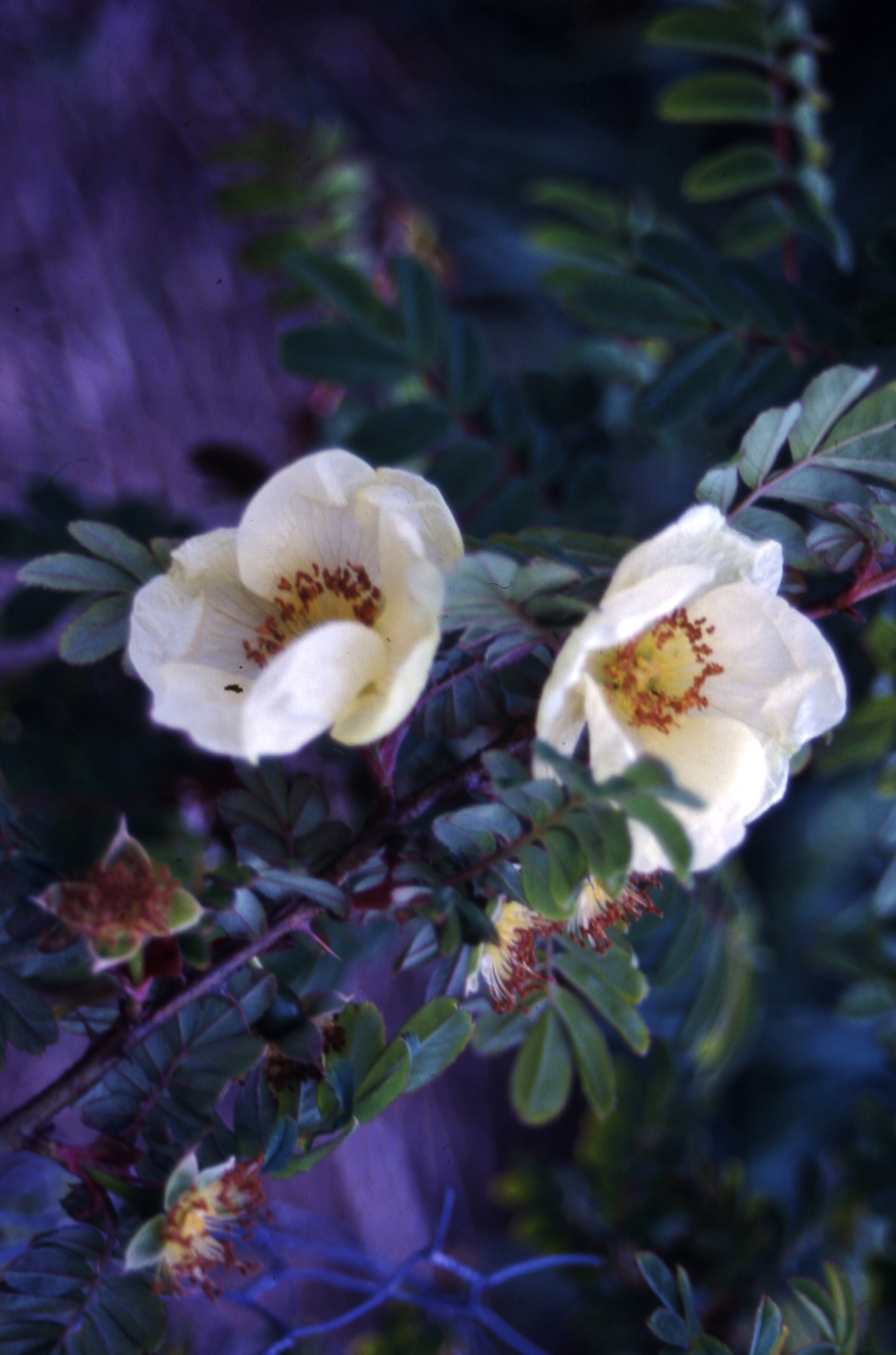
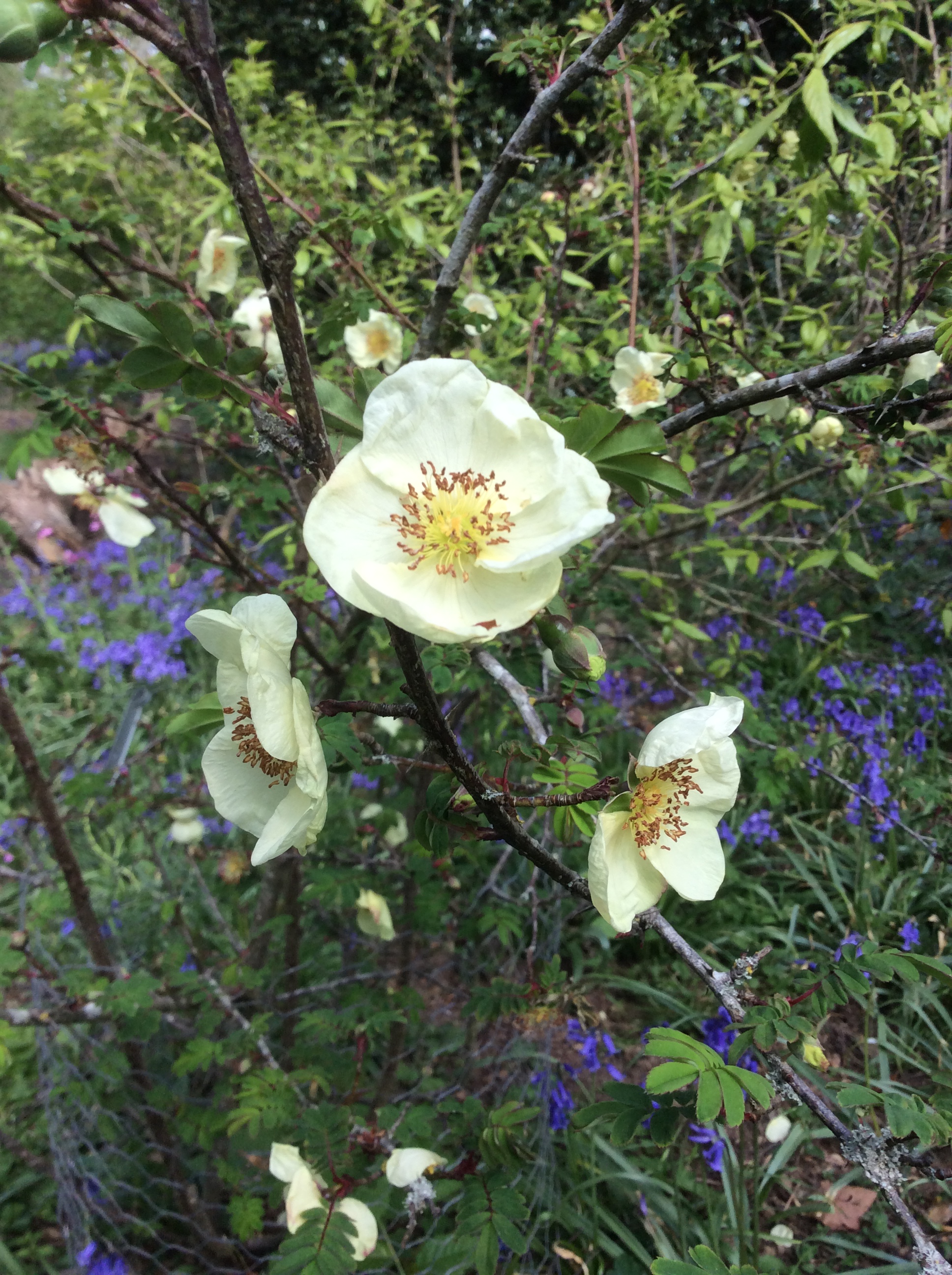
Few roses seem to maintain their habits from the wild in cultivation, but R. sericea does, as these two twenty-year old plants indicate. I recall collecting seed in the Savoy Alps from Rosa pimpinellifolia, creeping charmingly among boulders, a lovely wandering ground hugging plant. It was when its seedling reached 3x3m in the garden that I realised how far I had misconstrued its appreciation of the cosy comfort of cultivation. It was no longer an alpine plant. I suspect seed-raised specimens of pimpinellifolia from the cliff scrub of the UK’s west coast would do the same.
Many forms of R. sericea are open and upright, with long rangy stems, showing off their flowers and fruits perfectly. Others are more spreading and leafy, and still others, usually from altitude, stiff, thin twigged, and compact – alpine.
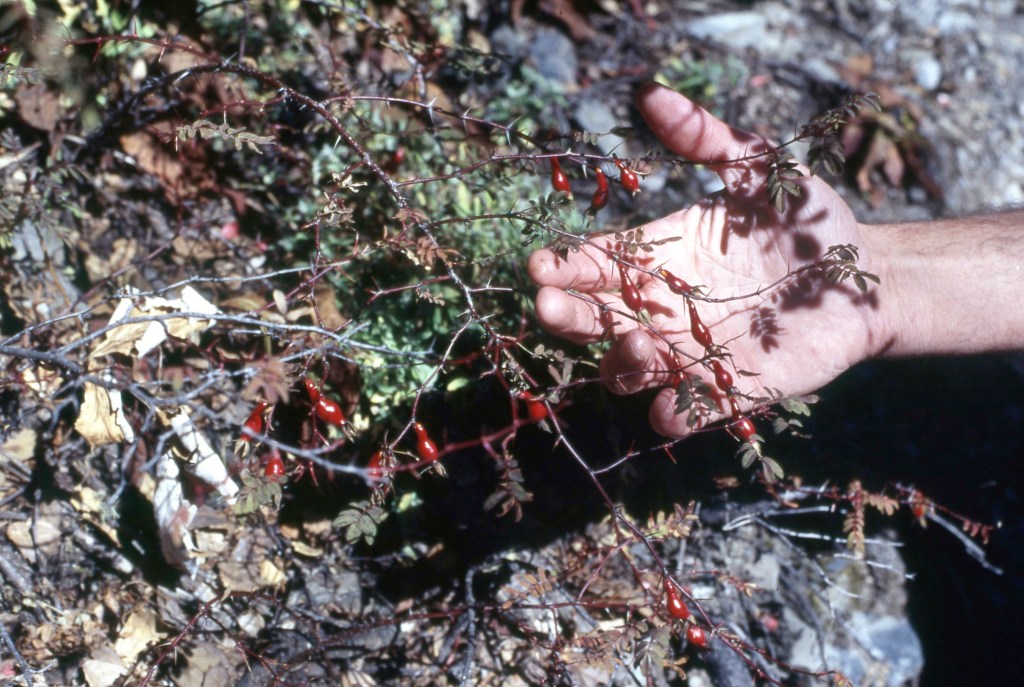
The light abundant fernlike foliage, sometimes a blue or sea green, prominently veined, with a wide range of leaflets from 5 to as many as 17, is a good, light, elegant counterfoil in the garden to heavy evergreens like hardy hybrid rhododendrons and camellias.
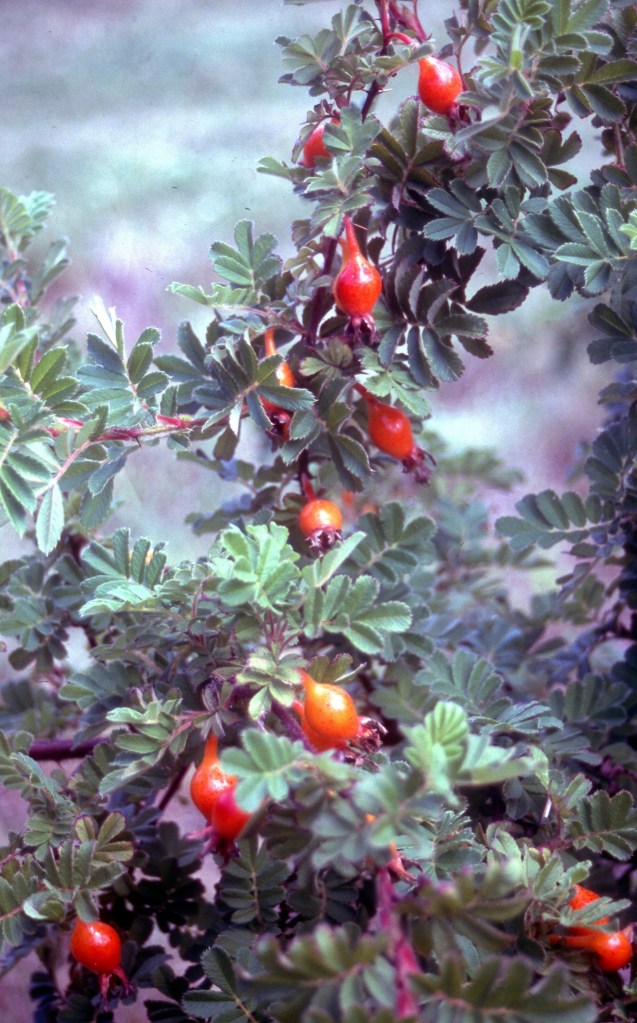
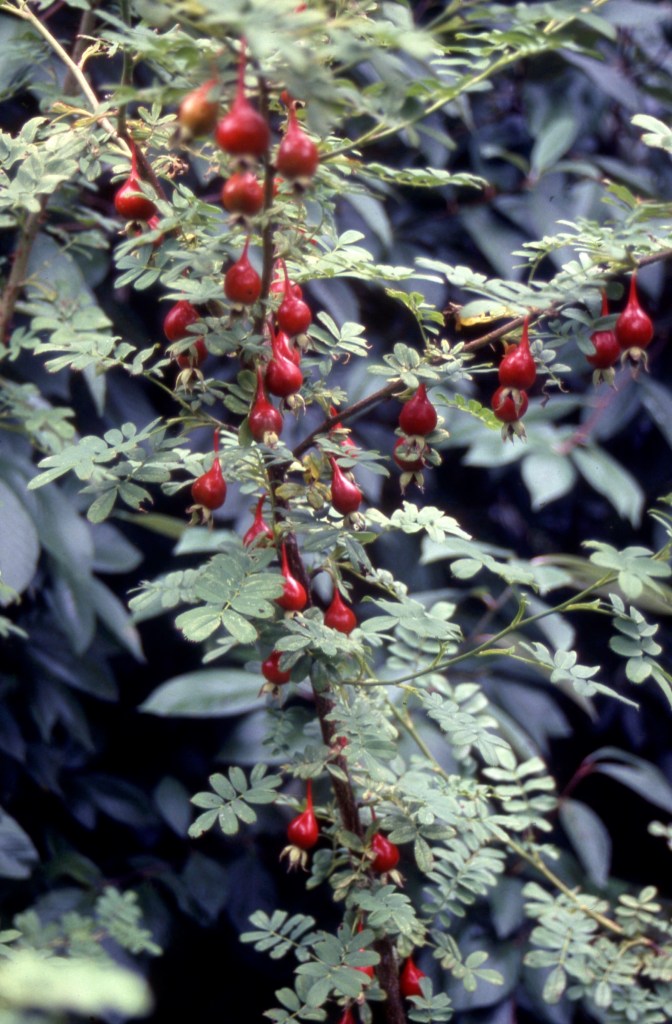
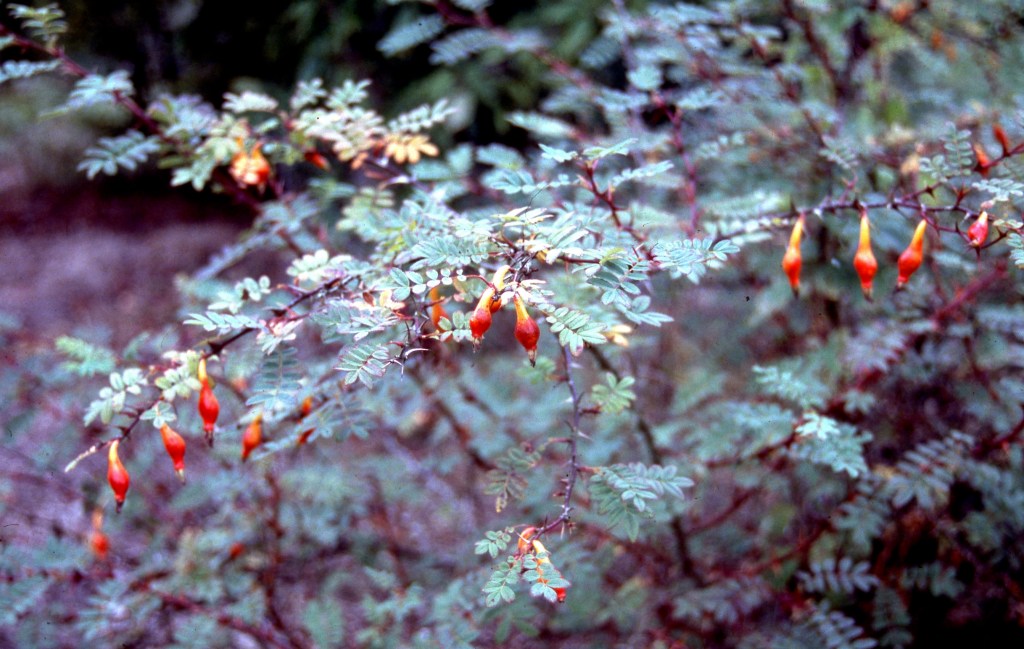
Foliage, whether an attractive fresh green, or a more glaucous sea green, can earn its keep even when there is no flower or fruit – for about 8 months of the year –and play a pleasing role in the garden landscape.
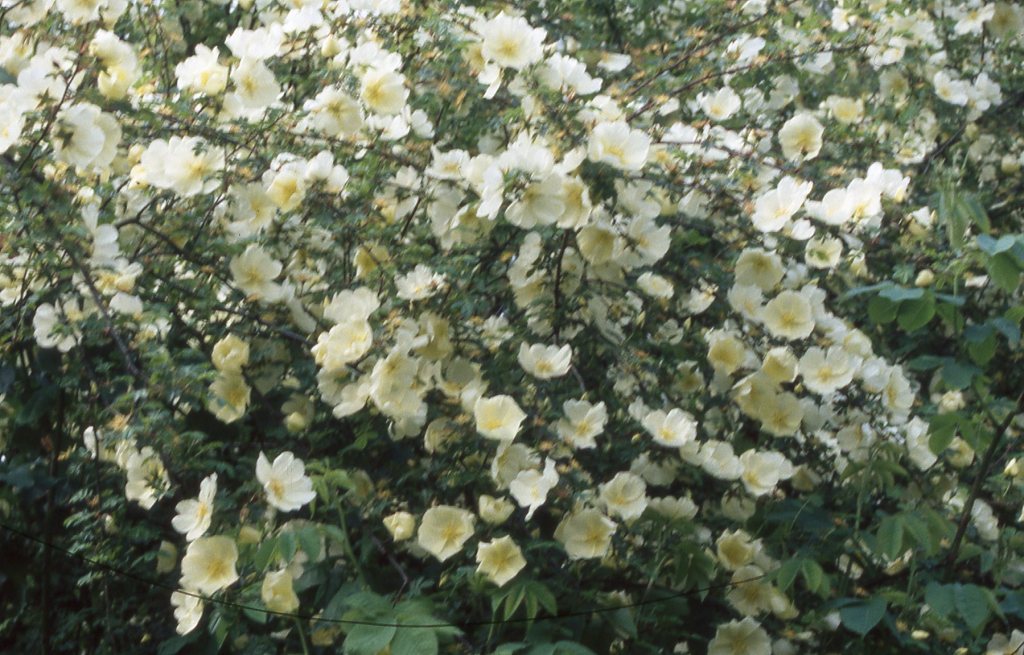
The flowers of R. sericea are borne singly or in pairs, on short laterals, and therefore scattered across the bush, so in flower it is not an impressive mass of colour. However, flowering in May, it has the advantage of few competitors in other roses, and the charm of its individual flowers (as well as its heps), earn it a place in gardens.
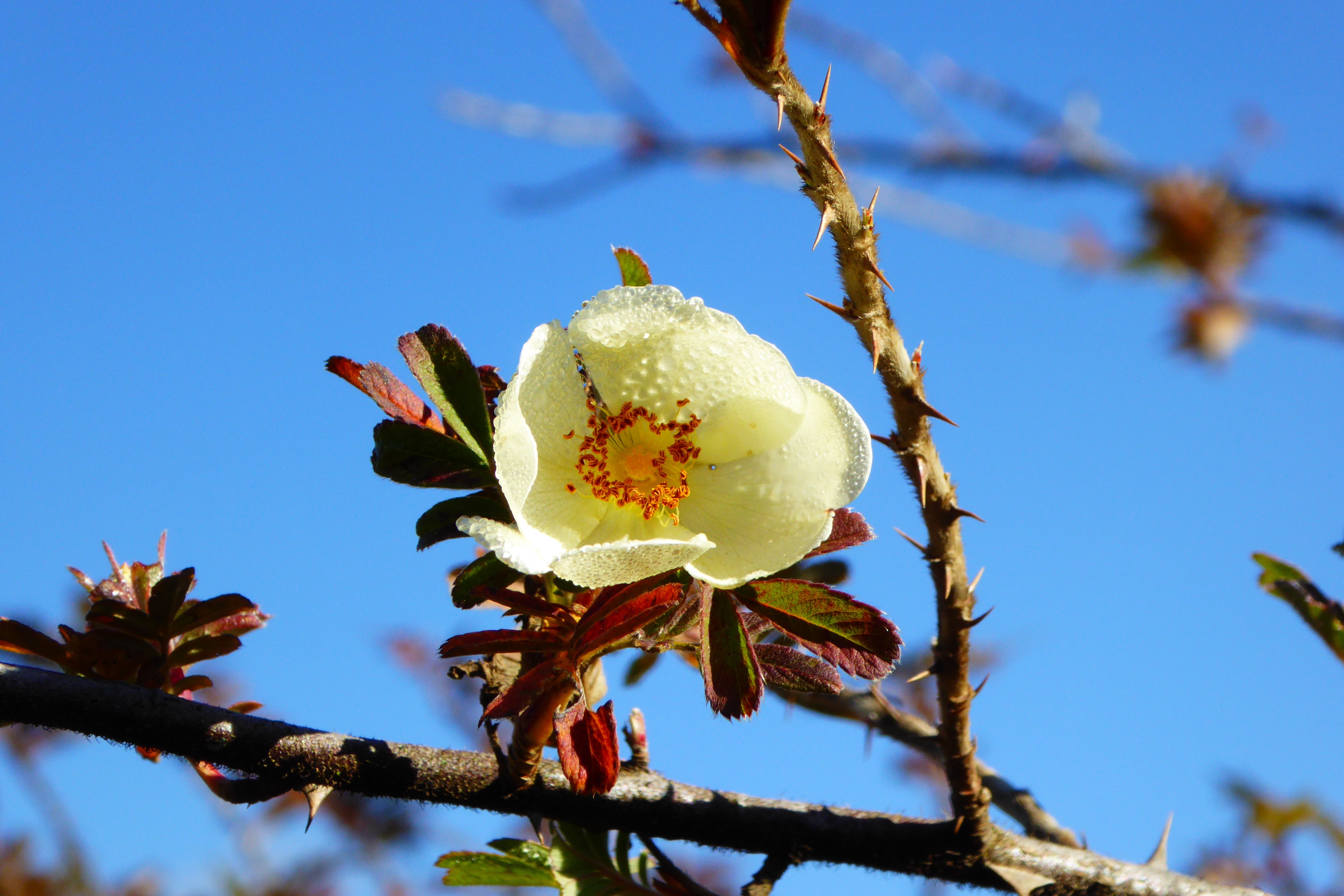
The term ‘sericea’ derives from the Latin ‘serica’, meaning ‘silken’, presumably referring to the soft silky down on the translucent petals, particularly those with a cream or pale yellow cast. Some petals overlap to form a bowl, with the texture of wrinkled tissue paper.
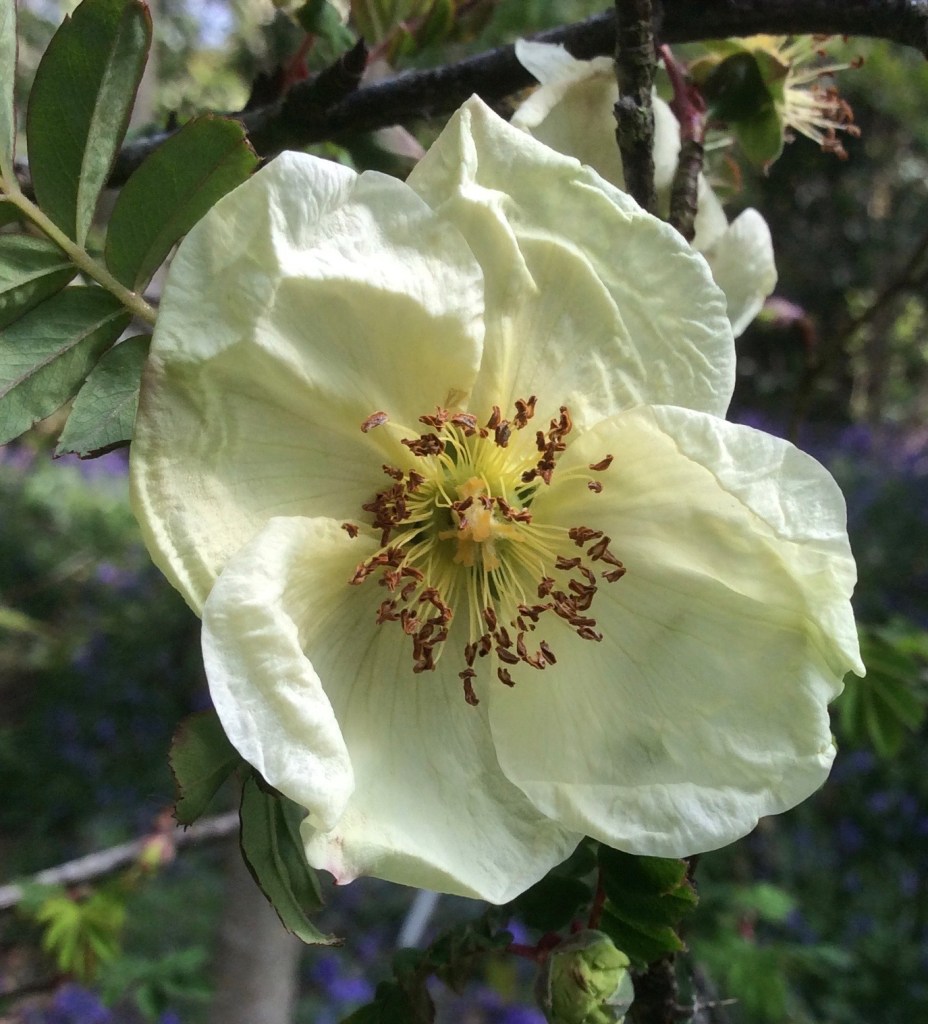
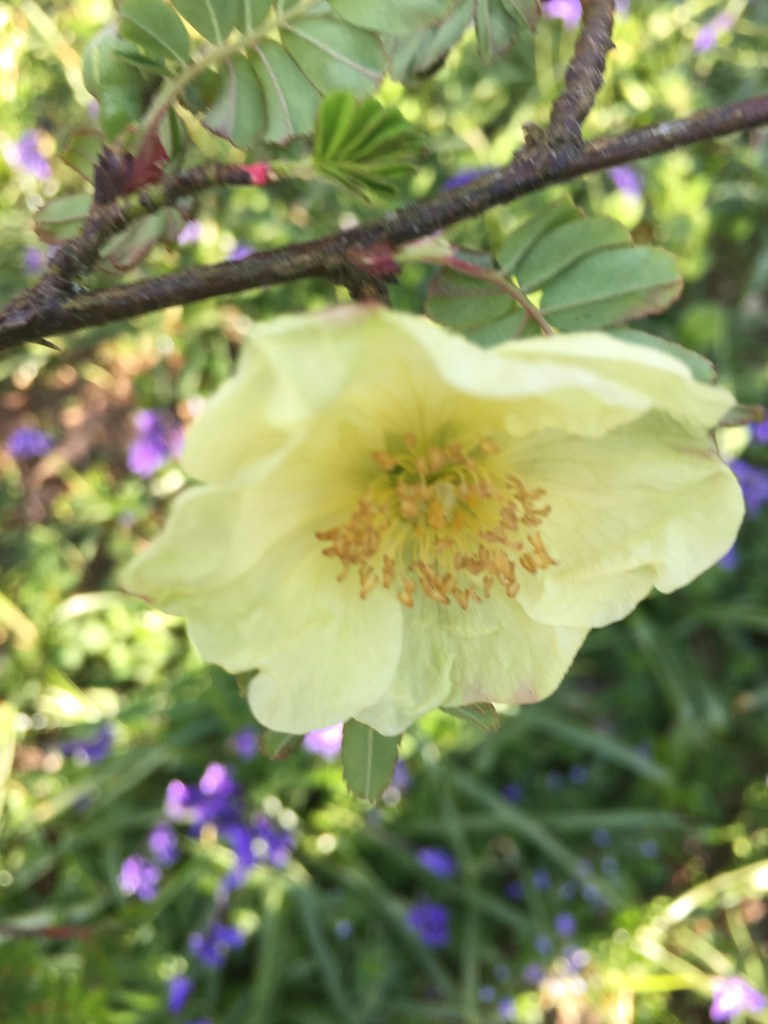
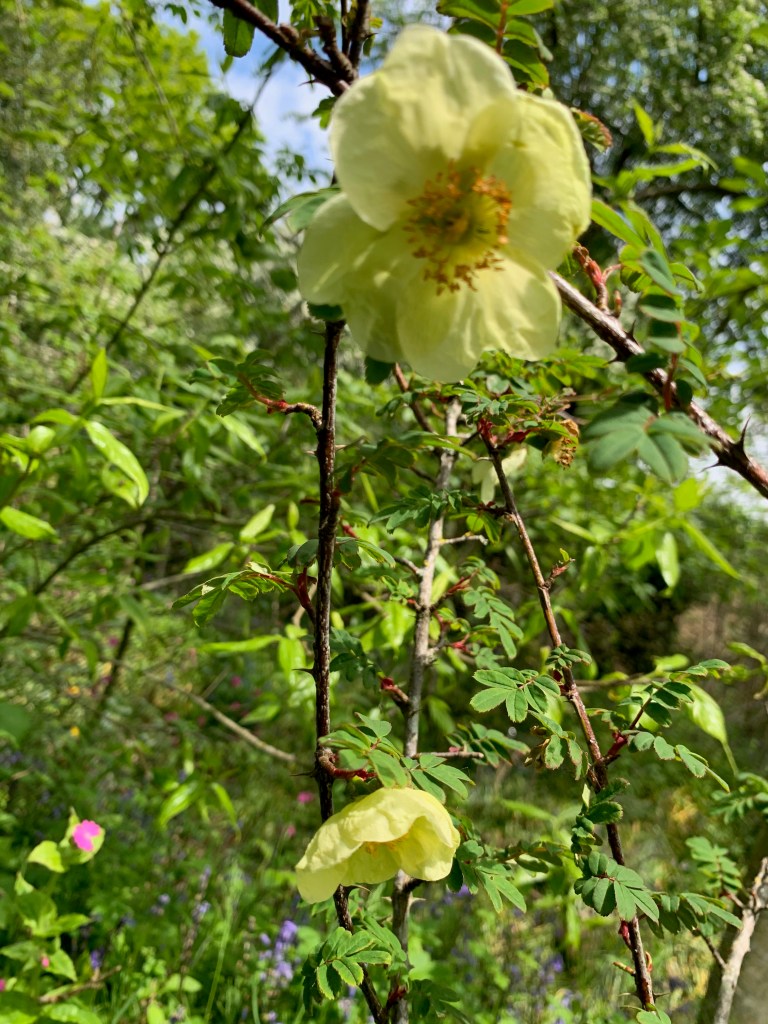
Flower colour ranges from a pure white, through cream, to a nice yellow. Some flowers have petals separated, with a bi-lobed effect; one form I’ve encountered has recurved petals, opening with a green eye.
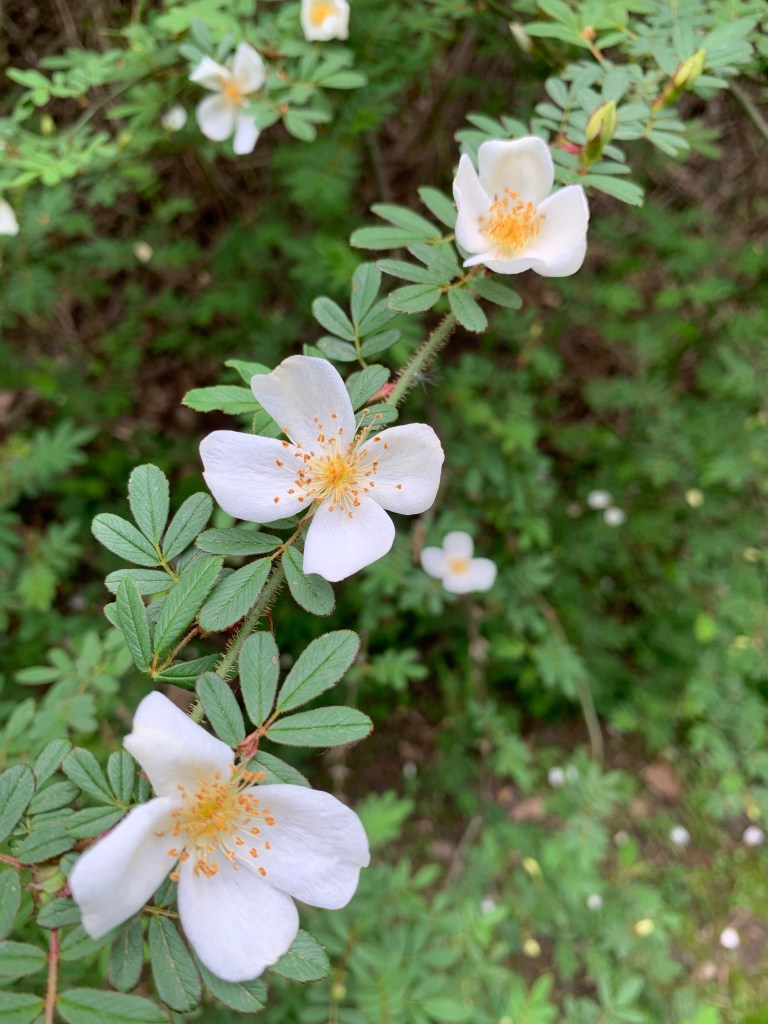
Rarely, a few plants have flowers of a true yellow.
One sericea hybrid I’ve come across, called ‘Hidcote Gold’ is a free-flowering yellow with five-petalled flowers, but shows the influence of R. sericea in its armature.
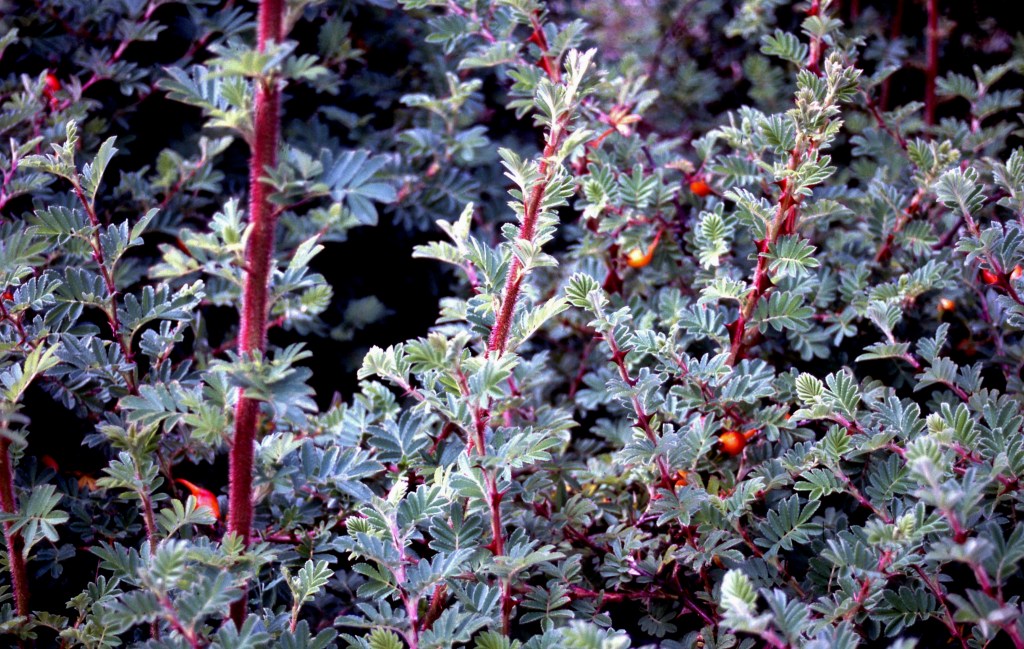
The armature of R. sericea is equally varied, with prickles either curved or straight and sometimes with fine bristles.
Plants bearing the celebrated large triangular translucent flattened red prickles that line the young shoots are known as R. sericea forma pteracantha, ‘winglike’.
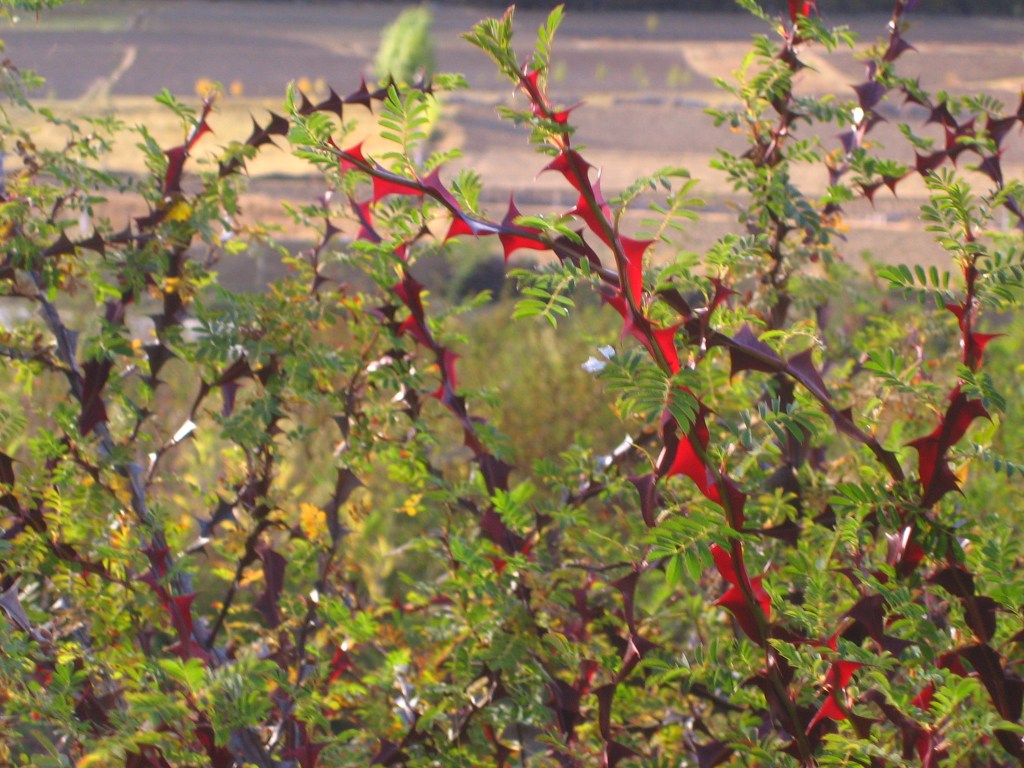
These turn brown/grey and opaque with age; some gardeners, happy to sacrifice the flowers, prune hard each year to encourage a display of these young red prickles which can be quite dramatic.
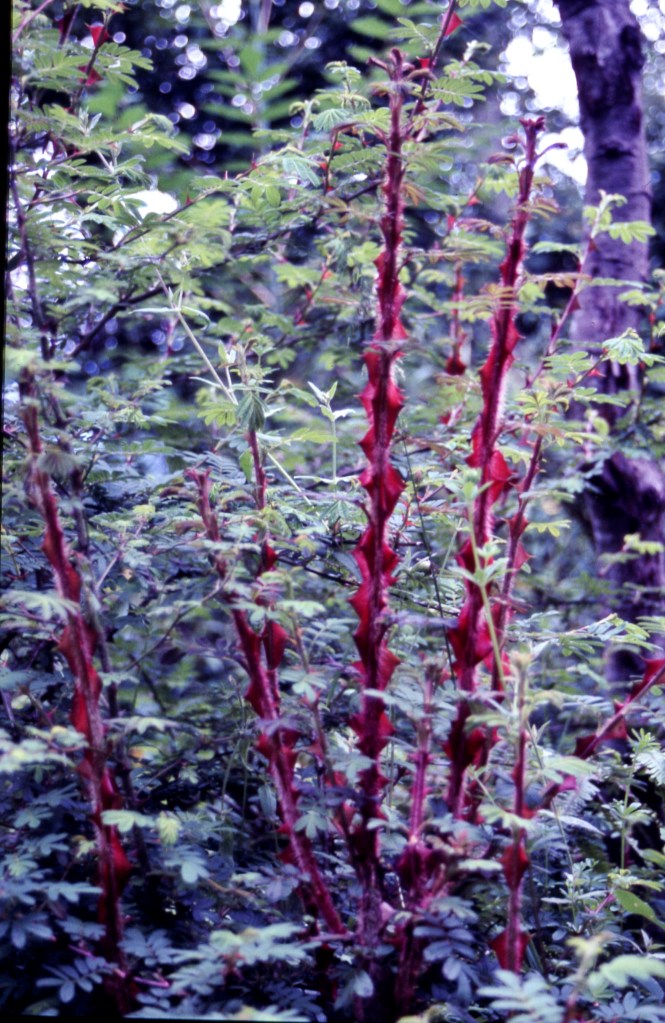
In the wild, forma pterocantha appears as a random feature, and batches of seedlings yield some plants with the winged red prickles, some without.
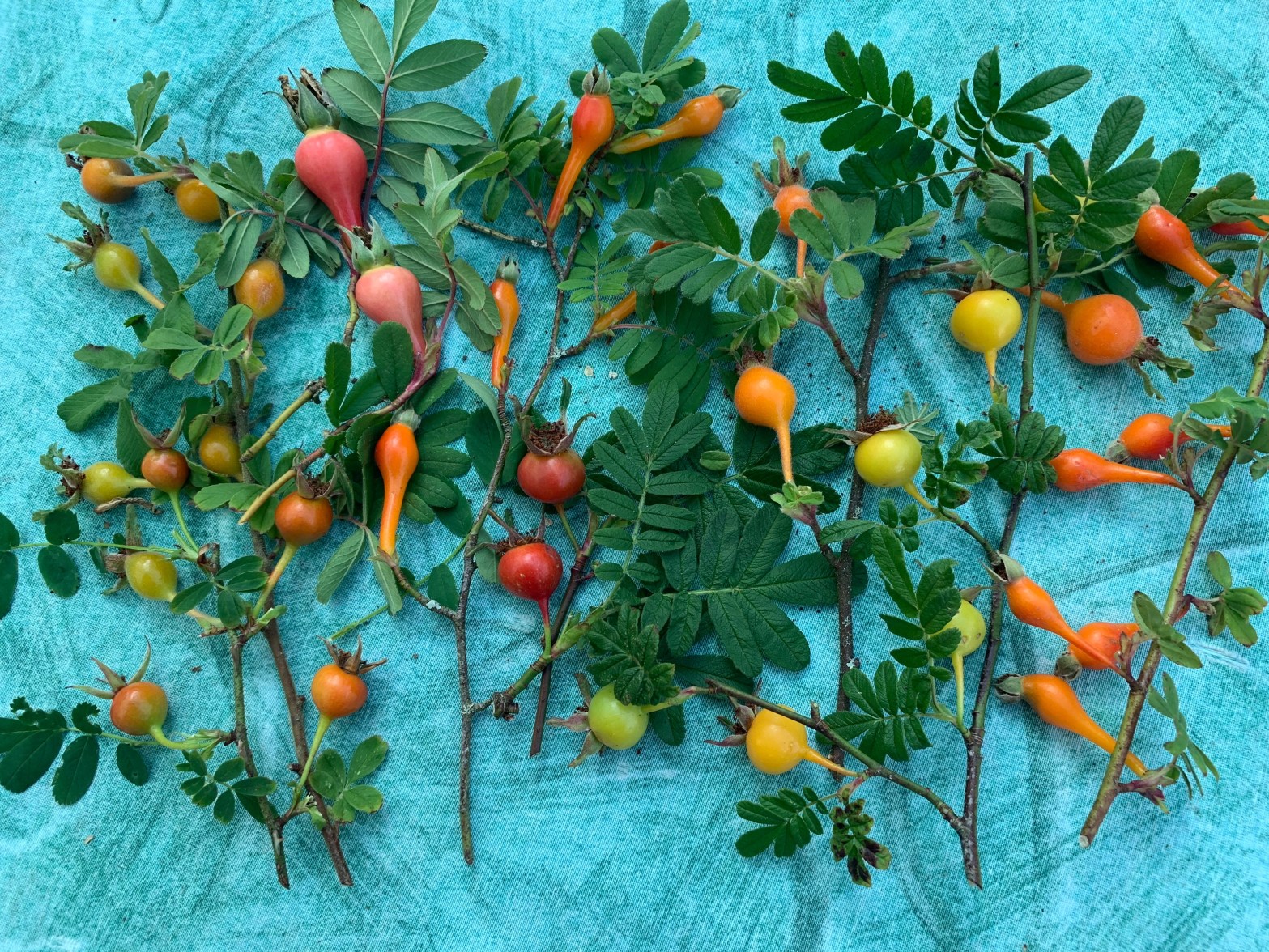
But perhaps it is the fruits within the species R. sericea that take the biggest prize for variety. It would take a whole book to describe the range in detail. It is much easier to show images revealing the remarkable spread of hep shape, sizes and colour.
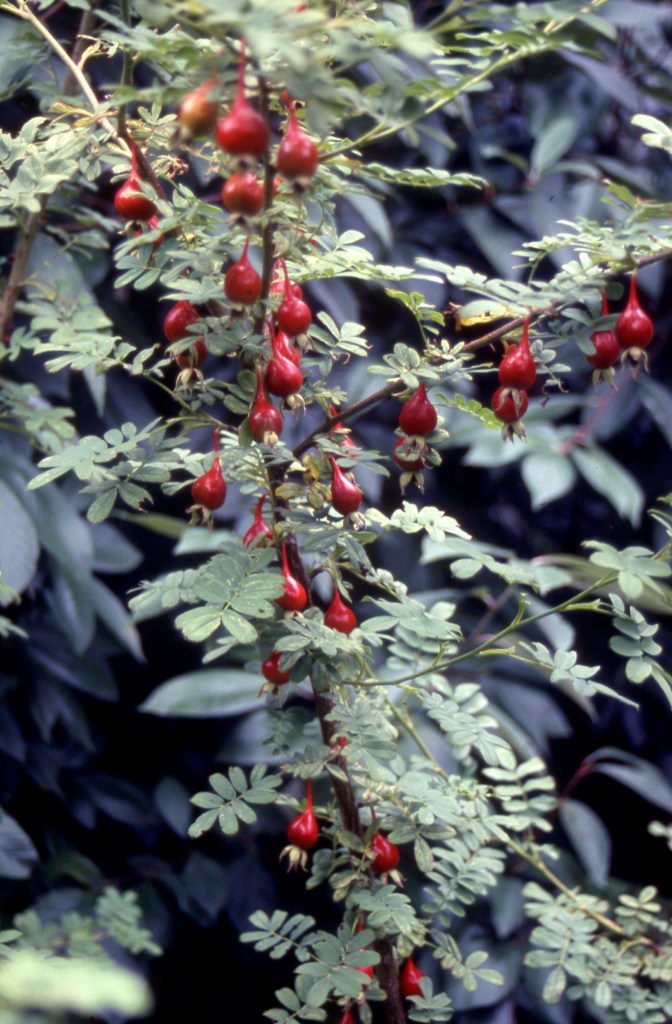
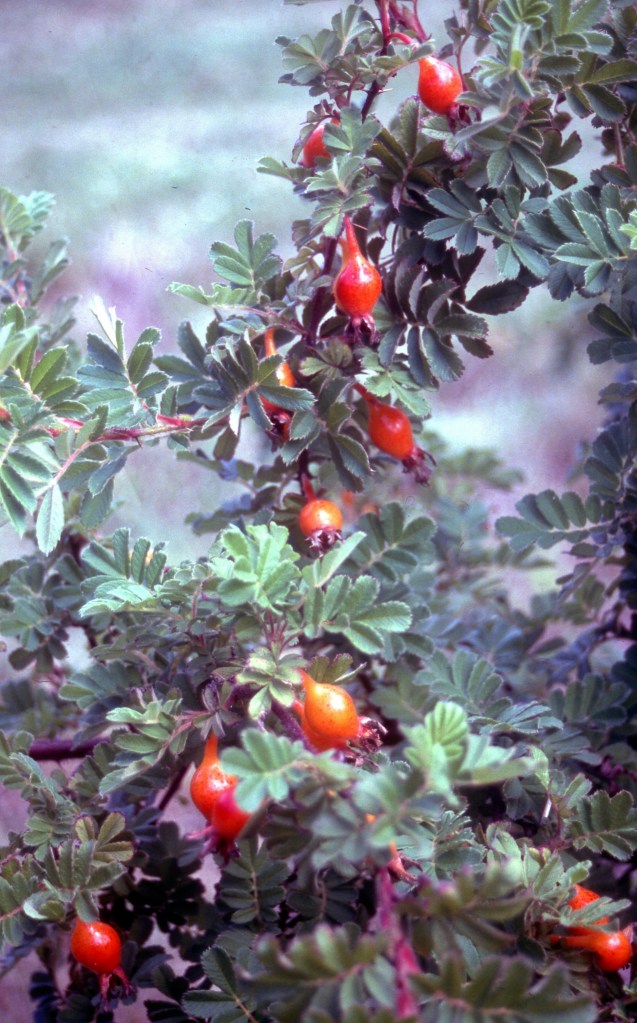
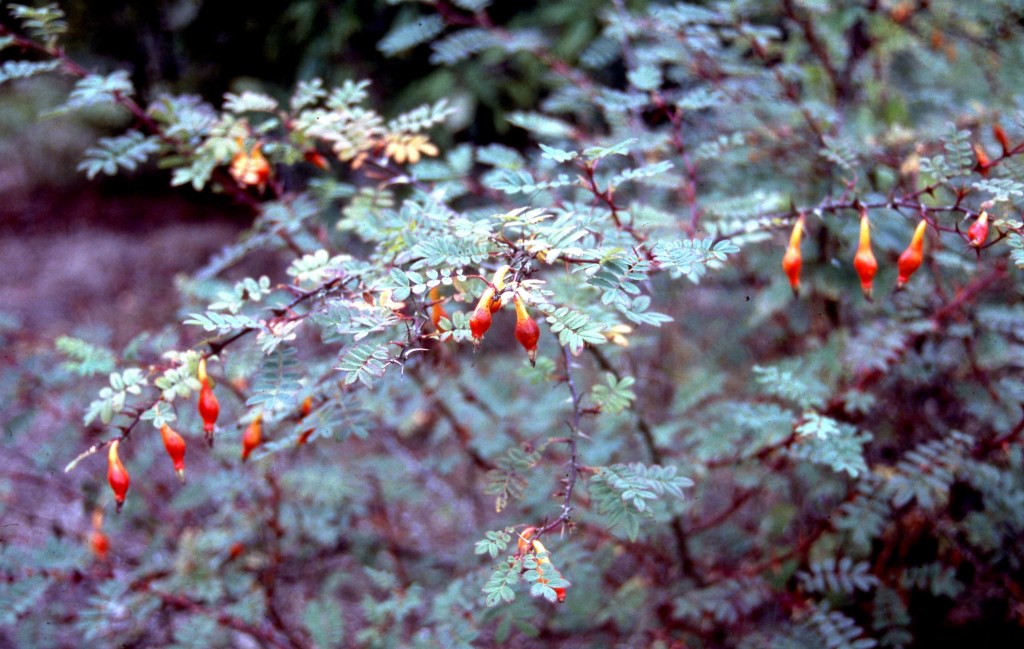
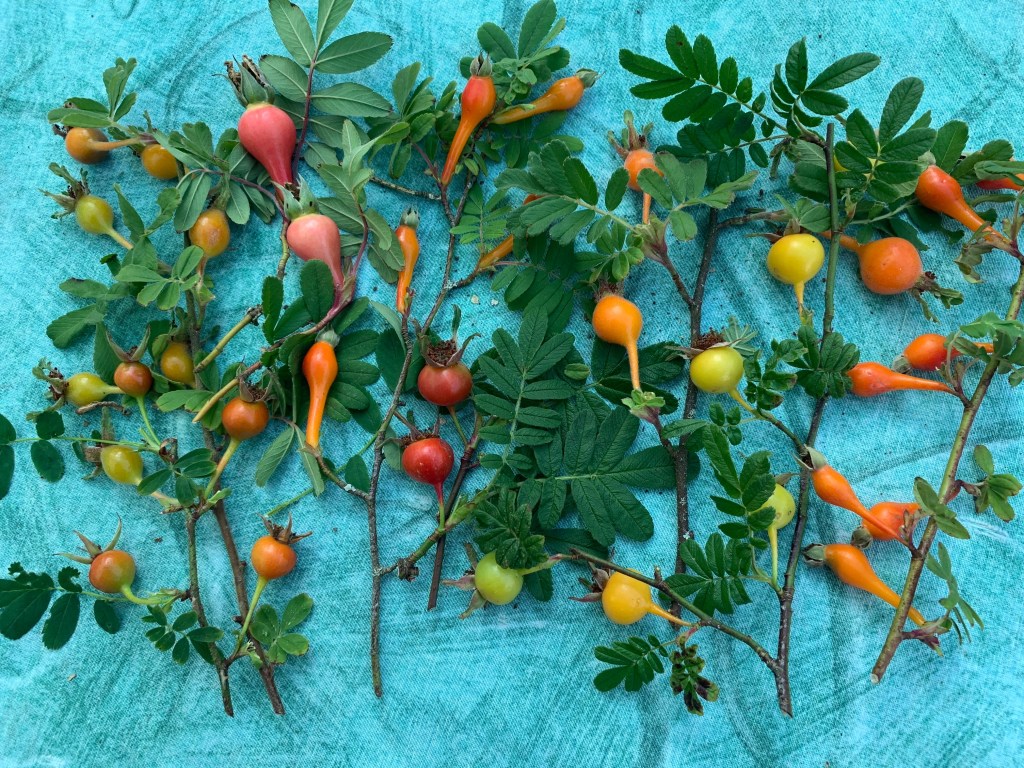
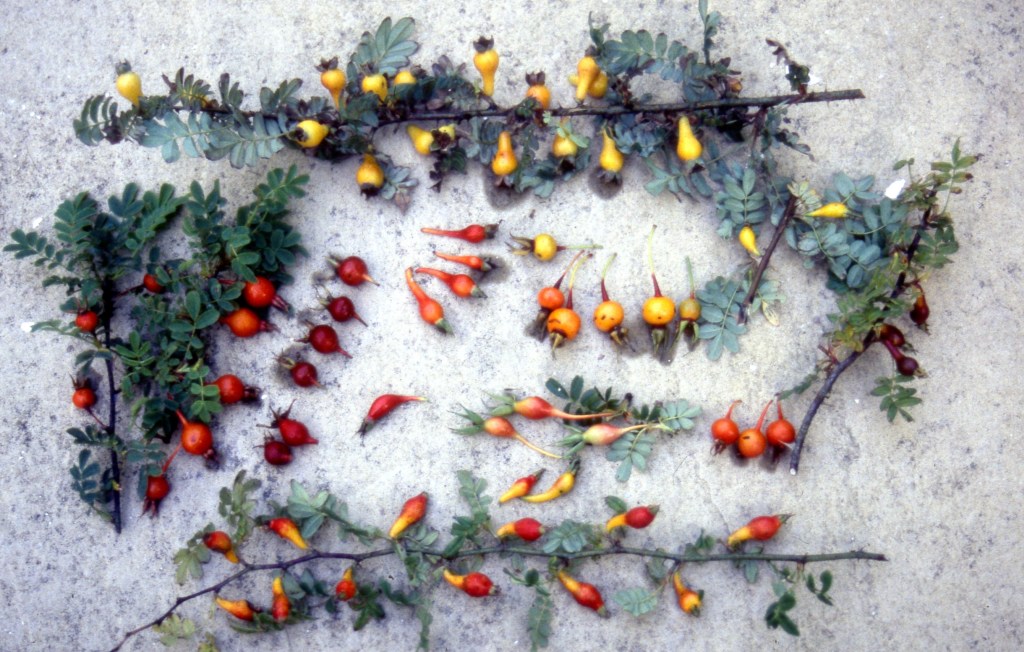
One of the great lessons of seeing plants in the wild is seeing the variation of characters within a species, and from a horticultural viewpoint, identifying specimens of ornamental merit.
Growing wild plants from seed will often reveal this variety ,and selections can then be made at leisure of the ‘best’ to embellish our gardens. Rosa sericea is perhaps an extreme example of this, with its astonishing variety of habit, growth, armature, foliage, flowers and fruit.

