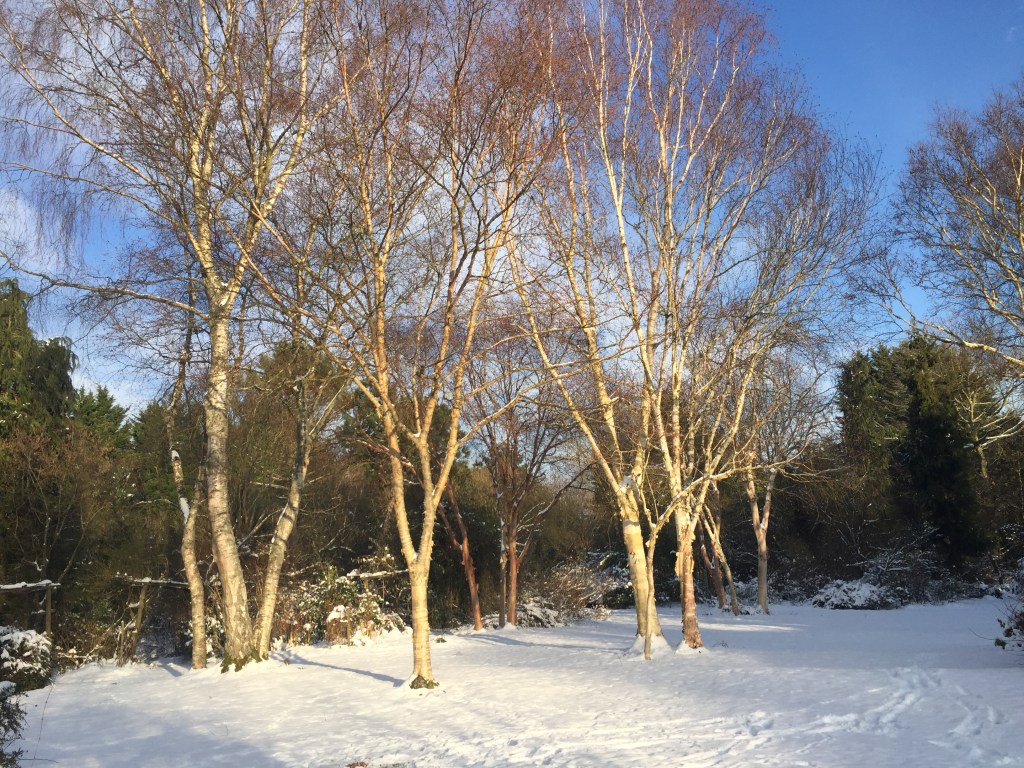
Coleridge referred to Betula pendula as ‘most beautiful of forest trees, the lady of the woods’. Its elegance, pendulous grace and white stems make it one of the most loved of Britain’s native trees. A low December sun, picking out the delicate tracery of its fine twigs, and highlighting the white bark running up into the top branches, is a joy to see in the dark dog days of winter. It’s why we should always plant these beautiful trees on the north side of the house, so we are looking at them with the light as it illuminates all the detail of twig and trunk: much better than looking south to see them silhouetted against the winter light. Pendula has a delicacy that few other birches can match; for example, three closely related subspecies, ssp mandshurica, japonica and szechuanica, have an altogether coarser quality. Its graceful weeping habit is taken to perfection with its cultivar ‘Tristis’, which hangs down its tall slim tracery of branches vertically like a curtain that sways and dances and revels in the wind.
Along with the ‘best’ forms of its sister native species, the polymorphic Betula pubescens (which spreads in various, mostly horticulturally-inferior forms, right across Europe) Betula pendula has long held court as the favoured choice for gardens and arboreta in Europe. American birches, Betula lenta (the first ‘exotic’ species to be introduced, in 1736) and Betula alleghanensis, papyrifera and populifolia, brought in later in the 18th century, could not match B. pendula for beauty, and were not widely planted. Of this group B. nigra is probably the most popular, but tends to be short-lived and vulnerable to late frosts.
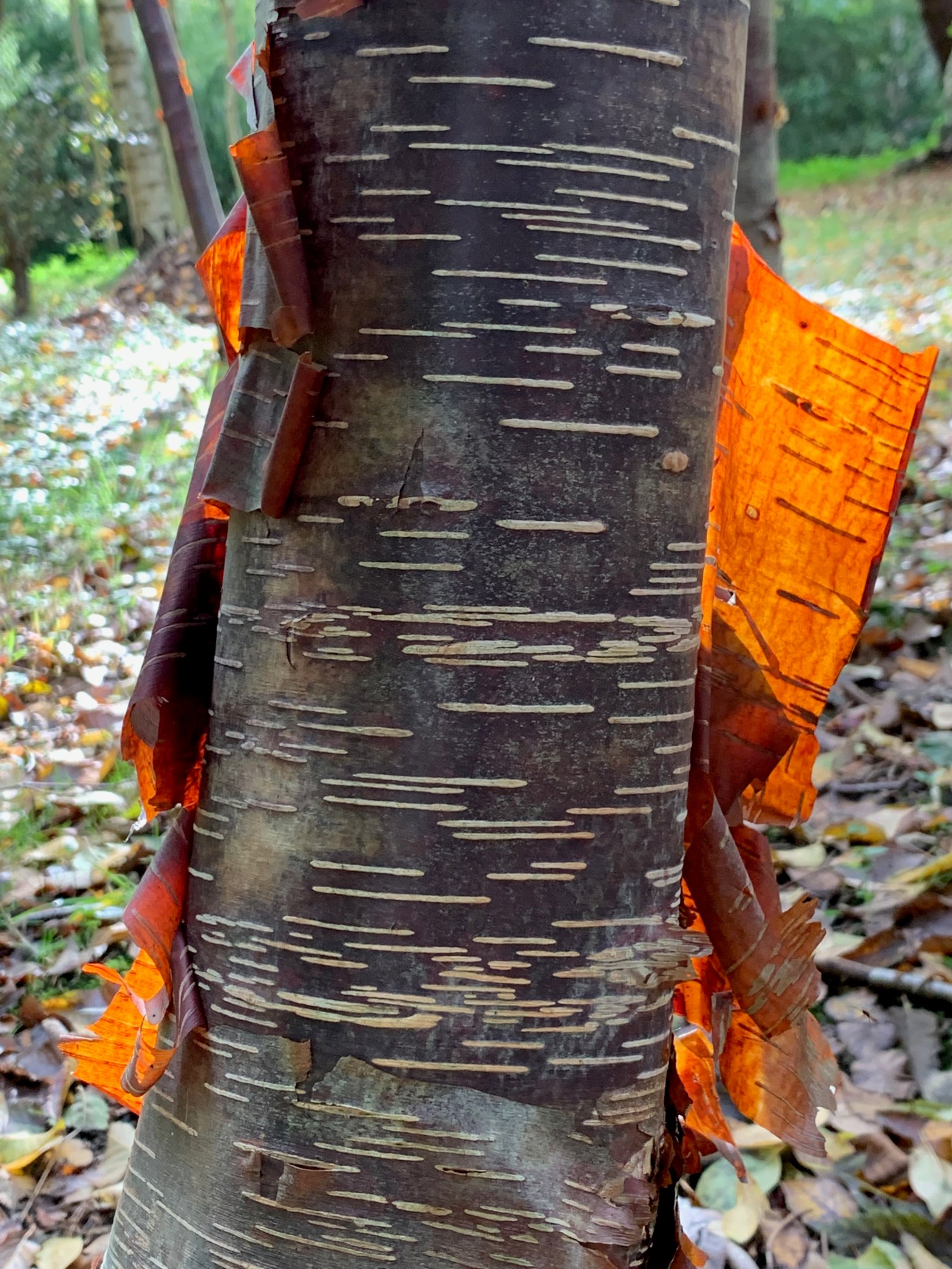
The ornamental birches that today really rank as worthy consorts of our ‘Lady of the Woods’ are the many forms of the ubiquitous B. utilis, from Asia. Their stems, which are the species’ major attractive feature, offer a most extraordinary variety of colour: a range from white, cream, buff, brown, mauve, purple and rich ruby to something close to black, often with an array of white lenticels which enhance the dark barked forms and/or a hyaline overlay of smoky grey.
B. utilis comprises 4 subspecies, ranging from ssp occidentalis in Afghanistan and N.W. Pakistan, ssp jacquemontii in Kashmir and environs, ssp utilis in central Himalaya and SE Tibet into W. China, and ssp albosinensis in Sichuan, Hubei and north into Gansu. The lighter white, ivory and cream-barked forms predominate in the west of the range, with a transition to dark barks in Bhutan and east into China. The line between subspecies is indistinct geographically, and one subspecies runs irregularly into another, with intermediate forms.
In the early 20th century Wilson’s and Forrest’s Chinese collections of B. utilis began to stir interest, but it was after 1980, when China reopened to botanists and gardeners and Schilling and Lancaster explored the Western Himalaya in Nepal, that the ornamental qualities of this highly variable birch species began to be widely recognised. By the turn of the present century, many seedling forms had been introduced and given cultivar names, and are increasingly proving to be popular as small- and medium- sized trees for the average garden.
I have been privileged to see some of these remarkable trees across most of their range in the wild, and to enjoy the sheer wonder of their varied personalities.
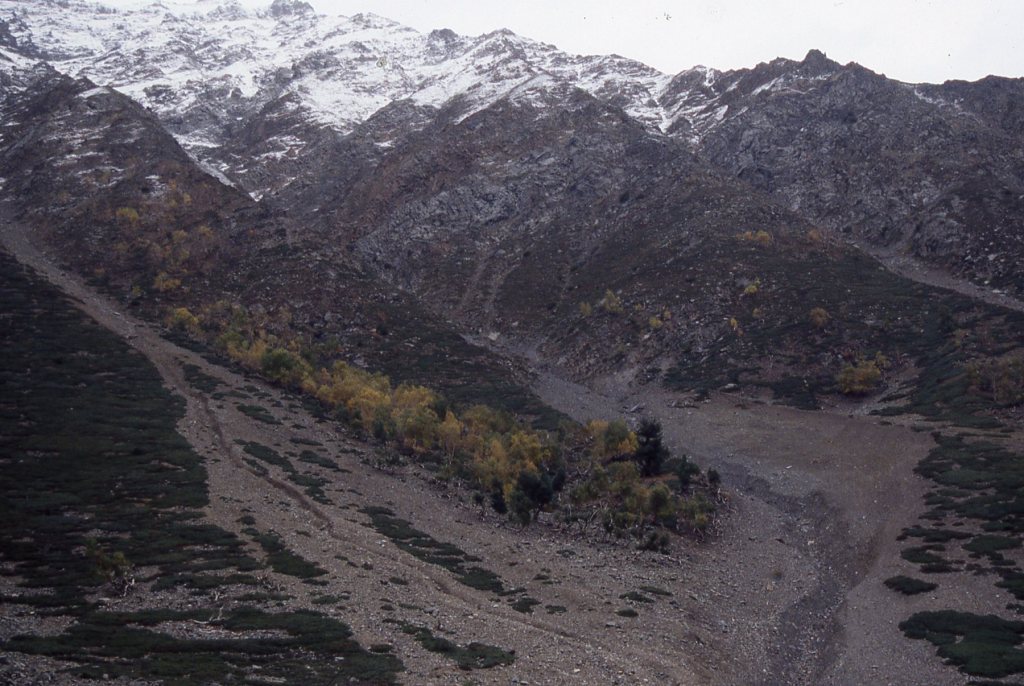
In far N.W. Pakistan, Betula occidentalis is scattered through the Hindu Kush, and the majestic grandeur of the Karakoram in conditions that at, say, 12000ft could only be described as hostile, with low temperatures and more than 2 metres of snow in winter, low rainfall in summer, on nutrient-free shifting screes.
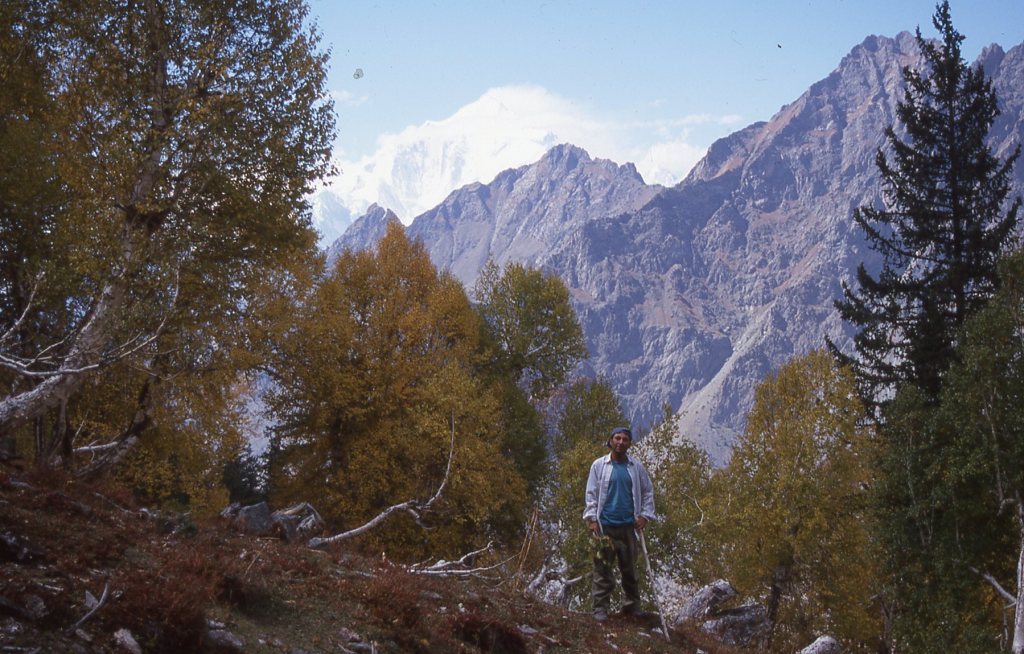
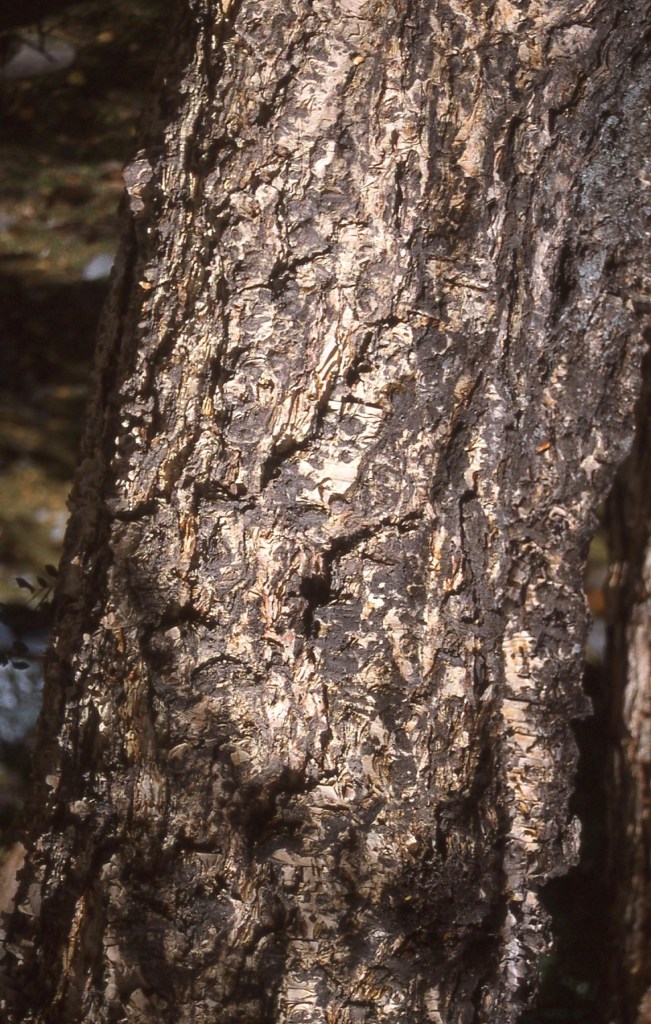
This may be why B. occidentalis is proving difficult to grow well in Kent! However, In more sheltered conditions at lower elevations, old trees can be found in the wild of 11-12m, with trunks up to a metre in diameter and a rough shaggy bark untypical of its relatives.
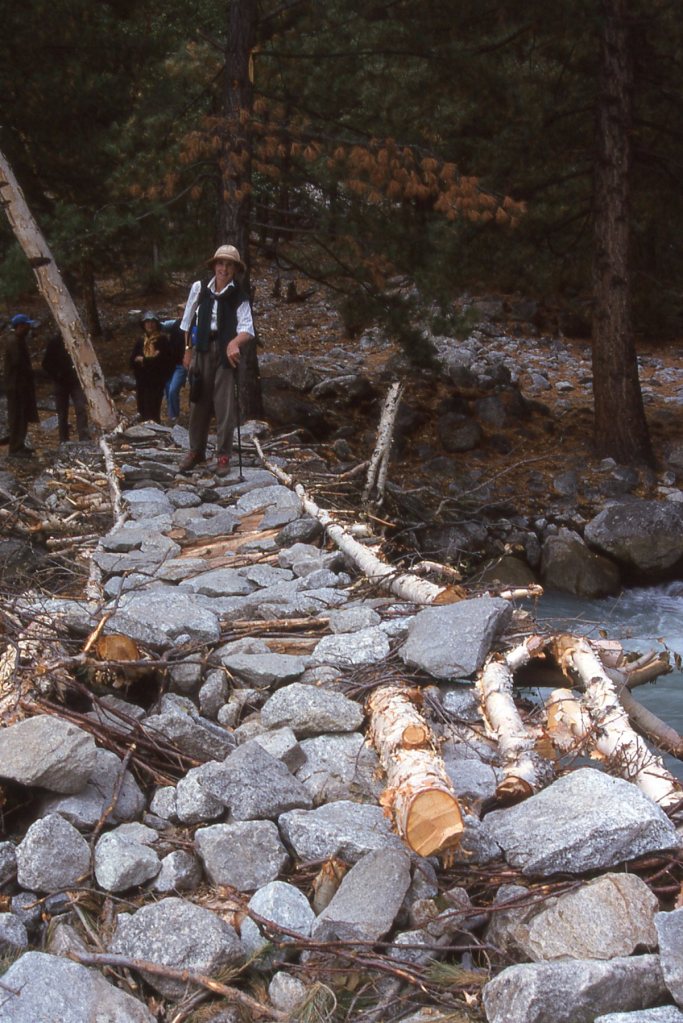
In very remote areas Betula utilis lives up to its name: useful not only in obvious ways such as firewood or rough stakes for fencing, and wooden handles for tools, but also because the papery bark is greaseproof. They use it for bringing down yak butter made during the summer in the high mountain pastures. I’ve seen B. utilis also put to a specific heavy duty use in the shape of bridges made from thick utilis branches, weighed down with flat shale stone.
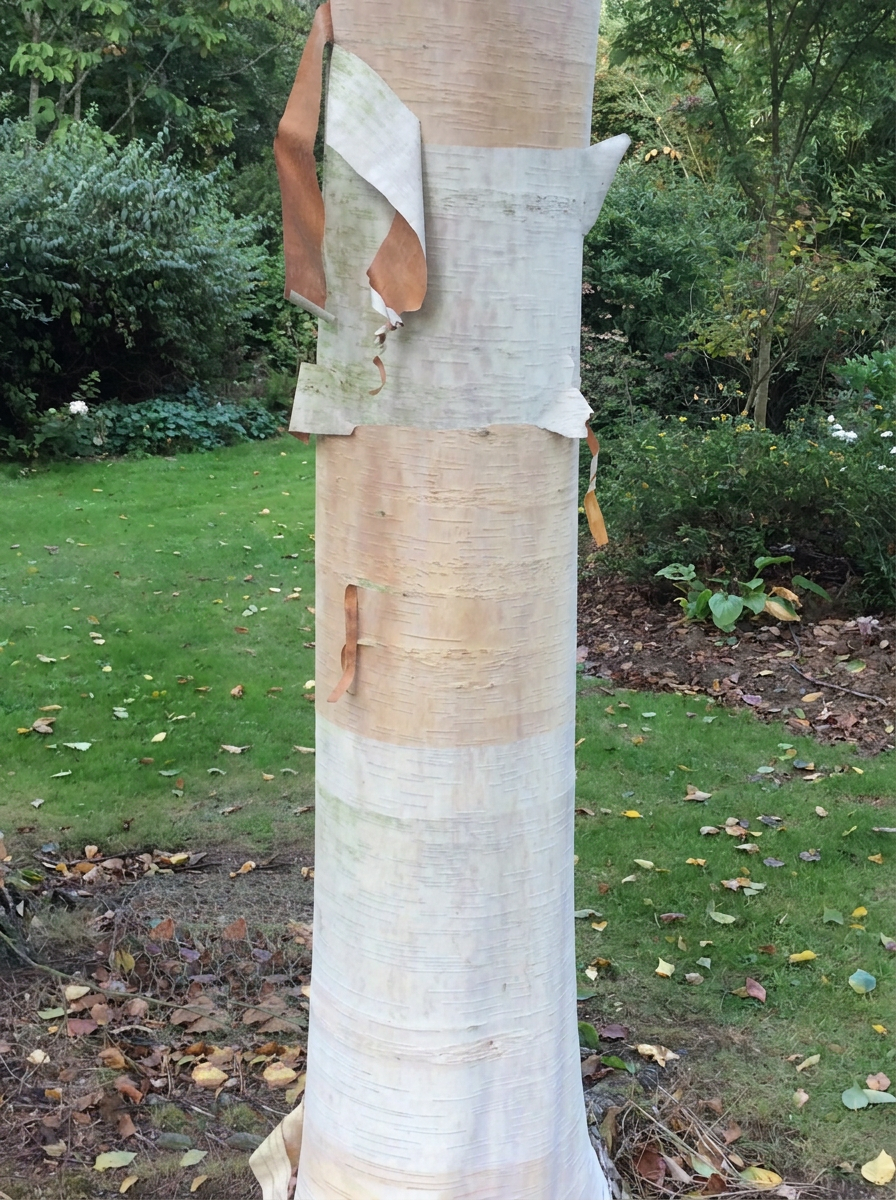
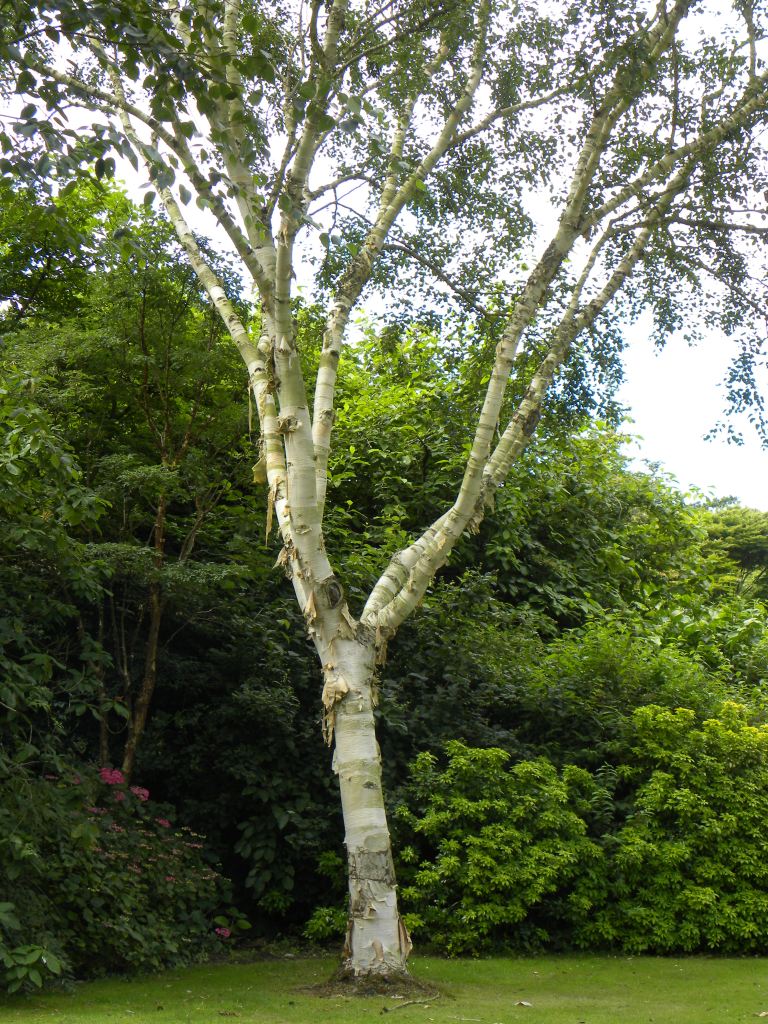
Moving east along the Himalaya, Kashmir and W. Nepal have produced some beautiful white/cream/ivory forms of B. ssp jacquemontii; no less than 24 named cultivars are listed in Hugh A. McAllister and Kenneth Ashburner’s 2013 book The genus Betula: a Taxonomic revision of birches. The most widely planted is probably the 1933 introduction ‘Doorenbos’, after the Dutch plantsman of that name, which is a clear white; ‘Trinity College’, a nice cream form in the Chinese garden at Werrington in Cornwall, is probably the same as ‘Werrington’.
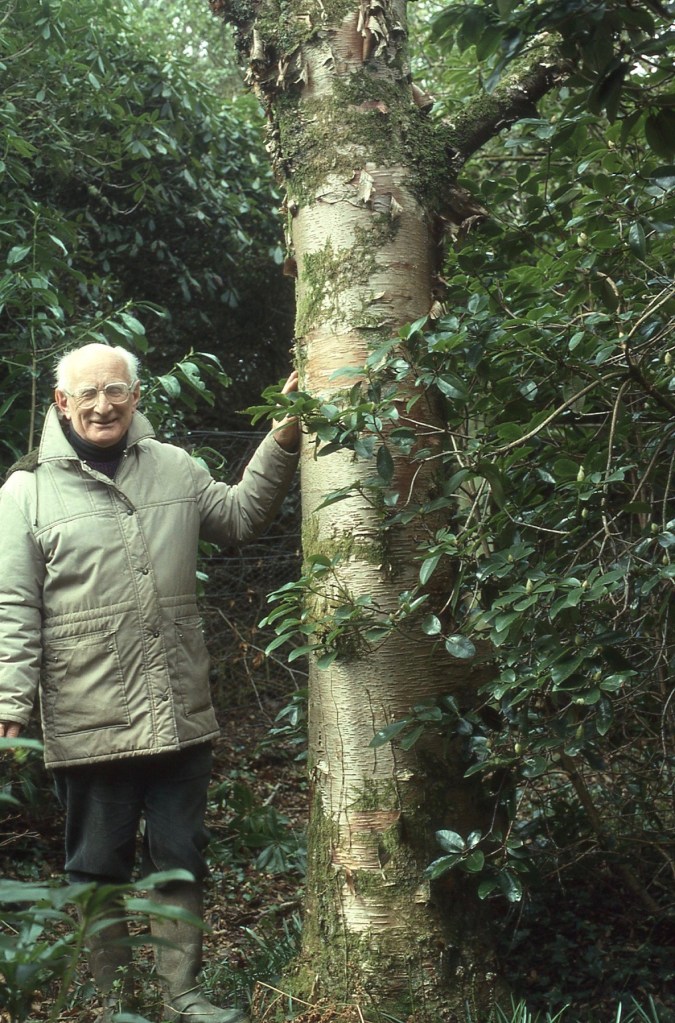
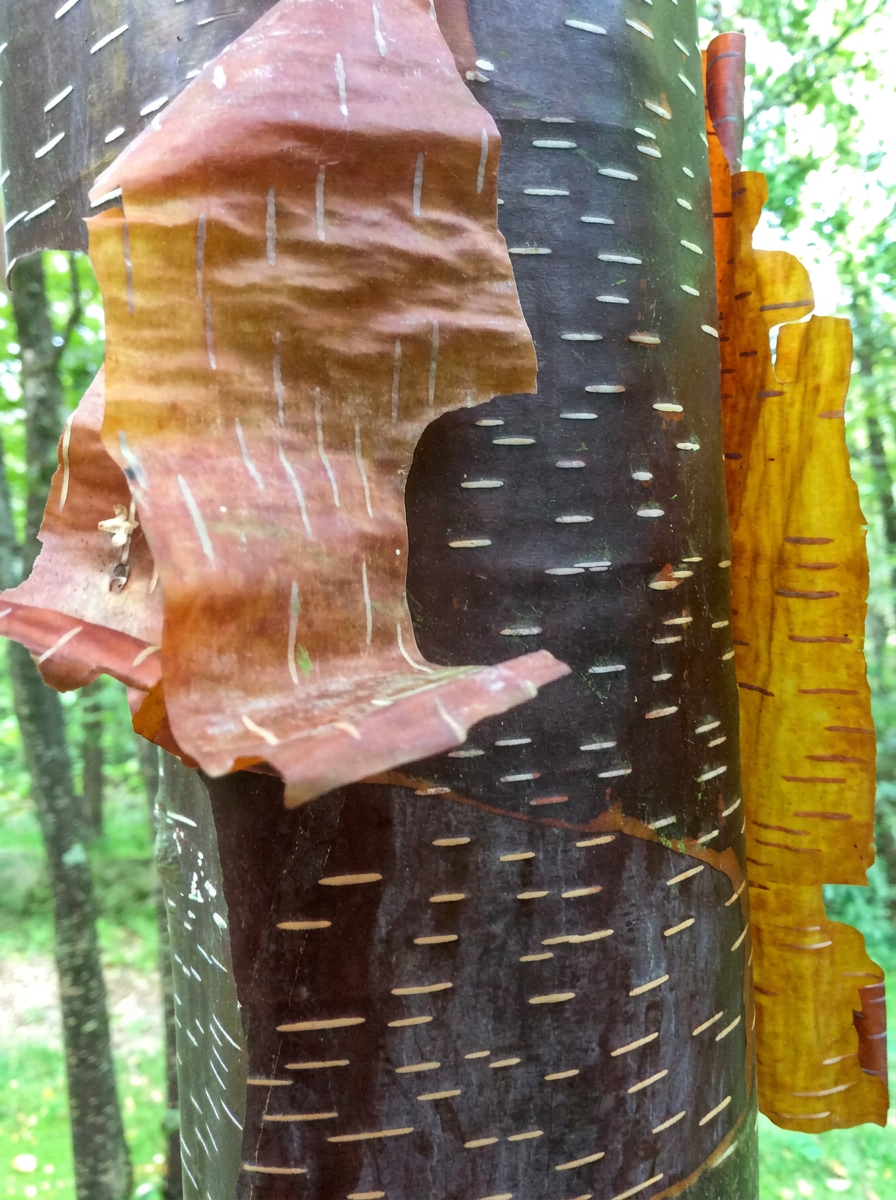
The type of B. ssp utilis – if there is a type – is found further east, in Bhutan, where dark-barked forms are sometimes spectacularly lined with conspicuous white lenticels.
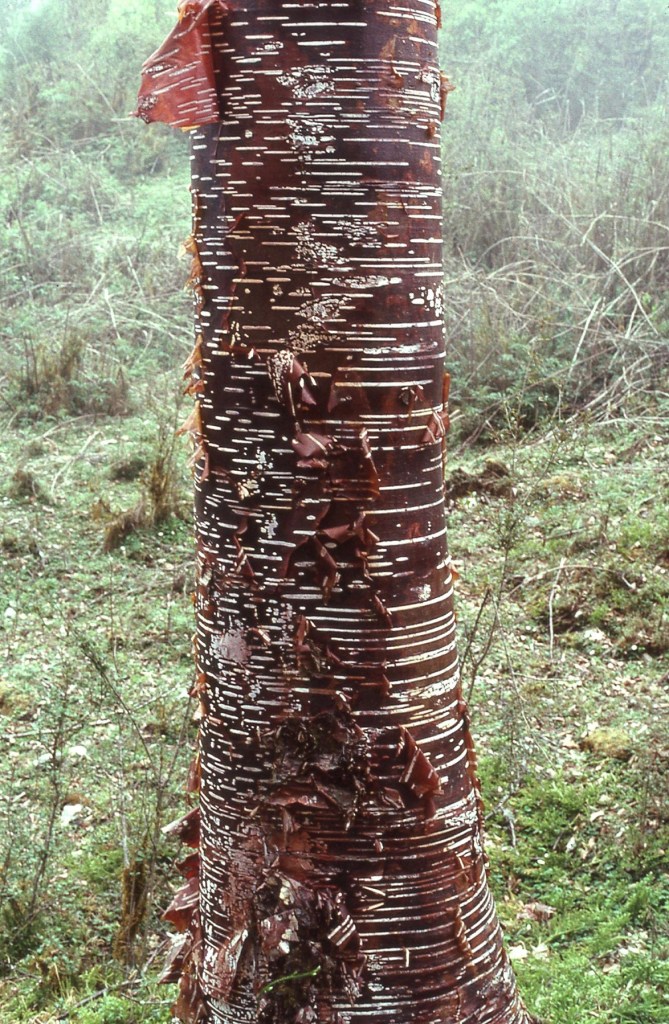
In Bhutan it is widespread, scattered through the forest; and it extends east into China where there are many variations on this dark theme. I named two of the most dramatic of these, from the Mekong/Salween divide, ‘Melony Sanders’ and ‘Chris Lane’ – where the lenticels coalesce on a polished dark bark, creating a ‘marbling’ effect.
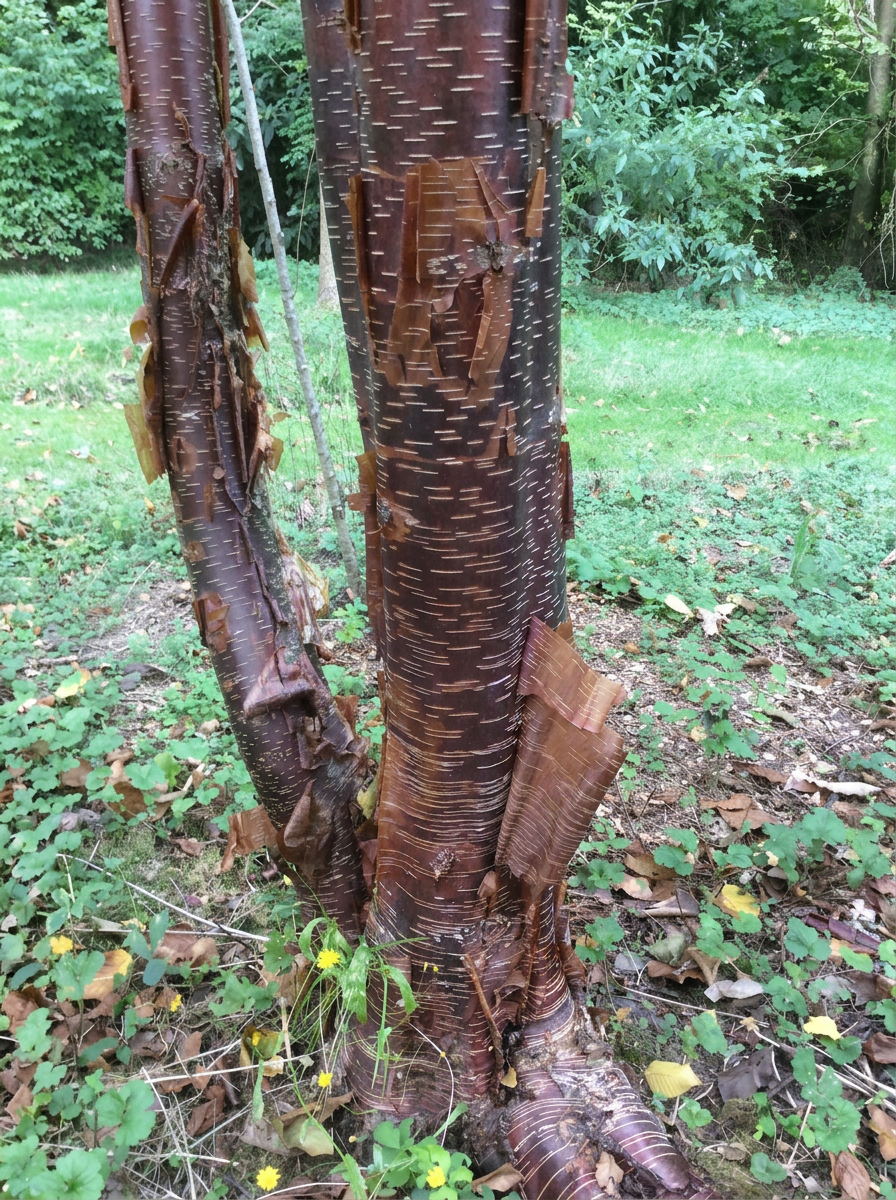
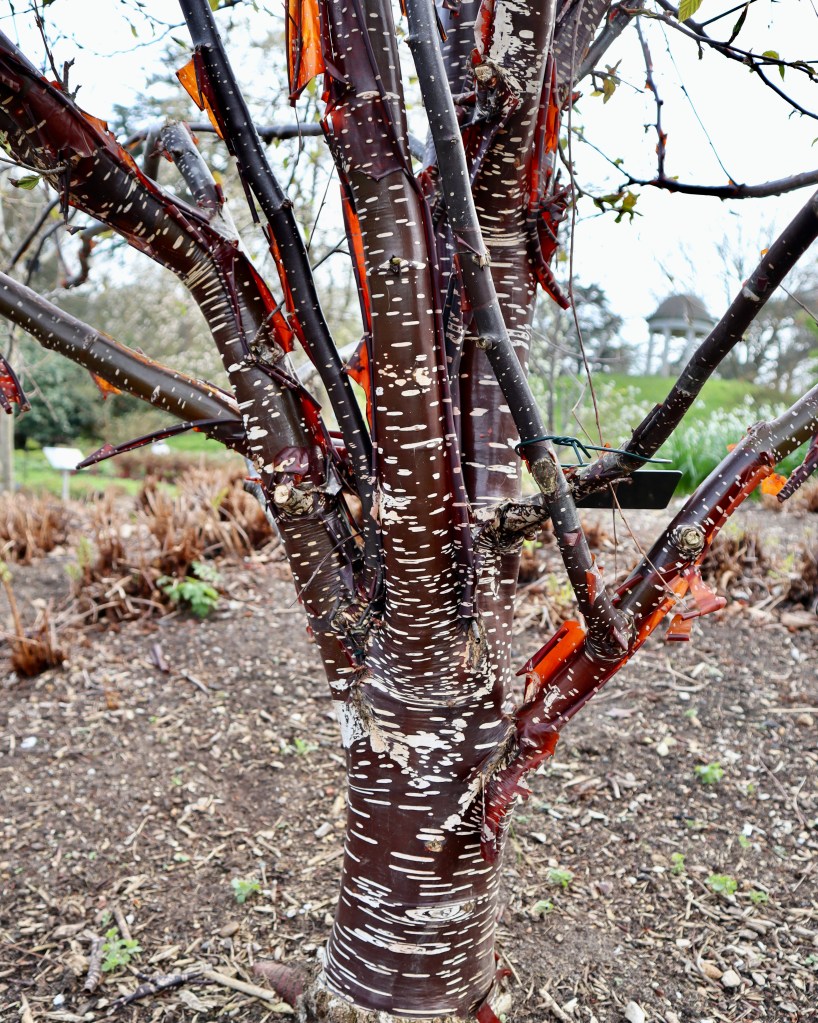
As a young plant, this variety can be vulnerable to late frost. It does not like full exposure, and needs thoughtful siting, with wind protection and some protective top cover. Having said that, It has never been affected by frost here in Kent in 15 years, with favourable katabatics (cold air drainage) on a gentle slope.
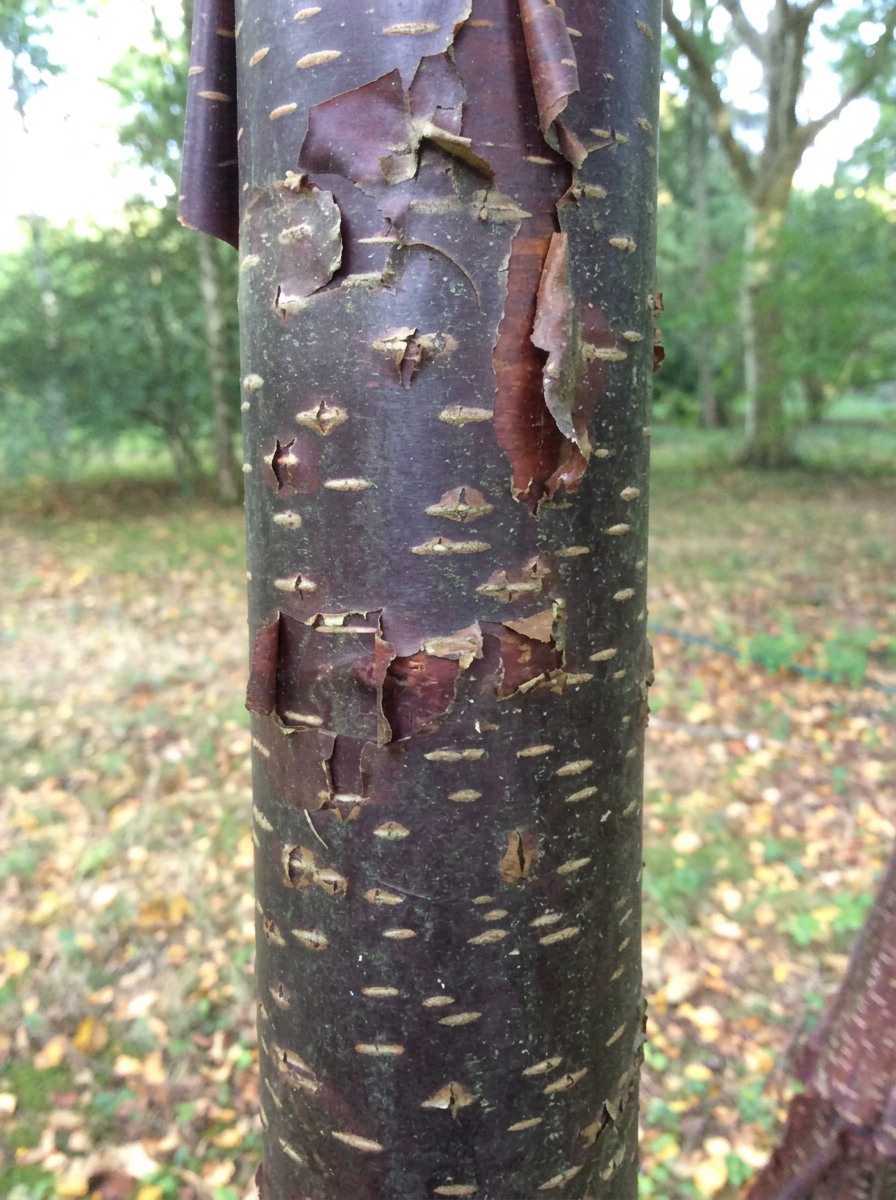
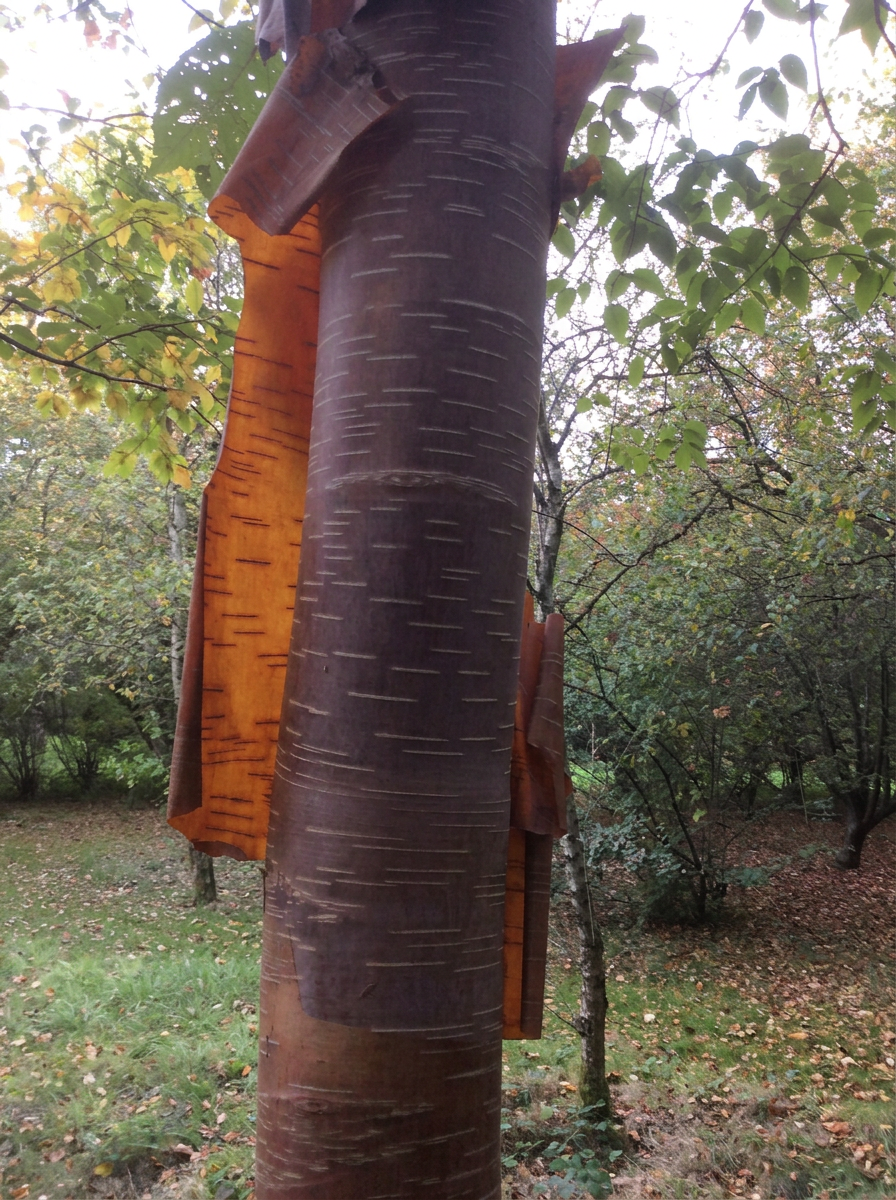
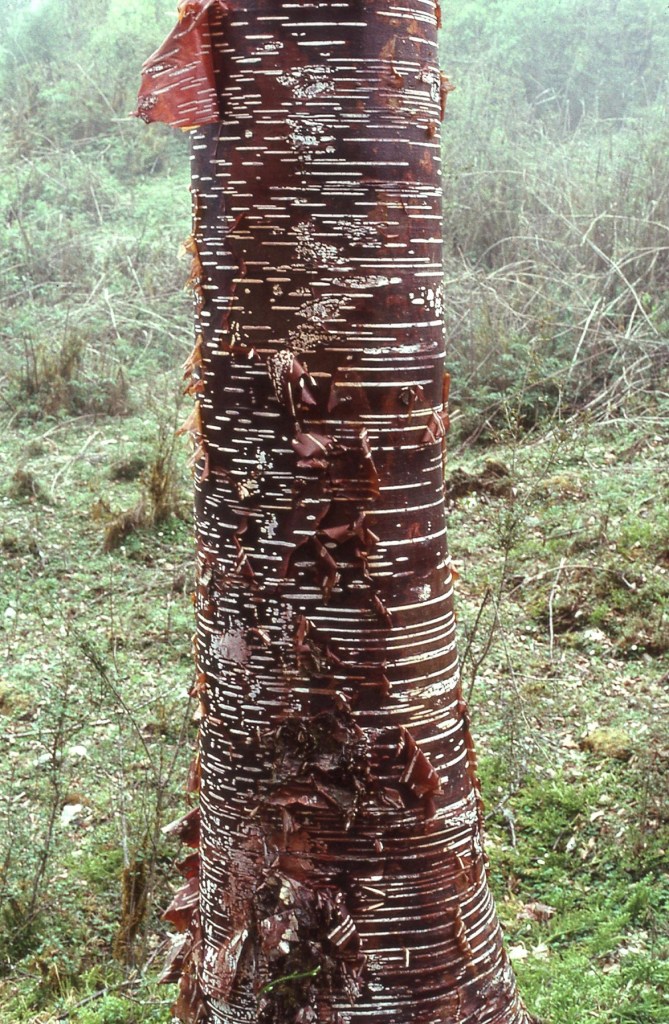
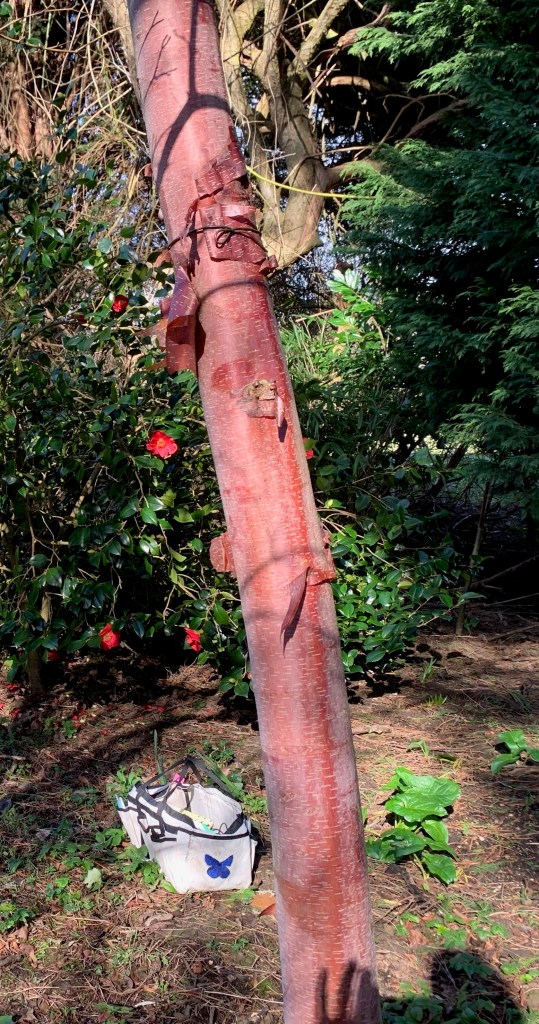
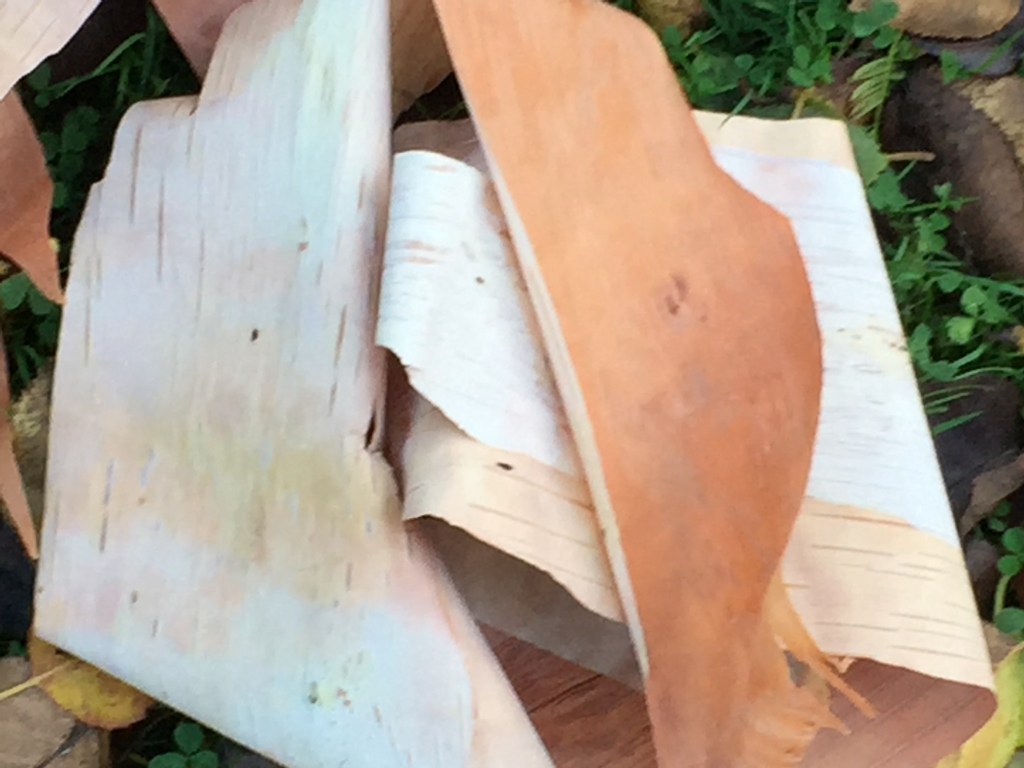
The utilis subspecies of N. China is Betula utilis ssp albosinensis, found growing in open forest in N. Sichuan, Hubei and Gansu provinces. For many, this is the favourite for stem colour, with a readily-peeling bark revealing fresh coppery, salmon pink, red and purple tones underlying a misting of smoky grey on the old bark.
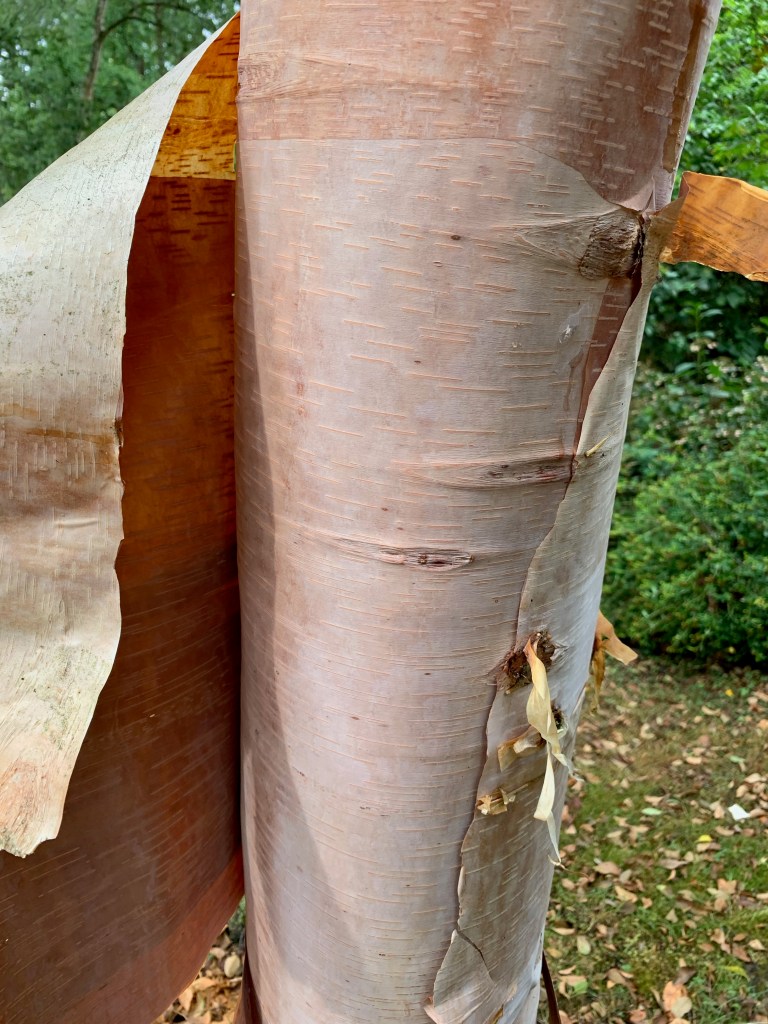
A favourite is ‘Chinese Garden ‘ from Werrington in Cornwall, collected by Wilson in Sichuan (W 4106), a rich pinkish and deep honey colour. ‘China Ruby’ was named by Brian Humphrey from a Hillier plant, also thought to be a Wilson collection, and listed as B. utilis ssp albosinensis var septentrionalis.
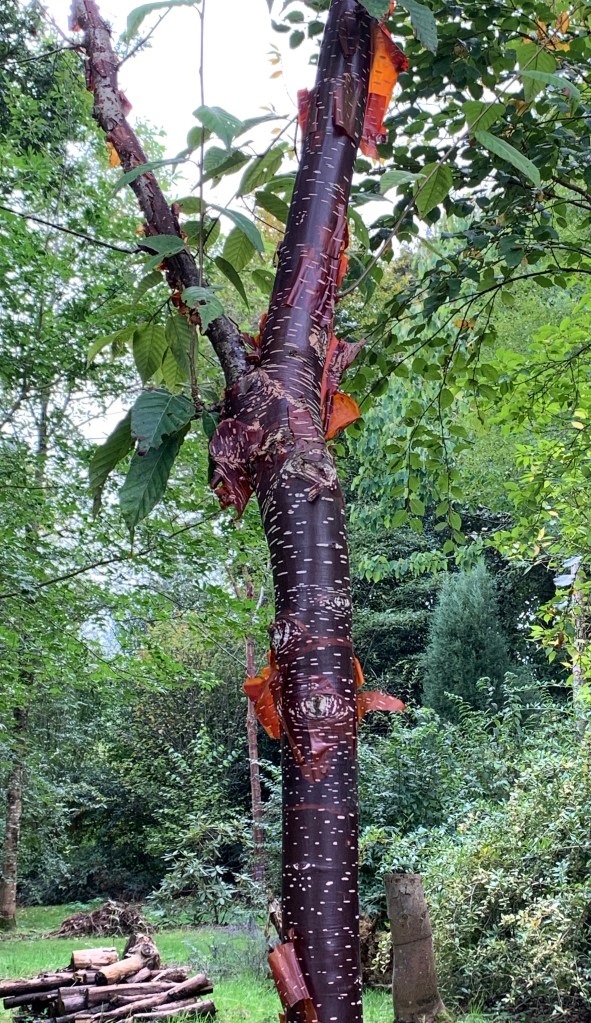
William Purdom collected seed of var albosinensis in Gansu. The Genus Betula describes it as ‘a beautiful stem of smoky mauves, buffs and satiny pinks’.
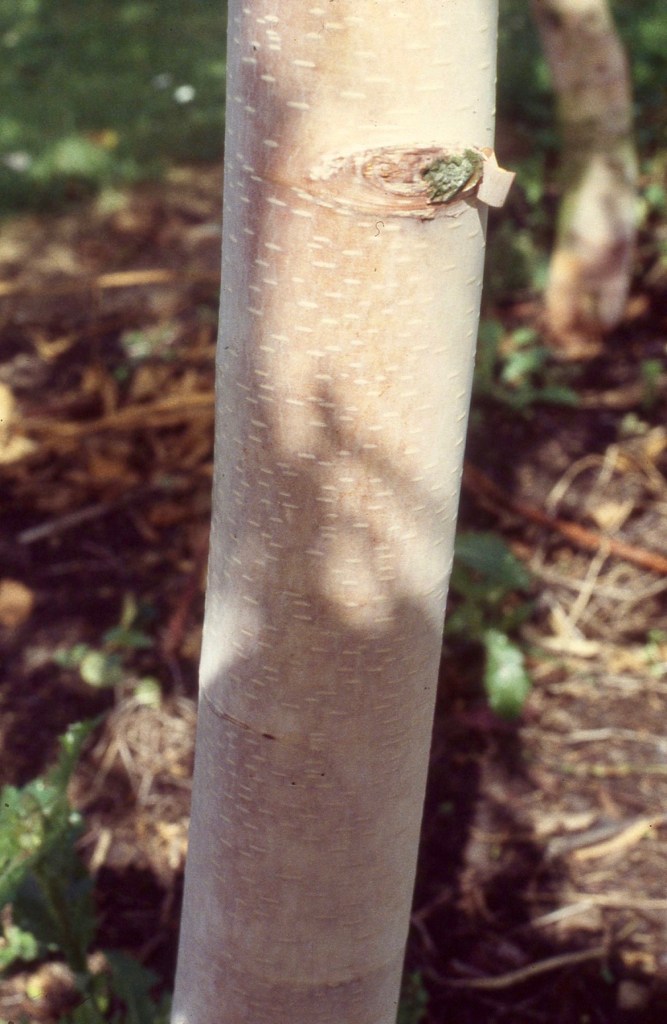
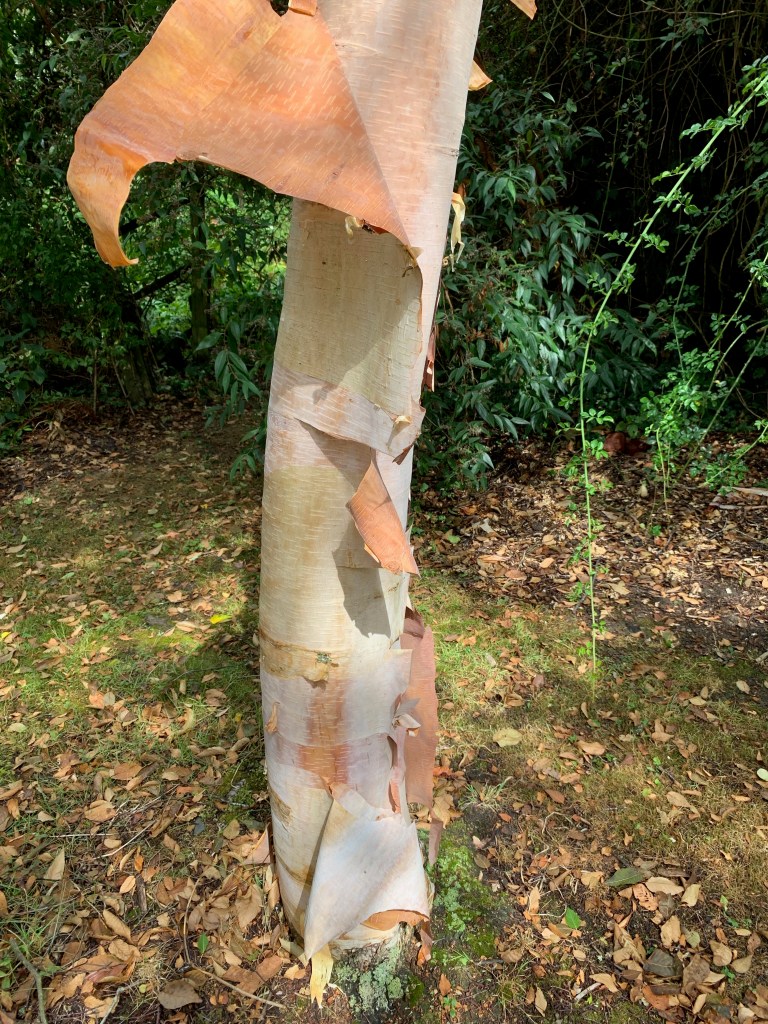
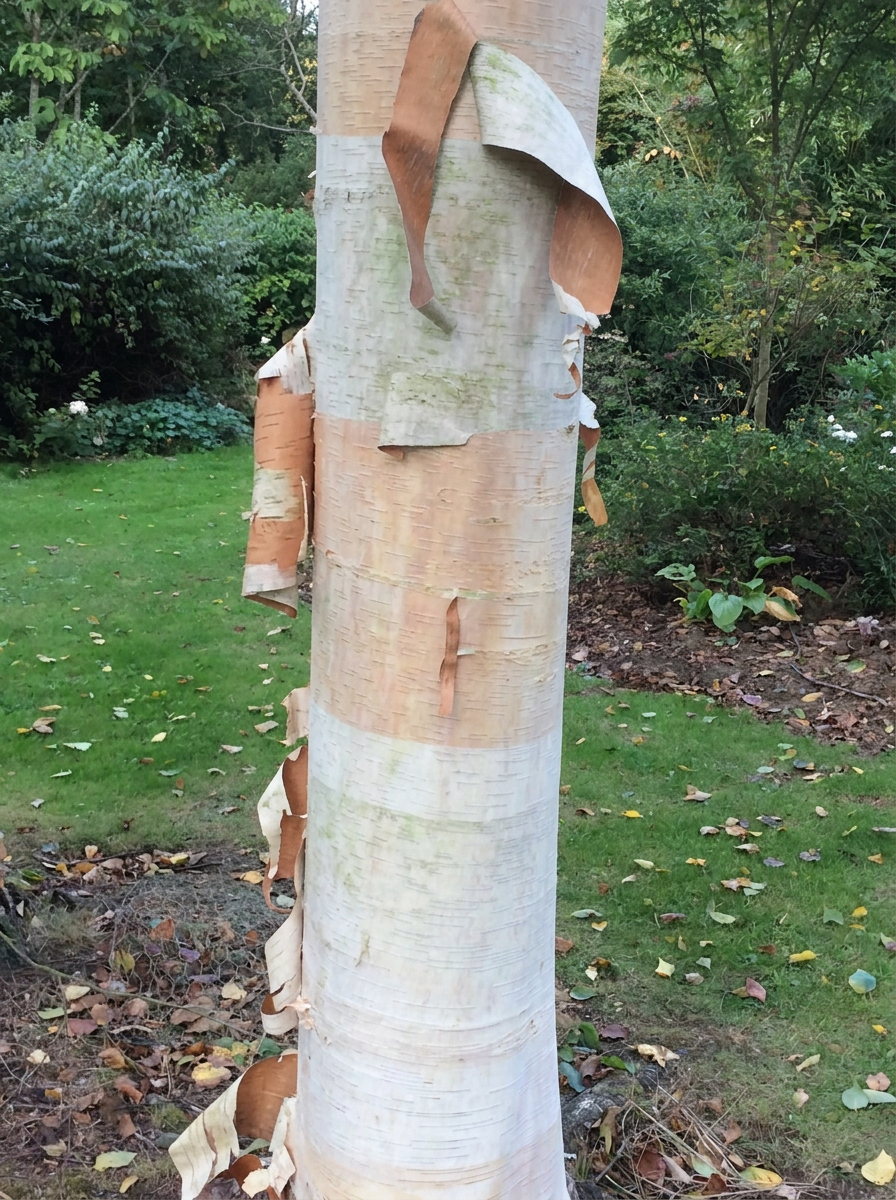
All birches are very tactile, and visitors can frequently be seen touching them and peeling the bark. The ‘Purdom 752’ at White House Farm got this attention from a elderly visitor deep into his nineties, who was found leaning on his stick and stroking B. albosinensis var septentrionalis ‘Purdom 752’ muttering ‘pure nylon stocking’, to the delight and amusement of a group of ladies also of a certain age. I think Purdom would have approved.
As garden plants, care should be taken in siting all types of birches, for the sake less of the birches, than of other plants in the vicinity. For they are all spreading surface rooters, thrusting their shallow roots densely over a wide area, thus able to compete aggressively for moisture and nutrient to the detriment of neighbouring plants. Pioneer trees in the wild, they are programmed to do this, so unless there is irrigation freely available it is best to avoid placing them in mixed or shrub borders, and to keep them to themselves, or in companion with other birches. They make excellent specimen trees set in lawn, or in small groves or clusters of stems.
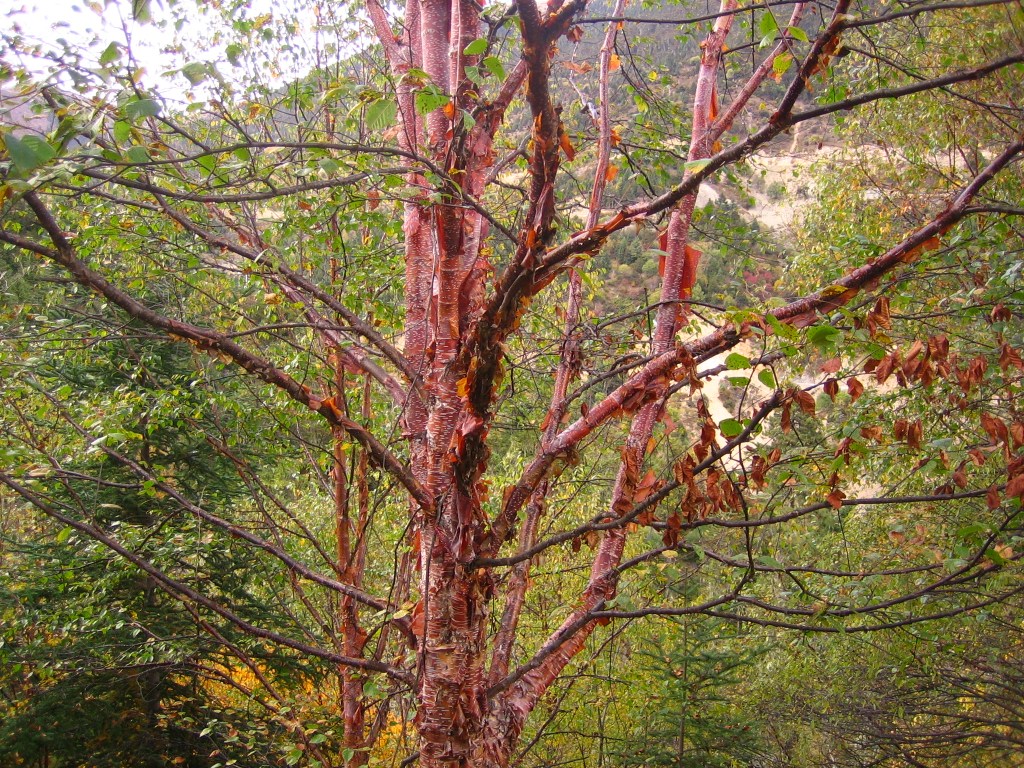


Dear Maurice loved reading the article illustrated with some excellent photos, I still long for someone to do more propagation of Betula utilis ‘Chris Lane’. I remember seeing it for the first time at his namesakes nursery years ago when I think we were supposed to be looking at Wisteria, increadible lenticels! I thought you might like to read this article on Betula if you haven’t already from 1928 by Charles Coltman-Rogers. Much of it stands up, and the confusion around the Acuminatae is still ongoing. One thing that did surprise me is his attitude toward B. utilis which he regards as difficult to grow in England! Anyway hope this link works page 57-80. Really enjoying these articles so do keep them coming. https://archive.org/details/dli.ernet.229567/page/57/mode/1up
Best Rowan
LikeLike