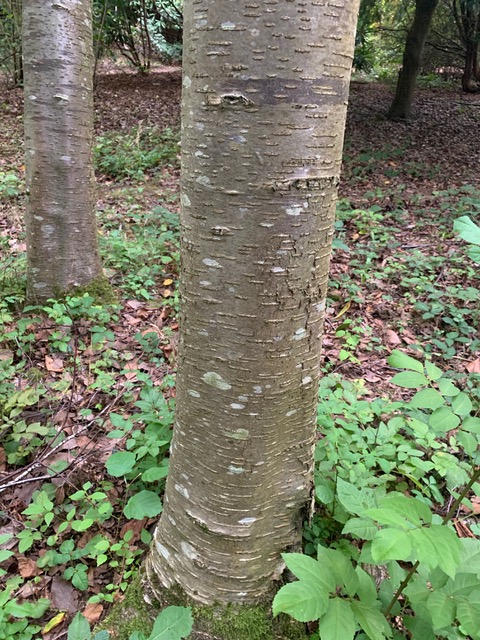
In Sichuan Betula luminifera is the common species at low altitude, where it is a widespread pioneer and something of a weed, colonising roadsides and any patch of bare earth, whether due to human activity or natural erosion. Its stem is not at all decorative, a nondescript brownish grey with a few lenticels.
B. luminifera is not widely grown, except in specialist collections. It belongs to a group recognised as not reliably hardy in the UK, known as the Acuminatae, which incorporates B. alnoides and B. cylindrostachya, both from warm temperate to subtropical regions in China and the Himalaya, and neither of particular ornamental merit. Having said that, given our milder winters, B. luminifera has proved to be perfectly hardy here and undamaged for 30 years. For me its two most significant aspects as a garden plant are that it grows incredibly fast as a seedling, and always has conspicuous catkins.
Its speed of growth from seed is phenomenal, even here in dry, quasi-continental Kent. In places with a more congenial climate, with generous rainfall, like Cornwall, you must – as an old New Zealand forester told me of Pinus radiata in his country – plant it and jump backwards. I would like to see a comparison with other fast-growing species such as Alnus rubra and a vigorous Populus, for example , planted together and measured for growth rate after 5 and 10 years. I would cheerfully put a tenner on B. luminifera.
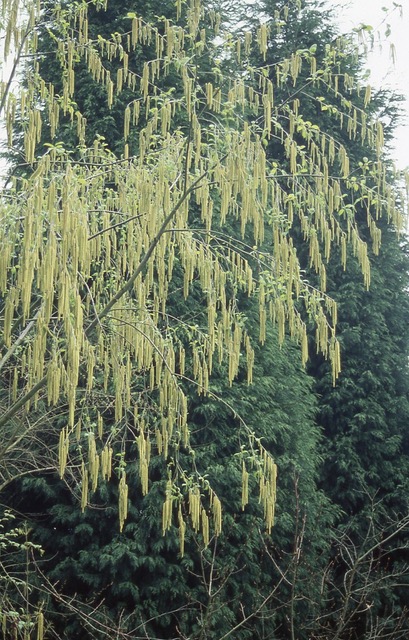
Plants I raised from Sichuan seed are up to 60ft here at White House Farm, and covered in catkins every spring. They grow into a clean-trunked rather narrow, tall tree. If you are looking for a quick screen, this is a good choice: and they come freely from seed, though from garden seed there is always a strong likelihood of hybridity. I have no experience of its growth rate as a grafted plant, but it produces catkins when in a pot as a young graft on B. pendula. Grafted, it could be less vigorous but more floriferous, which for the smaller garden could be a useful asset. We have made a selection of an exceptional seedling for the quality of its catkins. This is especially conspicuous as a young small tree and we have given it the cultivar name of B. luminifera ‘White House Farm’.
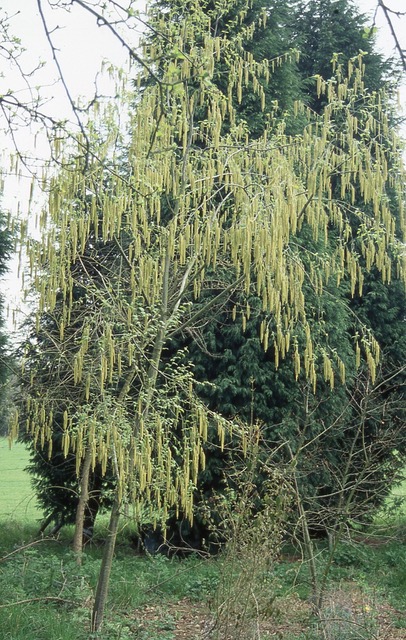
We have measured these catkins at over a foot long, and in heavy bunches they are highly effective. The length shortens with age, but the effect remains pleasing.
Two Japanese birch species of note are B. ermanii and B. davurica. They could not be more different, the former with an exceptional white bark, the latter with a flaking exfoliating bark of many colours. I have a Korean wild provenance tree of B. ermanii, received as B. costata seed from the late Ferris Miller. (Most plants in collections labelled B. costata are likely to be B. ermanii.) This Korean tree has great vigour, and after some 35 years has a heavily-lenticelled ivory white trunk approaching 2 ft in diameter. The whiteness extends right up into the upper branches.
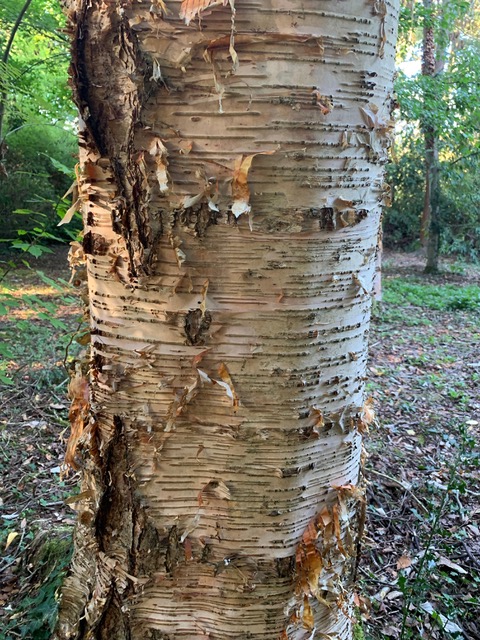
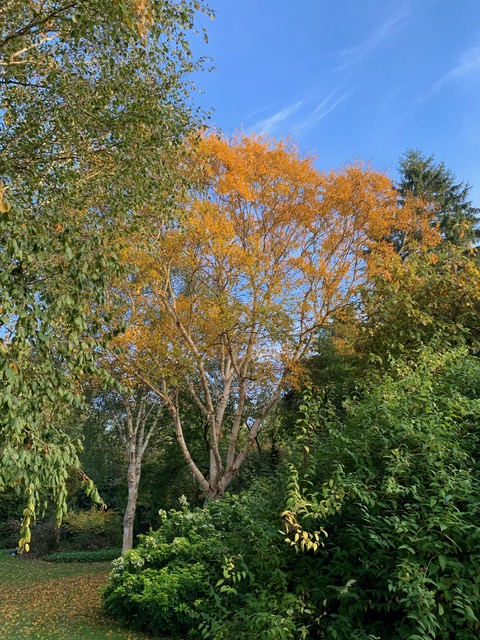
Different, because it tends to be more decorative, is the type of B. ermanii from Hokkaido in N. Japan. There are a half dozen named cultivars, the most commonly available of which is ‘Blush’, of Dutch origin: a creamy white bark which, with a degree of imagination, has a faint suggestion of rose in some light conditions.
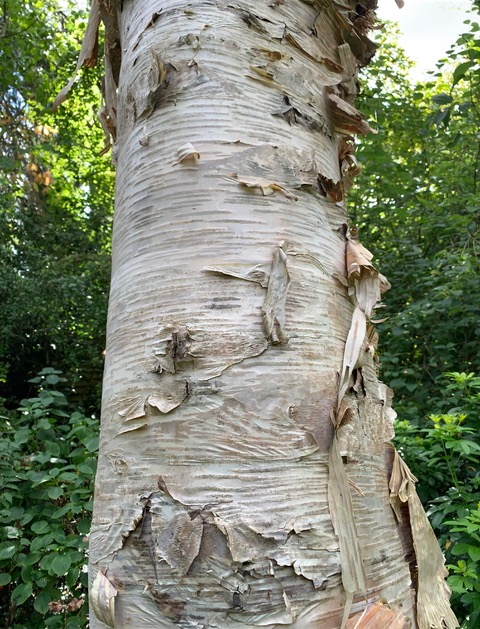
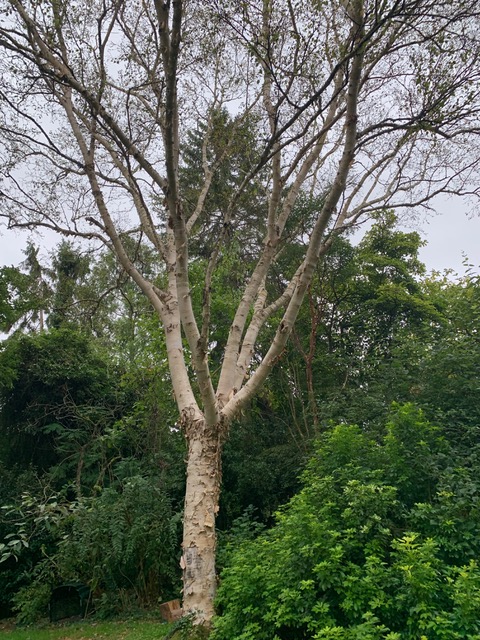
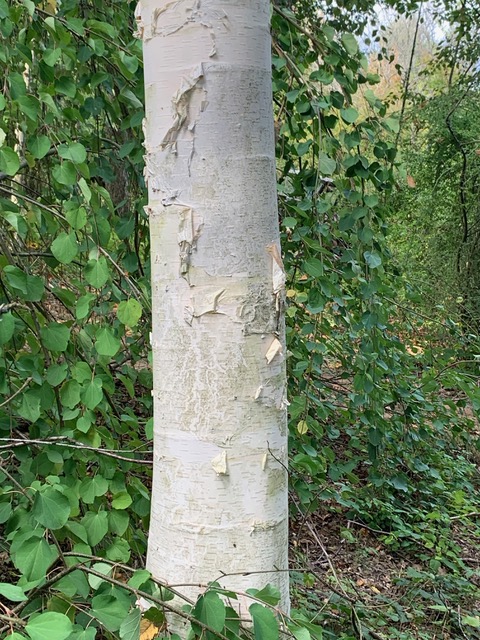
B. ermanii ‘Grayswood Hill ‘is similar, with what is described as a creamy orange bark with attractive lenticels on a very vigorous tree. B. ermanii ‘Polar Bear’ is pure white – of unknown origin (some think it is a form of B. utilis, or a hybrid.)
All these trees have beautiful yellow/gold autumn colour.
Ideal for a small garden is B. ermanii ‘Mt Apoi’, raised from seed collected on the mountain in Hokkaido of that name. Often treated as a form of B. ermanii in the trade, it is, according to The Genus Betula: a taxonomic revision of birches (2013), probably a natural hybrid with B. fruticosa. It is in effect a smaller version of B. ermanii, to about 4m, with a nice white trunk and perfect for a small garden.
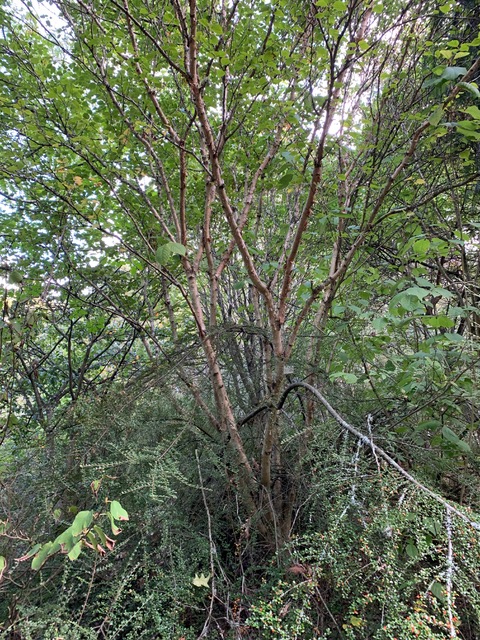
Also a miniature form of the type is B. ermanii var saitoana. I had seed of this from the late Ferris Miller, collected in the wild in Korea. I kept four to grow on: three were small scrubby twiggy shrubs of no horticultural value, but the fourth was a slow growing, lovely small tree to about 2.5m, a reduced replica of the type, with a neat branching shape and a perfectly white trunk. Alas, this was lost to honey fungus which is endemic here. Incidentally, the best solution we have found to this aggressive pest here is hygiene, removing every piece of root thicker than your finger when felling and digging up trees, to avoid leaving buried dead wood for it to feed on and gain enough vigour to become a pathogen on healthy growth.
In complete contrast, but also from the wild in Hokkaido, is B. dahurica. The bark is notable for peeling off in small curly flakes to give a multi-coloured effect. Many years ago at Stone Farm, Kenneth Ashburner’s collection, when reviewing a group of these trees with Kenneth, I suggested he name one of them ‘Garnet’, as the inner surface of the bark flakes was a striking garnet red, particularly when wet, as it often was on Dartmoor.
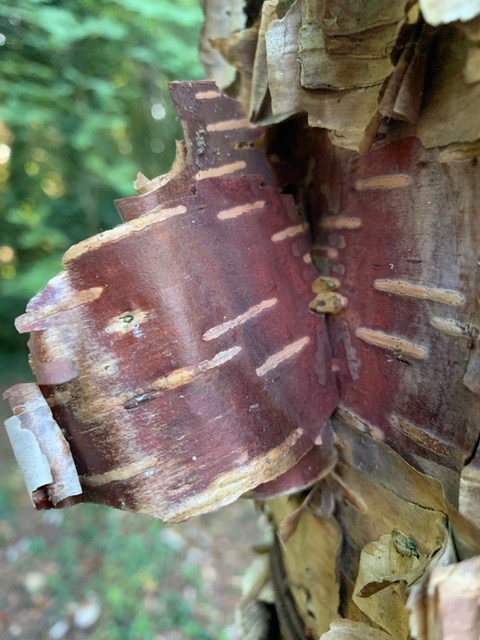
I thought no more of this until a couple of years later, when during a business lunch with an American who had recently moved to the UK and had nothing remotely to do with trees, said, as we shook hands ‘What a coincidence – I have two Maurice Fosters growing in my garden’. It turned out these trees were my proposed ‘Garnet’, which unbeknownst to me, Kenneth had named ‘Maurice Foster’. The story continues, as my specimen at White House Farm, given to me by Kenneth, is now the Tree Register’s (TROBI’s) national champion, the biggest of its kind in UK and Ireland.
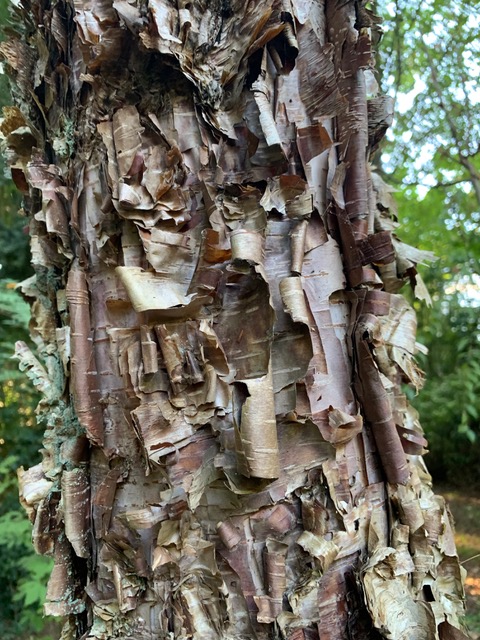
Early introductions of B. dahurica were noted for early flushing, and often cut back by frost, leaving a rather scrubby dieback which inhibits free growth. However, this Ashburner group of seedlings is much later to grow out, and they make shapely free growing trees with no dieback. This is a major advantage. I have another Ashburner seedling which, although similar, I rate more highly than ‘Maurice Foster’. This is not named, but one of my favourite trees, which after 40 years is now some 60ft tall, strong and upright, but with semi-pendulous branches and attractive bark at all seasons. Kenneth received it grown from seed collected by a Japanese botanist.
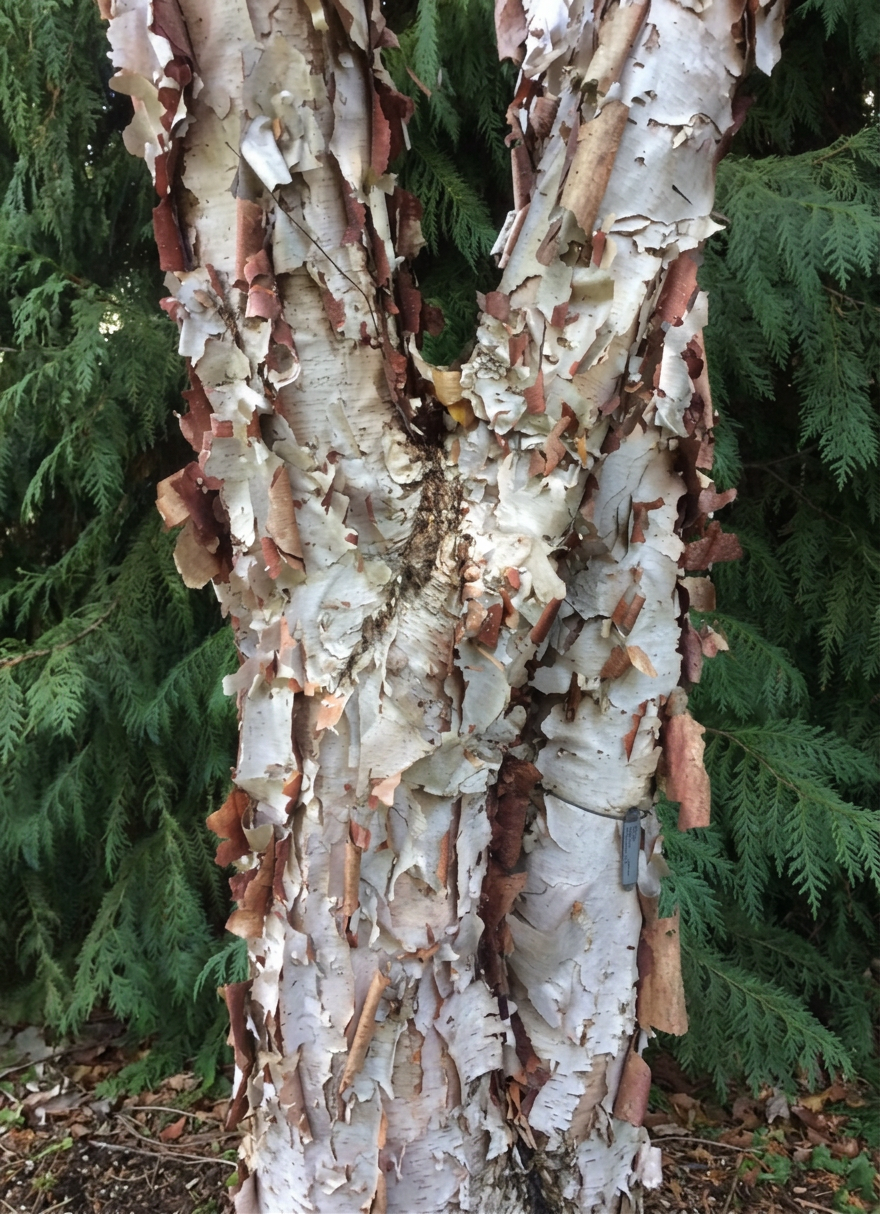
There are a number of attractive small shrubby birches, that each in their way have distinct appeal. B. chichibuensis from Japan, and the Chinese B. potaninii, bomiensis and skorzovii all have something to offer to the smaller garden. But the species I find with the most character, although recalcitrant and difficult, is B. calcicola, found only on the Yulongshan, a mountain in N.W. Yunnan. It is an upright 2m shrub, with its young shoots beautifully clothed with silky hairs and close-set deeply impressed veins. It was introduced by Roy Lancaster in 1985 (L1691), and later again by Brickell and Leslie (B&L 12206) and the CLD expedition (CLD 791).
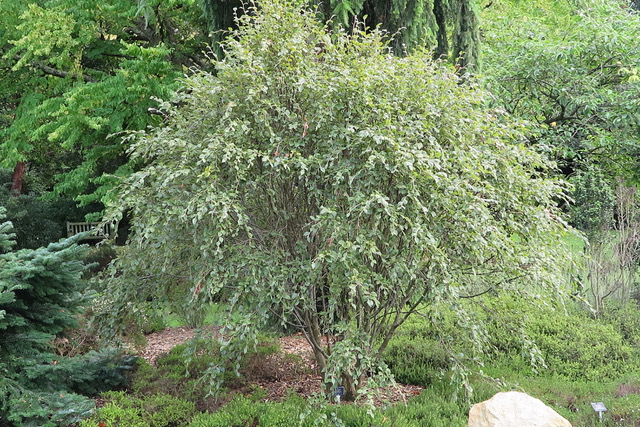
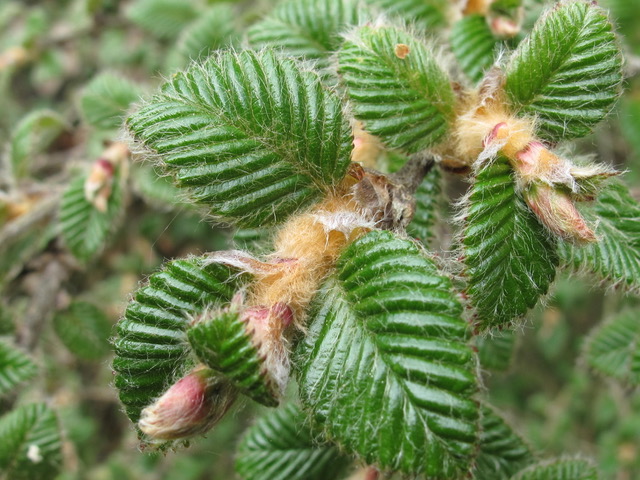
Seed from Roy’s introduction produced a natural hybrid from plants in the wild which were growing in close proximity, a combination of the rather stiff and nondescript small tree B. delavayi, and the shrubby B. calcicola. This natural hybrid is a small tree with something of the character of B. calcicola in the foliage and shoots, but easily pruned to a single stem à la B. delavayi, when it spreads and cascades in a very attractive way. It is very rare now in gardens.
B. skvortsovii was found in Sichuan in dry pine barrens studded with huge boulders. It had been found earlier by Skvortsov, but existed only as a herbarium specimen until we found it and introduced it in 1998. In the wild I thought it was B. potaninii, but it was later identified by Hugh McCallister as distinct and new, and he named it B. skvortsovii. It makes a medium-sized spreading shrub, with good autumn colour.
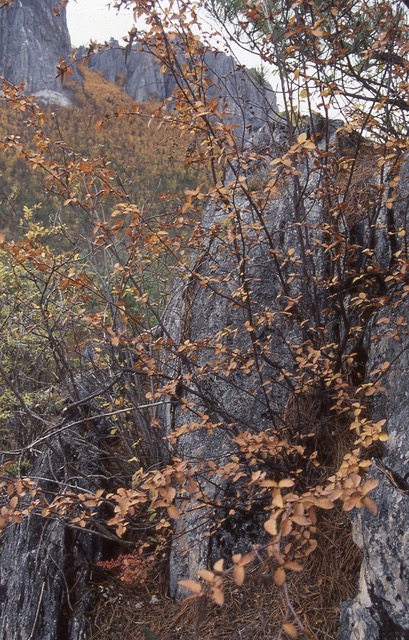
B. bomiensis was discovered by Keith Rushforth in S.E. Tibet – again, an open elegantly-spreading shrub, with the short male catkins bearing red anthers that decorate it effectively for a few days.
These shrubby birches will not stop the traffic with spectacular flowers or shining bark, but they have a grace and an understated elegance and character that may well make them worthwhile in the eyes of the discerning gardener.
Birches are one of the most important and deservedly popular trees to grace our gardens, large or small. They are an all-seasons tree, offering not just an incredible variety of beautiful bark throughout the year, but also many have that more indefinable, nuanced quality of elegance that goes with a light, semi-pendulous, graceful form. They are a delight at all times – and indeed, one of the few trees that come into their own and give pleasure right through the winter months.

