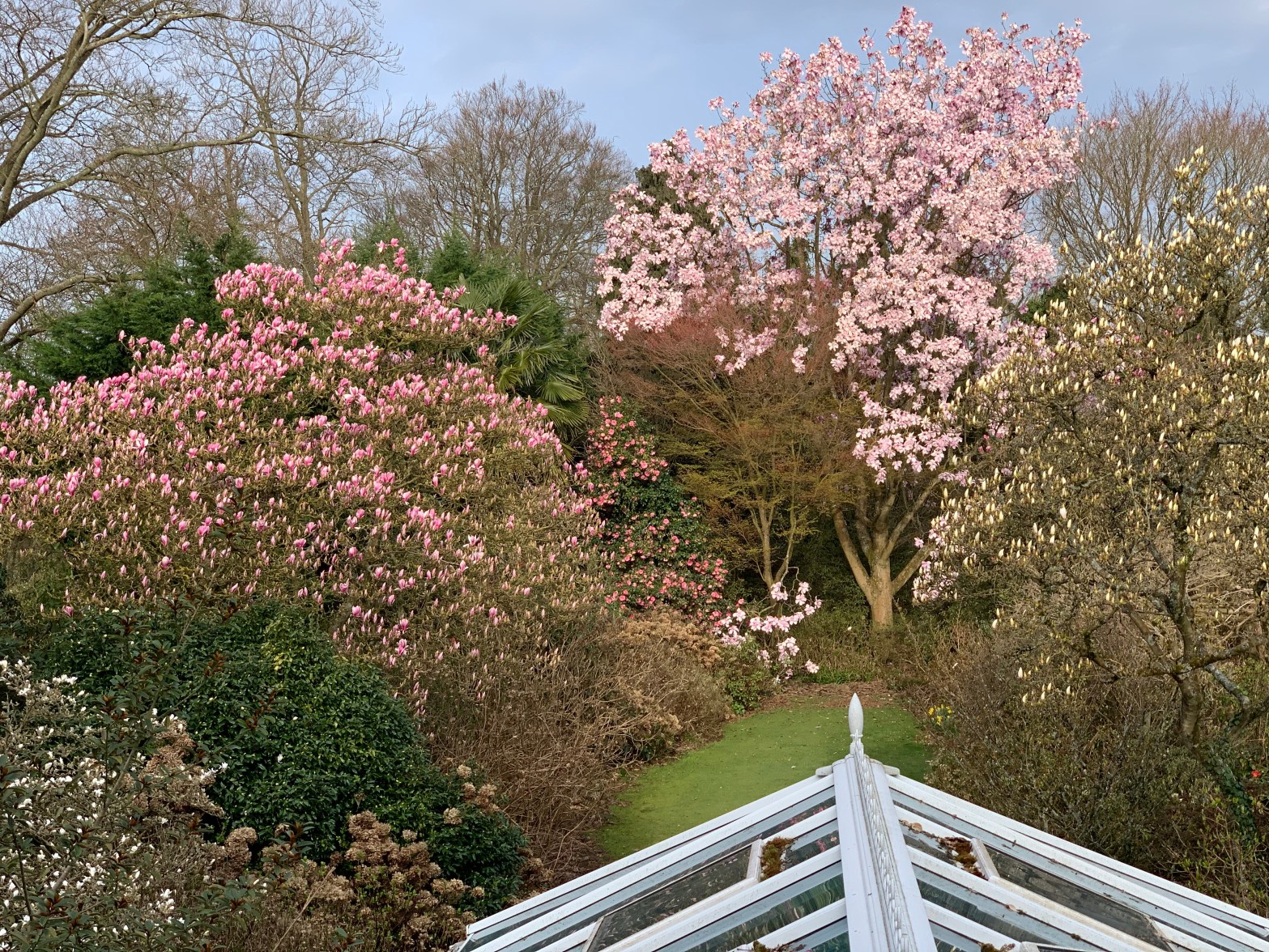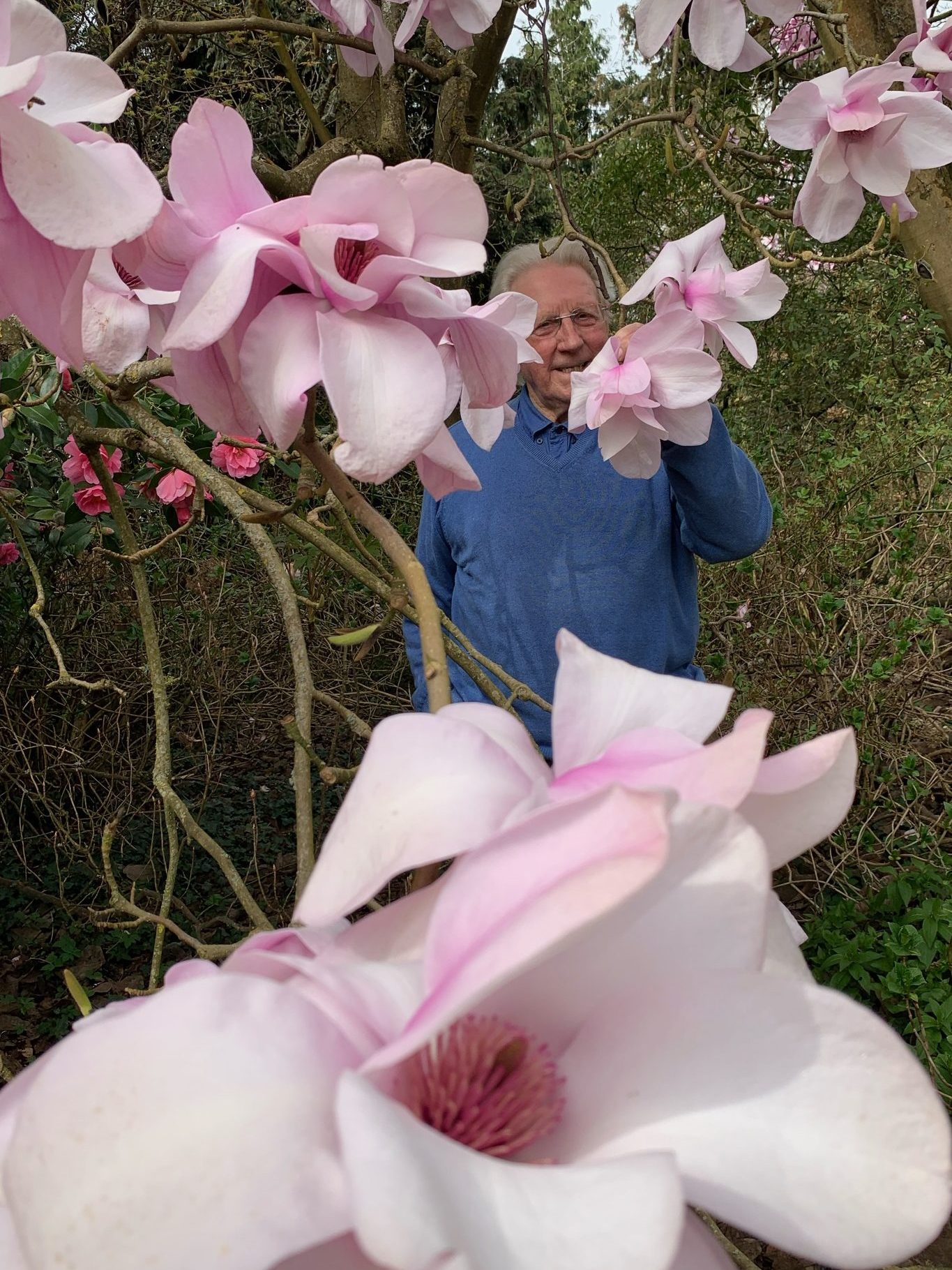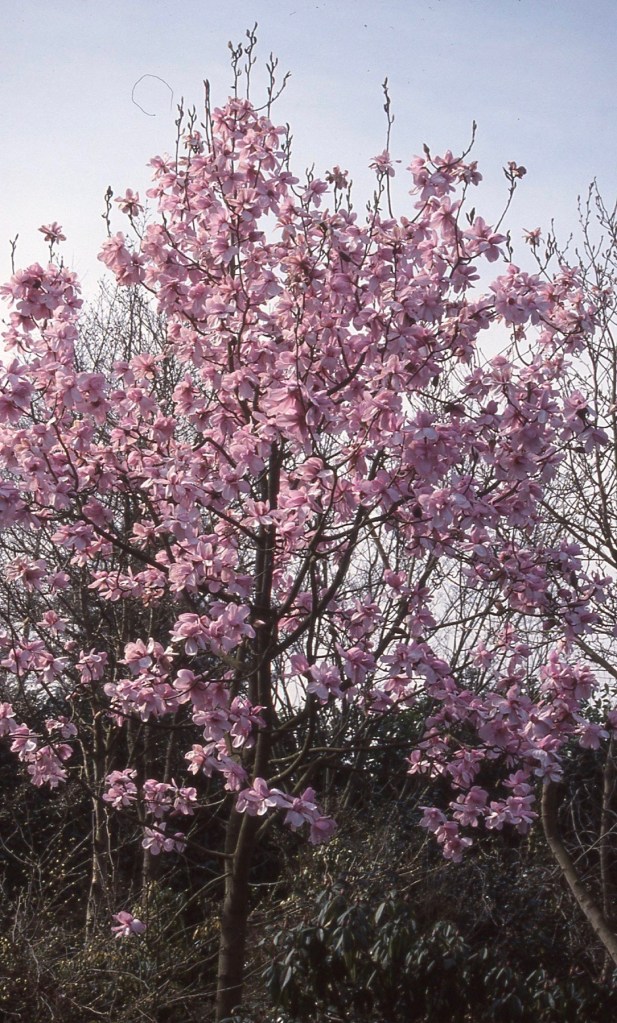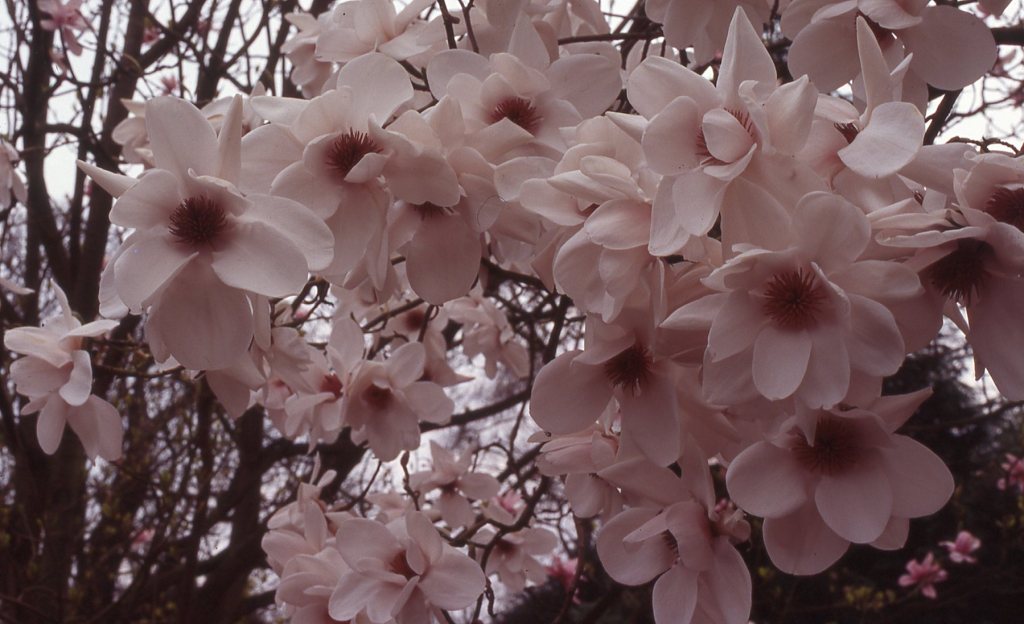
Featured

Indigoferas: an overlooked treasure

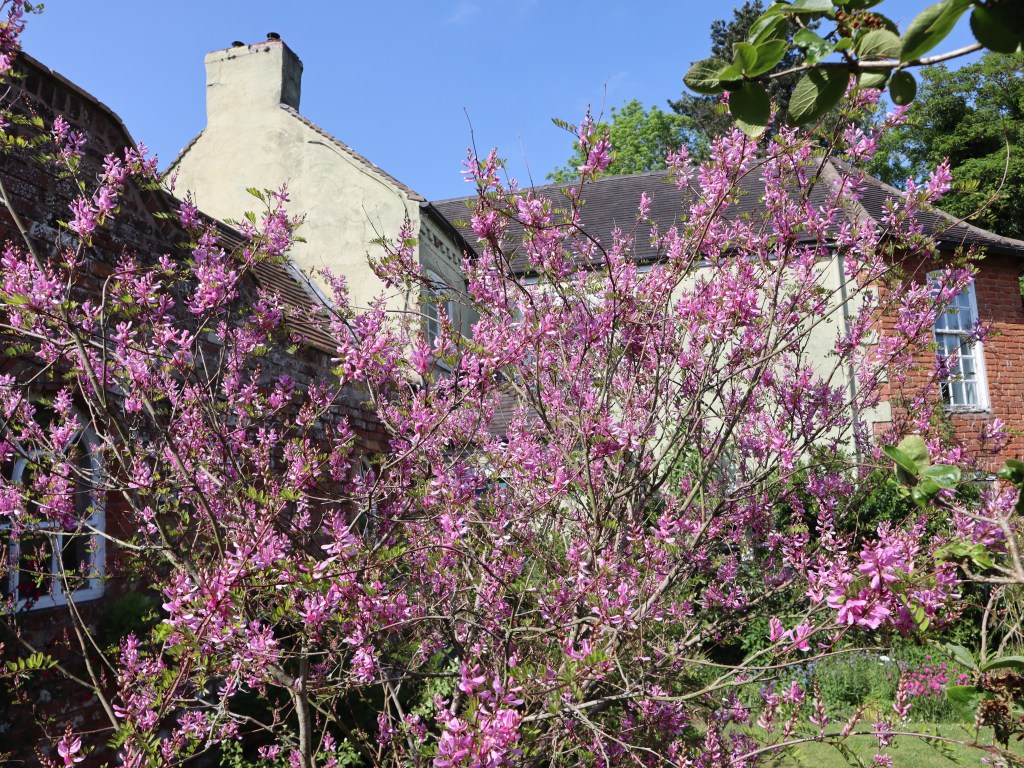
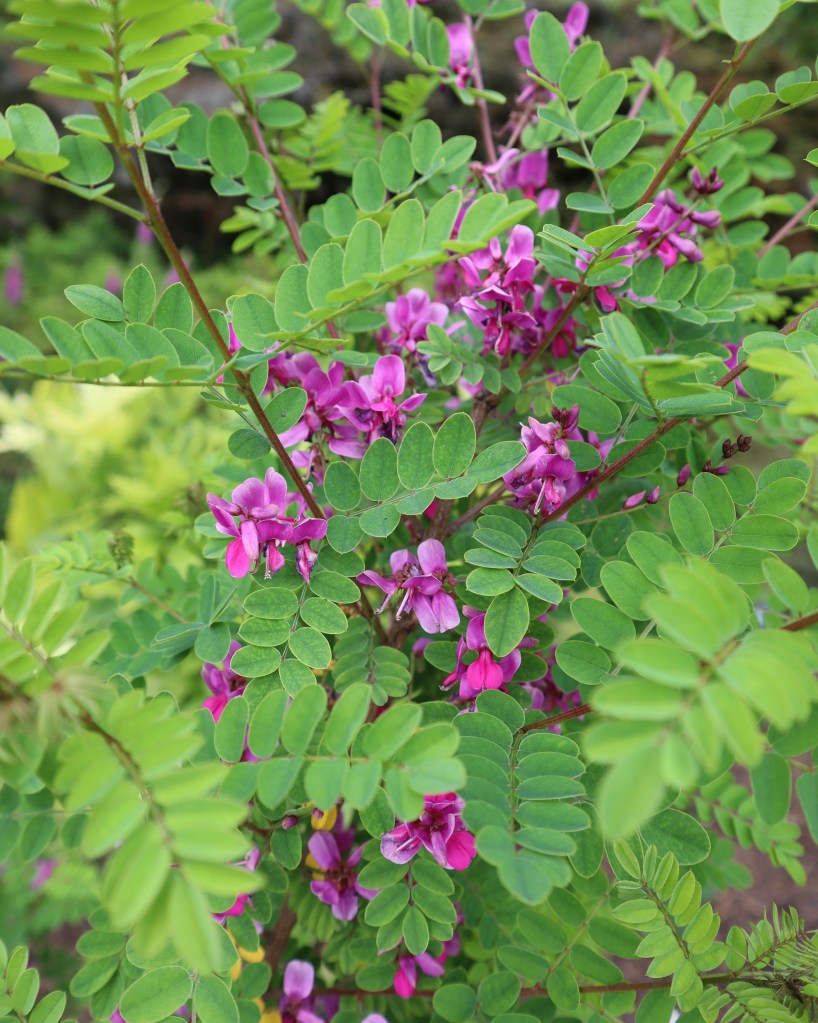
Only a handful of the more than 750 species of Indigofera (mainly tropical and subtropical) will survive in the open in the UK, and of these only a small proportion are worth growing as ornamentals. But those that are worthwhile are excellent shrubs for any garden, flowering for months through summer into autumn if given the right spot – for the most part, in a warm, sheltered situation. Their performance through the hot, dry summer of 2025 gives ample testimony of their robustness and dependability, with a few still flowering at the end of October, holding out against heavy rain, gusty wind and cold wet lengthening hours of darkness. They will grow in any soil, but are completely intolerant of winter wet, demanding free drainage.

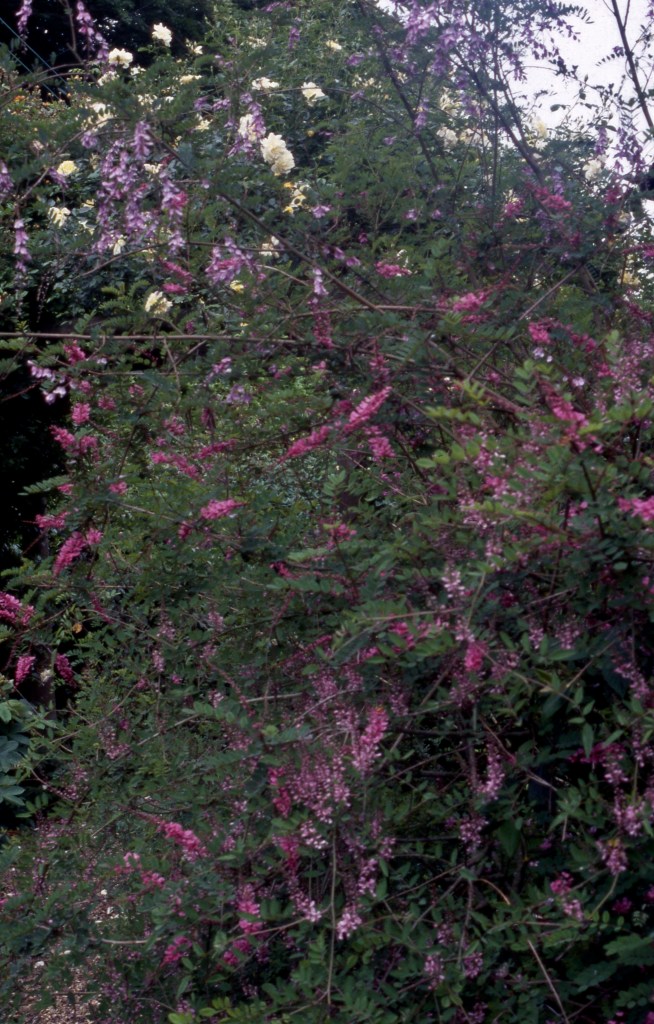
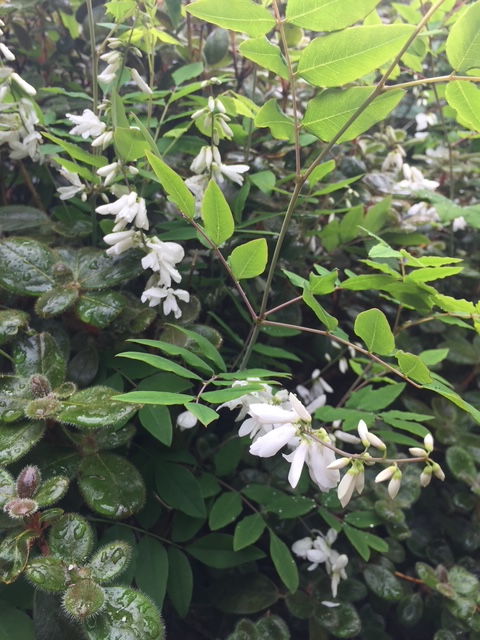
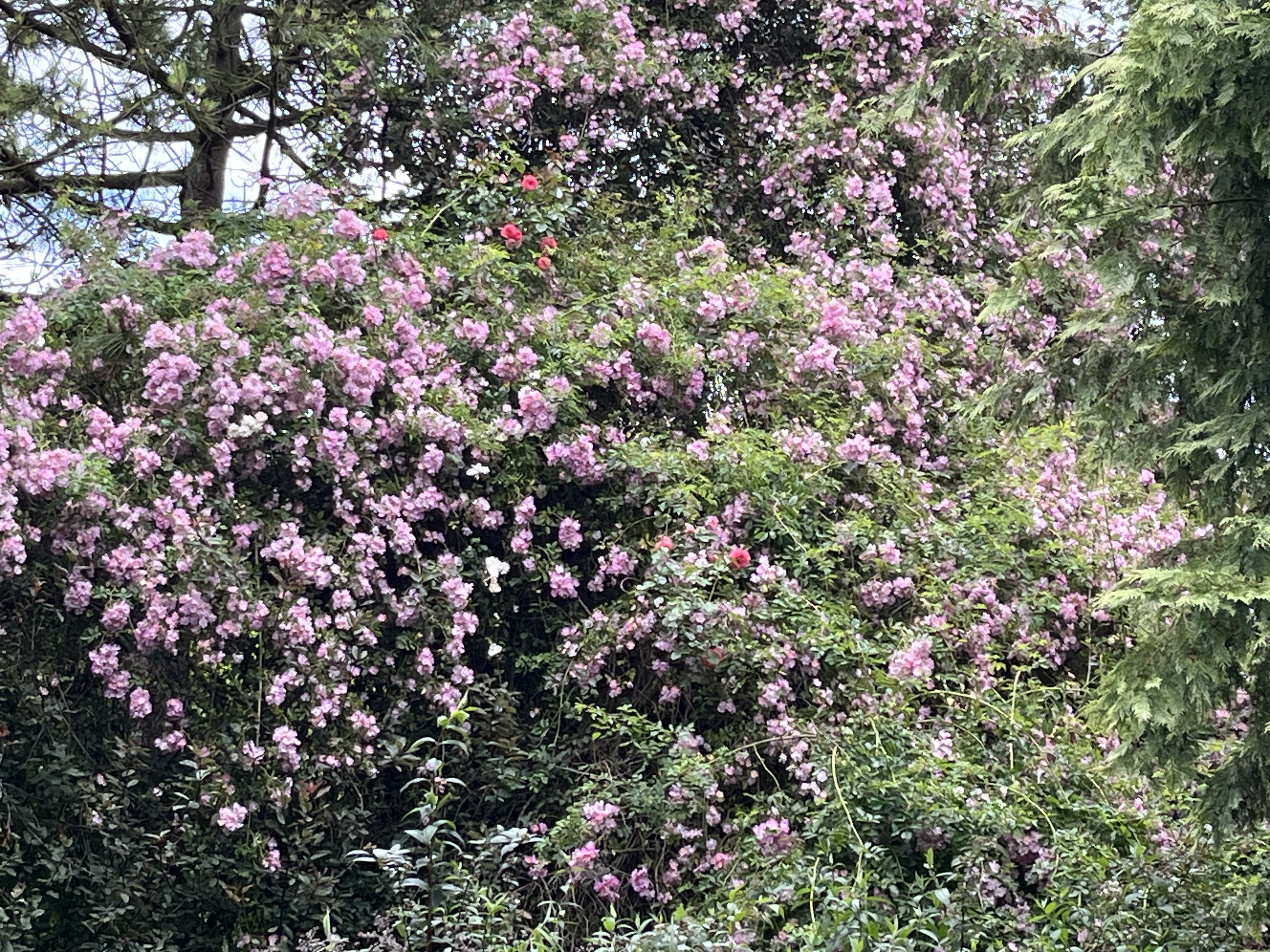
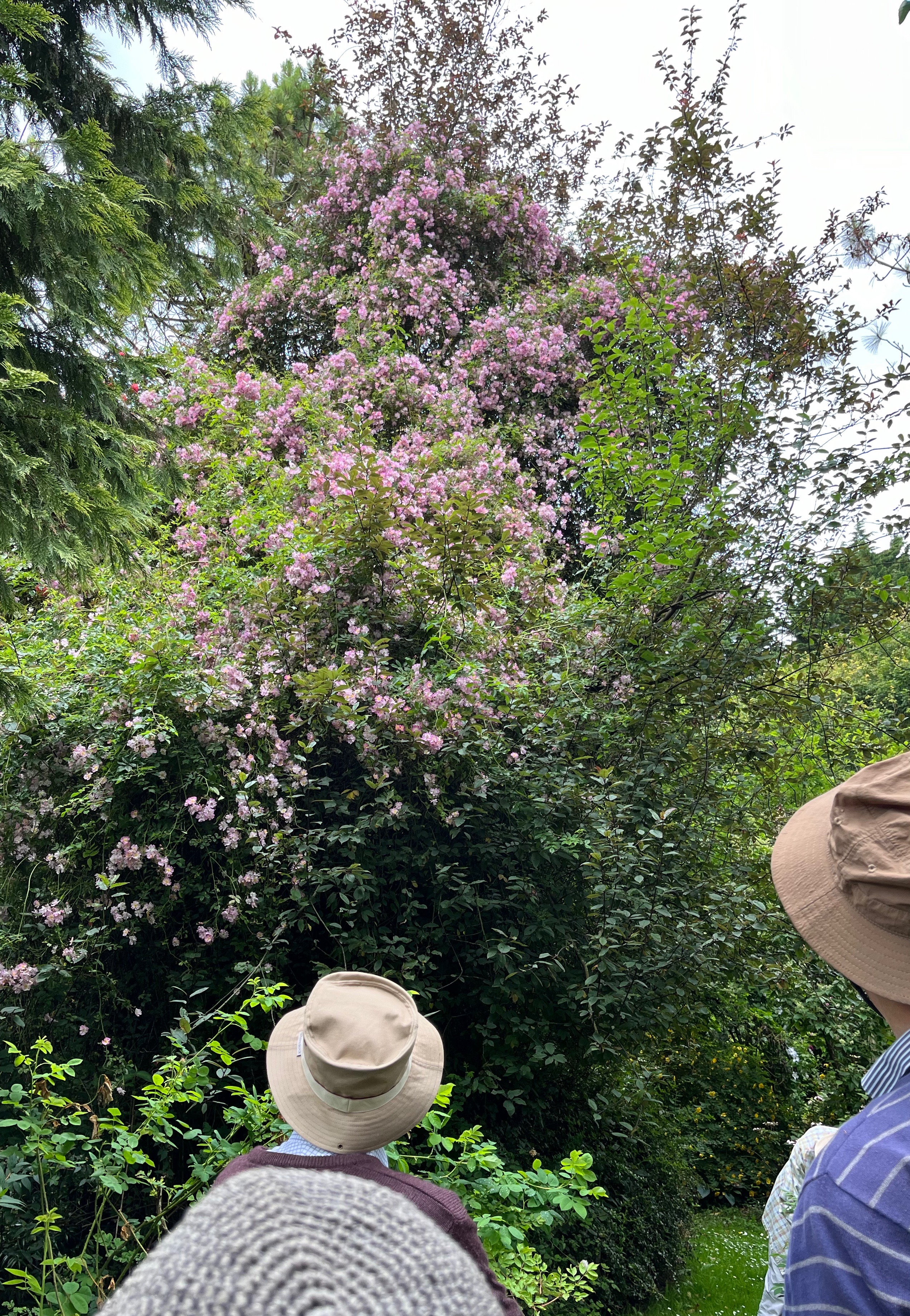
Indigofera pendula growing through a nice plant of Indigofera howelli, and into Rosa ‘Leverkusen’.

With a couple of exceptions, both species and cultivars in UK gardens are for the most part small shrubs or sub-shrubs, most with dainty pinnate leaves and the flowers appearing from the leaf axils along the shoots as they grow, providing continuous flowering through summer. They are quite easy to propagate from conventional summer cuttings, though care must be taken to keep them dry over their first winter, and it is best to leave them undisturbed in the cuttings tray.

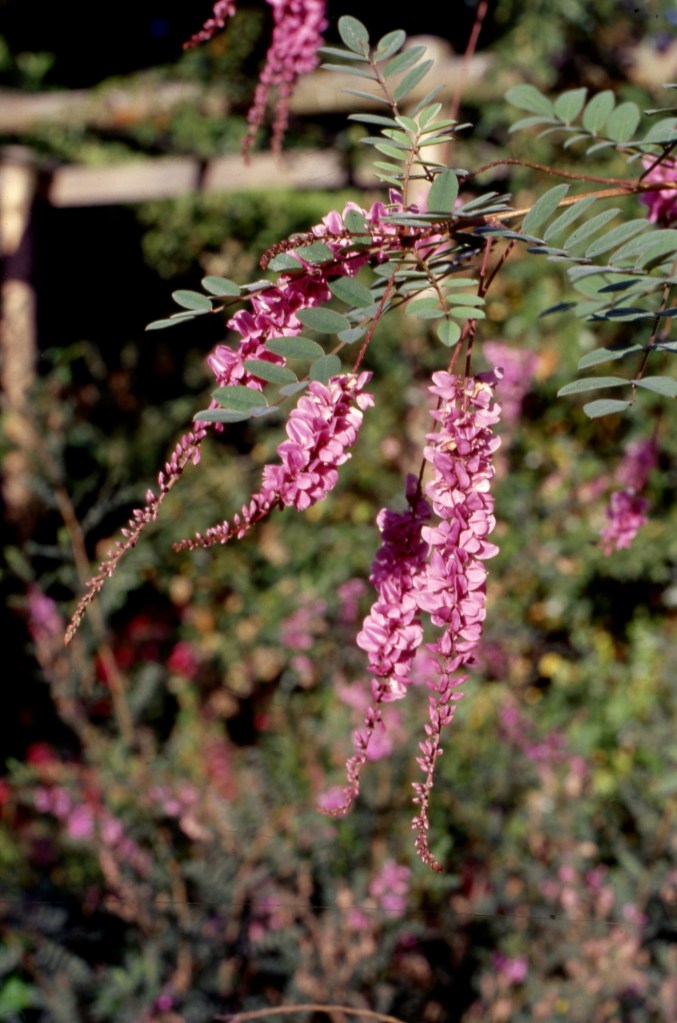
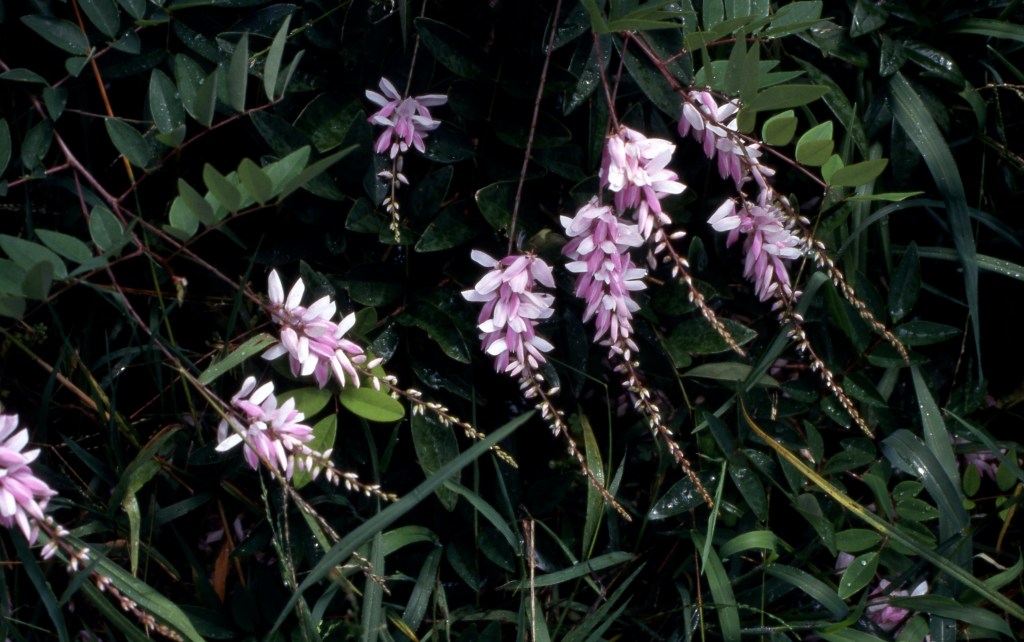
One exception to this small shrub habit is  a vigorous tall upright shrub or small tree with long arching branches that is rarely seen. Indigofera pendula seems rather fastidious as to position and has failed to establish in a number of gardens, probably due to exposure. In the wild in W. Yunnan it grows in light woodland or scrub, scrambling over and through evergreens and rhododendrons, its long pendulous flowers hanging daintily through its host’s branches. In cultivation it does best in a similar scandent situation of part shade and effective shelter from wind. Its racemes go on extending with the upper flowers dropping away or seed forming before the growing tip flowers have opened. I have measured one such raceme in the autumn at 22 inches, with the final 6 inches still bearing flowers in October. In general effect the flowers are a pale lilac, with a deeper pink within, and a greyish tone on the outside of the wings – but effective in good clusters.

I. pendula performed well in the 2011 RHS AGM trial at Wisley, and a White House Farm seedling gained an AGM under the cultivar name of ‘Shangri-La’. The late Peter Catt produced a large batch for sale, but few, if any, now seem to have survived, including my own. My existing plant, a sister seedling, is now 20 years old and a small tree, growing rather stiffly and untidily to 15ft, with pendulous branchlets. It is sited near a South wall, but in part shade. It breaks new flowering shoots from the old wood, so there is always plenty going on. It is well worth growing if you can find the right spot.

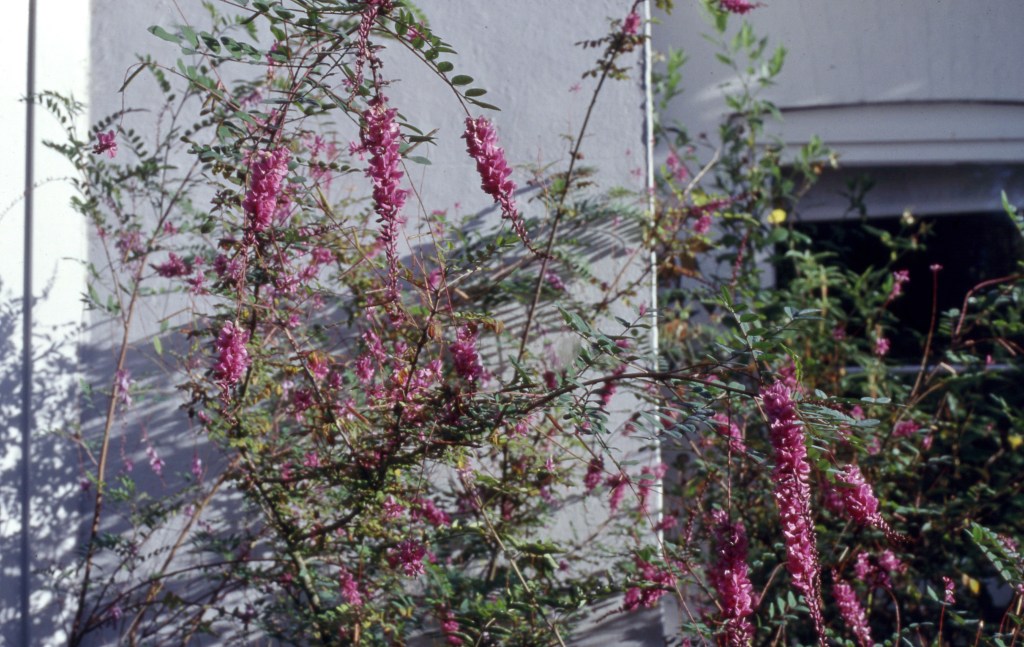
For me star of the RHS AGM trial was Indigofera howellii from northern China, still my first choice –  and its correct name. It was grown initially as I. potaninii, then as I. subverticillata and you might still find it under these names in the occasional old garden. It makes a tidy shrub, bushy and upright to about 2 metres. It was introduced by George Forrest, raised by Reginald Cory (of Cory Cup fame, an award given every year to a hybridiser) who gave it to Charles Eley in Suffolk who then passed it around. Hilliers listed it in 1925, but most plants in circulation seem to have  spread as a clone from Hergest, and it appears its distribution was more or less confined to that single source. So for a flowering shrub of the first rank, it has a messy history in cultivation, and has never really rooted firmly in the trade.

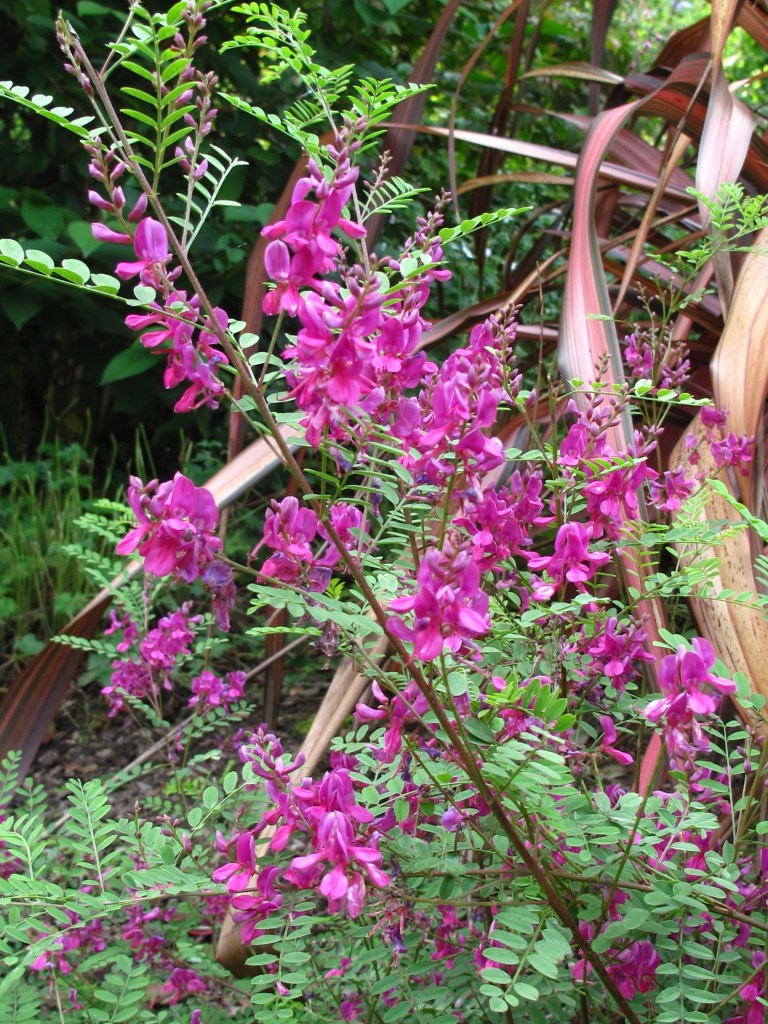
The flowers are in close-set long racemes, held horizontally or semi-pendulous, a deep crimson pink and the brightest in the genus; and freely produced from June to September. Chris Sanders is quoted at the trial  ‘Always been an outstanding plant’. To receive an AGM it was felt necessary to give it a clonal name (plants from seed could vary) so the WHF plant in the trial (ex Hergest) was selected for distribution as Indigofera howellii ‘Reginald Cory’.

Indigofera ‘Claret Cascade’ is a howellii x pendula hybrid, and a close intermediate between the two species, according to Dr Brian Schrire, who was the trial’s botanical advisor and whose taxonomic input was essential to its ultimate value. It was raised by Tom Wood at Oakover nursery from WHF seed, where the two species are growing in close proximity. It was first known in the trade as a dark form of pendula. The flower racemes are angled, but so densely packed with florets that they are often weighed down to the perpendicular, and close to pendula in style, but deeper and richer in colour, a dark purplish red. It makes a tidy, bushy shrub to about 2m.

Indigofera ‘Claret Cascade’ (image courtesy Jack Aldridge)

Indigofera kirilowii is an altogether smaller plant, with a dense, bushy habit, sprawling to a height of about 0.75m and as much across, with large, broader leaflets that are a showy yellow in autumn over a long period. Flowers are a bright rich pink, the largest individual florets in the genus, produced not only from the old wood, but also in a second flush from the same year’s young growth, which gives it exceptional continuity. A useful front of border plant with interest and colour over several months. And a useful ‘filler’ of small spaces anywhere in the garden.

There is a little seen white form – var alba identical to the type, including its bright autumn yellow leaves, except that its flowers are white. Both the species and its white form are happy in any soil  and best with plenty of sun and altogether undemanding plants needing little attention for a good return, and thus to be warmly recommended.

There is also a white form of another species –  Indigofera fortunei – and for those readers interested in the detail of taxonomy,  it differs from I. kirilowii in that it has greater vigour, and smaller flowers, with rounder rather than elliptical standards (the floral element behind the wings and the keel), and shorter racemes. Leaflets are thicker in texture, more overlapping and with a less acute apex. It is less hardy, originating from S. and S.E. China, while I. kirilowii hails from  the tougher climes of E. and N.E. Korea and Japan.

Perhaps the ‘cleanest’ pink in colour is Indigofera amblyantha. Michael Hayworth-Booth of hydrangea fame maintained there was no such colour as what we perceive as ’true’ pink, but the closest was in fact a white background uniformly covered with myriad red dots – the depth of colour dependent on the concentration of the dots, rather like the pixels in an old newspaper black and white picture. Be that as it may, in a good form, I. amblyantha is an attractive almost salmon pink, but the flowers, though borne over a long period, are too scattered and too small to make much of an impact in the garden, unless carefully sited. Plant it where you pass it closely every day and enjoy a certain individual delicate beauty; or at a distance, looking into the light. With its ‘see-through’ habit, it looks like a pale pink cloud, with a nice small tree appearance. It is perfect for shading Japanese azaleas and Hydrangea serrata, as root competition is minimal with its downward-thrusting thong-like roots. The flowers are variable in quality from seed – so propagate via cuttings.

I. amblyantha – a somewhat uncharacteristic image, in which I pulled flowers together deliberately for the shot

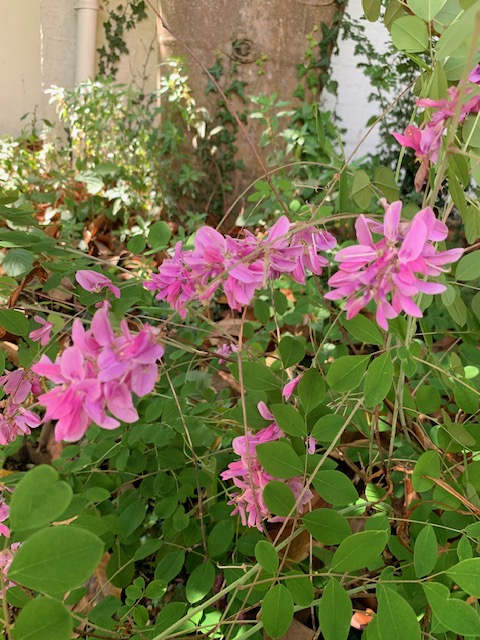
Another pleasing pink, also rarely seen, possibly because it needs some attention (frost protection and watering until established) and is not the hardiest of the ‘hardy’ species, is Indigofera decora. To be at is best, about a foot high, with large bright pink bicoloured flowers, it needs sun, warmth and perfect drainage. I saw it in suburban Sydney in a narrow strip of a border a bit over a foot wide, running alongside a path from street gate to house and flanked by a baking low wall. It had suckered for years and taken over the ground completely, covered in flower, a tight monoculture. What a picture! Here at WHF it is less generous, but grows and flowers.

Indigofera decora – needs a warm sheltered sunny situation, preferably against a wall: this one is in our conservatory
I. decora – showing the bicoloured effect

I have a plant in my conservatory that flowers very well (above) and one at the base of a south wall, outside, suckering gently along with Mahonia fortunei, but blooming less conspicuously. It is full of charm and a lovely colour.  Perhaps the best way of growing it is in a large pot where it can be enjoyed all summer and brought in for the winter. It is worth the trouble.

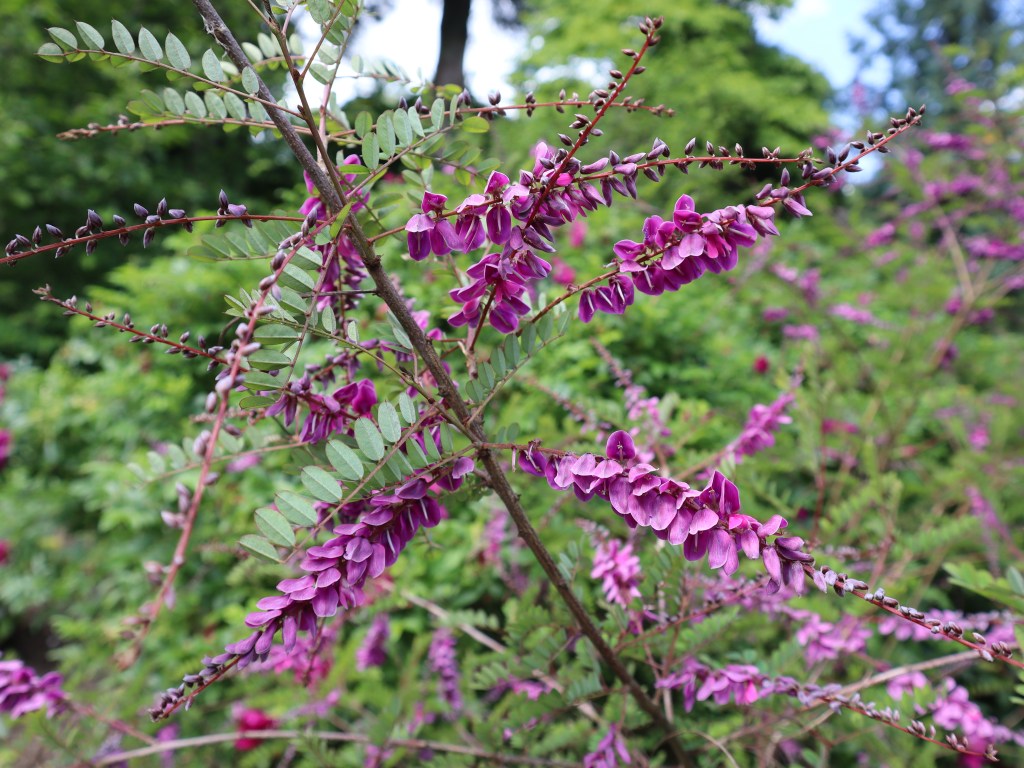
The indigofera most frequently seen both in gardens and in its natural habitat in the Himalaya, is Indigofera heterantha. It makes a strong upright bush up to about 2m, and because it flowers on new wood it benefits from being trimmed. It has a relatively compact, blunt flower raceme, and small, neat, elegant leaves. It is the hardiest species in the UK and thus the most widely available in nurseries. But caveat emptor, as this species is very variable from seed, so you should take care to acquire a good form rather than any old dog. An excellent form from the Bulk Nursery in Boskoop was awarded the AGM. The flowers are a bright purplish pink and freely produced throughout the summer. If it is reliability you are looking for, this is your plant.

Indigofera heterantha at Cliff Garden, Lee – image courtesy of Chris Sanders

There are one or two other species worthy of note. Indigofera himalayensis in its cultivar named form of ‘Silk Road’ has pretty foliage, but with me is not a generous plant with its flowers: it flowers early in May, with no repeat flowering. My plant here for 6 years in part shade has failed to impress. Perhaps part shade has an influence.

Jack Aldridge tells us that there is an excellent form of I. himalayensis, rarely seen, and known as I. dielsiana. It is the first indigofera to flower, in early to late spring, and develops into a lovely vase shape. Brian Schrire eulogises two old plants near Jermyns House at Hilliers which reached 2m high and 3m wide “and what a sight they were in full go”. Jack is equally enthralled by a plant he saw at Stone House Cottage and his photograph certainly reflects his excitement and he describes the overall effect as ‘fantastic’.

I. dielsiana, a magnificent form of I. himalayensis at Stone Cottage (image courtesy Jack Aldridge)

Indigofera hebepetala has the darkest flowers of all, a very distinctive deep pink with a rich crimson standard. The habit of the plant I grew was stiff and gawky, but the flowers at close quarters quite striking. I lost mine to honey fungus. A species I introduced from W. Yunnan, Indigofera hancockii, reached an AG, but failed to get the vital -M in the RHS AGM trial, but was thought by Chris Lane to be worth growing. It is certainly hardy, and a good foliage plant with a fresh look throughout the summer.

Indigofera hancockii – flowers tend to be obscured by the leaves, but a good foliage plant (image courtesy Jack Aldridge)

Maurice Foster

We are now taking bookings for group visits in 2026: email us at whitehousefarmarb@gmail.com

Featured

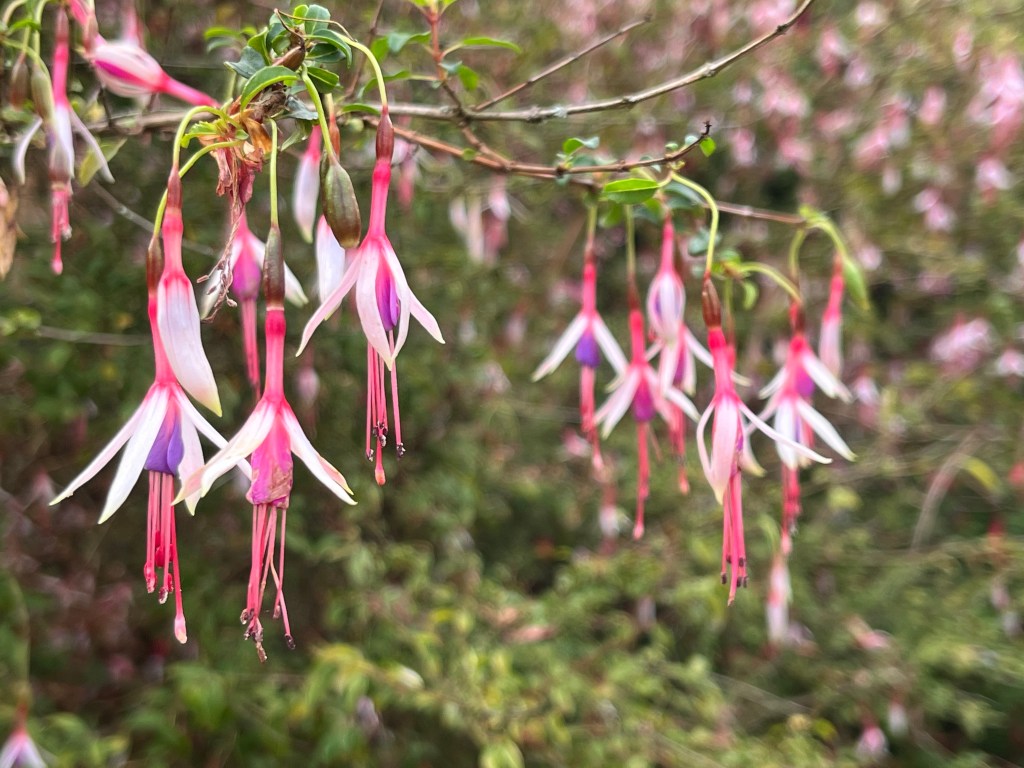
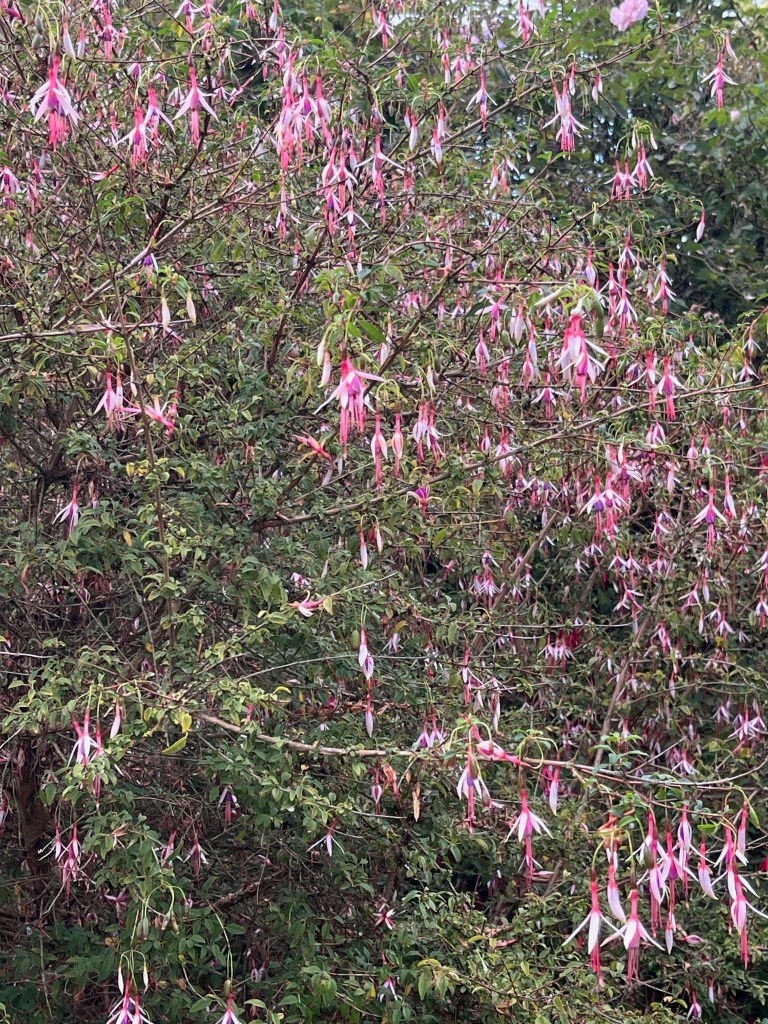
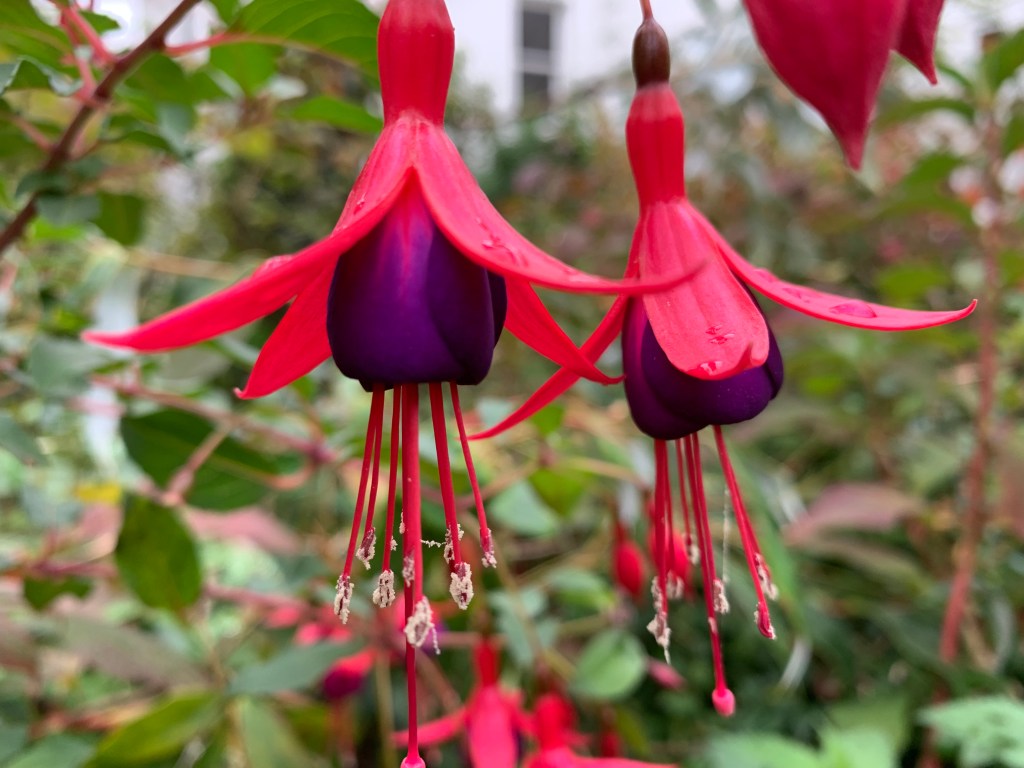
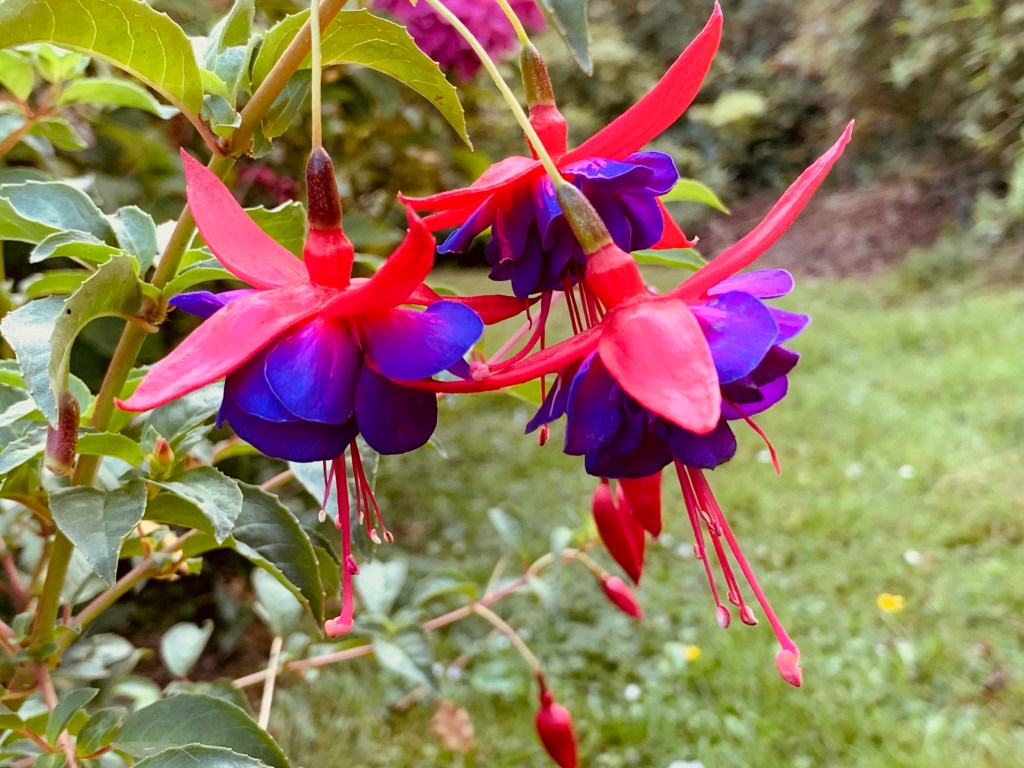
The humble fuchsia: or how to make summer last until November

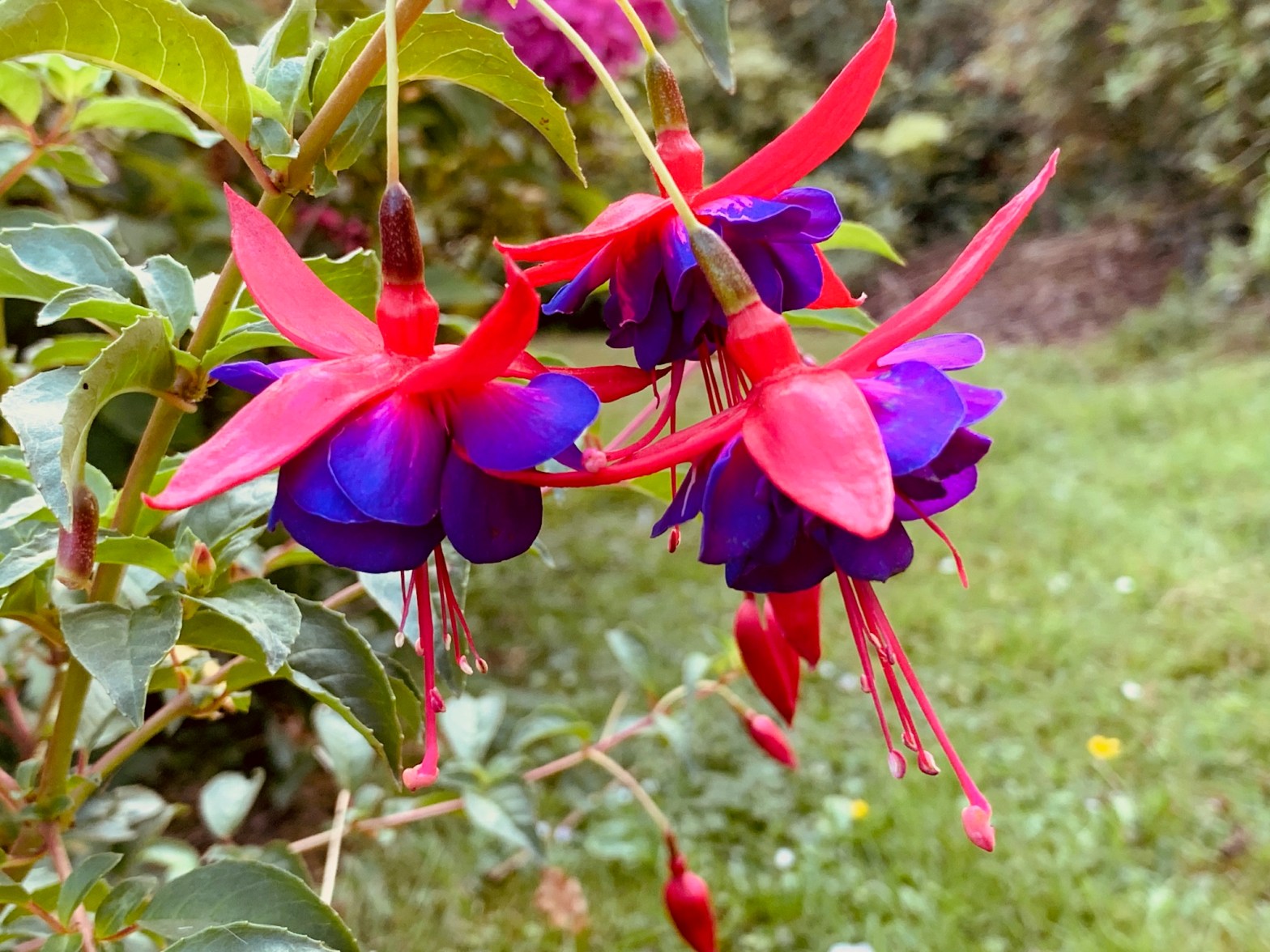
The heat and drought of this summer has seen some rather unexpected successes. For example, here we are in mid-October with both fuchsias and indigoferas still effective in the garden, having excelled themselves since June. I’ll write more on indigoferas later, but the humble hardy fuchsia is making such a splash at this time of year, as winter draws in, and the clocks go back, I feel it warrants special mention now. There are also, now, plenty of fuchsias to choose from, many in a wide range of colours and many with an RHS AGM, and some that warrant status as effective flowering shrubs.

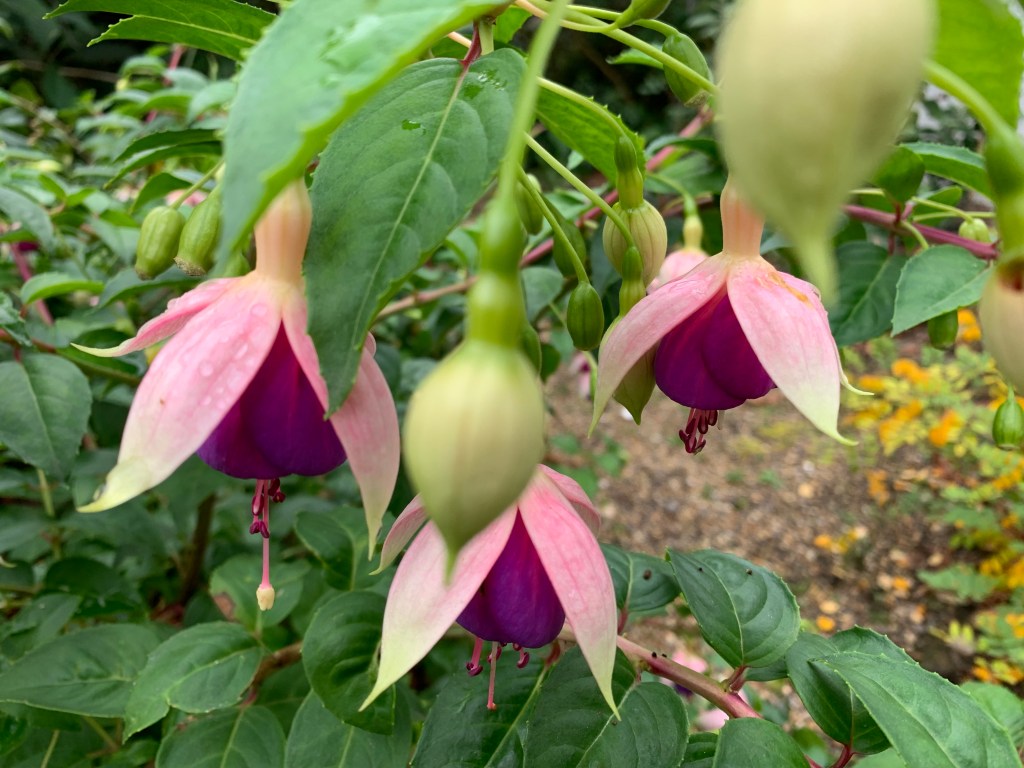
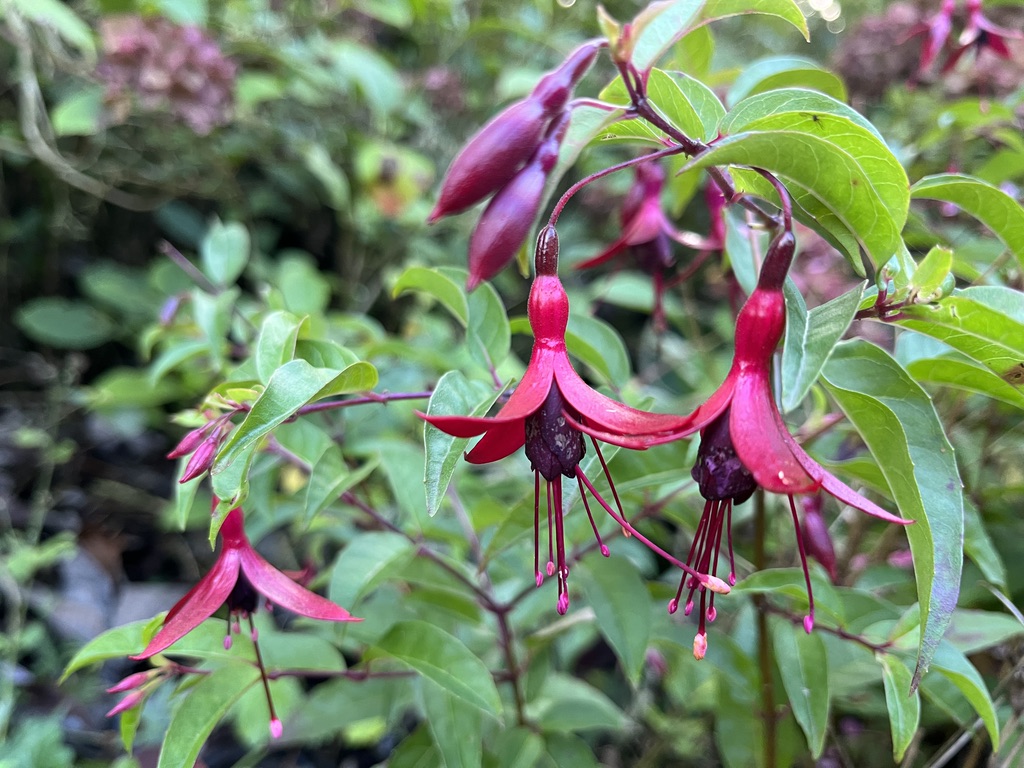
Fuchsia ‘Baby Blue Eyes’, flowers from June to November

Curiously, fuchsias were allegedly originally introduced from Latin America for their sweet fruits, rather than their flowers; conversely runner beans were brought in from the same source for the quality and rich colour of their flowers, rather than their fruits.

‘Hardy ‘ fuchsias are easy to grow in any soil that retains moisture in summer, but which doesn’t keep their feet wet in winter: they need good drainage. They perform best with plenty of sun providing that there is moisture at the root; and their tolerance of dry periods improves with age as they develop thick and deepening root systems. They will also tolerate part shade and still perform well.

Once established, they will readily survive winter cold, especially with the help of a protective surface mulch – which also contributes to feeding the soil and restricting water loss. Some have cold-resistant top growth that survives through the winter, and may be pruned up into small trees; others may be cut right down, either by winter cold, or by pruning, like a herbaceous plant. These will make up to 4/5ft of growth by August, flowering all the time. Other fuchsias are quite dwarf – useful for peeping out of a border wherever there is a small space available. All fuchsias repay good treatment (fertilizer, mulch) handsomely, and will flower freely from June to November, gradually diminishing as daylight length shortens. Some are highly effective in the garden landscape, providing splashes of vivid colour into October and November; others are less of a landscape feature but have a great deal of charm at close quarters.

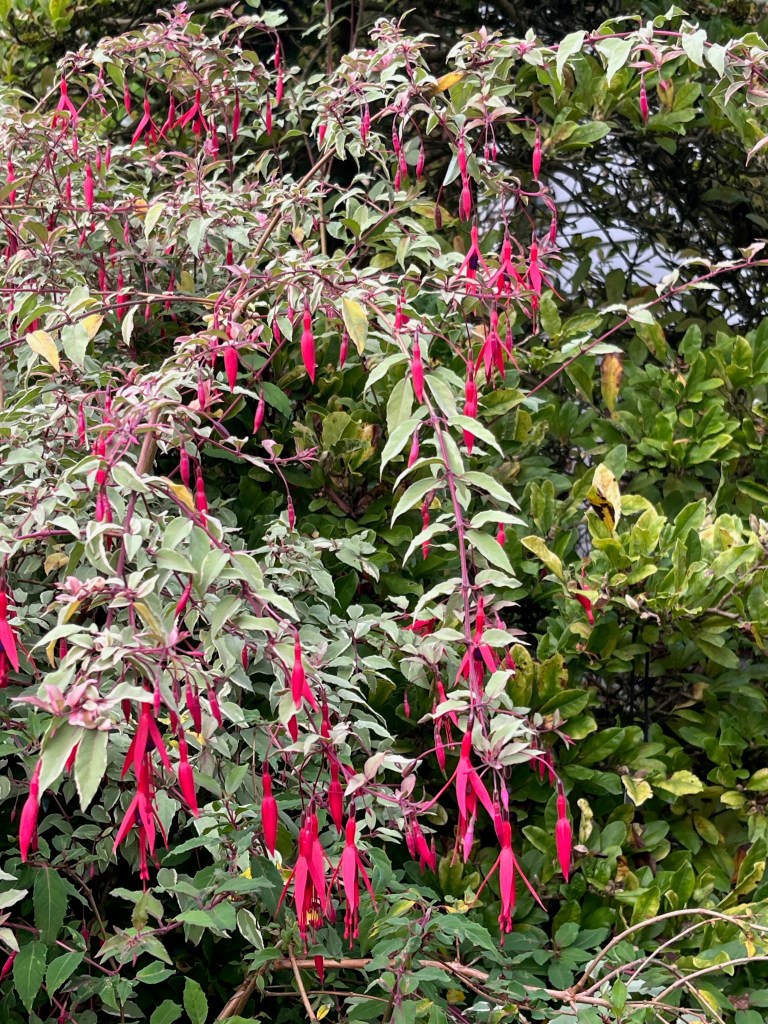
Of the species, F. magellanica var gracilis (left, in the variegated form) is worth growing as a shrub, making a 3ft light twiggy plant, with narrow flowers of the traditional turkey red sepals with purple petals. The variegated form, if such is your taste, is as hardy, as long as you are prepared to cut out the reversions to green (which caused its AGM to be rescinded in 2012).  There are various other forms of this species in similar mould, all of which are reliable and hardy. 

F. haschbachii, is similar in flower, and less often seen – but is a perfectly hardy plant of greater vigour that we have sprawling through a large hydrangea at the edge of the arboretum. It seems rarely out of flower.

Of the many hybrid cultivars (the specialist nursery Roualeyn in N. Wales, for example, lists more than 70) the toughest and most vigorous we grow is ‘Lady Bacon’ which here shrugs off winter cold and makes a 10 x 10ft bush dripping with flower for many months. She seeds herself freely in our gravel paths and is perfectly at home.

All elements of the flower are narrow, rather like the species, from the narrow pink tube opening into off-white linear sepals to the narrow blue/violet petals fading to magenta, with long protruding stamens and stigma. The profusion of flower makes up for its rather subdued colour in the landscape.

Hawkshead‘ (AGM 2002) is another fuchsia that comes through winter with only minor twig damage, and its myriad effective white flowers show up in the garden scene for weeks, well into the winter. It makes a shrub of about 5/6ft.

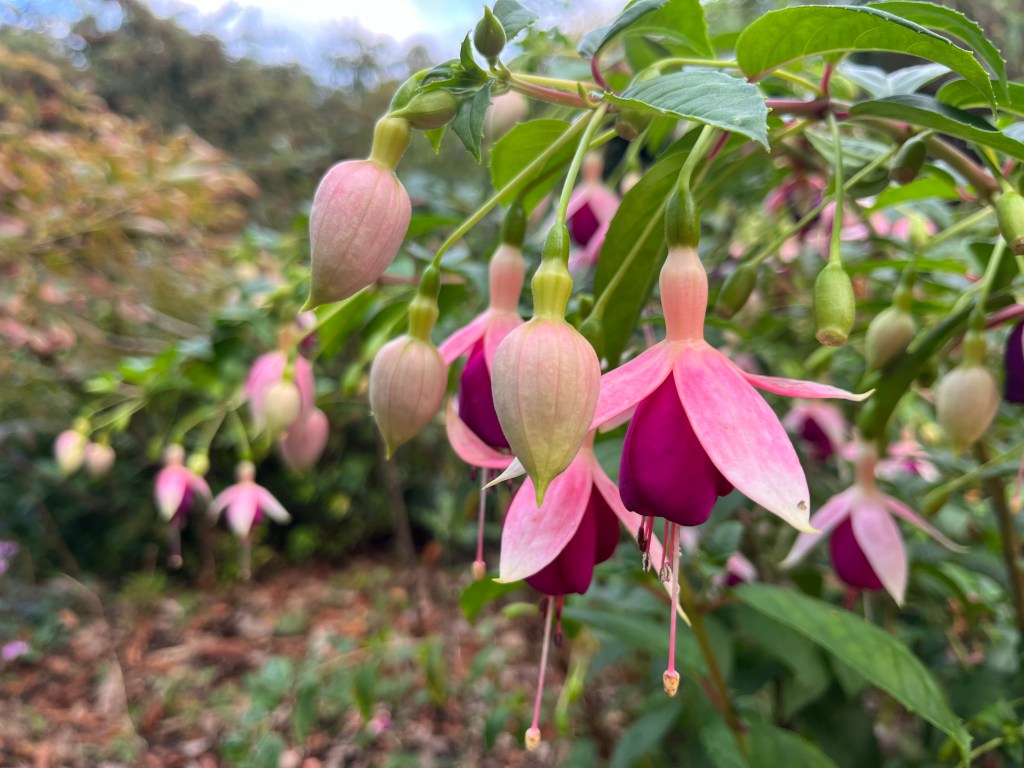
But perhaps the star of the RHS AGM (1999-2005) was ‘Baby Blue Eyes’ (AGM 2004). It, too, comes through winters with minor twig damage, is easily cleaned up with a pair of secateurs, and offers a vivid mass of bright pink sepals and blue/violet petals into November. ‘Baby Blue Eyes’ is perhaps the most colourful and free flowering hardy fuchsia of all, lighting up any corner of the garden in sun or shade. It is a first class flowering shrub with more and brighter flowers than the healthy and easy semi-double scarlet and bluish/violet ‘Margaret’ – which is also vigorous and hardy, growing to 5ft in a season if pruned to the ground.

Fuchsia ‘Baby Blue Eyes’

The veteran ‘Mrs Popple’ (AGM 1993) introduced in 1900, is similar to the ancient (1830)  ‘Riccartonii‘ (AGM 1993) but with flowers a darker violet/purple and about twice the size, her skirts a rich dark violet with stamens protruding prominently. She grows to about 4ft.

Fuchsia ‘Riccartonii” (1830)

I’ve seen ‘Riccartonii’ making large bushes up to 5/6ft and as much across along the coast, and near old abandoned cottages in the West country, where it continues to thrive unattended for decades. It can make a strong and effective flowering shrub, and is sometimes used as hedges, clipped but still flowering. It is perhaps the classical fuchsia’s fuchsia of popular imagination, with its mixture of red and violet/purple.

A plant of similar colouring, but if anything a more striking dark blue/violet, and with notably semi-double skirts, is ‘Army Nurse’ (AGM 1993), introduced just after the war and appropriately named for its red and blue colours (blue skirt and red cape). It is a less vigorous, and a smaller but upright plant, at its best later in the summer.

In contrast to these ‘traditionally ‘ coloured fuchsias is a medium-sized spreading plant from 1871 called ‘Rose of Castile Improved’ (AGM 2002). This has large flowers of an unusual colour  –  with the palest pink tube, and pink-stained white sepals crowning petals of a reddish/violet, fading to a paler reddish/purple. I have propagated this from a plant in my grandmother’s garden over decades, and it holds its vigour well, and performs every year in spite of being cut to the ground in winter. Its survival in lists for over 150 years is the best testimony to its distinctive quality.

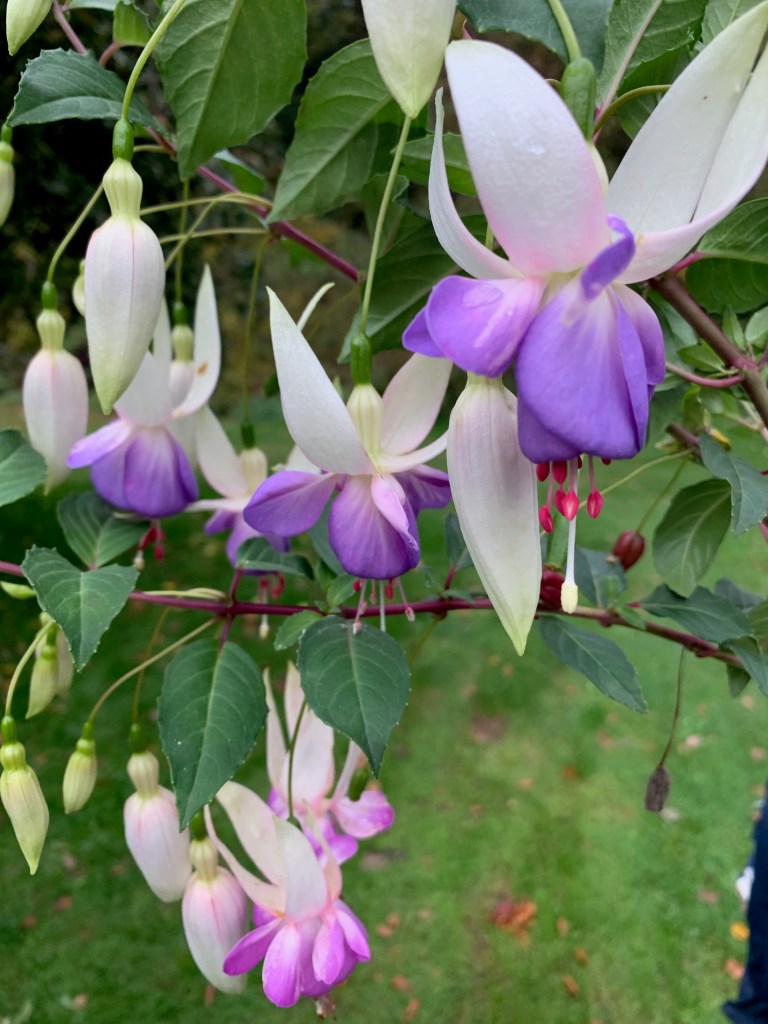
The closest to blue we grow here is ‘Sarah Delta‘, which has large flowers scattered freely on a 4ft spreading bush. The white sepals are faintly brushed with pink and reflex strongly to promote the untidy semi-double skirt that’s a pleasing blue violet with a white stain spreading from the base, red stamens and a white pistil. At dusk, in a soft evening light, they appear a true blue. They fade to a mauve/pink quite quickly in strong sun. It is a soft, fast growing plant that continues to produce buds and flowers all along the shoots until the November weather closes in.

Fuchsia ‘Sarah Delta’

‘David’ (AGM 2004) is close to the species in flower size and colour, and in garden effect, but the petals and sepals are a little shorter and broader. Here it grows and flowers freely in part shade, making a bush about 5x5ft and has never been cut by frost. It gained an AGM after trial. It makes a good flowering shrub.

Fuchsia ‘David’

Also with an AGM after trial is ‘Saturnus’ (AGM 2004). This is usually cut to the ground by frost, but is quick to recover in spring to make a low , multishoot , upright, twiggy sub-shrub flowering freely for many weeks, with a skirt of soft mauve/violet capped by strongly reflexing turkey red sepals. It is useful where space is limited and associates well with Japanese azaleas or small hydrangea serratas. A Chris Lane favourite.

Fuchsia ‘Saturnus

The only pest to have significant impact on fuchsias at White House Farm is the capsid bug: this eats young buds and shoots, preventing flowering and distorting growth. A couple of timely applications of any systemic insecticide soon solves this problem.

Fuchsias are among the easiest plants to propagate, either from summer cuttings under plastic or mist, or from bits of hard twigs simply stuck in the soil. Indeed a few stout twigs may well root in a glass of water on a warm but shady windowsill.

We intend to plant more hardy fuchsias. We find them a versatile, easygoing, generous group of plants that provide colour and form throughout the summer and extend their colourful bounty deep into autumn, when most flowering plants are hunkering down for the dark anonymity of winter.

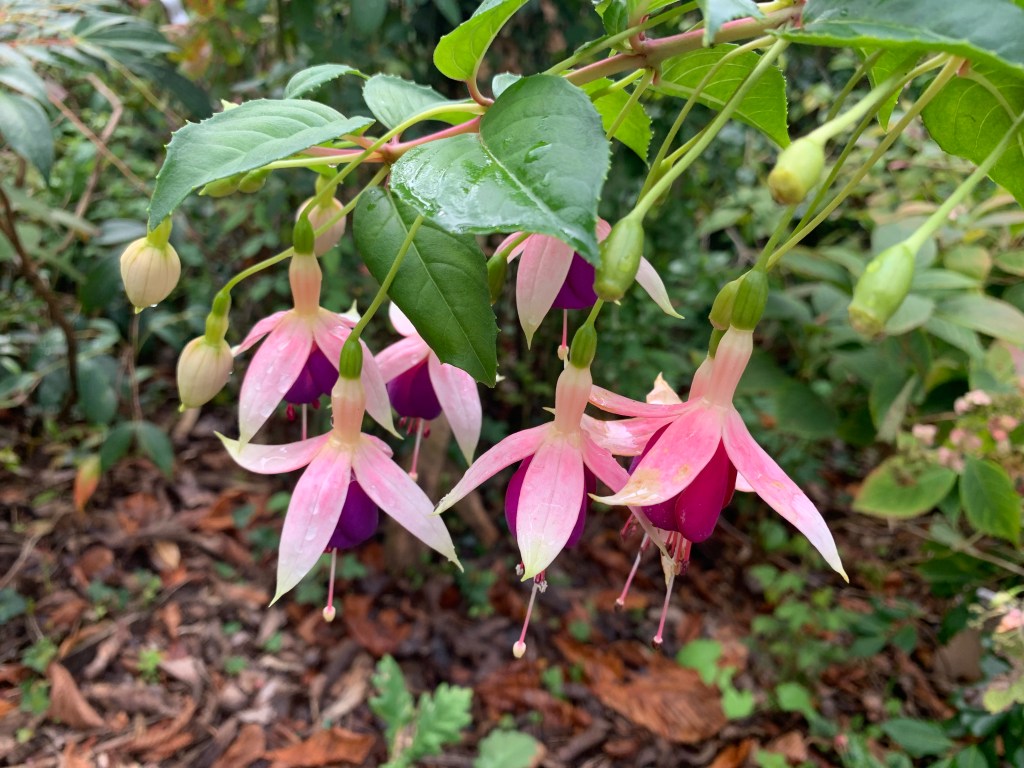
An old variety that was labelled ‘Dark Eyes’, but has turned out not to be….suggestions welcome.
Featured

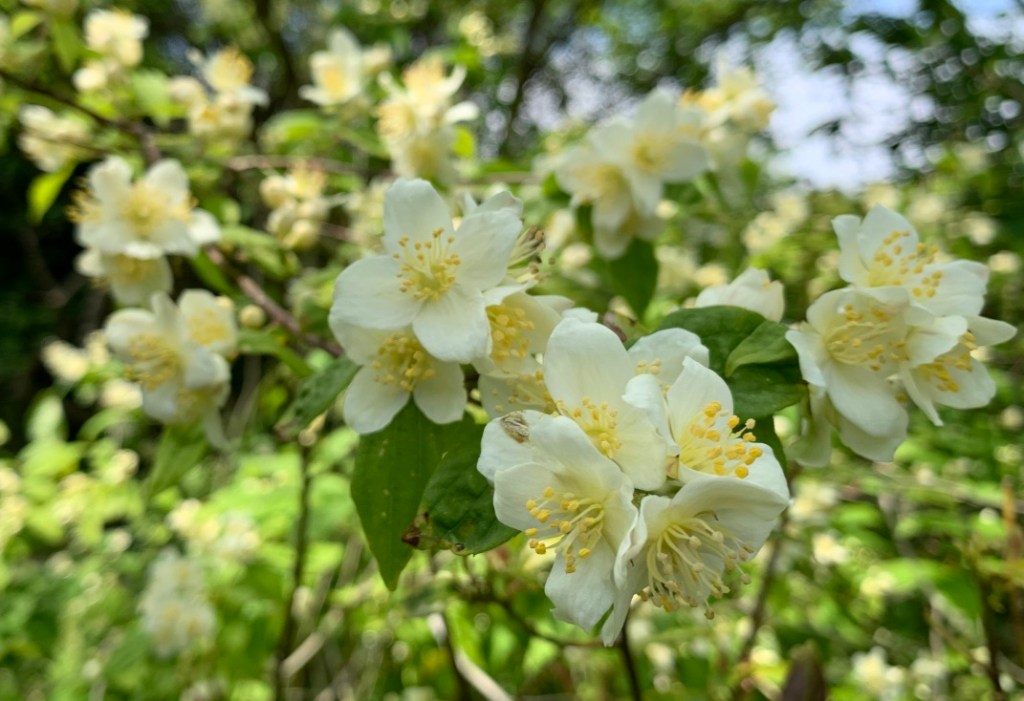
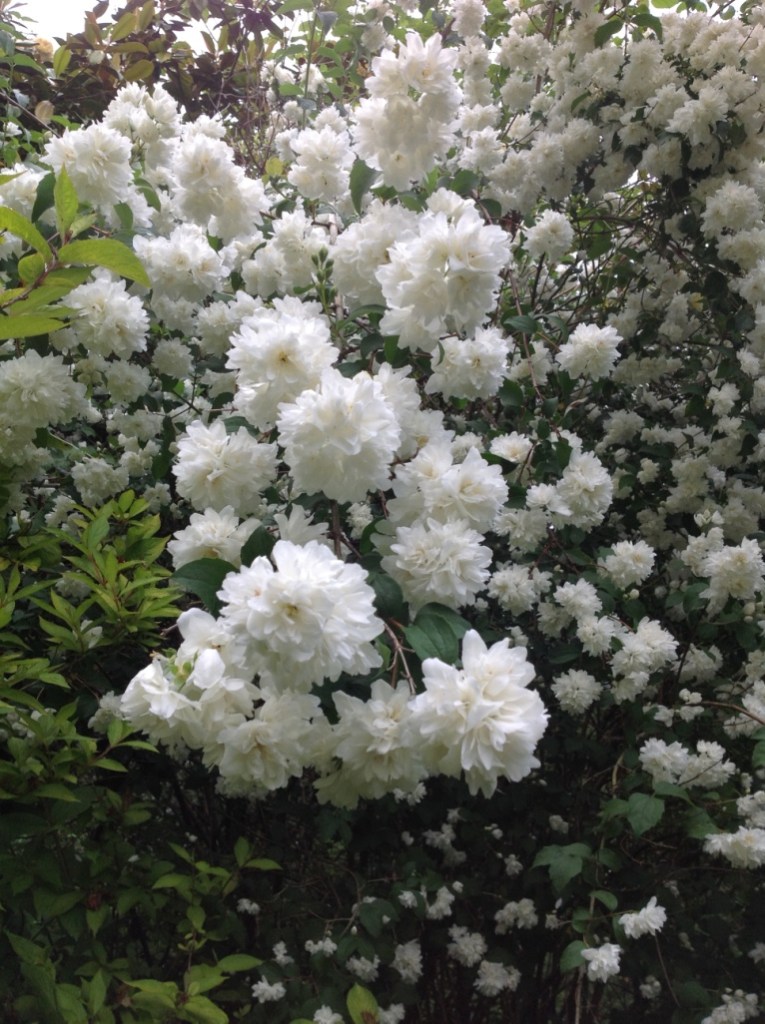
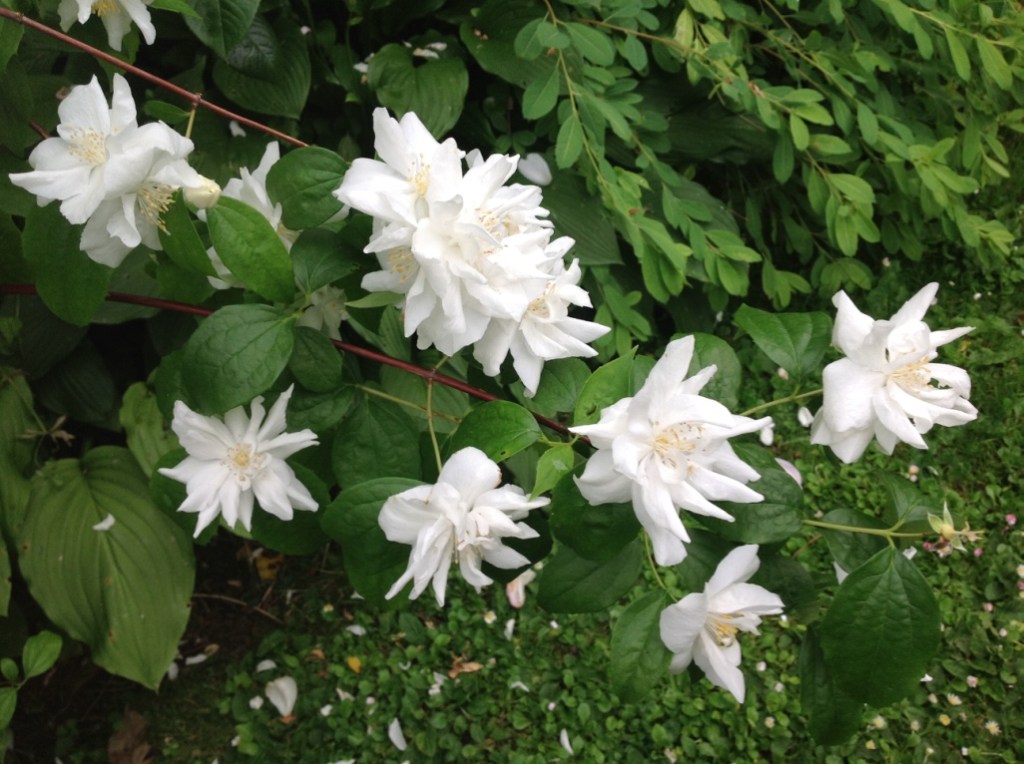
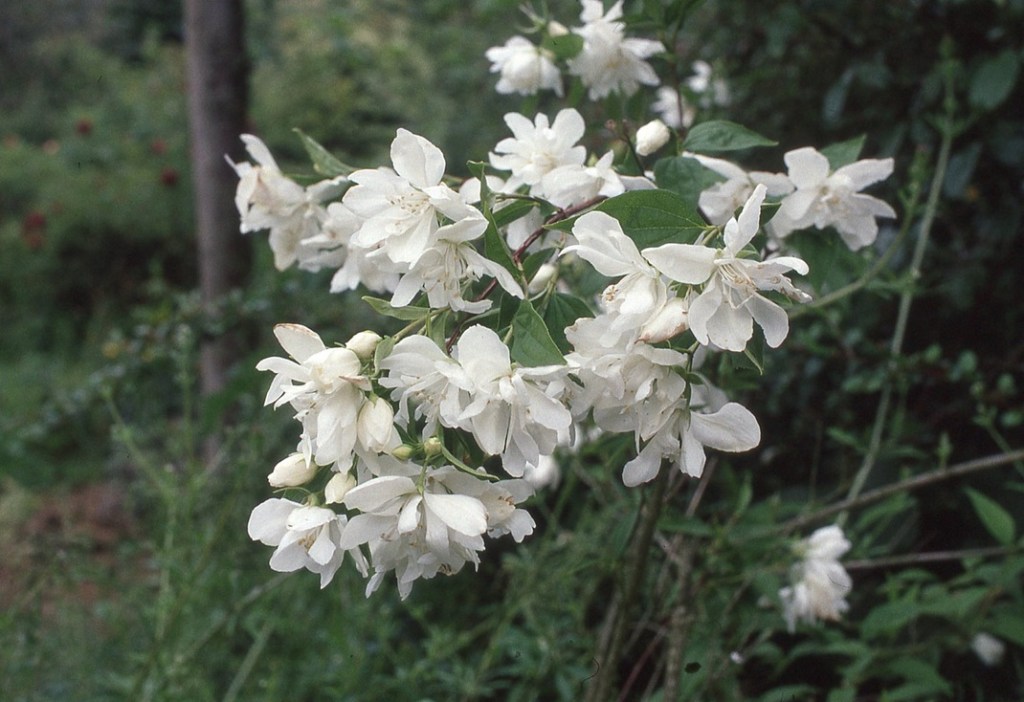
The variety and versatility of Philadelphus

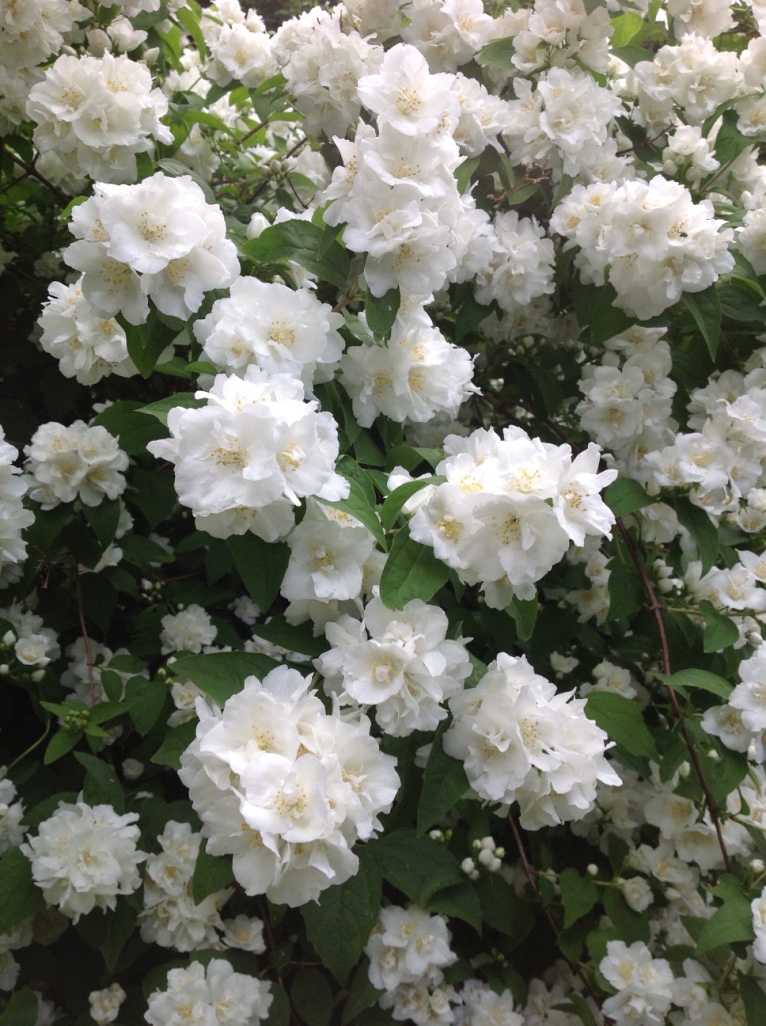
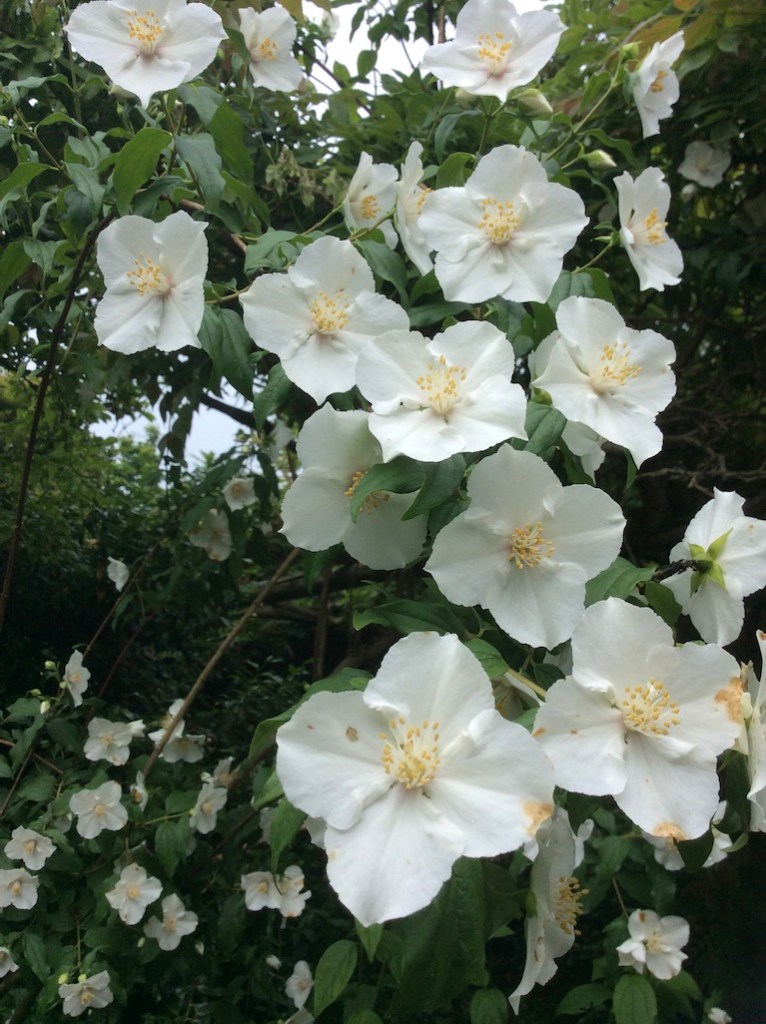
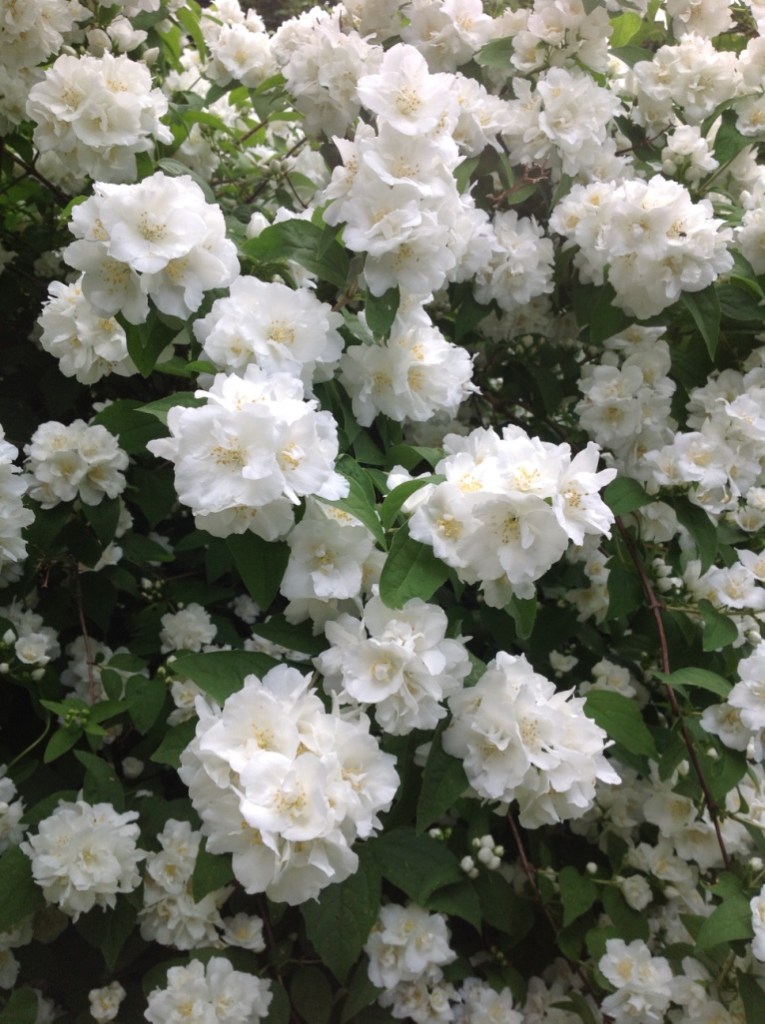
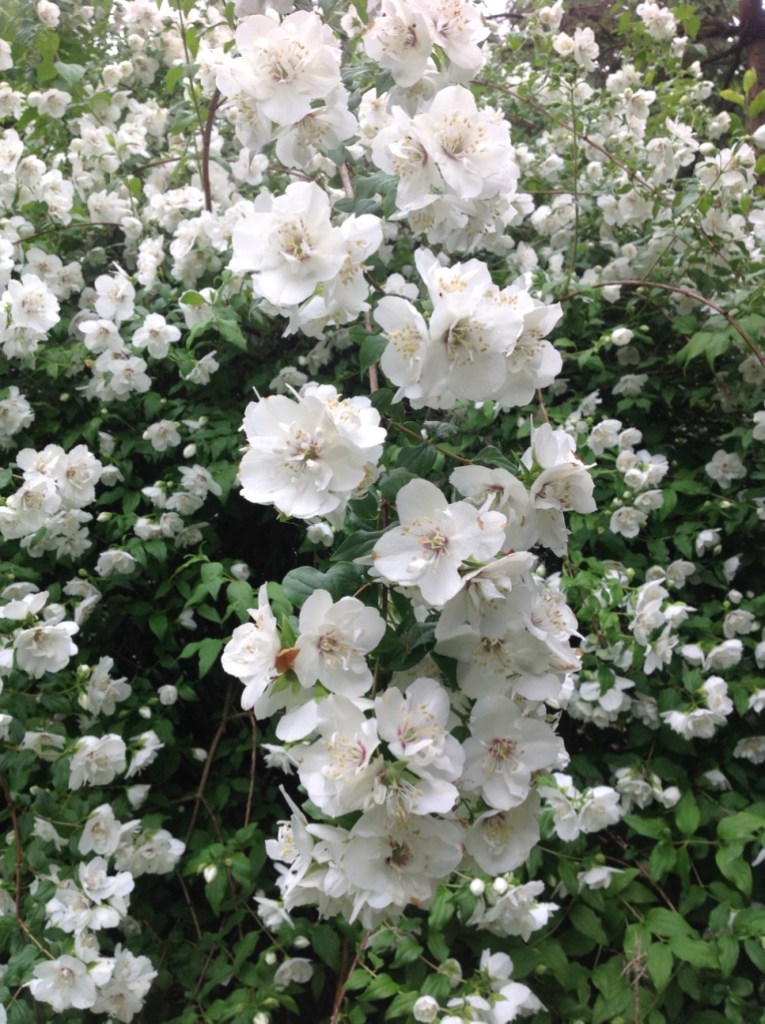
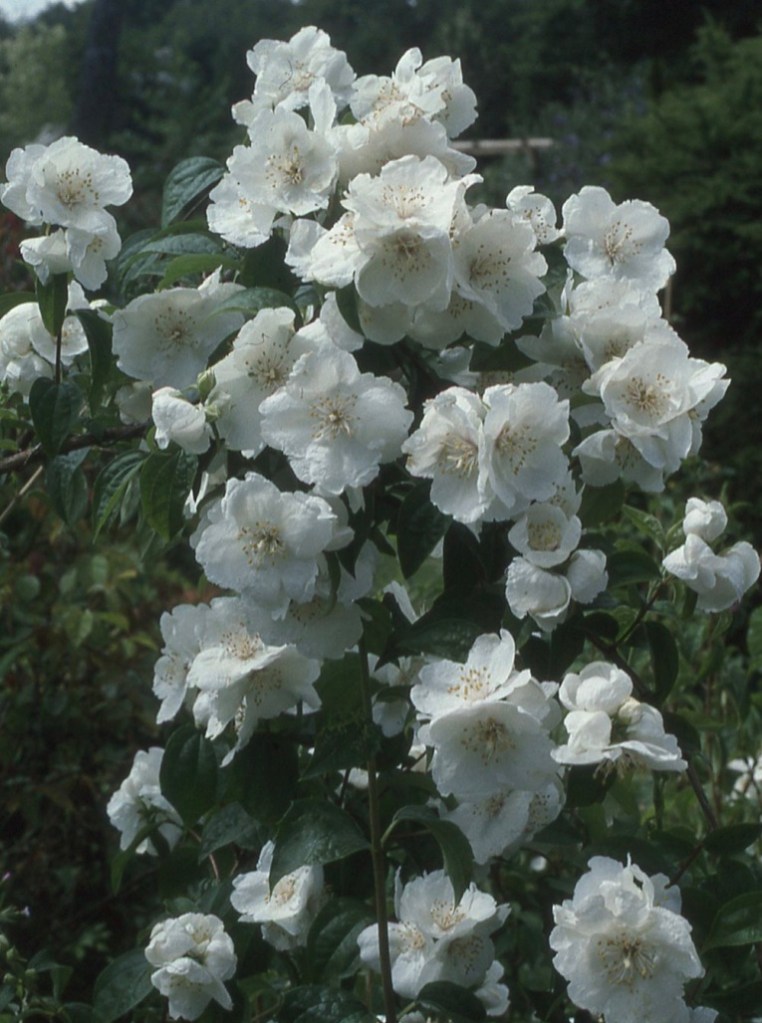
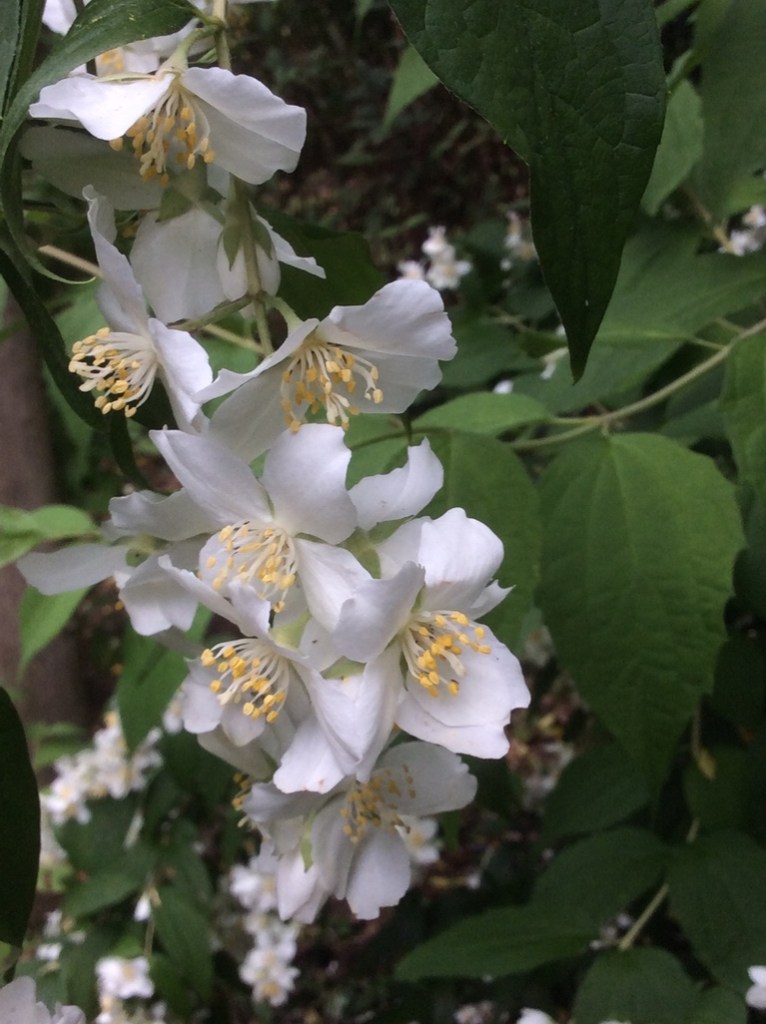
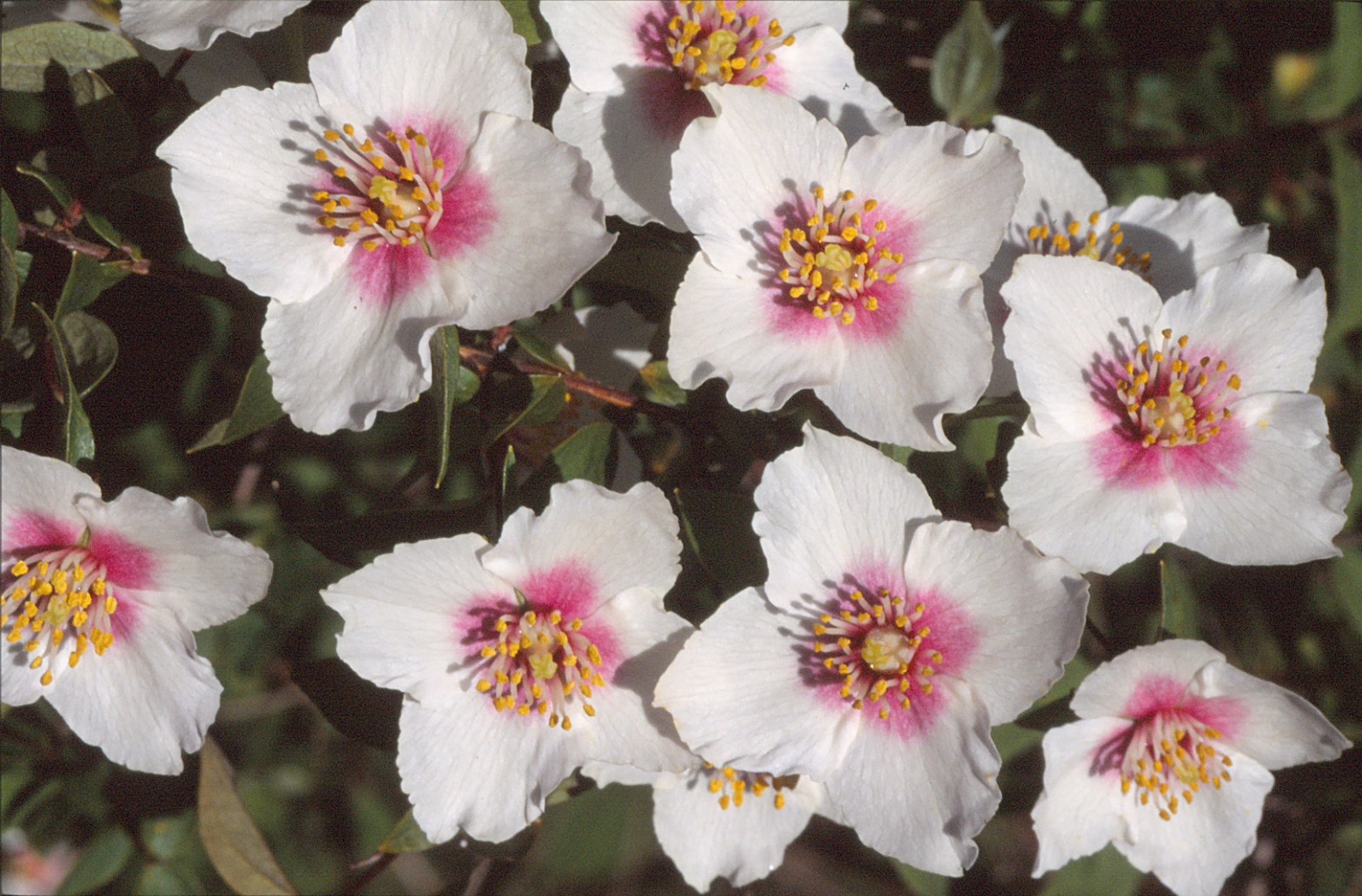
Philadelphus ‘Belle Étoile’

Along with an estimated 65 other genera, Philadelphus is a genus split between Asia and the Americas, with elements migrating north from Eurasia when the continents divided. Species developed independently, with good ability to adapt to the changing climatic and geological conditions. New species of Philadelphus are still being discovered today in the mountains of northern Mexico, for example, with new plants growing in various collections from recently collected seed.

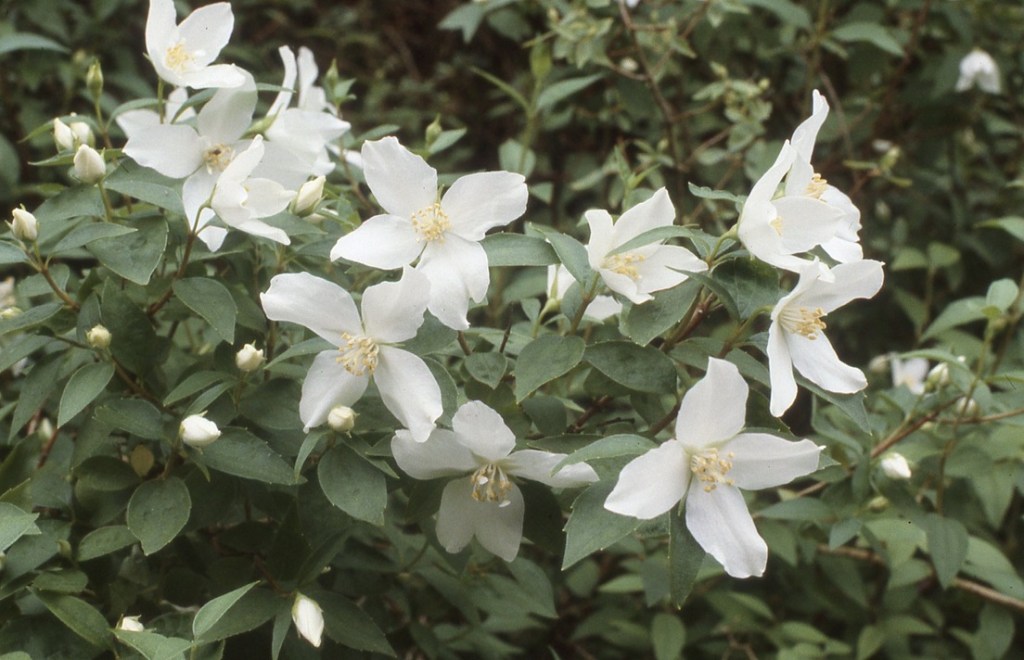
Phildelphus species often have few clearly distinguishing characteristics, and attempting to sort them out can lead to a serious risk of brain damage, their disposition to mate with anything  similar nearby adding to the taxonomic and nomenclature problem. The cultivars, though, are a different story – offering a wide range of clearly different flower forms and habits. What follows attempts to introduce this range.

‘Casa Azul’, a recent hybrid with Mexican parentage

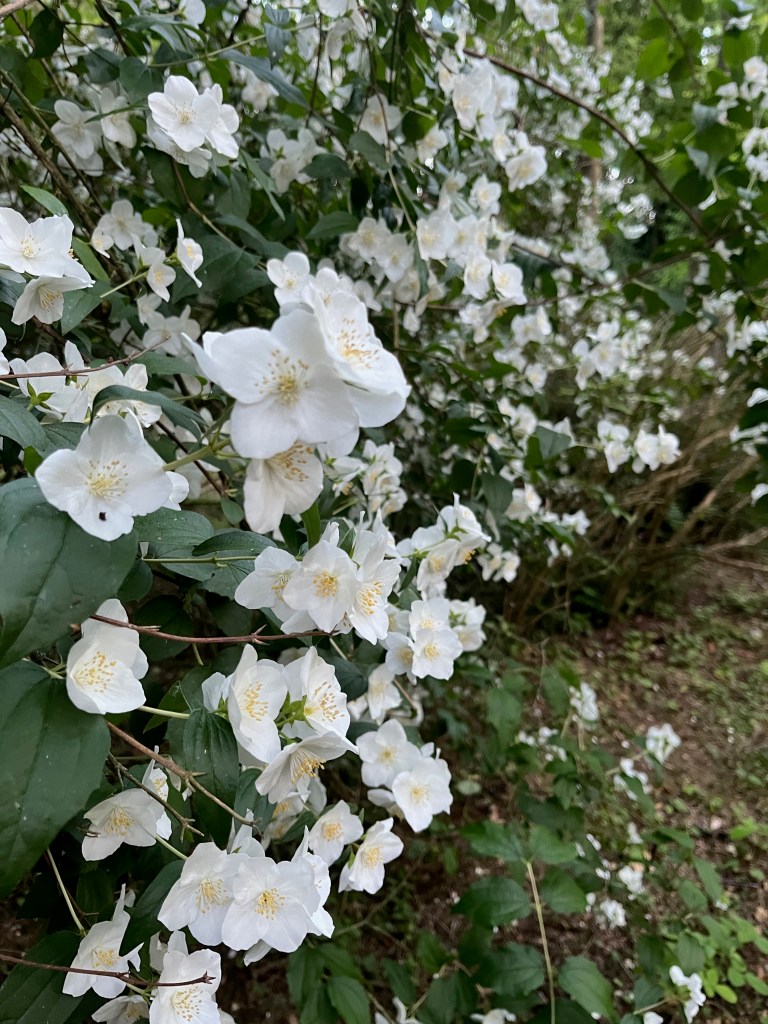
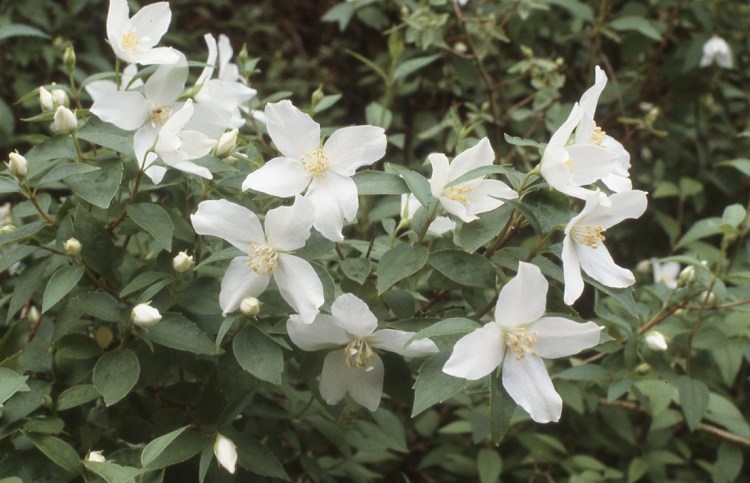
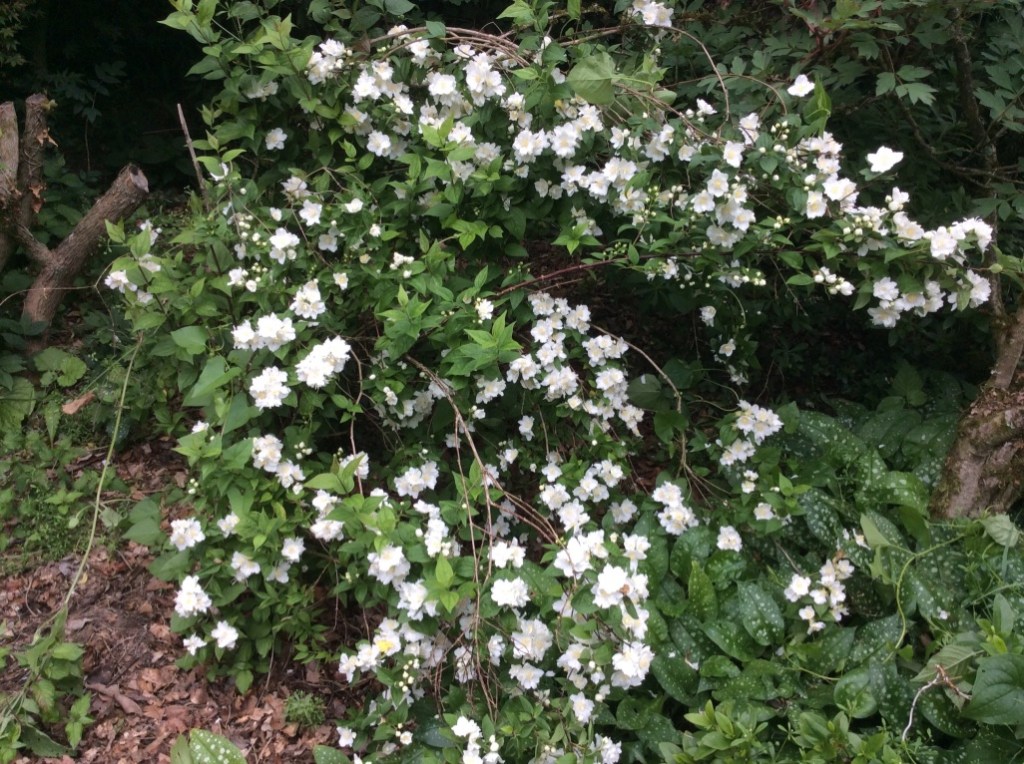
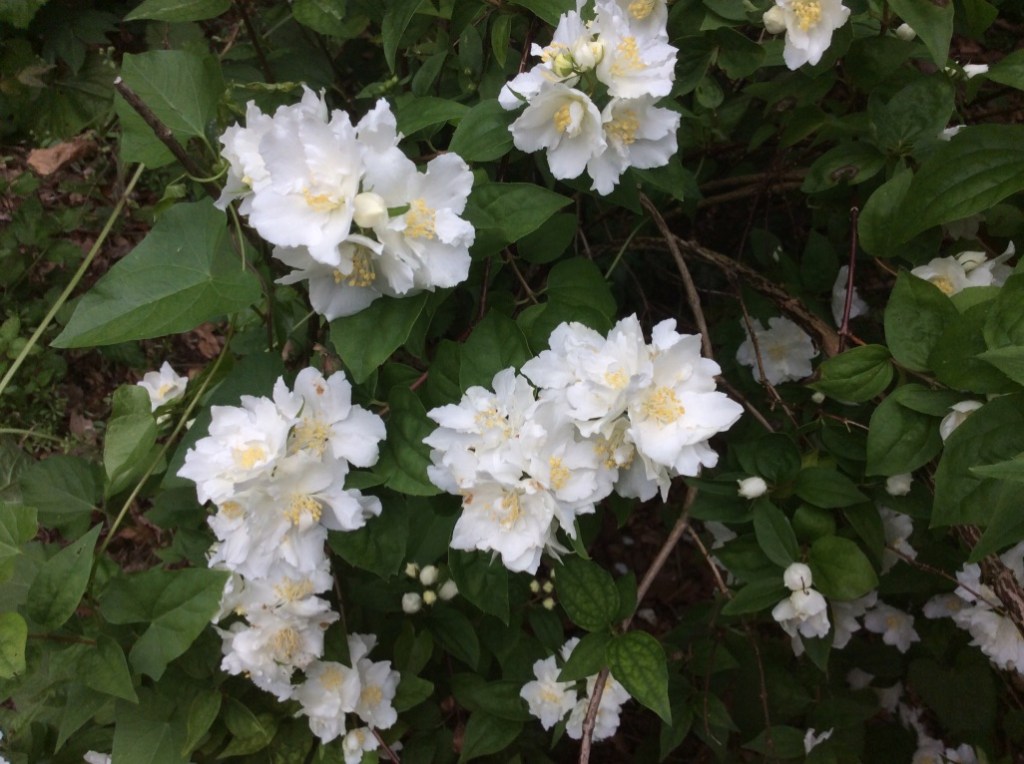
There is a single species native to Europe, P. coronarius, the old ‘Mock Orange’ that has famously added fragrance to many a midsummer marriage bouquet. But the Philadelphus of garden history is otherwise mostly a mongrel race, largely consisting of either spontaneous hybrids, or hybrids skilfully created by the French genius Victor Lemoine, who we also have to thank for many other ornamental popular shrubs, dating back to his first hybridising endeavours in the 1880s. Standout garden varieties of Philadelphus bred by Lemoine include the reliably superbly-scented ‘Belle Etoile’ (featured above) ‘Coupe d’Argent’, ‘Voie Lactée’ (Milky Way) and many others. Some disappeared after going out of fashion and are only recently being rediscovered in private gardens and repropagated (for example, by the National Trust, who came to White House Farm recently to replace some of the early 20th century Philadelphus plantings across their properties nationally).

Lemoine produced his Philadelphus hybrids by crossing species (his earliest was P. coranarius x microphyllus to produce P. x lemoinei), then crossing hybrids with hybrids, with a complex parentage that led to many of the most effective cultivars for our gardens. He has produced the majority of philadelphus cultivars we grow today.

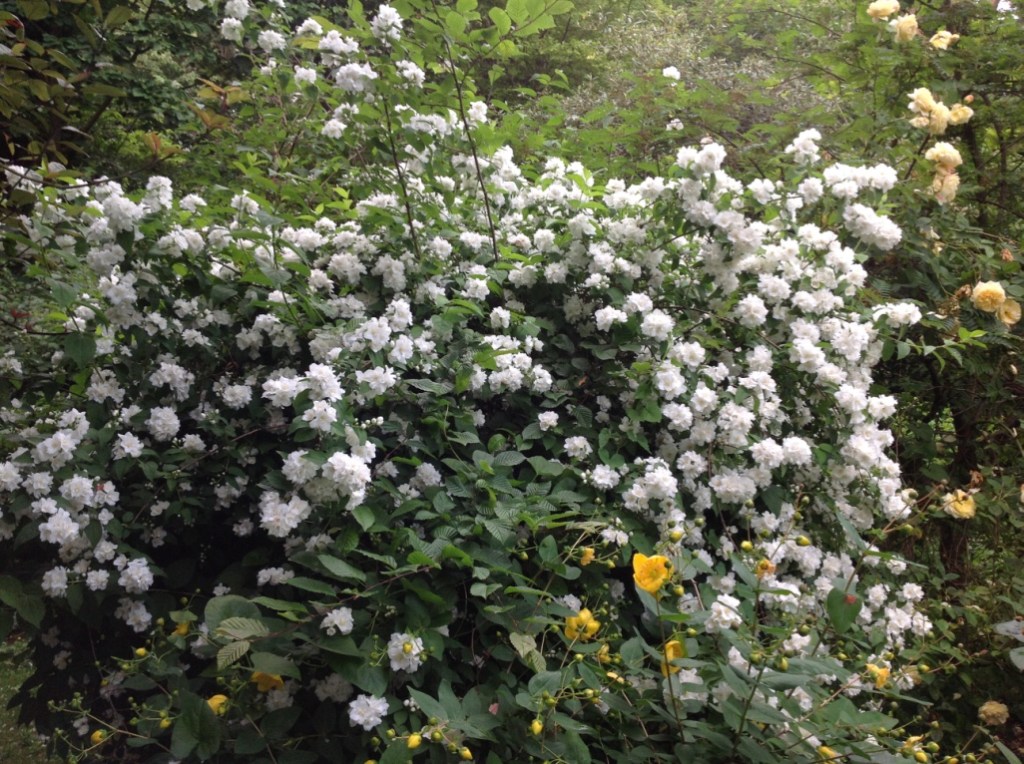
Philadelphus cultivars have the big advantage of flowering at midsummer, when the big band spring displays are over. They are brilliant companions to roses, being white flowered and thus flexible in their use, to contrast for example with reds, or cosy up to pale pinks. Their fragrance, which is more free in the air than most roses, can subtly compete and contrast. To wander in a warm summer garden at dusk, ‘as light thickens, and the crow makes wing to the rooky wood’, with not a breath in the trees, through pools of Philadelphus perfume, is a joy and a privilege.

Philadelphus ‘Voie Lactée’, a Lemoine hybrid, with Clematis ‘Romantika’ and a Rosa chinensis seedling

Philadelphus are tolerant of soils of any pH and structure, and tough and hardy in low temperatures. They vary in habit from 6 metre monsters to half metre dwarfs, their flowers ranging from big untidy doubles to exquisitely cupped four-petalled singles, in racemes or panicles, offering gardeners wide variety – and versatility – of use. The earliest flower from the last week of April or beginning of May (P. schrenkii) and the latest not until mid-July (P. incanus) with the majority at their best in the middle of June, when more time is spent in the garden than at probably any other time.

Philadelphus schrenkii, from Korea, the earliest to flower (late April/early May)

Out of flower, Philadelphus are just a bunch of green foliage, but the larger types are robust enough, for example, to host late flowering clematis or scrambling informal roses; varieties of Philadelphus of modest habit shrink into the background unseen.

Remarks on a few cultivars follow: I have included some that can be sourced with some effort, but which are not frequently seen in gardens.

Double flowered cultivars

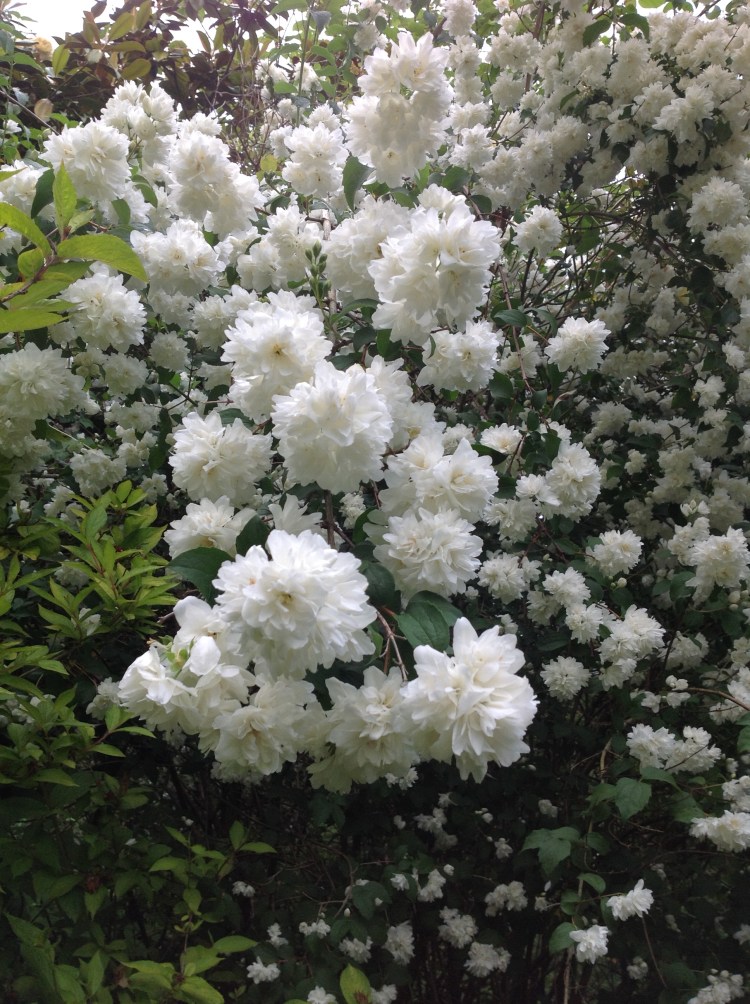
Of the doubles, ‘Virginale‘ is often encountered, but I find her rather stiff and leggy, tall and angular – as Howarth-Booth puts it, ‘whose buxom appearance suggests a rather fuller life than the French adjective conveys’ (Effective Flowering Shrubs, p.238). ‘Mrs E. L. Robinson‘ is not very different, though thought by some to be a notable improvement. ‘Minnesota Snowflake‘ is a hearty 2m double, bred in the US for hardiness. Bold and free, it makes a good background plant. ‘Girandole‘ is another large, spreading double that needs space.

Preferable, in my view, is ‘Enchantement‘, of more modest bushy growth, to a bit above 2m, with a fuller figure, and free-flowering clusters of double flowers on arching branches. A more compact double is ‘Natchez‘, named after a town in Mississipi. The relatively compact bush is rather tousled, and the doubled flowers untidy, with rows of narrow petals surrounding a few stamens. Both its habit and flowers remind me of the Ogden Nash limerick: 

There was a young belle of old Natchez,
Who ripped all her garments to patches.
When comment arose on the state of her clothes,
She drawled ‘when ah itches ah scratches’…

The flowers on ‘Natchez’ are unusually large, held singly or in small clusters with a small bunch of stamens displayed on a modest bush; it has definite character and appeal.

Conquete‘ is somewhat similar, but with even more congested and rather unkempt narrow-petalled flowers. 

In contrast, ‘Boule d’argent‘ is neat and dapper, both in habit and flower, reaching not more than 1.5m, with tight ball-like clusters. I lost my plant to honey fungus, so if anyone could provide cuttings they would be gratefully received and happily exchanged.

Dame Blanche‘ is a small plant to about 1m, with semi-single flowers and a few petaloids – another good choice where space is limited.

Rarely seen, ‘Ophelie‘ is another Lemoine hybrid,  its semi-double flowers with a few petaloid processes in the centre, along with a small purple stain at the base. The habit is excellent, semi-weeping and nicely balanced. As it is unlikely to exceed 1.25m, it’s perhaps worth a place as a lawn specimen.

Single-flowered cultivars

Of the smaller singles, ‘Sybille‘ is exquisite, a shapely squarish flower, slightly fringed and prominently stained with purple at the base. It is a twiggy, dense, 1.25m shrub – another good choice for a small garden.

P. ‘Sybille’

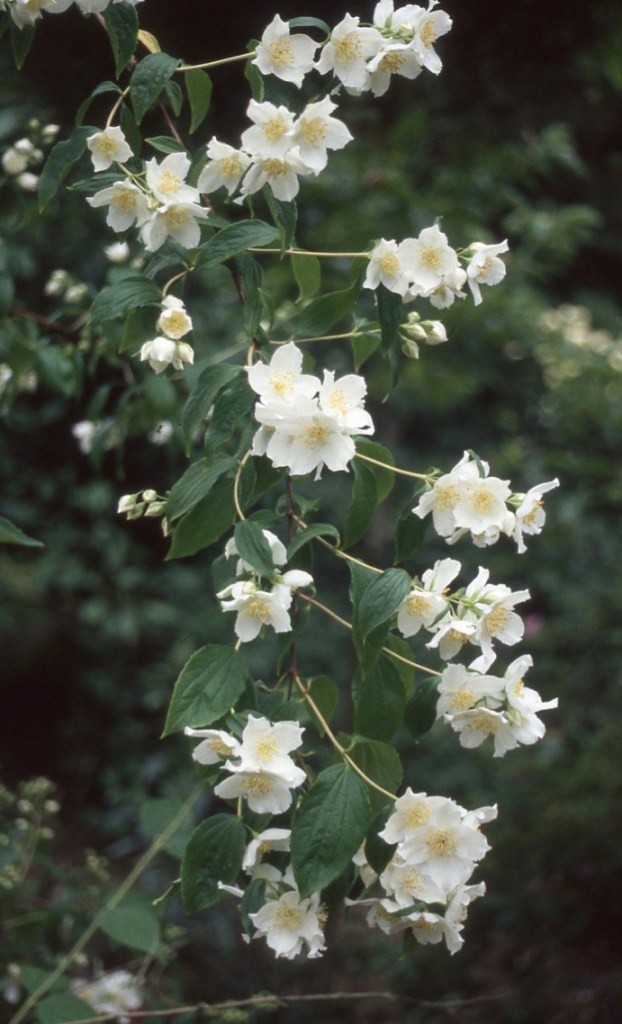
Cultivars in the Lemoinei group are generally of modest size. The type (‘Lemoinei’) has arching branches heaped with simple single flowers on a dense but neat bush to about 2m, and is particularly fragrant.

 ‘Avalanche‘ (below) is one of my favourites, late, spreading, low, elegant, fragrant (beware imposters).

P. ‘Avalanche’
P. ‘Avalanche’

Silberregen‘ , a modest self-contained shrub, smells strongly of strawberries.

P. ‘Silberregen’, smells unmistakeably of strawberries

Manteau d’ermine‘ is one of the smallest at about 0.75m with clusters of cream double flowers. There are more. ‘Lemoinei ‘, crossed with the dubiously hardy Mexican P. argyrocalyx, is a very rare upright bush with elegantly pendulous shoots, showing to advantage the prominent silver calyxes to its cupped white flowers, that came to us from the National Collection at Leeds. I have given this a ‘kennel’ name of ‘Silver Cascade’. It is not registered.

Some new Mexicans

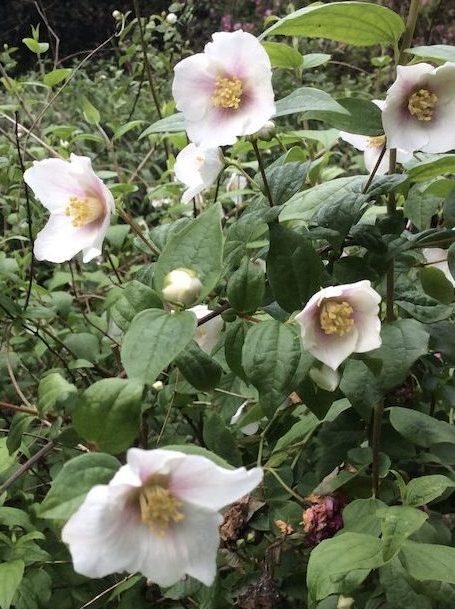
Some recent introductions from Mexico that have proved their worth in the garden are forms of P. maculatus, with single drooping flowers with a purple eye (‘blotched’ or ‘stained’, as the name suggests) and among the most fragrant of any flowering shrub. ‘Sweet Clare‘, a form I named for my daughter, and ‘Mexican Jewel’ are similar, the former being perhaps the most strongly fragrant of all Philadelphus.

P. palmeri, a new Mexican species I introduced from John Fairey seed, is a low shrub, arching nicely, but with me, of still unproven hardiness. Such new species have yielded quite a few new hybrids which look very promising, but as yet with me are unproven. Keep an eye open, for example, for ‘Fragrant Falls‘ and ‘Pearls of Perfume’. More are coming onto the market.

Many other Mexicans are vigorous scramblers, that shown a tree, will be 15ft into it in no time, and may well continue to 25ft, long raking shoots eventually hanging down wreathed in flowers to spectacular effect. P. sargentiana is one such, its large fringed flowers crowded on long stems (another plant from John Fairey seed established here at White House Farm).

An old variety with similar climbing instincts is P. ‘Rose Syringa‘ which pushes up a wall to the eaves of the house, its long shoots falling with the weight of myriad squarish fragrant  yellowish/cream flowers with a purple stain. In full flower this is a spectacular plant, of uncertain origin. Bean gives a good account of it.

Purples and pinks

There is another group based on a Lemoine plant with a more prominent purple eye, P. purpureomaculatus – of modest growth with arching branches and set with flowers, as the name suggests, deeply stained with purple. ‘Belle Etoile‘ and ‘Sybille‘ (above) are grouped here, and the latter is itself a parent of ‘Beauclerk’, which displays to great effect a large flat flower about 2” across, with an area of light pink at its base, on a medium sized bush. There’s also ‘Bicolore’ and ‘Burkwoodii‘ which I have less experience of growing.

A spectacular new introduction created by Alan Postil,  former propagator at Hilliers, to create a genuine pink effect, was voted plant of the year at Chelsea 2025. Its title is more a story than a name – ‘Petite Perfume Pink‘ leaves little to add in its description. The basal bright pink stain suffuses into the petals to give a true pink; ‘petite’ describes the habit which is compact and arching; ‘perfume’ speaks for itself. It is a breakthrough plant.

Moving up a space in size, there is a multiple choice. Leaving aside the iconic and ubiquitous ‘Belle Etoile’ – a familiarity it fully merits, and still my choice, if I could only grown one Philadelphus – there is ‘Voie lactée‘ (Milky Way) with quite broad petals, which reflex slightly on maturity, with a small and narrow bunch of stamens at the centre.

P. ‘Voie Lactée’

Splendens is a less well-known, huge, 4m spreading, arching plant of notable grace, in spite of its size. The flowers are in numerous weeping panicles along the lateral branches, creating a waterfall of slightly fragrant elegance. There was a magnificent specimen in Maurice Mason’s arboretum in Larch Wood which he had from Hilliers; but despite being an easy grower it is a plant rarely seen, perhaps because of its size.

Atlas’, another Lemoine hybrid, is a rather informal large shrub with large flowers over 2” across  – and often an alias for various plants found under this name.

Coupe d’argent‘ is little planted, but its large squarish fragrant flowers that mature flat in spite of its name, with a hint of purple at the base, are magnificent. Its habit, though, is excruciating, spraying long gangling shoots in every direction – but ours does very well trained into a tree, and tumbling over an arbor.

 P. delavayi is the dominant species of Philadelphus in W. China, frequent and widespread. It flowers early in cultivation, is very fragrant, with panicles of shapely white flowers contrasting with its dark calyxes. The best known for this character, with a very dark purple calyx, is P. delavayi Nymans Variety. The habit is stiff, upright, then spreading, growing to 3m, but still striking in full flower. At the other end of the scale is a cultivar of P. delavayi known as ‘Flavescens’, with a distinct yellowish cream calyx.

Philadelphus delavayi ‘Flavescens’
Variegated Philadelphus

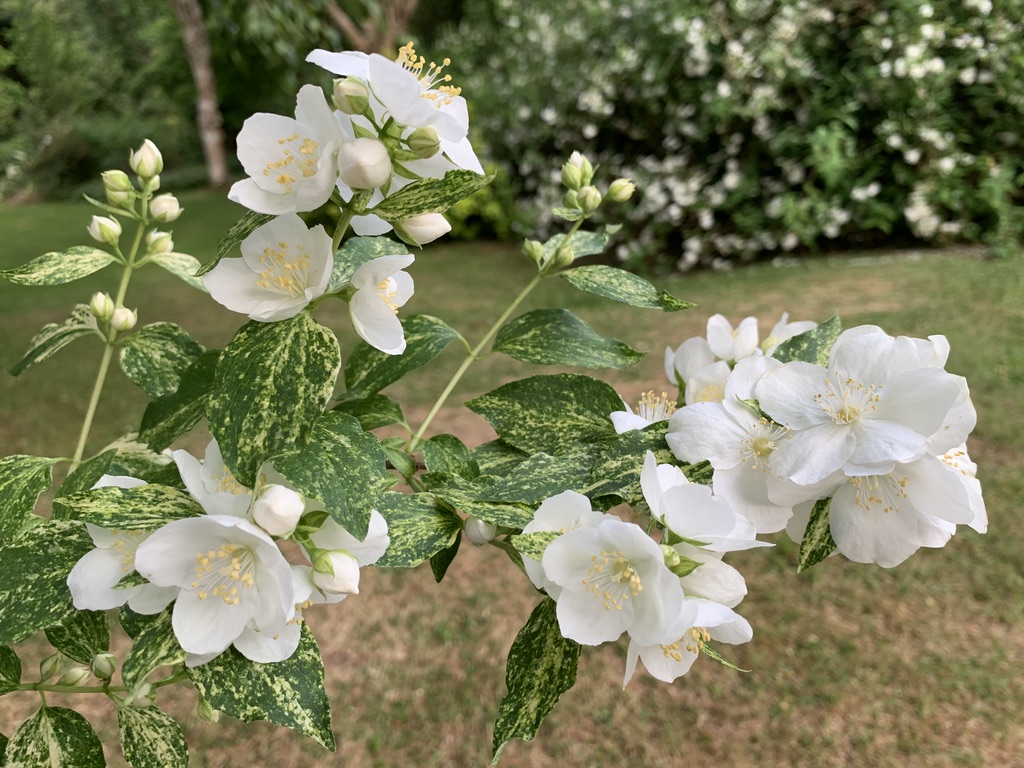
For those who enjoy variegated plants, there are a couple of choices: ‘Variegatus’, a form of P. coronarius with a very bold cream variegation, the principal effect of which is cream, with the ratio of cream to green strongly in favour of the former, to the point where the flowers tend to merge. ‘Bowles Var‘ is synonymous. Quite different in both habit, variegation and flower is ‘Innocence’.  The variegation consists of yellow flecking on a deep green base. The multiple flowers are nicely cupped and presented on an upright shrub to around 2m. It is a distinctive plant that rarely reverts to green.

Philadelphus ‘Innocence’

These are just a few Philadelphus in our collection.  There are many more.  We used to grow more than eighty, but have discontinued some, mainly those that were bred for hardiness rather than for flower, so of more limited ornamental value. Comments on cultivars are of course personal opinions. I have omitted the more than sixty odd species for the most part; but I hope I have sufficiently illustrated the range, variety and versatility of a genus that should be more thoughtfully considered when making planting choices.

Help for making such choices should be soon at hand, because an RHS AGM trial of the more compact cultivars is at the planning stage. This will be on display at Wisley and will showcase a good representative selection of the best for overall garden value, particularly for the smaller garden.

Maurice Foster   Sept 2025

Featured

White House Farm Open Day on Hydrangea aspera

Per aspera ad astra

That quote punningly just about sums up this season for Hydrangea aspera: translated as roughly ‘Through asperities (hardships, adversities, rigours) to the stars.’ The ‘aspera’ in H. aspera is usually taken to refer to the rough texture of the underside of the leaf, but I have not since 1976 experienced such a hard, adverse and rigorous test of this species, with punishing temperatures on successive days this summer exceeding 30C, exacerbated by an almost total absence of rain. The thunderstorms were all around but never over us, the torrential downpours everyone else seemed to get always missing our few acres. The drought was unremitting, and considering the general prejudice that the subsection of the genus Hydrangea called asperae (which includes H. aspera and H. involucrata) needs plenty of moisture to grow well, expectations were for a poor season.

Incredibly, and at first blush something of a miracle, this has turned out not to be the case. Contrary to these negative expectations, it is an excellent show this year, with asperas and involucratas flowering beautifully everywhere as I write this, their flowers normal size, and if anything more prolific than usual. We gave them only one good watering, late on when the plants were budding, to encourage the production of flowers. We have 3 underground cisterns that catch the rain from various roofs and hold many thousands of litres of rainwater. This naturally acidic rainwater is important as our mains supply is alkaline (Kentish chalk a likely influence) and we’ve found a single mains water soak can turn hydrangeas pink and spoil the purity and depth of blue for several years, especially in the macrophyllae subsection (H. macrophylla and H. serrata) – but this applies as well to the various ‘blues’ among our aspera seedlings.

Apart from any natural ability to resist adverse conditions (don’t forget that H. aspera is a weed species in Western China, so like all weeds, is a natural survivor) we put this good performance down to a heavy mulch of wood chip, inhibiting evaporation; to ‘close boskage‘ planting (a term popularized by Michael Haworth-Booth for woody co-planting that fills a bed or border, leaving no exposed ground); to some top cover shade from the hottest part of the day; and to a generally northern/easterly facing situation in a retentive medium loam, for the most part without tree root competition. All this encouraged retention of moisture at the root – without irrigation.

You are invited to come and see these plants for yourselves during our Hydrangea Aspera Open Day on Saturday August 23, 10.00-4.30pm (see below). We’ll tour the collection, and look at the taxonomy of the species – for example, comparing the fleshy hairs (trichomes) on the stems and leaves of H. sargentiana with the stiff, flat hairs on the leaf reverse of H. strigosa and the soft, long, curly hairs on H. villosa – key elements in distinguishing the recognized species in the aspera complex. We’ll also examine the many colourful hybrids we have created at White House Farm over many years, producing flowers of rich colour, many against a background of dark foliage – such as ‘Hot Chocolate’, available widely now in nurseries, and mentioned online just last week.

The many and varied forms of H. involucrata will also be on show. These are easygoing plants that should be more widely planted for garden decoration, as I am sure you will agree when you see them flowering in West Kent. They are among the most shade tolerant of all plants, continuing to flower freely in poor light.

Early autumn is one of the time windows in the year for grafting, so we will start the day with a hands-on demonstration of grafting by our trustee Chris Lane, one of the best known skilled professional grafters in the country, who runs five national collections, including Wisteria, Hamamelis and Flowering Cherry, at his Witch Hazel Nursery in Kent. Chris will show the key technical elements in what is sometimes the only practical means of propagation available for certain plants, and something beginners should not be afraid to undertake. There is a mythology attached to this essentially straightforward method of reproduction that can seriously inhibit the amateur from having a go. But watching a personally-made graft grow on is the most satisfying of any garden activity, and the pleasure goes on for years. So come and see how it is done, and go for it.

I will also demonstrate how to take cuttings, particularly of hydrangeas – among the easiest plants to reproduce from this method. Very little specialist equipment is needed to succeed: a pot, a polythene bag, an elastic band and a north facing windowsill can do the trick for many of the easier hydrangeas. Choosing the stage of development of the wood, ideally just firming – not too hard, not too soft – is an important judgment, and the date in the calendar matters less than this critical selection of which shoot to take, with suitable cuttings of some hydrangea species available from June through to August. The cuttings window for H. aspera is more limited, as it matures its wood quite early, and harder wood is not so easy to root. Getting summer cuttings through their dormancy over the winter is another problem – we’ll discuss strategies for that, what to aim for, and what to avoid.

There will also be a range of H. macrophylla, H. serrata and their hybrids – with H. serrata in particular providing late colour in a way no other genus can rival for the beauty of the transition between the fresh flowers of summer and the first signs of the more muted shades of autumn.

OPEN DAY SCHEDULE: We’ll start on time as there is a lot to get through. Coffee/tea and biscuits will be available from 10.00am onwards all day. If you wish to come for only part of the day, that’s fine – but please let us know your timings, so someone can come and greet you, and take you to the tour.
10.30am Chris Lane: grafting demonstration, with participation and discussion. If you have sharp knives and/or root stocks and scions to practice on, please bring them. We might have a few magnolia root stocks for sale – TBD.

11.00am Maurice Foster: introduction to the day, and the tours of the garden and arboretum, plus demonstration of how to take Hydrangea cuttings (with participation and discussion as we start to go round the garden).

11.30am  Garden Tour in small groups with Trustees, looking at hydrangea cultivars of all kinds, examples of planting strategies, and landscape effects.

1.00pm  Lunch, with informal discussion. Bring your own picnic lunch.

1.45pm Tour of the arboretum – the beginning of autumn colour on H. serrata and hybrids, our H. aspera walk, wild-collected paniculatas, heteromallas and other hydrangea species, with rose hips, early liquidambers and some early berries (sorbus, cretaegus, euonymus) on the way.
3.45 – 4.30pm  Tea, discussion, selection of ‘Plant of the Day’.

WHF Trustees, plant experts across many genera, will be on hand to guide, discuss and answer questions; WHF plants will be available for sale; Gift Aid Donations are welcome (most choose to give £15 per person). To reserve a space email whitehousefarmarb@gmail.com.

Featured

Hydrangea serrata: a lesson from Japan

A few spaces are left for our Open Day on Wednesday June 25th, with a focus on hydrangeas – serratas, but many other hydrangea species too.

Coffee and intro talks at 10.30, tours at 11am and 2pm – tea and Q & As at 4.30pm. Bring your own picnic lunch, we provide biscuits and drinks

TO RESERVE A SPACE, EMAIL US AT WHITEHOUSEFARMARB@GMAIL.COM

Winter temperatures in Nova Scotia are commonly below -20C, which doesn’t bother tough hydrangea species like H. paniculata, arborescens or heteromalla – nor, surprisingly, H. serrata. This grows and flowers there normally, untroubled by the low temperatures, reflecting its origins as a species in the mountains of Japan. H. macrophylla, in contrast, originating in the milder maritime regions of Japan, and evolving in a frost-free environment with a long soft growing season and thick, turgid, slow-to-mature shoots, is usually cut to the ground by frost and more or less ungrowable in these low temperatures.

These cold-resistant qualities of H. serrata seem improbable when you look at the plants: usually not more than a metre high, slender twigged, with small thin leaves, as if they have a delicate and vulnerable constitution. On this superficial evidence H. serrata has not often been a first choice selection for planting where it will have to endure the rigours of a cold and unforgiving winter.

The apparent delicacy of flower and shrub form belies a robust constitution

As a montane species, mainly belonging to mountain forests but often seen above the tree line, H. serrata has a short growing season: its wood is usually ripened by August, hardened already for winter.

Its relative lack of popularity in Western gardens might be due to this misperception, particularly on the part of a nursery trade which sees it as difficult to sell, and thus fails to promote it, in a vicious circle. But there are many advantages of this great shade-loving garden plant, ideal for underplanting or companion planting in a border. For example:

-Early flowering.
H. serrata is an earlier flowering species than H. macrophylla, from late May to early July, so good to fill the ‘June gap’. In addition, many also often fade to attractive autumn colours with some varieties continuing to offer great colour through October. The Japanese varieties with ‘Beni’ – meaning ‘red’ – all have this benefit.


-Compact habit.
Most varieties will remain reliably compact enough for minimal intervention in a border, offering a reliable, low-maintenance carapace of colour year on year, without pruning needed..

-Shade-loving.
To be seen at its best, H. serrata needs semi-shade, as it flowers at midsummer when the sun is at its zenith. The full heat of direct sun at midday can shrivel the rayflowers. They often recover once cool temperatures return, but the species thrives underplanted and in close combination with other shrubs. Good sunlight exposure, however, often gives the foliage an attractive range of rich, dark maroon and purple colour.

Modest growth.
Its reliably modest growth means H. serrata can be a stable component of a herbaceous border, without compromising nearby plants. Here at WHF we have 45 year-old Japanese serratas still no more than four feet high, and wide. These give the impression that once established, they are happy just to get on with the business of existing for as long a life as possible, in keeping with the sometimes very ancient forests where they’re found in Japan. Petite growth to produce another year’s array of often jewel-like tiny flowers is also consistent with a short growing season.

This type of serrata flowers reliably with no pruning, each year’s new buds and leaves imperceptibly inching forward. A few more vigorous varieties will reach out over a path every few years, but serratas are the low maintenance hydrangea par excellence. We have specimens here at WHF over forty years old that are covered with flower every year and still no more than a chest high spreading shrub.

The influence of H. scandens genes in both wild hybrids and cultivars can add to that axiliary flowering, for an overall free-flowering effect, rather than heads on individual stems. In some varieties, no shoot is without a flowerbud (such as ‘Shiro Fuji’).

-Variety of form and colour.
Here at WHF Clare has been documenting our hydrangea serrata walk (some 229 distinct specimens bred over some thirty years of back-crossing), and she would add to the virtues of H. serrata sheer variety of flower form – each plant offering a slightly different combination of fertile and rayflower colour; and the rayflowers themselves ranging from fimbriate to rounded, drop-shaped petals to square, almost tessalated petals, singles to doubles, sometimes more. Below is an example of single-double-multiple variation across the same type and colour, in adjacent seedlings:

As with H. macrophylla, soils vary and colours vary accordingly, from pinks and reds through purples to blues, according to the plants’ varying ability to take up aluminium. Not only soil changes this capacity, however – stress and juvenility can also vary this ability and cause colour change. In our collection, several varieties have pinker and bluer flowers on twigs joined to the same branch. Self-layers, as the plant slowly spreads are often pinker than the parent they rooted from, suggesting either that blueing might a feature of maturity, or that (more likely) the nearby soil has a different ph than the bed. If moving towards a path, spread in the past with with ash or gravel, this is a likely source of alkalinity enough to influence colour – as is an alkali mains water supply, as we have in chalky Kent.

Above are three seedlings of the same variety, growing in different soils in the Garden, Wood, and Arboretum.

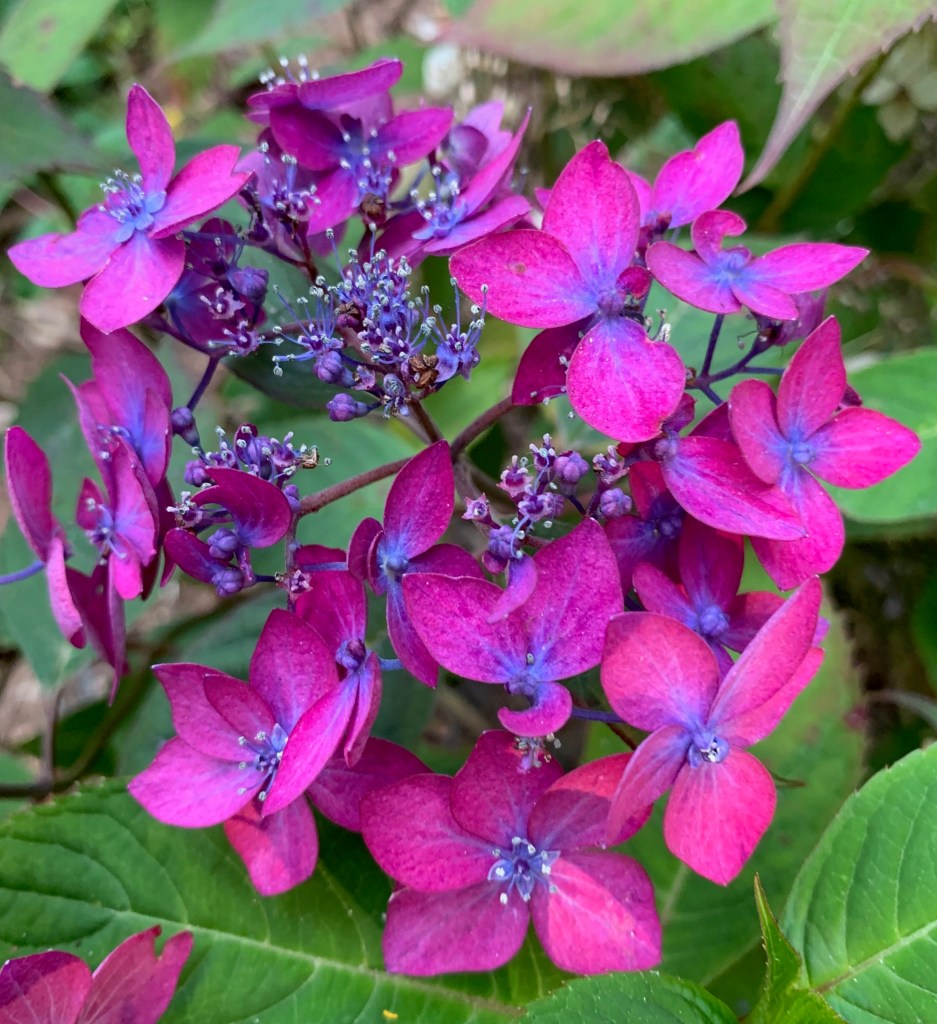
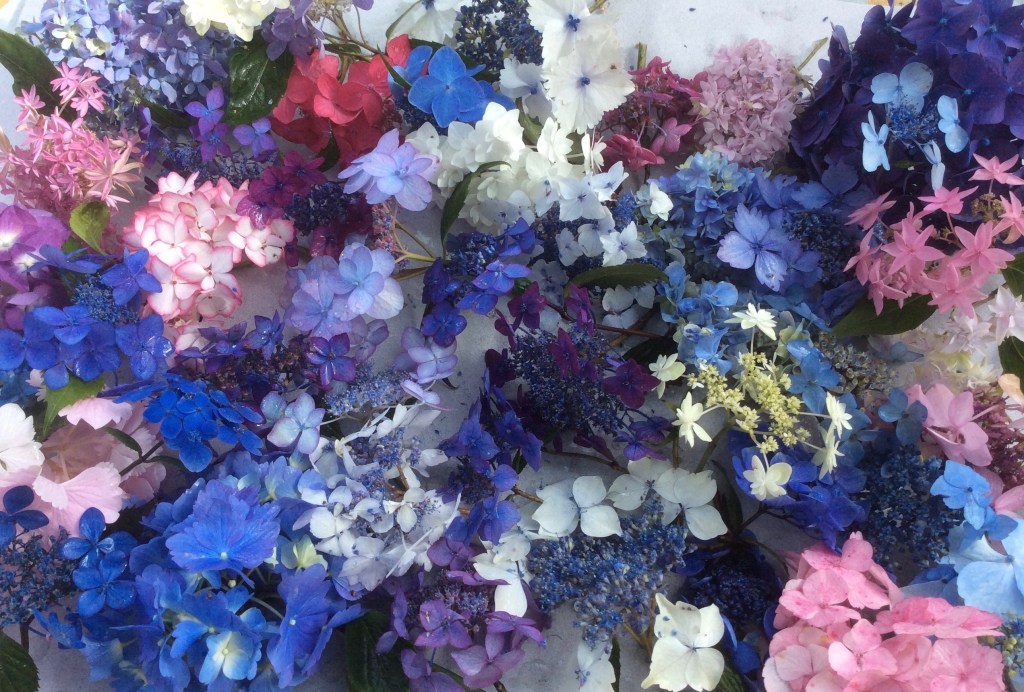
A selection of colours and forms of H. serrata collected at WHF in late June

We look forward to seeing on Wednesday June 25th to see more….

Featured

Wild roses in the garden

For those like William Robinson whose taste is inclined away from ‘fat, complex and overbred roses’, rose species can be a very satisfying contrast. Where there is space for them to flourish, they are a good enough reason on their own to justify a remark allegedly made by one of the Rothschilds, that ‘every garden, no matter how small, should have at least 15 acres of natural woodland’. But not all species roses climb, scramble or ramble (for a few of my favourites that do, see my blog ‘Four super-performing tree-climbing roses at WHF‘). There are plenty of modest growers available to grace small and medium-sized gardens, and they can play a very useful role in layouts featuring both flowering shrubs and herbaceous plants. I have come to view them as flowering shrubs – in other words, as giving their best when associated with complementary or contrasting plants in habit, foliage and flower. As with other genera, species appear to be more disease resistant, making these good choices in places prone to black spot and mildew. Here I make an argument for their versatility: as a resource in landscaping, in planning for year-round colour and interest, and offering low-maintenance effective (sometimes spectacular) displays.  

There are about 150 species of rose, though disagreement among taxonomists remains. There is a concentration of species in China, and since it opened up in 1980 we have been privileged to have access to a far greater range of rose species and forms than at any other time in history. I can only offer a brief selection here of a handful of personal suggestions; many, although with plenty of appeal, such as our native dogrose, R. canina, would not be a high priority for most gardens. So what follows is a horticultural, not botanical selection, and I have attempted to create some horticultural categories to simplify matters a little. Bearing in mind that all classification is by definition an artificial device, I’ve settled on six categories as a way of thinking about different kinds of species roses’ garden potential.
  • The colonisers (speaks for itself)
  • The early birds (performing in May before the great mass of roses are flowering, useful in combination with other late spring plants)
  • The double whammies (the engine room of species for garden performance, following effective flowering in summer with an equally valuable autumn fruit and foliage effects)
  • The scramblers (big flowing flowering shrubs that need space) – as someone remarked of R. multiflora, ‘horse high, bull strong, and goat tight’.
  • The high fliers (Invaluable for vertical gardening and fit only for large trees. Use on walls or buildings at your peril)
  •  The individualists (in both senses – with striking individual character, and for use as specimen plants).
The Colonisers

These are rampant growers that sucker freely and in time will form colonies that can cover considerable areas, of course only if on their own roots. Generally they don’t require fertile ground, and are useful for difficult sites in the garden like banks, cuts, dry sandy areas and rooty areas. You must prepare the ground first though and get rid of any nasty perennial weeds or you will be stacking up disaster for the future. Some good species in this category are:

Rosa rugosa – a vigorous and easy, healthy and green rose making a bush up to 8ft generally well clothed with foliage. From Japan, Korea, and East China, mainly coastal, and now naturalised in the northeastern United States – so will tolerate salt spray and salinity. Found growing on dunes and often best in low nutrient conditions once established: in Japan the species is known as ‘sea tomato’ on account of its large red fruits.

Rosa pimpinellifolia – a suckering rose with tiny leaves, forming mound-like thickets about a meter high, often wider in diameter; symmetrical, low habit, profusely flowering, easy to cultivate, with many varied flower forms. Excellent for use as ground cover and for mass planting.

Rosa asicularis – another suckering rose with blueish green foliage, good on poor soil, and tolerating low temperatures such as those on the Mongolian steppe. Flowers are 1.5 to 2 inches across; in good soil will grow up to 8 feet. The N. American variety nitida has shining smaller attractive foliage, will tolerate wet poorly-drained situations and offers good autumn colour. The variety nutkana has nice heps –  but watch this one,  it can really spread.

R. asicularis

Rosa gallica pumila – some think this is close to the wild European form of Gallica: it makes a suckering shrub from 1.5 to 4 feet tall.

The Early Birds

These are like a stimulating aperitif combined with what the French call ‘une amuse-bouche’, and to thoroughly mix metaphors, the May overture to the big trombones of the midsummer band. The yellow species, forms and hybrids are first class flowering shrubs, some particularly enticing – and there are some modest growers for the small garden. There are also plenty of other plants to combine with. For example, yellows with clematis alpina, purple lilacs or white viburnums, blue ceanothus or wisteria.

Among them are Rosa chinensis, according to Bean “essentially a race of garden roses”. There are very many forms of R. chinensis, most continuously flowering. The wild species can climb great heights into a tree. I have been collecting different forms of R. chinensis for many years and they give a handsome and generous return, typically blooming for many months.

Rosa xanthina  – solitary flowers 1.5 inches across, close in form to Pimpinellifolia but yellow (hence the name), and without bristles on the shoots. ‘Canary Bird’ is its best known cultivar.

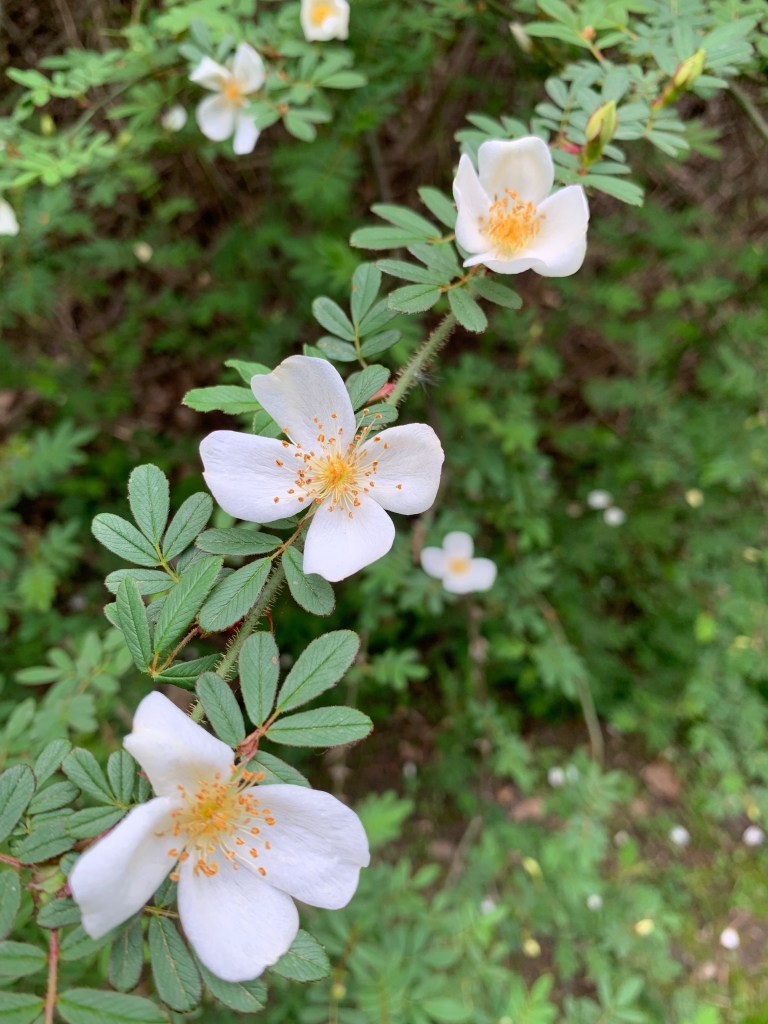
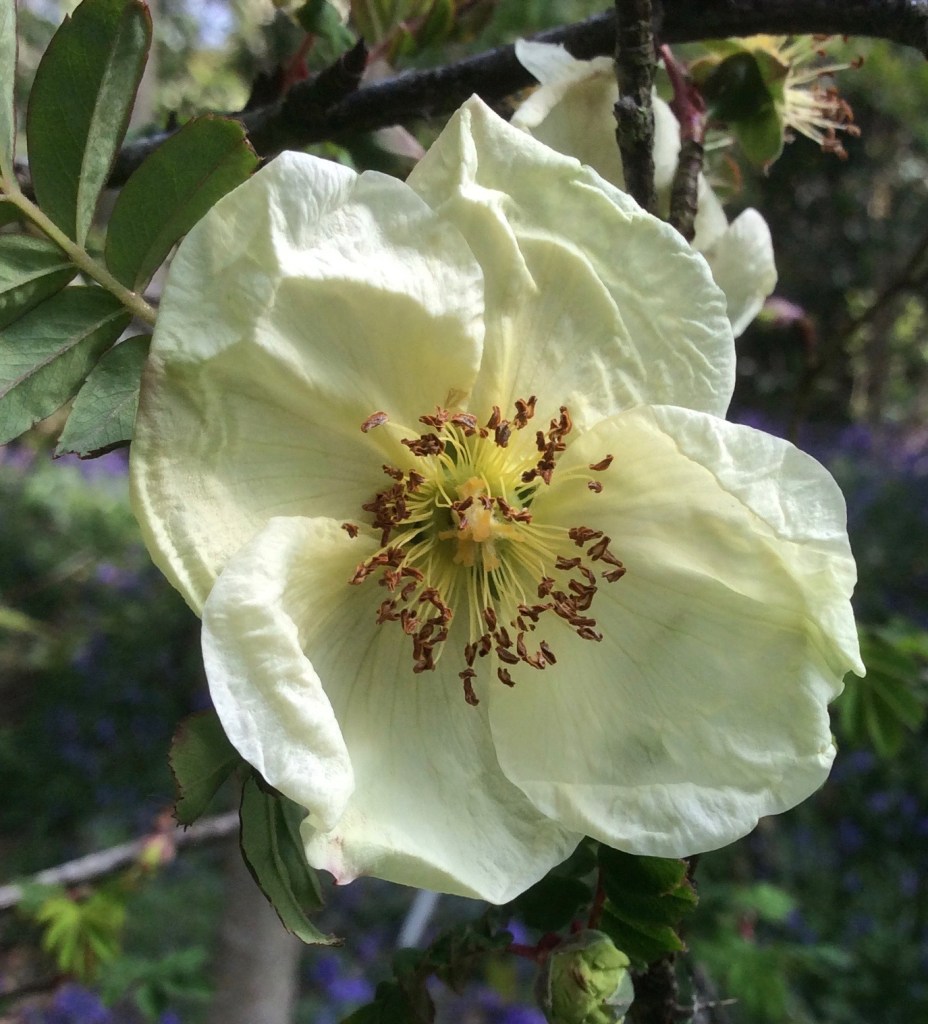
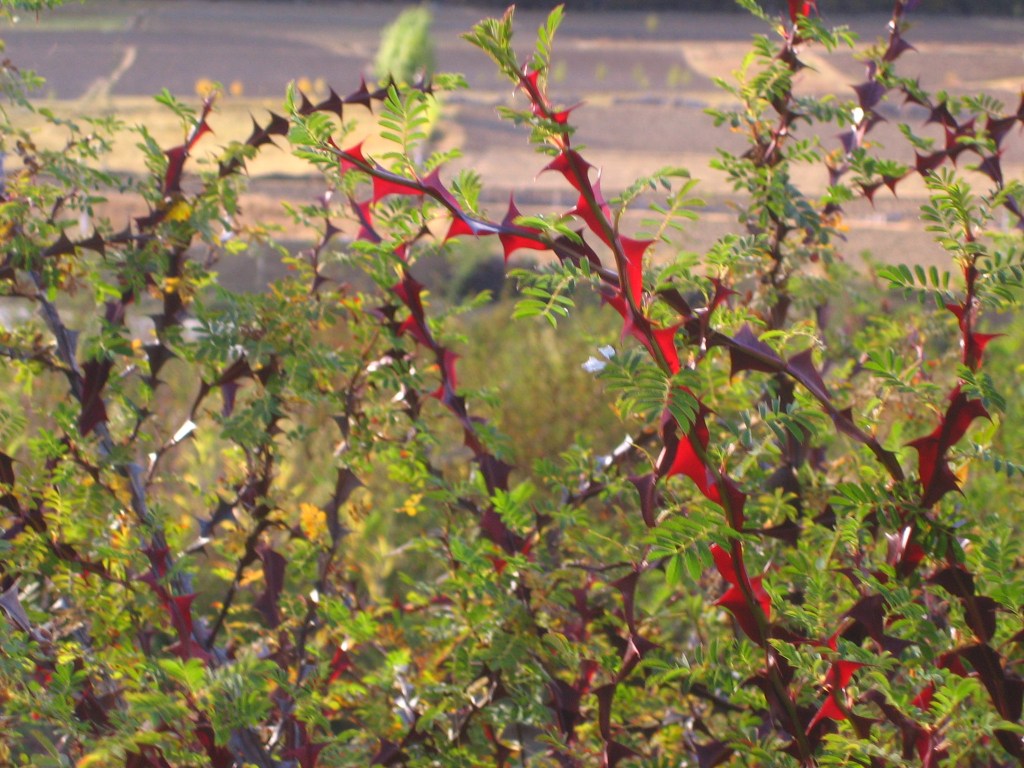
Rosa sericea  –  a white to cream rose, the only rose with 4 petals (see above) followed by usually bicoloured (yellow and red) urn-shaped hep: one variety, R. sericia var pteracantha, also has attractive red thorns. Altitudinally and geographically it’s the most widespread of all species, and one of the earliest rose species to flower (see above).

R. sericea var pteracantha
The Double Whammies

These are roses that both flower and fruit in sufficient profusion to create two different garden effects, in summer and autumn.  Mostly growing to about 8 feet by 10 feet, they offer benign shelter for companion plantings, and are typically a large spreading mound. It is good to avoid pruning back to restrict size if you can, as it spoils the attractive natural form. Jack Harkness wrote: ‘The fruit of these roses is such a harvest festival as to send us into winter singing. Why no jeweller has copied them I cannot understand. They are nature’s perfect pendants.’  R. virginiana arguably offers some of the best autumn colour of any flowering shrub. R. moyseii (below) and others mentioned elsewhere fall into this category, with heps and autumn colour sometimes the main feature.

The Scramblers/Sprawlers

These roses really fit the bill for the wild garden; they need space to achieve their full effect. They will climb when given half an opportunity, some to 25 feet or more. Left to themselves in the open, they’re usually twice as wide as high. You must clear the land of all perennial weeds before planting. For foliage effect consider R. fedschenkoana (sea green), R. glauca (‘greyish-green with a mauve tinge in shade’ – Hiller’s Manual of Trees and Shrubs – hence it’s other name, rubrifolia) or R. soulieana  (grey-green foliage).

R. soulieana

Rosa multiflora – ‘an impenetrable tangle of brush fit only for burning’ according to Michael Dirr.  It is greedy and invasive; you can see whole fields taken over by it in nature. In the species, the leaves are dull, flowers small and it tends to drop petals quickly; I have got rid of most species multifloras in the arboretum as they were taking over. But it is an influential parent of very many excellent hybrids, like ‘Rambling Rector’ and ‘Violette’ (aka ‘Violetta’), and has a ‘profound influence on garden roses in many ways…and the main ancestor of the ‘rambler’ group of roses’ (Graham Stuart Thomas) among many other corymbose ‘polyantha’ types, such as R. wichurana, sempervirens, filipes. Below are two Chinese collections from a pink form.

Rosa wichurana – a glossy, disease-proof, late flowering Japanese species.

Rosa cymosa – with prickly stems, colourful young growth and larger compound corymbs with smaller flowers – hence its colloquial name ‘The Elderflower rose’.

The High Fliers

‘The musk and banksian roses often scale tall trees and a tree thus festooned with their branches laden with flower is a sight to be remembered. To walk through a Glen in the early morning or after a slight shower, when the air is laden with the soft delicious perfume from myriads of rose flowers, is truly a walk through an earthly paradise…’

-Ernest Wilson

These are the roses I have in mind when applying my five ‘F’s rule for trees: if a tree doesn’t offer excellent form, fragrance, foliage, fruit, or flower, put a rose up it. Some are so vigorous they can easily smother and kill a small tree. 

Among them are R. banksiae, with four varieties in cultivation, all flowering in May.
Rosa banksiae var lutea – ‘one of the world’s choice plants’ – Jack Harkness.

Rosa banksiae  The species, a single white. There are thornless examples.

Rosa banksiae var banksiae  The double white. Our plant is 60ft into an old Lawson.

R. banksiae var banksiae just starting to open at WHF

Rosa banksiae var lutescens  Single yellow and often seen in the Italian Lakes and the South of France but hardy enough here in Kent. We lost our 50ft plant to honey fungus.

Rosa banksiae lutea – the yellow double form.

Also in the ‘High Fliers’ category should be Rosa gigantea – the largest flower of all wild rose species, with flowers up to 5 inches across. At White House Farm we have  one at over 10 years old that’s topped out a mature native holly, proving that this is a species that will take some frost; and the synstylae roses, which I’ve written about here.

Synstylae roses (with styles fused into a single column, hence the name) cross-fertilise readily, are promiscuous, and one species, R. longicuspis, is a genuine glossy evergreen. Great for growing into screen trees. Other good roses from the synstylae section are:

R. brunonii – an almost impossibly vigorous rose, even in poor soil – as are the more delicate looking R. filipes, and R. glomerata.

The Individualists

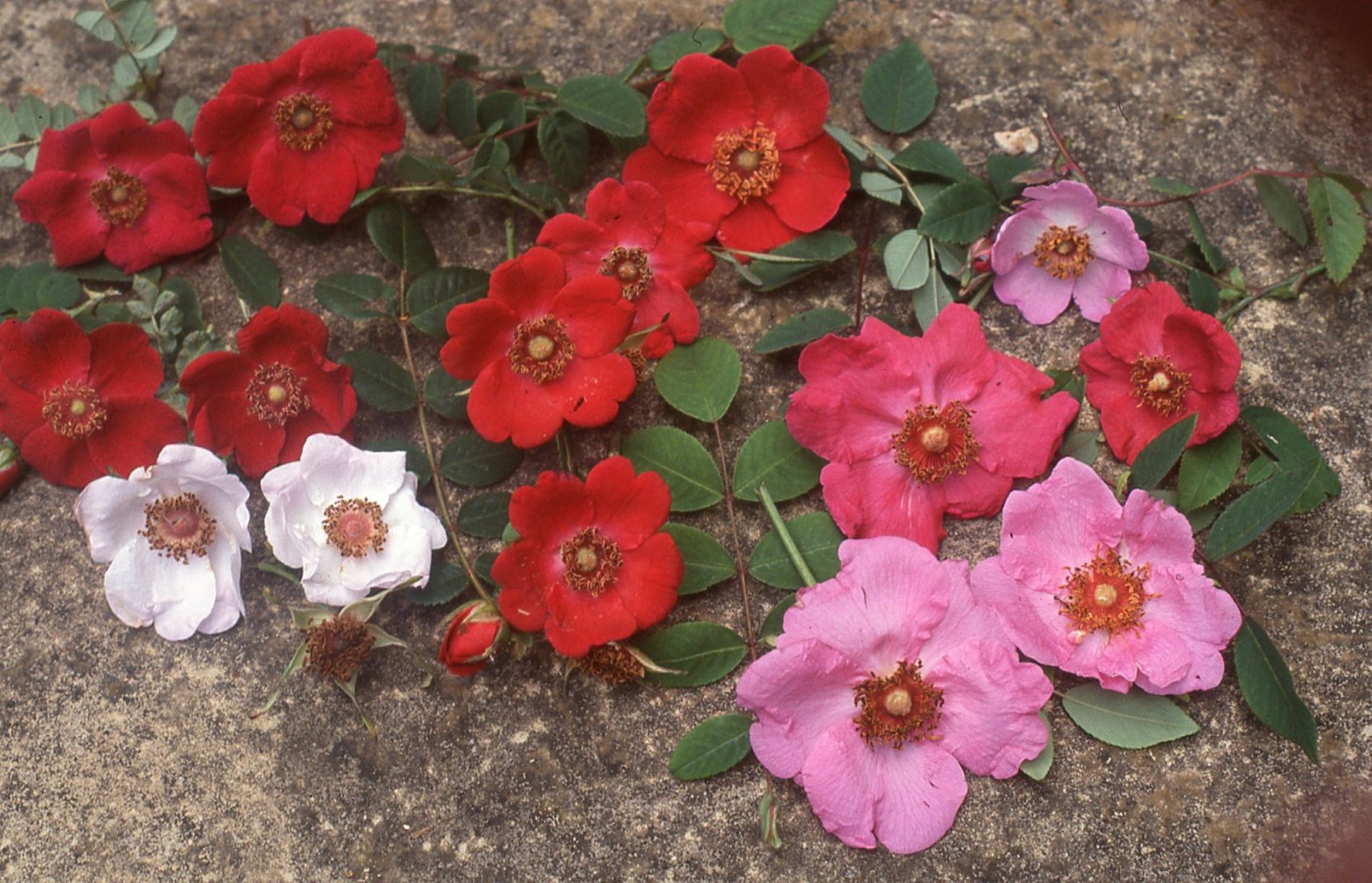
These roses have character and are suitable for specimen planting. Among them: Rosa moyesii – variable in colour from deep blood red to pink, a flower of classical form. Some are obtainable from nurseries – what’s offered in the trade is usually red, as are some of its hybrids, such as Rosa x moyseii ‘Eos’. Good forms are usually selected for the quality of their flowers, the form R. moyseii ‘Geranium’ was named at Wisley in 1938 for its compact form and quality of heps as well as flowers.

Forms of R. moysii at WHF

Rosa wilmottiae – elegant greyish foliage, lilac pink, 6 foot by 6 foot when fully grown.

Rosa webbiana – solitary flowers on short laterals, lacy twigs and foliage “like a graceful lady in lacy crinoline”.

Rosa laevigata, and ‘Coopers Burmese’ – with flowers 2 to 3 inches across.

A few spaces are left for our Open Day on June 14th, with a focus on species roses!

Coffee and intro talks at 10.30, tours at 11am and 2pm – tea and Q & As at 4.30pm. Bring your own picnic lunch, we provide biscuits and drinks

to reserve a space, email us at whitehousefarmarb@gmail.com

Our next Open Day when the WHF hydrangea serratas are at their best is Weds June 25th – also with some spaces available. Just email us to make a reservation and get further details for either event: whitehousefarmarb@gmail.com.

Featured

Deutzias: the WHF collection

There will be an IDS Deutzia Study Study here on Saturday May 24th. Book here.

I’ve been surprised this year how robust our early Deutzias have proven to be, with the driest March and April on record for Kent followed by some weeks of daily sun and temperatures over 20C. It’s a new discovery to add to what we’ve learned by growing a wide range of this genus since the 1990s, when I was among a very few interested in new wild species.

Deutzias are fast growing, reliable and showy flowering shrubs which create significant impact in the landscape, some across a remarkably long season. They are ideal for co-planting with other May genera such as Wisteria or Viburnum plicatum, for planting against evergreen foliage backgrounds, and for decorating the edges of a planted woody border. Many tolerate full sun remarkably well. Blooming period appears to be driven more by daylight length than variation in weather conditions, as although opening early this year with the heat, they have remained fresh, though fading, through an extended period.

The genus ranges from the early-flowering species at their peak now, notably the low-growing white D. gracilis, the long, arcing shoots of variably colourful D. purpurascens, the tightly-bunched twig-covering pompoms of hybrids D. x. rosea and D. x elegantissima to later flowering D. compacta and large-flowered hybrids such as ‘Joconde’ and ‘Strawberry fields’.

Deutzia hybrids, among them ‘Contraste’ (top left), ‘Strawberry Fields’ (top centre), ‘Joconde’ (top right)
Forms of D. compacta: the lateness of the species makes it useful for the ‘June gap’.

It is their nature to flower most freely on one-year old wood, so pruning to produce as much new wood as possible maximises flowering capacity for the following year. We prune immediately after flowering, the current years flowered shoots pruned away before the plant puts its energy into seed production, to induce strong, arcing, free-flowering leaders creating spectacular flowering shoots over a metre long, for the following year. We plan to include a practical demonstration of Deutzia pruning on our Study Day.

The collection of Deutzias here at White House Farm is extensive – according to some authorities one of the most comprehensive ranges growing anywhere in the UK. This gives visitors the ability in a single visit to grasp the key differences – and similarities – between species across this genetic range; and to appreciate features of the genus as a whole, which we’ve found includes huge variability within species (especially in purpurascens, longifolia and compacta), longevity (thirty-year-old shrubs reliably blooming year after year) and consistency under varied weather conditions. Deutzias are a useful element in planted landscape design, striking both from afar and at close quarters.
Forms of D. longifolia

Deutzia species at White House Farm

D. bhutanensis
D. calycosa ( including ‘Dali’)
D. compacta (including ‘Lavender Time’, ‘Needham’s Pink’, and other collections)
D. cordatula
D. corymbosa
D. crassifolia
D. crenata (including var. heterotricha)
D. discolor (including ‘Major’)
D. glabrata
D. glauca
D. glomeruliflora (multiple collections)
D. gracilis (including collections from Japan, var. grandiflora, var zentenaroana, and ‘Nikko’)
D. grandiflora
D. hookeriana
D. longifolia (including ‘Farreri’, ‘Veitchii’, and multiple collections unique to WHF)
D. maximowicziana
D. monbeigii (including Forrest’s type species, ‘June Dawn’, ‘White star’, etc.)
D. multiradiata
D. ningpoensis (including ‘Pink Charm’)
D. paniculata
D. pilosa
D. pulchra
D. purpurascens (including ‘Alpine Magician’, and multiple collections unique to WHF)
D. rehderiana  (including the pink form)
D. scabra (including ‘Candidissima’, ‘Codsall Pink’, ‘Pride of Rochester’)
D.aff schneideriana (Nymans form)
D. setchuanensis (var. corymbiflora)
D. staminea
D. taiwanensis (in our experience, synonymous with D. pulchra)
D. sp White on white, White on purple (multiple collections unique to WHF)

Deutzia Hybrids at White House Farm

D. x elegantissima (purpurascens x scabra var. sieboldiana – ‘Fasciulata’, ‘Rosealind’ and the type)
D. ‘Hillieri’ (longifolia ‘Veitchii’ x setchuenensis – var. corymbiflora)
D. x hybrida (discolor x longifolia – including ‘Contraste’, ‘Joconde’, ‘Magicien’, ‘Mont Rose’, ‘Perle Rose’, ‘Rosea Plena’/’Pink Pompon’, and ‘Strawberry Fields’
D. x lemoinei (gracilis x parviflora – ‘Avalanche
D. x magnifica (longifolia ‘Vilmorinae’ x scabra) – ‘Eburnea’, ‘Nancy’/‘Magnifica’
D. x maliflora (x lemoinei) x purpurascens) – ‘Fleur de Pommier’)
D. x rosea (gracilis x purpurascens) – ‘Carminea’, Grandiflora’ , ‘Rosea’, Yuki Cherry Blossom)
D. x wilsonii (discolor x mollis)

What the above list omits is the 40-50 second and third generation unnamed hybrids based mainly on D. purpurascens we have been creating over 20 years. We have been numbering and photographing these and some regular standouts have emerged. I was breeding for dark pinks and purples, and good continuity, and every year sibling specimens jostle for the best of the type, either for intensity of colour, flower shape, or overall habit.

We hope to see some of you on Saturday May 24th: some of the early roses are also at their best here for some years after a wet winter and warm early summer.

Maurice Foster

Featured

Melliodendron xylocarpum

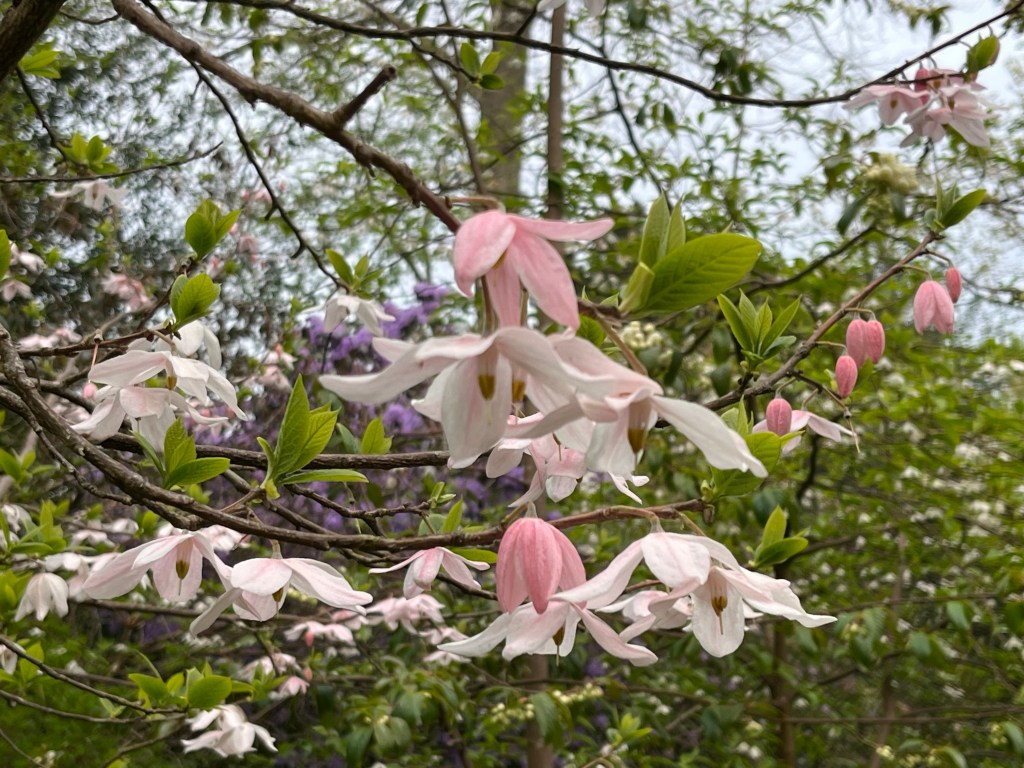
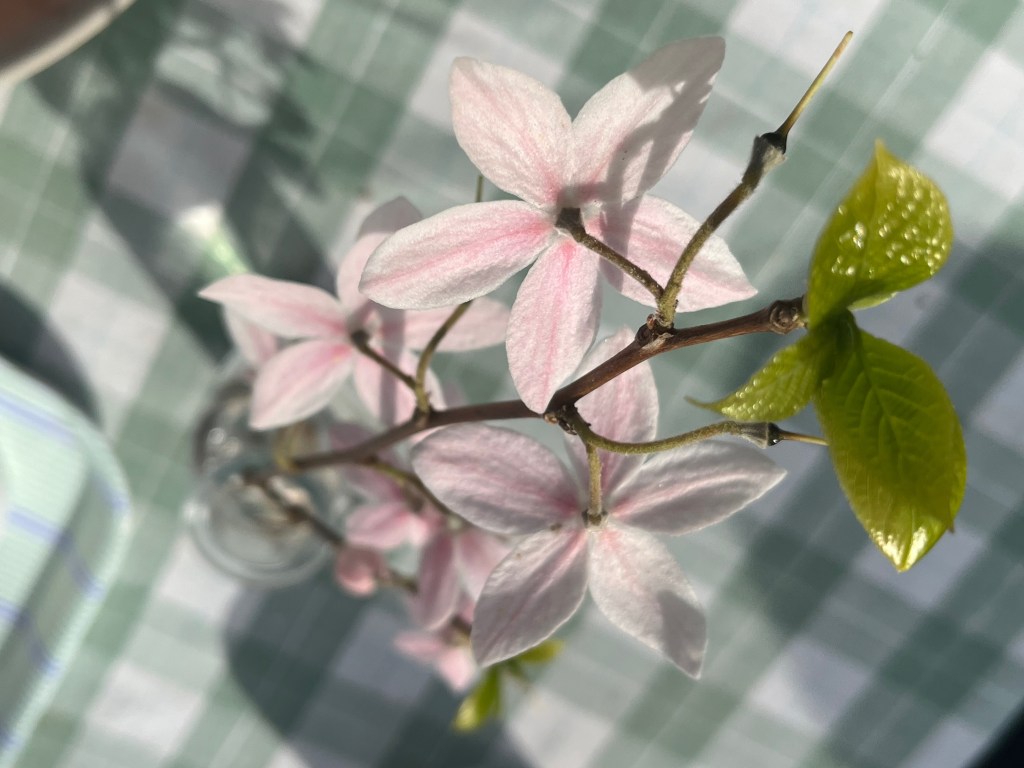
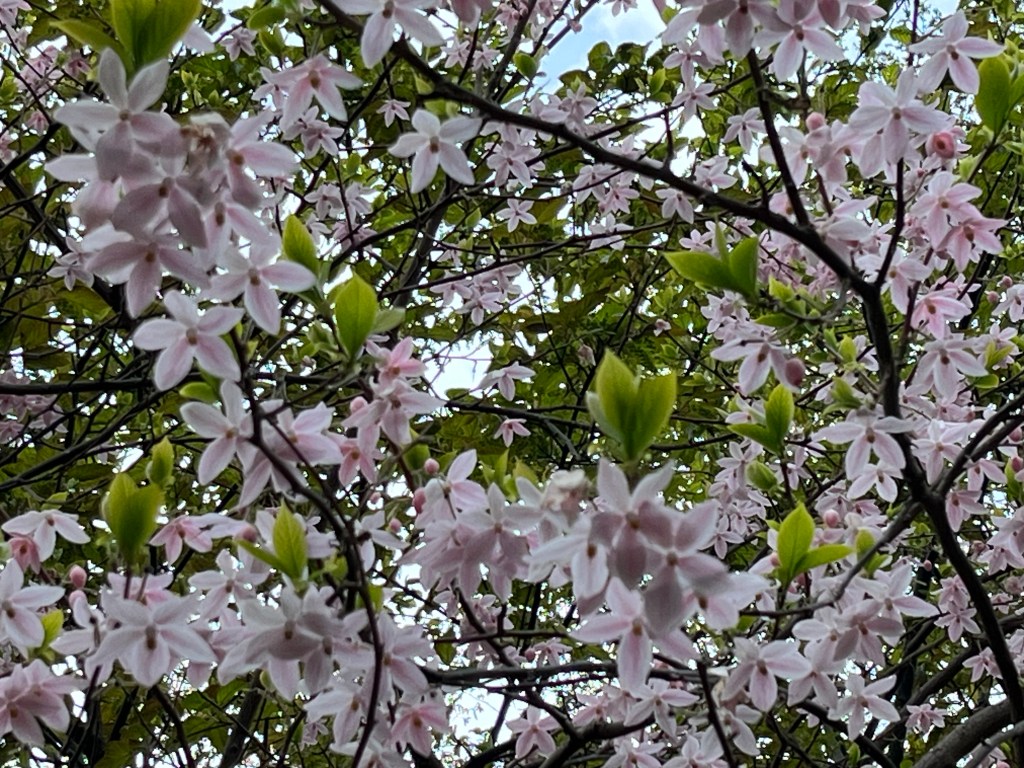
It has been a very good year at White House Farm for Melliodendron xylocarpum, which has lived up to its reputation as an outstandingly attractive newly introduced small tree. A quiet, warm, sunlit spring, and cool at night has meant the flowers have lasted well, and the trees have been effective for two months.

The much larger UBC form reaching free-flowering maturity this year

We have six accessions here of which four are now regularly flowering freely –  the Hillier form, one from the University of British Columbia and two seedlings from a collection in Hunan.

L to R: The UBC form, Hillier, and one of our Hunan collections

We have noted that no two are quite the same and there are variations in flower size and colour as well as flowering time. Seedling forms are thus likely to vary, and forms of a richer pink may well emerge and be worth naming – so it will be interesting to keep an eye open for seedling variations in the next decade. There was a good seed set last year (pace squirrels) and trees take around 10 years to flower from seed, so it may be a while before potentially richer pink forms emerge. Clare has been photographing the accessions for four years and has observed variation in degrees of pink from year to year, presumably due to varying conditions. In all our accessions pink is most intense in bud then pales significantly as flowers age, in some cases to an almost pure white – the comparison photographs below were taken with the smaller earlier-flowering specimens in their later colour.

L to R: The UBC much larger flower, then Hillier, then one of ours with curled petals from Hunan (the last two in their latest colour, faded to almost white)

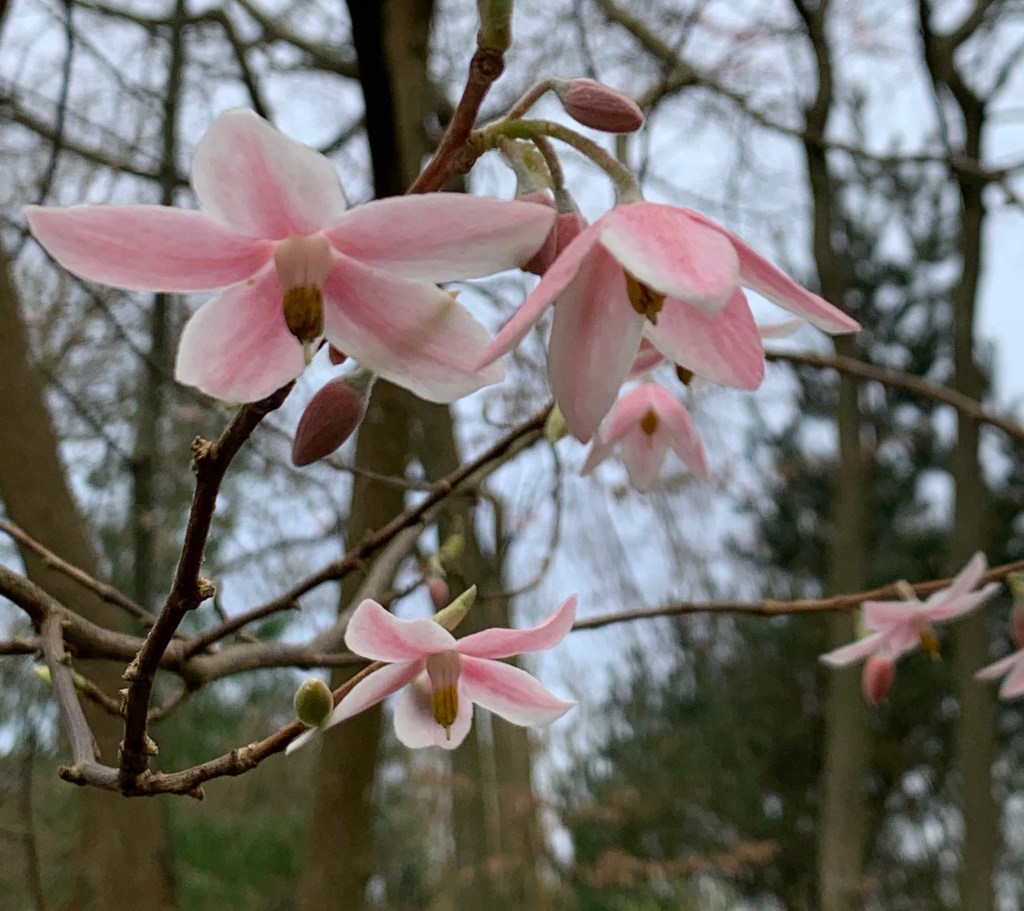
Flowering times vary  slightly. The Hillier form is first to flower and is truly precocious, its solidly pink (rather than pink-streaked) flowers opening before the leaves. It is the deepest pink of those we grow but fades slowly in warm sunshine. The Hunan seedlings flower as green leaf growth is just emerging, with pink buds and white open flowers appearing with the first leaves in a three-colour display; but the flowers hang well clear of the foliage, so it does not spoil the effect.

The UBC form is late, at least two weeks after the Hillier form, and this year, as our specimen reaches maturity, the UBC flowers have been a full three inches across – significantly larger than all the others – appearing both before and with the foliage.

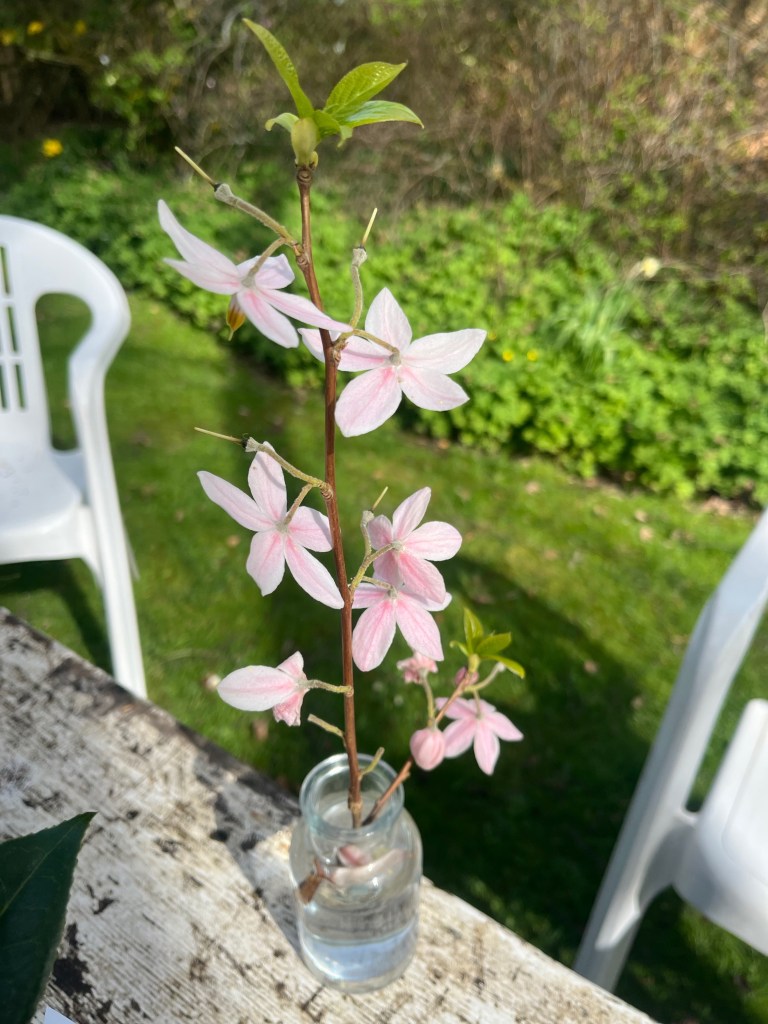
We also discovered by chance that Melliodendron has remarkable longevity as a cut flower. A specimen of the Hillier form picked on March 30th for our Open Day and left on the table outside in rain, wind and full sun looked like this on April 9th.

The Hillier form earlier in the season on the tree:

For more on Melliodendron, see the introduction to the plant I wrote in the 2020 IDS Yearbook: ‘Meliodendron xylocarpum: a new star’ . Please get in touch if you have thoughts on this exciting recently-introduced genus to share.

Next events at White House Farm:

Saturday May 24th IDS Deutzia Study Day

Saturday June 14th – Open Day (species roses) – to book, email us at whitehousefarmarb@gmail.com

Wednesday June 25th Open Day (Hydrangea serrata et. al.) – to book, email us at whitehousefarmarb@gmail.com

Featured

 Magnolia sargentiana var robusta, et alia

Maurice is on last week’s ‘Gardening WithThe RHS’ podcast, talking about hydrangeas: listen here.

In Asiatic Magnolias in Cultivation (1955) G. H. Johnstone OBE VMH wrote:

“ This magnolia [sargentiana var robusta] is certainly  one of the most spectacular of all those introduced into our gardens and in the running maybe for inclusion in a list of the most beautiful plants to be seen in the gardens of the British Isles.”

George Johnstone grew all the big Asiatic magnolias in his garden at Trewithen in Cornwall, and studied them as living specimens closely and comprehensively over many years at first hand. He was also a frequent visitor to the other great Cornish collections, notably to that at Caerhays, where J. C. Williams had planted all the big Asiatic species available at that time, including the type species of M. sargentiana. This appeared more closely allied to M. dawsoniana than to var robusta, and there is a remarkable similarity in flower between the two, the  relatively narrow tepals hanging loosely ‘like the fringe of a tassel’.

By contrast, the bigger nodding flowers with large broad tepals of var robusta are just one character that singles it out as a distinctive plant, very different to the  type species.

A pale form of M. sargentiana robusta at Lanydrock

M. sargentiana var robusta was found and introduced  as a single plant by Ernest Wilson (W 923a) on the Washan in W Sichuan. He collected it blind in a population of the type without seeing it in flower., which may have influenced his naming.

Both Johnstone and subsequently Treseder (Magnolias) were both firmly of the view that M. sargentiana var robusta merited full species status. In his book Treseder lists the detailed differences between M. sargentiana and M. sargentiana var robusta. Without reproducing all his comparative detail here, suffice it to say that Treseder clearly differentiates habit, young shoots, leaves, flower buds, flowers, fruit cones, and seedling flowering times (25 years for the type, and only 11-15 for var robusta).

M. sargentiana var sargentiana W914 taken at Wisley in 2010: the first flower of a scion given by Charles Williams grafted and planted on Battleston Hill in 2006/7. Many thanks to Jim Gardiner for photo and info.

Johnstone makes the point that of the many seedlings of var robusta raised over the years in Cornwall, none reverted to the type, all maintaining the character of the original. My own experience is limited, but I have been growing what is known as the ‘Caerhays Dark Form’ for 50 years from an original Treseder graft, which today as I write is pushing 50ft with perhaps 2000 flowers. It is a spectacular tree (see below). 

I sent seed to the late Peter Chappell who returned a seedling that had beetroot red young growth, which needless to say it lost as it matured. It flowered in 11 years from seed and is identical to the parent in every particular, so that cut flowers from the two, in different vases were indistinguishable by visitors who could not tell which from t’other. I like to think that the ability to reproduce morphologically identical offspring is a strong indicator of a true species.

The change to full species status was not accepted by the botanical authorities at the British Museum and the RHS Council at the recommendation of the then acknowledged authority on Magnolias, J E Dandy, who wrote ‘ I….cannot accept that this single plant (from which all the cultivated plants are derived) represents a botanical taxon.’ In other words a single plant growing within the range of typical M sargentiana is not enough to establish a new species.

This naming of a less common and less horticulturally significant variety as the type species is an example of a problem that is by no means unique, especially when opinions are based, for example, on herbarium specimens only (Callaway, in The World of Magnolias points out that Dandy named at least 6 magnolia species based on single herbarium specimens.)

None of the authors above followed through, deferring to the botanists. They reluctantly concluded that more should be known about the plants involved with more specimens studied in and from the wild. Treseder sums it up ‘ The unfortunate difference of opinion between plantsmen and botanists remains and is likely to continue until botanical research becomes possible once more in China’.

Unfortunately since China opened up again to western botanists in 1980, as far as I am aware no new introductions or further studies of M. sargentiana or M. sargentiana var robusta have been made, so at present the status quo for var robusta prevails.

A further option is from Spongberg ( Magnolias and their allies) who writes ‘…..it may be best to accord this plant cultivar status in the future’  – ie  Magnolia sargentiana ‘Robusta’.

Whatever its name, it remains in my experience the best choice of the big flowered Asiatics for general cultivation: with vigorous growth, excessive freedom of flower, and weather resistant 8-10 inch nodding flowers in extraordinary profusion. A majestic tree.

‘Mr Magnolia’ Jim Gardiner looks less than dismayed at being surrounded by M. sargentiana var robusta.

I’ve sown seed from a M. sargentiana var robusta cultivar called ‘Blood Moon’ and produced two promising seedlings: M. ‘Premiere Cru’ and ‘Grand Cru’.

M. ‘Premiere Cru’ yesterday: raised from M. sargentiana var robusta ‘Blood Moon’

M. ‘Premiere Cru’, bred here at WHF, is striking for its intensely dark colour compared to its parent ( it may be pollinated by the deep pink Aberconway cultivar M. sprengeri ‘Claret Cup’ ). It is reliably hardy -and is certainly reliably free-flowering. Like an earlier seedling of var robusta, it flowered after 11 years from seed, and I like to think its robustness since then at White House Farm – very rarely damaged by frost in Kent – reflects its M. sargentiana var robusta tough constitution, which in my experience is by far the most ‘robust’ of all the early Asiatics. It’s high time to revise perceptions of the gardenworthiness of this first rank flowering tree.

Maurice Foster

Featured image at top: our M. sargentiana robusta ‘Caerhayes dark form’ in 2023.

Join us for our spring Open Days to see our 200+ magnolias, 140 camellias and other spring-blooming genera on Mother’s Day, Sunday March 30th and Wednesday April 9th. (£15). To reserve a space, email whitehousefarmarb@gmail.com

Featured

 ‘Go east young man’  –  the Magnolia campbellii Mollicomata group

Join us for our spring Open Days to see our 200+ magnolias, 140 camellias and other spring-blooming genera on
Mother’s Day, Sunday March 30th and Wednesday April 9th. (£15).
To reserve a space, email whitehousefarmarb@gmail.com

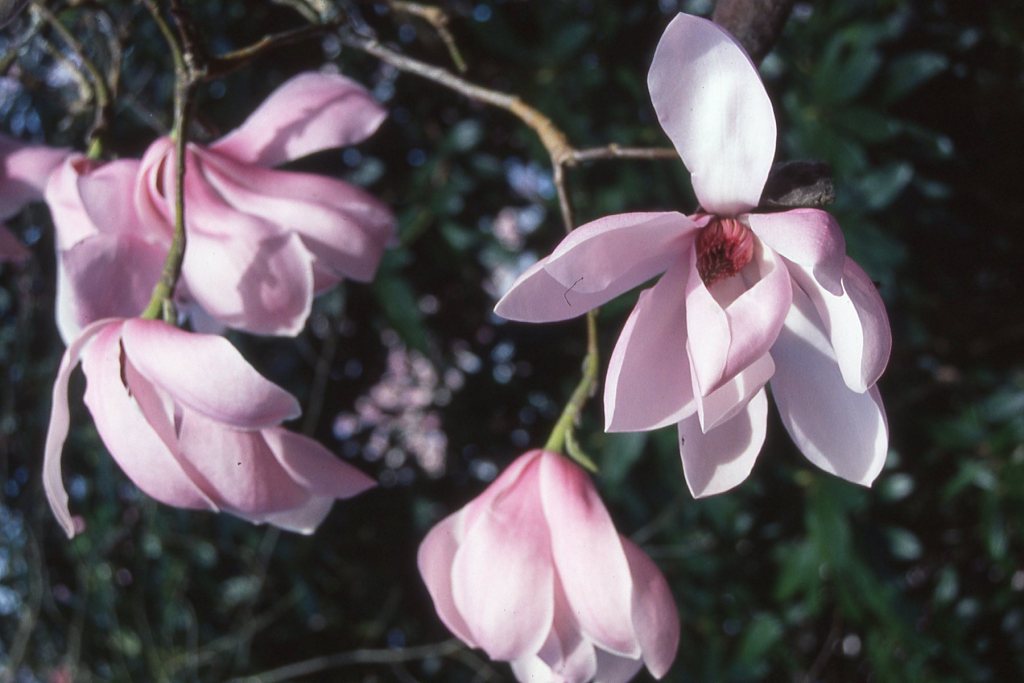
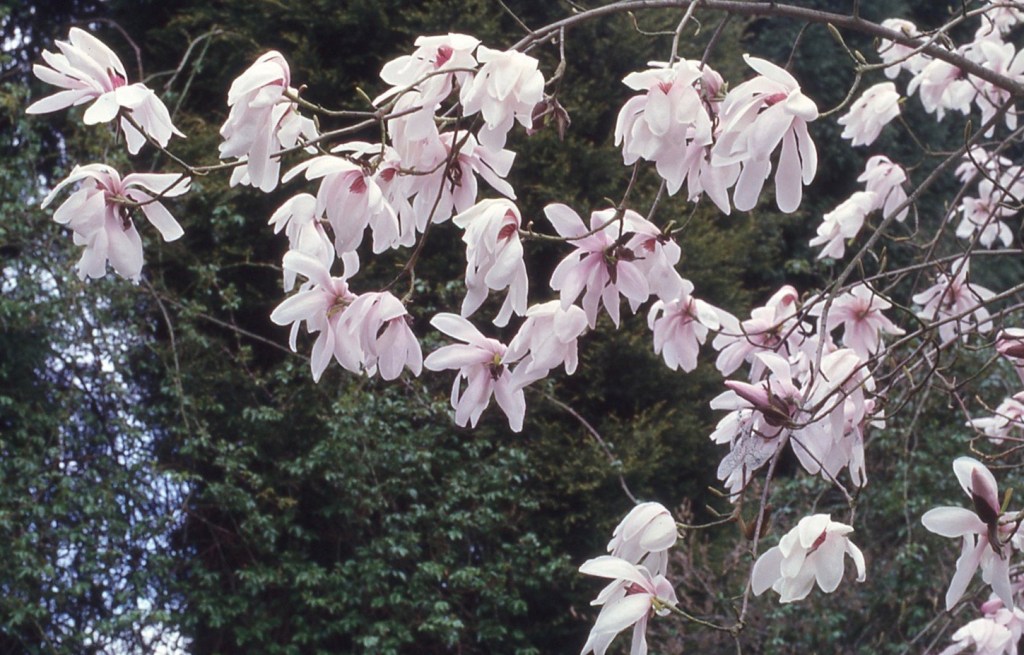
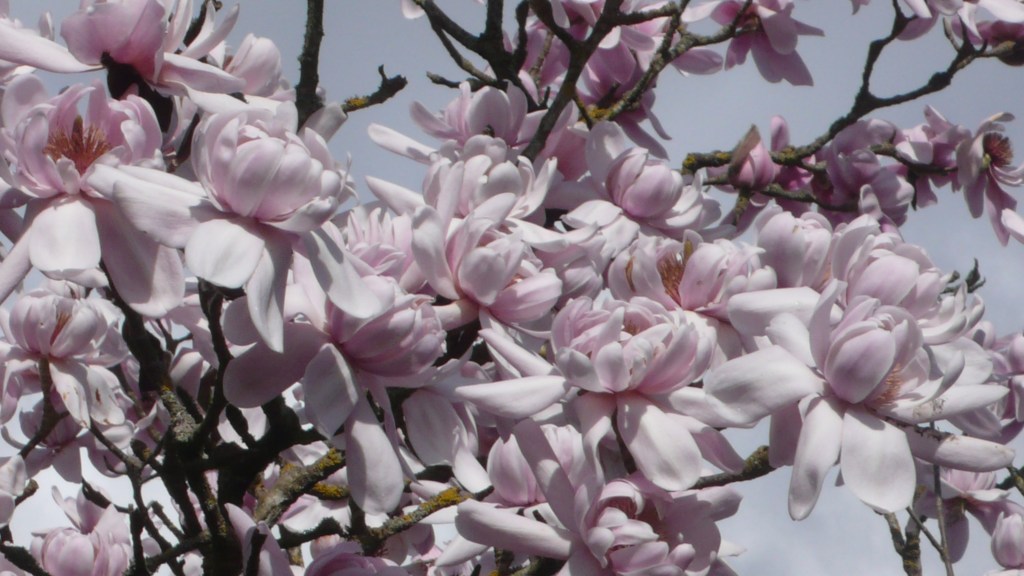
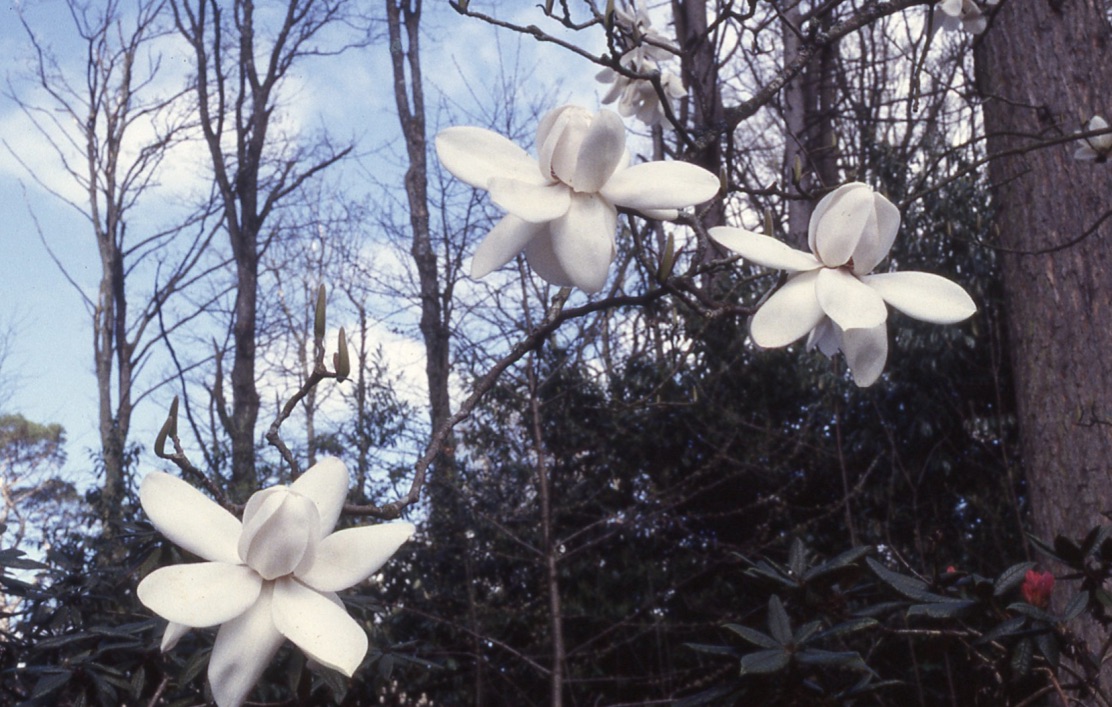
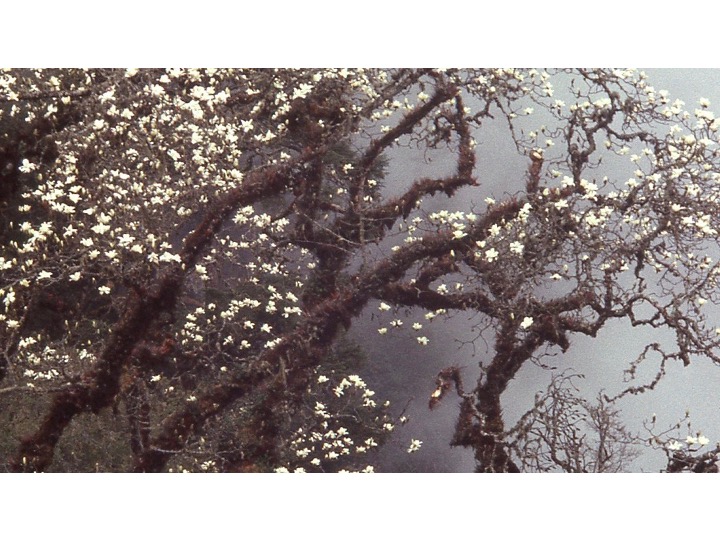
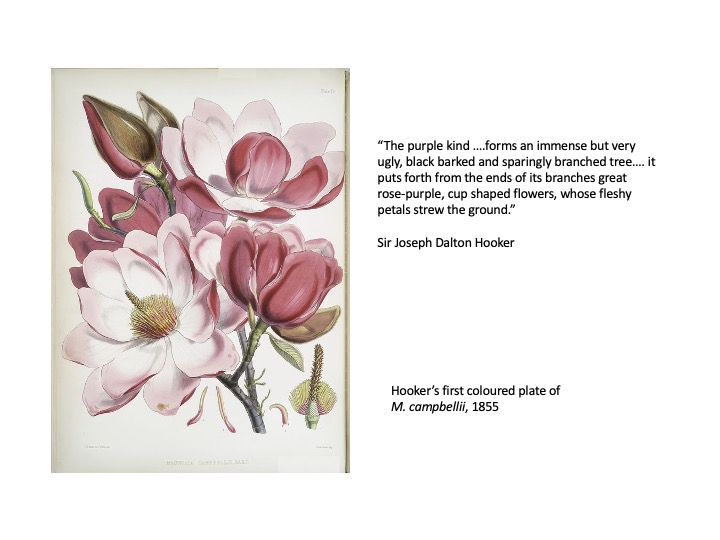
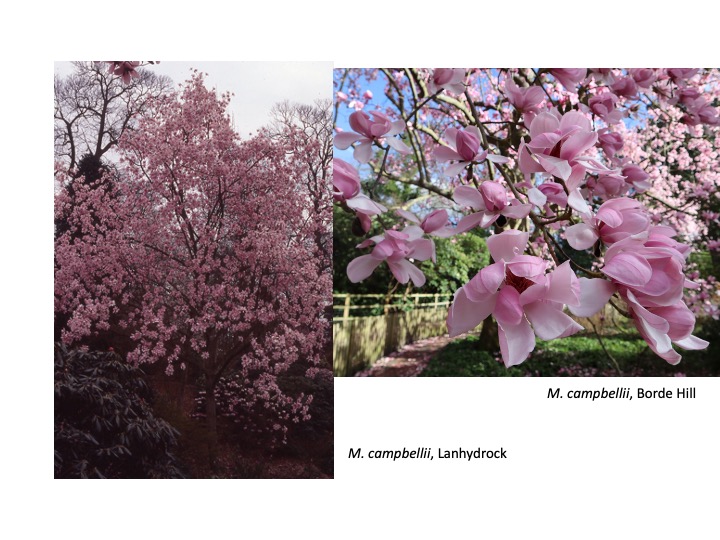
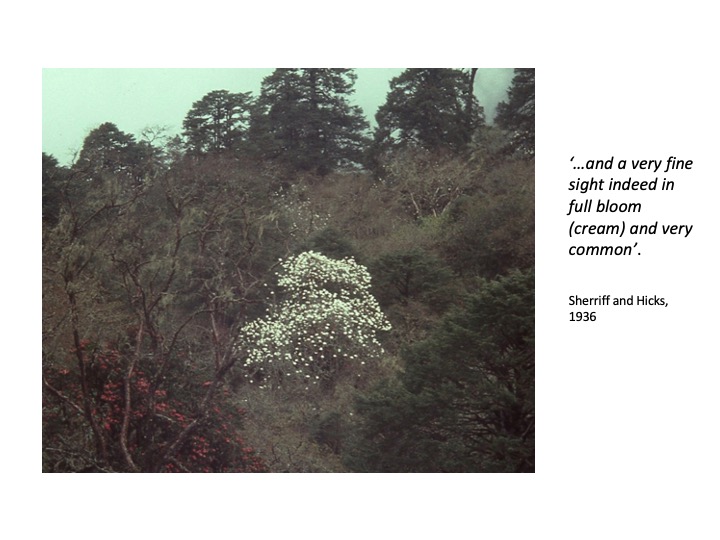
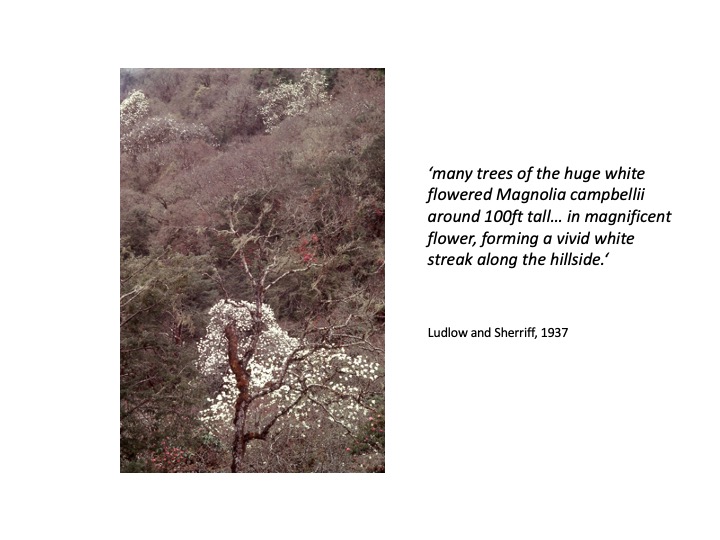
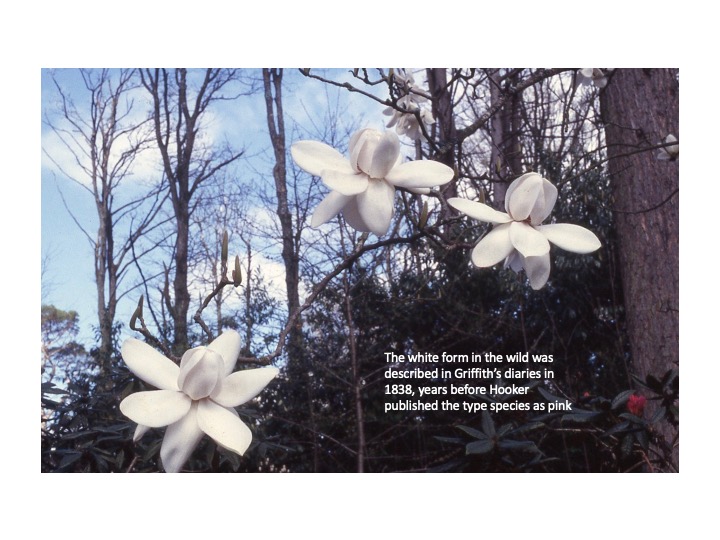
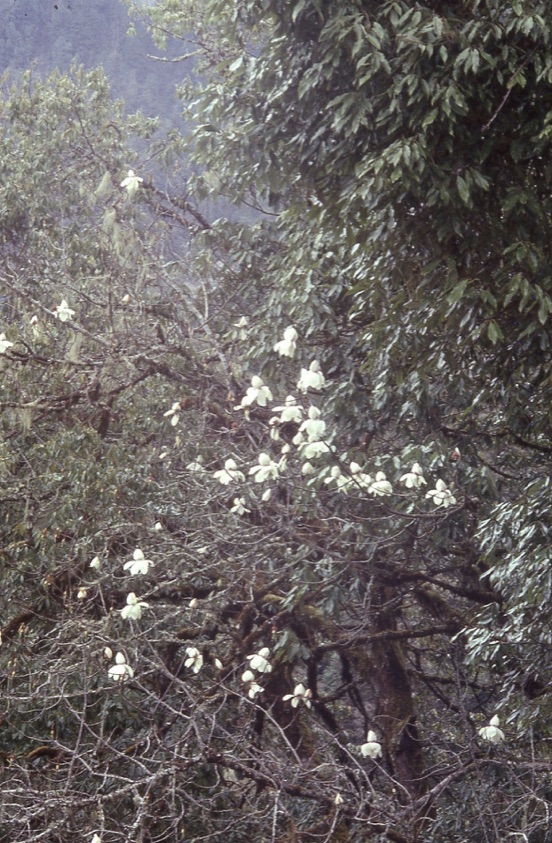
Magnolia campbellii occurs right along the Himalaya, from Nepal to SE Tibet. Moving further east,  into W. China, in the spring of 1904, George Forrest discovered, on the western side of the Mekong valley  in Yunnan at 10,000 ft in snow drifts, a magnolia  with an affinity to, but distinct from, M. campbelli. This was named as M. campbellii ssp mollicomata.

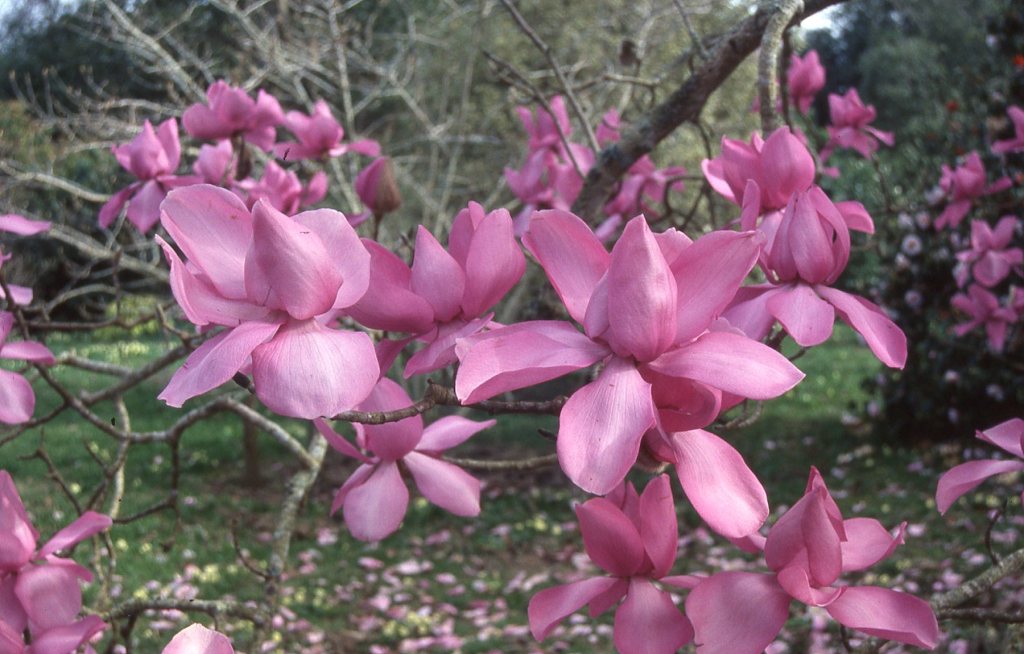
A George Forrest introduction of a pale form of M. mollicomata at Caerhayes

Botanists now vary as to the status of mollicomata.  TSO treats it as a horticultural ‘group’ within campbellii, holding that it forms a meaningful entity only within gardens. Others still maintain it as a variety, or a subspecies. Botanically, it may not differ sufficiently to separate it from campbellii, but horticulturally the differences are real:

  • The pedicels  and perules are notably hairy (hence mollicomata – the ‘downy magnolia’)
  • The buds are bullet-shaped, with a little pinched waist, as against ovoid for M. campbellii
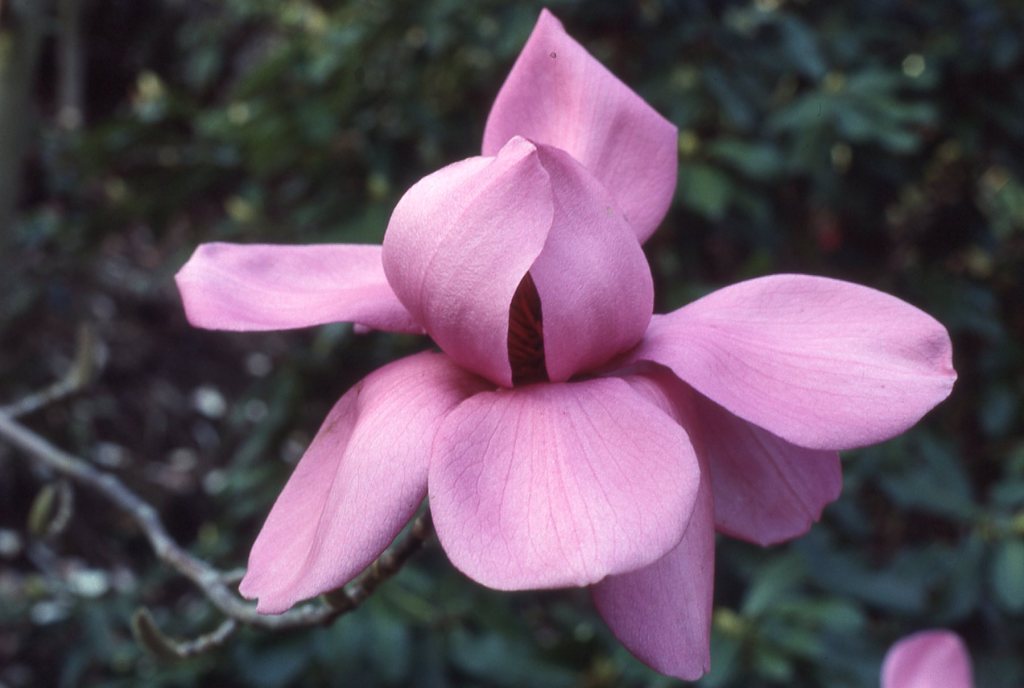
  • The shape of the open flower is different: M. mollicomata is invariably some form of cup and saucer but, while M. campbelli  is quite often in this style, it can vary, sometimes with  looser cup-shaped flowers.
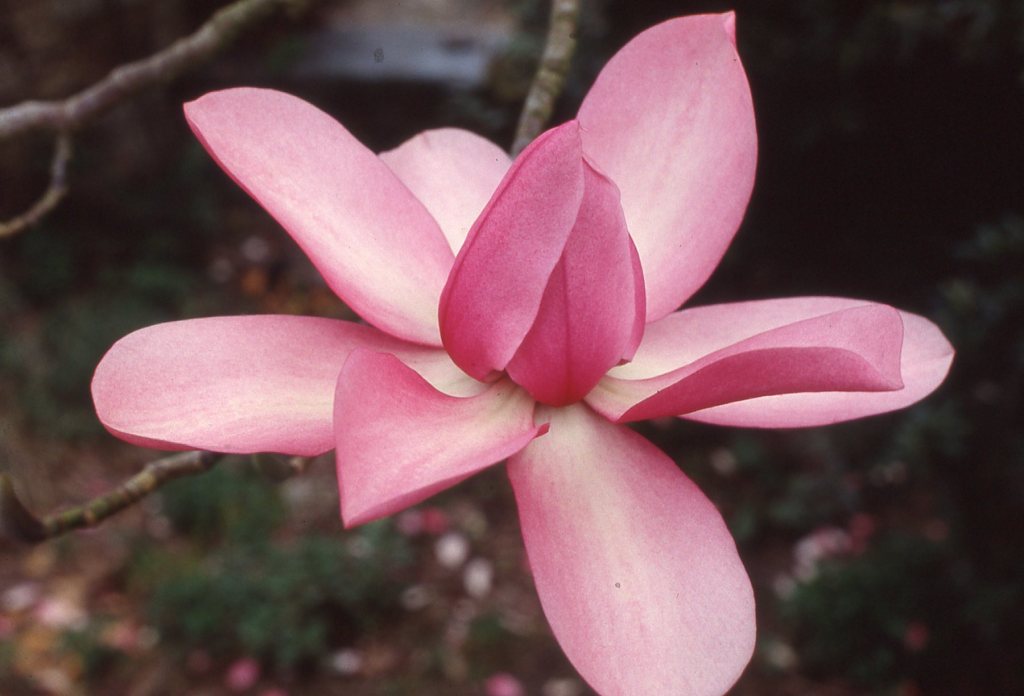
  • The flower is a different and for some a less pleasing colour; jt has a more fuchsia tone, with a bluish colour base. Gardeners expecting the clean clear pink of the campbelli type might be disappointed.
  • It flowers from seed in half the usual time of M. campbellii – after 10 or 12 years. It took 12 years to flower from seed at both Bodnant and Windsor.
  • White flowers are rare.
  • It flowers two weeks or more later than typical M. campbellii and  is thus more likely to avoid frost damage in the garden.
Classic mollicomata form, from the Upper Salween, Yunnan

This is a typical flower from the Salween drainage of the Salween/Mekong divide in far N.Yunnan, where it is locally frequent in silver fir forest. Forrest thought it favoured the western aspect, exposed to the wetter conditions of the monsoon.  Note the sharp reflexing of the outer tepals.

Incidentally, in the wild, a white form of M. mollicomata is as rare as the (wild) pink form of M. campbellii. I don’t know of a true white mollicomata in cultivation – but readers may have seen one?

It is rare now to find a plant in flower in the wild because the buds appear to be taken for medicinal purposes, along with young bark and young shoots. Even in very remote areas huge trees are still found climbed high, with not one bud left. It seems as much in demand for this purpose as M. officinalis, especially in Yunnan. So it is rare to see a large tree smothered in flower.

Its relative lateness is a virtue in the garden; and there are forms that are even later than the type. Some of these offer wonderful colour, and for the garden are a massive improvement on the type. For those uneasy about the early flowering and frost susceptibility of typical M. campbellii, these later forms are not only superb for their colour, but generally April flowering, and thus escaping the occasional cold snap of late winter and early spring.

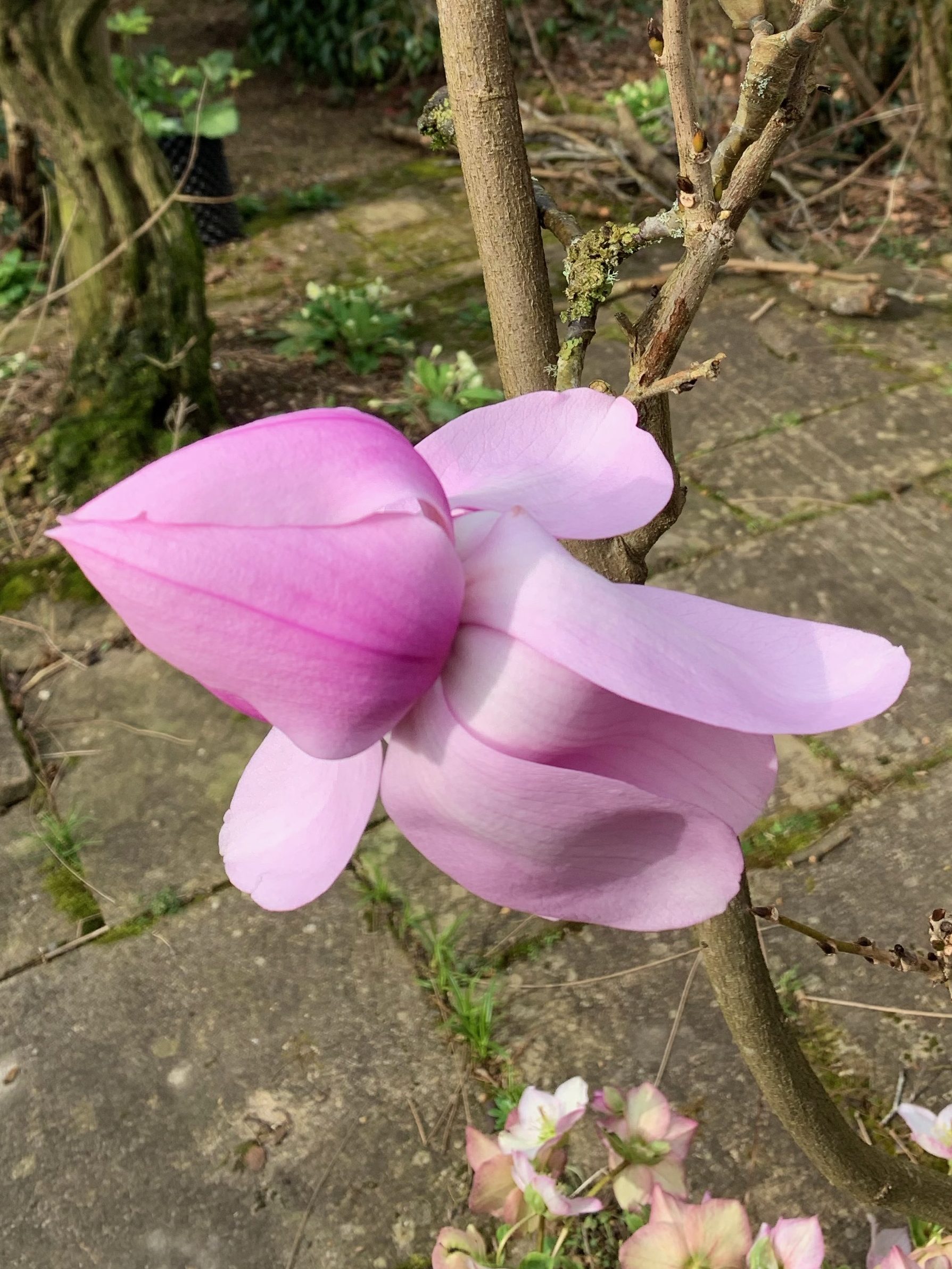
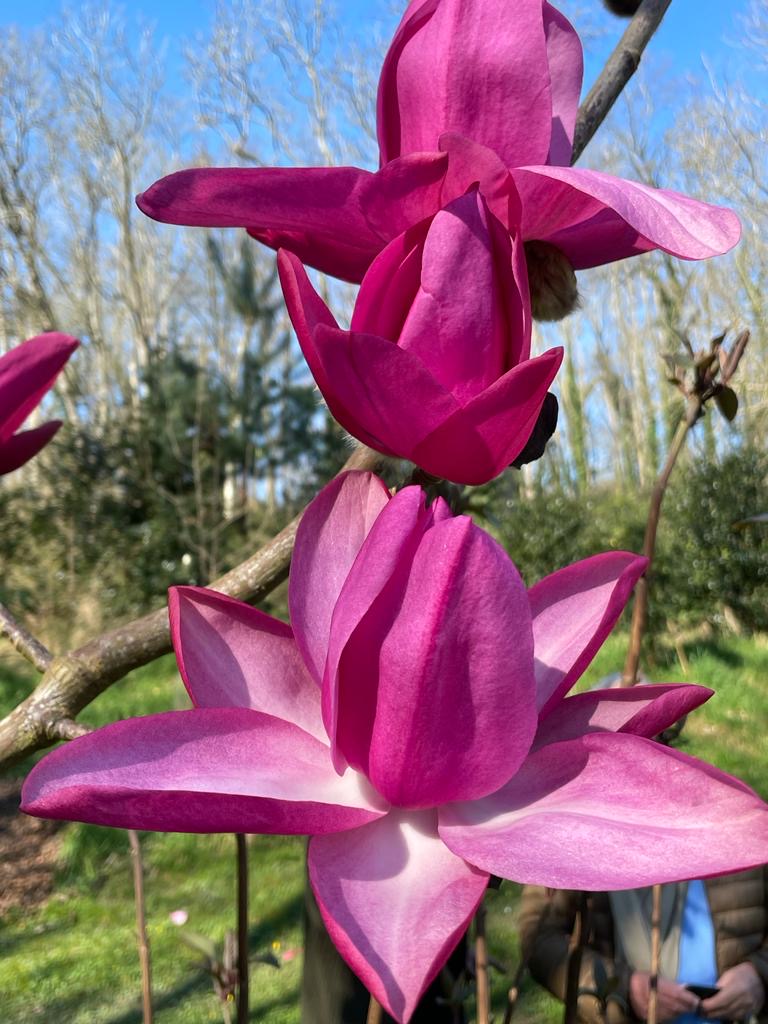
Darjeeling is one such, and high on my list of top 10 magnolias. The exceptionally rich red/purple colour with the outer whorl of tepals reflexed to show a paler inside, together make an unforgettable picture. This is an even richer colour in the warmer climate of New Zealand, as appears to be the case with other ‘red’ magnolias.  The colour seems to be fugitive to cold.  It was named by Hilliers as long ago as 1987 and grafted from a tree growing in the Lloyds Botanic Garden, Darjeeling. A fabulous flowering tree.

And Betty Jessel is a seedling raised by Sir Charles Jessel in Kent from M. mollicomata ‘Darjeeling’, and is also a remarkably rich colour, almost crimson in effect, during open weather. It does not appear to graft as easily as other cultivars and this is maybe why it is less often seen.

M. mollicomata ‘Betty Jessel’

Latest of all to flower is Peter Borlase, a little-known seedling from Lanhydrock. This is an unusual colour, a warm rose with a paler bar down the centre of the tepal. It was named for the head gardener at Lanhydrock and selected from a row of open-pollinated seedlings planted as a shelter belt. It flowers in April and as late as into May, on a sturdy upright medium-sized  tree. It leafs out late; so late, it can appear to have died, like Acer pentaphyllum or Sorbus keenanii.

M. mollicomata ‘Peter Borlase’, flowering in late April

And of course there is the ‘Lanarth’ group, collected by Forrest in 1924, which tend to flower later than typical M. campbellii and from an earlier age. All have the remarkable and unique episcopal purple colour, fading to magenta/violet. It comes more or less true to colour from seed.

Forest never saw ‘Lanarth’ in flower, his note just said ‘only M. mollicomata, I think. GF’. When it was first introduced it was known as the ‘telephone number Magnolia’, because its collection number was F25655, typical of the then five digit phone number. Three seedlings were raised. One went to Lanarth, one to Werrington, the other to Borde Hill.

The original raising took 20 years or so to florescence, but seedlings from it have flowered sooner, such as ‘Trewidden Belle’, almost certainly a hybrid, below:

At White House Farm this took some 15 years to flower from grafting, but it was moved as a small tree of about 2.5m which set it back. The colour has something of the magenta/purple tone of‘Lanarth’ but with more red and and brighter.

Another group that brings in the 3 elements of later flowering, a cup and saucer shape, and improved cold hardiness is the hybrid between the type campbellii and mollicomata, the Raffillii Group. Charles Raffill at Kew made this cross in 1946 and distributed up to 100 plants to gardens across the country. It flowered first at Windsor and this plant was named ‘Charles Raffill’. A subsequent cultivar flowered at Caerhays and was named ‘Kew’s Surprise’.

M. campbellii x mollicomata ‘Charles Raffil’ at Windsor

The quality of the flower may be just short of the class act of M. campbellii, but it is a first rate plant for those who fear the species may be susceptible to frost damage.

M. mollicomata ‘Jim Gardiner’ – the only double of the Group (photo courtesy Jim Gardiner)

Lastly, the M. campbelli mollicomata Group includes a wonderful double form – as far as Jim Gardiner knows, the only one – aptly named M. mollicomata ‘Jim Gardiner’, pictured above at Borde Hill in 2014 another variety well worth watching….

Maurice Foster

Featured image at top: M. mollicomata ‘Werrington’ at Tregrehan.

Featured

The majesty of Magnolia campbellii

Archibald Campbell was a political officer at Darjeeling in N. India at the time of Joseph Hooker’s celebrated 1849 visit to the Himalaya, which he helped to expedite. He was perhaps fortunate to have the most spectacular flowering tree yet discovered – the pink type species of Magnolia campbellii – named for him by Hooker. For Hooker’s early experience of the species was restricted to Darjeeling and Sikkim, where the superb pink form is local, and of very limited distribution, possibly even ex situ as planted specimens: as Polunin and Stainton say in their 1984 Flowers of the Himalaya ‘A pink-flowered form is cultivated around Darjeeling’. By contrast, the white form (now M. campbelli alba) is ubiquitous across wide swathes of the Himalaya, from Nepal to Tibet. For the pink form to have been recognised as the type of the species is arguably an accident of history.

Kingdon Ward’s well known description of M. campbellii in Sikkim refers to ‘a fleet of pink waterlilies riding at anchor in a green surf’. But he also described the trees in Sikkim as white-flowered and rarely pink, writing ‘[we] gaze down in wonder on the dark forest, lit by thousands of milk-white glowing cups, hung like beacons in the bare trees, and be silent.’

Borde Hill photo courtesy Jack Aldridge

Hooker himself mentioned the scarcity of the pink form in 1855, only six years after first seeing it and naming it – due to the demand, he suggested at the time, for its high quality timber from huge specimens, up to 150ft tall.

But all other published descriptions I have read of M. campbellii in the wild are of a white, not pink, form of the species. Polunin and Stainton state that there are no pink forms in Nepal. In 1936 Sherriff and Hicks described the species as up to 80ft in central Bhutan: ‘and a very fine sight indeed in full bloom (cream) and very common’. And a year later in 1937, Ludlow and Sherriff in N. Bhutan saw M. campbellii  ‘in magnificent flower, forming a vivid white streak along the hillside’.

Heading west they encountered ‘many trees of the huge white-flowered Magnolia campbellii around 100ft tall’.

In 1989, travelling for almost 3 weeks in West and Central Bhutan, when M. campbellii was in its full pomp, with scores of trees in full flower, I never saw a single pink form.

Long before Hooker described the pink form, William Griffith, an assistant surgeon working in Madras for the East india Company,  had travelled extensively in Assam, Burma, Bhutan and neighbouring countries, and made significant collections. He discovered the white form in 1838, eleven years before Hooker saw the pink form. Griffith described the white form in his diaries, but alas, died at the untimely age of 35, and his records were published posthumously, well after Hooker had already published his description of the pink form and designated it the type species.

But for this accident of history, the white form would certainly have been described as the type species, and the pink form a local forma rosea.

The white form in the wild is long lived, and can grow to a great size with specimens up to 150 ft reported, and once established, is seemingly indestructible.

The tree on the left is at the head of a village called Gante Gompa in Bhutan, growing in the precinct of a temple. Completely exposed and coppiced by storm and hollow, it is still 70ft tall and 8ft in diameter, full of vigour and reportedly flowering to capacity. The middle picture is a very old specimen, a true plant of M. campbellii alba from the Himalaya, planted on Zixishan, a temple mountain between Kunming and Dali in Yunnan, apparently presented to celebrate the historic visit of a significant religious figure. This makes sense, as these pure white flowers were regarded as a symbol of purity among Buddhists. It is protected by a monk, who as someone pointed out, has not done a good job as it has been burned, hollowed out and hacked, but in spite of it all still manages to grow with vigour, and flower freely. On a subsequent visit the guardian allowed me to climb it to photograph the flowers close up (right) which confirmed it as classical M. campbellii alba.

Further improbably tough hostile conditions are evidenced in a M. campbellii alba not far from us at White House Farm in Kent. “Plant a tree in seventy three” was a slogan to encourage schoolchildren in the UK to plant trees. The late Brian Doe, then Head Gardener at Borde Hill in Sussex took a seedling of M. campbellii alba to the field of a friend who lived on the North Downs on chalk, next to a chalk quarry, and it flowered  with a classic cup-and-saucer pure white campbellii bloom. It survives, if not prospers.

I’ve no idea why to Brian it seemed a suitable place for a magnolia, which in the wild enjoys an acid forest soil with plentiful moisture in the benign shelter of open woodland. Maybe it was a deliberate experiment.  It rather echoes the work and experience of Colin Mugridge, who grows healthy rhododendrons in a limestone quarry in N Wales with a pH of 7-4. Here it was planted in turf, short cropped by grazing sheep, on a south facing slope, in full sun, in the precinct of a cottage called Chalk Pit Cottage. The soil is grey, full of shards of crushed chalk, and with little humus. At one stage the tree had a pony tethered to it. There could be nowhere more hostile, but although growth was not optimal, it evidently showed no signs of chlorosis.

Who claimed that these Magnolias required an acid or neutral soil, or were impossible to grow in alkaline conditions? Has any formal research been done into soil pH? Does this single example open this whole question? If any reader of this blog has further experience of alkalinity tolerance in magnolias, please comment below, or email us at whitehousefarmarb@gmail.com. All the books say don’t plant these trees in alkaline conditions, so this is an important issue. Would there were more Brian Does who dared to defy received wisdom.

In the wild, the pink form may be local, the white form ubiquitous: but what is also curious about this brilliant species is that yellow forms reportedly exist quite widely in Bhutan, and must have been encountered, but for some reason not reported, by earlier explorers.

I saw this inaccessible specimen deep in the forest, but even with a zoom camera was unable to do it full justice. A student from Bhutan at Wisley told me that yellow-flowered specimens are quite frequent off the beaten track, and not at all unusual. Peter Cox sent me a photo of fallen tepals from a yellow form he saw in NE India.

Taken at Mount Congreve, showing how the colour fades from bud, to mature, to the fading flower. Photos courtesy of Raf Lenaerts.

At Mt Congreve in Ireland this fine specimen shows that this is not a flight of wishful thinking, but a reality. The yellow is quite intense in the bud, gradually fading with maturity to cream. It is surprising that this opportunity for hybridisers has not been exploited. A cross with M. acuminata or one of its hybrids seems obvious.

It is easy to conclude that these are straightforward, forgiving plants, and once established, indestructible, combining this cultural toughness with a generosity of flower of a beauty unsurpassed by any other flowering tree.  But hang on a minute, comes the cry –  in the UK they flower in March, and thus the flowers are always susceptible to frost damage.

But this is ‘up to a point, Lord Copper’ –  siting with tree top cover, or against a wall, with tree top cover, or on a slope to guarantee cold air drainage, can each contribute to mitigate this. At White House Farm on our katabatically favourable hill in Kent, we have suffered frost damage to our campbelliis only once in the last 15 years. Perhaps climate change brings such hidden advantages.

M. campbellii is also said to take 20-30 years to flower from seed. This may be true in the benign west country, where rainfall and shaded warmth stimulate impressive growth, perhaps at the expense of flower, but I have found they will flower from a strong graft at 10-12 years with good light and good siting. Perhaps it is time for us all –  even those in their wrinkly sixties –  to give this wonderful tree a try, and experience the skin tingling majesty of its flowers.

By Maurice Foster

  • Some of these ideas and images were shared at an IDS Study Day on Magnolias held at Arboretum Wespelaar, on April 14th 2024.
Featured

Mahonias: mainstays of the garden from September to March

One of our main occupations at present is to review all genera in the collection here at White House Farm, with a view to completing an accurate database, and creating permanent labels. Trustees Chris Sanders, Jack Aldridge and Rod White have all recently been trawling through the Mahonia collection in a valiant attempt to sort out the nomenclature and taxonomy of a genus where hybridity is rife and newly wild-collected species the subject of much discussion. French expert Olivier Colin was also here recently for the day with advice and comment, so the horticultural brainpower applied in the field is formidable. And comment on the current RHS mahonia trial at the Hillier arboretum is also a useful source of information.

I have been collecting Mahonias for some years  as I rate very highly the role they play in the winter garden from September to March. This year, when for days it seemed hardly to get light, and a depressingly dark cloudbase hung over the world like a giant saucepan lid, Mahonias lifted the spirit with their irrepressible shiny evergreen foliage and their longlasting succession of bright yellow flowers, with a constant flutter of bluetits feasting on nectar and blackbirds later relishing the juicy blue fruits.

When we completed our initial survey I was amazed to discover that I had amassed as many as over 70 species, forms and hybrids, including a significant number raised from wild collected seeds from both Asia and the Americas. Here are just one or two to provide a flavour of the pleasure they give in passing them daily during the short dog days of dormancy.

Mahonia nitens
Mahonia nitens

This is M. nitens (Ogisu 94010) photographed in September, and one of the earliest to flower. It was given to the De Belders at Kalmthout, who generously distributed it. Great for small gardens: compact, excellent foliage with purple young growth and flower able to compete with the best.

Mahonia oywakensis
Mahonia oywakensis

An Edward Needham collection, this is the type species of M. oywakensis. Its narrow leaflets and golden flowers are special and it looks a relatively compact grower. It flowers from October into November.

Mahonia russellii
Mahonia russellii

A quite recent introduction, this is  the Mexican M. russellii, named for James Russell of Castle Howard fame. Suspecting a lack of hardiness, I tucked it in under an old holly in a quite dry situation, stony and well drained – poor soil to keep it honest – and it has thrived, flowering freely each year in December. There are some first rank Mexican mahonias turning out to be hardy here at White House Farm, and which should be better known for their significant impact on the winter garden.

Mahonia ‘Esme’
Mahonia ‘Esme’

I have named a plant for each of my 7 grandchildren and this is called Mahonia ‘Esme’, who is currently in her third year at Glasgow university and rapidly becoming Scottish. It appeared from nowhere as a volunteer in a pot in the greenhouse and I planted it as any old background seedling evergreen in the rose garden. It turned out to be a first class plant some 4x4m with long pendulous racemes of small flowers in January and February. I measured one raceme at 16 inches. The young growth is plum purple. The parentage is anyone’s guess but M. duclouxiana – whatever that is – influence gets most votes.

Mahonia ‘Cantab’
Mahonia lindsayae ‘Cantab’

Also with pendulous flowers is the hybrid M x lindsayae ‘Cantab’, which sprawls untidily over a vast area. Don’t plant it if you are a strict disciplinarian. The individual florets are perhaps the largest in the genus, delightful and highly effective – and like the plant, sprawl gently everywhere in a generous mass. A plant of distinction, in both senses; I enjoy its flowers and its individuality.

Mahonia huiliensis? MF 941068

From south Sichuan, the identity of this Mahonia is a subject of some discussion. It was identified as M. huiliensis  MF 941068 (Chinese advice) but there are thoughts it may be something new. In any event, from October on it is magnificent. The dark red rachis are distinctive.

A recent discovery, not yet certainly identified

There is a variety of opinion among cognoscenti on this plant. It was collected in Yunnan by Charles Boulanger, and this plant was kindly given to me by Alexander Anagnostides who is building a fine garden in Varengeville sur mer, in Normandy. It flowers very early in late August/early September and one thought is that it may be a hybrid between M. shenii and M. nitens. However, I have raised it from seed, kept three and distributed the rest and so far all seedlings have turned out to be identical to the parent, with no suggestion of hybrid parentage. The foliage is highly distinctive, unmistakeably thick and hard like a stiff plastic. Any thoughts welcome.

Mahonia in a temple garden in the far west of Yunnan, China

Finally, there must be many more fine mahonias  still to be discovered in China and not yet in cultivation in the West. For example, this is a highly distinctive free flowering plant with unusually pale green foliage I photographed in a temple garden in the far west of Yunnan. We can only hope that the wonders and wealth of the Chinese woody flora, the finest in the world, may still be available for our future enlightenment and enjoyment.

Maurice Foster

Featured

Four super-performing tree-climbing roses at WHF

Yunnan in Western China is probably the epicentre of rose species – and many of them, such as members of the Synstylae group, have huge vigour, which they seem to pass on to their various hybrids.

The best known is probably Rosa filipes, of which the remarkable ‘Kiftsgate’ is a form or hybrid. The type species of R. filipes is infrequent in the wild, but recognisable from its long, thread-like pedicels forming large corymbs of simple single white flowers.

R. filipes from the wild at WHF

Below is an open-pollinated R. filipes seedling from White House Farm, ‘Rosemary Foster’, with pale pink colouring, which will climb up to fifty feet in a tree (here, sycamore and oak) and hang down long flowering shoots in arcs.

WHF’s R, filipes pink seedling, ‘Rosemary Foster’

The other notable member at WHF of the synstylae group is Rosa longicuspis, which has virtually every attribute a desirable flowering plant might possess: it has polished dark green foliage, is fully evergreen (even in several degrees of frost), largish flowers in open corymbs which those with a decent nose say has a faint smell of bananas – and vigour. Our plant is 20 feet tall by as much as 40-50ft across, entirely smothering an old bramley apple tree. The young shoots are polished reddish brown.

The conventional commercial sources have said neither of these synstylae are marketable because they are too vigorous for the average garden. R. filipes is also ultra-promiscuous, producing copious seedlings, many of which are worthwhile (like ‘Rosemary Foster’). But we think they have significant potential for hybridising. We use them to enliven our screen trees, and they are often a feature in autumn for their clusters of hips.

Another very promising synstylae bred here has large rosette-like white flowers hanging in festoons cascading down the side of an old gean. It leaves ‘Rambling Rector’ standing in the middle of his rural parish, so we’re looking for a suitable name for it from higher up the episcopal hierarchy.

A further climbing rose which has attracted much attention from visitors is a strong pink seedling of ‘Veilschenblau’ , now smothering a large Prunus colorata in the Rose Garden. This was brought in as a specimen to the RHS Woody Plant Committee by its then secretary Diana Miller many years ago as a seedling from her garden. I showed interest in it, took the specimen home and rooted it as cuttings. There seems to be little of Veilschenblau in it, in terms of either colour or vigour, but twenty odd years on it is now a remarkable spectacle.

We tend to leave self-sown rose seedlings here until they flower, particularly if a good rose is or was once planted nearby. One never knows one’s luck. After all, every plant we grow in our gardens originated from seed.

Further reading:

‘A Genuinely Evergreen Rose’ on Rosa longicuspis, in The Plant Review, Sept 2020

‘Elusive Titans of the Trees: Synstylae, in the The Historic Roses Journal, Autumn 2020

NOTE: there are still a few places left for our next IDS Study Day on Hydrangea asperae (aspera and involucrata) on Wednesday August 21st. Book here.
Featured

Summer colour at White House Farm: the Hydrangea reappraised

by Clare Foster, Chair of the Board of Trustees, WHFAF

On Wednesday July 10th we will hold an afternoon Garden Masterclass tour of White House Farm with Maurice Foster, Caroline Jackson, Jack Aldridge and Annie Guilefoyle, exploring White House Farm’s collection of Japanese serrata cultivars and Maurice’s own serrata hybrids. A few places are still available from Garden Masterclass here. For those of you new to us, Maurice and Clare’s Garden Masterclass Thursday Garden chat is here. It gives a brief overview of White House Farm’s 53-year history as a private garden and its current purpose as a charity.

The recent rain and cool weather has brought our H. serrata walk to unusually spectacular free-flowering display and intense colours this week. Early Hydrangea macrophylla – the Hortensias – are also coming into full character, such as the seminal ‘Veitchii’, ‘Rosea’, ‘Mme Emile Mouillere’, ‘Comtesse Generale de Vibraye’, along with several of the intensely-coloured Dutch Ladies and Teller series, among others. Together with Annabelle and its pink derivatives, and more recent introductions such as the black-leaved ‘Daredevil’ and scandent ‘Runaway Bride’, White House Farm offers a snapshot history of the genus Hydrangea in flower in a single afternoon. In the wood, species collections of H. angustipetala and chinensis – many with their yellow fertile flowers close to qualifying them as ‘yellow hydrangeas’ – are also at their peak.

Wild collections of H. stylosa – in the same section as H. macrophylla and H. serrata – are among our favourite plants.

For those unable to make it in person, many of White House Farm’s hydrangeas are featured in Maurice’s recent book, ‘The Hydrangea: a Reappraisal.’

The book was written to capture the interest of both seasoned horticulturalists and beginning gardeners and garden designers: as John Grimshaw points out in his review for Hortus magazine, it shares a lifetime of practical knowledge of propagating, growing and observing these plants.* Everard Daniel in the RHS Rhododendron Camellia and Magnolia Newsletter has also reviewed the book and concluded …..’ this will certainly be the premier go-to Hydrangea reference book from now on’.

Our H. involucrata ‘Viridescens’, which is widely available, is demonstrating its astonishing freedom of flower in near 100% shade for something like its 30th year.

Come join us for a thorough discussion of hydrangea siting (crucial to their character), shade and sun tolerance, colour variation, and see the wonderful jewel-like variety of forms of rayflowers, especially among our some 57 Japanese and European serrata cultivars.

  • *If you order a copy at its RRP of £25 from us at whitehousefarmarb@gmail.com, £9 of the cost goes to the White House Farm Arboretum Foundation.

Featured

Cherry-picking for bark

WHF Trustee Chris Lane, who holds the national collection of prunus at his Witch Hazel nursery suggests some Prunus worth growing for their beautiful trunks alone, with flowers the icing on the cake (or cherry on top….) Reproduced with the kind permission of the RHS Plant Review (March 2024).

Upcoming events at White House Farm in June, July and August:

-a WHF Hydrangea serrata Study Day on Saturday June 8th (9 places still available), email whitehousefarmarb@gmail.com for programme details and to reserve a spot;

-A Garden Masterclass ‘summer colour’ tour on Weds July 10th (book via Garden Masterclass website here)

-An IDS Study Day on the important ‘asperae’ subsection of Hydrangea (aspera and involucrata) on Weds August 21st (book via the IDS website here)

See our latest newsletter here: https://whitehousefarmgardenandarboretum.com/whf-winter-newsletter-2023-24/

Featured

Jack Aldridge, for whom Cornus is not the only genus

by Clare L. E. Foster, WHF Trustee

Jack Aldridge, WHF Trustee and Horticulturalist at RHS Wisley, gave a Thursday Garden Chat for Garden Masterclass about his work on Oakwood at Wisley; other recent talks range from ‘Woody Plants that Should be Better Known and Grown’ for Plant Heritage, and an overview of Camellia sasanqua for the International Camellia Society.

Jack has recently played a key role, along with Rod White, who has an unofficial national collection of Camellia reticulata, in identifying and labelling the camellia collection at White House Farm (some 100+ cultivars and 40+ species) which will be a feature of the April 4th guided tour and discussion; as will Magnolias (200+, some 50+ years old, including 12 national champions), which Maurice Foster is speaking about at a Wespelaar IDS Magnolia Study Day in Belgium next month.

WHF is known for its use of Magnolias as canopy trees for underplanted camellias, rhododendrons and hydrangeas, along with other small trees of interest for their flower or foliage, from cornus, styrax, and corylopsis, to carpinus and euonymus, with clematis, wisteria and climbing roses joining in, wherever siting offers each plant its best combination of light and shade, space and protection. This tiered woody co-growing approach offers sequential colour but is also low maintenance, enabling colourful year-long effects achieved without a team of gardeners. As well as looking at the best spring-flowering plants, and others that deserve not to be rarities, these methods and more will be showcased discussed as design strategies at the April Garden Masterclass event – an informal guided tour designed to be directed by participants’ specific interests and questions.

Spring at WHF is dominated by the spectacle of magnolias on all sides, set off by evergreen camellias and rhododendrons below, with conifers as high backdrops. But WHF is also known for the range of other often overlooked genera in spring gardens, such as Meliodendron, Staphylea and Berberis, as well as the colourful spring foliage of birches, maples, and hornbeams. A few places are still available for the April 4th event: for more information click here.

Jack is working on Cornus for Trees and Shrubs Online (TSO) and has an article in this month’s The RHS Plant Review about Cornus hybrids – an issue which also has contributions by two other WHF Trustees, Chris Sanders (on an overlooked clematis) and Chris Lane (on dark-stemmed flowering cherries).

Jack will join Maurice Foster and horticulturalist and gardening lecturer Caroline Jackson in leading the first of a series of Garden Masterclasses at White House Farm on Thursday April 4th, informal tours designed to be led by participants’ interests and questions – observing not just the best or some rare selections but also some growing and planning lessons learned over the past 50 years.

See our latest newsletter here: https://whitehousefarmgardenandarboretum.com/whf-winter-newsletter-2023-24/

Featured

Elegant and resilient: some new garden-worthy Camellia species

Maurice Foster shares some observations on some of the newer wild Camellia species growing at White House Farm.

The four seminal species behind the largely nineteenth-century development of literally thousands of cultivars are of course C. japonica, C. sasanqua, C. reticulata and C. saluenensis. Their relative merits as species are already well known, and their influence on the vast treasurehouse of garden camellia hybrids immense. C. cuspidata has also been quite widely grown for many years. But over the last 20 years several other camellia species have been brought into cultivation; some of the most promising of these for garden-worthiness are among the 48 Camellia species we grow here at White House Farm.

The total number of designated camellia species varies markedly depending on which taxonomist you favour. In 1958 Robert Sealy at Kew described some 82 species from the material then available; by 1981, with many more species newly discovered in China, H. T. Chang recognised no less than 280. T. Ming brought this back to a more sensible 119 in 2000 – but this back and forth itself shows there is a challenge here, and scope for more work, both in the field and the laboratory.

Whichever taxonomic classification you follow, about 80% of species are to be found in China, with some new species recently discovered in Vietnam and elsewhere in E. Asia. Most of these Chinese species are found in the warmer temperate zones of the south and south west, with inland populations often at relatively low altitude, meaning that cold hardiness has been seen as the principal limiting factor for successful cultivation in the UK.  The vigour of WHF’s collection seems to disprove this concern. Of course we have had a good run of milder winters, and some botanists believe members of Theaceae, such as Camellia, and the closely related Ternstroemia and Polyspora, for example, have cold hardy genes in their makeup. But it may be, too, that as for so many other genera, siting is crucial.

C. pitardii – the best of our 4 seedlings
C. tunganica, introduced by White House Farm

Here, finding the right spot for planting is the first priority, and the key to success in creating optimum conditions for survival and good growth. Most of our species camellias are located in the wood, or as underplanting in the mature garden, with wind protection from the bitter North Sea winter winds to the north and the east to which we are exposed being on a hogsback of some 500ft. But the same slope protects against spring radiation frosts, because colder air, being heavier than warm air, sinks – this katabatic wind means sheltered slopes avoid frost pockets. Rainfall at WHF averages about 30” a year: drainage is another benefit of slopes, and there’s a balance to be struck between top cover, root competition, and good light, although I have found that once established, C. species cope especially well with this. Light woodland is ideal, with part shade, some humidity, and plenty of moisture during growth.

Certainly, winter hardiness appears to be less of a concern after 20 years growing experience here. Not only have these newer Camellia species not succumbed to frost, but last year C. tunganica, introduced by White House Farm some 15 years ago, maintained fresh white flowers in abundance after a series of -7C nights: freshness of flower already the standout quality of this species, which drops before browning, essential in a white.

Bearing in mind that all species vary from seed, some of these species can clearly hold their own with the best of the garden hybrids in flower and foliage. Of three large flowered red species, the spectacular red flowers of C. chekiangoleosa warrant inclusion in any collection – and although I am now pretty sure that some of my open pollinated seedlings are contaminated with C. japonica and are natural hybrids, my plants still show what is distinctive about the species: a tough, vigorous pyramid of bold glossy large elliptic leaves ( typically 16x5cm) studded with large cupped flowers of a vivid clear blood red, significantly larger than those of typical C. japonica. It outperforms the reds C. polyodonta and C. semiserrata, which have also survived multiple cold winters here (-7C).

C. chekianoleosa – this form likely a wild hybrid with C. japonica

A species that should certainly be more widely grown is C. trichocarpa. From SE Yunnan and SW Guizhou at altitudes up to 2300m it is moderately hardy: here three plants have been growing strongly without problem for 17 years. The 5-6cm white flowers appear in early spring and have a large central boss of bright yellow spreading stamens, presenting themselves beautifully on an upright shrub (reaching about 3m) among green 11 x 5cm wavy edged leaves with deeply impressed veins, and attractive cinnamon bark.

See Maurice’s 2019 RCM Bulletin article on C. trichocarpa here:

Ming reduced C. trichocarpa to a subspecies of C. henryana, but in cultivation the two are quite different. The flowers of the latter are much smaller, on a bush with a loose, spreading habit, and smaller, less impressively veined, acuminate 7x3cm lanceolate leaves more widely spaced on arching shoots. C. henryana is exceptional for its spring foliage: perhaps the best red young growth of all.

C. henryana – worth growing for its spring foliage display alone

Reddish coppery young growth is an attractive character of many species and is also a feature of C. yunnanensis, a species in turn often confused with C. henryana, as both flower from late October, and can continue over winter in milder weather into early spring. But C. yunnanensis flowers are relatively large, up to 8cm, produced both terminally and in the upper axils with the white petals reflexing to give still more prominence to the yolk-like shock of yellow stamens.

C. yunnanensis once mature (c. 10 years+) produces a good crop of conspicuous large fruits, like purple cheeked apples; as does C. tricocarpa, whose prominent apple-sized fruits, red where exposed to sun, are a valuable ornamental feature. I’ve found the seeds of this and most other camellia species also germinate, and the seedlings establish, very easily.

Also white-flowered but entirely different in character are C. forrestii, C. grijsii and C. brevistyla: all are small-flowered substantial shrubs, and all are proving to be hardy, achieving about 3m after 7-10 years. C. forrestii is particularly free flowering, terminally and in the leaf axils. The small flowers of some 3 – 4cms across are slightly cupped and slightly fragrant. Ovate petite leaves have a slight gloss on a bushy neat shrub. From Yunnan and found up to 2500m, it has been perfectly at home here and our two plants are fringed by dozens of self sown seedlings.

C. pitardii, with a wide distribution in China, is perhaps my favourite, variable in habit and in flower, with colour ranging from rich pink to white. In a good form flowers are of high quality, some specimens a clear shell pink, with little of the more typical vinous underlay. I have three different collections, all growing well after a decade; the best has an open habit and clustered flower buds, both terminal and axillary, with up to twelve buds on less than a foot  of stem. The elegant open funnel shaped flowers are up to 8cm in diameter and open in succession over a long period from February onwards. It is an excellent plant often confused with C. saluenensis, parent of the great C. x  williamsii race.

The Taiwanese species C. transnokoensis is now well known and frequently planted. It has turned out to be surprisingly hardy, and its dense bushy habit, small leaves and abundance of small flowers in spring make a great display. We grow 3 or 4 forms, the best with dark pink buds, the colour retained on the back of the outermost petals when open, particularly attractive. It is an excellent candidate for a small garden, or a specimen plant in a pot.

Many other new Camellia species are thriving in Cornwall – these notes offer a mere glimpse into a future full of exciting potential, and suggest what is already possible in Kent. This looks likely to be a continuously expanding new range of plants which are beginning to prove their value in gardens, and for hybridising, too. They certainly offer beauty and interest in a far more demanding range of garden conditions than their native origins might seem to allow.

References: Collected Species of the genus Camellia. An illustrated outline. By Gao Jiyin, Clifford R. Parks, Du Yueqiang.

See Maurice’s 2017 RCM Yearbook article on Camellia species here.

There will be an IDS Study Day on the genus Camellia on Saturday March 30th at White House Farm: for more information click here.

There will also be a Garden Masterclass guided tour of White House Farm Camellias and Magnolias on April 4th: for more information click here.

For more details of these and other events see our latest Newsletter: https://whitehousefarmgardenandarboretum.com/whf-winter-newsletter-2023-24/

Featured

The mystery of Prunus ‘Tsubame’

By WHFAF Trustee Christopher Sanders VMH. This article was originally published in December 2023 by the RHS Plant Review. Reproduced by kind permission of the RHS.

Featured

Erwan Le Bec shares his experience of interning at White House Farm

Erwan Le Bec, a French horticultural student at INH school (Agrocampus Ouest Angers) writes about his recent visit to us as an intern. He left us with extraordinary photographs and research notes about our collections.

Since I was a child I’ve had a particular interest in the world of plants.

It started with my grandfather’s vegetable garden, then moved to ornamental plants, and especially woody plants, whether trees or shrubs, because to me they seemed incredible living creatures, able to survive against all the difficulties of our world. This passion developed over the years and I decided to take advantage of my studies in landscape design to deepen my knowledge of botany. I began in 2019 with an internship at the Roscoff botanical garden, then continued with an internship at the Aoba nursery, run by Cédric Basset and Manon Rivière, and, last year, had a unique experience at Wespelaar arboretum with Christophe Crock and Koen Camelbeke. This world of trees and shrubs is now for me both a refuge and an idyllic setting for a future professional life.

A selfie with Carpinus fangiana

For several years I’d been hoping to be able to have some experience in gardens in England, to improve my English and my knowledge of plants at the same time. Last summer, during a talk in Herkenrode with Philippe de Spoelberch, we spoke about the garden at White House Farm and its wonderful Hydrangea collection. Having worked on the Hydrangea collection at Wespelaar arboretum, WHF seemed a good choice for my next internship destination. After few emails, I agreed with Maurice Foster on a 3-week internship in August 2023. As soon as I arrived, I felt right at home at White House Farm, with a nice welcome from Clare, her children and Maurice. The atmosphere was incredible: a house in the middle of a treasure trove of plants from so many different horizons. The Hydrangea aspera had just begun to bloom and were shining in all their splendor, like images I’d seen in books about the flora of China.

From the very first evening, Maurice welcomed me with open arms into his world, giving me access to his knowledge and some interesting books: it was the beginning of an incredible experience, three weeks of pure happiness. During these weeks I inventoried with Maurice some zones in the garden, and some genera like Carpinus, Sorbus, Corylus and Euonymus. Thanks to this work, I discovered my favourite plant of the garden: the Magnolia wilsonii x Magnolia globosa seedling from one of his collections that he has nicknamed ‘Parachute’ because of its very big white flower.

White House Farm Magnolia seedling ‘Parachute’, 17cm across

Any activity with Maurice at White House Farm is interesting and instructive, because at WHF each plant has its own story, so every day he took me with him to the different regions of his travels. For example, he discovered Carpinus fangiana in Yunnan in 1998 with some American botanists – the tree had no fruits, and they thought that the foliage looked fagaceous, and was probably an oak. But Maurice kept on searching, and finally spotted a the very characteristic single fruit of Carpinus fangiana in some taller branches. I also helped the arboretum team for one day a week, pruning, tree-felling, and weeding, which was a great way to learn about plant collections in a different way, as something constantly changing. And every week Maurice took me to different famous gardens like Wisley, Nymans and Hilliers to meet different plant specialists, such as Chris Sanders, Chris Lane, Rod White and Jack Aldridge. It was a great pleasure to talk to them, each one a specialist in his own areas.

Rod White’s private garden

This unique and comprehensive experience was very encouraging; it helped me feel I belong in this world of enthusiasts. So I’m finishing my last year of study in landscape design by specialising in urban green spaces, with a 6-month work experience in February 2024 to conclude my course, which I hope to do in a garden or arboretum. My sincere thanks to Maurice and Clare for their welcome, and to Philippe de Spoelberch for this recommendation.

Follow Erwan on Instagram at @decouverte_botanique, connect with him on LinkedIn, or contact him at erwan.le-bec@orange.fr.

_______________________________________________________________________________________________For more about White House Farm, join WHF Friends to receive our latest newsletter.

Featured

‘Dogwood with a bark’: Cornus wilsoniana

By WHFAF Trustee and RHS Wisley horticulturalist Jack Aldridge

This article was originally published in June 2023 by the RHS Plant Review. Reproduced by kind permission of the RHS.

Featured

Two rare Philadelphus re-located

by WHF Trustee Chris Sanders, VMH

As a result of the successful Philadelphus study day held at WHF on Saturday 17th June, two rare Lemoine Philadelphus cultivars believed to have been lost to cultivation have come to light.

Philadelphus ‘Oeil de Pourpre’ (Purpureomaculatus Group)

Trustee Jack Aldridge, who is based at Wisley, brought a handsome specimen from that garden labeled ‘Oeil de Pourpre’.  At first, both Maurice and myself, who had both grown and lost this cultivar in the past, and remembered it as a rather weak plant of poor constitution, were rather doubtful about its identity.  However, on returning home, I dug out some images taken many years ago when I grew a specimen obtained from the National Collection of Philadelphus at Leeds, and I’m now convinced that the Wisley plant is indeed correctly named.  In the attached image its chief characteristics of a deep purplish basal blotch (the deepest colour of any Philadelphus) and the distinctive cup-shaped blooms can clearly be seen. 

 ‘Oeil de Pourpre’ was raised by the famous French Nursery of Victor Lemoine et Fils and introduced in 1910.

Philadelphus ‘Oeil de Pourpre’ Photo: Chris Sanders

Philadelphus ‘Purpureomaculatus’ (Purpureomaculatus Group)

At the study day, there was some discussion about two other Lemoine cultivars, namely ‘Bicolore’ and ‘Purureomaculatus’, neither of which had been seen in cultivation for some time.  I later recalled that a plant from Leeds which had been distributed as ‘Bicolore’ had been misidentified and was really ‘Purpureomaculatus’, but, like ‘Oeil de Pourpre’ seemed to have become very rare and no longer offered for sale.  Arguably, this is the most attractive of the group with widely expanded medium-sized flowers having a good purple blotch at the base of each petal.

Philadelphus ‘Purpureomaculatus’ (Crathes)

A couple of days after the event, the indefatigable Jack alerted me to a small Shropshire nursery (Harley Nursery, near Much Wenlock) who were offering ‘Bicolore’ for sale via their website.  Photographs accompanying the text left no doubt in my opinion that this was clearly ‘Purpureomaculatus’.  A visit to the nursery on the following day resulted in the purchase of five lusty plants for distribution to interested parties.  Also, interestingly, the nursery owner confirmed that he had obtained his original stock from the (now defunct) National Collection at Pershore College in Worcestershire.  As a former student at this college who was very familiar with the collection in its heyday, I was aware that much of the Pershore collection had been obtained from guess where – Leeds!

‘Purpureomaculatus’ was raised by Lemoine and introduced in 1902.

The above two cultivars are really important discoveries and the intention is to propagate them as soon as possible for wider distribution.  Now it just remains to try and track down the real ‘Bicolore’.

Featured

Magnolia Study Day 2023

On Saturday April 8th students and faculty from Wisley, Great Dixter and Kew gathered round a table of vases of magnolias in current bloom, selected from the WHF collection of around 250 species and cultivars from Magnolia, Michelia and Mangleitia. These students were joined by WHF Friends and Volunteers from a variety of backgrounds, from landscape architects to directors of other well-known gardens nearby. The table was set on the main lawn, ringed everywhere by magnolias up to 30-40 ft in the garden landscape, conspicuous against a dark backdrop of conifers. Twelve of these are Tree Register (TROBI) National Champions (eg Apollo, Arnold Dance, Sundew, Sweetheart, Pickard’s Snow Queen etc).

M. ‘Red Lion’, one of Oz Blumhardt’s sister seedlings to ‘Star Wars’ – a national champion at WHF

Another table provided continuous cups of tea and coffee, and someone brought two tins of chocolate crispies, essential requirements to keep the show on the road.

A few last flowers of the earlies – sargentiana var robusta, campbellii , campbellii var mollicomata and dawsoniana- were still available for the vases, plus some examples of their hybrids and forms, such as the Raffilii Group, Premier Cru, sargentiana var robusta ‘Blood Moon’, dawsoniana ‘Clarke’ and ‘Valley Splendour’. 

Vases picked that morning showing the main horticultural divsisions, with M. ‘Iolanthe’ and ‘Dawn’ in the background. The Nothogfagus (centre) coming in to leaf marks the spring timing.

Maurice arranged 8 vases divided into main horticultural subdivisions of most practical use to horticulturalists and garden designers, and containing examples of representative specimens:

  • 1 The early Asiatic trees (campbelli, dawsoniana, sargentiana var robusta – see above)
  • 2  Stellata, loebneri and denudata (see above)
  • 3   Sprengeri (Copeland Court, Lanhydrock, Claret Cup etc)
  • 4 Soulangeana and Pickards (Snow Queen, Grace McDade, Ruby, Opal etc)
  • 5 Greshams (Tina Durio, Manchu Fan, Pink Bouquet, Darrell Dean etc)
  • 6 Kiwis –  New Zealand hybrids (Iolanthe, Ruth, Kathryn, Genie etc)
  • 7 Michelia/Mangletia (only Michelia doltsopa, and Michelia yunnanensis in flower)
  • 8 Yellows (only Petit Chicon and Honey Tulip beginning to flower)
‘Honey Tulip’, open on April 8th: a truly precocious yellow of fine globular shape, the colour of solid honey

Vases of M. stellata , like the best pink form ‘Jane Platt’ and pale pink ‘Dawn’ were featured with cultivars of the tough, weather-resistant M. kobus x stellata M. x loebneri, such as the favourite fragrant Mag’s Pirouette, free flowering long-lasting ‘Merrill’ and the larger flowered ‘Donna’.

Is this Peter Smither’s ’32 tepals FV’ or Jane Platt? Are they different?

Two additional vases could be added –  the summer flowering Oyamas and the evergreen grandifloras that do not begin flowering until May and were therefore not represented; but our evergreen michelia Doltsopa, over forty feet, gave us a fresh first flower.

Michelia Doltsopa

There was plenty of discussion of subjects like growth rates, weather resistance, length of flowering time and notably the questionable value to horticulturalists of sinking Michelia and Mangleitia into Magnolia when there are morphological characters of significance to gardeners that clearly distinguish them. There was a consensus that this was unhelpful as there is useful horticultural information and history contained in a name, and the value of this is sharply reduced by placing these two genera into the generality of the wider genus of Magnolia. For example, what value is there now in calling Mangletia decidua (significantly named as the only deciduous plant in an evergreen section) Magnolia decidua, when so many other magnolias are deciduous? The power and point of the name is hollowed out…..

A Keith Rushforth collection of campbellii alba, the ‘classic’ white campbellii that really should be the type species if William Griffith (1810-45) hadn’t died prematurely and his diaries taken so long to be published. Photo: Jack Aldridge

After lunch, the group toured the arboretum where distractions like Meliodendron xylocarpum, Corylopsis and Stachyurus and large leaf rhododendrons were seen, along with more magnolias – notably a superb M. campbellii alba from the Himalaya flowering for only the second year with 8 flowers; and the final flowers on ‘Premier Cru’, a WHF seedling.

A late flower of WHF seedling ‘Premier Cru’ – a putative hybrid between sargentiania robusta ‘Blood Moon’ sorengeri ‘Claret Cup’. Early flowering and a very strong colour.

Extraordinarily delicious home-baked cake generously provided by Wisley staffer Narisa Kempster rounded off the day, with the plant of the day over tea winning most votes (4 out of 24) not a magnolia, but the meliodendrons then in early flower, especially the Hillier form and MF’s own collection, one freely flowering for the first time this year as a 11 year year-old tree, a nice pink. A forty-foot specimen Gresham Magnolia ‘Manchu Fan’ and M. loebneri ‘Mags Pirouette’ were also featured in the vote.

Text: Maurice and Clare Foster. Photographs by Owen Hayman and Clare Foster.

Featured

Propagation: crucial now not just for garden collections, but also for conservation

WHF held a propagation skills workshop on a cold weekday in early March 2023. Talks were given by Chris Lane on grafting, Peter Shotter on seed germination, Maurice Foster on cuttings, and Nadeesha Bandara shared details of the research project she’s part of at Nottingham University about the influence of hormones on rooting. We had eighteen students from Kew and Great Dixter plus Rod White from the RHS Woody plant Committee and Jack Aldridge from Wisley, so were crammed cosily in the conservatory on a snowy day with a continuous supply of tea and coffee, followed by a muddy tour of the arboretum when the skies cleared.

Maurice introduced the day by saying that the next generation of horticulturalists carry a great responsibility precisely as propagators, because without ‘looking after, growing on, sharing all the stuff that’s been collected’ the wonderful plants we’ve got now that are not being produced commercially will disappear. He said ‘botanists used to be sniffy about what they call ex situ conservation but have come to recognise this is increasingly important as large areas of wild populations are eradicated…so skilled propagators now and in the future will bear a huge responsibility in conservation’ – not just in enlarging the range of good garden plants available to designers and gardeners. 

Chris Lane has done hundreds of thousands of grafts in the past five decades, the prerequisite of being able to create and maintain five national collections at his Witch Hazel nursery in Kent – Prunus (flowering cherries), Hamamelis, Wisteria, Parrotia and Amelanchier. After stressing the importance of maintaining your own razor sharp knives from his talk I learned more about the logic behind the differences between the two main times of grafting, winter and summer. In winter (usually whip grafts – a diagonal cut that binds the end cut of the rootstock with end cut of the scion, aligning and matching the circling edges of the cambium – there will be minimal activity in the scion and rootstock, so pot conditions need to be dry and very well-aired, and low temperatures can be taken advantage of to that end – what Chris Lane calls ‘cold callousing’. With summer grafts, usually side veneer grafts – where only one side of the root stock is cut, peeling back to a short flap at the base where sharply-tapered young scion material is inserted – both scion and rootstock are in the midst of vigorous growth, so moisture is less of a problem, but leaves need clipping by at least half of their area to minimise transpiration. So summer grafts will do well in a fogging unit, or under polythene; whereas winter grafts need to be kept dry in the pot while dormant.

Chris Lane discussing low tech hot pipe grafting at home
A side veneer graft

Hot pipe grafting over the winter enables warmth to applied confined to just the union to encourage callousing while avoiding rot. Chris showed students how to make a home-made version of this technique. For more details of this and other grafting tips Chris mentioned, there’s a good comprehensive print introduction to grafting by Brian Humphrey, The Bench Grafter’s Handbook, by CRC Press (2019).

Peter Shotter on soils for optimal seed germination

Peter Shotter said the key to sowing seeds of woody plants was the composition of the compost – it should be low in nutrient and very free draining. He mixes his own sterile medium with as much as 50% grit, and 50% peat or peat substitute. He also makes his own bespoke leaf moulds. Perlite is a commonly-used alternative to grit, but Peter has found it associated with rot in lilies and other bulb seeds, or other seeds that need a long time to germinate. A heated propagator isn’t necessary if more patience with a cold frame is an option – and artificial warmth can backfire for slow-to-germinate species by encouraging rot and disease, especially in the case of large woody plant seeds such as camellia, peony, oak and magnolia etc. Chris Lane pointed out the need now to be able to grow your own understocks from seed because of reduced commercial availability, and Maurice said he’s seen the same sorbus seeds take from 1-7 years to germinate, which is an evolutionary survival mechanism – if the same seed treated in the same way germinates at different times, if the first to grow dies, more are on their way. For this reason he sometimes uses petri dishes in the fridge to be able to lift seeds as they germinate without disturbing the others. Peter discussed growing-on, and his potting on compost mixture for the seed of difficult bulbs, such as lilies – a third leaf mould, a third grit, and a third commercial ericaceous compost.  

Moving to cuttings, Maurice emphasised three things – the importance of juvenility, of the timing when the cutting is taken (a function of the state of the wood, not the calendar), and aftercare. Cuttings have to be taken early enough for the rooted plant to retain enough carbohydrate to survive their first dormant winter. With woody plants such as birches and maples it is essential to keep them dry and not to transplant them until they start growing the following spring. The idea is to keep them in a state of suspension or stasis. During this period if moisture is not controlled they will rot off, so the sterile compost needs good aerating grit to ensure a supply of oxygen at the root: dryness while dormant is key. He added that 80% of losses in planting out woody plants from pots in the garden is due to planting too deep – and it’s the same with cuttings when you first pot them on: allow the root shoulders to be just visible, perhaps adding some grit on top – and again, avoid nutrient-rich commercial composts, as well as potting on into too big a pot. Keeping constant temperature during sunny periods is important, so misting and shading will be necessary, but without restricting too much light for photosynthesis – it’s a balance. 

A bark sliver can encourage and enable monitoring of callusing

Then Nadeesha Bandara from the University of Nottingham shared details of an ongoing research project on the effects of hormones on rooting. 

Our next Study Day will be on Magnolias, on Saturday April 8th, with a few places remaining. The early Asiatics – campbelliis, sargentianas and dawsonianas will be mostly over, but there will be plenty of others to see – and the soulangeanas, loebneris etc should be at their peak. To apply, or for more information about our 250+ collection of Magnolia cultivars and species, contact Clare Foster at whitehousefarmarb@gmail.com.

Looking at Betula utilis ‘Chris Lane’ with Chris Lane on March 9th, 2023

by Clare Foster, Chair of the WHF Arboretum Foundation