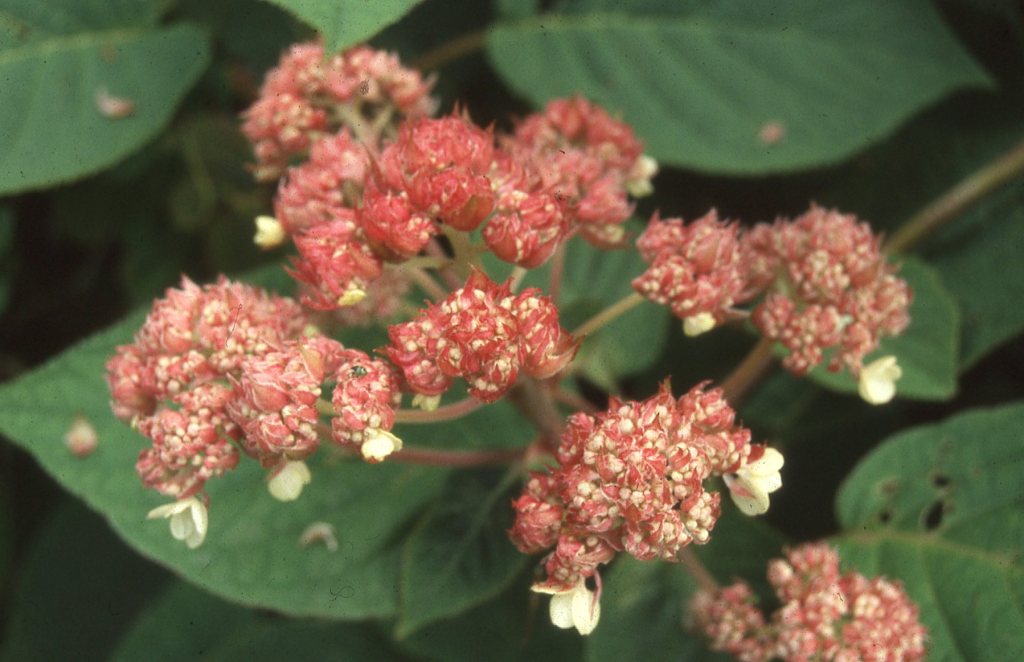
It was in the Proceedings of the Linnean Society in December 1858 that Hooker and Thompson described a new species of hydrangea they had discovered in Sikkim, in the temperate Himalaya, flowering in August of the previous year. They named this Hydrangea ‘robusta’, describing it as a small tree with strong branches – arbor parva, ramis robustis. Its principal distinguishing characters they described as:
the upper part of the petiole winged, the leaves rough above, pubescent/tomentose below (petiole superioribus alato….superne asperulis subtus pubescenti-tomentosus….) broadly ovate, ovate cordate, margins fimbriate dentate (foliis late ovatis, ovato-cordatisve margine fimbriato dentatis…)
Broadly, there are three types of vestiture in Hydrangea aspera – one which is unique to H. sargentiana and which defines it as a species, the others as strigose or villous (or tomentose.) These hairs are an important reliable, generally stable character to distinguish them, because in other respects – leaf colour, size, texture, and shape – they are highly variable.
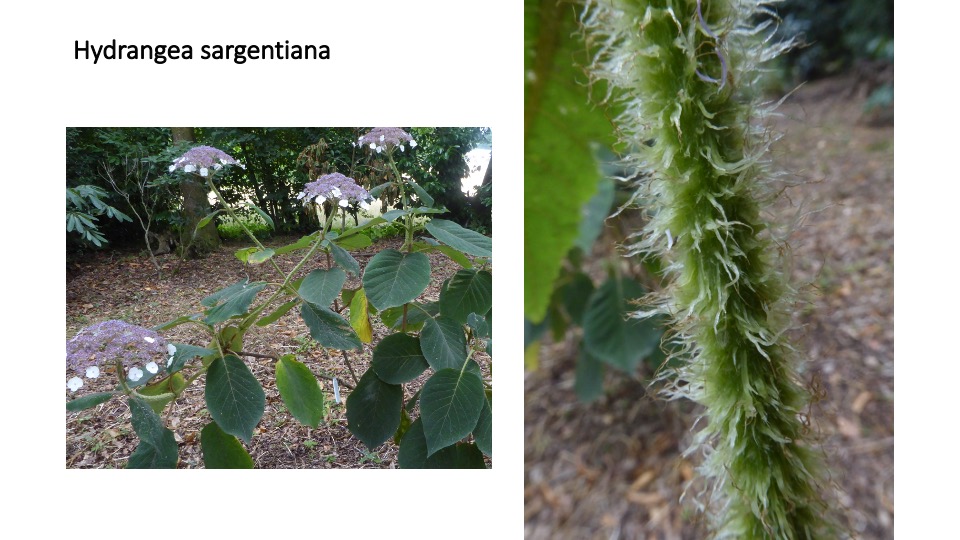
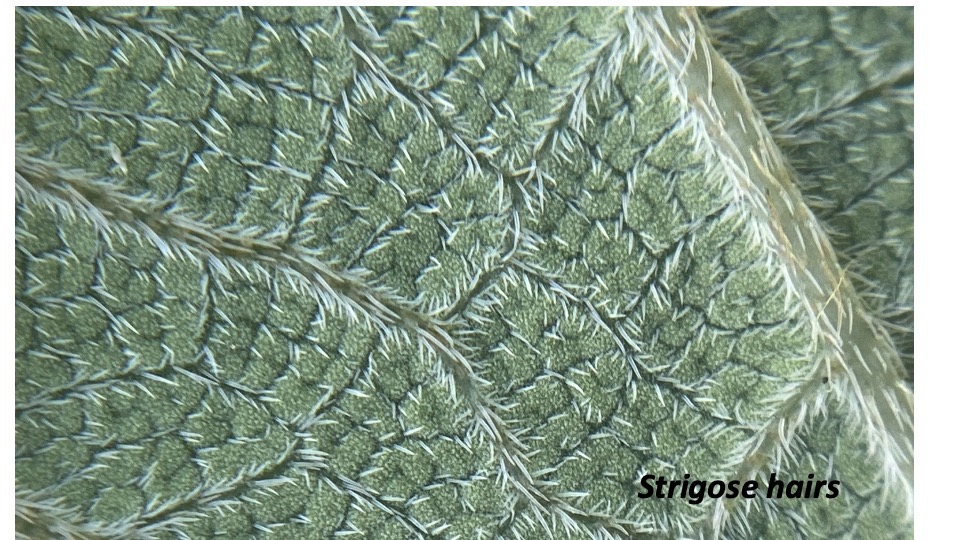
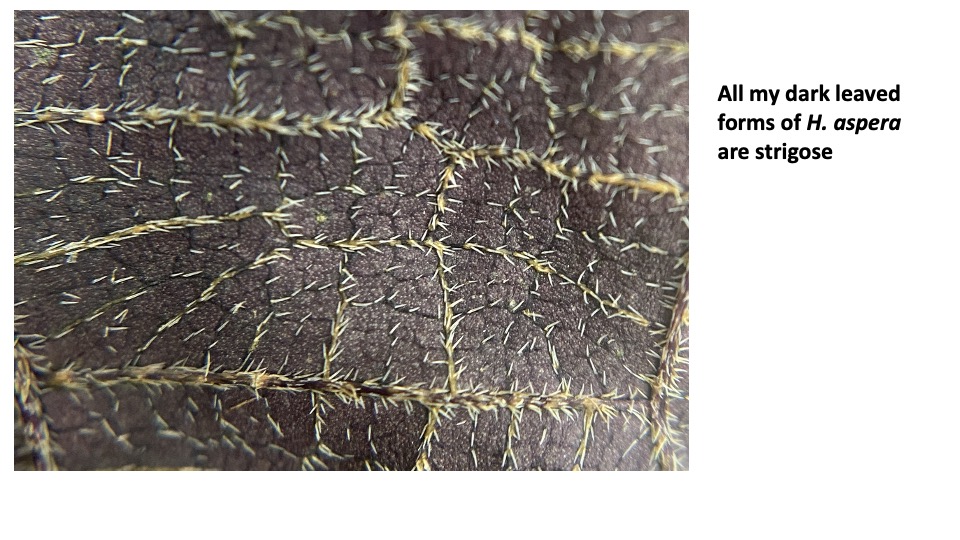
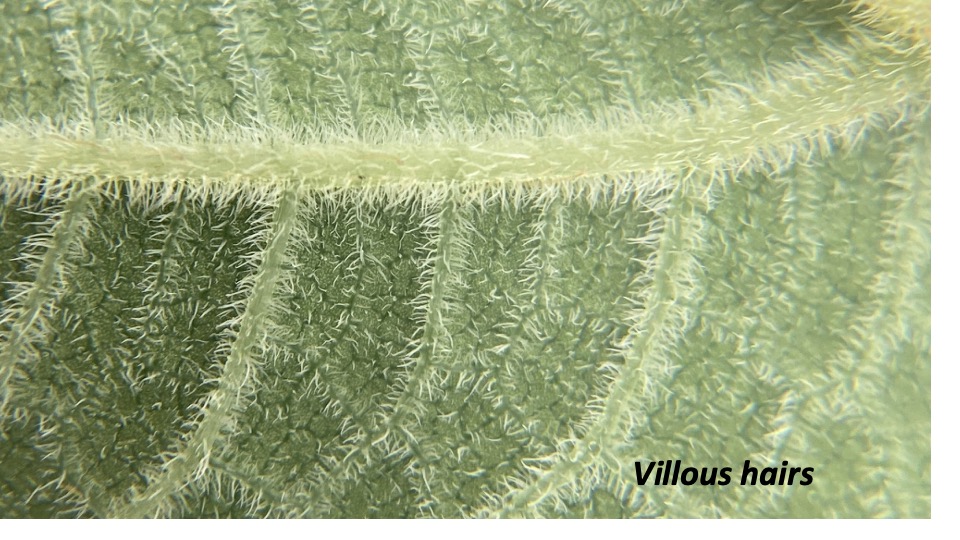
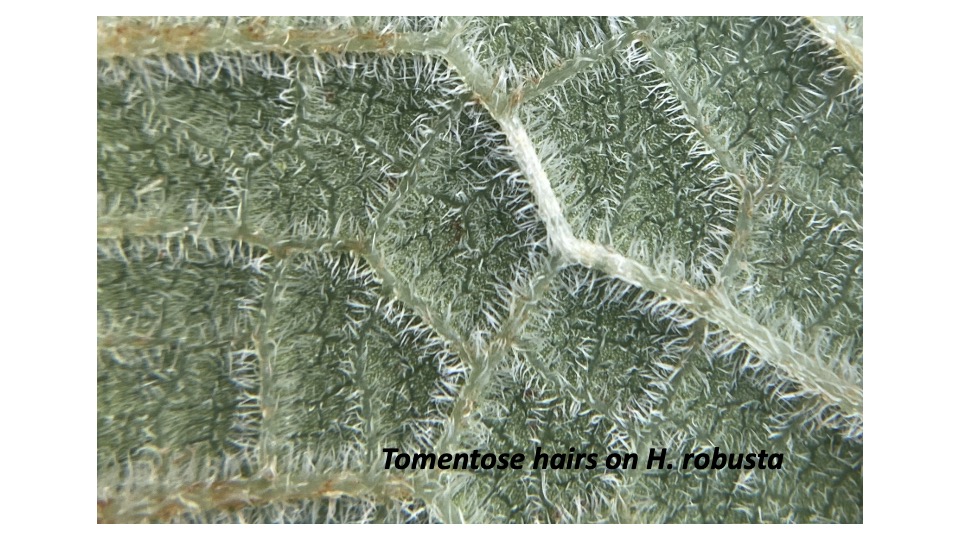
The 1957 McLintock revision placed robusta as a subspecies of aspera, and in alliance with H. longipes, presumably on account of its long petiole and broad cordate leaf. However H. longipes is strictly strigose on the leaf reverse, and uniformly white-flowered, as opposed to the tomentose leaf undersides and mauve pink fertile flowers and floral bracts of H. robusta.
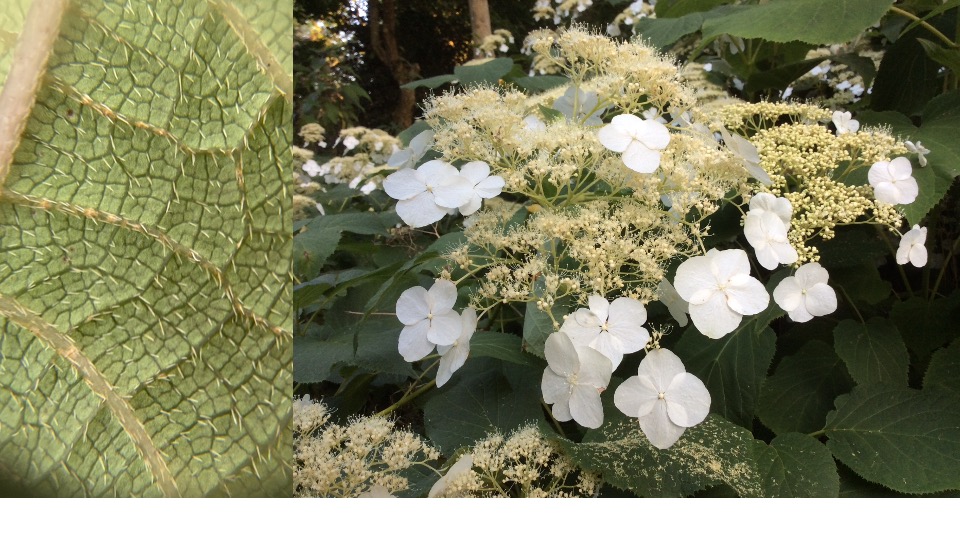
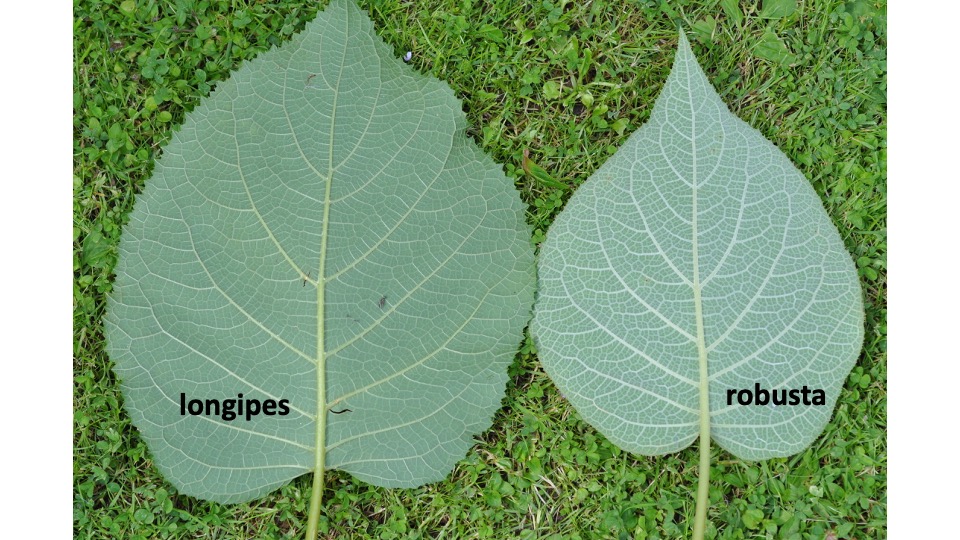
Over the years , H. robusta has become something of a dustbin for any specimen with large leaves and lengthy petioles, and most in cultivation have little in common with the Hooker and Thompson plant, notably with the vestiture, which is often strigose, instead of villous/tomentose. Because the hairs are generally the most stable character, this is important. Many hydrangeas labelled as H. robusta in cultivation are simply forms of H. strigosa: the most widespread of the forms of the Asperae group in the Himalaya and China, where it is a pioneer species, colonising flood-washed river banks, new road works, indeed any newly exposed soil. It can become something of a weed. It varies enormously in its foliage size and shape and it is always tempting to put those forms with large leaves into H. robusta or just occasionally into H. sargentiana.
Wilson, interestingly, never described any of his aspera collections in Plantae Wilsonianae (1907-1910) as H. robusta, or indeed in his other writings, and I believe H. robusta is not mentioned anywhere by Henry. Wilson was well aware of the extraordinary variability of H. strigosa, splitting out 3 varieties, and admitting there were still variations within these.
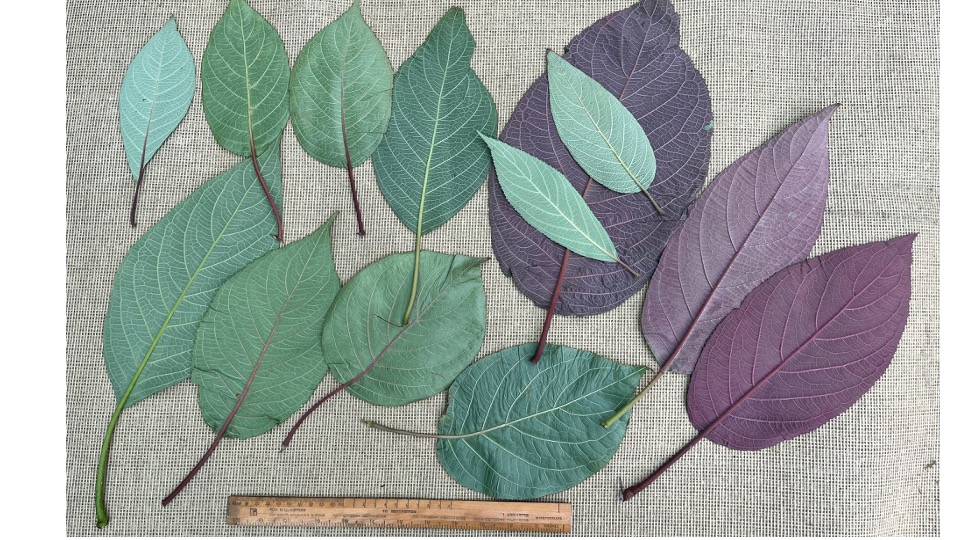
As far as I am aware, there have been few collections of the original Hooker and Thompson H. robusta introduced into cultivation. I know personally of two, both from Sichuan. Roy Lancaster made a collection at Baoshan in Sichuan which he gave to Kew, and I found a specimen of this in Lady Arabella Lennox-Boyd’s garden at Gresgarth in Lancashire given to her by John Simmonds, from Kew (incorrectly labelled H. villosa). Two plants were also sent to Trelissick in Cornwall, and these were subsequently given the cultivar names of ‘Pink Cloud’ and ‘Blue Skies.’ My own collection of robusta at White House Farm, which is very similar, also originated from Baoshan.
Jack Aldridge has recently done extensive research into plants that agree with the Hooker and Thompson introduction, and has discovered more plants in gardens, notably recent introductions by Bleddyn and Sue Wynn Jones from the Himalaya, and by Thomas Packenham from Sichuan. I hope that more will emerge with time to confirm it as a secure species.
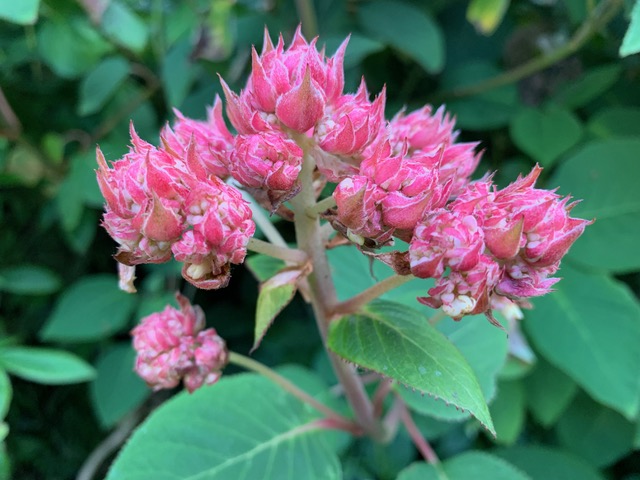
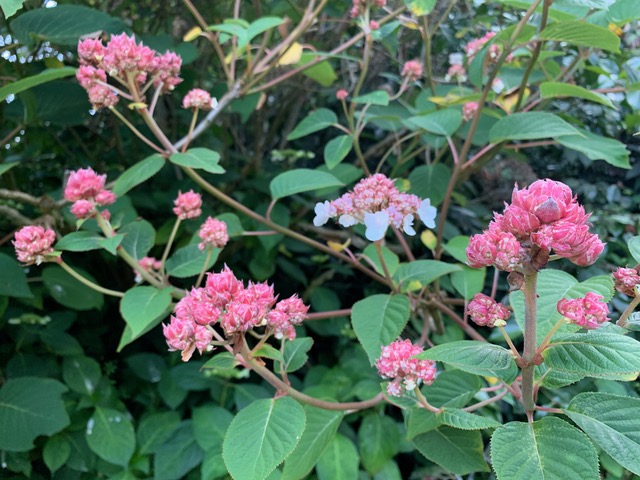
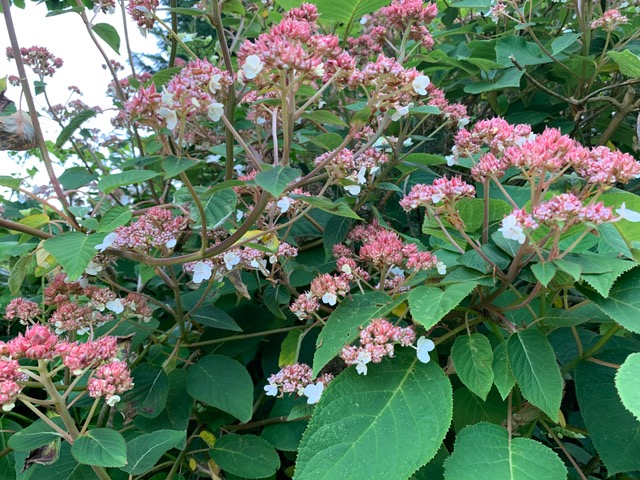
This White House Farm plant (above) which matches the Hooker and Thompson description of H. robusta, is horticulturally distinctive, with strikingly pink flower buds, and may warrant a cultivar name to recognise its ornamental value. It has made a large shrub about 3mx3m and has turned out to be perfectly hardy, except that it has suffered from the punishing heatwaves and drought of 2026. It is in a little too much sun, and like many hydrangeas in relative exposure, the leaf-edges this year are curled with the unremitting high leaf-surface temperatures, and the flowers pale with exhaustion.
Our next Open Day is Sunday August 16th: come and see the drought-stricken asperas – and the genera that surprisingly are seeming to do well in these heatwave and drought conditions.
Email whitehousefarmarb@gmail.com to reserve a place.


As always, I’m grateful for your extending my knowledge of the genus. Many thanks. (With regard to the drought, it has really taken a toll of my hydrangeas, many of which were too young to have developed sufficient root systems to cope.)
LikeLike